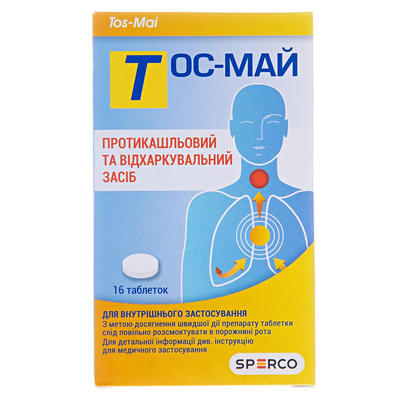
Tos-May Tablets No. 16 (8x2)
Ingredients
Active ingredients: dextromethorphan hydrobromide, benzocaine, potassium guaiacol sulfonate, sodium benzoate;
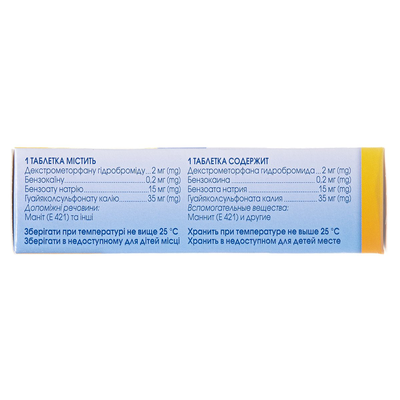
1 tablet contains 2 mg of dextromethorphan hydrobromide, 0.2 mg of benzocaine, 15 mg of sodium benzoate, and 35 mg of potassium guaiacol sulfonate;
Excipients: mannitol (E 421), povidone, talc, magnesium stearate, anise essence, menthol, sodium saccharin
Dosage Form
Tablets.
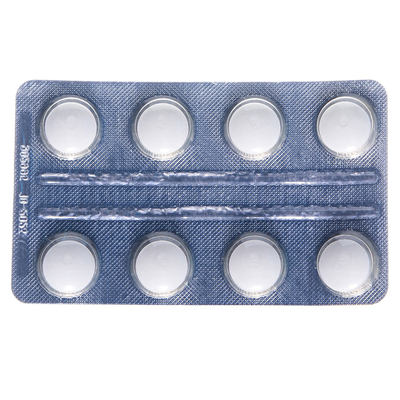
Main physical and chemical properties: white tablets with speckles, 13 mm in diameter.
Pharmacotherapeutic group
Antitussives and expectorants.
ATC code R05F B.
Pharmacological properties
Pharmacodynamics.
A combination drug with antitussive, mucolytic, expectorant, and local anesthetic effects, which reduces coughing, pain, and throat irritation. The drug’s action is due to the pharmacological properties of its components.
Dextromethorphan is an antitussive agent and the D-stereoisomer of levorphanol. In terms of its mechanism of action, dextromethorphan is an NMDA receptor antagonist in the medulla oblongata; it acts on the central component of the cough reflex, thereby reducing dry, nonproductive coughs associated with irritation of the respiratory tract mucosa during colds. Dextromethorphan has also been shown to affect the peripheral component of the cough reflex by inhibiting impulses originating from the mucous membrane of the upper respiratory tract. In terms of the intensity of its antitussive effect, dextromethorphan is similar to codeine, but, unlike codeine, it does not cause dependence, does not depress the respiratory center or the activity of the ciliated epithelium of the respiratory tract, and has no analgesic effect.
Benzocaine is a highly active topical local anesthetic, a derivative of para-aminobenzoic acid. It has no resorptive effect. Its mechanism of action is associated with a reduction in the ionic permeability of nerve endings. As a component of combination antitussive preparations, it reduces pain and irritation in the throat.
Potassium guaiacol sulfonate is an expectorant. It helps reduce the viscosity of bronchial mucus, depolymerizes mucopolysaccharides, and increases the activity of the cilia in the ciliated epithelium of the respiratory tract. It reduces the surface tension and adhesive properties of sputum, lowers its viscosity, and facilitates its clearance from the respiratory tract, transforming a nonproductive cough into a productive one. It has a mild antiseptic and anesthetic effect.
Sodium benzoate belongs to the class of direct-acting expectorants. When taken orally, it increases the secretion of the bronchial glands, thins sputum, and facilitates its clearance from the respiratory tract. It has mild antibacterial and antifungal properties.
Pharmacokinetics.
After oral administration, dextromethorphan is rapidly absorbed in the gastrointestinal tract and has high bioavailability. The antitussive effect develops 15–30 minutes after administration and lasts 5–6 hours. Maximum plasma concentration is reached after 2 hours. It is actively metabolized in the liver via N- and O-demethylation. The half-life is 6.5 hours. It is excreted primarily by the kidneys as metabolites, and only a small amount is excreted unchanged.
Potassium guaiacol sulfonate is rapidly absorbed from the gastrointestinal tract. Peak blood concentration is reached within 1–2 hours. Therapeutic concentrations are maintained for 6 hours. The half-life is 1–2 hours. It is excreted in sputum and eliminated by the kidneys as metabolites and in its unchanged form.
Indications
Symptomatic treatment of dry, irritating cough associated with acute respiratory viral infections and infectious-inflammatory diseases of the upper and lower respiratory tracts. For preparing patients for bronchoscopy.
Contraindications
Hypersensitivity to dextromethorphan, amide anesthetics, or other components of the medication. Respiratory failure, bronchial asthma, pulmonary emphysema.
Do not use in combination with monoamine oxidase (MAO) inhibitors or selective serotonin reuptake inhibitor (SSRI) antidepressants (fluoxetine, paroxetine), nor within 2 weeks after discontinuing their use.
Interactions with Other Medications and Other Types of Interactions
Concomitant use of this medication with antidepressants—MAO inhibitors, furazolidone, procarbazine, selegiline, and linezolid due to an increased risk of central nervous system (CNS) stimulation, the development of hypertension, and hyperthermia (serotonin syndrome). CNS depressants, including psychotropic, antihistamine, and antiparkinsonian drugs, as well as alcohol, enhance the sedative effect of this medication when used concomitantly. Dextromethorphan is metabolized by the cytochrome P450 CYP2D6 isoenzymes and undergoes significant presystemic metabolism. Concomitant use with CYP2D6 inhibitors may increase the concentration of dextromethorphan in the body to levels significantly exceeding therapeutic concentrations. This increases the risk of dextromethorphan toxicity in the patient and may cause agitation, confusion, tremor, insomnia, diarrhea, and respiratory failure, as well as increase the risk of serotonin syndrome. Potent inhibitors of CYP2D6 enzymes include fluoxetine, paroxetine, quinidine, and terbinafine. When used concomitantly with quinidine, the concentration of dextromethorphan in blood plasma increases 20-fold. Amiodarone, flecainide, propafenone, sertraline, bupropion, methadone, cinacalcet, haloperidol, perphenazine, and thioridazine also have a similar effect on the metabolism of dextromethorphan. If concomitant use of CYP2D6 inhibitors and dextromethorphan is necessary, the patient’s condition should be closely monitored, and the dose should be adjusted promptly as needed. The use of dextromethorphan with MAO inhibitors, medications for Parkinson’s disease, selective serotonin reuptake inhibitors, and other antidepressants leads to a significant potentiation of their effects; therefore, such combinations should be avoided. Nonsteroidal anti-inflammatory drugs (NSAIDs) in the cyclooxygenase-2 (COX-2) inhibitor class, namely celecoxib, parecoxib, and valdecoxib, may increase blood concentrations of dextromethorphan by inhibiting its hepatic metabolism. This medication should not be taken with grapefruit or grapefruit juice due to inhibition of the CYP2D6 and CYP3A4 enzymes and increased levels of dextromethorphan in the blood.
Benzocaine, which is a component of this medication, interacts with cholinesterase inhibitors, which inhibit the metabolism of local anesthetics; therefore, there is a risk of systemic toxicity. Benzocaine reduces the antibacterial effect of sulfonamide drugs. Interactions may occur with diagnostic tests for assessing pancreatic function that use bentiromide. It is recommended to discontinue treatment at least 3 days before undergoing such a test.
Special Instructions for Use
Do not exceed the maximum daily doses of the drug, do not combine the use of the drug with the consumption of alcoholic beverages, and do not use the drug for chronic cough associated with bronchial asthma or pulmonary emphysema. Use caution when prescribing this medication to patients with liver disease, as the metabolism of dextromethorphan may be altered; this should be taken into account when determining the dosage.
Patients suffering from a chronic cough caused by smoking or accompanied by excessive phlegm production should consult a doctor before using this medication.
If the cough lasts longer than 7 days or is accompanied by fever, a rash, or a headache, the patient should be examined to determine the cause of the condition.
There have been reports of dextromethorphan abuse. Although the dose of dextromethorphan in this medication is low, this should be taken into account when prescribing the medication to adolescents, young adults, and patients with a history of substance abuse involving narcotic and psychotropic substances.
The use of dextromethorphan may lead to the release of histamine; therefore, it should be used with caution in patients with atopic dermatitis.
Dextromethorphan is metabolized in the liver by the cytochrome P450 CYP2D6 isoenzyme, the activity of which is genetically determined. In approximately 10% of the global population, the activity of this enzyme is low (“slow metabolizers”). In such individuals, as well as in patients taking medications that inhibit CYP2D6 (see the section “Interactions with Other Medications and Other Types of Interactions”), signs of overdose and/or prolonged exposure to dextromethorphan may occur.
There is a risk of methemoglobinemia when using medications containing benzocaine, primarily in patients with congenital defects such as glucose-6-phosphate dehydrogenase deficiency, NADH-hemoglobin reductase deficiency, pyruvate kinase deficiency, or hemoglobin M. The appearance of cyanosis of the skin, lips, and nail beds, headache, dizziness, shortness of breath, weakness, and tachycardia may indicate methemoglobinemia, which is potentially life-threatening and requires immediate medical intervention.
When using local anesthetics, including benzocaine, there is an increased risk of systemic toxicity in patients with acute illnesses. In patients with hypersensitivity to systemic ether-type anesthetics, particularly derivatives of para-aminobenzoic acid (PABA), parabens, or paraphenylenediamine (hair dye), may also exhibit hypersensitivity to benzocaine.
The use of benzocaine may cause a positive result on a doping test in athletes.
Use during pregnancy or breastfeeding.
No teratogenic or embryotoxic effects of the drug have been reported; but, given the lack of adequate clinical studies, Tos-Mai should be used during pregnancy only as prescribed by a doctor when the expected benefit to the mother outweighs the potential risk to the fetus.
Due to the lack of information regarding the use of this medication during breastfeeding, it should not be used by women during this period.
Effect on reaction time when operating motor vehicles or other machinery.
Some patients may experience drowsiness or slowed reactions after taking this medication, which should be taken into account when operating vehicles.
Dosage and Administration
Children 12 years of age and older and adults are usually prescribed 1–2 tablets 4–6 times daily (the maximum daily dose is 16 tablets), and children aged 6 to 12 years are prescribed 1 tablet 4 times a day (the maximum daily dose for this age group is 8 tablets).
The duration of treatment depends on the severity and course of the disease and is determined by the doctor on an individual basis. Do not use this medication for more than 7 days without consulting a doctor.
To achieve a faster effect, the tablets should be slowly allowed to dissolve in the mouth.
Children.
Tos-Mai is prescribed for children 6 years of age and older.
Overdose
In the event of a significant overdose, symptoms may occur due to:
dextromethorphan—drowsiness, dizziness, ataxia, irritability, hyperactivity, confusion, blurred vision, nystagmus, respiratory depression, nausea, vomiting, central nervous system (CNS) depression, agitation, psychotic disorders (psychosis), dysarthria, myoclonus, tremor;
potassium guaiacol sulfonate—drowsiness, nausea, vomiting; nephrolithiasis;
benzocaine – dizziness, double vision, agitation, convulsions, lethargy; methemoglobinemia with the development of cyanosis of the skin, lips, and nail beds; headache; dizziness; shortness of breath; weakness; tachycardia.
Treatment.
In case of overdose, seek medical help immediately! Treatment is symptomatic. If seizures occur, benzodiazepines should be administered; in cases of respiratory depression, respiratory support and naloxone should be provided. If methemoglobinemia develops, methylene blue should be administered.
Side Effects
Gastrointestinal: nausea, vomiting, abdominal pain, diarrhea, constipation, gastrointestinal disturbances.
Central nervous system: general weakness, drowsiness, headache, impaired consciousness.
Immune system: allergic reactions, including rash, itching, facial flushing, angioedema, and anaphylactic reactions.
Blood and lymphatic system disorders: methemoglobinemia.
Shelf life
2 years. Do not use this medication after the expiration date printed on the package.
Storage Conditions
Store at a temperature not exceeding 25 °C. Keep out of the reach of children.
Packaging
8 tablets per blister pack made of aluminum foil coated with PVDC and laminated with PVC/PVDC. 2 blister packs with instructions in a cardboard box.
Dispensing Category
Available without a prescription.
Manufacturer
Laboratorios Alcalá Pharma, S.L.