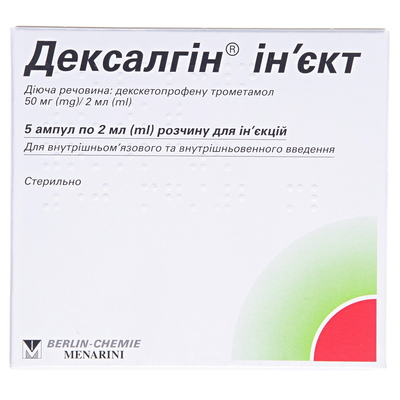
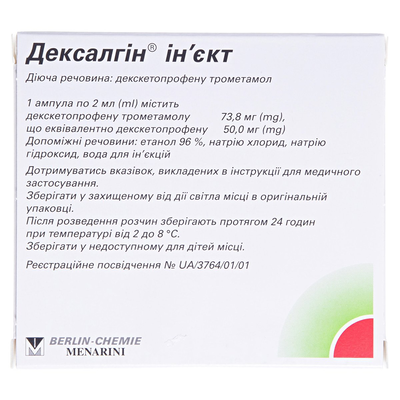
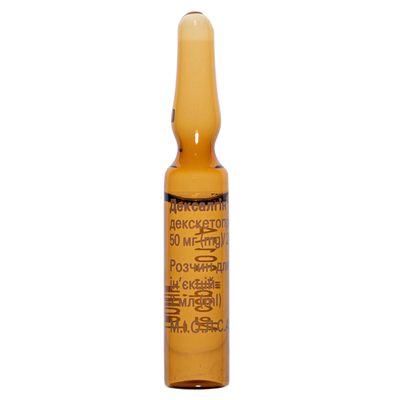
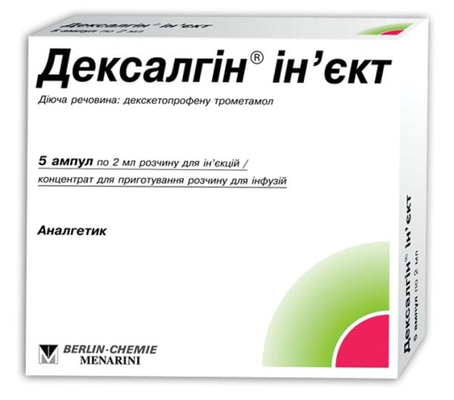
Dexalgin Inject, solution for injection, 50 mg/2 mL, 2 mL per ampoule, No. 5
Ingredients
Active ingredient: dexketoprofen trometamol;
1 mL of solution for injection/infusion contains 36.9 mg of dexketoprofen trometamol, which is equivalent to 25 mg of dexketoprofen (one 2-mL ampoule contains 73.8 mg of dexketoprofen trometamol, which is equivalent to 50 mg of dexketoprofen);
excipients: 96% ethanol, sodium chloride, sodium hydroxide, water for injection.
Dosage Form
Solution for injection/infusion.
Main physical and chemical properties: clear, colorless solution.
Pharmacotherapeutic group
Nonsteroidal anti-inflammatory and antirheumatic agents. Propionic acid derivatives. Dexketoprofen. ATC code M01A E17.
Pharmacological properties
Dexketoprofen trometamol—the tromethamine salt of (S)-(+)-2-(3-benzoylphenyl) propionic acid, which has analgesic, anti-inflammatory, and antipyretic effects and belongs to the class of nonsteroidal anti-inflammatory drugs (NSAIDs).
Mechanism of Action
The mechanism of action of NSAIDs is based on reducing prostaglandin synthesis by inhibiting cyclooxygenase activity. Specifically, it inhibits the conversion of arachidonic acid into the cyclic endoperoxides PGG2 and PGH2, from which the prostaglandins PGE1, PGE2, PGF2a, PGD2, as well as prostacyclin PGI2 and thromboxanes ThA2 and ThB2. In addition, inhibition of prostaglandin synthesis may affect other inflammatory mediators, such as kinins, which may also indirectly influence the drug’s primary effect.
Pharmacodynamics.
Dexketoprofen trometamol has been shown to inhibit the activity of cyclooxygenase-1 and cyclooxygenase-2 in laboratory animals and in humans.
Clinical Efficacy and Safety
Clinical studies in various types of pain have demonstrated that dexketoprofen trometamol exerts a pronounced analgesic effect. The analgesic effect of dexketoprofen trometamol following intramuscular and intravenous administration to patients with moderate-to-severe pain was studied in various types of pain associated with surgical procedures (orthopedic and gynecological surgeries, abdominal surgeries), as well as for musculoskeletal pain (acute low back pain) and renal colic. During the studies, the analgesic effect of the drug began rapidly and peaked within the first 45 minutes. The duration of the analgesic effect following administration of 50 mg of dexketoprofen trometamol is typically 8 hours. Clinical studies have demonstrated that the use of Dexalgin® Inject allows for a significant reduction in the dose of opioids when used concomitantly for the relief of postoperative pain. When patients who were prescribed morphine via a patient-controlled analgesia device for the relief of postoperative pain were also prescribed dexketoprofen trometamol, they required significantly less morphine (by 30–45%) than patients who received a placebo.
Pharmacokinetics.
Absorption
Following intramuscular administration of dexketoprofen trometamol to humans, peak concentration is reached in approximately 20 minutes (10–45 minutes). It has been demonstrated that following a single intramuscular or intravenous administration of 25–50 mg of the drug, the area under the concentration-time curve (AUC) is proportional to the dose.
Distribution
Similar to other drugs with a high degree of plasma protein binding (99%), the volume of distribution of dexketoprofen averages 0.25 L/kg. The distribution half-life is approximately 0.35 hours, and the elimination half-life is 1–2.7 hours.
Pharmacokinetic studies of repeated administration of the drug have shown that Cmax and AUC following the last intramuscularor intravenous administration do not differ from those following a single dose, indicating that the drug does not accumulate.
Biotransformation and Excretion
Dexketoprofen is metabolized primarily by conjugation with glucuronic acid and subsequent renal excretion. Following administration of dexketoprofen trometamol, only the S-(+) optical isomer is detected in urine, indicating that the drug is not converted to the R-(-) optical isomer in humans.
Elderly Patients
Following administration of single and multiple doses, the extent of drug exposure in healthy elderly volunteers (aged 65 years and older) participating in the study was significantly higher (up to 55%) than in young volunteers; however, no statistically significant difference was observed in the maximum concentration or the time to reach it. The mean half-life increased (up to 48%), while the estimated total clearance decreased.
Preclinical Safety Data
Standard preclinical studies—including pharmacological safety, genotoxicity, and immunopharmacology studies—did not reveal any particular risk to humans. Chronic toxicity studies in animals identified the maximum dose of the drug that does not cause adverse reactions, which is twice the dose recommended for humans. When higher doses of the drug were administered to monkeys, the main adverse reactions were blood in the feces and reduced weight gain; at the highest dose, gastrointestinal pathologies in the form of erosions were observed. These reactions occurred at doses where drug exposure was 14–18 times higher than at the maximum dose recommended for humans. No studies on carcinogenic effects in animals have been conducted.
Like all NSAIDs, dexketoprofen can cause embryonic or fetal loss in animals either through a direct effect on development or indirectly through damage to the mother’s gastrointestinal tract.
Indications
Symptomatic treatment of acute moderate-to-severe pain in cases where oral administration of the drug is not appropriate, such as postoperative pain, renal colic, and low back pain.
Contraindications
- Hypersensitivity to dexketoprofen, any other nonsteroidal anti-inflammatory drug (NSAID), or to the drug’s excipients;
- patients in whom the use of substances with similar effects, such as acetylsalicylic acid or other NSAIDs, trigger the development of bronchial asthma attacks, bronchospasm, acute rhinitis, nasal polyps, urticaria, or angioedema;
- if photoallergic or phototoxic reactions have occurred during treatment with ketoprofen or fibrates;
- a history of gastrointestinal bleeding or perforation associated with NSAID therapy;
- active peptic ulcer/gastrointestinal bleeding, or a history of gastrointestinal bleeding, ulcers, or perforations;
- chronic dyspepsia;
- active bleeding or increased bleeding tendency;
- Crohn’s disease or ulcerative colitis;
- severe heart failure;
- moderate or severe renal impairment (creatinine clearance ≤59 mL/min);
- severe hepatic impairment (10–15 points on the Child-Pugh scale);
- hemorrhagic diathesis and other coagulation disorders;
- in cases of severe dehydration (due to vomiting, diarrhea, or insufficient fluid intake);
- the third trimester of pregnancy and the breastfeeding period;
Due to the presence of ethanol in the drug, Dexalgin® Inject is contraindicated for neuraxial (intrathecal or epidural) administration.
Interactions with Other Medications and Other Types of Interactions
Concomitant use of the following agents with NSAIDs is not recommended:
- other NSAIDs (including selective cyclooxygenase-2 inhibitors), including high-dose salicylates (≥ 3 g/day). Concomitant use of multiple NSAIDs increases the risk of gastrointestinal ulcers and gastrointestinal bleeding due to their mutually reinforcing effects;
- anticoagulants: NSAIDs potentiate the effects of anticoagulants, such as warfarin, due to the high degree of binding of dexketoprofen to plasma proteins, as well as due to inhibition of platelet function and damage to the gastric and duodenal mucosa. If concomitant use is necessary, it should be carried out under medical supervision and with careful monitoring of relevant laboratory parameters;
- heparins: the risk of bleeding is increased (due to inhibition of platelet function and damage to the gastric and duodenal mucosa). If concomitant use is necessary, it should be carried out under medical supervision and with careful monitoring of relevant laboratory parameters;
- corticosteroids: increased risk of developing gastrointestinal ulcers or gastrointestinal bleeding;
- lithium (reports have been made for several NSAIDs): NSAIDs increase blood lithium levels, which may lead to toxicity (reduced renal excretion of lithium). Therefore, at the start of dexketoprofen therapy, when adjusting the dose, or upon discontinuation of the drug, blood lithium levels must be monitored;
- high-dose methotrexate (at least 15 mg per week). Due to a reduction in the renal clearance of methotrexate during NSAID therapy, its adverse effects on the hematopoietic system are generally exacerbated;
- hydantoin derivatives and sulfonamides: the toxicity of these substances may be increased.
Concomitant use of the following agents with NSAIDs requires caution:
- diuretics, angiotensin-converting enzyme (ACE) inhibitors, aminoglycoside antibiotics, and angiotensin II receptor antagonists. Dexketoprofen reduces the effectiveness of diuretics and other antihypertensive agents. In some patients with impaired renal function (e.g., those who are dehydrated or the elderly), the use of cyclooxygenase inhibitors in combination with ACE inhibitors, angiotensin II receptor antagonists, or antibacterial aminoglycosides may impair renal function, which is generally reversible. When using dexketoprofen in combination with any diuretic, ensure that the patient is not dehydrated, and monitor renal function at the start of treatment;
- Low-dose methotrexate (less than 15 mg per week): Due to a reduction in the renal clearance of methotrexate when used concomitantly with NSAIDs, its adverse effects on the hematopoietic system as a whole are exacerbated. During the first few weeks of concomitant use, blood tests should be performed weekly. Even in cases of mild renal impairment, as well as in elderly patients, treatment should be conducted under close medical supervision;
- pentoxifylline: there is a risk of bleeding. Monitoring should be intensified, and bleeding time should be checked more frequently;
- Zidovudine: There is a risk of increased toxic effects on red blood cells due to its effect on reticulocytes, which can lead to severe anemia after the first week of NSAID use. Within 1–2 weeks after starting NSAIDs, a blood test should be performed to check reticulocyte counts;
- sulfonylurea drugs: NSAIDs can enhance the hypoglycemic effect of these agents by displacing sulfonylurea drugs from their binding sites on plasma proteins.
Potential interactions should be considered when using the following medications:
- beta-blockers: NSAIDs may weaken their antihypertensive effect by inhibiting prostaglandin synthesis;
- cyclosporine and tacrolimus: nephrotoxicity may be increased due to the effect of NSAIDs on renal prostaglandins. Renal function should be monitored during combination therapy;
- thrombolytic agents: the risk of bleeding increases;
- antiplatelet agents and selective serotonin reuptake inhibitors: the risk of gastrointestinal bleeding is increased;
- probenecid: plasma concentrations of dexketoprofen may increase, likely due to inhibition of renal tubular secretion andconjugation of the drug with glucuronic acid, and requires dose adjustment of dexketoprofen;
- cardiac glycosides: NSAIDs may increase the concentration of glycosides in plasma;
- mifepristone: Theoretically, there is a risk that the efficacy of mifepristone may be altered by prostaglandin synthase inhibitors. Limited data suggest that co-administration of NSAIDs on the same day as prostaglandin does not adversely affect the efficacy of mifepristone or prostaglandin with regard to cervical ripening or contractility, nor does it reduce the clinical efficacy of medications used for medical abortion;
- quinolone antibiotics: animal studies have shown that the use of high doses of quinolone derivatives in combination with NSAIDs increases the risk of seizures;
- tenofovir: when used concomitantly with NSAIDs, plasma concentrations of urea nitrogen and creatinine may increase; therefore, renal function should be monitored to assess the potential impact of concomitant use of these medications;
- deferasirox: when used concomitantly with NSAIDs, the risk of gastrointestinal toxicity may increase. Close monitoring of the patient is required when this drug is used in combination with deferasirox;
- pemetrexed: Concomitant use with NSAIDs may reduce the clearance of pemetrexed; therefore, particular caution is required when using high doses of NSAIDs. Patients with mild to moderate renal impairment (creatinine clearance 45 to 79 mL/min) should avoid taking NSAIDs for two days before and two days after receiving pemetrexed.
Special Considerations for Use
Use with caution in patients with a history of allergic conditions. Avoid using Dexalgin® Inject in combination with other NSAIDs, including selective cyclooxygenase-2 inhibitors. Adverse reactions can be minimized by using the lowest effective dose for the shortest possible time necessary to improve the patient’s condition.
Gastrointestinal Safety
Gastrointestinal bleeding, ulcer formation, or ulcer perforation, in some cases with fatal outcomes, have been observed with all NSAIDs at various stages of treatment, regardless of the presence of warning symptoms or a history of serious gastrointestinal disease. If gastrointestinal bleeding or an ulcer develops, the drug should be discontinued. The risk of gastrointestinal bleeding, ulcer formation, or ulcer perforation increases with higher doses of NSAIDs in patients with a history of ulcers, especially those complicated by bleeding or perforation, as well as in elderly patients.
Elderly patients: Elderly patients have an increased incidence of adverse reactions to NSAIDs, particularly gastrointestinal bleeding and perforation, which can sometimes be fatal. Treatment of such patients should be initiated at the lowest possible dose. As with all NSAIDs, patients with a history of esophagitis, gastritis, and/or peptic ulcer disease should ensure that these conditions are in remission. In patients with current symptoms of gastrointestinal disorders or a history of such disorders, the gastrointestinal tract should be monitored for possible complications during treatment, particularly gastrointestinal bleeding. NSAIDs should be prescribed with caution to patients with a history of gastrointestinal disorders (ulcerative colitis, Crohn’s disease), as there is a risk of exacerbation. For such patients and for patients taking low-dose acetylsalicylic acid or other agents that increase the risk of gastrointestinal adverse reactions, the possibility of combination therapy with protective agents, such as misoprostol or proton pump inhibitors, should be considered.
Patients, especially the elderly, with a history of gastrointestinal adverse reactions should inform their doctor of any unusual symptoms related to the digestive system, particularly gastrointestinal bleeding, especially during the initial stages of treatment.
This medication should be prescribed with caution to patients who are concurrently taking agents that may increase the risk of ulcers or bleeding, namely: oral corticosteroids, anticoagulants (e.g., warfarin), selective serotonin reuptake inhibitors, or antiplatelet agents such as acetylsalicylic acid.
Renal Safety
This medication should be prescribed with caution to patients with impaired renal function, as NSAID use may lead to worsening renal function, fluid retention, and edema. Due to the increased risk of nephrotoxicity, this medication should be prescribed with caution when used in combination with diuretics, as well as in patients at risk of developing hypovolemia. During treatment, the patient must receive adequate fluid intake to avoid dehydration, which may exacerbate the toxic effects on the kidneys. Like other NSAIDs, this medication may increase plasma concentrations of urea nitrogen and creatinine. Similar to other prostaglandin synthesis inhibitors, its use may be accompanied by renal adverse reactions, leading to glomerulonephritis, interstitial nephritis, papillary necrosis, nephrotic syndrome, and acute renal failure. Renal dysfunction is most common in elderly patients.
Liver Safety
This medication should be prescribed with caution to patients with impaired liver function. Similar to other NSAIDs, this medication may cause a temporary and mild increase in certain liver function tests, as well as a marked increase in AST and ALT levels. If these levels rise significantly, treatment should be discontinued.
Liver function abnormalities are most common in elderly patients.
Safety Regarding the Cardiovascular System and Cerebral Circulation
Patients with hypertension and/or mild to moderate heart failure require monitoring and medical consultation. Particular caution should be exercised when treating patients with a history of heart disease, particularly those with previous episodes of heart failure (the risk of developing heart failure increases with use of the drug), as fluid retention and edema have been observed during NSAID therapy. Clinical studies and epidemiological data suggest that the use of certain NSAIDs (especially at high doses and over a prolonged period) may slightly increase the risk of arterial thrombosis (e.g., myocardial infarction or stroke). There are insufficient data to rule out such a risk with dexketoprofen. Therefore, in cases of uncontrolled hypertension, congestive heart failure, ischemic heart disease, peripheral arterial disease, and/or cerebrovascular disease, dexketoprofen should be prescribed only after a thorough evaluation of the patient’s condition. An equally thorough assessment should be conducted before initiating long-term treatment in patients with risk factors for cardiovascular disease (such as hypertension, hyperlipidemia, diabetes mellitus, and smoking).
Nonselective NSAIDs can reduce platelet aggregation and prolong bleeding time by inhibiting prostaglandin synthesis. The concomitant use of dexketoprofen trometamol and low-molecular-weight heparin at prophylactic doses during the postoperative period has been studied in clinical trials, and no effect on coagulation parameters was observed. However, patients taking dexketoprofen trometamol concurrently with drugs that affect hemostasis—such as warfarin, other coumarin derivatives, or heparins—must be under close medical supervision. Cardiovascular dysfunction is most common in elderly patients.
Skin Reactions
There have been reports of very rare cases of serious skin reactions (some fatal) associated with the use of NSAIDs, including exfoliative dermatitis, Stevens–Johnson syndrome, and toxic epidermal necrolysis. The risk of these reactions is likely highest at the start of treatment; in most patients, they occurred within the first month of therapy. If skin rashes, signs of mucosal involvement, or other symptoms of hypersensitivity appear, Dexalgin® Inject should be discontinued.
Masking of Symptoms of Underlying Infections
Dexalgin® Inject may mask the symptoms of infections, which can interfere with diagnosis and timely treatment and, thereby, worsen the outcome of the infection. Such cases have been observed with bacterial pneumonia and bacterial complications of chickenpox. When Dexalgin® Inject is administered to relieve pain associated with an infectious process, monitoring of the infectious process is recommended. In an outpatient setting, the patient should consult a doctor if symptoms persist or worsen.
Additional Information
Particular caution should be exercised when prescribing this medication to patients:
- with a hereditary disorder of porphyrin metabolism (e.g., acute intermittent porphyria);
- who are dehydrated;
- immediately following major surgical procedures.
If the physician determines that long-term use of dexketoprofen is necessary, liver and kidney function should be monitored regularly.
In very rare cases, severe acute hypersensitivity reactions (e.g., anaphylactic shock) have been observed. At the first signs of severe hypersensitivity reactions following administration of Dexalgin® Inject, treatment should be discontinued. Depending on the symptoms, any treatment required in such cases should be administered under medical supervision.
Patients suffering from asthma in combination with chronic rhinitis, chronic sinusitis, and/or nasal polyps are at a higher risk of allergy to acetylsalicylic acid and/or NSAIDs than other patients. Prescribing this medication may trigger asthma attacks or bronchospasm, especially in patients with an allergy to acetylsalicylic acid or NSAIDs.
Severe infectious complications involving the skin and soft tissues may develop in the context of chickenpox. To date, no data have been obtained that would rule out the role of NSAIDs in exacerbating this infectious process. Therefore, Dexalgin® Inject is not recommended for use in patients with chickenpox.
Dexalgin® Inject should be administered with caution to patients with hematopoietic disorders, systemic lupus erythematosus, and mixed connective tissue diseases.
Like other NSAIDs, dexketoprofen trometamol may mask the symptoms of infectious diseases during its use. In isolated cases, the exacerbation of infectious processes localized in soft tissues has been reported during NSAID use. Therefore, if symptoms of a bacterial infection appear or worsen during treatment, patients are advised to consult a doctor immediately.
Each ampule of Dexalgin® Inject contains 12.35% by volume of ethanol, which is equivalent to up to 200 mg per dose, corresponding to 5 mL of beer or 2.08 of wine per dose. This medication may have adverse effects on individuals suffering from alcoholism. The ethanol content should be taken into account when administering the medication to pregnant or breastfeeding women, children, and patients at risk—such as those with liver disease—as well as patients with epilepsy. This medication contains less than 1 mmol of sodium (23 mg) per dose and is therefore practically sodium-free.
Use During Pregnancy or Breastfeeding
The use of Dexalgin® Inject is contraindicated during the third trimester of pregnancy and while breastfeeding.
Pregnancy
Inhibition of prostaglandin synthesis may adversely affect pregnancy and/or fetal development. According to the results of epidemiological studies, the use of drugs that inhibit prostaglandin synthesis in early pregnancy increases the risk of miscarriage, fetal heart defects, and failure of the anterior abdominal wall to close. Thus, the absolute risk of cardiovascular anomalies increased from < 1% to approximately 1.5%. It is believed that the risk of such events increases with higher doses and longer duration of therapy. The use of prostaglandin synthesis inhibitors in animals resulted in an increase in pre- and post-implantation losses and elevated embryo-fetal mortality. In addition, in animals treated with prostaglandin synthesis inhibitors during organogenesis, the incidence of fetal malformations, including cardiovascular abnormalities, was increased. However, animal studies of dexketoprofen trometamol did not reveal any reproductive toxicity. Dexketoprofen trometamol should be prescribed during the first and second trimesters of pregnancy only when absolutely necessary. When prescribing dexketoprofen trometamol to women planning pregnancy or during the first and second trimesters of pregnancy, the lowest effective dose should be used for the shortest possible duration of treatment.
During the third trimester, all prostaglandin synthesis inhibitors cause:
risks to the fetus:
- cardiopulmonary toxic syndrome (with ductus arteriosus obstruction and pulmonary hypertension);
- impaired renal function, which may progress to renal failure with the development of oligohydramnios;
risks to the mother and baby at the end of pregnancy:
- prolonged bleeding time (due to inhibition of platelet aggregation), which is possible even at low doses;
- delayed uterine contractions with consequent delayed labor and prolonged labor.
Breastfeeding
There are no data on the excretion of dexketoprofen into breast milk. Dexalgin® Inject is contraindicated during breastfeeding.
Fertility
Like all other NSAIDs, dexketoprofen trometamol may reduce female fertility; therefore, it is not recommended for women planning to become pregnant. Women who have difficulty conceiving or are undergoing infertility testing should consider discontinuing the drug.
Effect on Reaction Time When Driving or Operating Machinery
While using Dexalgin® Inject, dizziness, visual disturbances, or drowsiness may occur. In such cases, the ability to react quickly, assess traffic situations, and operate motor vehicles or other machinery may be impaired.
Dosage and Administration
To minimize side effects, use the lowest effective dose for the shortest possible period (see the “Special Considerations” section).
Adults. The recommended dose is 50 mg every 8–12 hours. If necessary, a repeat dose may be administered after 6 hours. The maximum daily dose should not exceed 150 mg. Dexalgin® Inject is intended for short-term use and should therefore be used only during periods of acute pain (no longer than 2 days). Patients should be switched to oral analgesics whenever possible. For moderate-to-severe postoperative pain, the drug may be used as indicated at the same recommended doses in combination with opioid analgesics.
Elderly patients. Dose adjustment is generally not required. However, due to the physiological decline in renal function, a lower dose is recommended; specifically, the maximum daily dose is 50 mg in cases of mild renal impairment.
Hepatic impairment. For patients with mild or moderate liver disease (5–9 points on the Child–Pugh scale), the maximum daily dose should be reduced to 50 mg, and liver function should be closely monitored. The drug is contraindicated in patients with severe liver disease (Child–Pugh score of 10–15).
Renal impairment. For patients with mild renal impairment (creatinine clearance 60–89 mL/min), the maximum daily dose should be reduced to 50 mg. In cases of moderate or severe renal impairment (creatinine clearance < 59 mL/min), the drug is contraindicated.
Children and adolescents. This medication should not be used in children and adolescents due to a lack of data on its efficacy and safety.
Method of Administration
Intramuscular administration. The contents of one ampule (2 mL) should be slowly injected deep into the muscle.
Intravenous infusion.
For intravenous infusion, dilute the contents of a 2-mL ampoule in 30–100 mL of 0.9% sodium chloride solution, glucose solution, or Ringer’s lactate solution. The infusion solution should be prepared under aseptic conditions, protected from natural daylight. The prepared solution should be clear. The infusion should be administered intravenously slowly over 10–30 minutes.
Dexalgin® Inject, diluted in 100 mL of 0.9% sodium chloride solution or glucose solution, may be mixed with dopamine, heparin, hydroxyzine, lidocaine, morphine, pethidine, and theophylline.
Intravenous injection (bolus administration).
If necessary, the contents of one ampule (2 mL of solution for injection) should be administered intravenously slowly over at least 15 seconds. The drug may be mixed in small volumes (e.g., in a syringe) with injection solutions of heparin, lidocaine, morphine, and theophylline.
Dexalgin® Inject must not be mixed in small volumes (e.g., in a syringe) with solutions of dopamine, promethazine, pentazocine, pethidine, or hydroxyzine, as this results in the formation of a precipitate.
Diluted solutions for infusion must not be mixed with promethazine or pentazocine.
The drug may only be mixed with the medications listed above.
For intramuscular or intravenous bolus administration, the drug should be administered immediately after it has been drawn from the ampoule.
When storing diluted solutions of the drug in polyethylene bags or in devices intended for administration made of ethyl vinyl acetate, cellulose propionate, low-density polyethylene, and polyvinyl chloride, no changes in the active ingredient content due to sorption were observed.
Dexalgin® Inject is intended for single use; therefore, any remaining prepared solution should be discarded. Before administration, visually inspect the solution to ensure it is clear and colorless. Do not use a solution containing solid particles.
Children
This medication should not be used in children and adolescents due to a lack of data on its efficacy and safety.
Overdose
The symptoms of overdose are unknown. Similar medications cause gastrointestinal disturbances (vomiting, anorexia, abdominal pain) and nervous system disturbances (drowsiness, dizziness, disorientation, headache). In the event of accidental overdose, symptomatic treatment should be initiated immediately, depending on the patient’s condition. Dexketoprofen trometamol is removed from the body by dialysis.
Side Effects
The table below lists adverse reactions categorized by organ system and frequency of occurrence, for which a causal relationship with dexketoprofen trometamol has been considered at least possible based on clinical studies, as well as adverse reactions which have been reported since Dexalgin® Inject was introduced to the market.
| Organs and organ systems | Common
(≥1/100 – 1/10) |
Sometimes
(≥ 1/1,000 – <1/100) |
Rarely
(≥ 1/10,000 – < 1/1,000) |
Very rare
(< 1/10,000) |
|||
| Blood/Lymphatic System Disorders | _ | Anemia | _ | Neutropenia, thrombocytopenia | |||
| Immune system disorders | _ | _ | Laryngeal edema | Anaphylactic reactions, including anaphylactic shock | |||
| Nutritional and metabolic disorders | _ | _ | Hyperglycemia, hypoglycemia, hypertriglyceridemia, anorexia,
loss of appetite |
||||
| Psychiatric disorders | _ | Insomnia, anxiety | _ | _ | |||
| Nervous system disorders | _ | Headache, dizziness, drowsiness | Paresthesia, fainting | _ | |||
| Eye disorders | _ | Blurred vision | _ | _ | |||
| Hearing disorders | _ | Vertigo | Ringing in the ears | _ | |||
| Heart problems | _ | Palpitations | Extrasystoles, tachycardia | _ | |||
| Vascular disorders | _ | Hypotension, hot flashes | Hypertension, superficial vein thrombophlebitis | _ | |||
| Respiratory, thoracic, and mediastinal disorders | _ | _ | Bradycardia | Bronchospasm, shortness of breath | |||
| Gastrointestinal disorders | Nausea, vomiting | Abdominal pain, dyspepsia, diarrhea, constipation, vomiting with blood, dry mouth | Peptic ulcer, bleeding, or perforation | Pancreatitis | |||
| Hepatobiliary disorders | _ | _ | Hepatocellular pathology | ||||
| Skin and subcutaneous tissue disorders | _ | Dermatitis, itching, rash, increased sweating | Hives, acne | Stevens–Johnson syndrome, toxic epidermal necrolysis (Lyell’s syndrome), angioedema, facial swelling, photosensitivity | |||
| Musculoskeletal and connective tissue disorders | _ | _ | Muscle stiffness, joint stiffness, muscle cramps, back pain | _ | |||
| Renal and urinary disorders | _ | _ | Acute renal failure, polyuria, renal pain, ketonuria, proteinuria | Nephritis, nephrotic syndrome | |||
| Disorders of the reproductive system | _ | _ | Menstrual disorders, prostate dysfunction | _ | |||
| General and local disorders | Pain at the injection site, reactions at the injection site, including inflammation, hematoma, bleeding | Fever, increased fatigue, pain, chills, asthenia, malaise | Tremors, peripheral edema | _ | |||
| Laboratory tests | _ | _ | Abnormal liver function test results | _ | |||
Gastrointestinal disorders were the most common.
Peptic ulcer disease, perforation, or gastrointestinal bleeding may develop, sometimes with fatal consequences, especially in elderly patients. According to available data, the following may occur during treatment: nausea, vomiting, diarrhea, flatulence, constipation, dyspeptic symptoms, abdominal pain, melena, vomiting with blood, ulcerative stomatitis, exacerbation of colitis, and Crohn’s disease. Gastritis is observed less frequently. Edema, hypertension, and heart failure have also been reported, which may be caused by the use of NSAIDs. As with other NSAIDs, the following adverse reactions are possible: aseptic meningitis, which generally occurs in patients with systemic lupus erythematosus or mixed connective tissue diseases, and hematologic reactions (purpura, aplastic and hemolytic anemia, and, rarely, agranulocytosis and bone marrow hypoplasia). Bullous reactions, including Stevens–Johnson syndrome and toxic epidermal necrolysis (very rare), may occur.
According to the results of clinical studies and epidemiological data, the use of certain NSAIDs, especially at high doses and over a prolonged period, may be associated with a slight increase in the risk of arterial thrombotic events, such as myocardial infarction and stroke.
Reporting of Suspected Adverse Reactions.
Reporting suspected adverse reactions after a drug’s approval plays an important role. This allows for continued monitoring of the benefit-risk profile of the drug.
Healthcare professionals should report any suspected adverse reactions through the national reporting system.
Shelf life
5 years.
Do not use the drug after the expiration date printed on the package.
Storage Conditions
Store in the original packaging, protected from light. After dilution, the solution may be stored for up to 24 hours at a temperature between 2 and 8 °C. Keep out of reach of children.
Incompatibility
Dexalgin® Inject must not be mixed in small volumes (e.g., in a syringe) with solutions of dopamine, promethazine, pentazocine, pethidine, or hydroxyzine, as this results in the formation of a precipitate.
Diluted solutions for infusion, prepared as described in the “Dosage and Administration” section, must not be mixed with promethazine or pentazocine.
Packaging
2-mL brown glass ampoules; 1, 5, or 10 ampoules per cardboard box.
Dispensing Category
By prescription only.
Manufacturer
Alfasigma S.p.A.