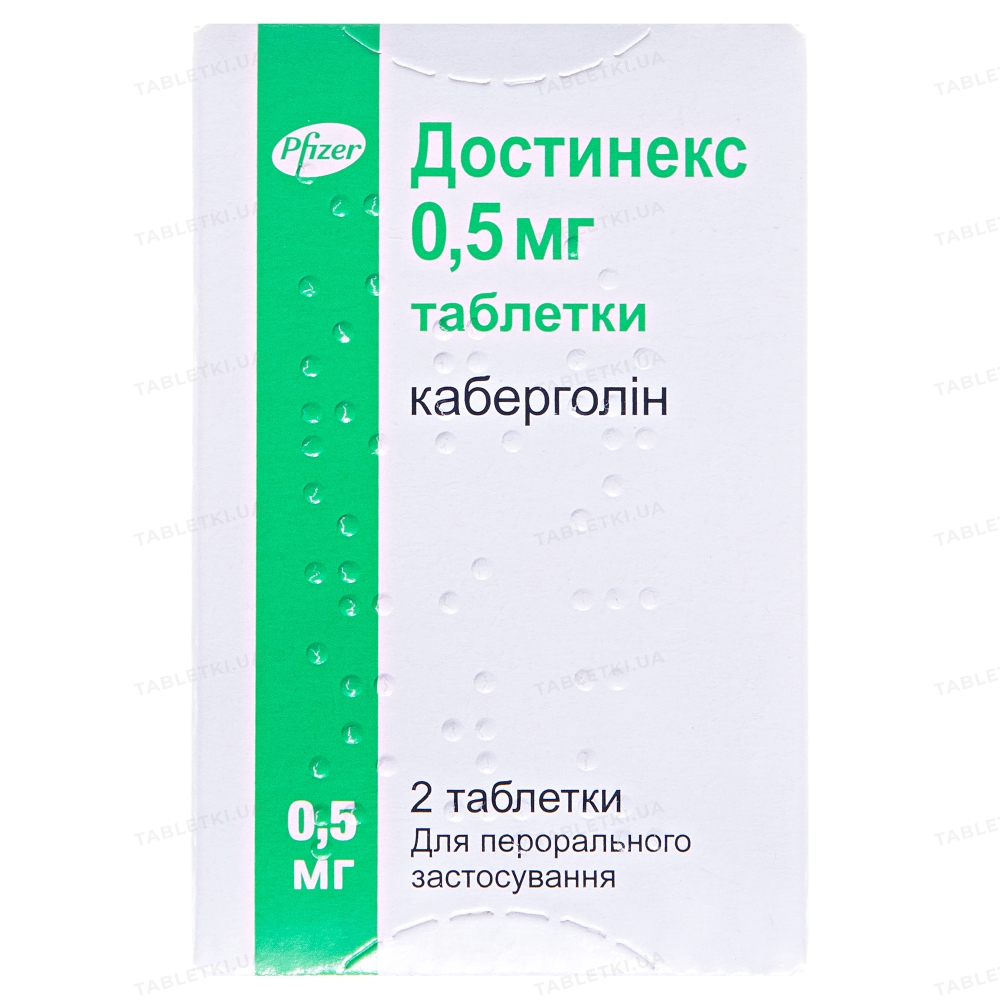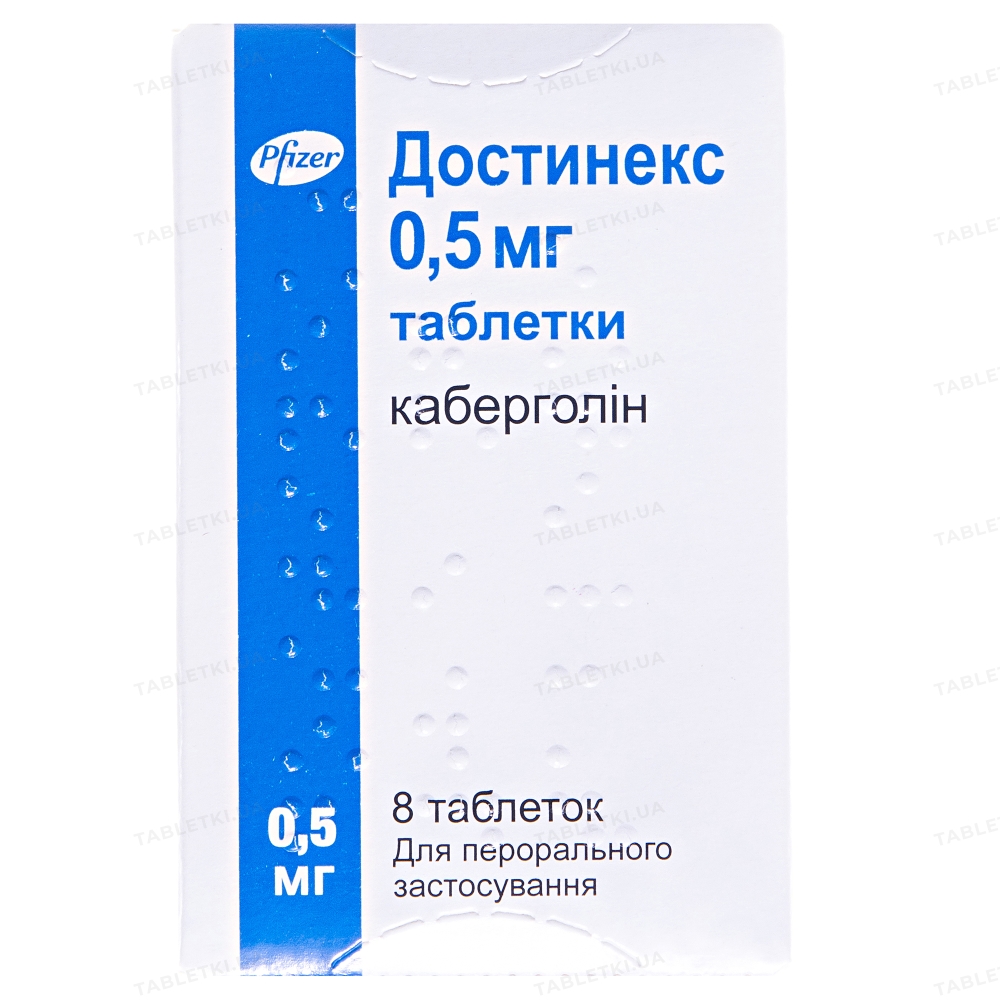
Dostinex 0.5 mg tablets, No. 8, in a bottle 4029799119720
Active ingredient: cabergoline;
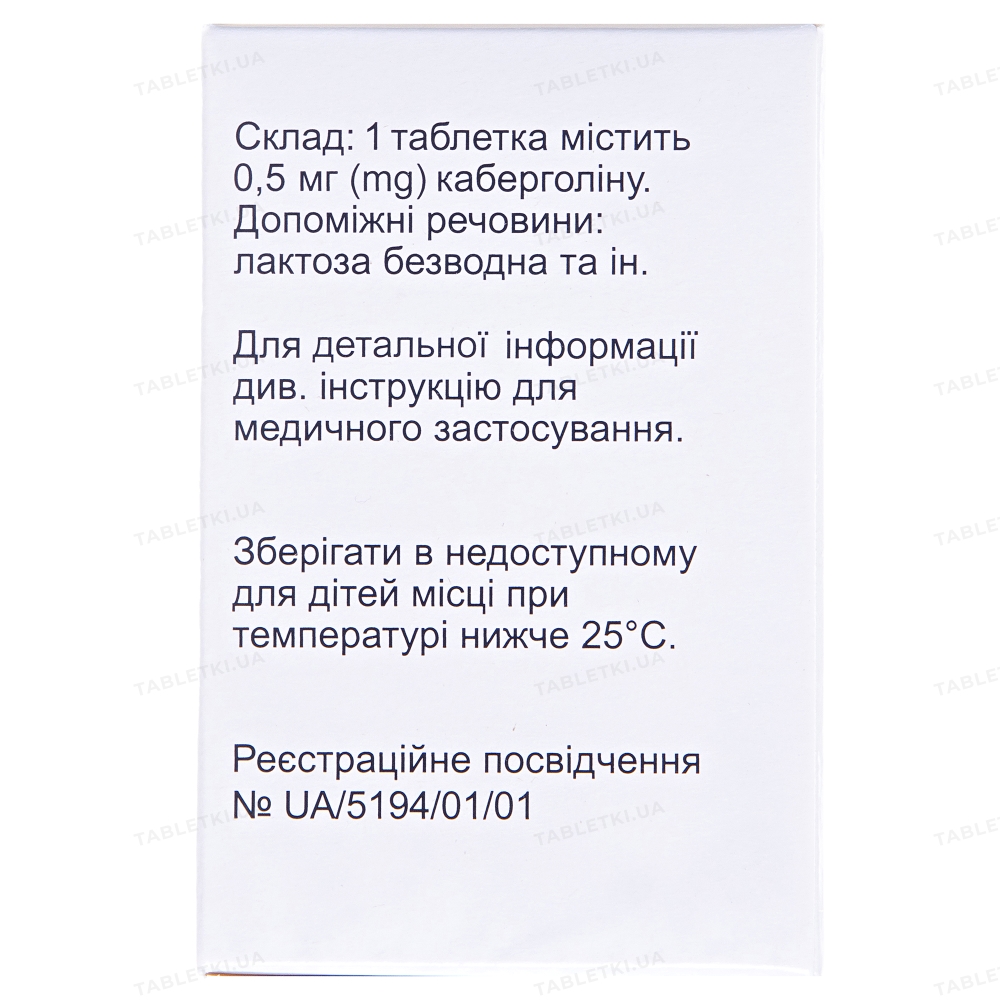
Each tablet contains 0.5 mg of cabergoline;
Excipients: leucine, anhydrous lactose.
Dosage Form
Tablets.
Main physical and chemical properties: white, flat, oblong tablets engraved with “PU,” separated by a score line on one side, and engraved with “700” and a small score line above and below the central “0” on the other side.
Pharmacotherapeutic group
Products used in gynecology. Prolactin inhibitors. ATC code G02C B03.
Pharmacological Properties
Pharmacodynamics.
Cabergoline is a dopaminergic ergot derivative characterized by potent and prolonged prolactin-lowering activity. The drug directly stimulates D2-dopamine receptors on the surface of lactotrophic cells in the pituitary gland, thereby inhibiting prolactin secretion. This substance reduces prolactin secretion in rats when administered orally at a dose of 3–25 μg/kg and in vitro at a concentration of 45 pg/mL. In addition, cabergoline exerts a central dopaminergic effect by stimulating D2 receptors at oral doses exceeding those effective in lowering serum prolactin levels. The long-term effect of Dostinex on lowering prolactin levels is likely due to its prolonged persistence in the, as indicated by the slow rate of elimination of total radioactivity from the pituitary gland following a single oral dose in rats (t1/2 is approximately 60 hours).
Pharmacodynamic effects were studied in healthy volunteers, postpartum women, and patients with hyperprolactinemia. Following a single oral dose of 0.3–1.5 mg, a statistically significant decrease in plasma prolactin levels was observed in each of the study populations. This effect develops rapidly—within 3 hours after administration—and persists for 7–28 days in healthy individuals and patients with hyperprolactinemia, and for 14–21 days in postpartum women. The extent of the reduction in prolactin levels and its duration are dose-dependent.
Regarding the endocrine effects of Dostinex not related to its antiprolactinemic effect, available data from human studies confirm the experimental results obtained in animal studies, and indicate that the test substance is highly selective and does not affect the basal secretion levels of other pituitary hormones or cortisol. The pharmacodynamic action of Dostinex did not correlate with the therapeutic effect only in terms of blood pressure reduction. The maximum blood pressure-lowering effect of a single dose is usually observed within the first 6 hours after administration and is dose-dependent in terms of both the maximum reduction and the frequency of occurrence.
Pharmacokinetics.
The pharmacokinetics and metabolic profiles of Dostinex were studied in healthy volunteers of both sexes and in female patients with hyperprolactinemia.
Following oral administration of the radiolabeled compound, it was rapidly absorbed from the gastrointestinal tract, and peak plasma radioactivity was reached within 0.5–4 hours.
Ten days after administration, approximately 18% and 72% of the radioactive dose were excreted in the urine and feces, respectively. The concentration of unchanged drug in the urine accounted for 2–3% of the administered dose.
The major metabolite identified in urine was 6-allyl-8b-carboxyergoline, which accounted for 4–6% of the drug dose. Three additional metabolites were detected in urine, which together accounted for less than 3% of the drug dose. The in vitro activity of these metabolites in inhibiting prolactin secretion is significantly lower than that of cabergoline. The biotransformation of cabergoline was also studied in the blood plasma of healthy male volunteers who received [14C]-cabergoline: it was found that cabergoline undergoes rapid and significant biotransformation.
Low urinary excretion of unchanged cabergoline was also confirmed in studies using a non-radioactive formulation. The half-life of cabergoline, which was determined by the rate of urinary excretion, is prolonged: 63–68 hours in healthy volunteers (using radioimmunoassay) and 79–115 hours in patients with hyperprolactinemia (using HPLC).
Given the half-life, steady state should be reached after 4 weeks, which was confirmed by the mean peak plasma concentrations of cabergoline following a single dose (37 ± 8 pg/mL) and after 4 weeks with repeated dosing (101 ± 43 pg/mL).
Results of in vitro experiments showed that the drug binds to plasma proteins at concentrations of 0.1–10 ng/mL by 41–42%. Food does not affect the absorption and distribution of the drug.
Indications
Suppression/inhibition of physiological lactation
Suppression of physiological postpartum lactation immediately after childbirth or suppression of established lactation in the following cases:
- after childbirth, if the mother has decided not to breastfeed the infant or when breastfeeding is contraindicated for the mother or infant for medical reasons;
- after a stillbirth or abortion.
Cabergoline inhibits physiological lactation by inhibiting prolactin secretion. In controlled clinical trials, a single 1-mg dose of cabergoline administered on the first day after delivery was effective in suppressing milk secretion, as well as in relieving breast engorgement and pain, in 70–90% of women. Fewer than 5% of women experienced a recurrence of breast symptoms by the third week postpartum (which were generally mild in severity).
Inhibition of milk secretion and relief of breast engorgement and breast pain were reported in approximately 85% of breastfeeding women with a cumulative dose of 1 mg of cabergoline, divided into four doses over two days. A recurrence of breast symptoms after 10 days is rare (in approximately 2% of cases).
Treatment of Hyperprolactinemia
Conditions associated with hyperprolactinemia, including amenorrhea, oligomenorrhea, anovulation, and galactorrhea. Treatment of patients with prolactin-secreting pituitary adenomas (micro- and macroprolactinomas), idiopathic hyperprolactinemia, or “empty sella” syndrome with concomitant hyperprolactinemia, which are the primary pathological conditions underlying the aforementioned clinical manifestations.
During long-term treatment at doses of 1 to 2 mg per week, cabergoline was effective in normalizing serum prolactin levels in approximately 84% of patients with hyperprolactinemia. Regular menstrual cycles resumed in 83% of women with amenorrhea. The resumption of ovulation was documented in 89% of women, as determined by progesterone levels monitored during the luteal phase. Galactorrhea that had developed prior to treatment resolved in 90% of cases. A reduction in tumor size was observed in 50–90% of women and men with micro- or macroprolactinomas.
Contraindications
Hypersensitivity to cabergoline, to any of the drug’s excipients, or to any ergot alkaloids.
History of fibrotic diseases of the lungs, pericardium, or retroperitoneal space.
Cabergoline is contraindicated in patients with hepatic insufficiency and in pregnant women with preeclampsia. Cabergoline should not be used concomitantly with antipsychotic medications or in women with a history of postpartum psychosis.
Cabergoline is contraindicated for long-term treatment if, prior to the start of treatment, there are signs of heart valve disease as determined by echocardiography (see the “Special Instructions and Precautions for Use” section).
Drug Interactions and Other Interactions
Concomitant use of Dostinex with other medications, particularly ergot alkaloids, during the early postpartum period has not been associated with any apparent interactions that could alter the efficacy or safety of this medication.
Since there are no data on the interaction of cabergoline with other ergot alkaloids, the concurrent use of these drugs during long-term treatment with Dostinex is not recommended.
Since Dostinex exerts its therapeutic effect through direct stimulation of dopamine receptors, its concurrent use with dopamine receptor antagonists (e.g., phenothiazines, butyrophenones, thioxanthenes, and metoclopramide) is not recommended, as these drugs may reduce the prolactin-lowering effect of cabergoline.
Like other ergot derivatives, Dostinex should not be used with macrolide antibiotics (e.g., erythromycin) due to the increased systemic bioavailability of cabergoline.
Special Considerations for Use
General Warnings
The safety and efficacy of Dostinex in patients with kidney or liver disease have not yet been established. Like other ergot derivatives, Dostinex should be prescribed with caution to patients with severe cardiovascular disease, Raynaud’s syndrome, renal failure, peptic ulcer disease, or gastrointestinal bleeding, as well as in patients with a history of serious mental disorders, particularly psychotic disorders. Particular caution should be exercised if patients are concurrently taking a psychotropic medication.
Patients with rare hereditary galactose intolerance, total lactase deficiency, or glucose-galactose malabsorption should not take this medication.
Symptomatic hypotension may develop with the use of Dostinex for any indication. Dostinex should be used with caution when administered concomitantly with other medications that lower blood pressure.
The effect of alcohol on the overall tolerability of the drug is currently unknown.
Pregnancy should be ruled out before using Dostinex, and pregnancy should be prevented for at least 1 month after the end of treatment.
Hepatic Insufficiency
Lower doses should be considered for patients with severe hepatic insufficiency receiving long-term treatment with Dostinex. In patients with severe hepatic insufficiency (Child-Pugh Class C) who received a single dose (1 mg), an increase in AUC was observed compared with healthy volunteers and patients with less severe hepatic insufficiency.
Postural Hypotension
Postural hypotension may occur following administration of Dostinex. Caution should be exercised when using this medication concomitantly with other blood pressure-lowering drugs.
Drowsiness/sudden sleep onset
The use of Dostinex has been associated with drowsiness. Dopamine agonists may cause episodes of sudden sleep onset in patients with Parkinson’s disease. Rare cases of sudden sleep onset during daily activities have been reported, in some cases without awareness or warning signs. Patients should be informed of the above information and advised to exercise caution when operating motor vehicles or other automated systems during treatment with cabergoline. Patients experiencing drowsiness and/or episodes of sudden sleep onset should refrain from driving or operating other automated systems. In such cases, it may be appropriate to reduce the dose or discontinue treatment (see the section “Effects on the Ability to Drive and Operate Machinery”).
Impulse Control Disorder
Patients should be monitored regularly for signs of impulse control disorders. During treatment with dopamine agonists, particularly cabergoline, behavioral symptoms of impulse control disorders may occur, including pathological gambling, increased libido, hypersexuality, compulsive spending and shopping, bulimia, and compulsive overeating caused by impulse control disorder; patients and caregivers should be informed of this. If such symptoms occur, consider reducing the dose or gradually discontinuing the medication.
Suppression/inhibition of physiological lactation
Like other ergot derivatives, Dostinex should not be used by women with hypertension that developed during pregnancy, such as preeclampsia or postpartum hypertension, unless the potential benefit outweighs the possible risk.
Serious adverse reactions, including hypertension, myocardial infarction, seizures, stroke, or psychiatric disorders, have been reported in postpartum women receiving cabergoline to suppress lactation.
Blood pressure should be closely monitored after treatment.
Hypertension may cause suggestive chest pain; In the event of severe, progressive, or persistent headache (with or without visual disturbances) or signs of central nervous system toxicity, cabergoline administration should be discontinued, and the patient should be examined immediately.
In studies of Dostinex use during the postpartum period, decreases in blood pressure were generally asymptomatic and often occurred as a single episode 2–4 days after the start of treatment. Since a decrease in blood pressure is frequently observed in the postpartum period regardless of medication, it is quite likely that a significant number of reported cases of low blood pressure following Dostinex administration were not caused by the drug. Nevertheless, periodic monitoring of blood pressure is recommended, especially during the first few days after taking cabergoline.
To avoid possible postural hypotension, a single dose of Dostinex should not exceed 0.25 mg for breastfeeding women taking the drug to suppress established lactation (see the “Dosage and Administration” section). In a clinical study evaluating the efficacy and tolerability of a single 0.5 mg dose of Dostinex for the suppression of lactation, it was found that the risk of developing adverse effects for this indication approximately doubles when the drug is administered as a single 0.5 mg dose.
Treatment of Hyperprolactinemia
A comprehensive evaluation of the pituitary gland is indicated before starting treatment with Dostinex, as hyperprolactinemia accompanied by amenorrhea/galactorrhea and infertility may be caused by a pituitary tumor.
Dostinex restores ovulation and fertility in women with hyperprolactinemic hypogonadism.
Since pregnancy may occur before the menstrual cycle resumes, it is recommended to take a pregnancy test at least once every four weeks during the period of amenorrhea, and after menstruation resumes, if a delay of more than three days is observed. Women wishing to avoid pregnancy should be advised to use barrier contraception during treatment with Dostinex and after discontinuation of the drug until anovulation resumes. Women who become pregnant while taking Dostinex should be monitored for signs of pituitary enlargement, as there is a risk that an existing pituitary tumor may grow in size during pregnancy.
Pregnancy must be ruled out before starting treatment with Dostinex. Women wishing to become pregnant are advised to discontinue treatment with Dostinex 1 month before planned conception once a regular ovulatory cycle has been established, as clinical experience with the drug is still quite limited and the drug has a long half-life. If pregnancy occurs during treatment, cabergoline should be discontinued.
Patients taking Dostinex for an extended period are advised to undergo regular gynecological examinations, including cytological examinations of the cervix and endometrium.
Fibrosis, heart valve damage, and possible associated clinical manifestations
Fibrotic and serous inflammatory conditions, such as pleurisy, pleural effusion, pleural fibrosis, pulmonary fibrosis, pericarditis, pericardial effusion, involvement of one or more heart valves (aortic, mitral, and tricuspid) or retroperitoneal fibrosis have been observed following long-term use of ergot derivatives with agonistic action on the serotonin 5HT2B receptor, such as Dostinex. In some cases, symptoms or signs of heart valve disease may improve after discontinuation of Dostinex.
In association with pleural effusion/fibrosis, an excessive increase in erythrocyte sedimentation rate (ESR) has been observed. In cases of an ESR increase of unknown etiology that is significantly abnormal, a chest X-ray is recommended.
The development of valvular lesions is associated with drug accumulation; therefore, patients should be treated with the lowest effective dose. At each visit, the safety profile of patients receiving Dostinex should be reevaluated to determine whether treatment should be continued.
Before starting long-term treatment, all patients should undergo a cardiovascular evaluation, including echocardiography, to determine the possible presence of asymptomatic valvular heart disease. Baseline levels of ESR or other markers of inflammation, pulmonary function/chest X-ray, and renal function should also be measured before starting treatment. It is unknown whether treatment with cabergoline may worsen the course of the disease in patients with valvular regurgitation. If a patient is diagnosed with fibrotic heart valve disease, continued treatment with Dostinex is not recommended (see the “Contraindications” section).
During long-term treatment, fibrotic diseases may develop asymptomatically; therefore, the patient should be monitored for possible signs of fibrosis progression. Consequently, attention should be paid to the following signs and symptoms during treatment:
- lung and pleural disorders, such as shortness of breath, persistent cough, or chest pain;
- renal failure or obstruction of the ureter or abdominal vessels, which may manifest as lower back or flank pain and swelling of the lower extremities, as well as any possible abdominal masses or tenderness, which may indicate retroperitoneal fibrosis;
- Heart failure: Cases of valvular or pericardial fibrosis often present as heart failure. Therefore, if such symptoms appear, the presence of valvular fibrosis (and constrictive pericarditis) should be ruled out.
Clinical and diagnostic monitoring of the progression of fibrotic diseases in accordance with established procedures is mandatory. The first echocardiogram should be performed within 3–6 months after the start of treatment, after which the frequency of echocardiography should be determined based on an appropriate individual clinical evaluation, with particular attention to the symptoms mentioned above, but no less frequently than once every 6–12 months.
Use of Dostinex should be discontinued if an echocardiogram reveals signs of new valvular regurgitation, complications of existing valvular regurgitation, valve stenosis, or valve leaflet thickening (see the “Contraindications” section).
The need for other clinical examinations (e.g., physical examination, including cardiac auscultation, X-ray, and computed tomography) should be determined on an individual basis for each patient.
Appropriate additional tests, including ESR and serum creatinine, should be performed as necessary to confirm the diagnosis of fibrotic disease.
Pregnancy and lactation.
There are currently no adequate and well-controlled studies on the use of cabergoline in pregnant women. Data from a 12-year observational study of pregnancy outcomes following cabergoline therapy are available for 256 pregnancies. According to the study results, 17 of 256 pregnancies (6.6%) resulted in severe fetal malformations or miscarriages, and 23 of 258 newborns had 27 neonatal anomalies, both severe and mild. The most common neonatal anomalies (10) were musculoskeletal malformations and cardiopulmonary anomalies (5). There is no information on perinatal disorders or the long-term development of infants exposed to cabergoline during fetal development. According to the latest published scientific data, the prevalence of major congenital anomalies in the general population is 6.9% or higher. The incidence of congenital anomalies varies across different populations. It is not possible to determine with certainty whether there is an increased risk, as a control group was not included in the study.
Cabergoline should be prescribed during pregnancy only when clearly indicated and only after a thorough assessment of the benefit-risk ratio (see Section 4.4).
Due to the drug’s long half-life and limited data on fetal exposure, women planning to become pregnant should discontinue cabergoline treatment 1 month before planned conception.
If conception occurs during treatment, the drug should be discontinued as soon as pregnancy is confirmed to limit the drug’s effects on the fetus.
There is no information on the excretion of cabergoline into breast milk; however, mothers are not recommended to breastfeed unless the use of Dostinex has not resulted in the suppression of lactation. Since the drug suppresses lactation, Dostinex should not be used by mothers with hyperprolactinemia who wish to breastfeed.
Affects the ability to operate vehicles and machinery.
Patients should exercise caution when performing activities that require quick and precise reactions at the start of treatment.
During the first few days of treatment, patients should refrain from activities requiring quick and precise reactions, such as driving a car or operating other automated systems.
Patients taking Dostinex who experience drowsiness should not operate vehicles or engage in other activities where impaired alertness could put themselves or others at risk of serious injury or death (such as operating automated systems). Driving and operating machinery may be resumed once drowsiness and impaired alertness have subsided (see the “Special Warnings and Precautions for Use” section).
Dosage and Administration
Dostinex is intended for oral use. Since Dostinex was primarily administered with food in clinical trials and since the tolerability of this class of drugs is improved when taken with food, it is recommended that the drug be taken with meals for all therapeutic indications.
Suppression/Inhibition of Physiological Lactation
Dostinex should be administered within the first day after delivery. The recommended therapeutic dose is 1 mg (2 tablets of 0.5 mg each), taken as a single dose.
To suppress established lactation, the recommended therapeutic dosing regimen is 0.25 mg (1/2 of a 0.5-mg tablet) every 12 hours for 2 days (total dose: 1 mg). This dosing regimen is better tolerated by women who prefer to suppress lactation rather than take a single dose, and it is associated with a lower incidence of adverse events, particularly symptoms of hypotension.
Treatment of Hyperprolactinemia
The recommended starting dose of Dostinex is 0.5 mg once a week or 1/2 of a 0.5-mg tablet twice a week (for example, on Monday and Thursday). The weekly dose should be increased gradually, preferably by 0.5 mg per week each month until optimal therapeutic efficacy is achieved. Typically, the therapeutic dose is 1 mg per week and may range from 0.25 mg to 2 mg per week. Dostinex has been used at doses up to 4.5 mg per week to treat patients with hyperprolactinemia.
The maximum dose of the drug should not exceed 3 mg per day.
The weekly dose may be taken as a single dose or divided into two or more doses per week, depending on the patient’s tolerance of the drug. If the prescribed doses exceed 1 mg per week, it is recommended to divide the weekly dose into several doses, as the tolerability of the drug at doses greater than 1 mg when taken as a single weekly dose has been evaluated in only a few patients.
When increasing the dose, the patient should undergo evaluation to determine the minimum dose of the drug that produces a therapeutic effect. Once an effective therapeutic dosing regimen has been established, it is recommended to monitor serum prolactin levels regularly (monthly), as normalization of these levels is usually observed within two to four weeks.
After discontinuation of Dostinex, a recurrence of hyperprolactinemia is usually observed. However, in some patients, sustained suppression of prolactin levels was observed for several months. In 23 of 29 women in the observation group, ovulatory cycles continued for more than 6 months after discontinuation of Dostinex.
Elderly Patients
Experience with the use of Dostinex in elderly patients is very limited due to the indications for its use. Available data suggest that there is no particular risk.
Children
The safety and efficacy of Dostinex in patients under 16 years of age have not been studied.
Overdose
Symptoms of overdose may be similar to those resulting from excessive stimulation of dopamine receptors (e.g., nausea, vomiting, complaints of stomach discomfort, postural hypotension, confusion/psychosis, or hallucinations).
If necessary, supportive measures should be taken to remove any residual unabsorbed drug and to maintain blood pressure. In addition, administration of dopamine antagonists may be appropriate.
Side Effects
In general, adverse events are dose-dependent. The likelihood of adverse events in patients with known intolerance to dopaminergic agents may be reduced if treatment with Dostinex is initiated at lower doses, for example, 0.25 mg once a week, followed by a gradual increase until the therapeutic dose is reached. In the event of persistent or severe adverse reactions, a temporary dose reduction followed by a more gradual increase—for example, by 0.25 mg/week every 2 weeks—may improve tolerability.
The following adverse reactions have been observed during treatment with Dostinex with the following frequencies: very common: ≥ 1/10; common: ≥ 1/100 and < 1/10; uncommon: ≥ 1/1,000 and < 1/100; rare: ≥ 1/10,000 and < 1/1,000; very rare: < 1/10,000; frequency unknown (cannot be estimated from the available data).
Cardiac disorders:
very common: valvular heart disease (including regurgitation) and related disorders (pericarditis and pericardial effusion);
Uncommon: palpitations;
Unknown: angina.
Respiratory, thoracic, and mediastinal disorders:
Uncommon: shortness of breath, pleural effusion, fibrosis (including pulmonary fibrosis), nosebleeds;
very rare: pleural fibrosis;
Frequency unknown: respiratory failure, pleurisy, chest pain.
Immune system disorders:
Uncommon: hypersensitivity reactions.
Nervous system disorders:
Very common: headache*, dizziness/vertigo;
Common: drowsiness;
Uncommon: transient hemianopsia, syncope, paresthesia;
Frequency unknown: sudden onset of sleep, tremor.
Eye disorders:
Unknown: visual disturbances.
Mental disorders:
Common: depression;
Uncommon: increased libido;
Unknown: aggression, delusions, hypersexuality, pathological gambling, mental disorders, hallucinations.
Vascular disorders:
Common: hypotensive effect in patients receiving long-term treatment; postural hypotension, hot flashes**;
Uncommon: peripheral vasospasm, loss of consciousness.
Gastrointestinal disorders:
Very common: nausea*, dyspepsia, gastritis, abdominal pain*;
Common: constipation, vomiting**;
Rare: epigastric pain.
General disorders and reactions at the injection site:
Very common: asthenia***, fatigue;
Uncommon: edema, peripheral edema.
Hepatobiliary disorders:
Frequency unknown: hepatic failure.
Skin and subcutaneous tissue disorders:
Uncommon: rash, alopecia.
Musculoskeletal and connective tissue disorders:
Uncommon: leg cramps.
Reproductive system and breast disorders:
Common: breast pain.
Laboratory tests:
Common: asymptomatic decrease in blood pressure (≥ 20 mmHg systolic and ≥ 10 mmHg diastolic);
Uncommon: In women with amenorrhea, a decrease in hemoglobin levels was observed during the first few months after menstruation;
Frequency unknown: elevated creatine phosphokinase levels, abnormal liver function tests.
* Very common—in patients being treated for hyperprolactinemia; common—in patients with inhibition/suppression of lactation.
** Common—in patients being treated for hyperprolactinemic conditions; rare—in female patients with inhibited/suppressed lactation.
Very common—in patients being treated for hyperprolactinemia; uncommon—in female patients with lactation inhibition/suppression.
Impulse control disorder.
Pathological gambling, increased libido, hypersexuality, compulsive spending and shopping, refusal to eat, and compulsive overeating may occur in patients receiving dopamine agonists, particularly cabergoline.
Reporting of Suspected Adverse Reactions
Reporting suspected adverse reactions after a drug’s approval is crucial. This allows for monitoring the risk-benefit ratio of the drug’s use. Healthcare professionals are asked to report any suspected adverse reactions.
Shelf Life
2 years.
Storage conditions
Store out of the reach of children at a temperature below 25 °C.
Packaging
2 or 8 tablets in a dark glass bottle with a screw-on aluminum cap and tamper-evident seal, or in a high-density polyethylene bottle with a polypropylene cap and child-resistant closure. 1 bottle per cardboard box.
Manufacturer
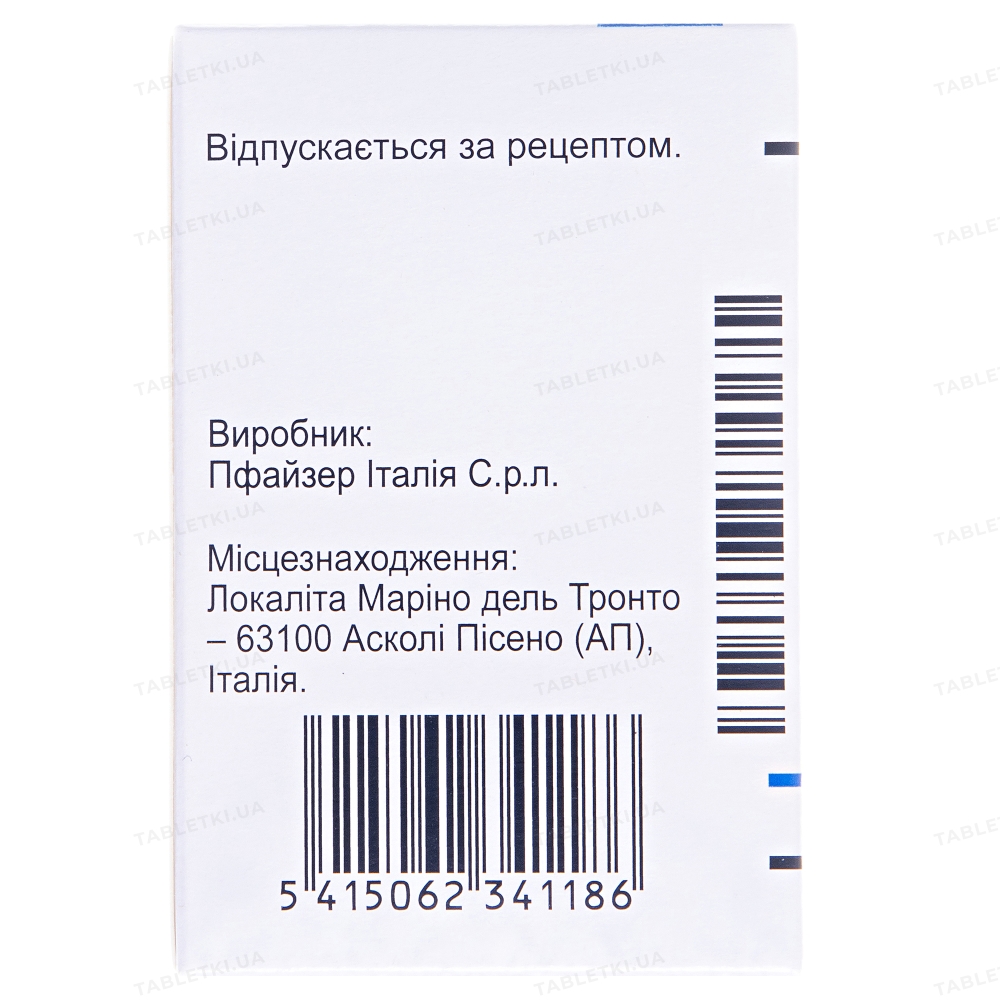
Pfizer Italia S.r.l.
Address
Località Marino del Tronto – 63100 Ascoli Piceno (AP), Italy.
Località Marino del Tronto – 63100 Ascoli Piceno (AP), Italy.