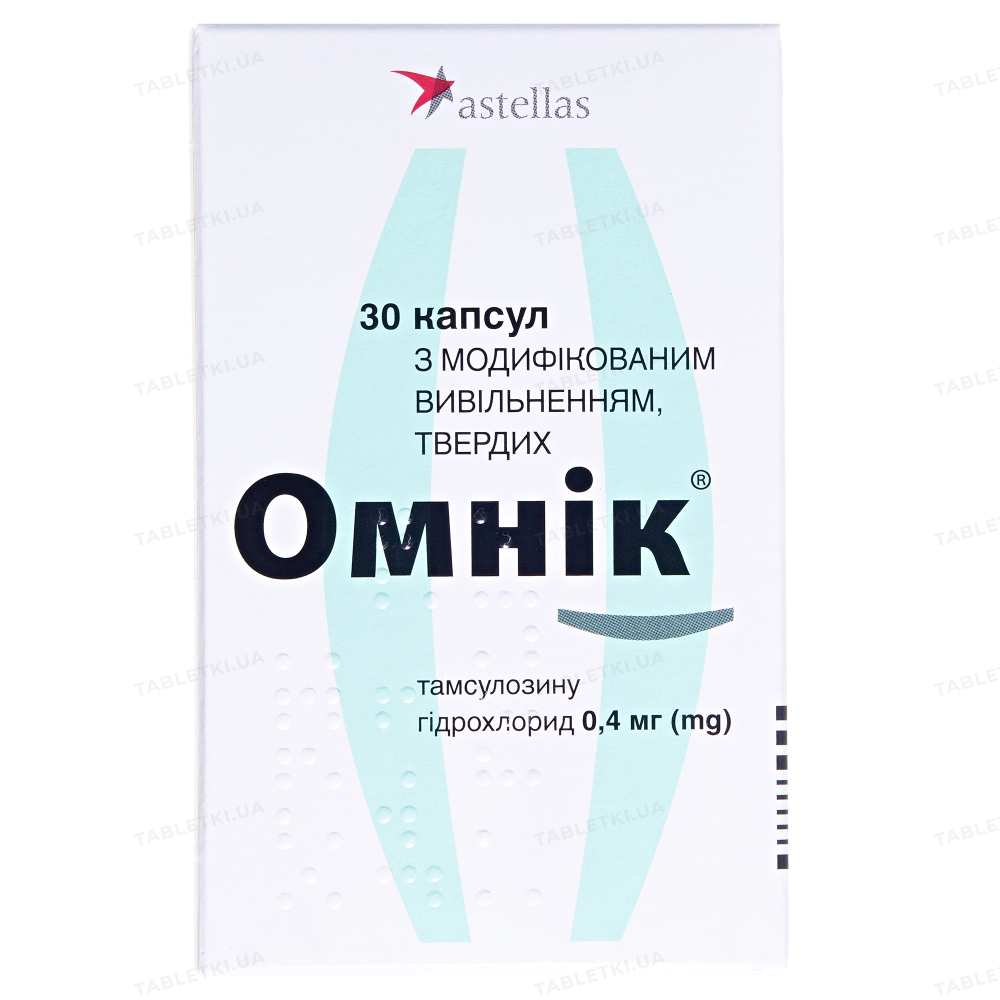
Omnik Hard Capsules with Modified Release, 0.4 mg each, No. 30 (10 x 3)
Composition
Active ingredient: tamsulosin hydrochloride;
1 capsule contains 0.4 mg of tamsulosin hydrochloride;
excipients: microcrystalline cellulose, methacrylate copolymer (type A), polysorbates, sodium lauryl sulfate, triacetin, calcium stearate, talc; capsule shell: gelatin, indigotine (E 132), titanium dioxide (E 171), yellow iron oxide (E 172), red iron oxide (E 172).
Dosage Form
Modified-release capsules, hard.
Main physical and chemical properties: Oblong capsules (Type 2) with an orange body and an olive-green cap, bearing black markings on the surface; contents: a yellowish-white granular powder.
Pharmacotherapeutic group
Agents used in the treatment of benign prostatic hyperplasia. α1-adrenergic receptor antagonists. ATC code G04C A02.
Pharmacological Properties
Pharmacodynamics.
Omnik® selectively and competitively blocks postsynaptic α1-adrenoreceptors, specifically α1A and α1D, located in the smooth muscle of the prostate, the bladder neck, and the prostatic urethra. This leads to a reduction in the tone of the smooth muscle of the prostate, the bladder neck, and the prostatic urethra, and improves urine flow. At the same time, symptoms of obstruction and irritation associated with benign prostatic hyperplasia are reduced (difficulty initiating urination, weak urine stream, dribbling after urination, a sensation of incomplete bladder emptying, frequent urge to urinate, nocturia, and urinary urgency).
These effects persist over time with long-term treatment and significantly delay the need for surgery or catheterization.
α1-adrenoreceptor antagonists may lower blood pressure by reducing peripheral vascular tone. During studies of the drug Omnik®, no clinically significant decrease in blood pressure was observed.
Pharmacokinetics.
Absorption: Tamsulosin is well absorbed from the gastrointestinal tract, and its bioavailability is nearly 100%. Absorption of tamsulosin is slightly slower after a meal. Consistent absorption is achieved when the patient takes Omnik® at the same time after a meal. The pharmacokinetics of tamsulosin are linear.
After a single dose of Omnik® taken after a meal, the peak plasma concentration of tamsulosin is reached in approximately 6 hours, and steady-state concentrations are observed on the fifth day of daily dosing. Cmax is approximately two-thirds higher than that achieved after a single dose.
Distribution: In men, tamsulosin is approximately 99% bound to plasma proteins. The volume of distribution is negligible (approximately 0.2 L/kg).
Metabolism: Tamsulosin hydrochloride is not subject to first-pass metabolism and is slowly metabolized in the liver to form pharmacologically active metabolites that retain high selectivity for α1-adrenoreceptors. Most of the active substance is present in the blood in its unchanged form.
Elimination: Tamsulosin and its metabolites are excreted from the body primarily in the urine. Approximately 9% of the dose is excreted as unchanged active ingredient.
Following a single dose of Omnik® taken after a meal and at steady-state plasma concentrations, the half-lives are approximately 10 and 13 hours, respectively.
Indications
Treatment of functional lower urinary tract disorders associated with benign prostatic hyperplasia.
Contraindications
Hypersensitivity to tamsulosin hydrochloride, including drug-induced angioedema, or to any of the excipients; a history of orthostatic hypotension; severe hepatic insufficiency.
Drug Interactions and Other Interactions
Interaction studies have been conducted only in adults.
No drug interactions were observed when tamsulosin hydrochloride was administered concomitantly with atenolol, enalapril, nifedipine, or theophylline. Concomitant use with cimetidine increases, and with furosemide decreases, the plasma concentration of tamsulosin; however, since these levels remain within the normal range, no specific adjustment of the tamsulosin dosage is required.
In in vitro studies, diazepam, propranolol, trichlormethiazide, chlormadinone, amitriptyline, diclofenac, glibenclamide, simvastatin, and warfarin did not affect the free fraction of tamsulosin in human plasma. Similarly, tamsulosin does not alter the levels of the free fractions of diazepam, propranolol, trichlormethiazide, and chlormadinone in human plasma.
However, diclofenac and warfarin may increase the rate of tamsulosin elimination.
Concomitant use of tamsulosin hydrochloride with strong CYP3A4 inhibitors may lead to an increase in the effects of tamsulosin hydrochloride. Concomitant use with ketoconazole (a known potent CYP3A4 inhibitor) resulted in increases in AUC and Cmax of up to 2.8 and 2.2, respectively.
Tamsulosin hydrochloride should not be administered in combination with strong CYP3A4 inhibitors to patients with low CYP2D6 metabolism.
Tamsulosin hydrochloride should be used with caution in combination with strong and moderate CYP3A4 inhibitors.
Concomitant use of tamsulosin hydrochloride and paroxetine (a strong CYP2D6 inhibitor) results in increases in Cmax and AUC of up to 1.3 and 1.6, respectively, but this is not clinically significant.
Concomitant use with other α1-adrenergic blockers may enhance the hypotensive effect.
Special Considerations for Use
As with other α1-adrenergic blockers, a decrease in blood pressure may occur in rare cases when using Omnik®; this may occasionally lead to loss of consciousness. At the first signs of orthostatic hypotension (dizziness, weakness), the patient should sit or lie down until the aforementioned symptoms subside.
Before starting treatment with Omnik®, a medical examination should be conducted to identify other concomitant conditions that may cause symptoms similar to those of benign prostatic hyperplasia. Before starting treatment, a digital rectal examination of the prostate should be performed and, if necessary, a prostate-specific antigen (PSA) test should be conducted before treatment begins and at regular intervals during treatment.
This medication should be prescribed with extreme caution to patients with severe renal insufficiency (creatinine clearance <10 mL/min), as no clinical studies have been conducted on the use of Omnik® in such patients.
In some patients who have taken or are taking tamsulosin, atonic pupil syndrome (IFIS, a variant of the narrow-pupil syndrome) has been observed during surgical procedures for cataract and glaucoma removal, which may lead to an increased risk of complications during or after such surgery.
As a rule, it is recommended to discontinue tamsulosin treatment 1–2 weeks before cataract and glaucoma surgery; however, the benefit of discontinuing tamsulosin treatment has not yet been definitively established. Atonic pupil syndrome has also been reported in patients who discontinued tamsulosin for an extended period prior to cataract surgery.
Patients are not recommended to start taking tamsulosin hydrochloride prior to elective cataract or glaucoma surgery. When preparing for surgery, surgeons and ophthalmologists should determine whether the patient has taken (or is currently taking) tamsulosin in order to prevent potential complications associated with IFIS.
Tamsulosin hydrochloride should not be prescribed in combination with strong CYP3A4 inhibitors in patients with low CYP2D6 metabolism.
Tamsulosin hydrochloride should be used with caution in combination with strong and moderate CYP3A4 inhibitors (see “Drug Interactions and Other Interactions”).
Cases of allergic reactions to tamsulosin have been reported in patients with a history of allergy to sulfonamides. Caution should be exercised when administering tamsulosin hydrochloride to patients with a history of allergy to sulfonamides.
Use during pregnancy and/or breastfeeding.
Omnik® is not indicated for use in women.
Fertility
During short- and long-term clinical trials of tamsulosin, ejaculatory disorders were observed. Cases of ejaculatory disorders, retrograde ejaculation, and insufficient ejaculation have been reported during the postmarketing period.
Effect on reaction time when driving or operating machinery.
No studies have been conducted on the drug’s effect on the ability to drive or operate machinery. However, patients should be warned about the possibility of dizziness.
Dosage and Administration
The recommended dose for adults is 1 capsule daily after breakfast or after the first meal of the day. The capsule should be swallowed whole; do not break or chew it, as this will interfere with the modified release of the active ingredient.
No dose adjustment is required for patients with renal impairment. No dose adjustment is required for patients with moderate to severe hepatic impairment (see also “Contraindications”).
Children.
Do not administer this medication to children.
The safety and efficacy of tamsulosin in children (under 18 years of age) have not been evaluated.
Overdose
Symptoms.
An overdose of tamsulosin hydrochloride may potentially cause severe hypotension. Severe hypotension has been observed at various levels of overdose.
Treatment.
In the event of a sharp drop in blood pressure due to overdose, supportive therapy aimed at restoring normal cardiovascular function should be administered (for example, the patient should be placed in a supine position). If this measure is ineffective, administer infusion therapy and prescribe vasopressors. Renal function should be monitored, and general supportive care should be provided. Due to the high degree of tamsulosin’s binding to plasma proteins, hemodialysis is unlikely to be beneficial.
To prevent further absorption of the drug, vomiting may be induced. In the event of an overdose involving a significant amount of the drug, the patient should undergo gastric lavage using activated charcoal and low-osmotic laxatives, such as sodium sulfate.
Side Effects
| Body System | Common (>1/100, <1/10) | Uncommon (>1/1,000, <1/100), | Rare (>1/10,000, <1/1,000) | Very rare (<1/10,000) | Unknown (cannot be estimated from the available data) |
| Neurological disorders | Dizziness (1.3%) | Headache | Fainting | ||
| Eye-related | Blurred vision *, visual disturbances * | ||||
| Cardiac | Heart palpitations | ||||
| Vascular disorders | Orthostatic hypotension | ||||
| Respiratory and mediastinal disorders | Rhinitis | Nosebleeds * | |||
| Gastrointestinal disorders | Constipation, diarrhea, nausea, vomiting | Dry mouth * | |||
| Skin and mucous membrane disorders | Rash, itching, hives | Angioedema | Stevens-
sa ̶ Johnson |
Erythema multiforme *, exfoliative dermatitis *,
photosensitivity reaction * |
|
| Reproductive disorders | Ejaculatory disorders, including retrograde ejaculation and ejaculatory insufficiency | Priapism | |||
| General disorders | Asthenia |
* Reported during the postmarketing surveillance period
During postmarketing surveillance, cases of intraoperative iris instability (narrow-pupil syndrome) have been reported during cataract and glaucoma surgery in patients taking tamsulosin (see the “Special Considerations for Use” section).
Postmarketing experience: In addition to the adverse reactions listed above, cases of atrial fibrillation, arrhythmia, tachycardia, and dyspnea have been reported. Since these cases were reported spontaneously, the frequency of reports and the causal relationship with tamsulosin use cannot be reliably established.
Reporting of Suspected Adverse Reactions
Reporting adverse reactions after a drug’s registration is of great importance. This allows for monitoring the benefit-risk ratio associated with the use of this drug. Healthcare and pharmaceutical professionals, as well as patients or their legal representatives, should report all cases of suspected adverse reactions and lack of efficacy of the drug through the Automated Pharmacovigilance Information System at: https://aisf. dec.gov.ua.
Shelf life
4 years.
Storage conditions
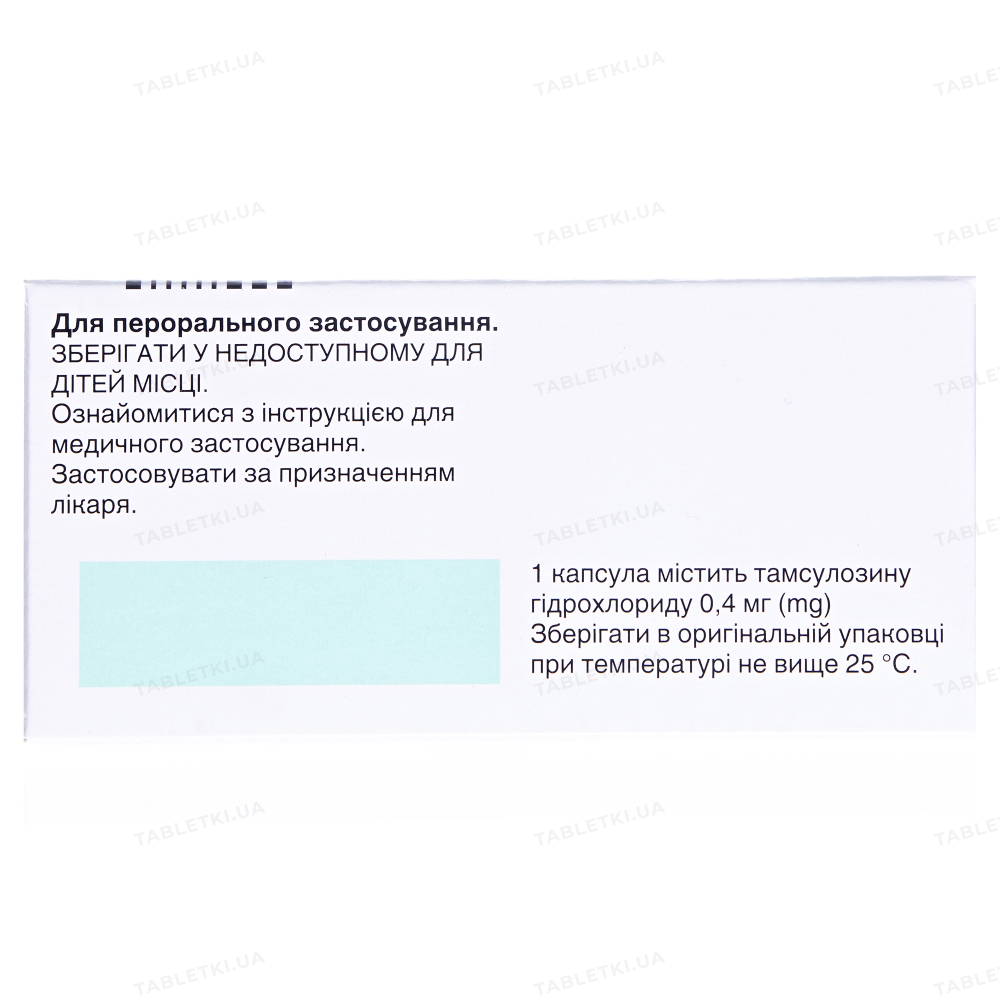
Store in the original packaging at a temperature not exceeding 25 °C.
Keep out of reach of children.
Packaging
10 capsules per blister pack, 3 blister packs per cardboard box.
Manufacturer
Delpharm Meppel B.V.
Manufacturer’s location and address of operations: Hogemaat 2, 7942 JG Meppel, the Netherlands.
Applicant
Astellas Pharma Europe B.V.
Location of the applicant: Sylviusweg 62, 2333 BE Leiden, the Netherlands.