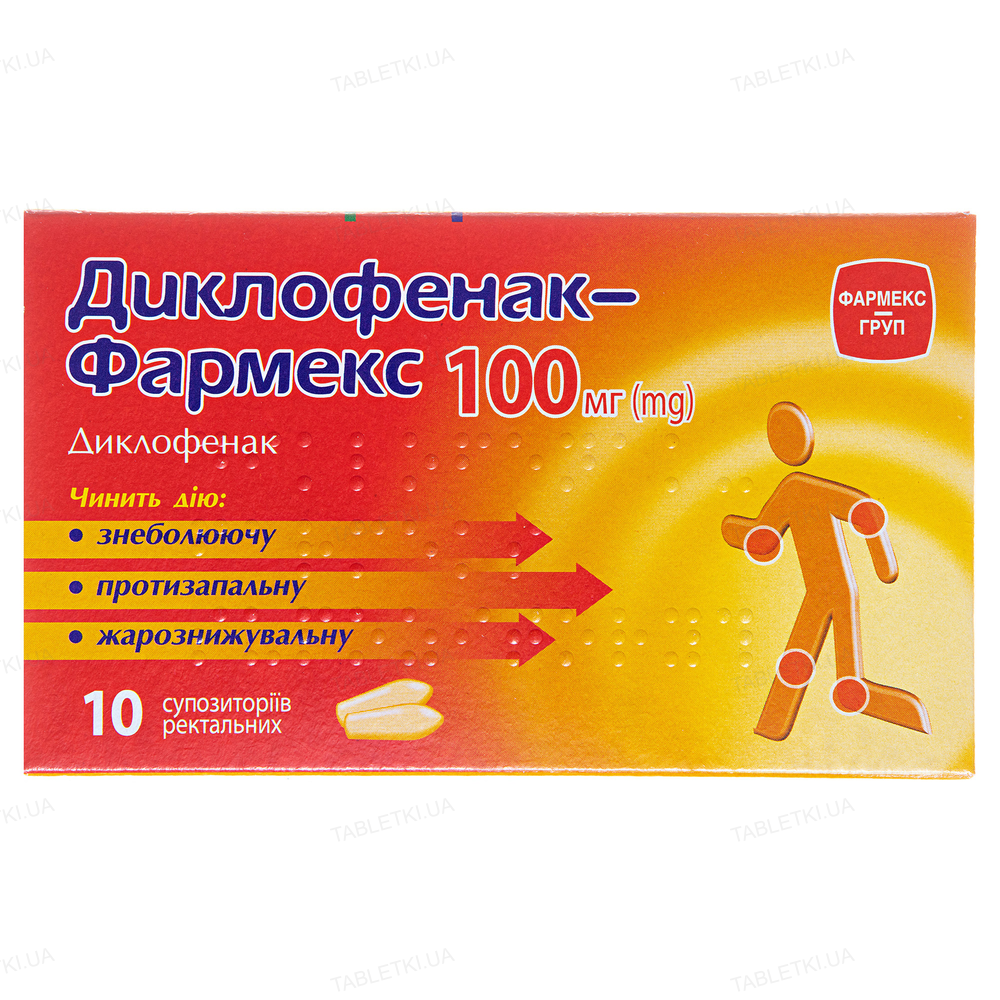
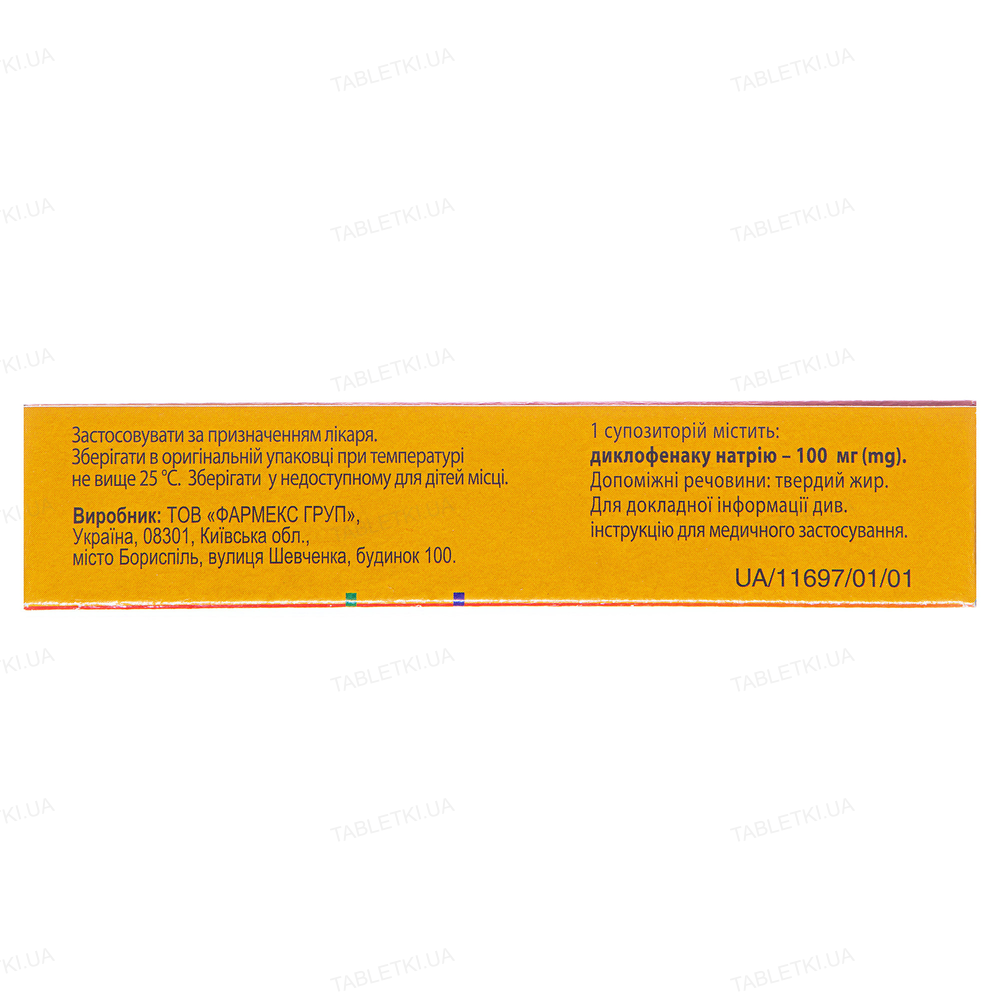
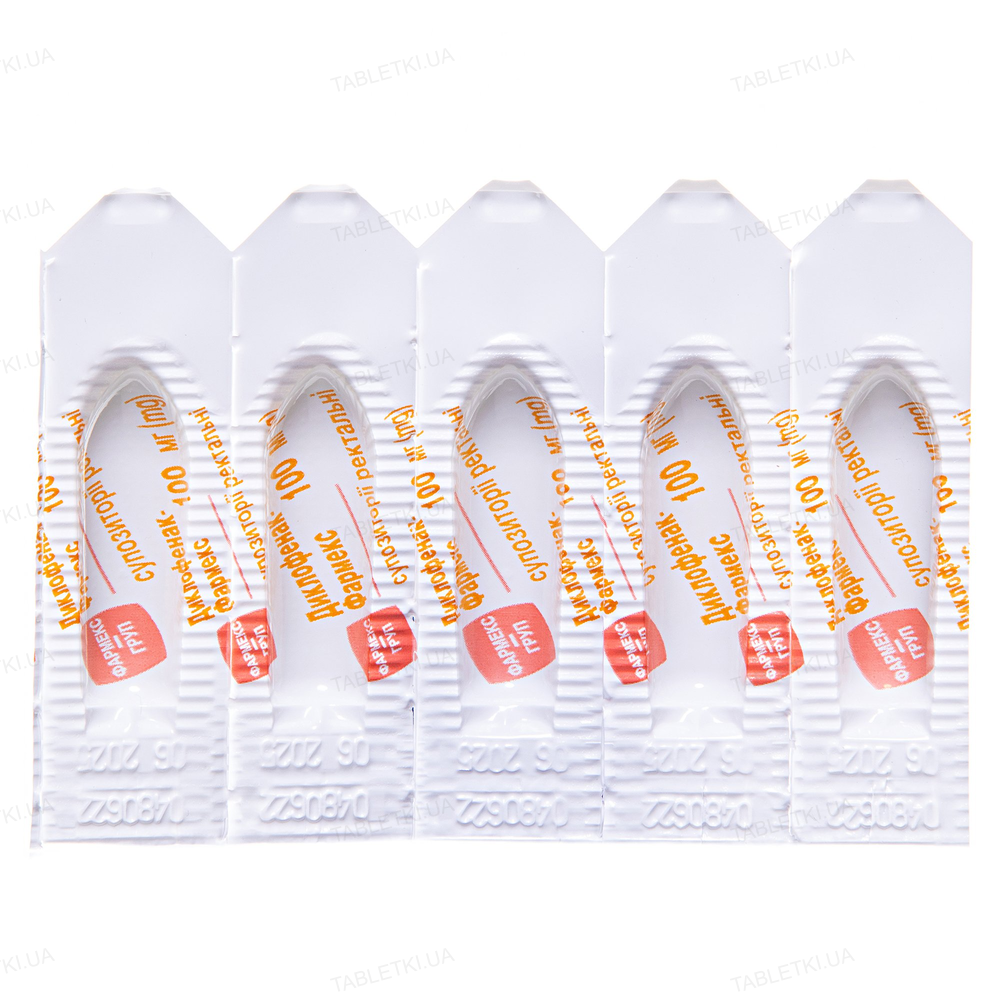
Diclofenac-Pharmex Rectal Suppositories, 100 mg, No. 10 (5 x 2)
Active ingredient: diclofenac;
1 suppository contains 100 mg of diclofenac sodium (calculated as 100% dry weight);
Excipient: hard fat.
Dosage Form
Rectal suppositories.
Main physical and chemical properties: suppositories with a smooth surface, white or nearly white in color, and of uniform consistency. A funnel-shaped indentation and an air core are permitted.
Pharmacotherapeutic group
Nonsteroidal anti-inflammatory and antirheumatic drugs. ATC code M01A B05.
Pharmacological Properties
Pharmacodynamics.
Diclofenac sodium is a nonsteroidal anti-inflammatory drug with pronounced analgesic and anti-inflammatory effects. It is an inhibitor of prostaglandin synthase (cyclooxygenase).
Pharmacokinetics.
Absorption. Absorption occurs rapidly, but more slowly than with enteric-coated tablets.
After administration of 50 mg diclofenac sodium suppositories, the concentration per unit dose is approximately two-thirds of the concentration achieved after administration of enteric-coated tablets [1.95 ± 0.8 μg/mL (1.9 μg/mL = 5.9 μmol/L)].
Bioavailability. As with oral formulations, the area under the concentration-time curve (AUC) is approximately half that of the parenteral dose. Following repeated administration, the pharmacokinetics of the drug remain unchanged. No accumulation of the drug is observed when the recommended dosage is followed.
Distribution. The binding of diclofenac to serum proteins is 99.7%, primarily to albumin (99.4%).
Diclofenac penetrates into the synovial fluid, where its peak concentration is reached 2–4 hours later than in blood plasma. The apparent half-life in synovial fluid ranges from 3 to 6 hours. Two hours after peak plasma concentrations are reached, the concentration of diclofenac in synovial fluid remains higher than in plasma; This phenomenon persists for 12 hours.
Diclofenac was detected in low concentrations (100 ng/mL) in breast milk from one woman. The estimated amount of the drug entering the infant’s body via breast milk is equivalent to a dose of 0.03 mg/kg/day.
Metabolism. Diclofenac is metabolized partly by glucuronidation of the unchanged molecule, but mainly through single and multiple hydroxylation and methoxylation, resulting in the formation of several phenolic metabolites, most of which form conjugates with glucuronic acid. Two of these phenolic metabolites are biologically active, but to a much lesser extent than diclofenac.
Elimination. The total systemic clearance of diclofenac is 263 ± 56 mL/min (mean ± standard deviation). The terminal plasma half-life ranges from 1 to 2 hours. The plasma half-life of the four metabolites, including the two pharmacologically active ones, is also short, ranging from 1 to 3 hours. Approximately 60% of the administered dose is excreted in the urine as a glucuronide conjugate of the intact molecule and as metabolites; most of these are also converted into glucuronide conjugates. Less than 1% of diclofenac is excreted unchanged. The remaining administered dose is excreted as metabolites in the feces.
Pharmacokinetics in specific patient groups. No effect of patient age on the absorption, metabolism, or excretion of the drug was observed, except that in five elderly patients, a 15-minute intravenous infusion resulted in plasma concentrations 50% higher than expected in young, healthy volunteers.
In patients with impaired renal function receiving therapeutic doses, accumulation of the unchanged active ingredient is not expected, based on the drug’s kinetics following a single dose. In patients with a creatinine clearance of less than 10 mL/min, the calculated equivalent concentrations of hydroxylated metabolites in plasma were approximately 4 times higher than in healthy volunteers. Ultimately, however, all metabolites were excreted in the bile.
Patients with hepatic impairment. In patients with chronic hepatitis or compensated cirrhosis, the pharmacokinetics and metabolism of diclofenac are similar to those in patients without liver disease.
Indications
Inflammatory and degenerative forms of rheumatism: rheumatoid arthritis, juvenile rheumatoid arthritis, ankylosing spondylitis, osteoarthritis, including spondyloarthritis.
Pain syndromes involving the spine.
Rheumatic diseases of extra-articular soft tissues.
Post-traumatic and postoperative pain syndromes accompanied by inflammation and swelling, particularly following dental and orthopedic surgeries.
Gynecological conditions accompanied by pain and inflammation, such as primary dysmenorrhea and adnexitis.
Migraine attacks.
Acute gout attacks.
As an adjunctive treatment for severe inflammatory diseases of the ENT organs accompanied by pain, such as pharyngotonsillitis and otitis.
According to general therapeutic principles, the underlying disease should be treated with basic therapy. Fever alone is not an indication for the use of this medication.
Contraindications
Hypersensitivity to the active ingredient or to any excipient.
A history of gastrointestinal bleeding or perforation associated with previous treatment with nonsteroidal anti-inflammatory drugs (NSAIDs).
A history of active peptic ulcer disease/bleeding or recurrent peptic ulcer disease/bleeding (two or more separate episodes of confirmed ulcer or bleeding).
Third trimester of pregnancy.
Inflammatory bowel diseases (e.g., Crohn’s disease or ulcerative colitis).
Liver failure.
Renal insufficiency (glomerular filtration rate <15 mL/min/1.73 m²).
Congestive heart failure [NYHA (New York Heart Association), functional class II–IV].
Do not use to treat postoperative pain following aortocoronary bypass surgery (or use of a heart-lung machine).
Ischemic heart disease in patients with angina or a history of myocardial infarction.
Cerebrovascular disease in patients who have had a stroke or have experienced transient ischemic attacks.
Peripheral arterial disease.
Proctitis.
Diclofenac sodium, like other NSAIDs, is contraindicated in patients who experience bronchial asthma attacks, urticaria, angioedema, or acute rhinitis in response to acetylsalicylic acid or other NSAIDs.
Drug Interactions and Other Interactions
The following interactions have been observed with the use of diclofenac in the form of enteric-coated tablets and/or other dosage forms.
Lithium. When used concomitantly, diclofenac may increase plasma lithium concentrations. Monitoring serum lithium levels is recommended.
Digoxin. When used concomitantly, diclofenac may increase the concentration of digoxin in plasma. Monitoring of serum digoxin levels is recommended.
Diuretics and antihypertensive drugs. Concomitant use of diclofenac with diuretics and antihypertensive drugs [e.g., β-blockers, angiotensin-converting enzyme (ACE) inhibitors] may reduce their antihypertensive effect by inhibiting the synthesis of vasodilating prostaglandins. Therefore, such combinations should be used with caution, and patients, especially the elderly, should be closely monitored for blood pressure. Patients should receive adequate hydration; monitoring of renal function after initiation of concomitant therapy and on a regular basis thereafter is also recommended, especially when using diuretics and ACE inhibitors, due to the increased risk of nephrotoxicity.
Drugs that cause hyperkalemia. Concomitant treatment with potassium-sparing diuretics, cyclosporine, tacrolimus, or trimethoprim may be associated with an increase in serum potassium levels; therefore, patients should be monitored more frequently.
Anticoagulants and antiplatelet agents. Concomitant use increases the risk of bleeding; therefore, precautions are recommended. Although clinical studies do not suggest that diclofenac affects anticoagulant activity, there are anecdotal reports of an increased risk of bleeding in patients taking diclofenac concomitantly with anticoagulants. Therefore, close monitoring of these patients is recommended to ensure that no adjustment to the anticoagulant dosage is necessary. Like other nonsteroidal anti-inflammatory drugs (NSAIDs), diclofenac in high doses may temporarily inhibit platelet aggregation.
Other NSAIDs, including selective cyclooxygenase-2 inhibitors and corticosteroids. Concomitant use of diclofenac and other NSAIDs or corticosteroids may increase the risk of gastrointestinal bleeding or ulceration. Concomitant use of two or more NSAIDs should be avoided.
Selective serotonin reuptake inhibitors (SSRIs). Concomitant use of NSAIDs and SSRIs may increase the risk of gastrointestinal bleeding.
Antidiabetic drugs. Clinical studies have shown that diclofenac can be used in combination with oral antidiabetic drugs without altering their therapeutic effect. However, there have been reports of both hypoglycemia and hyperglycemia in such cases, which has necessitated adjustments to the dosage of antidiabetic medications during diclofenac therapy. Therefore, it is recommended to monitor blood glucose levels during combination therapy.
There are also isolated reports of metabolic acidosis with concomitant use of diclofenac, particularly in patients with pre-existing renal insufficiency.
Methotrexate. Diclofenac may inhibit the clearance of methotrexate in the renal tubules, leading to increased methotrexate levels. Caution should be exercised when prescribing NSAIDs, including diclofenac, less than 24 hours before methotrexate administration, as this may increase methotrexate blood concentrations and enhance its toxic effects. Cases of serious toxicity have been reported when the interval between methotrexate administration and NSAID administration, including diclofenac, was within 24 hours. This interaction is mediated by the accumulation of methotrexate resulting from impaired renal excretion in the presence of NSAIDs.
Cyclosporine. The effect of diclofenac, like that of other NSAIDs, on prostaglandin synthesis in the kidneys may enhance the nephrotoxicity of cyclosporine; therefore, diclofenac should be administered at lower doses than in patients not taking cyclosporine.
Tacrolimus. The use of NSAIDs with tacrolimus increases the risk of nephrotoxicity, which may be mediated by the renal antiprostaglandin effects of NSAIDs and calcineurin inhibitors. Therefore, diclofenac should be used at lower doses than in patients not taking tacrolimus.
Antibacterial quinolones. There are anecdotal reports of seizures in patients taking quinolone derivatives and NSAIDs concurrently. This may occur in patients with or without a history of epilepsy or seizures. Therefore, caution should be exercised when deciding to use a quinolone in patients already receiving NSAIDs.
Phenytoin. When phenytoin is used concomitantly with diclofenac, it is recommended to monitor phenytoin plasma concentrations due to the expected increase in phenytoin exposure.
Colestipol and cholestyramine. These drugs may delay or reduce the absorption of diclofenac. Therefore, it is recommended to administer diclofenac at least 1 hour before or 4–6 hours after colestipol/cholestyramine.
Cardiac glycosides. Concomitant use of cardiac glycosides and NSAIDs in patients may exacerbate heart failure, reduce glomerular filtration rate, and increase plasma levels of cardiac glycosides.
Mifepristone. NSAIDs should not be used for 8–12 days after taking mifepristone, as NSAIDs may reduce the effect of mifepristone.
CYP2C9 inhibitors. Caution is advised when diclofenac is used concomitantly with potent CYP2C9 inhibitors (e.g., voriconazole), as this may lead to a significant increase in peak plasma concentrations and exposure to diclofenac due to inhibition of diclofenac metabolism.
CYP2C9 Inducers. Caution should be exercised when diclofenac is used concomitantly with CYP2C9 inducers (e.g., rifampicin). This may lead to a significant decrease in diclofenac plasma concentrations and diclofenac exposure.
Special Considerations
Gastrointestinal ulcers, bleeding, or perforation may occur at any time during treatment with nonsteroidal anti-inflammatory drugs (NSAIDs), regardless of whether they are COX-2 selective, even in the absence of warning symptoms or a history of predisposition. To minimize adverse effects, the lowest effective dose should be used for the shortest possible duration.
Placebo-controlled studies have shown an increased risk of thrombotic, cardiovascular, and cerebrovascular complications with the use of certain selective COX-2 inhibitors. It is not yet known whether this risk is directly related to the COX-1/COX-2 selectivity of individual NSAIDs.
Concomitant use of Diclofenac-Farmeks with systemic NSAIDs, such as selective cyclooxygenase-2 inhibitors, should be avoided, due to the lack of any evidence of a synergistic effect and concerns regarding potential additive side effects.
Since there are currently no comparable data from clinical studies on long-term treatment with the maximum dose of diclofenac, an increased risk cannot be ruled out. Therefore, before prescribing diclofenac, a thorough benefit-risk assessment should be conducted in patients with clinically confirmed ischemic heart disease, cerebrovascular disorders, peripheral arterial occlusive disease, or significant risk factors (e.g., hypertension, hyperlipidemia, diabetes mellitus, smoking). The minimum effective dose should be used for as short a period as possible.
Caution is advised in patients over 65 years of age. In particular, it is recommended to use the lowest effective dose in frail elderly patients or patients who are underweight.
In rare cases, the use of NSAIDs may cause allergic reactions, including anaphylactic/anaphylactoid reactions, even in the absence of prior exposure to diclofenac. Hypersensitivity reactions may also progress to Kounis syndrome, a serious allergic reaction that can cause a myocardial infarction. Symptoms of such reactions may include chest pain occurring in conjunction with an allergic reaction to diclofenac. Diclofenac-Farmeks, like other NSAIDs, may mask the signs and symptoms of infection.
Effects on the Gastrointestinal Tract.
With the use of all NSAIDs, including diclofenac, cases of gastrointestinal bleeding (vomiting blood, melena), ulceration, or perforation have been reported; these can be fatal and may occur at any time during treatment, with or without warning symptoms, or in patients with a history of serious gastrointestinal events. These events generally have more serious consequences in elderly patients. If gastrointestinal bleeding or ulceration occurs in patients receiving diclofenac sodium, the drug should be discontinued.
As with other NSAIDs, including diclofenac, patients with symptoms suggestive of gastrointestinal disorders (GID) require medical supervision and extreme caution. The risk of bleeding, ulceration, or perforation associated with GI disorders increases with higher doses of NSAIDs, including diclofenac, as well as in patients with a history of ulceration, especially when complicated by bleeding or perforation, and in elderly patients.
Elderly patients have an increased incidence of adverse reactions to NSAIDs, particularly gastrointestinal bleeding and perforation, which can be fatal.
To reduce the risk of such gastrointestinal toxicity, treatment should be initiated and maintained at the lowest effective dose.
For these patients, as well as for those who require concomitant use of low doses of acetylsalicylic acid (ASA/aspirin or other medications that increase the risk of GI adverse effects), the possibility of combination therapy with protective agents (e.g., proton pump inhibitors or misoprostol) should be considered. Patients with a history of gastrointestinal toxicity, especially the elderly, should report any unusual abdominal symptoms (particularly bleeding associated with TT). Caution should also be exercised in patients receiving concomitant medications that may increase the risk of ulceration or bleeding, such as systemic corticosteroids, anticoagulants (e.g., warfarin), antithrombotic agents (e.g., acetylsalicylic acid), or selective serotonin reuptake inhibitors.
The use of NSAIDs, including diclofenac, increases the risk of gastrointestinal anastomotic failure. Close monitoring and caution are recommended when using diclofenac following gastrointestinal surgery.
Effects on the liver.
When prescribing Diclofenac-Farmeks to patients with impaired liver function, close medical monitoring is required, as their condition may worsen.
As with other NSAIDs, including diclofenac, levels of one or more liver enzymes may be elevated. As a precaution, regular monitoring of liver function is recommended during long-term use of diclofenac sodium. If liver failure persists or worsens, or if clinical signs or symptoms may be associated with progressive liver disease, or if other manifestations (e.g., eosinophilia, rash) are observed, the use of Diclofenac-Farmeks should be discontinued. A condition such as hepatitis may develop without prodromal symptoms. Caution is advised when using Diclofenac-Farmeks in patients with hepatic porphyria due to the potential to trigger a porphyria attack.
Effects on the kidneys.
Due to the importance of prostaglandins in maintaining renal blood flow, long-term treatment with high doses of NSAIDs, including diclofenac, often (1% to 10% of cases) leads to edema and hypertension.
Since cases of fluid retention and edema have been reported with NSAID therapy, including diclofenac, special attention should be given to patients with impaired cardiac or renal function, a history of hypertension, elderly patients, patients receiving concomitant therapy with diuretics or drugs that significantly affect renal function, as well as patients with a significant reduction in extracellular fluid volume for any reason—for example, before or after major surgery. In such cases, monitoring of renal function is recommended. Discontinuation of therapy usually results in a return to the pre-treatment state.
Effects on the skin.
Serious skin reactions (some of them fatal) have been reported very rarely, including exfoliative dermatitis, Stevens-Johnson syndrome, and toxic epidermal necrolysis, in association with the use of NSAIDs, including diclofenac sodium. Patients are at greatest risk of developing these reactions at the start of therapy: in most cases, the onset of the reaction occurs within the first month of treatment. Treatment with Diclofenac-Farmeks should be discontinued at the first sign of a skin rash, mucosal lesions, or any other signs of hypersensitivity.
Systemic lupus erythematosus and mixed connective tissue diseases.
Patients with systemic lupus erythematosus (SLE) and mixed connective tissue disease may be at increased risk of developing aseptic meningitis.
Cardiovascular and cerebrovascular effects.
Use of the drug is generally not recommended in patients with established cardiovascular diseases (e.g., heart failure, ischemic heart disease, peripheral arterial disease) or uncontrolled hypertension.
Patients with a history of hypertension and/or mild to moderate congestive heart failure should be monitored and advised, as fluid retention and edema have been reported in association with the use of NSAIDs, including diclofenac.
Data from clinical trials and epidemiological studies indicate that the use of diclofenac, especially at high doses (150 mg/day) and during long-term treatment, may slightly increase the risk of arterial thrombotic events (e.g., myocardial infarction or stroke).
Diclofenac should be prescribed to patients with significant risk factors for cardiovascular events (e.g., hypertension, hyperlipidemia, diabetes mellitus, smoking) only after a thorough clinical evaluation. Since the cardiovascular risks of diclofenac increase with higher doses and longer duration of treatment, it should be used for the shortest possible period and at the lowest effective dose. The patient’s need for diclofenac should be periodically reassessed based on symptom relief and response to therapy.
Patients should be informed of the need to monitor for symptoms of serious arterial thromboembolic events (chest pain, shortness of breath, weakness, speech difficulties), which may occur at any time. In such cases, a doctor should be consulted immediately.
Effects on hematological parameters.
During long-term use of diclofenac sodium, as well as other NSAIDs, monitoring of complete blood count is recommended.
Diclofenac-Farmeks may reversibly inhibit platelet aggregation. Patients with hemostatic disorders, hemorrhagic diathesis, or hematological disorders should be closely monitored.
History of bronchial asthma.
In patients with bronchial asthma, seasonal allergic rhinitis, nasal mucosal edema (i.e., nasal polyps), chronic obstructive pulmonary disease, or chronic respiratory tract infections (especially those associated with allergic symptoms similar to rhinitis) are more likely to experience reactions to NSAIDs, such as exacerbations of bronchial asthma (so-called analgesic intolerance/analgesic asthma), angioedema, or urticaria. Therefore, special precautions are recommended for such patients (readiness to provide emergency care). This also applies to patients with allergic reactions to other substances, such as rash, itching, or hives.
Like other drugs that inhibit prostaglandin synthase activity, diclofenac sodium and other NSAIDs may trigger bronchospasm when used in patients with bronchial asthma or a history of bronchial asthma.
Pregnancy and lactation.
Pregnancy.
Starting from the 20th week of pregnancy, the use of diclofenac may cause oligohydramnios due to fetal renal dysfunction. This condition may occur shortly after the start of treatment and is generally reversible after discontinuation of treatment. Unless absolutely necessary, diclofenac should not be used during the first or second trimester of pregnancy. During the first and second trimesters of pregnancy, diclofenac sodium should be prescribed only if the expected benefit to the mother outweighs the potential risk to the fetus, and only at the minimum effective dose; the duration of treatment should be as short as possible. Prenatal monitoring for oligohydramnios may be advisable if diclofenac exposure has occurred for several days starting at 20 weeks of gestation. If oligohydramnios is detected, diclofenac should be discontinued.
Like other NSAIDs, this medication is contraindicated during the third trimester of pregnancy (it may inhibit uterine contractility and cause premature closure of the fetal ductus arteriosus).
Inhibition of prostaglandin synthesis may adversely affect pregnancy and/or embryonic/fetal development. Data from epidemiological studies indicate an increased risk of heart defects and gastroschisis following the use of a prostaglandin synthesis inhibitor in early pregnancy. The absolute risk of cardiovascular disease increased from less than 1% to approximately 1.5%. It cannot be ruled out that the risk increases with higher doses and longer duration of treatment. It has been shown that, in animals, administration of a prostaglandin synthesis inhibitor leads to an increase in pre- and post-implantation losses and embryo/fetal mortality.
In addition, animals treated with a prostaglandin synthesis inhibitor during organogenesis exhibited an increased incidence of various congenital malformations, including those of the cardiovascular system. If diclofenac sodium is used by a woman trying to conceive or during the first trimester of pregnancy, the dose should be as low as possible, and the duration of treatment should be as short as possible.
In the third trimester of pregnancy, the use of prostaglandin synthesis inhibitors may cause the following adverse effects:
In the fetus:
- cardiopulmonary toxicity (due to premature closure of the ductus arteriosus and pulmonary hypertension);
- renal dysfunction (see above);
In the mother late in pregnancy and in the newborn:
- prolonged bleeding time, an antiplatelet effect that may occur even at very low doses;
- inhibition of uterine contractions, leading to delayed or prolonged labor.
Therefore, diclofenac sodium is contraindicated during the third trimester of pregnancy.
Breastfeeding.
Like other NSAIDs, diclofenac passes into breast milk in small amounts. Consequently, diclofenac suppositories should not be used by women who are breastfeeding to avoid adverse effects on the infant. If treatment is absolutely necessary, the infant should be switched to formula feeding.
Female Fertility.
Like other NSAIDs, diclofenac sodium may negatively affect female fertility; therefore, it is not recommended to prescribe this medication to women planning to become pregnant. Women who have difficulty conceiving or who are undergoing fertility testing should consider discontinuing diclofenac sodium.
Based on animal studies, impaired fertility in males cannot be ruled out. The relevance of these findings to humans is unclear.
Affects the ability to operate vehicles and machinery.
Patients experiencing visual disturbances, dizziness, lightheadedness, drowsiness, central nervous system disorders, lethargy, or increased fatigue during treatment with diclofenac sodium should not drive or operate complex machinery.
Dosage and Administration
The minimum effective dose should be used for the shortest possible period, taking into account the treatment goals for each individual patient.
Do not take orally—for rectal use only.
Suppositories should be inserted into the rectum as deeply as possible, preferably after bowel evacuation.
The initial dose of diclofenac sodium is usually 100 to 150 mg/day. For mild symptoms, as well as for long-term therapy, a dose of 75–100 mg/day of diclofenac sodium is sufficient.
The daily dose should be divided into 2–3 doses. To avoid nighttime pain or morning stiffness, diclofenac sodium is administered as rectal suppositories before bedtime, prior to taking the medication during the day (the daily dose should not exceed 150 mg).
For primary dysmenorrhea, the daily dose of diclofenac sodium should be determined on an individual basis; it is usually 50–150 mg/day. The initial dose may be 50–100 mg/day, but if necessary, it may be increased over the course of several menstrual cycles to a maximum of 150 mg/day.
Treatment should begin upon the onset of the first pain symptoms and continue for several days, depending on how the symptoms resolve.
For the treatment of migraine attacks, treatment should begin with a 100-mg dose at the first signs of an attack. If necessary, a second suppository (100 mg of diclofenac) may be used on the same day. If necessary, treatment may be continued on subsequent days (the daily dose of diclofenac sodium should not exceed 150 mg; the dose should be divided into 2–3 administrations).
Elderly patients: Although the pharmacokinetics of diclofenac sodium do not deteriorate to any clinically significant extent in elderly patients, nonsteroidal anti-inflammatory drugs should be used with particular caution in such patients, as they are generally more prone to adverse reactions. In particular, frail elderly patients or those with low body weight are advised to use the lowest effective doses; patients should also be monitored for gastrointestinal bleeding during NSAID therapy.
Renal Insufficiency
The use of Diclofenac-Farmeks is contraindicated in patients with renal insufficiency (eGFR <15 mL/min/1.73 m²; see the “Contraindications” section).
No specific studies have been conducted in patients with impaired renal function; therefore, no recommendations for dose adjustment can be provided. The drug should be used with caution in patients with impaired renal function (see the “Special Instructions and Precautions for Use” section).
Hepatic Insufficiency
The use of Diclofenac-Farmeks is contraindicated in patients with hepatic insufficiency (see the “Contraindications” section).
No specific studies have been conducted in patients with hepatic insufficiency; therefore, no recommendations regarding dose adjustment can be provided. The drug should be used with caution in patients with mild to moderate hepatic insufficiency (see the “Special Instructions and Precautions for Use” section).
Children.
Diclofenac sodium 100 mg suppositories should not be used to treat children.
Overdose
Symptoms. There is no typical clinical picture characteristic of diclofenac overdose. Overdose may cause symptoms such as headache, nausea, vomiting, epigastric pain, gastrointestinal bleeding, diarrhea, dizziness, disorientation, agitation, coma, drowsiness, tinnitus, and seizures. In cases of severe intoxication, acute renal failure and liver damage may occur.
Treatment. Symptomatic therapy is provided as needed. Supportive measures and symptomatic treatment are prescribed for complications such as hypotension, renal failure, seizures, gastrointestinal disturbances, and respiratory depression.
It is unlikely that specific measures, such as forced diuresis, dialysis, or hemoperfusion, will be effective in removing NSAIDs, including diclofenac, from the body due to its extensive protein binding and intensive metabolism. Activated charcoal should be considered within one hour of ingestion of a potentially toxic dose of the drug. In addition, gastric lavage should be considered in adults within one hour of ingesting a potentially toxic dose of the drug. In the event of frequent or prolonged seizures, diazepam should be administered intravenously. Depending on the patient’s clinical condition, other measures may also be indicated.
Side Effects
The frequency of adverse reactions is defined as follows: very common (≥ 1/10); common (≥ 1/100, < 1/10); uncommon (≥1/1,000, <1/100); rare (≥1/10,000, <1/1,000); very rare (<1/10,000); frequency unknown (cannot be estimated from the available data).
Blood and lymphatic system disorders: very rare—thrombocytopenia, leukopenia, anemia (hemolytic anemia, aplastic anemia), agranulocytosis.
Immune system disorders: rare—hypersensitivity, anaphylactic and anaphylactoid reactions (including arterial hypotension and shock); very rare – angioedema (including facial swelling).
Psychiatric disorders: very rare—disorientation, depression, insomnia, irritability, nightmares, psychotic disorders.
Nervous system disorders: common—headache, dizziness; rare—drowsiness; increased fatigue; very rare—paresthesias, weakness, memory impairment, seizures, anxiety, tremor, aseptic meningitis, taste disturbances, stroke; frequency unknown – confusion, hallucinations, sensory disturbances, general malaise.
Eye disorders: very rare—visual disturbances, blurred vision, diplopia; frequency unknown—optic neuritis.
Ear and labyrinth disorders: common – dizziness; very rare – tinnitus, hearing impairment.
Cardiovascular disorders: common—hypertension; common* – palpitations, chest pain, heart failure, myocardial infarction, hypertension, hypotension; very rare – vasculitis; frequency unknown – Kunis syndrome.
Respiratory, thoracic, and mediastinal disorders: rare—asthma (including dyspnea), bronchospasm; very rare—pneumonitis.
Gastrointestinal disorders: common—nausea, vomiting, diarrhea, dyspepsia, abdominal pain, flatulence, anorexia, decreased appetite; rare—gastritis, gastrointestinal bleeding, vomiting, melena, hemorrhagic diarrhea, gastric and intestinal ulcers, with or without bleeding, stenosis or perforation of the gastrointestinal tract (sometimes fatal, especially in elderly patients), which may lead to peritonitis or proctitis; very rarely—colitis (including hemorrhagic colitis, ischemic colitis, and exacerbation of ulcerative colitis or Crohn’s disease), constipation, stomatitis (including ulcerative stomatitis), glossitis, esophageal dysfunction, diaphragmatic bowel stenosis, pancreatitis, and exacerbation of hemorrhoids.
Hepatobiliary disorders: common—elevated transaminase levels; rare—hepatitis, jaundice, liver dysfunction; very rare—fulminant hepatitis, liver necrosis, liver failure.
Skin and subcutaneous tissue disorders: common—rash; rarely—urticaria; very rarely—blistering rash, eczema, erythema, erythema multiforme, Stevens-Johnson syndrome, Lyell’s syndrome (toxic epidermal necrolysis), exfoliative dermatitis, hair loss, photosensitivity reactions, purpura (including allergic purpura), Henoch-Schönlein purpura, pruritus.
Renal and urinary tract disorders: common—fluid retention, edema; very rare—acute kidney injury (acute renal failure), hematuria, proteinuria, tubulointerstitial nephritis, nephrotic syndrome, papillary necrosis of the kidney.
General disorders and administration site conditions: common—irritation at the injection site; rare—swelling.
Reproductive system and breast disorders: very rare—impotence.
*Frequency rates are based on data from long-term use of high doses (150 mg/day).
Clinical studies and epidemiological data indicate an increased risk of thrombotic complications (e.g., myocardial infarction or stroke) associated with the use of diclofenac, particularly at high therapeutic doses (150 mg per day) and with long-term use.
Visual disturbances.
Disorders such as visual disturbances, blurred vision, and diplopia are class effects of NSAIDs and are generally reversible after discontinuation of the drug. The most likely mechanism underlying visual disturbances is the inhibition of the synthesis of prostaglandins and other related compounds, which, by disrupting the regulation of retinal blood flow, contribute to the development of visual disturbances. If such symptoms occur during treatment with diclofenac, an ophthalmological examination should be performed to rule out other possible causes.
Shelf Life
2 years—for packaging in PVC/PVDC/PE film strips.
3 years—for packaging in PVC/PE film strips.
Storage Conditions
Store in the original packaging at a temperature not exceeding 25 °C. Keep out of the reach of children.
Packaging
5 suppositories per strip, 2 strips per cardboard pack.
Manufacturer
FARMEKS GROUP, LLC.
Manufacturer’s location and address.
Ukraine, 08301, Kyiv Oblast, Boryspil, 100 Shevchenko Street.