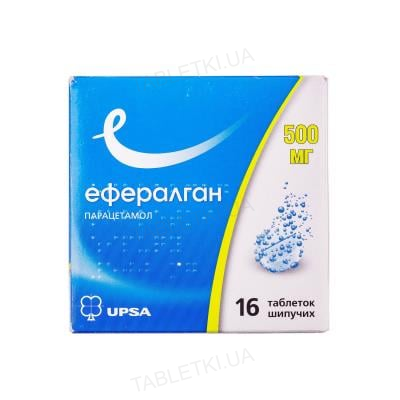
Eferalgan 500 mg coated tablets, No. 16 (4x4)
Ingredients
Active ingredient: acetaminophen;
1 effervescent tablet contains 500 mg of acetaminophen;
inactive ingredients: anhydrous citric acid, anhydrous sodium carbonate, sodium bicarbonate, sorbitol (E 420), sodium saccharin, sodium docusate, povidone, sodium benzoate (E 211).
Dosage Form
Effervescent tablets.
Main physical and chemical properties: white tablets with beveled edges and a score line, which dissolve in water with an effervescent reaction; minor chips may be present.
Pharmacotherapeutic group
Analgesics and antipyretics. ATC code N02B E01.
Pharmacological properties
Pharmacodynamics.
Paracetamol has analgesic, antipyretic, and anti-inflammatory effects.
Pharmacokinetics.
Paracetamol is rapidly and almost completely absorbed in the gastrointestinal tract. Maximum plasma concentration is reached in 30–60 minutes. The half-life is 1–4 hours. It is evenly distributed throughout all body fluids. Binding to plasma proteins is variable. It is excreted primarily by the kidneys in the form of conjugated metabolites.
Indications
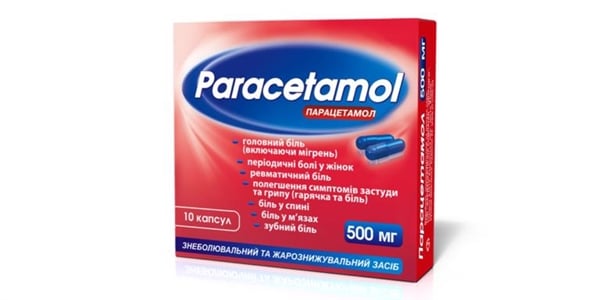
Symptomatic treatment of conditions accompanied by mild to moderate pain and/or fever (infectious and inflammatory diseases, headache, toothache, muscle pain, painful menstruation).
Contraindications
Hypersensitivity to paracetamol or to any other components of the drug.
Severe liver and/or kidney dysfunction, congenital hyperbilirubinemia, glucose-6-phosphate dehydrogenase deficiency, blood disorders, Gilbert’s syndrome, severe anemia, leukopenia.
Fructose intolerance (since the medication contains sorbitol).
Alcoholism.
Special Safety Precautions
Before taking the medication, completely dissolve one tablet (a single dose may range from ½ to 2 tablets) of Eferalgan in a glass of water (150–200 mL).
If you are on a salt-free or low-salt diet, keep in mind that each effervescent tablet contains 412.4 mg of sodium.
Individuals who abuse alcohol should consult a doctor before taking this medication, as there is an increased risk of paracetamol-induced hepatotoxicity. In elderly patients, the elimination of paracetamol from the body may be reduced.
Paracetamol may affect the results of laboratory tests: tests for uric acid (when using the phosphotungstic acid method) and blood glucose levels (when using the glucose oxidase-peroxidase method).
Interactions with Other Medications and Other Types of Interactions
The rate of paracetamol absorption may increase with concomitant use of metoclopramide and domperidone and may decrease with concomitant use of cholestyramine. The anticoagulant effect of warfarin and other coumarins may be enhanced by the simultaneous, long-term, regular daily use of paracetamol, increasing the risk of bleeding. Intermittent use has no significant effect.
Barbiturates reduce the antipyretic effect of acetaminophen.
Anticonvulsants (including phenytoin, barbiturates, and carbamazepine), which stimulate the activity of hepatic microsomal enzymes, may enhance the toxic effect of acetaminophen on the liver by increasing the extent to which the drug is converted into hepatotoxic metabolites. Concomitant use of paracetamol with isoniazid increases the risk of developing hepatotoxic syndrome. Paracetamol reduces the effectiveness of diuretics.
Do not use concomitantly with alcohol.
Special Considerations for Use
If you have liver or kidney disease, consult your doctor before taking this medication. Consult your doctor before taking this medication if you are taking warfarin or similar medications with anticoagulant effects.
In patients with severe infections, such as sepsis, which are accompanied by decreased glutathione levels, taking acetaminophen increases the risk of metabolic acidosis.
Symptoms of metabolic acidosis include deep, rapid, or labored breathing, nausea, vomiting, and loss of appetite. Seek medical attention immediately if these symptoms occur.
Do not exceed the recommended doses. If symptoms persist, consult a doctor.
Do not take this medication at the same time as other products containing acetaminophen.
When administering paracetamol to children at a dose of 60 mg/kg per day, combination with other antipyretics is justified only if the medication proves ineffective. Use with caution in patients weighing up to 50 kg, in cases of chronic malnutrition (low glutathione stores in the liver), dehydration, or mild to moderate hepatic insufficiency.
Treatment should be discontinued if acute viral hepatitis is detected.
Use during pregnancy or breastfeeding.
Pregnancy. Prescription of this medication during these periods is possible only if the expected benefit to the mother outweighs the potential risk to the fetus or infant.
A substantial body of data on pregnant women indicates neither developmental defects nor fetal/neonatal toxicity. Epidemiological studies of nervous system development in children exposed to acetaminophen in utero show inconclusive results. When clinically necessary, acetaminophen may be used during pregnancy at the lowest effective dose for the shortest possible duration and as infrequently as possible.
There are no traditional studies using currently accepted standards for assessing reproductive and developmental toxicity.
Breastfeeding. Paracetamol passes into breast milk, but in clinically insignificant amounts. Available published data do not indicate any contraindications for breastfeeding.
Effect on reaction time when operating motor vehicles or other machinery.
No effect.
Dosage and Administration
This medication is indicated for adults and children weighing more than 15 kg (ages 3 years and older). For children weighing less than 15 kg, other dosage forms of paracetamol should be used. In children, the paracetamol dose is determined by body weight; if the body weight is unknown, the child must be weighed before starting treatment. The daily dose of paracetamol should not exceed 60 mg/kg/day, which should be divided equally into 4 or 6 doses (15 mg/kg every 4 hours or 10 mg/kg every 6 hours).
For children weighing 15 to 21 kg (usually ages 3 to 6), give ½ tablet; if necessary, repeat doses at 6-hour intervals, but do not exceed 2 tablets per day.
For children weighing 21 to 25 kg (usually 6 to 10 years old)—½ tablet; if necessary, repeat doses at 4-hour intervals, but no more than 3 tablets per day.
Children weighing 26 to 40 kg (usually 8 to 13 years old) should take 1 tablet; if necessary, repeat doses at 4-hour intervals, but do not exceed 4 tablets per day.
Children weighing 41 to 50 kg (usually ages 12 to 15) should take 1 tablet; if necessary, doses may be repeated at 4-hour intervals, but no more than 6 tablets per day.
For adults and children weighing more than 50 kg (15 years and older)—1–2 tablets per dose; if necessary, the dose may be repeated after 4 hours; the average daily dose is 3 g of acetaminophen per day (6 tablets), however, for severe pain, the maximum daily dose of 4 g of paracetamol (8 tablets) may be taken, with at least a 4-hour interval between doses.
Treatment duration: no more than 3 days.
Children.
Do not use in children under 3 years of age.
Overdose
There is a risk of serious poisoning in the elderly, young children, patients with liver damage, those with chronic alcoholism, and patients with chronic malnutrition.
To prevent overdose, do not use other medications containing acetaminophen together with Eferalgan.
A single dose of 10 g for an adult or 150 mg/kg of a child’s body weight may cause hepatocellular failure, impaired glucose metabolism, metabolic acidosis, hemorrhages, hypoglycemia, encephalopathy, coma, and death. This is accompanied by elevated levels of liver transaminases, lactate dehydrogenase, and bilirubin, and a decrease in prothrombin levels within 12–48 hours.
Acute renal failure with acute tubular necrosis may manifest as severe pain in the lumbar region, hematuria, and proteinuria, and may develop even in the absence of severe liver damage. Cardiac arrhythmia and pancreatitis have also been reported. With prolonged use of the drug in high doses, hematopoietic system disorders such as aplastic anemia, pancytopenia, agranulocytosis, neutropenia, leukopenia, and thrombocytopenia may develop. When taking high doses, the following may occur: from the central nervous system—dizziness, psychomotor agitation, and disorientation; nephrotoxicity (renal colic, interstitial nephritis, papillary necrosis) may occur in the urinary system; and hepatonecrosis may occur in the digestive system.
In patients with risk factors (long-term use of carbamazepine, phenobarbital, phenytoin, primidone, rifampicin, St. John’s wort, or other drugs that induce liver enzymes; alcohol abuse; glutathione system deficiency, such as malnutrition, AIDS, starvation, cystic fibrosis, or cachexia), taking 5 g or more of acetaminophen may lead to liver damage. Liver damage may become apparent 12–48 hours after the overdose.
In case of an overdose, the patient should be taken to a hospital immediately, even if there are no early symptoms of overdose. Symptoms of overdose may appear within the first 24 hours—such as nausea, vomiting, loss of appetite, pallor, and abdominal pain—or may not reflect the severity of the overdose or the risk of liver damage.
Emergency measures: immediate hospitalization, determination of plasma paracetamol levels, gastric lavage, intravenous administration of the antidote N-acetylcysteine or oral administration of methionine within the first 10 hours, and symptomatic treatment.
Side effects
Very rare:
allergic reactions: anaphylaxis, pruritus, rash on the skin and mucous membranes (usually generalized rash, erythematous rash, urticaria), angioedema, erythema multiforme (including Stevens-Johnson syndrome), toxic epidermal necrolysis (Lyell’s syndrome);
Gastrointestinal system: nausea, epigastric pain, elevated liver enzymes (usually without jaundice), liver dysfunction;
Endocrine system: hypoglycemia, up to and including hypoglycemic coma;
Hematologic system: anemia, thrombocytopenia, leukopenia, neutropenia, sulfhemoglobinemia and methemoglobinemia (cyanosis, shortness of breath, chest pain), hemolytic anemia, bruising, or bleeding;
Respiratory system: bronchospasm in patients sensitive to acetylsalicylic acid and other NSAIDs.
Occasionally, malaise, decreased blood pressure, and renal colic may occur.
Shelf life
3 years.
Storage conditions
Store at a temperature not exceeding 30 °C, out of the reach of children.
Packaging
4 effervescent tablets per strip, 4 strips per cardboard box.
Dispensing Category
Over-the-counter.
Manufacturer
UPSA SAS, France.
Address
979, Avenue des Pyrénées, 47520 Le Passage, France.
304, Avenue du Docteur Jean Bru, 47000 Agen, France.