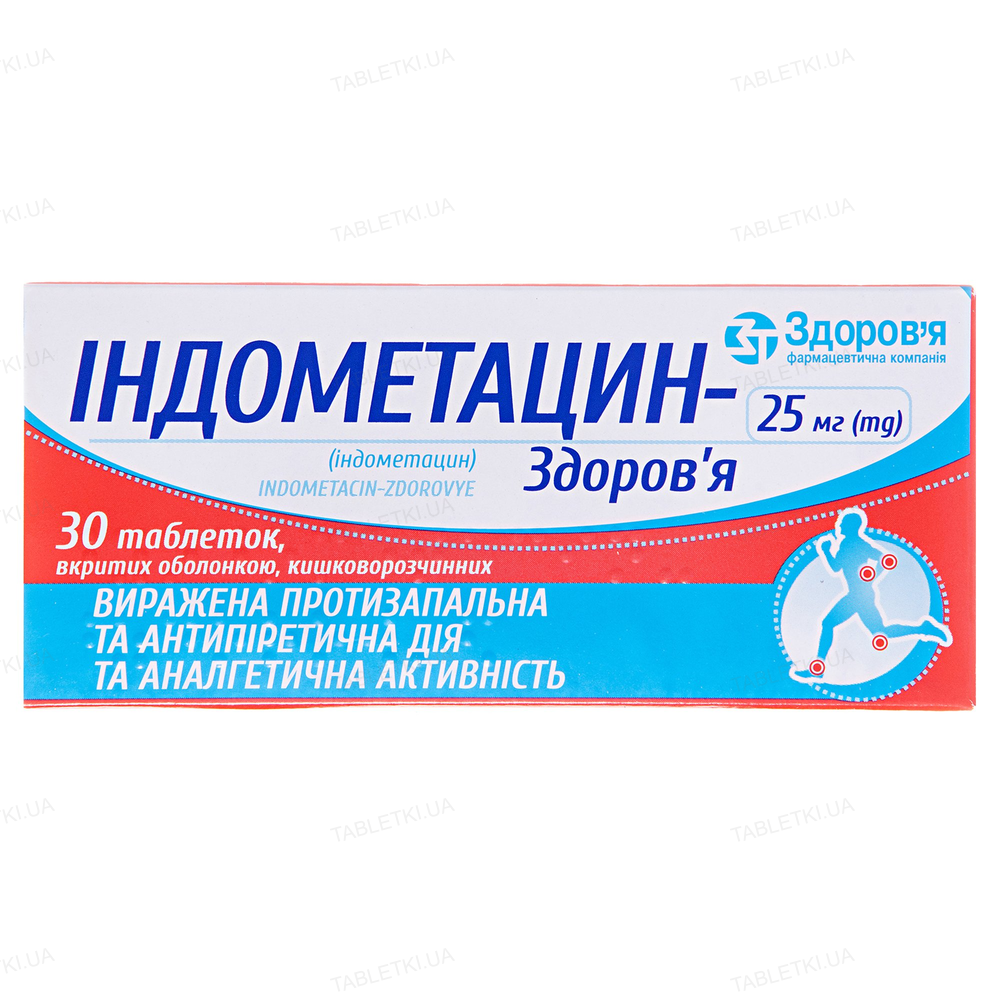
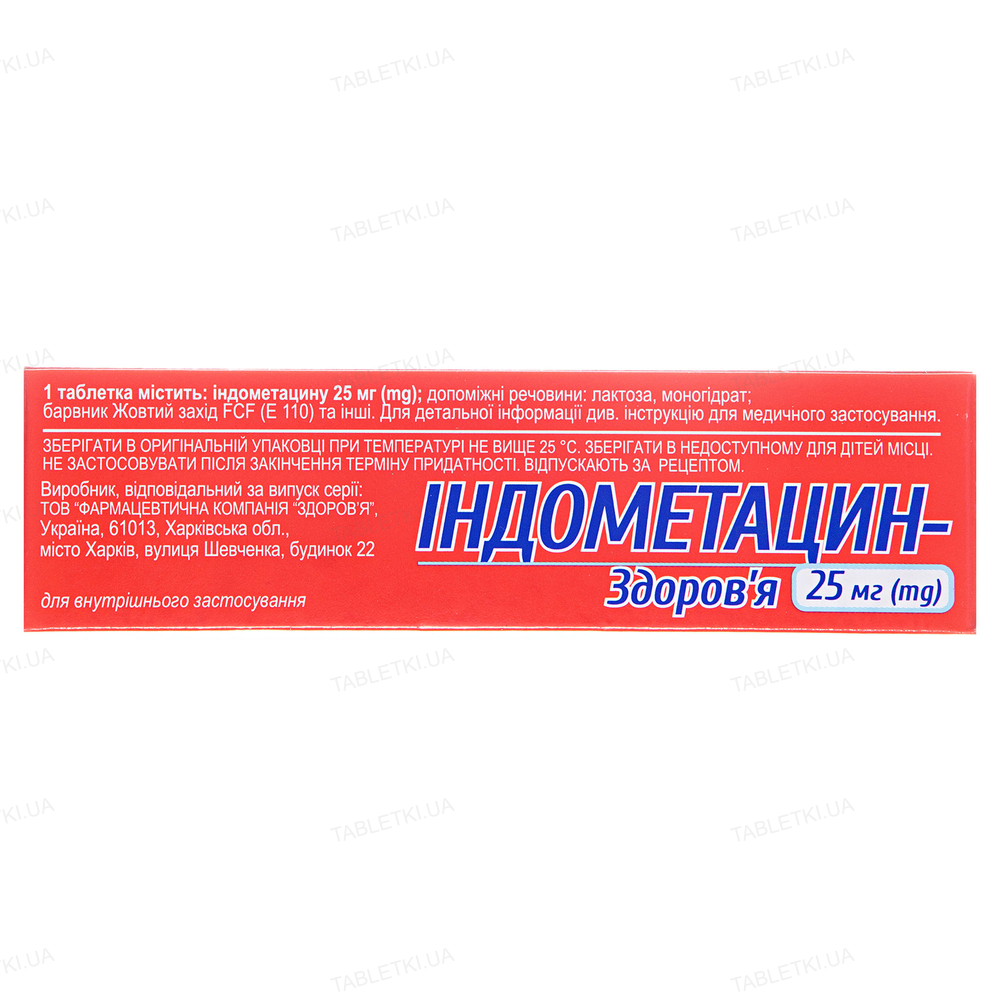
Indomethacin-Zdorovye tablets, enteric-coated, 25 mg, No. 30 (10 x 3)
Ingredients
Active ingredient: indomethacin;
1 tablet contains 25 mg of indomethacin;
Inactive ingredients: corn starch; colloidal anhydrous silicon dioxide; magnesium stearate; microcrystalline cellulose; lactose monohydrate; crospovidone; talc; Yellow No. 5 FCF (E 110); “Akryl-eze white” dry mixture, white in color, containing talc, triethyl citrate, methacrylate copolymer, sodium bicarbonate, titanium dioxide (E 171), silicon dioxide, sodium lauryl sulfate.
Dosage Form
Film-coated, enteric-coated tablets.
Main physical and chemical properties: yellow-orange to orange, biconvex film-coated tablets. Two layers are visible on cross-section.
Pharmacotherapeutic group
Nonsteroidal anti-inflammatory and antirheumatic agents.
ATC code M01A B01.
Pharmacological properties
Pharmacodynamics.
Indomethacin—a derivative of indoleacetic acid—belongs to the group of nonsteroidal anti-inflammatory drugs (NSAIDs). It has a pronounced anti-inflammatory effect, which significantly exceeds that of phenylbutazone and acetylsalicylic acid. Its analgesic activity is comparable to that of metamizole. It has an antipyretic effect. Indomethacin exerts a strong inhibitory effect on prostaglandin synthesis by inhibiting cyclooxygenase. In addition, it reduces both platelet aggregation and lipoxygenase activity at the site of inflammation, and consequently, leukotriene activity; it also reduces the release of endogenous pyrogens, inactivates lysosomal enzymes, and inhibits the activity of neutral proteases. Other effects may also be significant, such as the decoupling of oxidative phosphorylation and the inhibition of catecholamine reuptake, the enhancement of norepinephrine metabolism, and its known ganglion-blocking action.
Pharmacokinetics.
Absorption: When administered orally, 80–90% of the administered dose is absorbed through the mucous membrane of the small intestine. It reaches maximum plasma concentration within 1–2 hours.
Distribution: It is distributed throughout all tissues and organs. It crosses the placental and blood-brain barriers. It penetrates the synovial membrane into the joints, where its concentration in synovial fluid is higher than in blood plasma. It binds to plasma proteins by 90–98% and is therefore capable of displacing other drugs from protein binding and enhancing their therapeutic effect when used concomitantly.
Metabolism: It is metabolized in the liver by oxidation and conjugation.
Elimination: The half-life of indomethacin ranges from 2.6 to 11.2 hours, with a mean of 5.8 hours. Up to 60–75% is excreted by the kidneys, 10–20% of which is excreted unchanged, while the remainder is excreted in bile and feces. It passes into breast milk.
Indications
The efficacy of short-term symptomatic treatment with indomethacin has been established for the following conditions:
- acute and chronic pain associated with inflammatory and degenerative diseases of the musculoskeletal system: rheumatoid arthritis; acute and chronic ankylosing spondylitis (Bechterew’s disease) during an exacerbation; gout attacks and gouty arthritis; moderate to severe osteoarthritis;
- diseases of the periarticular tissues: tendinitis, bursitis (acute painful shoulder), tendobursitis, tenosynovitis; pain syndromes and inflammation following injuries (including in athletes) and surgical procedures;
- discopathy, plexitis, radiculoneuritis;
- dysmenorrhea.
Contraindications
- Hypersensitivity to any component of the medication;
- Hypersensitivity to acetylsalicylic acid or other NSAIDs with clinical manifestations such as an asthma attack, angioedema, hives, or rhinitis;
- active peptic ulcer of the stomach or duodenum or recurrences (two or more episodes of confirmed ulcers and bleeding), ulcerative colitis, and/or enterocolitis;
- a history of gastrointestinal bleeding or perforation associated with NSAID use;
- concomitant use of other NSAIDs, including selective cyclooxygenase-2 inhibitors, due to an increased risk of adverse effects;
- severe heart failure;
- severe renal and hepatic insufficiency;
- pre- and postoperative pain associated with aortocoronary bypass surgery.
Drug Interactions and Other Interactions
The use of two or more NSAIDs should be avoided due to an increased risk of adverse effects.
Concomitant use with antibacterial agents may increase the risk of seizures; with ciprofloxacin, it may increase the risk of skin reactions and neurotoxicity.
Concomitant use of quinolones and indomethacin may increase the risk of seizures in patients with or without a history of epilepsy or seizures.
Concomitant use of zalcitabine and indomethacin causes changes in their pharmacodynamics.
Concomitant use of zidovudine and indomethacin increases the risk of hematologic toxicity. The risk of indomethacin toxicity increases when used with ritonavir.
Caution is advised when used concomitantly with cyclophosphamide due to the risk of water intoxication.
Caution is advised when used concomitantly with antiepileptic drugs due to the potentiation of phenytoin’s effects.
Concomitant use with haloperidol increases drowsiness.
Concomitant use with triamterene should be avoided due to the risk of reversible renal failure.
Concomitant use with tacrolimus increases the risk of nephrotoxicity.
Indomethacin increases the bioavailability of bisphosphonates when used concomitantly with tiludronic acid.
Concomitant use with benzodiazepines increases the risk of dizziness.
When taken concurrently with desmopressin, the effect of the latter is enhanced.
NSAIDs should be avoided for 8–12 days after taking mifepristone.
Indomethacin may reduce the rate of baclofen clearance and thus increase its toxic effects.
In patients taking indomethacin and muromonab-CD3 concurrently, the risk of developing psychosis and encephalopathy increases.
Indomethacin may distort laboratory test results:
- cause an increase in the levels of one or more liver enzymes;
- the drug may cause false-negative results in the dexamethasone suppression test.
Concomitant use of NSAIDs and COX-2 inhibitors increases the risk of “analgesic” nephropathy and papillary necrosis of the kidneys. Therefore, their concomitant use should be avoided.
When taken concurrently with vasodilators, the risk of bleeding increases.
Other NSAIDs, alcohol: Concomitant use of indomethacin with other NSAIDs and alcohol increases the risk of gastrointestinal side effects.
Diflunisal: increases plasma levels and decreases renal clearance of indomethacin. Fatal gastrointestinal hemorrhages may occur. This combination is not recommended.
Digoxin: Indomethacin may increase the concentration of digoxin in blood plasma (by reducing its renal excretion), which requires dose adjustment and monitoring of digoxin levels.
Lithium salts: Indomethacin prolongs and potentiates the effects of lithium salts and increases lithium toxicity, requiring monitoring of lithium levels.
Immunosuppressants: Concomitant use of indomethacin and immunosuppressants, such as methotrexate and cyclosporine, leads to increased toxicity of these drugs.
Diuretics: NSAIDs reduce the therapeutic efficacy of diuretics (by decreasing their tubular secretion). There may be an increased risk of hyperkalemia when used concomitantly with potassium-sparing diuretics and a decrease in renal function with an increased risk of acute renal failure when used in combination with thiazide diuretics(triamterene). Diuretics may enhance the nephrotoxicity of indomethacin.
Antihypertensive agents: Indomethacin may attenuate the antihypertensive effect of angiotensin-converting enzyme (ACE) inhibitors and beta-blockers when used concomitantly.
Corticosteroids: increased risk of gastrointestinal ulcers and bleeding (see the “Special Considerations for Use” section).
Anticoagulants: The risk of ulcers and bleeding increases due to inhibition of platelet function and an aggressive effect on the gastrointestinal mucosa.
Bleeding time and prothrombin time should be monitored. Indomethacin competitively binds to coumarin anticoagulants at plasma protein binding sites, resulting in increased plasma concentrations of these anticoagulants. When used concomitantly, indomethacin should be administered at the lowest possible dose, and the use of protective agents should be considered (see the “Special Considerations for Use” section).
Antiplatelet agents and selective serotonin reuptake inhibitors (SSRIs): increased risk of gastrointestinal bleeding (see the “Special Considerations for Use” section).
Concomitant use with antidepressants (selective serotonin reuptake inhibitors) should be used with caution due to an increased risk of bleeding.
Probenecid slows the excretion of indomethacin and increases its toxicity.
Antidiabetic agents: Indomethacin does not alter the therapeutic efficacy of oral antidiabetic agents or insulin, despite reports of aor hyperglycemic effects when used concomitantly. The effects of sulfonylurea derivatives may be potentiated by NSAIDs. In rare cases, concomitant use with metformin may cause metabolic acidosis.
Special Considerations for Use
Side effects can be minimized by using the lowest effective dose of the drug for the shortest possible period of time to control the symptoms of the disease (see the “Dosage and Administration” section; as well as the gastrointestinal and cardiovascular risk factors listed below).
This medication should be used with caution in patients with impaired renal, hepatic, or cardiac function, as well as in conditions where fluid retention is possible, since indomethacin causes a decrease in renal function and fluid retention.
In patients with systemic lupus erythematosus and connective tissue diseases, there may be an increased risk of developing viral meningitis.
Caution should be exercised when administering this medication to patients following surgical procedures, as bleeding time may be prolonged in these patients.
In rare cases, indomethacin may mask the symptoms of an infectious-inflammatory process; caution should also be exercised when administering live vaccines.
Patients receiving long-term treatment with this medication should undergo periodic blood tests and liver or gastric function tests to detect any adverse effects as early as possible.
Use the drug with caution in patients with sigmoid colon abnormalities.
In patients with reduced blood flow, in whom renal prostaglandins play an important role in maintaining renal perfusion, NSAIDs may trigger severe renal decompensation. The group at risk for such a reaction includes patients with renal or hepatic dysfunction, those with diabetes mellitus, the elderly, patients with reduced intravascular volume, congestive heart failure, or sepsis, as well as those concurrently taking nephrotoxic medications. Renal function should be monitored in these patients while they are taking the drug.
Caution should be exercised when administering the drug to patients with bronchial asthma due to the potential for bronchospasm.
Concomitant use of indomethacin with other NSAIDs, including selective COX-2 inhibitors, should be avoided.
When taking NSAIDs, there is a risk of hyperkalemia, especially in patients aged 65 years and older, patients with renal insufficiency, and patients being treated with beta-blockers, ACE inhibitors, and potassium-sparing diuretics. Serum potassium levels should be monitored in these patients.
Use with extreme caution in patients with a history of hypersensitivity to foods or medications, and in patients with allergic conditions such as hay fever, bronchial asthma, or nasal polyps.
Elderly patients (65 years of age and older).
The use of NSAIDs in patients aged 65 years and older is more likely to cause adverse effects, primarily gastrointestinal hemorrhage or perforation, which may sometimes be fatal (see the “Dosage and Administration” section).
Gastrointestinal hemorrhage, ulceration, and perforation.
Gastrointestinal hemorrhage, ulceration, and perforation (sometimes fatal) have been observed with the use of all NSAIDs at any time during treatment, whether or not there are warning symptoms or a history of previous serious gastrointestinal events.
The risk of gastrointestinal adverse events is higher with high doses of NSAIDs in patients with a history of peptic ulcer disease, particularly when complicated by bleeding or perforation, and in elderly patients. For such patients, NSAID therapy should be initiated at the lowest possible dose, taking into account the need for protective medications (e.g., misoprostol or proton pump inhibitors). This approach is also recommended in cases of concomitant use of low doses of acetylsalicylic acid or other medications that increase the risk of gastrointestinal complications (corticosteroids, anticoagulants, antiplatelet agents, SSRIs).
Particular caution is required when treating patients with other gastrointestinal diseases (ulcerative colitis, Crohn’s disease) that may be exacerbated by the use of NSAIDs.
Patients who abuse alcohol or who smoke are at increased risk of gastrointestinal complications; therefore, their treatment should be conducted with particular caution.
Patients with a history of gastrointestinal disorders (including elderly patients) should be advised to report any unusual abdominal symptoms (especially gastrointestinal bleeding), particularly at the start of treatment.
Particular caution is required when using medications that may increase the risk of ulceration or bleeding (oral corticosteroids, anticoagulants such as warfarin, SSRIs, or antiplatelet agents such as acetylsalicylic acid (see the section “Interactions with Other Medications and Other Types of Interactions”)).
Use of the drug should be discontinued if gastrointestinal lesions or bleeding occur.
Cardiovascular and cerebrovascular disorders.
Appropriate monitoring and counseling are necessary for patients with a history of hypertension and/or mild to moderate congestive heart failure, as there have been reports of edema and fluid retention associated with NSAID therapy.
Clinical studies and epidemiological data indicate that the use of certain NSAIDs (especially at high doses and over a prolonged period) may be associated with a slight increase in the risk of arterial thrombotic complications (e.g., myocardial infarction or stroke). There are insufficient data to rule out such a risk with the use of indomethacin.
Patients with uncontrolled hypertension, congestive heart failure, established ischemic heart disease, peripheral arterial disease, and/or cerebrovascular disease, as well as those with risk factors for cardiovascular complications (e.g., hypertension, hyperlipidemia, diabetes mellitus, smoking) should be treated with indomethacin only after a careful assessment of the benefit-risk ratio.
Such an assessment is also necessary before initiating long-term treatment in patients with risk factors for cardiovascular complications (e.g., hypertension, hyperlipidemia, diabetes mellitus, smoking).
Skin reactions.
Very rarely, serious (including fatal) skin reactions are observed with the use of NSAIDs, in particular exfoliative dermatitis, Stevens-Johnson syndrome, and toxic epidermal necrolysis. The risk of these reactions is highest at the start of treatment (during the first month). The medication should be discontinued as soon as the first skin or other symptoms of hypersensitivity appear.
Renal effects.
Indomethacin should be used with caution in patients with renal disease (creatinine clearance < 30 mL) due to the potential for renal damage.
Hematological effects.
It should be prescribed with caution to patients with a history of coagulation disorders, as the drug inhibits prostaglandin biosynthesis and affects platelet function.
Hepatic effects.
Long-term treatment with indomethacin, as with other NSAIDs, may cause changes in liver function, requiring periodic monitoring of liver enzyme levels.
Infections and parasitic infestations.
Due to its anti-inflammatory effect, the drug may mask the symptoms of acute inflammation, so the presence of a bacterial infection must be ruled out before prescribing it.
Effect on fertility.
In women of reproductive age, there is a risk of reversible suppression of fertility when using this medication.
Psychiatric effects.
Use with caution in patients with psychiatric disorders, depression, epilepsy, or Parkinson’s disease, as this may worsen the course of the underlying condition.
Excipients.
This medication contains lactose; therefore, if a patient has been diagnosed with an intolerance to certain sugars, they should consult a doctor before taking this medication.
The colorant “Sunset Yellow FCF” (E 110) may cause allergic reactions.
Use during pregnancy or breastfeeding.
Pregnancy
This medication is contraindicated during pregnancy.
Breastfeeding
Breastfeeding should be discontinued during treatment, as small amounts of indomethacin pass into breast milk.
Effect on reaction time when driving or operating machinery.
This medication may cause side effects (ringing in the ears, dizziness, drowsiness, hearing and vision disturbances) that may impair alertness and reflexes and affect the ability to drive or operate machinery.
Dosage and Administration
Directions
Take orally during or after a meal, without chewing, with milk.
Dosage
For adults and children 14 years of age and older, the initial dose is 25–50 mg 2–3 times daily.
If the therapeutic effect is insufficient, increase the dose to 150 mg per day, divided into 3 doses. The maximum daily dose is 200 mg. During long-term use, the daily dose should not exceed 75 mg.
Gout
To relieve an acute gout attack, administer an initial dose of 100 mg, followed by 50 mg 3 times daily until the pain subsides.
Elderly patients (65 years and older)
Elderly patients should take the lowest possible dose for the shortest possible duration and strictly follow the recommendations due to an increased risk of side effects.
Duration of Treatment
Treatment should be conducted for the shortest possible time at the lowest effective dose to reduce the likelihood of side effects (see the “Special Considerations” section).
Children.
The use of indomethacin is not recommended for children under 14 years of age.
Overdose
Symptoms: nausea, vomiting, abdominal pain, severe headache, dizziness, memory impairment, confusion, disorientation, or lethargy. There have been reports of paresthesia, stiffness, and seizures.
Treatment: symptomatic and supportive.
Gastric lavage should be performed as soon as possible if the drug was taken recently. If spontaneous vomiting does not occur, vomiting should be induced by administering ipecac preparations to the patient. If the patient does not vomit, gastric lavage should be performed. After gastric emptying, 25 g or 50 g of activated charcoal may be administered. Depending on the patient’s condition, continuous medical and nursing supervision may be necessary. The patient should remain under observation for several days, as gastrointestinal ulcers and bleeding have been reported as side effects of indomethacin. The use of antacids may be beneficial. Indomethacin cannot be removed from the body by hemodialysis.
Side Effects
The most common side effects are gastrointestinal disturbances. Peptic ulcers, perforation, or gastrointestinal bleeding (sometimes fatal) may occur, primarily in elderly patients (see the “Special Considerations” section).
Blood and lymphatic system disorders: leukopenia, neutropenia, thrombocytopenia, agranulocytosis, anemia (including hemolytic and aplastic), disseminated intravascular coagulation.
Immune system disorders: bronchospasm, asthma attacks, anaphylactic or anaphylactoid reactions in hypersensitive patients, fever, vasculitis, anaphylaxis, pulmonary edema, cerebral edema.
Metabolism and nutrition disorders: elevated urea levels, weight gain, elevated liver enzyme levels, increased sweating, accelerated cartilage degeneration, fluid retention, hyperglycemia, glucosuria, hyperkalemia.
Neurological disorders: agitation, convulsions, muscle weakness, involuntary muscle movements, psychiatric disorders, exacerbation of epilepsy and parkinsonism, impaired consciousness, coma, dysarthria, aseptic meningitis, hallucinations, fear, dizziness, headache, drowsiness, depression, fatigue, anxiety, weakness, impaired concentration; sensory disturbances, including paresthesia; disorientation, insomnia, irritability, peripheral neuropathy, memory impairment, psychotic reactions.
Respiratory system: nosebleeds, pulmonary subtropical eosinophilia, dyspnea, acute respiratory distress.
Ocular system: optic neuritis, corneal deposits and retinal damage, conjunctivitis, pain in the periorbital region, diplopia, blurred vision.
Ear and labyrinth disorders: deafness, hearing impairment, tinnitus.
Cardiac: tachycardia, angina, palpitations, arrhythmias, edema; worsening of heart failure associated with NSAID use.
Clinical studies and epidemiological data indicate that the use of certain NSAIDs (especially at high doses and over a long period of time) may be associated with a slight increase in the risk of arterial thrombotic complications (e.g., myocardial infarction or stroke) (see the “Special Considerations for Use” section).
Vascular system: hypertension, hypotension, thrombotic microangiopathy.
Gastrointestinal: anorexia, taste disturbances, gastroenteritis, erosive and ulcerative lesions, gastrointestinal bleeding and perforation, proctitis, intestinal strictures, gastritis, bleeding from the sigmoid colon or a diverticulum, regional ileitis, cholestasis, nausea, vomiting, diarrhea, dyspepsia, constipation, abdominal pain, flatulence, melena, hematemesis, ulcerative stomatitis, exacerbation of ulcerative colitis, Crohn’s disease, exacerbation of an existing ulcer.
Liver and biliary tract disorders: toxic hepatitis with or without jaundice, fulminant hepatitis.
Skin and subcutaneous tissue disorders: hair loss, exacerbation of psoriasis, eczema, pruritus with or without a rash, urticaria, petechiae, ecchymoses, angioedema, exfoliative dermatitis, purpura, erythema nodosum, erythema multiforme, bullous eruptions, including Stevens–Johnson syndrome and toxic epidermal necrolysis.
Renal and genitourinary system: renal dysfunction, edema, vaginal bleeding, breast enlargement and tenderness, gynecomastia, proteinuria, hematuria, nephrotic syndrome, interstitial nephritis, acute renal failure, papillary necrosis.
Effects on laboratory and diagnostic test results: elevated levels of aminotransferases [alanine aminotransferase (ALT), aspartate aminotransferase (AST)] in serum, transient increase in bilirubin levels.
Shelf life
5 years.
Storage conditions
Store in the original packaging at a temperature not exceeding 25 °C.
Keep out of the reach of children.
Packaging
Film-coated, enteric-coated tablets, 25 mg each, No. 30 (30×1), No. 30 (10×3) in blister packs inside a box.
Manufacturer
Limited Liability Company “Pharmaceutical Company ‘Zdorov’ya’”.
Limited Liability Company “FARMEKS GROUP.”
Manufacturer’s location and address of operations: Ukraine, 61013, Kharkiv Oblast, city of Kharkiv, 22 Shevchenko Street.
(Limited Liability Company “Pharmaceutical Company ‘Zdorov’ya’”)
Ukraine, 08301, Kyiv Oblast, Boryspil, 100 Shevchenko Street.
(Limited Liability Company “FARMEKS GROUP”)