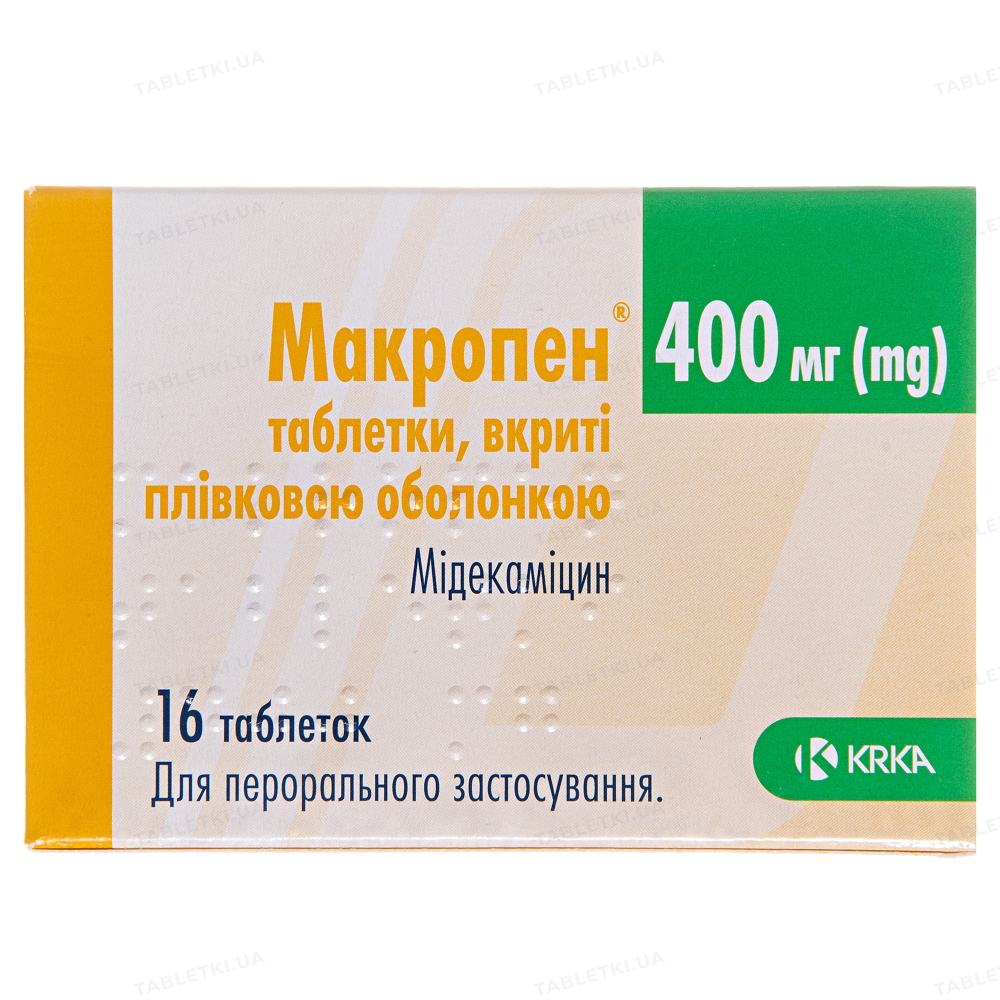
Macropen tablets, film-coated, 400 mg, No. 16 (8 x 2)
Ingredients
Active ingredient: midecamycin;
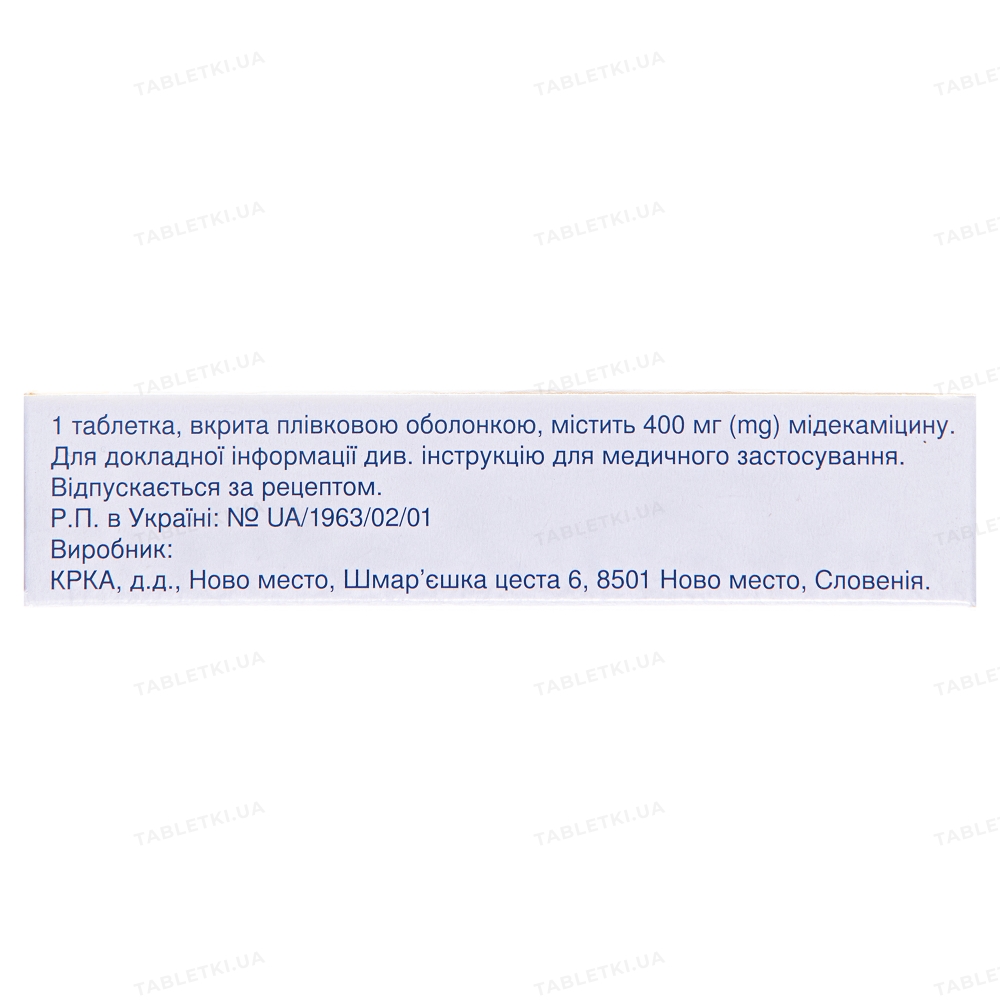
1 film-coated tablet contains 400 mg of midecamycin;
excipients: potassium polacrilin, talc, microcrystalline cellulose, magnesium stearate, acrylate copolymer, polyethylene glycol, titanium dioxide (E 171).
Dosage Form
Film-coated tablets.
Main physical and chemical properties: round, slightly biconvex, white film-coated tablets with beveled edges and a score line on one side.
Pharmacotherapeutic group
Antimicrobials for systemic use. Macrolides, lincosamides, and streptogramins. Midecamycin. ATC code J01F A03.
Pharmacological Properties
Pharmacodynamics.
Antibacterial action.
Midekamicin is a broad-spectrum macrolide antibiotic with a mechanism of action similar to that of erythromycin. It is active against Gram-positive bacteria (staphylococci, streptococci, pneumococci, Bacillus anthracis, Corynebacterium diphtheriae, and Listeria monocytogenes), certain Gram-negative bacteria (Bordetella pertussis, Campylobacter spp., Moraxella catarrhalis, and Neisseria spp.), anaerobic bacteria (Clostridium spp. and Bacteroides spp.), and other bacteria such as mycoplasmas, ureaplasmas, chlamydiae, and Legionella.
In vitro susceptibility of microorganisms to medecamycin acetate (MDM-acetate) and medecamycin (MDM)
| MIC90 (minimum inhibitory concentration) values (μg/mL) | ||
| Bacterium | MDM-acetate | MDM |
| Streptococcus pneumoniae | 0.5 | 0.10 |
| Streptococcus pyogenes | 0.67 | 0.20 |
| Streptococcus viridans | 0.28 | 0.39 |
| Staphylococcus aureus | 1.5 | 1.5 |
| Listeria monocytogenes | 2 | 1.5 |
| Bordetella pertussis | 0.25 | 0.20 |
| Legionella pneumophila | 0.1 | 0.12–1 |
| Moraxella catarrhalis | 2 | - |
| Helicobacter pylori | 0.5 | - |
| Propionibacterium acnes | 0.12 | - |
| Bacteroides fragilis | 5.5 | 3.13 |
| Mycoplasma pneumoniae | 0.024 | 0.0078 |
| Ureaplasma urealyticum | 0.34 | 1.56 |
| Mycoplasma hominis | 2.3 | - |
| Gardnerella vaginalis | 0.08 | - |
| Chlamydia trachomatis | 0.06 | - |
| Chlamydia pneumoniae | 0.5 | - |
The criteria for midecamycin regarding MIC interpretation are the same as for other macrolides, according to the NCCLS (National Committee for Clinical Laboratory Standards). Bacteria are considered susceptible if their MIC90 is ≤ 2 μg/mL and resistant if their MIC90 is ≥ 8 μg/mL.
Antimicrobial efficacy of metabolites.
Midekamicin metabolites exert a similar antibacterial effect, but to a lesser extent. Animal studies have shown that medecamycin and medecamycin acetate are more effective in vivo than in vitro, partly due to the high concentration of metabolites in tissues.
Mechanism of action.
Midekamicin inhibits the synthesis of RNA-dependent proteins during the protein chain elongation phase by binding to the 50S subunit and blocking transpeptidation and/or translocation reactions. Due to differences in ribosomal structure, binding to the ribosomes of eukaryotic cells does not occur. Therefore, the toxicity of macrolides to human cells is low.
Midekamicin primarily exerts a bacteriostatic effect. However, it may also exhibit a bactericidal effect depending on the type of bacterium, the drug concentration at the site of action, the size of the inoculum, and the reproductive stage of the microorganism. In vitro activity is reduced in an acidic environment. If the pH of the culture medium for Staphylococcus aureus or Streptococcus pyogenes increases to 7.2–8, the minimum inhibitory concentration of midecamycin is reduced by half. If the pH decreases, the activity of midecamycin increases.
Midekamicin accumulates in human alveolar macrophages. Macrolides also accumulate in neutrophils. In vitro studies have shown that midekamicin also affects immune functions. An increase in chemotaxis has been observed compared to erythromycin. In vivo, midecamycin stimulates the activity of natural killer cells. These studies demonstrate the effect of midecamycin on the immune system, which is important for its antibacterial effect in vivo.
Resistance.
Resistance to macrolides develops due to a decrease in the permeability of the outer membrane of bacterial cells (enterobacteria), inactivation of the drug (S. aureus, E. coli), and, most importantly, a shift in the site of action.
The incidence of bacterial resistance to macrolides varies widely. Resistance in methicillin-sensitive S. aureus ranges from 1% to 50%, whereas most methicillin-resistant strains of S. aureus are also resistant to macrolides. Resistance in pneumococci is generally below 5%, but in some parts of the world it exceeds 50% (Japan). Resistance of Streptococcus pyogenes to macrolides ranges from 1% to 40% in Europe. Resistance rarely develops in Mycoplasma, Legionella, and C. diphteriae.
Pharmacokinetics.
Absorption.
Midekamicin and midekamicin acetate are rapidly and relatively well absorbed, reaching peak serum concentrations of 0.5–2.5 μg/mL and 1.31–3.3 μg/mL, respectively, within 1–2 hours. Since food intake slightly reduces peak concentrations, especially in children aged 4 to 16 years, it is recommended that midecamycin be taken before meals.
Distribution.
Midekamicin penetrates tissues well, where it reaches concentrations 100% higher than those in the blood. It reaches high concentrations in bronchial secretions as well as in the skin. The volume of distribution of myocamicin (medecamycin acetate) is 228–329 L.
47% of midecamycin and 3–29% of its metabolites are protein-bound. Myocamycin (midecamycin acetate) also passes into breast milk. After administration of a dose of 1,200 mg/day, 0.4–1.7 μg/mL of medecamycin acetate was detected in breast milk.
Metabolism and Excretion.
Midekamicin is primarily metabolized in the liver. It is mainly excreted in bile, with only about 5% excreted in urine.
Significant increases in peak serum concentrations, AUC, and half-life are possible in patients with liver cirrhosis.
Indications
Infections of the respiratory and genitourinary tracts caused by Mycoplasma, Legionella, Chlamydia, and Ureaplasma urealyticum; infections of the respiratory tract, skin, and soft tissues, and other infections caused by bacteria susceptible to medecamycin and penicillin in patients with hypersensitivity to penicillin; enteritis caused by Campylobacter spp.; treatment and prevention of diphtheria and pertussis.
Contraindications
Hypersensitivity to medecamycin or to any of the drug’s excipients; severe liver dysfunction.
Drug Interactions and Other Interactions
Macrolides are known to interact with other medications. Macrolide antibiotics affect hepatic metabolism, where they may inhibit the activity of cytochrome P450 enzymes. Unlike erythromycin, midecamycin and midecamycin acetate do not bind to microsomal oxidases in liver cells and do not form stable complexes with cytochrome P450, and therefore do not affect the pharmacokinetics of theophylline. Midekamicin may cause an increase in serum cyclosporine levels (levels twice as high) and a prolongation of the half-life and an increase in the AUC (area under the curve) of carbamazepine. Use the drug with caution in patients who are concurrently taking carbamazepine or cyclosporine, and, if possible, monitor serum levels of these drugs.
Concomitant use of midecamycin and ergot alkaloids may inhibit their metabolism in the liver and increase their plasma concentrations.
Caution is advised when using medecamycin concomitantly with warfarin, as the clearance of warfarin may be reduced, increasing the risk of bleeding.
Special Considerations for Use
During long-term treatment, liver enzyme levels should be monitored, especially in patients with a history of liver dysfunction.
Prolonged use of the drug may lead to superinfection. Severe diarrhea may be a manifestation of pseudomembranous colitis.
Use During Pregnancy or Breastfeeding: There have been no reports of harmful effects of medecamycin on the fetus. Use during pregnancy is permitted only in extreme cases where the expected benefit to the mother outweighs the potential risk to the fetus.
Since the drug passes into breast milk, breastfeeding should be discontinued for the duration of treatment with this medication.
Effect on reaction time when driving or operating machinery.
There are no data on the drug’s effect on the ability to drive or operate machinery.
Dosage and Administration
The drug should be taken before meals.
Adults and children weighing more than 30 kg: 1 400-mg tablet 3 times daily.
The maximum daily dose for adults is 1,600 mg of medecamycin.
Children weighing less than 30 kg: use the oral suspension. Treatment lasts 7 to 14 days. Treatment for chlamydial infection should continue for 14 days.
Children
This dosage form should be used in children weighing more than 30 kg.
Overdose
No information on overdose is available. If doses exceeding the therapeutic range are taken, nausea and vomiting may occur. Treatment is symptomatic.
Side Effects
Blood and lymphatic system: eosinophilia.
Gastrointestinal system: nausea, loss of appetite, vomiting, diarrhea, stomatitis, abdominal pain, pseudomembranous colitis.
Skin and subcutaneous tissue disorders: rash, hives and itching, angioedema, Stevens-Johnson syndrome.
Liver and biliary tract disorders: elevated transaminase levels and jaundice.
General disorders: hypersensitivity reactions, including flushing; general weakness; dizziness.
If severe adverse reactions occur, treatment should be discontinued.
Shelf life
3 years.
Storage conditions
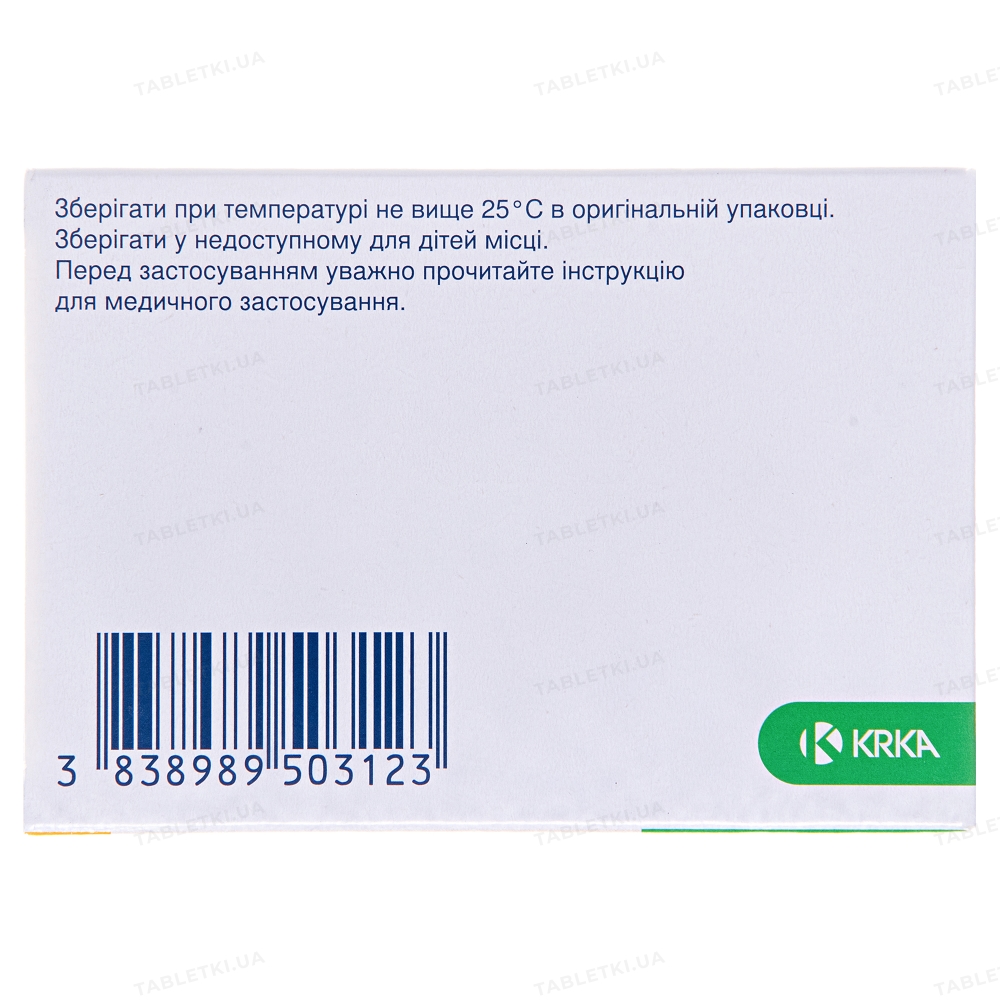
Store at a temperature not exceeding 25 °C in the original packaging. Keep out of reach of children.
Packaging
8 tablets per blister pack; 2 blister packs per cardboard box.
Manufacturer
KRKA, d.d., Novo mesto, Slovenia.
Address
Smarjeska cesta 6, 8501 Novo mesto, Slovenia.