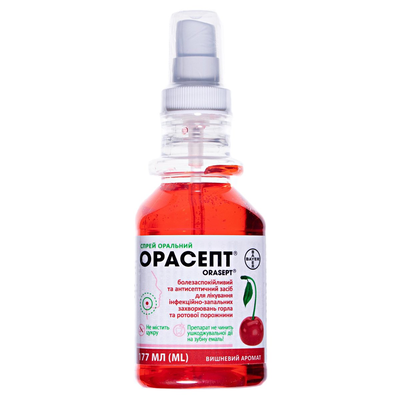
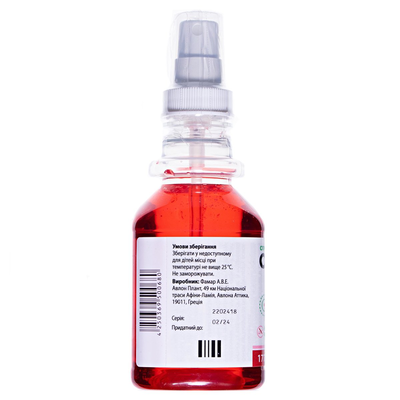
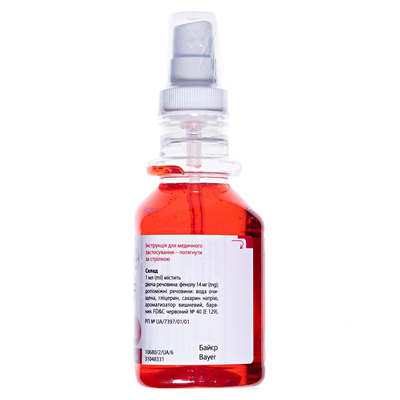
Orasepat Spray, 1.4% solution, 177 ml per bottle.
Ingredients
Active ingredient: phenol;
1 mL contains 14 mg of phenol;
excipients: purified water, glycerin, sodium saccharin, cherry flavoring, FD&C Red No. 40 (E 129).
Dosage Form
Oral spray.
Main physical and chemical properties: a clear, red liquid with a cherry/phenol odor.
Pharmacotherapeutic group
Preparations used for throat disorders. Antiseptics. Phenol.
ATC code R02A A19.
Pharmacological properties
Pharmacodynamics. The active ingredient in this preparation is phenol; in low concentrations (from 0.25% to 1.5%), its water-glycerin solution is used as a topical antiseptic (bactericidal and antifungal action) and a local anesthetic for treating the mucous membranes of the oral cavity and pharynx. Glycerin has a soothing effect on the oral mucosa.
Pharmacokinetics.
Phenol, which is a component of the drug, is absorbed and secreted by mucus, followed by excretion via the gastrointestinal tract. In the event of an overdose, phenol is metabolized in the liver and excreted by the kidneys.
Indications
As an analgesic and antiseptic:
- for infectious and inflammatory diseases of the oral cavity and pharynx (tonsillitis, pharyngitis, tonsillitis, stomatitis, gingivitis, periodontitis);
- after procedures in the oral cavity and pharynx, or dental surgery;
- when using dentures or orthodontic appliances.
Contraindications
Hypersensitivity to any component of the product. Severe liver or kidney dysfunction. Phenol throat spray should not be used by patients with epiglottitis or inflammatory conditions involving widespread mucosal involvement.
Interactions with Other Medications and Other Types of Interactions
The drug is prescribed as part of a comprehensive treatment regimen for inflammatory diseases of the oral cavity and throat, in combination with sulfonamides, antibiotics, and vitamins.
Do not use this medication concurrently with drugs for the treatment of myasthenia gravis; central nervous system depressants; disinfectant solutions containing heavy metals; monoamine oxidase inhibitors; neuromuscular blockers; opioids; or vasoconstrictors.
Special Instructions for Use
The spray is intended for short-term use. If symptoms do not subside within 7 days, this may indicate the presence of an organic pathology (abscess, neoplasm) requiring other methods of treatment.
Consult a doctor within 1–2 days in case of severe sore throat and/or symptoms such as fever, headache, rash, nausea, or vomiting. If your condition worsens, seek medical attention immediately.
The concentration of phenol in the product is considered safe with regard to toxicity and carcinogenicity.
Orasept does not damage tooth enamel.
Use during pregnancy or breastfeeding.
Data on the use of phenol during pregnancy are lacking or limited (fewer than 300 cases of treatment in pregnant women).
Study results do not indicate any direct or indirect reproductive toxicity when the medication is administered according to recommendations.
If use of the drug is necessary during pregnancy, consult a doctor.
Breastfeeding
It is unknown whether phenol is excreted into breast milk. Therefore, a risk to newborns/infants cannot be ruled out.
Effect on reaction time when driving or operating machinery.
No effect on the ability to drive or operate machinery has been observed.
Directions for Use and Dosage
Spray into the mouth and/or throat. The liquid may be swallowed.
When used in the mouth, hold in the mouth for 15 seconds, then spit out.
For children aged 2 to 12 years, administer by pressing the bottle’s spray nozzle up to 3 times. For children 12 years of age and older and adults, press the spray button up to 5 times. Repeat the spray every 2–4 hours or as directed by a doctor. The duration of use is determined by the clinical effect and tolerability of the medication.
If a dose of phenol spray is missed and the patient uses it regularly, the medication may be administered as soon as the patient remembers. If it is nearly time for the next dose, do not take a double dose without consulting a doctor. The duration of treatment for uncomplicated tonsillitis should not exceed 7 days.
Children.
Children under 12 years of age should use this medication under adult supervision. Do not use in children under 2 years of age.
Overdose
When taken orally, phenol causes damage to the mucous membranes, nausea, vomiting, increased sweating, and diarrhea. Dizziness and weakness may occur. Initially, agitation may occur, followed by loss of consciousness. Depression of the central nervous system occurs, accompanied by suppression of circulation and respiration. In severe cases, pulmonary edema, liver, or kidney damage may develop, leading to impaired function of these organs. Death occurs due to respiratory failure; the lethal dose is 1–15 g of phenol taken orally. In case of overdose, symptomatic treatment is recommended (gastric lavage, administration of activated charcoal, and, if necessary, hospitalization in a toxicology unit).
Side Effects
Immune system. Allergic reactions.
Skin and subcutaneous tissue disorders. Urticaria, pruritus, angioedema, rash. Possible reactions at the application site, local swelling of the throat.
Renal and urinary tract disorders. Chromaturia (dark brown or green discoloration of urine).
Shelf life
2 years.
Storage Conditions
Store out of the reach of children at a temperature not exceeding 25 °C. Do not freeze.
Packaging
177 mL of spray in a plastic bottle.
Dispensing Category
Over-the-counter.