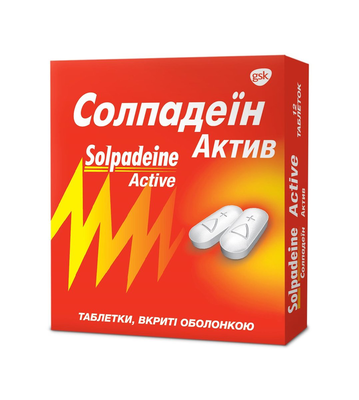
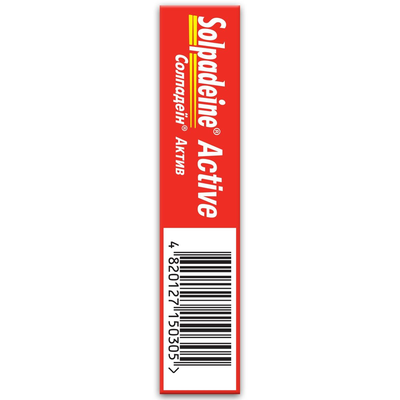
Solpadein Active Tablets, coated, No. 12
Composition
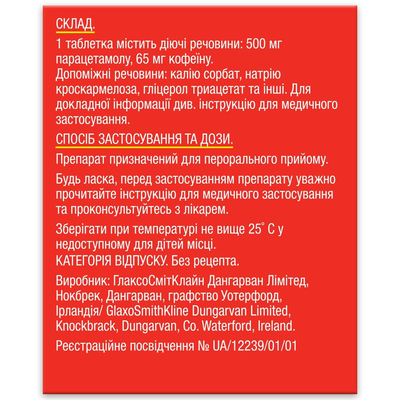
Active ingredients: Each tablet contains 500 mg of acetaminophen and 65 mg of caffeine;
inactive ingredients: pregelatinized starch, corn starch, povidone, potassium sorbate, talc, stearic acid, croscarmellose sodium, hypromellose, glycerol triacetate.
Dosage Form
Film-coated tablets.
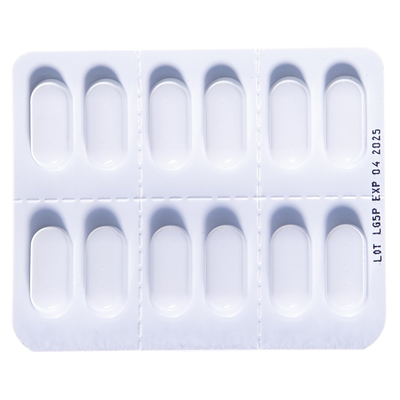
Main physical and chemical properties: white, capsule-shaped, film-coated tablets with flat edges, embossed with a triangular logo and a “+” symbol on one side and no embossing on the other side.
Pharmacotherapeutic group
Pharmacological Properties
Pharmacodynamics.
Paracetamol is an analgesic and antipyretic. Its effect is based on the inhibition of prostaglandin synthesis in the central nervous system. Due to its weak inhibition of peripheral prostaglandins, particularly in the gastrointestinal tract, paracetamol is partially suitable for patients for whom inhibition of peripheral prostaglandins is undesirable, for example, when salicylates are contraindicated.
Caffeine acts as a potentiator, increasing the efficacy of paracetamol.
Pharmacokinetics.
Paracetamol and caffeine are rapidly absorbed in the gastrointestinal tract and distributed throughout most body tissues. Plasma protein binding of acetaminophen is minimal when taken at therapeutic doses.
Paracetamol and caffeine are metabolized primarily in the liver and excreted in the urine as metabolites.
Indications
The drug has a moderate analgesic and antipyretic effect. Indications for use include headaches, including migraines, toothaches, neuralgias, rheumatic pain, and menstrual cramps; and for the relief of cold and flu symptoms and sore throat.
Contraindications
History of hypersensitivity to acetaminophen, caffeine, or any other component of the drug; severe liver and/or kidney dysfunction; congenital hyperbilirubinemia; glucose-6-phosphate dehydrogenase deficiency; alcoholism; blood disorders, severe anemia, leukopenia; states of increased agitation, sleep disturbances, epilepsy; marked elevation of blood pressure, organic diseases of the cardiovascular system, including severe atherosclerosis and severe hypertension; decompensated heart failure, acute myocardial infarction, paroxysmal tachycardia, hyperthyroidism, acute pancreatitis, severe forms of diabetes mellitus, glaucoma; age over 60 years.
Do not use concomitantly with monoamine oxidase (MAO) inhibitors or within 2 weeks after discontinuing MAO inhibitors.
Contraindicated in patients taking tricyclic antidepressants or beta-blockers.
Drug Interactions and Other Interactions
The rate of paracetamol absorption may increase with the use of metoclopramide and domperidone and decrease with the use of cholestyramine.
Prolonged concomitant use of this medication with acetylsalicylic acid or other nonsteroidal anti-inflammatory drugs (NSAIDs) may lead to kidney damage.
The anticoagulant effect of warfarin and other coumarins, which increases the risk of bleeding, may be enhanced by long-term, regular use of acetaminophen. Single doses do not produce a significant effect. Barbiturates reduce the antipyretic effect of acetaminophen. Anticonvulsants (including phenytoin, barbiturates, and carbamazepine), which stimulate the activity of hepatic microsomal enzymes, may enhance the toxic effect of acetaminophen on the liver by increasing the extent to which the drug is converted into hepatotoxic metabolites. When paracetamol is used concomitantly with hepatotoxic agents, the likelihood of paracetamol accumulation increases, as does the toxic effect of paracetamol and these agents on the liver. Concomitant use of high doses of acetaminophen with isoniazid increases the risk of developing hepatotoxic syndrome. Acetaminophen reduces the effectiveness of diuretics.
Paracetamol increases plasma levels of acetylsalicylic acid and chloramphenicol. Probenecid affects the plasma concentration of paracetamol and its excretion.
Inducers of hepatic microsomal enzymes (rifampicin and phenobarbital) increase the toxicity of acetaminophen, as its biotransformation produces large amounts of a toxic epoxide. Paracetamol may reduce the bioavailability of lamotrigine, thereby reducing its effect, due to the likely induction of its metabolism in the liver. Concomitant use of paracetamol and zidovudine increases the risk of neutropenia.
Do not use concomitantly with alcohol.
Concomitant use of caffeine with MAO inhibitors may cause a dangerous rise in blood pressure. Caffeine enhances the effect (improves bioavailability) of analgesic-antipyretics and potentiates the effects of xanthine derivatives, alpha- and beta-adrenomimetics, and psychostimulants.
Cimetidine, hormonal contraceptives, and isoniazid enhance the effects of caffeine.
Caffeine reduces the effects of opioid analgesics, anxiolytics, hypnotics, and sedatives; it acts as an antagonist to anesthetics and other CNS depressants, and acts as a competitive antagonist of adenosine and ATP. When caffeine is used concomitantly with ergotamine, the absorption of ergotamine from the gastrointestinal tract is enhanced; when used with thyrotropic agents, the thyroid-stimulating effect is increased.
Caffeine may increase the excretion of lithium from the body. Therefore, concomitant use of this medication with lithium preparations is not recommended.
Special Considerations for Use
This medication contains acetaminophen; therefore, it should not be used with other medications containing acetaminophen that are used, for example, to reduce fever, treat pain, alleviate flu and cold symptoms, or treat insomnia. Concomitant use with other medications containing acetaminophen may lead to an overdose. A paracetamol overdose can cause liver failure, which may necessitate a liver transplant or result in death.
If you have liver or kidney disease, consult your doctor before using this medication. Restrictions on the use of this medication in such patients are primarily due to its acetaminophen content. Patients with liver disease are at increased risk of paracetamol-induced hepatotoxicity.
Do not consume alcoholic beverages during treatment. At doses exceeding 6–8 g per day, acetaminophen can be toxic to the liver. However, adverse effects on the liver may also occur at significantly lower doses if alcohol is consumed, if liver enzyme inducers or other substances that have a toxic effect on the liver are used, or in patients with non-cirrhotic alcoholic liver disease. Long-term alcohol use significantly increases the risk of paracetamol-induced hepatotoxicity. In patients with impaired liver function, as well as in those taking high doses of acetaminophen over a prolonged period, regular liver function tests are recommended.
When treating with oral anticoagulants while simultaneously taking high doses of acetaminophen, monitoring of prothrombin time is necessary.
This medication may affect the results of laboratory tests for blood glucose and uric acid levels. Patients who take analgesics daily for mild arthritis should consult a doctor before use.
Cases of liver dysfunction or liver failure have been reported in patients with reduced glutathione levels, such as in cases of severe malnutrition, anorexia, low body mass index, chronic alcoholism, or sepsis.
In patients with low glutathione levels, taking acetaminophen increases the risk of metabolic acidosis. Symptoms of metabolic acidosis include deep, rapid, or labored breathing, nausea, vomiting, and loss of appetite. Seek medical attention immediately if these symptoms occur.
If symptoms persist, consult a doctor.
While taking this medication, it is not recommended to consume excessive amounts of caffeinated beverages (such as coffee, tea, and certain other drinks). This may lead to sleep disturbances, tremors, an unpleasant sensation behind the breastbone due to palpitations, tension, and irritability.
Keep this medication out of sight and out of reach of children.
Use during pregnancy or breastfeeding.
Use of this medication during pregnancy is not recommended, as there is an increased risk of spontaneous miscarriage associated with caffeine use.
Use of this medication is not recommended during breastfeeding. Paracetamol and caffeine pass into breast milk, but in clinically insignificant amounts (when taken at the recommended doses). Caffeine in breast milk may have a stimulating effect on infants during breastfeeding, but no significant toxicity has been observed.
Effect on reaction time when operating motor vehicles or other machinery.
No or negligible effect.
Dosage and Administration
The drug is intended for oral use.
Adults and children 12 years of age and older: 1–2 tablets every 4–6 hours as needed. Do not take more than 8 tablets (4,000 mg of acetaminophen/520 mg of caffeine) within a 24-hour period.
Do not exceed the recommended dose.
Use the lowest effective dose for the shortest duration necessary to achieve the therapeutic effect.
The interval between doses should be at least 4 hours.
Children
This medication is not recommended for children under 12 years of age.
Overdose
Paracetamol.
An overdose of paracetamol can cause liver failure, which may require a liver transplant or be fatal. Acute pancreatitis has been observed, usually in conjunction with liver dysfunction and hepatotoxicity. Liver damage is possible in adults who have taken 6–8 g or more of paracetamol and in children who have taken more than 150 mg/kg of body weight. In patients with risk factors (long-term treatment with carbamazepine, phenobarbital, phenytoin, primidone, rifampicin, St. John’s wort, or other medications that induce liver enzymes; regular consumption of excessive amounts of ethanol; glutathione-deficient cachexia (digestive disorders, cystic fibrosis, HIV infection, starvation, cachexia)), taking 5 g or more of acetaminophen may lead to liver damage.
In case of overdose, immediate medical attention is required. Treatment must be initiated immediately. The patient should be taken to a hospital, even if there are no early symptoms of overdose.
Symptoms of overdose in the first 24 hours include pallor, nausea, vomiting, loss of appetite, and abdominal pain. Experience shows that clinical symptoms of liver damage usually become apparent 24–48 hours after an overdose and typically peak after 4–6 days. Glucose metabolism disorders and metabolic acidosis may occur. In severe poisoning, liver failure may progress to encephalopathy, hemorrhages, hypoglycemia, coma, and may be fatal. Acute renal failure with acute tubular necrosis may manifest as severe lower back pain, hematuria, and proteinuria and may develop even in the absence of severe liver damage. Cardiac arrhythmias have also been reported.
With prolonged use of the drug in high doses, hematopoietic system disorders such as aplastic anemia, pancytopenia, agranulocytosis, neutropenia, leukopenia, and thrombocytopenia may develop. When taking high doses, the central nervous system may be affected by dizziness, psychomotor agitation, and disorientation; and in the urinary system, nephrotoxicity (renal colic, interstitial nephritis, capillary necrosis).
Symptoms of overdose may be limited to nausea and vomiting or may not reflect the severity of the overdose or the risk of organ damage. Immediate medical attention is necessary in the event of an overdose, even if no symptoms of overdose are observed. If an overdose is confirmed or even suspected, the patient must be taken to the nearest medical facility where they can receive emergency care and appropriate treatment. This must be done even if there are no symptoms of overdose, due to the risk of delayed liver damage. Treatment with activated charcoal should be considered if an excessive dose of acetaminophen was taken within the past hour. The concentration of acetaminophen in the blood plasma should be measured 4 hours or more after ingestion (earlier measurements are unreliable). Treatment with N-acetylcysteine may be administered within 24 hours after paracetamol ingestion, but the maximum protective effect occurs when it is administered within 8 hours after ingestion. The effectiveness of the antidote decreases sharply after this time. If necessary, N-acetylcysteine is administered intravenously to the patient according to the recommended dosage. In the absence of vomiting, methionine may be administered orally as a suitable alternative in remote areas outside a hospital setting.
Caffeine.
Caffeine overdose may cause epigastric pain, vomiting, increased urine output, rapid breathing, tachycardia, or cardiac arrhythmia, and affect the central nervous system (insomnia, restlessness, nervous excitement, agitation, anxiety, dizziness, irritability, emotional distress, tremor, and seizures). Clinically significant symptoms of caffeine overdose are also associated with severe paracetamol-induced liver damage, which may occur with high doses of the drug. There is no specific antidote, but supportive measures, such as the use of beta-adrenergic receptor antagonists, may alleviate the cardiotoxic effects. Gastric lavage is necessary; oxygen therapy is recommended; diazepam should be administered in cases of seizures. Symptomatic treatment.
Side Effects
Information on the adverse reactions listed below was obtained through postmarketing surveillance. These data are provided voluntarily and relate to a patient population of unknown size; therefore, the frequency of these adverse reactions is unknown, but they are most likely rare (< 1/10,000).
Adverse reactions caused by paracetamol:
Blood and lymphatic system disorders: thrombocytopenia, neutropenia, leukopenia, agranulocytosis, pancytopenia.
Immune system disorders: anaphylaxis, hypersensitivity reactions of the skin, including skin rash, angioedema, Stevens-Johnson syndrome, toxic epidermal necrolysis, and acute generalized exanthematous pustulosis.
Respiratory, thoracic, and mediastinal disorders: bronchospasm in patients sensitive to acetylsalicylic acid and other nonsteroidal anti-inflammatory drugs.
Hepatobiliary system: liver dysfunction, liver failure, hepatic necrosis, jaundice.
Adverse reactions caused by caffeine:
Central nervous system: nervousness, dizziness.
Cardiovascular system: rapid heartbeat, edema.
Gastrointestinal system: gastrointestinal upset, abdominal pain, diarrhea, nausea, vomiting.
Psychiatric: insomnia, restlessness, anxiety and irritability, nervousness.
Skin and subcutaneous tissue disorders: itching, rash, sweating, purpura, hives.
In addition, after taking medications containing similar active ingredients, the following adverse reactions may occur: headache, erythema multiforme, heartburn, epigastric pain, hypoglycemia (up to hypoglycemic coma), anemia, sulfhemoglobinemia, and methemoglobinemia (cyanosis, shortness of breath, chest pain), hemolytic anemia, bruising or bleeding, tachycardia, arrhythmia, increased blood pressure, and elevated liver enzyme levels, usually without the development of jaundice.
When this medication is taken concurrently at the recommended doses with products containing caffeine, the resulting increased caffeine dose may exacerbate caffeine-related side effects.
Shelf life
4 years.
Storage Conditions
Store at a temperature not exceeding 25 °C, out of the reach and sight of children.
Packaging
12 film-coated tablets per blister pack; 1 blister pack per cardboard box.
Dispensing Category
Over-the-counter.