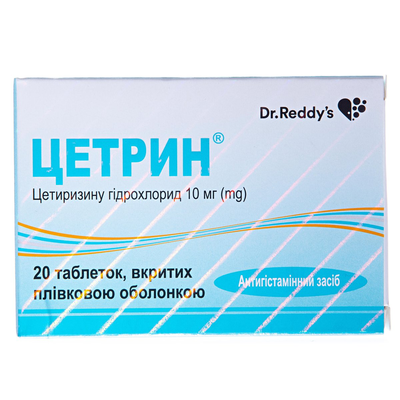
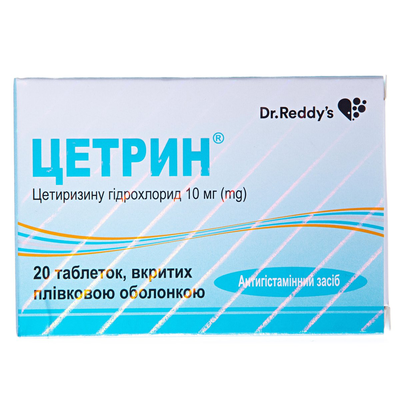
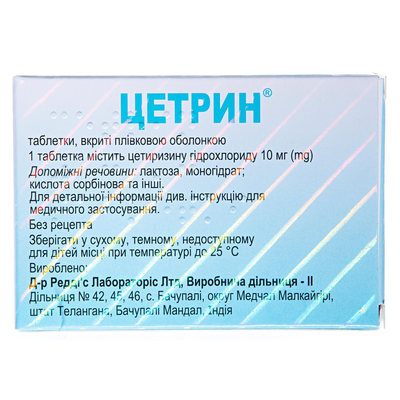
Cetrin tablets, film-coated, 10 mg, No. 10
Ingredients
Active ingredient: cetirizine hydrochloride;
1 tablet contains 10 mg of cetirizine hydrochloride;
Excipients: lactose monohydrate; corn starch; povidone; magnesium stearate; hypromellose; polyethylene glycols; titanium dioxide (E 171); talc; sorbic acid; polysorbates; dimethicone.
Dosage Form
Film-coated tablets.
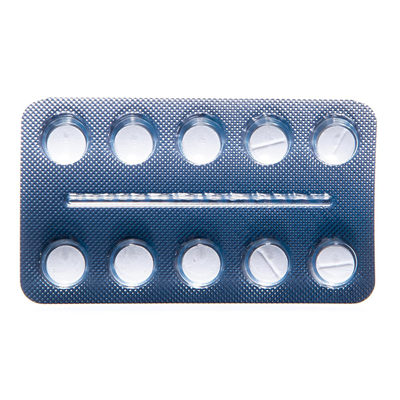
Main physical and chemical properties: round, biconvex, film-coated tablets, white in color, with a score line on one side and smooth on the other.
Pharmacotherapeutic group
Antihistamines for systemic use. Piperazine derivatives. ATC code R06A E07.
Pharmacological Properties
Pharmacodynamics.
Cetirizine is a competitive histamine antagonist and a metabolite of hydroxyzine that blocks H1-histamine receptors. It prevents the development of and alleviates the course of allergic reactions; it has antipruritic and anti-exudative properties; inhibits the development of the histamine-mediated early phase of an allergic reaction, limits the release of inflammatory mediators during the late phase of an allergic reaction, reduces the migration of eosinophils, neutrophils, and basophils; reduces capillary permeability; prevents the development of tissue edema; and relieves smooth muscle spasms. It eliminates skin reactions to the administration of histamine, specific allergens, and cold exposure (in cases of cold urticaria), and reduces histamine-induced bronchoconstriction in mild bronchial asthma. It has virtually no anticholinergic or antiserotonergic effects. At therapeutic doses, it has virtually no sedative effect. The onset of action after a single 10-mg dose of cetirizine occurs within 20 minutes in 50% of individuals and within 1 hour in 95% of individuals. The effect lasts for at least 24 hours after a single dose. During course therapy, tolerance to the antihistamine effects of cetirizine does not develop. After discontinuation of treatment, the effect persists for up to 3 days.
Pharmacokinetics.
It is rapidly absorbed from the gastrointestinal tract; the time to reach peak plasma concentration after oral administration is approximately 1 hour. The bioavailability of cetirizine is the same when administered as tablets or syrup. Food does not affect the extent of absorption but prolongs the time to peak concentration by 1 hour and reduces the peak concentration by 23%. Plasma protein binding is 93%. It is metabolized in small amounts in the liver by O-dealkylation to form a pharmacologically inactive metabolite (unlike other H1-histamine receptor blockers, which are metabolized in the liver via the cytochrome P450 system). It does not accumulate; two-thirds of the drug is excreted unchanged by the kidneys, and approximately 10% is excreted in the feces. Systemic clearance is 53 mL/min.
The half-life in adults is 7–10 hours; in children aged 6–12 years, it is 6 hours; and in children aged 2–6 years, it is 5 hours.
Patients with Impaired Renal Function
The pharmacokinetics of the drug in patients with mild renal impairment (creatinine clearance below 40 mL/min) were similar to those in healthy volunteers. In patients with moderate renal impairment, the half-life was three times longer, and clearance was 70% lower than in healthy volunteers.
In patients undergoing hemodialysis (creatinine clearance below 7 mL/min), following administration of a single 10-mg dose of cetirizine, the half-life was three times longer, and clearance was 70% lower than in healthy volunteers. During hemodialysis, cetirizine is removed from plasma to a negligible extent. Patients with moderate or severe renal impairment require dosage adjustment.
Indications
Nasal symptoms of seasonal and chronic allergic rhinitis (rhinorrhea, nasal itching, sneezing), and non-nasal symptoms associated with conjunctivitis. Itching, various types of urticaria, including chronic idiopathic urticaria.
Contraindications
History of hypersensitivity to cetirizine, to any of the drug’s excipients, to hydroxyzine, or to any piperazine derivatives. Severe renal impairment with a creatinine clearance of less than 10 mL/min.
Drug Interactions and Other Interactions
Studies were conducted on the interaction of cetirizine with pseudoephedrine, cimetidine, antipyrine, ketoconazole, erythromycin, and azithromycin. These studies did not confirm any pharmacokinetic interactions between these agents and cetirizine. When taken concomitantly with theophylline, the clearance of cetirizine is reduced, which may lead to accumulation and overdose of cetirizine. There are no data on the potentiation of the effects of sedatives when cetirizine is used at therapeutic doses. However, the use of sedatives should be avoided while taking cetirizine. The extent of cetirizine absorption is not reduced by food intake, although the rate of absorption is delayed by 1 hour. Alcohol and/or central nervous system (CNS) depressants, when used concomitantly with cetirizine, may cause further impairment of attention and performance, although cetirizine does not potentiate the effects of alcohol (at blood alcohol levels of 0.5 g/L).
Special Considerations for Use
Cetrin® is excreted by the kidneys; therefore, in patients with renal insufficiency, the dose should be reduced to 5 mg per day. No dose adjustment is necessary for elderly patients with normal renal function. When taken at therapeutic doses, no clinically significant interactions with alcohol were observed (at blood alcohol levels of 0.5 g/L). However, it is recommended to avoid concomitant use of the drug with alcohol. Caution is advised when prescribing this medication to patients with epilepsy or those at risk of seizures; it should not be used in patients with hereditary galactose intolerance, Lapp lactase deficiency, or glucose-galactose malabsorption.
This medication contains lactose monohydrate. If you have been diagnosed with an intolerance to certain sugars, consult your doctor before taking this medication.
Use with caution in patients prone to urinary retention (spinal injury, prostatic hyperplasia), as cetirizine may increase the risk of urinary retention.
Antihistamines suppress skin allergy tests; therefore, you must stop taking this medication 3 days before the test (elimination period).
Use during pregnancy or breastfeeding.
Pregnancy. There are insufficient data on the use of this medication during pregnancy. Animal studies do not indicate any direct or indirect harmful effects on pregnancy, embryonic/fetal development, labor, or postnatal development. Therefore, the drug should be prescribed to pregnant women only when, in the physician’s opinion, the benefits of treatment outweigh the potential risk to the fetus.
Breastfeeding. Cetirizine passes into breast milk at concentrations ranging from 25% to 90% of plasma concentrations, depending on the time elapsed since administration. Therefore, the drug should be prescribed with caution to women who are breastfeeding.
Effect on reaction time when driving or operating machinery. Individuals who drive vehicles or operate complex machinery should use this medication with caution, taking into account their own body’s response (see the “Adverse Reactions” section). Do not exceed the therapeutic dose.
Concomitant use of this medication with other central nervous system (CNS) depressants may cause further impairment of attention and working capacity.
Dosage and Administration
Take orally, regardless of meals, with a sufficient amount of liquid (1 glass).
Children aged 6 to 12 years: 5 mg (half a tablet) twice daily.
Adults and children 12 years of age and older: 10 mg (1 tablet) once daily.
No dose adjustment is necessary for elderly patients with normal renal function.
For patients with impaired renal function, the dose should be adjusted on an individual basis, taking into account renal clearance, age, and body weight.
Patients with moderate or severe renal impairment
There are no data on the benefit-risk ratio for patients with renal impairment. Since cetirizine is primarily excreted by the kidneys, if alternative treatment is not possible, dosing intervals should be determined individually based on renal function.
Dosage for adult patients based on renal function is presented in Table 1.
To use the table, creatinine clearance (Clcr) in mL/min must be determined. Clcr (mL/min) can be calculated based on serum creatinine concentration (mg/dL) using the following formula:

Table 1
Dosage Adjustment for Adult Patients Based on Renal Function:
| Renal function | Creatinine clearance (mL/min) | Dosage and Frequency |
| Normal | ≥ 80 | 10 mg once daily |
| Mild impairment | 50–79 | 10 mg once daily |
| Moderate impairment | 30–49 | 5 mg once daily |
| Severe impairment | < 30 | 5 mg once every 2 days |
| End-stage renal disease—patients undergoing dialysis | < 10 | Contraindicated |
For children with impaired renal function, the dosage should be adjusted individually based on creatinine clearance and body weight.
For patients with hepatic impairment (provided renal function is normal), no dose adjustment is necessary.
For patients with impaired liver and kidney function, the dose should be adjusted (see Table 1).
The duration of treatment is determined by the physician based on the course of the disease.
Children. Cetirizine tablets are not prescribed for children under 6 years of age, as this dosage form does not allow for the necessary dose adjustment.
Overdose
Overdose with cetirizine is primarily associated with effects on the central nervous system or with effects that may indicate anticholinergic activity. Side effects reported after taking a dose at least 5 times higher than the recommended daily dose include: confusion, diarrhea, dizziness, fatigue, headache, malaise, mydriasis, pruritus, restlessness, sedation, drowsiness, stupor, tachycardia, tremor, and urinary retention.
In the early stages, the patient should be made to vomit. No antidote has been identified. Gastric lavage, administration of activated charcoal, and laxatives are recommended. Dialysis is not effective. In severe cases, cardiovascular and respiratory functions should be closely monitored.
Side Effects
Cetrin® is generally well tolerated by patients at the recommended doses.
It is known that cetirizine at usual doses (10 mg per day) may cause adverse CNS reactions, drowsiness, increased fatigue, headache, and dizziness. These are mild and transient.
In some cases, paradoxical CNS stimulation has been observed.
Although cetirizine is a selective H1-receptor antagonist and has virtually no anticholinergic activity, isolated cases of delayed urination, impaired accommodation of the eye, and dryness of the oral mucosa. Liver dysfunction has also been observed, including elevated liver enzyme levels and increased bilirubin concentrations. In most cases, these symptoms resolved after discontinuation of cetirizine.
Clinical Studies
In clinical studies comparing cetirizine at a dose of 10 mg with other antihistamines at recommended doses, minor adverse reactions were observed involving the central and peripheral nervous systems (dizziness, headache); from the gastrointestinal tract (abdominal pain, dry mouth, nausea); from the respiratory system (pharyngitis); general disorders (increased fatigue) and psychiatric disorders (drowsiness). It is known that drowsiness (psychiatric disorders) was observed more frequently during the study, but in most cases was mild or moderate in severity.
Objective tests, as demonstrated in other studies, have shown that when the drug is administered at the recommended daily doses to healthy young volunteers, daily activities are not impaired.
Data indicate that among children aged 6 months to 12 years who were included in controlled clinical or pharmacoclinical studies, adverse reactions involving the gastrointestinal tract (diarrhea) and or from the respiratory system (rhinitis) were minor.
Postmarketing Experience
In addition to the adverse reactions recorded during clinical trials and listed above, isolated cases of the following adverse reactions to cetirizine have been reported during postmarketing use. These less frequently reported adverse reactions were classified by frequency of occurrence as: uncommon (≥ 1/1,000 to < 1/100); rare (≥ 1/10,000 to < 1/1,000); very rare (< 1/10,000) or unknown (cannot be estimated from the available data).
Blood and Lymphatic System
Very rare: thrombocytopenia.
Immune system disorders
Rare: hypersensitivity.
Very rare: anaphylactic shock.
Nutrition and metabolism
Frequency unknown – increased appetite.
Psychiatric
Uncommon: mental agitation with anxiety (agitation).
Rare: aggression, confusion, depression, hallucinations, insomnia.
Very rare: nervous tic.
Frequency unknown: suicidal thoughts.
Nervous system
Uncommon: paresthesias.
Rare: convulsions, movement disorders.
Very rare: dysgeusia, syncope, tremor, dystonia, dyskinesia.
Frequency unknown: amnesia, memory impairment.
Eye and balance disorders
Frequency unknown: vertigo.
Cardiac disorders
Rare: tachycardia.
Gastrointestinal system
Uncommon: diarrhea.
Hepatobiliary system
Rare: liver dysfunction (elevated levels of transaminases, alkaline phosphatase, γ-glutamyltransferase, and bilirubin).
Skin and subcutaneous tissue disorders
Uncommon: itching, rash.
Rare: hives.
Very rare: angioedema, drug-induced fixed erythema.
Renal and urinary tract disorders
Very rare: dysuria, enuresis.
Frequency unknown: urinary retention.
General disorders
Uncommon: asthenia, malaise.
Rare: edema.
Changes in laboratory and diagnostic test results
Rare: weight gain.
Shelf life
3 years.
Do not use after the expiration date printed on the package.
Storage conditions
Store in a dry, dark place out of the reach of children at a temperature not exceeding 25 °C.
Packaging
10 tablets per blister pack; 2 or 3 blister packs per cardboard box.
Dispensing Category
Available without a prescription.