
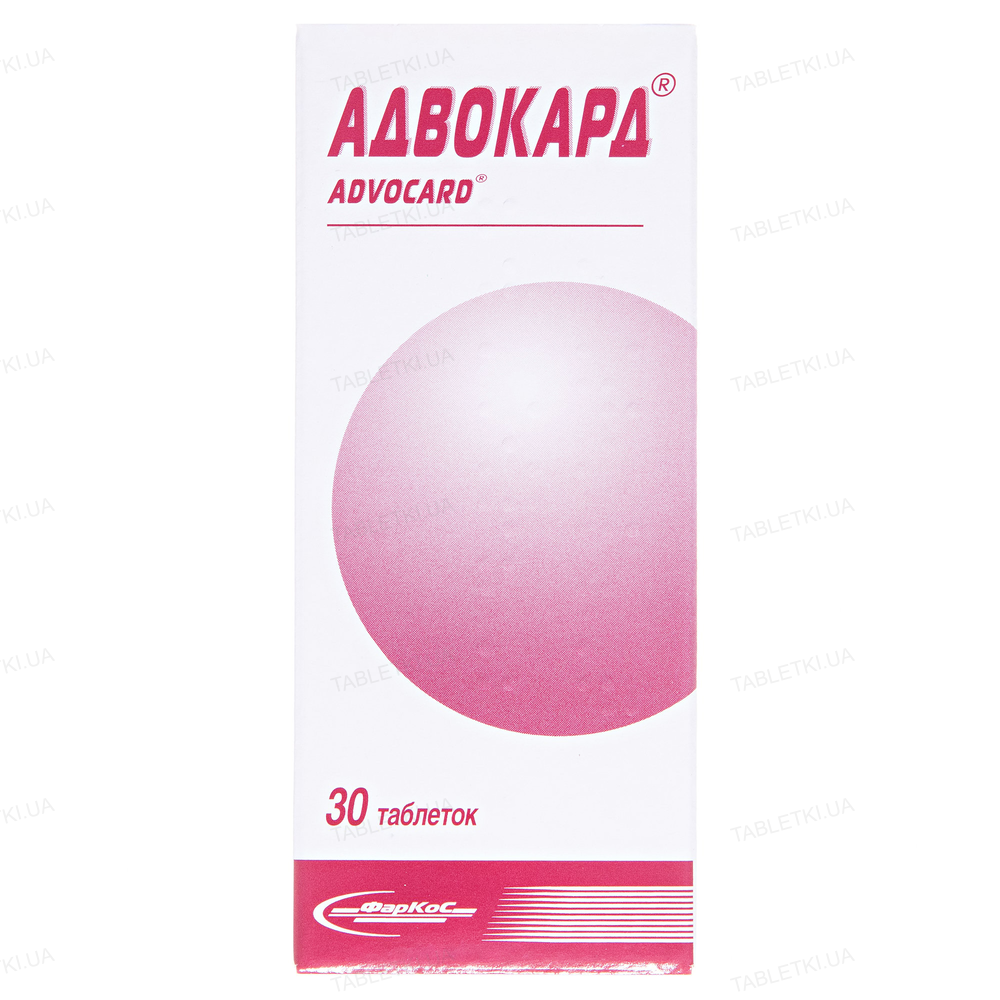
Advocard Tablets, No. 30 (10 x 3)
Composition
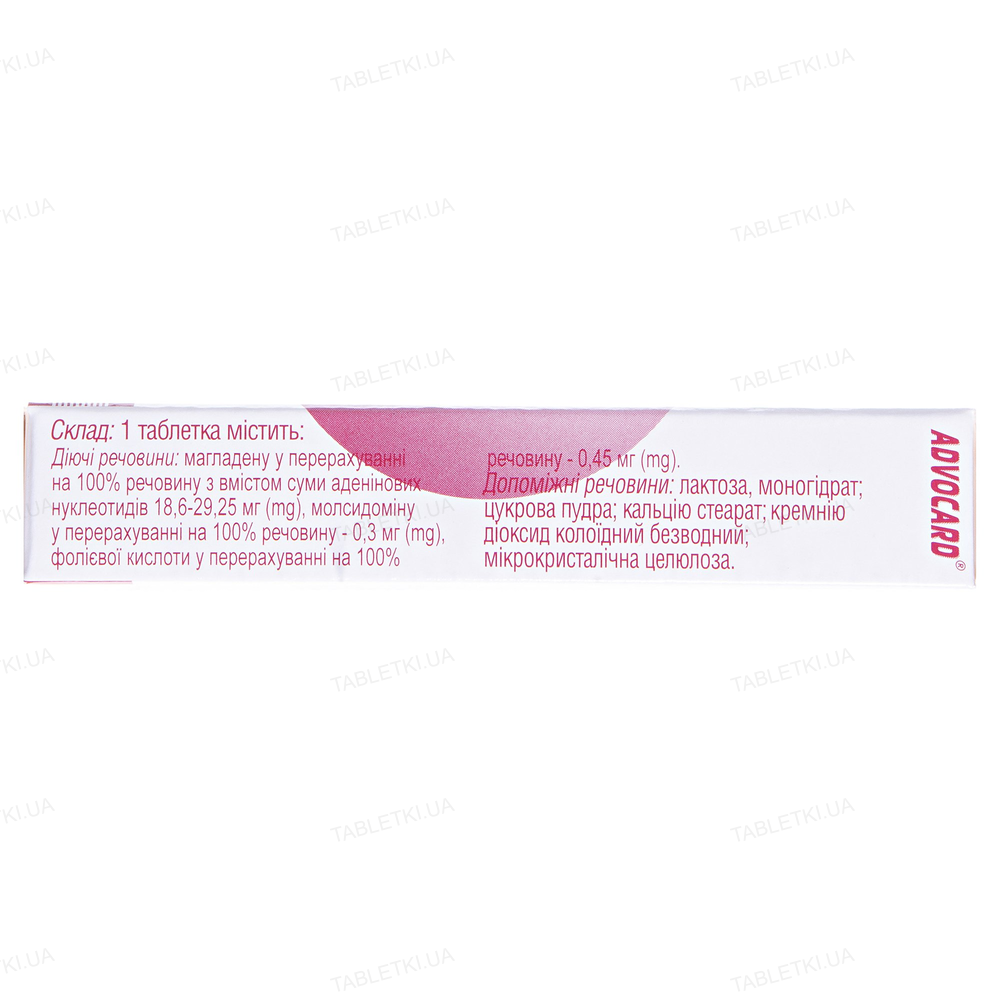
Active ingredients: 1 tablet contains: magladen, calculated as 100% active ingredient, with a total adenosine nucleotide content of 18.6–29.25 mg; molsidomine, calculated as 100% active ingredient—0.3 mg; folic acid, calculated as 100% active ingredient—0.45 mg;
excipients: lactose monohydrate; powdered sugar; colloidal anhydrous silicon dioxide; microcrystalline cellulose.
Dosage Form
Tablets
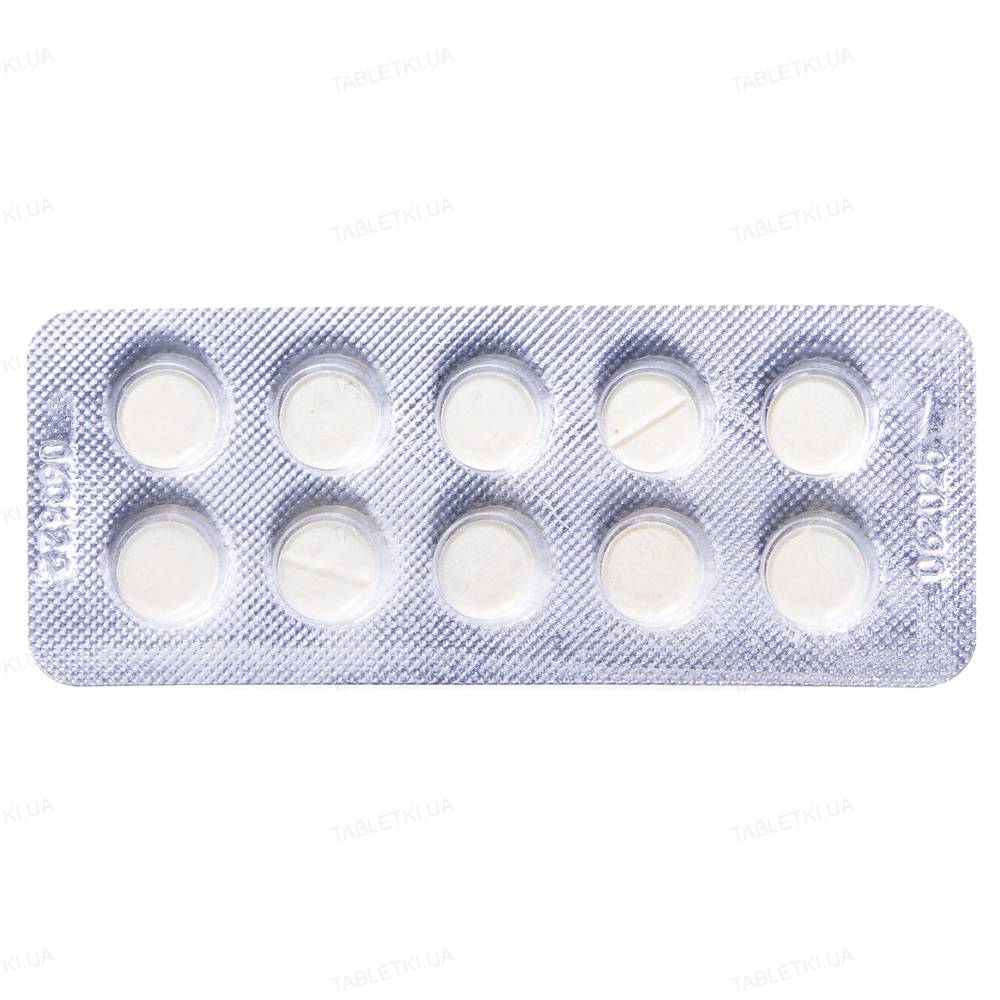
Main physical and chemical properties: light yellow tablets with darker spots, flat-cylindrical in shape, with a bevel and a score line.
Pharmacotherapeutic group
Combination cardiovascular agents. ATC code C01E X
Pharmacological properties
Pharmacodynamics.
ADVOCARD® is an original combination drug. It exhibits antianginal and anti-ischemic effects, exerts membrane-protective and antioxidant effects, improves myocardial metabolism by protecting cells from hypoxia, and exhibits antiatherosclerotic effects by normalizing homocysteine metabolism. The mechanism of action of ADVOCARD® is associated with the combined effects of the drug’s ingredients.
Magladen acts on purine (adenosine) receptors, thereby leading to the activation of potassium channels. The activation of potassium channels leads to the inhibition of calcium ion influx into the cell, which is accompanied by anti-ischemic, membrane-stabilizing, and antiarrhythmic effects. By acting on ATP-dependent potassium channels (ATP-KP) in mitochondria, Magladen promotes processes aimed at protecting the myocardium from damage associated with ischemia.
Through its action on purine receptors, Magladen exhibits an antiplatelet effect.
Molsidomine and its active metabolites SIN 1 and SIN 1A are nitric oxide donors. Nitric oxide stimulates the guanylate cyclase system and activates ATP-sensitive potassium channels, which blocks the influx of calcium ions into vascular cells and leads to their dilation. This explains the synergistic effect of Magladen and molsidomine on hemodynamic parameters.
Unlike organic nitrates, the drug does not lead to tolerance. Molsidomine has a positive effect on systemic hemodynamic parameters, reducing the load on the myocardium. By inhibiting platelet phospholipase synthesis and stimulating prostacyclin synthesis in the vascular wall, molsidomine exhibits antiplatelet properties.
Folic acid is involved in many metabolic processes. Of particular importance is its role in the metabolism of homocysteine, a factor in the development of atherosclerosis. By reducing homocysteine levels, folic acid exerts an anti-atherosclerotic effect. By stimulating metabolic processes in the myocardium, folic acid improves its functional activity.
In cases of coronary insufficiency, the drug has an energy-saving effect by reducing the myocardium’s oxygen demand. ADVOCARD® reduces lactate levels in the myocardium, inhibits the activity of membrane-bound phospholipases, prevents structural and functional damage to cardiomyocyte membranes, and maintains the quantitative and qualitative composition of membrane lipids. ADVOCARD® improves coronary blood flow, increases exercise tolerance, and reduces the frequency and severity of angina attacks. In patients with heart failure, it improves myocardial metabolic supply and, by normalizing hemodynamic parameters, increases the left ventricular ejection fraction. Use of the drug helps normalize magnesium ion concentrations in tissues. ADVOCARD® exhibits an antiarrhythmic effect.
Pharmacokinetics. The pharmacokinetics of the drug have not been studied.
Indications
As part of complex therapy for ischemic heart disease and heart failure, exertional and resting angina; prevention and treatment of angina attacks.
Contraindications
Individual hypersensitivity to the drug or its ingredients. Severe arterial hypotension; severe forms of bronchial asthma; cardiogenic and other types of shock; the acute phase of myocardial infarction, especially with low blood pressure; traumatic brain injury; second- or third-degree sinoatrial and atrioventricular block; hemorrhagic stroke; glaucoma, especially angle-closure glaucoma; untreated malignant neoplasms; pediatric patients; pregnancy or breastfeeding.
Drug Interactions and Other Interactions
When ADVOCARD® is used concomitantly with antihypertensive agents (including nitrates), their effects are potentiated. Concomitant use with sildenafil citrate is not recommended, as it may lead to the development of hypotension.
Dipyridamole enhances the therapeutic effect of the drug, while xanthinol nicotinate, caffeine, theophylline, and aminophylline reduce it.
The drug enhances the antianginal effects of α- and β-adrenergic blockers, calcium channel blockers, and nitrates.
Alcohol consumption is strictly prohibited during treatment.
When molsidomine is used concomitantly with peripheral vasodilators, calcium channel blockers, or antihypertensive agents, the antiplatelet effect is potentiated.
Patients undergoing long-term treatment with antiepileptic drugs (phenobarbital, phenytoin, and primidone) may develop a folate deficiency. Therefore, the use of folic acid may reduce plasma levels of antiepileptic drugs and trigger a seizure.
Oral contraceptives, ethanol, sulfasalazine, cycloserine, glutethimide, and methotrexate may affect folate metabolism.
Folic acid increases the metabolism of phenytoin. Reduced or altered absorption may occur with the concurrent use of cholestyramine and folic acid. Therefore, the medication should be taken 1 hour before or 4–6 hours after taking cholestyramine.
Special Considerations for Use
Elderly patients may be more sensitive to the drug; therefore, treatment should begin with 1 tablet 3 times daily. If the drug is well tolerated, the dose may be increased to the standard dosage.
The drug should not be prescribed when atrioventricular block is combined with other arrhythmias. Use is not recommended in cases of severe arterial hypotension. Use with caution in patients prone to bronchospasm or with obstructive diseases of the bronchopulmonary system.
The tablets contain a small amount of powdered sugar (1 tablet contains 0.01 bread unit (BU)), which should be taken into account by patients with diabetes mellitus.
The drug contains lactose; therefore, patients with rare hereditary forms of galactose intolerance, lactase deficiency, or glucose-galactose malabsorption should not use this drug.
During treatment with this medication, consumption of products containing caffeine (coffee, tea) should be limited.
This medication should be prescribed with caution to patients with vitamin B12 deficiency, malignant neoplasms, anemias of unknown etiology, as folic acid may interfere with the diagnosis of pernicious anemia by alleviating the hematological manifestations of the disease, thereby allowing neurological complications to progress. In cases of pernicious anemia, the drug should be used only in conjunction with cyanocobalamin.
Long-term use of folic acid, especially in high doses, is not recommended due to the risk of reduced blood levels of cyanocobalamin.
During long-term use of the drug, blood magnesium levels must be monitored.
Use During Pregnancy and Breastfeeding.
There are no clinical data on the safety and efficacy of this medication during pregnancy; therefore, its use is contraindicated in pregnant women.
Breastfeeding should be discontinued for the duration of treatment.
Effect on reaction time when driving or operating machinery.
This medication does not affect the ability to drive or operate machinery. However, if dizziness or a drop in blood pressure occurs during treatment for any reason, patients should refrain from driving or operating machinery.
Dosage and Administration
Take ADVOCARD® tablets sublingually (under the tongue) and hold them under the tongue until they are completely dissolved. The single dose is 1–3 tablets 3–4 times daily, regardless of meals. The course of treatment is 20–30 days. During an angina attack, take 1–3 tablets. The maximum single dose is 3 tablets. The maximum daily dose is 20 tablets.
Children.
There is no clinical experience with the use of this medication in children under 18 years of age; therefore, it is not prescribed to this patient population.
Overdose
Overdose is accompanied by headache, dizziness, and visual disturbances. In such cases, caffeine or caffeine-containing medications may be administered.
Hypotension accompanied by nausea and vomiting; bradycardia; atrioventricular block; syncope associated with a sudden drop in blood pressure; and collapse. Rarely, increased diuresis, chest discomfort, hyperthermia, and, in isolated cases, hypermagnesemia may occur. Treatment: symptomatic.
Side Effects
The drug is well tolerated. In very rare cases, the following may occur:
Cardiovascular system: hypotension, up to and including collapse, tachycardia.
Nervous system: at the start of treatment—headache, dizziness, sensation of heaviness in the head.
Gastrointestinal system: nausea, bitter taste in the mouth, epigastric discomfort, flatulence.
Other: facial flushing, general weakness, allergic reactions, skin rash, itching, hives, bronchospasm, anaphylactic reactions.
Shelf life
3 years.
Do not use this medication after the expiration date printed on the package.
Storage
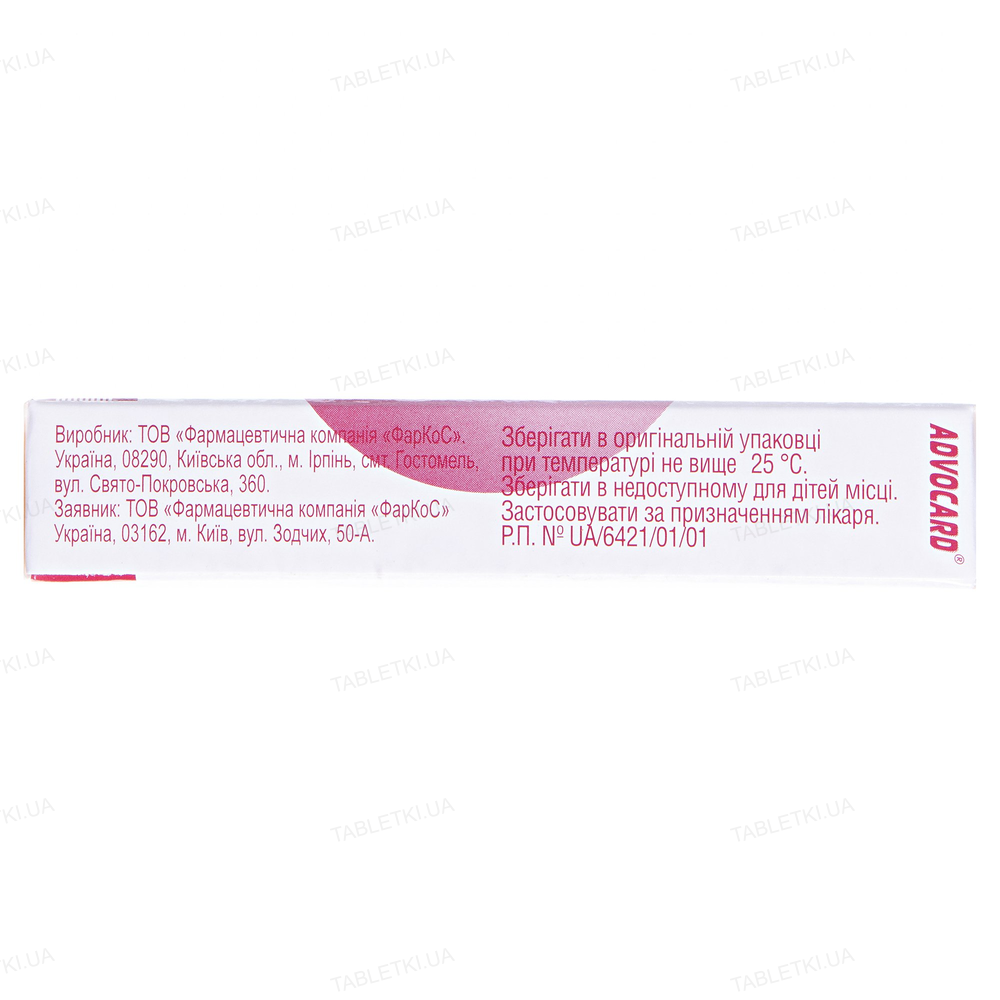
Store in the original packaging at a temperature not exceeding 25 °C.
Keep out of reach of children.
Packaging
10 tablets per blister; 3 or 4 blisters per box labeled in Ukrainian; 1 blister per box without secondary packaging.
Manufacturer
FarCoS Pharmaceutical Company, LLC.
Address
Ukraine, 08290, Kyiv Oblast, Irpin City, Gostomel Town, 360 Svyato-Pokrovska St.







