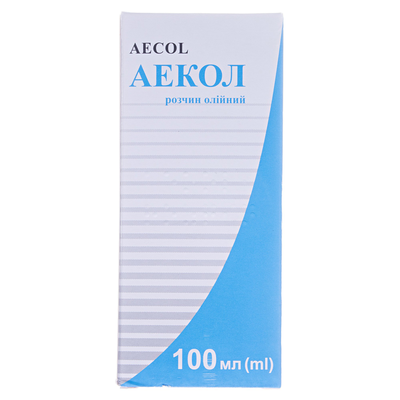
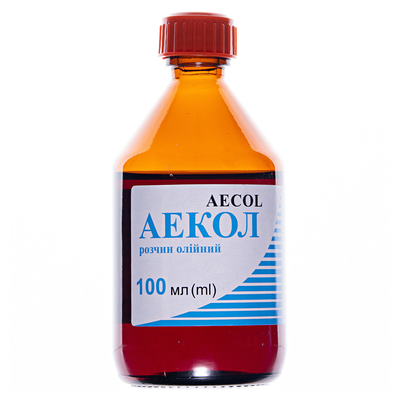
Aekol oil solution, 100 ml per bottle.
Ingredients
Active ingredients: retinol acetate, alpha-tocopherol acetate, menadione, beta-carotene;
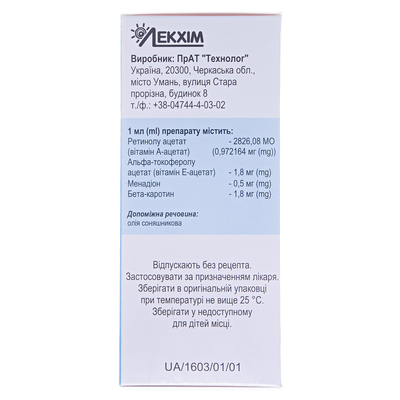
1 mL of the preparation contains: retinol acetate (vitamin A acetate) – 2,826.08 IU (0.972164 mg); alpha-tocopherol acetate (vitamin E acetate) – 1.8 mg; menadione – 0.5 mg; beta-carotene – 1.8 mg;
excipients: sunflower oil.
Dosage Form
Oil solution.
Main physical and chemical properties: an orange-red oily liquid.
Pharmacotherapeutic group
Agents for the treatment of wounds and ulcerative lesions. Preparations that promote wound healing (scarring).
ATC code D0ZA X.
Pharmacological properties
Pharmacodynamics.
A combined vitamin preparation whose action is due to the vitamins A, E, and K in its composition. It exhibits metabolic and antiulcer effects. It accelerates wound healing and stimulates tissue repair. It exhibits antioxidant and anti-inflammatory effects, restores capillary blood flow, normalizes tissue and capillary permeability, and has a hemostatic effect.
Pharmacokinetics.
No pharmacokinetic studies of the drug have been conducted.
Indications
Use as part of combination therapy for gastric and duodenal ulcers, post-gastrectomy conditions, and nonspecific ulcerative colitis.
Topical use: fissures of the rectal mucosa (including conditions following fissure excision), proctosigmoiditis, hemorrhoids, scleroderma, decubital, trophic, and varicose ulcers, cervical erosion, endocervicitis, colpitis, purulent-necrotic wounds, infected second- and third-degree burns, and conditions following autodermoplasty.
Contraindications
Hypersensitivity to any component of the drug.
For oral use: pregnancy and breastfeeding; patients under 14 years of age. Hypervitaminosis A, hypervitaminosis E, retinoid overdose, thyrotoxicosis, obesity, severe cardiosclerosis, the acute phase of myocardial infarction, decompensated heart failure, gallstone disease, chronic pancreatitis, severe hepatic insufficiency, chronic glomerulonephritis, acute and chronic nephritis, hyperlipidemia, hypercoagulation, thromboembolism, chronic alcoholism, sarcoidosis (including a history thereof), glucose-6-phosphate dehydrogenase deficiency.
Interactions with Other Medications and Other Types of Interactions
This medication should not be taken orally concurrently with estrogens (which increase the risk of hypervitaminosis A); with nitrites and cholestyramine, as they impair the absorption of the drug; iron and silver preparations, alkaline agents, and indirect-acting anticoagulants.
Vitamin A is incompatible with hydrochloric acid and acetylsalicylic acid. Vitamin A reduces the anti-inflammatory effect of glucocorticoids. Concomitant use of petroleum jelly may impair the absorption of vitamin A in the intestine. Vitamin E facilitates the absorption and utilization of vitamin A.
High-dose vitamin E supplementation may cause vitamin A deficiency in the body. Vitamin E enhances the effects of steroidal and nonsteroidal anti-inflammatory drugs (diclofenac sodium, ibuprofen, prednisolone); and reduces the toxic effects of cardiac glycosides (digitoxin, digoxin) and vitamins A and D. Cholestyramine, colestipol, and mineral oils reduce the absorption of vitamin E. Vitamin E may increase the effectiveness of anticonvulsants in patients with epilepsy who have elevated blood levels of lipid peroxidation products. Vitamin E and its metabolites exert an antagonistic effect on vitamin K.
Vitamin K weakens the effect of indirect anticoagulants (including coumarin and indandione derivatives). It does not affect the anticoagulant activity of heparin. When used concomitantly with antiplatelet agents and fibrinolysis inhibitors, their hemostatic effect is potentiated. Concomitant use with broad-spectrum antibiotics, quinidine, quinine, high-dose salicylates, and sulfonamides requires an increase in the dose of vitamin K. Antacids reduce absorption due to the precipitation of bile acid salts in the proximal small intestine. Colestramine, colestipol, mineral oils, sucralfate, and dactinomycin reduce the absorption of vitamin K. Concomitant use with hemolytic drugs increases the risk of side effects.
Special Considerations for Use
Use with caution in cases of severe hepatobiliary system damage, increased risk of thromboembolism, myocardial infarction, atherosclerosis, and in diseases accompanied by coagulation disorders.
During long-term use, biochemical parameters and blood clotting time should be monitored; when administered orally in high doses, exacerbation of gallstone disease and chronic pancreatitis is possible.
Rarely, creatinuria, elevated creatine kinase levels, elevated cholesterol levels, thrombophlebitis, pulmonary embolism, and thrombosis may occur in patients predisposed to these conditions. In cases of epidermolysis bullosa, white hair may begin to grow in areas affected by alopecia.
The drug tends to accumulate and remain in the body for a long time. Women who have taken high doses of retinol should not plan a pregnancy until at least 6–12 months have passed. This is because during this time, there is a risk of fetal malformation due to high levels of vitamin A in the body.
It is not recommended to use this medication during long-term treatment with tetracyclines.
Do not use in combination with medications containing vitamins A, E, or K.
The presence of fats in the diet is essential for the proper absorption of vitamin A.
Excessive alcohol and tobacco use impairs the absorption of the drug from the digestive tract.
Use during pregnancy or breastfeeding.
Oral administration of this medication is contraindicated during pregnancy or breastfeeding.
Effect on reaction time when driving or operating machinery.
This medication does not affect reaction time when driving or operating machinery.
Dosage and Administration
Take the medication orally 30–40 minutes before meals: adults—5–10 mL (1–2 teaspoons) 2–3 times daily for 4–5 weeks.
If necessary, after consulting a doctor, the course of treatment may be repeated after 6 months.
For topical use in proctology, apply as tampons moistened with the solution or as microenemas of 30–50 mL for 10–12 days; in gynecology, apply as tampons moistened with the solution; the treatment course consists of 1–15 procedures.
Apply topically every other day to affected skin areas—which should first be cleaned of necrotic tissue—using oil-soaked dressings until granulation and epithelialization occur.
Children.
Use of this medication is contraindicated in children under 14 years of age.
Overdose
Symptoms of hypervitaminosis A, E, and K.
Symptoms of vitamin A overdose: irritability, dizziness; confusion, diarrhea, severe dehydration; generalized rash followed by large-scale peeling, starting on the face; bleeding gums, dryness and ulceration of the oral mucosa, peeling of the lips, and sharply painful palpation of long tubular bones due to subperiosteal hemorrhages.
Acute and chronic hypervitaminosis A is accompanied by severe headache, fever, drowsiness, vomiting, visual disturbances (double vision), dry skin, joint and muscle pain, the appearance of pigmented spots, enlargement of the liver and spleen, jaundice, changes in blood counts, and loss of strength and appetite. In severe cases, seizures, heart failure, and hydrocephalus may develop.
Treatment is symptomatic.
When taking high doses of vitamin E (ranging from 400 mg to 800 mg per day over a long period), headaches, general weakness, fatigue, and dyspeptic disorders may occur; the risk of thromboembolism increases in patients predisposed to it, as does the risk of elevated cholesterol levels.
Treatment of an overdose involves removing vitamin E from the body and providing symptomatic therapy.
Symptoms of vitamin K hypervitaminosis include hyperprothrombinemia and hyperthrombinemia, hyperbilirubinemia, jaundice, and elevated liver enzyme levels; abdominal pain, constipation or diarrhea, general agitation, restlessness, and skin rashes may occur.
In such cases, the drug is discontinued. While monitoring blood coagulation parameters, anticoagulants are administered. Treatment is symptomatic.
Side Effects
Neurological and sensory system: rapid fatigue, drowsiness, lethargy, weakness, irritability, headache, insomnia, convulsions, discomfort, intraocular hypertension, visual disturbances, profuse sweating, altered sense of taste, fever, sensation of heat.
Musculoskeletal system: gait disturbance, pain in the bones of the lower extremities, changes on X-rays of the bones.
Gastrointestinal system: loss of appetite, dry mouth, canker sores, dyspeptic symptoms such as epigastric discomfort, abdominal pain, nausea, vomiting, diarrhea, and weight loss.
Exacerbation of liver disease, increased levels of transaminases and alkaline phosphatase.
Urinary system: pollakiuria, nocturia, polyuria.
Hematologic system: hemolytic anemia, hyperprothrombinemia and hyperthrombinemia (elevated levels of prothrombin and thrombin—blood clotting factors—in the blood), thromboembolism, hemolysis in patients with vitamin E deficiency.
Cardiovascular system: transient decrease in blood pressure, tachycardia, weak pulse.
Allergic reactions: itching, hives, erythema, and rash; dry, flaky skin; facial flushing, bronchospasm, cracked lips, yellow-orange spots on the soles of the feet, palms, and in the nasolabial triangle, subcutaneous edema; in isolated cases, itchy maculopapular rashes may occur on the first day of use, requiring discontinuation of the medication; reactions at the application site.
Other: hair loss, menstrual irregularities, photosensitivity, hypercalcemia, hyperbilirubinemia (elevated levels of the pigment bilirubin in the blood).
When the dose is reduced or the medication is temporarily discontinued, these side effects resolve on their own.
In cases of skin diseases, the use of high doses of the drug after 7–10 days of treatment may be accompanied by an exacerbation of the local inflammatory reaction, which does not require additional treatment and subsequently subsides. This effect is associated with the drug’s myelostimulatory and immunostimulatory action.
With prolonged use of high doses of vitamin E ranging from 400 mg to 800 mg per day, the following may occur: worsening of hypoprothrombinemia; dizziness; creatinuria; and the development of gastrointestinal bleeding.
If any of these symptoms occur, discontinue the drug immediately.
Shelf life
2 years.
Storage Conditions
Store in the original packaging at a temperature not exceeding 25 °C. Keep out of reach of children.
Packaging
Available in 50 mL or 100 mL bottles. One bottle per package.
Dispensing Category: Over-the-counter.
Dispensing Category
Over-the-counter.
Manufacturer
PJSC “Technolog.”