
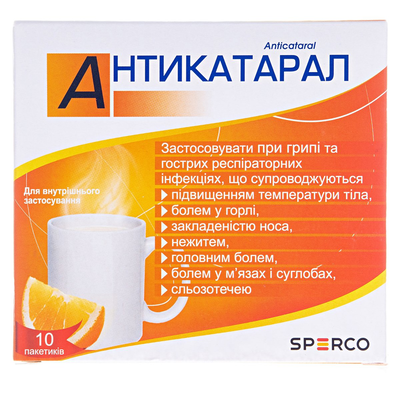
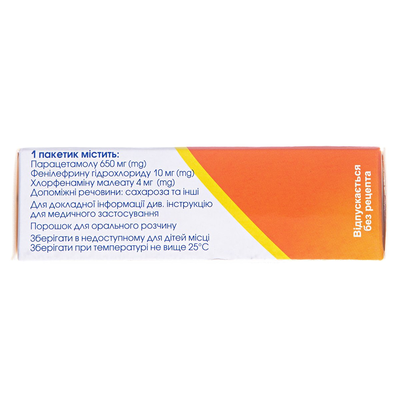
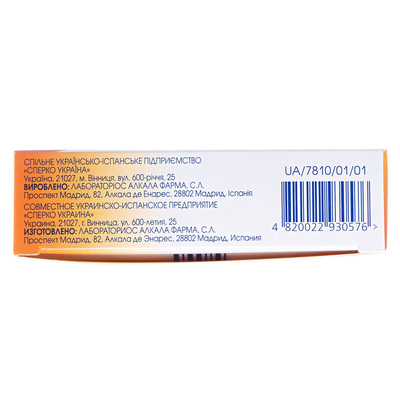
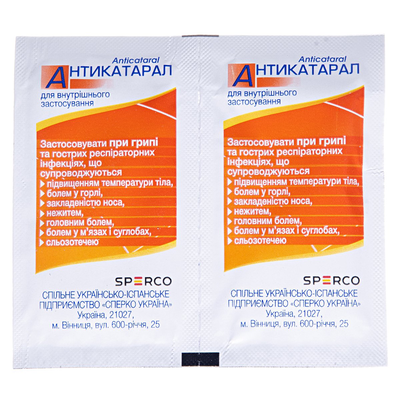
Antikataral powder for oral solution No. 10 in a package
Ingredients
Active ingredients: acetaminophen, phenylephrine hydrochloride, chlorphenamine maleate;
1 packet contains 650 mg of acetaminophen, 10 mg of phenylephrine hydrochloride, and 4 mg of chlorphenamine maleate;
Inactive ingredients: colloidal anhydrous silicon dioxide, anhydrous citric acid, sodium saccharin, sucrose, sodium cyclamate, orange flavoring
Dosage Form
Powder for oral solution.
Main physical and chemical properties: a white, homogeneous, lump-free powder; after dissolution in water, it has an orange flavor.
Pharmacotherapeutic group
Analgesics and antipyretics. Paracetamol, combinations without psycholeptics.
ATC code N02B E51.
Pharmacological properties
Pharmacodynamics.
A combination drug with analgesic, antipyretic, anti-inflammatory, and antiallergic effects due to the action of its constituent components.
Paracetamol is an analgesic and antipyretic with pronounced analgesic and antipyretic effects. These effects of paracetamol are associated with its action on the thermoregulatory center in the hypothalamus and its ability to inhibit prostaglandin synthesis in the central nervous system.
Phenylephrine hydrochloride is a sympathomimetic agent that acts primarily through direct action on α-adrenoreceptors. It causes vasoconstriction and reduces swelling and hyperemia of the mucous membranes of the nasal cavity and paranasal sinuses.
Chlorphenamine maleate is an H1-histamine receptor blocker; it has an antiallergic effect, reduces capillary permeability, constricts blood vessels, and alleviates swelling and redness of the mucous membranes of the nose, nasopharynx, and paranasal sinuses; reduces local exudative manifestations, and suppresses the symptoms of allergic rhinitis (sneezing, rhinorrhea, itchy eyes and nose, and throat irritation).
Pharmacokinetics.
After oral administration, paracetamol is rapidly absorbed from the gastrointestinal tract. Maximum plasma concentration is reached within 30–60 minutes. At therapeutic doses, the half-life ranges from 1 to 4 hours. Paracetamol is metabolized in the liver primarily by conjugation. Depending on plasma concentration, it is partially deacetylated or hydroxylated. The primary route of excretion is via urine (90–100% within 24 hours), in the form of glucuronide conjugates (60%), sulfates (35%), or cysteine (3%).
The half-life of phenylephrine after oral administration ranges from 2.1 to 3.4 hours.
The maximum plasma concentration of chlorphenamine maleate is reached in 1–2.5 hours; The half-life ranges from 16 to 19 hours. 70–83% of the oral dose is excreted in the urine unchanged or as metabolites.
Indications
Symptomatic treatment of influenza and acute respiratory infections accompanied by fever, sore throat, nasal congestion, runny nose, headache, muscle and joint pain, and watery eyes.
Contraindications
Hypersensitivity to any component of the drug; severe liver and/or kidney disease; hematopoietic disorders; blood disorders; severe leukopenia, anemia; severe cardiovascular diseases, including severe cardiac conduction disorders, severe ischemic heart disease, severe hypertension, decompensated heart failure, and severe coronary artery atherosclerosis; congenital glucose-6-phosphate dehydrogenase deficiency (may lead to hemolytic anemia); Gilbert’s syndrome (intermittent benign jaundice resulting from glucuronyltransferase deficiency), Dubin-Johnson syndrome; pulmonary emphysema, chronic obstructive pulmonary disease; bronchial asthma; diabetes; alcoholism; Hyperthyroidism; angle-closure glaucoma; bladder neck obstruction; pyloroduodenal obstruction; acute gastric ulcer; arrhythmias; benign prostatic hyperplasia with difficulty urinating; acute pancreatitis; increased excitability; sleep disturbances; pheochromocytoma; epilepsy; old age; risk of respiratory failure.
Do not use in combination with monoamine oxidase inhibitors (MAOIs) or within 2 weeks after discontinuing MAOIs, tricyclic antidepressants, or beta-blockers.
Drug Interactions and Other Interactions
Concomitant use of Antikataral with monoamine oxidase inhibitors (MAOIs), tricyclic antidepressants, methyldopa is contraindicated due to the risk of developing severe hypertension, tachycardia, hyperthermia, and dysfunction of vital organs, which may be fatal. The drug potentiates the effects of sedatives, antiepileptic drugs, ethanol, and ethanol-containing medications. When Antikataral is used concomitantly with antihypertensive drugs, the efficacy of the latter may be reduced. Barbiturates and alcohol may increase the hepatotoxic and nephrotoxic effects of paracetamol, and barbiturates reduce the antipyretic effect of paracetamol. Anticonvulsants (phenytoin, barbiturates, carbamazepine), isoniazid, and rifampicin may increase the hepatotoxic effect of acetaminophen. Tetracycline increases the risk of paracetamol-induced anemia and methemoglobinemia. Concomitant use of paracetamol with azidothymidine may cause neutropenia. Concomitant use of acetaminophen increases the hepatotoxicity of levomycetin. Acetaminophen potentiates the effects of indirect anticoagulants, increasing the risk of bleeding. The rate of paracetamol absorption may be increased by metoclopramide and domperidone and decreased by cholestyramine. Antacids and food reduce the absorption of paracetamol. Concomitant use of an antikatarrhal agent with β-blockers may lead to hypertension and bradycardia. Anticatarrhal agents may reduce the effectiveness of diuretics. Concomitant use with antibiotics may slow the elimination of the latter.
Concomitant use of paracetamol with hepatotoxic drugs enhances the toxic effects of these drugs on the liver. This cold remedy is not recommended for use with sedatives, hypnotics, or medications containing alcohol due to an increased risk of hepatotoxicity. It is also not recommended for use with vasoconstrictors.
The depressant effect of chlorphenamine on the central nervous system (CNS) is significantly enhanced by the simultaneous use of Antikataral with the following medications: hypnotics, barbiturates, sedatives, neuroleptics, tranquilizers, anesthetics, narcotic analgesics, and ethanol-containing medications.
Chlorphenamine potentiates the anticholinergic effects of atropine, antispasmodics, tricyclic antidepressants, and antiparkinsonian drugs. Chlorphenamine may inhibit the action of anticoagulants.
Phenylephrine may cause a hypertensive crisis and/or arrhythmia when used concomitantly with other adrenergic drugs or MAO inhibitors, and cause severe hypertension when combined with indomethacin and bromocriptine. Concomitant use of phenylephrine with other sympathomimetic agents or tricyclic antidepressants (e.g., amitriptyline) increases the risk of cardiovascular side effects. Rauwolfia alkaloids reduce the therapeutic effect of phenylephrine. Phenylephrine may reduce the effectiveness of beta-blockers and other antihypertensive agents. It also increases the risk of developing hypertension and other cardiovascular side effects.
Concomitant use of phenylephrine with digoxin or other cardiac glycosides increases the risk of arrhythmias and heart attack. Antidepressants, antiparkinsonian and antipsychotic drugs, and phenothiazine derivatives increase the risk of urinary retention, dry mouth, and constipation. Concomitant use with ergot alkaloids (ergotamine, methysergide) increases the risk of ergotism.
Special Considerations
Do not exceed the recommended doses, and do not take the medication for more than 3 consecutive days, as it contains acetaminophen, which is hepatotoxic when taken in excess.
While taking this medication, it is not recommended to use other medications containing acetaminophen, sympathomimetics (phenylephrine, pseudoephedrine), barbiturates, tranquilizers, other sedatives and hypnotics, or to consume alcohol (including alcohol contained in other medications), as these can cause liver dysfunction when taken concurrently with acetaminophen.
Prolonged use may lead to severe liver complications, such as cirrhosis. Acute or chronic overdose may result in severe liver damage and, in rare cases, death. Long-term use of paracetamol in high doses may lead to irreversible kidney damage and the development of renal failure. Long-term use of paracetamol in high doses may lead to liver and kidney damage. If paracetamol is to be used for an extended period as recommended by a doctor, liver function and peripheral blood counts must be monitored.
In patients with severe infections, such as sepsis, accompanied by decreased glutathione levels, acetaminophen increases the risk of metabolic acidosis.
Consult a doctor before use:
- if the patient is taking warfarin or similar anticoagulants;
- if the patient has breathing difficulties or chronic bronchitis;
- if the patient has liver disease or infectious liver conditions, such as viral hepatitis;
- if the patient has renal insufficiency, which may require a dose adjustment. In cases of renal insufficiency, the doctor must assess the benefit-risk ratio before starting treatment. A dose adjustment and monitoring of the patient’s condition are required;
- in cases of hypertension;
- with daily use of analgesics.
Caution should be exercised in patients who are:
- who are chronically malnourished or dehydrated;
- with mild to moderate hepatic insufficiency (< 9 points on the Child-Pugh scale);
- with Raynaud’s disease;
- with thyroid disorders, except for hyperthyroidism, in which case Antikataral is contraindicated;
- glaucoma, except for angle-closure glaucoma, in which Antikataral is contraindicated.
Note that patients with alcohol-induced liver damage are at increased risk of paracetamol-induced hepatotoxicity.
Phenylephrine may cause a false-positive result in doping tests for athletes.
You should see a doctor if:
- the symptoms do not go away and/or are accompanied by a high fever that lasts more than three days;
- symptoms include a sore throat that lasts more than 3 days and is accompanied by fever, headache, rash, nausea, or vomiting;
- the headache becomes persistent.
Very rare cases of severe skin reactions have been reported. If you experience skin redness, a rash, blisters, or peeling, stop using acetaminophen and seek medical attention immediately. Elevated alanine aminotransferase (ALT) levels may occur during treatment with paracetamol at therapeutic doses.
This medication may interfere with laboratory test results for blood glucose and uric acid levels.
This medication contains sucrose. If you have a known intolerance to certain sugars, consult your doctor before taking this medication. May be harmful to teeth.
Pregnancy and lactation.
This medication is contraindicated during pregnancy or breastfeeding. If the medication must be prescribed during breastfeeding, breastfeeding should be discontinued for the entire duration of treatment.
Fertility.
According to some reports, fertility may be impaired in women due to the effect on ovulation of medications that inhibit cyclooxygenase/prostaglandin synthesis; this effect is reversible and resolves after discontinuation of treatment. Since paracetamol inhibits prostaglandin synthesis, it may negatively affect fertility, although no such cases have been reported to date.
Affects the ability to operate vehicles and machinery.
While taking this medication, you should refrain from driving vehicles and operating potentially hazardous machinery.
Directions for Use and Dosage
Take orally. Before use, dissolve the contents of the packet in half a glass of warm water.
The single dose for adults and children over 12 years of age is 1 packet. If necessary, repeat every 4 hours, but do not exceed the maximum daily dose of 4 sachets. The duration of treatment is determined by the treating physician. The maximum duration of use without consulting a doctor is 3 days. Do not take with other products containing acetaminophen.
Children.
Proti-Katara is indicated for children over 12 years of age.
Overdose
In case of overdose, acetaminophen causes hepatotoxicity. Liver damage is possible in adults who have taken 10 g or more of acetaminophen and in children who have taken a dose exceeding 150 mg/kg of body weight.
Clinical and biochemical signs of liver damage appear within 24–72 hours, but may not manifest for 12–48 hours after an overdose. The following symptoms develop: loss of appetite, nausea, vomiting, abdominal pain, and pale skin. Liver transaminase levels rise, bilirubin concentrations increase, and prothrombin levels decrease, accompanied by hemorrhages. Glucose metabolism disorders, hypokalemia, and metabolic acidosis (including lactic acidosis) may occur.
In severe poisoning, liver failure may progress to encephalopathy, bleeding, hypoglycemia, coma, and death.
When taking high doses of acetaminophen, the following symptoms may occur: dizziness, psychomotor agitation and disorientation, central nervous system depression, sleep disturbances, and increased sweating; From the urinary system—nephrotoxicity (renal colic, interstitial nephritis, capillary necrosis).
Acute renal failure with acute tubular necrosis may develop even in the absence of severe liver damage. In patients with risk factors (long-term treatment with carbamazepine, phenobarbital, phenytoin, primidone, rifampicin, St. John’s wort, or other drugs that induce liver enzymes; regular consumption of excessive amounts of ethanol; glutathione-deficiency conditions (digestive disorders, cystic fibrosis, HIV infection, starvation, cachexia)), taking 5 g or more of acetaminophen may lead to liver damage. Acute renal failure with acute tubular necrosis may manifest as severe lower back pain, hematuria, and proteinuria. Cardiac arrhythmias and pancreatitis may also occur.
General clinical manifestations, which appear 3–5 days later, include jaundice, fever, hemorrhagic diathesis, hypoglycemia, a hepatic odor, and liver failure.
Prolonged use of paracetamol in high doses may cause aplastic anemia, pancytopenia, agranulocytosis, neutropenia, leukopenia, and thrombocytopenia.
An overdose caused by the effects of phenylephrine and chlorphenamine maleate may cause increased sweating, psychomotor agitation or central nervous system depression, headache, dizziness, drowsiness, impaired consciousness, cardiac arrhythmias, tachycardia, extrasystoles, tremor, hyperreflexia, seizures, nausea, vomiting, irritability, anxiety, and increased blood pressure.
In case of an overdose of chlorphenamine maleate, atropine-like symptoms may occur: mydriasis, photophobia, dryness of the skin and mucous membranes, fever, and intestinal atony. Central nervous system depression is accompanied by respiratory disturbances and cardiovascular dysfunction (decreased heart rate, decreased blood pressure, potentially leading to circulatory failure). In case of overdose (even in the absence of symptoms), emergency medical care and immediate hospitalization are required.
Treatment: Gastric lavage, which must be performed within 6 hours if a paracetamol overdose is suspected, as well as symptomatic therapy. In cases of severe hypertension, α-adrenergic blockers should be administered.
Call an ambulance and transport the patient to the hospital immediately, even if there are no early symptoms of overdose. Symptoms may be limited to nausea and vomiting or may not reflect the severity of the overdose or the risk of organ damage. Treatment with activated charcoal should be considered if an excessive dose of acetaminophen was taken within the past hour. Plasma acetaminophen concentrations should be measured 4 hours or more after oral ingestion (earlier measurements are unreliable).
Treatment with N-acetylcysteine may be administered within 24 hours after paracetamol ingestion, but the maximum protective effect is achieved when administered within 8 hours after ingestion; after that, its effectiveness decreases sharply. After this time, the antidote’s effectiveness decreases sharply. If necessary, acetylcysteine is administered intravenously to the patient in accordance with current guidelines. In the absence of vomiting, oral methionine may be used as a suitable alternative in remote areas outside of a hospital setting.‑
Side Effects
Immune system: allergic reactions (anaphylaxis, including anaphylactic shock).
Skin and subcutaneous tissue disorders: hypersensitivity reactions, including itching, rashes on the skin and mucous membranes (erythema, urticaria, generalized rash), erythema multiforme (including Stevens-Johnson syndrome), allergic and angioedema, acute generalized exanthematous pustulosis, local drug-induced dermatitis, toxic epidermal necrolysis (Lyell’s syndrome), including fatal outcomes.
Blood and lymphatic system disorders: anemia, leukopenia, sulfhemoglobinemia, and methemoglobinemia (cyanosis, shortness of breath, chest pain), hemolytic anemia, thrombocytopenia, agranulocytosis, bruising, or bleeding.
Gastrointestinal disorders: nausea, vomiting, dry mouth, abdominal discomfort and pain, hypersalivation, loss of appetite, heartburn, diarrhea, flatulence, constipation.
Hepatobiliary system: impaired liver function, elevated liver enzymes, usually without the development of jaundice, hepatonecrosis (a dose-dependent effect).
Urinary system: urinary dysfunction, urinary retention (most likely in patients with prostatic hypertrophy), renal colic and interstitial nephritis, aseptic pyuria.
Endocrine disorders: fluctuations in blood sugar levels, hypoglycemia, up to and including hypoglycemic coma.
Cardiovascular disorders: increased blood pressure, tachycardia or reflex bradycardia, palpitations, shortness of breath, chest pain, arrhythmia, and myocardial dystrophy are possible with long-term use in high doses.
Respiratory system: bronchospasm in patients sensitive to acetylsalicylic acid and other nonsteroidal anti-inflammatory drugs (NSAIDs), nasal dryness.
Psychiatric disorders: psychomotor agitation and disorientation, behavioral changes, euphoria, anxiety, nervous agitation, fear, irritability, sleep disturbances, drowsiness, insomnia, confusion, depressive states, hallucinations, anxiety, sedative effect.
Central nervous system disorders: headache, weakness, dizziness, tremor, paresthesias, tingling and heaviness in the extremities, dyskinesias, epileptic seizures, and, in rare cases, coma.
Ear and vestibular system disorders: tinnitus, dizziness.
Eye disorders: visual disturbances and accommodation disorders, mydriasis, dryness of the ocular mucosa, increased intraocular pressure.
Shelf life
3 years.
Do not use this medication after the expiration date printed on the package.
Storage conditions
Store at a temperature not exceeding 25 °C. Keep out of reach of children.
Packaging
10 sachets per package.
Sales Conditions
Available without a prescription.
Manufacturer
Laboratorios Alcalá Pharma, S.L.
Laboratorios Alcalá Pharma, S.L.







