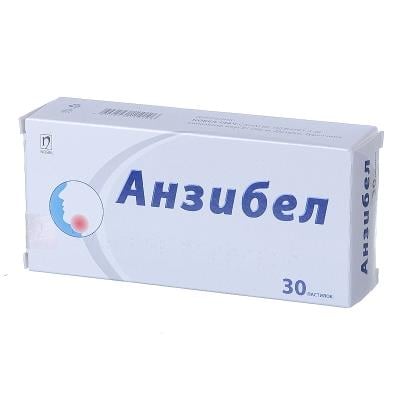
Anzibel Lozenges No. 30 (10 x 3)
Ingredients
chlorhexidine hydrochloride, benzocaine, enoxolone;
Each lozenge contains 5 mg of chlorhexidine hydrochloride, 4 mg of benzocaine, and 3 mg of enoxolone;
Inactive ingredients:
lozenges: sorbitol (E 420), acesulfame potassium, magnesium stearate;
menthol-flavored lozenges: sorbitol (E 420), acesulfame potassium, magnesium stearate, menthol flavoring;
honey- and lemon-flavored lozenges: sorbitol (E 420), acesulfame potassium, magnesium stearate, lemon flavoring, honey flavoring.
Dosage Form
Lozenges.
Main physical and chemical properties: round, biconvex lozenges that are white or nearly white in color, smooth on one side and bearing the “ŋ” logo on the other;
round, biconvex lozenges, white or nearly white in color, with a menthol scent, smooth on one side and bearing the “ŋ” logo on the other;
round, biconvex lozenges, white or almost white in color, with a lemon and honey scent, smooth on one side and bearing the “ŋ” logo on the other.
Pharmacotherapeutic group
Products used for throat conditions. Antiseptics. ATC code R02A A20.
Pharmacological properties
Pharmacodynamics.
Anzibel® is a combined antiseptic preparation for topical use in the oropharyngeal region. The pharmacological effect is provided by the components included in the preparation.
Chlorhexidine has a bacteriostatic effect at low concentrations and a bactericidal effect at high concentrations. The mechanism of action of chlorhexidine involves the formation of bonds with the bacterial cell membrane, leading to disruption of its structure. It is active against staphylococci, streptococci, Candida albicans, Escherichia coli, and certain aerobic and anaerobic bacteria. Proteus, Pseudomonas, and Klebsiella spp. are only slightly susceptible to chlorhexidine.
Benzocaine provides local anesthetic relief in cases of severe pain. It is used to treat wounds on the oral mucosa or tongue.
Enoxolone possesses anti-inflammatory and analgesic properties, as well as a pronounced antiviral effect against DNA- and RNA-containing viruses, including various strains of Herpes simplex and Herpes zoster viruses.
Indications
Topical treatment of symptoms associated with infectious inflammatory diseases of the oral cavity and pharynx.
Contraindications
Hypersensitivity to any component of the drug or known hypersensitivity to other agents with anesthetic activity, or to anesthetic ester derivatives. Phenylketonuria.
Interactions with Other Medications and Other Types of Interactions
Do not use with other medications containing antiseptics.
Concomitant use with iodine-containing medications is not recommended.
Due to the presence of benzocaine, the drug interacts with cholinesterase inhibitors (inhibits the metabolism of local anesthetics, increasing the risk of systemic toxicity) and with sulfonamides (metabolites of benzocaine may inhibit the antibacterial activity of sulfonamides).
Concomitant use of enoxolone and hydrocortisone may potentiate the effect of the latter on the skin.
Interactions with diagnostic tests.
Interactions may occur with diagnostic tests for assessing pancreatic function that use bentiromide. The results are invalidated because benzocaine is metabolized by arylamines and also increases the level of para-aminobenzoic acid (PABA). It is recommended to discontinue treatment at least 3 days before the test.
Special Instructions for Use
Do not exceed the recommended dose.
When using local anesthetics, including benzocaine, there is an increased risk of systemic toxicity in elderly patients, patients with acute illnesses, or debilitated patients. When enoxolol is used in elderly patients at high doses or for prolonged periods, fluid retention, edema, and hypertension may occur.
In patients with intolerance to ether-type local anesthetics (especially derivatives of para-aminobenzoic acid (PABA), parabens, or paraphenylenediamine (hair dye), may also exhibit intolerance to benzocaine.
The benefit-risk ratio must be evaluated in the following situations: severe mucosal trauma (increased absorption of anesthetics), on the surfaces of dental fillings or uneven edges, irreversible discoloration may occur due to the action of chlorhexidine.
The product contains benzocaine, which may cause a positive result in doping tests for athletes.
Anzibel® contains sorbitol; it is not recommended for patients with hereditary fructose intolerance. If a patient has been diagnosed with an intolerance to certain sugars, consult a doctor before taking this medication.
Anzibel® contains acesulfame potassium, which should be taken into account by patients with impaired or reduced kidney function or by patients on a potassium-controlled diet.
Because this medication contains acesulfame potassium, there is a risk of increased potassium levels in the stomach in patients with impaired potassium absorption. Elevated potassium levels may cause stomach irritation and diarrhea.
In patients with periodontitis, chlorhexidine may cause an increase in supragingival calculus.
Proper oral hygiene must be maintained using an anti-tartar toothpaste to prevent tartar buildup and tooth discoloration caused by chlorhexidine.
Use During Pregnancy or Breastfeeding
Anzibel® should not be used during pregnancy.
When used in high doses (above 60 mg/day) or for prolonged periods, enoxolone may contribute to fluid retention, edema, and hypertension, which should be taken into account in pregnant women.
There are insufficient data on the use of chlorhexidine and benzocaine in pregnant women.
It is unknown whether the active ingredients of the drug pass into breast milk; therefore, the drug should not be used during breastfeeding.
Effect on reaction time when driving or operating machinery
No effect.
Directions for Use and Dosage
Administer the medication into the mouth. Hold the lozenges in the mouth until they are completely dissolved.
Recommended doses for adults and children 12 years of age and older: 1 lozenge every 2–3 hours (maximum daily dose: 8 lozenges).
Take after meals and after brushing your teeth.
It is recommended not to rinse your mouth or drink large amounts of liquid for 2 hours after taking the lozenges.
The duration of treatment depends on the course of the illness and is usually 3 to 7 days; however, if symptoms persist or worsen 2 days after starting treatment, consult a doctor.
Children.
The efficacy and safety of Anzibel® in children under 12 years of age have not been established; therefore, the medication should not be prescribed to this age group.
Overdose
Overdose is unlikely.
In the event of an enoxolone overdose, hypermineralocorticoidism, sodium retention and potassium loss, edema, elevated blood pressure, and suppression of the renin-angiotensin-aldosterone system (RAAS).
In cases of chlorhexidine overdose, especially in children, symptoms of alcohol intoxication (slurred speech, numbness, or unsteady gait) may occur.
Despite the low absorption of benzocaine, excessive amounts may lead to systemic absorption, the symptoms of which may include blurred vision, diplopia, dizziness, convulsions, ringing in the ears, agitation (CNS stimulation) alternating with drowsiness (CNS depression), increased sweating, decreased blood pressure, slowed heart rate and cardiac arrhythmias, and cardiovascular depression.
Treatment of chlorhexidine overdose is symptomatic. Treatment includes the use of oxygen or artificial respiration as needed. Treatment of circulatory depression requires the use of vasoconstrictors and fluids. Patients may develop methemoglobinemia (difficulty breathing, dizziness, weakness, fatigue, lethargy), in which case methylene blue must be administered.
Side Effects
Immune system: allergic reactions, including nasal congestion.
Skin and subcutaneous tissue disorders: itching, hives, skin rashes, contact dermatitis.
Cardiovascular system: with chronic use, edema and hypertension may occur.
Gastrointestinal system: altered taste, dental plaque, discoloration/pigmentation of tooth enamel (brown spots), dental fillings, and dentures; mumps; irritation of the gastric mucosa; diarrhea; tongue and oral mucosa soreness, irritation or inflammation of the oral mucosa and tongue, as well as burning, itching, swelling, or redness of the mucous membranes in or around the mouth.
Shelf life
3 years.
Storage Conditions
Store at a temperature not exceeding 25 °C in the original packaging.
Keep out of reach of children.
Packaging
10 lozenges per blister pack.
10 lozenges per blister pack; 1, 2, or 3 blister packs per cardboard box.
Dispensing Category
Available without a prescription.