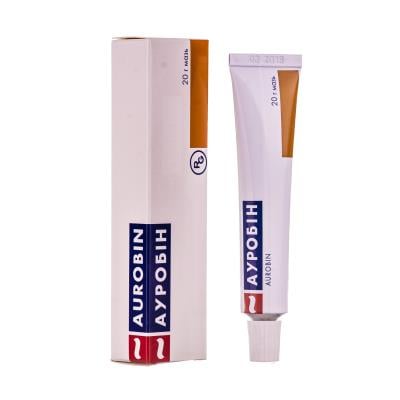
Aurobin ointment, 20 g tubes
Composition
Active ingredients: prednisolone caproate, lidocaine hydrochloride, dexpanthenol;
1 g of ointment contains 2 mg of prednisolone caproate, 20 mg of lidocaine hydrochloride, and 20 mg of dexpanthenol;
Excipients: polysorbate 60, triclosan, methylparaben (E 218), cetyl alcohol, glycerin, propylene glycol, polyethylene glycol stearate, mineral oil, dimethicone, medium-chain triglycerides, stearic acid, purified water.
Dosage Form
Ointment.
Main physical and chemical properties: a homogeneous ointment that is white or nearly white in color and virtually odorless.
Pharmacotherapeutic group
Agents for the treatment of hemorrhoids and anal fissures for topical use. ATC code C05A X03.
Pharmacological properties
Pharmacodynamics.
Aurobin is a combination drug containing, in optimal proportions, substances effective in treating inflammatory processes and pain in the perianal region.
Prednisolone caproate is a nonhalogenated glucocorticoid with a local anti-inflammatory effect. It reduces vascular permeability, increases vascular wall tone, and alleviates symptoms of inflammation.
Lidocaine quickly relieves pain and a burning sensation.
Dexpanthenol promotes the regeneration of damaged epithelium and mucous membranes.
Pharmacokinetics.
No pharmacokinetic studies have been conducted with the ointment. The active ingredients of the drug primarily exert a local effect. Topically applied prednisolone may be absorbed and cause systemic effects. Prednisolone is rapidly distributed throughout all body tissues. It binds strongly to plasma proteins. Prednisolone rapidly crosses the placenta and is excreted into breast milk. It is excreted in the urine as conjugates.
Lidocaine is well absorbed from mucous membranes and affected skin. It binds strongly to plasma proteins. The half-life of lidocaine in plasma is 1–2 hours. It is metabolized in the liver. Impaired renal function does not affect the excretion of the parent compound but may lead to the accumulation of its active metabolite. Lidocaine crosses the placenta and the blood-brain barrier and is excreted into breast milk.
Indications
Conditions accompanied by inflammation of the perianal area: itching, eczema, and dermatitis of the perianal area; hemorrhoids; and anal fissures.
Contraindications
Hypersensitivity (allergy) to any of the active ingredients of the drug or to any of its excipients.
Hypersensitivity to other amide-type local anesthetics (e.g., bupivacaine, etidocaine, mepivacaine, and prilocaine).
Treatment of the eyes or the periocular area.
Primary bacterial, viral, or fungal skin infections, including herpes simplex.
Rosacea, acne vulgaris, perioral dermatitis, or diaper rash; cutaneous tuberculosis; cutaneous manifestations of syphilis; dryness or scaling of the skin.
Concomitant treatment with lidocaine for other indications.
Skin tumors.
Cushing’s syndrome.
Vaccination period.
Children under 1 year of age.
First trimester of pregnancy.
Interactions with other medications and other types of interactions
No interaction studies have been conducted with Aurobin ointment.
The drug should not be used concurrently with lidocaine administered for other indications.
Caution is advised when used concomitantly with other antiarrhythmic agents.
Monoamine oxidase inhibitors enhance the local anesthetic effect of lidocaine.
Special Considerations for Use
If skin irritation or allergic reactions occur, use of the drug should be discontinued immediately and appropriate symptomatic treatment initiated. To avoid local or systemic toxicity, the drug should not be applied to large affected skin areas, in skin folds, under an occlusive dressing, and/or for prolonged periods.
With prolonged use of the medication on the same skin area, it may cause skin atrophy, especially in younger patients.
Use the drug with particular caution in patients with cataracts, diabetes mellitus, glaucoma, tuberculosis, and anemia, as well as in cases of glucocorticoid-induced hypothalamic-pituitary suppression.
Use the drug with caution in patients with severe heart failure, renal failure, or hepatic failure.
Caution is required when treating patients with a compromised or potentially compromised immune system (including patients with AIDS or HIV infection).
Aurobin ointment contains the excipients methylparaben (E 218), cetyl alcohol, and propylene glycol. Methylparaben (E 218) may cause allergic reactions (possibly delayed). Cetyl alcohol may cause local skin reactions (e.g., contact dermatitis). Propylene glycol may cause skin irritation.
Use during pregnancy or breastfeeding.
Pregnancy. The drug is contraindicated during the first trimester of pregnancy. When prescribing the drug during the second and third trimesters of pregnancy, the ratio of expected benefits to potential risks must be carefully evaluated.
Breastfeeding. Corticosteroids and lidocaine pass into breast milk. Thus, corticosteroids may affect the function of the newborn’s adrenal cortex and cause growth disturbances. Small amounts of lidocaine appear in breast milk. Although this poses no practical risk to the infant, extra caution is necessary when the drug is used by breastfeeding women.
Effect on reaction time when driving or operating machinery.
The potential effect of the drug on the ability to drive or operate machinery has not been studied; however, the possibility of adverse reactions affecting the central nervous system and vision should be considered.
Directions for Use and Dosage
For external use only.
Avoid prolonged use of the ointment or application to large areas of skin, regardless of the patient’s age.
Use under an occlusive dressing is not recommended.
Adults and elderly patients.
Apply a thin layer of ointment to the affected area 2–4 times daily. As symptoms subside, reduce the frequency of application. The duration of treatment should not exceed 5–7 days.
Children.
Children aged 1 year and older may use the product only in exceptional cases, at the minimum dose necessary to achieve a therapeutic effect, and no more than twice daily. The duration of treatment in children should not exceed 5 days.
Children. The ointment is contraindicated in children under 1 year of age.
Overdose
May manifest as local or systemic symptoms depending on the amount of corticosteroid and lidocaine absorbed. There is no specific antidote; supportive therapy should be provided.
Side Effects
Topical treatment with corticosteroids may cause local adverse effects.
With prolonged topical use or application to large areas of skin, suppression of adrenal cortex function is possible. This is particularly common when the ointment is used in children or under occlusive dressings. Protein catabolism may lead to a negative nitrogen balance.
Systemic absorption of large amounts of lidocaine following topical application may result in stimulation and/or suppression of the central nervous system.
Depending on the amount of absorbed corticosteroid and lidocaine, the following side effects may occur:
infections and infestations: activation of subclinical infections, masking of infection symptoms, opportunistic infections;
Immune system: hypersensitivity reactions;
Endocrine system: suppression of adrenal cortex function, hypercortisolism (as a result of the resorptive effect of prednisolone);
Nutrition and Metabolism Disorders: hypokalemic alkalosis, sodium and fluid retention, hypokalemia;
psychiatric disorders: insomnia, mental disorders;
central nervous system: seizures, dizziness, headache, increased intracranial pressure;
Ocular disorders: cataracts (the likelihood of developing cataracts is higher in children), subcapsular cataracts, exophthalmos, glaucoma, optic disc edema, corneal ulcer;
Cardiac: heart failure, cardiac conduction disturbances;
Vascular: hypertension, peripheral vasodilation;
Gastrointestinal system: gastric bleeding, gastrointestinal bleeding, perforation of the gastrointestinal tract, esophagitis, pancreatitis, peptic ulcer;
skin and subcutaneous tissue disorders: dermatitis, folliculitis (at the application site), acne-like rash (steroid acne), contact dermatitis; dryness, thinning, and fragility of the skin; erythema, rash, urticaria, hirsutism, hyperhidrosis, intertrigo, pruritus, skin atrophy, hypopigmentation, skin irritation, stretch marks, telangiectasia, burning sensation on the skin, purpura;
Musculoskeletal and connective tissue disorders: growth retardation, steroid myopathy, osteonecrosis, osteoporosis;
General disorders and administration site conditions: delayed wound healing;
Laboratory findings: increased intraocular pressure, negative nitrogen balance, delayed reaction in skin provocation tests.
Shelf life
2 years.
Storage conditions
Store at a temperature of 8–15 °C.
Keep out of reach of children.
Packaging
20 g of ointment in a sealed aluminum tube with a polyethylene cap featuring a perforated tip. 1 tube per cardboard box.
Dispensing Category
By prescription only.
Manufacturer
Gedeon Richter JSC.