
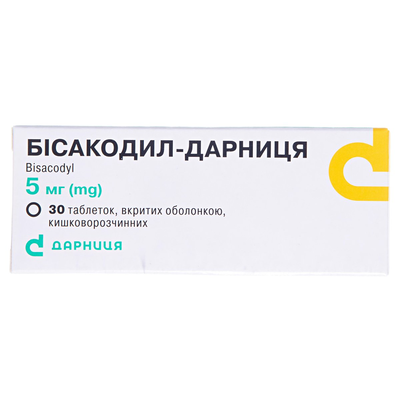
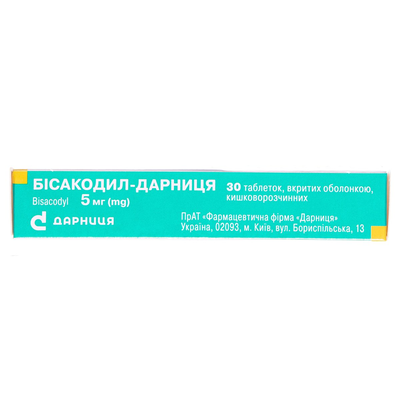
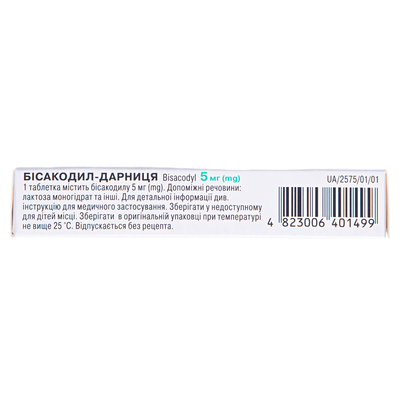
Bisacodyl-Darnitsa tablets, enteric-coated, 5 mg, No. 30 (10 x 3)
Ingredients
Active ingredient: bisacodyl;
1 tablet contains 5 mg of bisacodyl;
inactive ingredients: potato starch, lactose monohydrate, microcrystalline cellulose, povidone, calcium stearate, methacrylate copolymer dispersion, talc, titanium dioxide (E 171), polyethylene glycol, quinoline yellow (E 104).
Dosage Form
Film-coated, enteric-coated tablets.
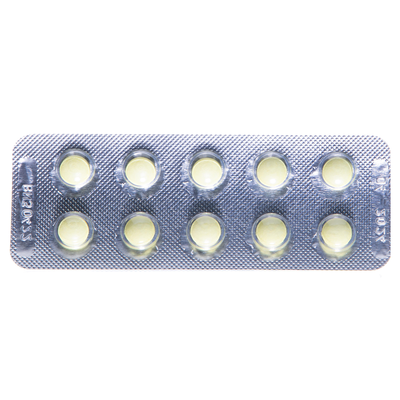
Main physical and chemical properties: film-coated tablets, round in shape, light yellow to greenish-yellow or yellow-orange in color, with a biconvex surface. Two layers are visible on a cross-section.
Pharmacotherapeutic group
Drugs used for constipation. Contact laxatives. Bisacodyl. ATC code A06A B02.
Pharmacological Properties
Pharmacodynamics.
Bisacodyl has a laxative effect, which manifests as the softening or loosening of stool. The mechanism of its laxative action is due to increased water penetration into the intestinal lumen and reduced water absorption, as well as accelerated intestinal peristalsis.
An important part of the mechanism of action involves the breakdown of bisacodyl in the alkaline intestinal contents, which leads to the formation of substances that irritate the receptors of the mucous membrane. This results in the stimulation of intestinal peristalsis.
Pharmacokinetics.
Intestinal and bacterial enzymes rapidly convert bisacodyl into its active metabolite. Only 5% of an oral dose is absorbed into the systemic circulation, metabolized in the liver, and excreted in the urine and bile as an inactive metabolite (glucuronides).
Indications
Short-term symptomatic treatment of constipation.
Bowel preparation for diagnostic procedures and prior to surgical interventions (under medical supervision).
Clinical need to facilitate bowel movements in cases of hemorrhoids, anal fistulas, and anal fissures.
Contraindications
- Hypersensitivity to bisacodyl or any other component of the medication.
- Acute proctitis, acute hemorrhoids, spastic constipation, intestinal obstruction, strangulated hernia.
- Gastrointestinal bleeding, uterine bleeding.
- Acute abdominal syndrome, including appendicitis, other acute inflammatory bowel diseases, and peritonitis.
- Severe abdominal pain accompanied by nausea and vomiting (these symptoms may be manifestations of the serious conditions listed above).
- Crohn’s disease, nonspecific ulcerative colitis.
- Severe dehydration.
Interactions with Other Medications and Other Types of Interactions
It is not recommended to take this medication concurrently with H2-histamine receptor blockers, dairy products, or antacids (within 1 hour), as there is a risk of rapid dissolution of the tablet’s outer coating and, consequently, irritation of the gastric and duodenal mucosa, as well as impaired efficacy of bisacodyl.
Alkaline foods should not be consumed while taking this medication or within 1 hour before or after taking it.
The laxative effect of bisacodyl may cause potassium deficiency; therefore, caution is advised when bisacodyl is used concomitantly with the following medications: diuretics, β-adrenergic agonists, corticosteroids (mineralocorticoids and glucocorticoids), amphotericin B, tetracosactide, or agents whose toxicity increases with potassium deficiency (e.g., cardiac glycosides).
Astemizole, terfenadine, erythromycin, amiodarone, sotalol, and quinidine preparations are not recommended for use in combination with bisacodyl.
When used with digitalis preparations (digitalis glycosides), the risk of hypokalemia and digitalis intoxication increases.
Special Considerations for Use
When using Bisacodyl-Darnitsa, keep in mind that the tablet is coated with an enteric coating, so it must not be split or chewed.
Do not take this medication with alkaline mineral water, and do not take it within 1 hour of consuming milk, antacids, or H2 blockers.
Use with caution when treating patients with liver or kidney disease.
It is contraindicated in cases of abdominal pain of unknown origin accompanied by nausea and vomiting.
Like all laxatives, bisacodyl should not be taken daily for more than 5 days without first determining the cause of constipation.
Prolonged use (more than 7 days) and regular use of this medication should be avoided, as this may lead to intestinal atony and an inability to have a bowel movement without the use of stronger laxatives.
Prolonged use of high doses may lead to electrolyte imbalance and hypokalemia.
Fluid loss in the gastrointestinal tract may cause dehydration, the symptoms of which may include thirst and oliguria. In patients suffering from fluid loss and for whom dehydration could be harmful (e.g., patients with renal insufficiency, elderly patients), bisacodyl should be discontinued; Treatment may be resumed only under medical supervision.
Patients may experience hematochezia (blood in the stool), which is mild and resolves spontaneously.
Cases of dizziness and/or fainting have been reported in patients taking bisacodyl. Available data on such cases suggest that these adverse reactions are associated with irregular bowel movements (or difficulty defecating) or a neurovascular response to abdominal pain, associated with constipation and not necessarily related to the use of bisacodyl.
There have been isolated reports of abdominal pain and bloody diarrhea following bisacodyl administration. Some cases were associated with ischemia of the colonic mucosa.
Bisacodyl should not be given to children under 10 years of age without consulting a doctor.
In elderly patients, frequent use of this medication may lead to asthenia, orthostatic hypotension, and impaired coordination.
The drug’s failure to stimulate a bowel movement may indicate an organic cause of constipation.
Laxatives do not aid in weight loss.
While taking bisacodyl, it is recommended to follow a specific high-fiber diet: whole-grain bread, beans and other legumes (if tolerated), fruits, and vegetables. It is also necessary to drink an adequate amount of fluids daily and increase physical activity.
Important information about excipients.
This medication contains lactose; therefore, patients with rare hereditary galactose intolerance, Lapp lactase deficiency, or glucose-galactose malabsorption should not take this medication.
Use during pregnancy or breastfeeding.
Use of this medication during pregnancy or breastfeeding is not recommended due to a lack of safety data for this patient group.
Effect on reaction time when driving or operating machinery.
Patients should be warned that colic may cause dizziness and/or fainting. During treatment, caution should be exercised when driving or operating machinery, and if dizziness occurs, patients should refrain from potentially hazardous activities that require increased concentration and rapid psychomotor reactions.
Dosage and Administration
For effective morning bowel movements, take the medication orally before bedtime, regardless of meals. Swallow the tablet whole with a full glass of water.
For short-term treatment of constipation and to facilitate bowel movements in cases of hemorrhoids, anal fistulas, and anal fissures.
Adults and children 10 years of age and older: 1–2 tablets (5–10 mg) once daily.
Children aged 4 to 10 years: 1 tablet (5 mg) once daily.
For preparation for diagnostic procedures and before surgical interventions (under a doctor’s supervision).
Adults and children 10 years of age and older: 2–4 tablets (10–20 mg) as a single dose in the evening.
Children aged 4 to 10 years: 1 tablet (5 mg) in the evening.
It is not recommended to use this medication for more than 7 days; daily use is not recommended.
Children.
Do not use this medication in children under 4 years of age.
For children aged 4 to 10 years, use this medication only as directed by a doctor.
Overdose
Symptoms. High doses may cause diarrhea, abdominal cramps, and electrolyte imbalance (including symptoms of hypokalemia and functional colonic atony). Chronic overdose may lead to chronic diarrhea, abdominal pain, hypokalemia, secondary hyperaldosteronism, and kidney stones.
Cases of renal tubular damage, metabolic alkalosis, and muscle weakness due to hypokalemia resulting from chronic misuse of the laxative have been reported.
Treatment. Discontinue the medication and consult a doctor. Gastric lavage or induction of vomiting is necessary. Correction of fluid and electrolyte imbalances is recommended (particularly important for the elderly and children), along with symptomatic treatment and, in some cases, antispasmodics.
Side Effects
Gastrointestinal: abdominal discomfort, spastic abdominal pain, flatulence, vomiting, nausea, diarrhea, thirst, dry mouth; intestinal colic, rectal irritation, and hematochezia (blood in the stool) may occur; prolonged use may lead to intestinal atony, colonic melanosis, and colitis.
Metabolism and metabolism-related disorders: disturbances in water and electrolyte balance (metabolic acidosis/alkalosis, hypokalemia, hypocalcemia), especially in the elderly, and dehydration (which may result in muscle weakness, cramps, and hypotension).
Nervous system disorders: dizziness, weakness, loss of coordination, orthostatic hypotension, intermittent calf muscle cramps, and, in severe cases, vasospasm. Dizziness and fainting following bisacodyl administration result from a vasovagal response (e.g., to colic or defecation).
Immune system disorders: anaphylactic reactions, hypersensitivity reactions, including skin rashes, itching, and angioedema.
Reporting of Suspected Adverse Reactions.
Reporting suspected adverse reactions after a drug’s approval is an important procedure. It allows for continued monitoring of the benefit-risk profile of the drug in question. Healthcare professionals should report any suspected adverse reactions through the national reporting system.
Shelf life
2 years.
Storage Conditions
Store in the original packaging at a temperature not exceeding 25 °C. Keep out of the reach of children.
Packaging
10 tablets per blister pack; 3 blister packs per package.
Dispensing Category
Over-the-counter.
Manufacturer
PJSC “Darnitsa Pharmaceutical Company.”







