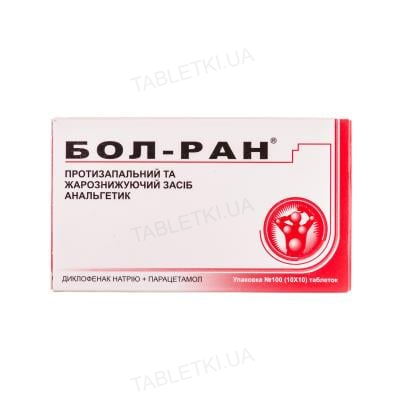
Bol-ran Tablets No. 10
Ingredients
Active ingredients: acetaminophen, diclofenac sodium;
1 tablet contains: 500 mg of acetaminophen, 50 mg of diclofenac sodium;
Inactive ingredients: corn starch, microcrystalline cellulose, sodium starch glycolate (type A), croscarmellose sodium, povidone, magnesium stearate, anhydrous colloidal silicon dioxide.
Dosage Form
Tablets.
Main physical and chemical properties: white, round, flat tablets with a score line on one side.
Pharmacotherapeutic group
Nonsteroidal anti-inflammatory and antirheumatic agents.
ATC code M01A B55.
Pharmacological properties
Pharmacodynamics.
Bol-Ran® is a combination drug that exerts pronounced anti-inflammatory, analgesic, and antipyretic effects. The pharmacological activity of the drug is due to the properties of diclofenac and acetaminophen, which are components of the formulation.
Diclofenac sodium exerts a pronounced anti-inflammatory and analgesic effect, as well as a moderate antipyretic effect. Paracetamol exhibits a pronounced analgesic effect and a slight antipyretic and anti-inflammatory effect. The mechanism of action is associated with the inhibition of prostaglandin synthesis.
Pharmacokinetics.
After oral administration, the drug is rapidly and completely absorbed. Food does not affect the absorption of the drug.
Plasma concentrations of the active ingredients are linearly dependent on the dose, with peak levels reached 60–90 minutes after administration.
The binding of diclofenac to serum proteins (primarily albumin) reaches 99.7%. The expected volume of distribution is 0.12–0.17 L/kg. Diclofenac penetrates into the synovial fluid, where its maximum concentration is reached 2–4 hours later than in plasma. The half-life in synovial fluid is 3–6 hours.
Diclofenac is metabolized by glucuronidation of the unchanged molecule and methoxylation, which leads to the formation of several phenolic metabolites whose biological activity is significantly lower than that of the parent compound.
The total systemic plasma clearance of diclofenac is approximately 300 mL/min. The terminal half-life is 1–2 hours. 60% of the administered dose is excreted in the urine as glucuronide conjugates of unchanged diclofenac; the remainder is excreted in bile and feces.
Paracetamol is metabolized in the liver and excreted primarily in the urine.
Following repeated administration of the drug, the pharmacokinetic parameters of the active ingredients do not change. Provided that the recommended intervals between doses are observed, no accumulation of the drug is observed.
Indications
Acute pain (muscle, headache, toothache, and pain localized in the spine), pain associated with non-articular rheumatism, rheumatoid arthritis, ankylosing spondylitis, osteoarthritis, spondyloarthritis, acute gout attacks, primary dysmenorrhea, adnexitis, pharyngotonsillitis, otitis; post-traumatic and postoperative pain syndrome.
Contraindications
Hypersensitivity to diclofenac, acetaminophen, or any other component of the medication. Acute gastric or intestinal ulcer; gastrointestinal bleeding or perforation. Inflammatory bowel diseases (Crohn’s disease or ulcerative colitis). A history of gastrointestinal bleeding or perforation associated with the use of nonsteroidal anti-inflammatory drugs (NSAIDs). Active peptic ulcer disease/bleeding or a history of recurrent peptic ulcer disease/bleeding (two or more separate episodes of confirmed ulcer or bleeding). The third trimester of pregnancy. Severe hepatic insufficiency (Child–Pugh Class C, cirrhosis, or ascites). Renal insufficiency (creatinine clearance < 30 mL/min). Severe heart failure (Class III–IV according to the New York Heart Association [NYHA] functional classification of chronic heart failure), congestive heart failure (NYHA Class II–IV), decompensated heart failure, severe hypertension, organic diseases of the cardiovascular system, including severe atherosclerosis, severe hypertension, acute myocardial infarction, paroxysmal tachycardia, hyperthyroidism. Acute pancreatitis. Severe forms of diabetes mellitus. Glaucoma. Contraindicated in patients who, in response to the use of ibuprofen, diclofenac, paracetamol, acetylsalicylic acid, or other nonsteroidal anti-inflammatory drugs (NSAIDs) experience bronchial asthma attacks (“aspirin-induced asthma”), angioedema, hives, or acute rhinitis, nasal polyps, or other allergic symptoms. Ischemic heart disease in patients with angina pectoris or a history of myocardial infarction. Cerebrovascular diseases in patients who have had a stroke or experience episodes of transient ischemic attacks. Hematopoietic disorders of unknown origin. Blood disorders, leukopenia, severe anemia. States of increased agitation, sleep disturbances, epilepsy. Peripheral arterial disease. Congenital hyperbilirubinemia. Glucose-6-phosphate dehydrogenase deficiency. Alcoholism. Treatment of postoperative pain following aortocoronary bypass surgery (or the use of cardiopulmonary bypass).
Interactions with Other Medications and Other Types of Interactions
Diclofenac.
Lithium, digoxin. This medication may increase plasma concentrations of lithium and digoxin. Monitoring of plasma lithium and digoxin levels is recommended.
Diuretics and antihypertensive agents. Like other NSAIDs, when used concomitantly with diuretics or antihypertensive drugs—such as beta-blockers, calcium channel blockers, angiotensin-converting enzyme (ACE) inhibitors, may reduce their antihypertensive effect by inhibiting the synthesis of vasodilatory prostaglandins. Therefore, the combination of these drugs should be prescribed with caution, and patients (especially the elderly) should have their blood pressure monitored periodically. Patients should drink an adequate amount of water, and renal function should be monitored periodically at the start and end of concomitant therapy, particularly when using diuretics and ACE inhibitors, due to an increased risk of nephrotoxicity.
Medications that cause hyperkalemia. Concomitant use of potassium-sparing diuretics, cyclosporine, tacrolimus, or trimethoprim may lead to an increase in serum potassium levels; therefore, serum potassium levels should be monitored in patients receiving these medications concurrently.
Anticoagulants and antiplatelet agents. Concomitant use of this drug with anticoagulants, particularly warfarin and other coumarins, and antiplatelet agents increases the risk of bleeding. Although clinical studies do not indicate that diclofenac affects the activity of anticoagulants, there is evidence of an increased risk of bleeding in patients who are taking diclofenac and anticoagulants at the same time. To ensure that the dosage of anticoagulants does not require adjustment, careful monitoring of such patients is recommended. Like other nonsteroidal anti-inflammatory drugs (NSAIDs), diclofenac may temporarily inhibit platelet aggregation at high doses.
Other NSAIDs, including selective cyclooxygenase-2 inhibitors, and corticosteroids. Concomitant use of this drug with other NSAIDs or corticosteroids increases the risk of gastrointestinal bleeding or ulcers. Concomitant use of two or more NSAIDs should be avoided.
Selective serotonin reuptake inhibitors (SSRIs). Concomitant use of systemic NSAIDs and SSRIs increases the risk of gastrointestinal bleeding.
Antidiabetic drugs. Diclofenac, when used in combination with oral antidiabetic agents, did not alter their therapeutic effect. However, there have been isolated reports of both hypoglycemia and hyperglycemia in such cases, necessitating an adjustment of the dose of antidiabetic agents during treatment with this drug. Therefore, blood glucose levels should be monitored during therapy with this drug.
There are also isolated reports of metabolic acidosis with concomitant use of diclofenac, particularly in patients with pre-existing renal impairment.
Methotrexate. Diclofenac may inhibit the clearance of methotrexate in the renal tubules, leading to increased methotrexate levels. Caution should be exercised when prescribing NSAIDs, including diclofenac, less than 24 hours before or after methotrexate administration, as this may increase methotrexate concentrations in the blood and enhance its toxic effects. Cases of serious toxicity have been reported when the interval between methotrexate administration and NSAIDs, including diclofenac, was within 24 hours. This interaction is mediated by the accumulation of methotrexate resulting from impaired renal excretion in the presence of NSAIDs.
Cyclosporine. The effect of NSAIDs on prostaglandin synthesis in the kidneys may increase the nephrotoxicity of cyclosporine; therefore, the drug should be prescribed at lower doses than when cyclosporine is administered to patients.
Tacrolimus. The use of NSAIDs with tacrolimus increases the risk of nephrotoxicity, which may be mediated by the renal antiprostaglandin effects of both NSAIDs and the calcineurin inhibitor.
Antibacterial agents—quinolone derivatives. Seizures may occur in patients who are taking quinolone derivatives and NSAIDs concurrently. This may occur in patients with or without a history of epilepsy or seizures. Therefore, caution should be exercised when deciding whether to administer a quinolone to patients already receiving NSAIDs.
Phenytoin. When phenytoin is used concomitantly with diclofenac, it is recommended to monitor phenytoin concentrations in plasma due to the expected increase in phenytoin’s effects.
Drugs that induce enzymes involved in drug metabolism. Drugs that induce enzymes—such as rifampicin, carbamazepine, phenytoin, St. John’s wort (Hypericum perforatum), and others—are theoretically capable of reducing plasma concentrations of diclofenac.
Colestipol and cholestyramine. Concomitant use of this drug with colestipol or cholestyramine reduces the absorption of diclofenac by approximately 30% and 60%, respectively. Therefore, it is recommended to administer diclofenac at least 1 hour before or 4–6 hours after administration of colestipol/cholestyramine.
Cardiac glycosides. Concomitant use of cardiac glycosides and NSAIDs may exacerbate heart failure, reduce glomerular filtration rate (GFR), and increase plasma levels of cardiac glycosides.
Mifepristone. NSAIDs should not be used for 8–12 days after mifepristone administration, as NSAIDs may reduce the effect of mifepristone.
CYP2C9 inhibitors. Caution is advised when diclofenac is co-administered with CYP2C9 inhibitors (e.g., voriconazole). This may lead to a significant increase in peak plasma concentrations and an enhancement of diclofenac’s effects.
CYP2C9 Inducers. Caution is advised when diclofenac is co-administered with CYP2C9 inducers (e.g., rifampicin). This may lead to a significant decrease in plasma concentrations and a reduction in the effect of diclofenac.
Paracetamol.
The rate of paracetamol absorption may increase with the use of metoclopramide and domperidone and decrease with the use of cholestyramine. The anticoagulant effect of warfarin and other coumarins may be enhanced with concomitant long-term daily use of acetaminophen, increasing the risk of bleeding. Intermittent use has no significant effect.
Barbiturates reduce the antipyretic effect of acetaminophen.
Concomitant use of acetaminophen with chloramphenicol increases the concentration of the latter in blood plasma.
Anticonvulsants (including phenytoin, barbiturates, and carbamazepine), which stimulate the activity of hepatic microsomal enzymes, may enhance the toxic effect of acetaminophen on the liver by increasing the extent of the drug’s conversion to hepatotoxic metabolites. When paracetamol is used concomitantly with hepatotoxic agents, the toxic effects of these drugs on the liver are increased.
Concomitant use of high doses of acetaminophen with isoniazid or rifampicin increases the risk of developing hepatotoxic syndrome. Acetaminophen reduces the effectiveness of diuretics.
Do not use concurrently with alcohol.
Special Considerations for Use
General Precautions for the Use of Systemic NSAIDs
Gastrointestinal ulcers, bleeding, or perforation may occur at any time during treatment with NSAIDs, regardless of cyclooxygenase-2 (COX-2) selectivity, even in the absence of warning symptoms. To minimize this risk, as well as the risk of other adverse reactions, treatment should be initiated at the lowest effective dose and continued for the shortest possible duration.
Concomitant use of Bol-Ran® with systemic NSAIDs, such as selective COX-2 inhibitors, due to the lack of any evidence of a synergistic effect and because of potential additive side effects. There is an increased risk of thrombotic cardiovascular and cerebrovascular complications when used with certain selective COX-2 inhibitors. It is unknown whether this risk is directly related to the COX-1/COX-2 selectivity of individual NSAIDs. Currently, there are no data available on long-term treatment with the maximum dose of diclofenac; therefore, the risk-benefit ratio of diclofenac use should be carefully weighed in patients with clinically confirmed ischemic heart disease, cerebrovascular disorders, occlusive peripheral arterial disease, or significant risk factors (e.g., hypertension, hyperlipidemia, diabetes mellitus, smoking). Diclofenac should be prescribed to patients with significant risk factors for cardiovascular events only after careful clinical evaluation. Since the cardiovascular risks associated with diclofenac may increase with higher doses and longer duration of treatment, it should be used for the shortest possible period and at the lowest effective dose. The patient’s response to therapy and need for diclofenac to relieve symptoms should be periodically reviewed.
Do not use concomitantly with other products containing diclofenac.
This medication contains acetaminophen; therefore, it should not be used together with other medications containing acetaminophen, such as those used to reduce fever, treat pain, alleviate flu and cold symptoms, or treat insomnia. Concomitant use with other medications containing acetaminophen may lead to an overdose. An acetaminophen overdose can cause liver failure, which may require a liver transplant or result in death.
The consequences are generally more severe in elderly patients.
If patients develop gastrointestinal bleeding or ulcers, treatment with Bol-Ran® must be discontinued.
Cases of liver dysfunction/liver failure have been reported in patients with reduced glutathione levels, such as in cases of severe malnutrition, anorexia, low body mass index, chronic alcoholism, or sepsis.
In patients with reduced glutathione levels, taking acetaminophen increases the risk of metabolic acidosis. Symptoms of metabolic acidosis include deep, rapid, or labored breathing, nausea, vomiting, and loss of appetite. Seek immediate medical attention if these symptoms occur. If symptoms persist, consult a doctor.
Consult a doctor before using this medication if the patient is taking warfarin or similar medications with anticoagulant effects.
Patients who take analgesics daily for mild arthritis should consult a doctor.
Caution is advised when administering this medication to patients over 65 years of age. In particular, it is recommended to use the lowest effective dose for frail elderly patients or those with low body weight.
History of bronchial asthma
In patients with bronchial asthma, seasonal allergic rhinitis, nasal mucosal edema (i.e., nasal polyps), chronic obstructive pulmonary disease, or chronic respiratory tract infections (especially those associated with allergic, rhinitis-like symptoms) are more likely to experience reactions to NSAIDs, such as asthma exacerbations (so-called analgesic intolerance/analgesic asthma), angioedema, or hives. Therefore, special precautions are recommended for such patients (readiness to provide emergency care). This also applies to patients with allergic reactions to other substances (e.g., rash, itching, or hives).
Like other drugs that inhibit prostaglandin synthase activity, diclofenac sodium and other NSAIDs may trigger bronchospasm when administered to patients with bronchial asthma or a history of bronchial asthma.
Effects on the Gastrointestinal Tract
As with the use of any other NSAIDs, whether COX-2 selective or not, including diclofenac, cases of gastrointestinal bleeding (episodes of vomiting blood, melena), ulcer formation, or perforation have been reported; these events may be fatal and may occur at any time during treatment, with or without warning symptoms or a history of serious gastrointestinal events. These events usually have more serious consequences in elderly patients. If gastrointestinal bleeding or ulceration occurs in patients receiving diclofenac, the drug must be discontinued.
As with the use of any other NSAIDs, including diclofenac preparations, patients with symptoms suggestive of gastrointestinal (GI) disorders, or with a history of gastric or intestinal ulcers, bleeding, or perforation, must be under medical supervision and require special caution. The risk of gastrointestinal bleeding increases with higher doses; it is also elevated in patients with a history of ulcers, especially those complicated by bleeding or perforation. Elderly patients have a higher incidence of adverse reactions to NSAIDs, particularly gastrointestinal bleeding and perforation, which can be fatal. To reduce the risk of such gastrointestinal toxicity, treatment should be initiated and maintained at the lowest effective doses. For such patients, as well as those requiring concomitant use of medications containing low doses of acetylsalicylic acid (ASA/aspirin) or other medications that increase the risk of adverse gastrointestinal effects, the use of combination therapy with protective agents (e.g., proton pump inhibitors or misoprostol) should be considered. Patients with a history of gastrointestinal toxicity, especially the elderly, should report any unusual abdominal symptoms (particularly gastrointestinal bleeding). Caution is also warranted for patients receiving concomitant medications that increase the risk of ulcers or bleeding, such as systemic corticosteroids, anticoagulants (e.g., warfarin), antithrombotic agents (e.g., ASA), or selective serotonin reuptake inhibitors.
Effects on the Liver
It should be noted that patients with liver disease are at increased risk of paracetamol-induced hepatotoxicity. Consult a doctor before using this medication.
Close medical supervision is required when the drug is prescribed to patients with impaired liver function, as their condition may worsen.
As with other NSAIDs, including diclofenac, levels of one or more liver enzymes may increase. Elevated enzyme levels usually return to normal after discontinuation of the medication.
During long-term treatment with this medication, monitoring of liver function and liver enzyme levels is recommended as a precautionary measure. If liver function abnormalities persist or worsen, or if clinical symptoms may be associated with progressive liver disease, or if other manifestations (e.g., eosinophilia, rash) are observed, the drug should be discontinued.
In addition to elevated liver enzyme levels, severe liver reactions have been rarely observed, including jaundice, fulminant hepatitis, liver necrosis, and liver failure, which in isolated cases have led to death.
Conditions such as hepatitis may occur without prodromal symptoms. Caution is advised when administering the drug to patients with hepatic porphyria due to the potential to trigger an attack.
Effects on the Kidneys
If you have kidney disease, consult your doctor before using this medication.
Renal effects of NSAIDs, including diclofenac, frequently (1–10%) include fluid retention with edema and/or hypertension. Therefore, diclofenac should be used with caution in patients with cardiac dysfunction and other conditions leading to fluid retention, particularly in patients with impaired cardiac or renal function, a history of hypertension, elderly patients, patients receiving concomitant therapy with diuretics, ACE inhibitors, or drugs that significantly affect renal function, patients at increased risk of hypovolemia, as well as patients with a significant reduction in extracellular fluid volume for any reason, such as before or after major surgery. In such cases, monitoring of renal function is recommended. Discontinuation of therapy usually results in a return to the pre-treatment state.
Effects on the Skin
In association with the use of NSAIDs, including diclofenac, serious skin reactions, some of them fatal, have been reported very rarely, including exfoliative dermatitis, Stevens-Johnson syndrome, and toxic epidermal necrolysis. The highest risk of these reactions occurs at the start of therapy, and in most cases, these reactions develop within the first month of treatment. The drug should be discontinued at the first signs of a skin rash, mucosal ulcers, or any other signs of hypersensitivity. In rare cases, as with other NSAIDs, allergic reactions—including anaphylactic or anaphylactoid reactions—may occur, even in the absence of prior exposure to diclofenac. Due to its pharmacodynamic properties, this medication, like other NSAIDs, may mask the symptoms of infection.
Systemic lupus erythematosus and mixed connective tissue diseases
Patients with systemic lupus erythematosus (SLE) and mixed connective tissue diseases are at increased risk of developing aseptic meningitis.
Cardiovascular and cerebrovascular effects
Treatment with Bol-Ran® is generally not recommended for patients with diagnosed cardiovascular diseases (heart failure, ischemic heart disease, peripheral arterial disease) or uncontrolled hypertension.
Diclofenac preparations should be prescribed to patients with significant risk factors for cardiovascular events (such as hypertension, hyperlipidemia, diabetes mellitus, smoking) may only be prescribed after a thorough clinical evaluation and only at doses up to 100 mg per day for a treatment course not exceeding 4 weeks. Since the cardiovascular risks associated with diclofenac use may increase with higher doses and longer duration of treatment, it should be used for the shortest possible period and at the lowest effective dose. The patient’s need for diclofenac to relieve symptoms and their response to therapy should be periodically reviewed, especially if treatment continues for more than 4 weeks.
For patients with a history of hypertension and/or mild to moderate congestive heart failure, appropriate monitoring and guidance are necessary, as cases of fluid retention and edema have been reported in association with the use of NSAIDs, including diclofenac.
Bol-Ran® should be used with caution in patients taking concomitant diuretics or ACE inhibitors, or who are at increased risk of hypovolemia.
Available data indicate that the use of diclofenac, especially at high doses (150 mg/day) and during long-term treatment, slightly increases the risk of arterial thrombotic complications (such as myocardial infarction or stroke).
This medication is contraindicated in patients with uncontrolled hypertension, congestive heart failure, stable ischemic heart disease, peripheral arterial disease, and/or cerebrovascular disease.
Patients should be informed of the possibility of serious thromboembolic symptoms occurring at any time (chest pain, shortness of breath, weakness, speech difficulties). In such cases, they should seek medical attention immediately.
Effects on Hematological Parameters
With long-term use of this drug, as with other NSAIDs, a complete blood count is recommended. Like other NSAIDs, this drug may temporarily inhibit platelet aggregation. Patients with hemostatic disorders, hemorrhagic diathesis, or hematological disorders should be closely monitored.
Diclofenac, a component of this medication, may adversely affect female fertility and is therefore not recommended for patients who are trying to conceive or undergoing infertility testing.
It should be noted that patients with non-cirrhotic alcohol-induced liver damage are at increased risk of paracetamol-induced hepatotoxicity. The drug may affect the results of laboratory tests for blood glucose and uric acid levels.
Do not exceed the specified doses.
Use during pregnancy or breastfeeding.
This medication is contraindicated during pregnancy or breastfeeding.
If a woman trying to conceive uses this medication, the dose should be as low as possible, and the duration of treatment should be as short as possible.
Effect on reaction time when driving or operating machinery.
Patients who experience visual disturbances, dizziness, vertigo, drowsiness, or other central nervous system disorders while taking Bol-Ran® should refrain from driving or operating machinery.
Dosage and Administration
The dose and duration of treatment are determined by the physician on an individual basis for each patient, depending on the patient’s age, the nature and course of the disease, individual tolerance, and the therapeutic efficacy of the drug. The drug should be used at the lowest effective doses for the shortest possible period of time, taking into account the treatment goals for each individual patient.
For adults and children 14 years of age and older: 1 tablet 2–3 times daily after meals, with an interval of at least 4 hours between doses. It is recommended to swallow the tablets whole with half a glass of water. Do not exceed the recommended dose.
The duration of treatment should be as short as possible and not exceed 5–7 days. The maximum duration of use without consulting a doctor is 3 days.
The maximum daily dose for adults and children 14 years of age and older is 3 tablets.
Do not take with other medications containing diclofenac or acetaminophen.
Children
This medication is contraindicated for children under 14 years of age.
Overdose
Diclofenac.
There is no typical clinical picture characteristic of diclofenac overdose. Overdose may cause headache, nausea, vomiting, epigastric pain, gastrointestinal bleeding, diarrhea, dizziness, disorientation, agitation, coma, drowsiness, tinnitus, and seizures. Acute renal failure and liver damage are possible in cases of severe intoxication.
Treatment.
Treatment of acute NSAID poisoning, including diclofenac, consists of supportive and symptomatic therapy. This includes treating manifestations such as hypotension, renal failure, seizures, gastrointestinal disturbances, and respiratory depression. It is unlikely that specific therapeutic measures such as forced diuresis, dialysis, or hemoperfusion will be effective in removing NSAIDs, including diclofenac, since the active ingredients of these drugs are extensively bound to blood proteins and undergo intensive metabolism. After ingestion of potentially toxic doses, activated charcoal may be administered; after ingestion of potentially life-threatening doses, gastric decontamination (e.g., inducing vomiting, gastric lavage) should be performed.
Paracetamol.
A paracetamol overdose can cause liver failure, which may require a liver transplant or result in death. Acute pancreatitis has been observed, usually in conjunction with liver dysfunction and hepatotoxicity.
Liver damage may occur in adults who have taken 10 g or more of paracetamol and in children who have taken more than 150 mg/kg of body weight. In patients with risk factors (long-term use of carbamazepine, phenobarbital, phenytoin, primidone, rifampicin, St. John’s wort, or other drugs that induce liver enzymes; alcohol abuse; glutathione system deficiency, such as malnutrition, HIV infection, starvation, cystic fibrosis, or cachexia), taking 5 g or more of acetaminophen may lead to liver damage.
In case of overdose, immediate medical attention is required. Treatment must be started immediately. The patient should be taken to a hospital, even if there are no early symptoms of overdose.
Symptoms of overdose within the first 24 hours include pallor, nausea, vomiting, loss of appetite, and abdominal pain. Experience shows that symptoms of liver damage may become apparent 12–48 hours after an overdose and usually peak after 4–6 days. Glucose metabolism disorders and metabolic acidosis may occur. In severe cases of poisoning, liver failure may progress to encephalopathy, hemorrhages, hypoglycemia, coma, and result in death. Acute renal failure with acute tubular necrosis may manifest as severe pain in the lumbar region, hematuria, and proteinuria, and may develop even in the absence of severe liver damage. Cardiac arrhythmia has also been reported.
With prolonged use of the drug in high doses, the hematopoietic system may be affected, leading to aplastic anemia, pancytopenia, agranulocytosis, neutropenia, leukopenia, and thrombocytopenia. When taking high doses, the following reactions may occur: from the central nervous system—dizziness, psychomotor agitation, and disorientation; from the urinary system—nephrotoxicity (renal colic, interstitial nephritis, capillary necrosis); from the digestive system—hepatonecrosis.
Treatment.
Symptoms of overdose may be limited to nausea and vomiting or may not reflect the severity of the overdose or the risk of organ damage. Immediate medical attention is necessary in the event of an overdose, even if no symptoms of overdose are observed. If an overdose is confirmed or even suspected, the patient must be taken to the nearest medical facility where emergency care and appropriate treatment can be provided. This must be done even if there are no symptoms of overdose—due to the risk of delayed liver damage. Treatment with activated charcoal should be considered if an excessive dose of acetaminophen was taken within the past hour. The concentration of acetaminophen in the blood plasma should be measured 4 hours or more after ingestion (earlier measurements are unreliable). Treatment with N-acetylcysteine may be administered within 24 hours after paracetamol ingestion, but the maximum protective effect is achieved when administered within 8 hours after ingestion. The effectiveness of the antidote decreases sharply after this time. If necessary, N-acetylcysteine should be administered intravenously to the patient in accordance with current dosing recommendations. In the absence of vomiting, methionine may be administered orally as a suitable alternative in remote areas outside a hospital setting.
Supportive and symptomatic treatment is indicated for complications such as hypotension, renal failure, seizures, gastrointestinal disturbances, and respiratory depression. It is unlikely that forced diuresis, hemodialysis, or hemoperfusion are effective for the elimination of nonsteroidal anti-inflammatory drugs (NSAIDs), since the drug’s active ingredients are extensively bound to plasma proteins and undergo intensive metabolism.
Side Effects
Blood and lymphatic system disorders: thrombocytopenia, neutropenia, leukopenia, anemia, including aplastic anemia, hemolytic anemia (especially in patients with glucose-6-phosphate dehydrogenase deficiency), sulfhemoglobinemia, and methemoglobinemia (cyanosis, shortness of breath, chest pain), agranulocytosis, pancytopenia, bruising, or bleeding.
Immune system disorders: hypersensitivity reactions (including cutaneous hypersensitivity reactions), anaphylactic/anaphylactoid reactions, including hypotension and anaphylactic shock; angioedema (including facial swelling), .
Skin and subcutaneous tissue disorders: skin rashes, erythema, mucosal eruptions, urticaria, blistering rashes, bullous rashes, eczema, erythema, erythema multiforme, Stevens-Johnson syndrome, toxic epidermal necrolysis (Lyell’s syndrome), exfoliative dermatitis, allergic dermatitis, hair loss, photosensitivity reactions, purpura, allergic purpura, pruritus.
Psychiatric disorders: disorientation, depression, nightmares, irritability, anxiety, fear, psychotic disorders, confusion, psychomotor agitation.
Nervous system disorders: headache, dizziness, drowsiness, fatigue, paresthesia, sleep disturbances, insomnia, memory impairment, convulsions, anxiety, tremor, aseptic meningitis, taste disturbances, cerebrovascular disorders, stroke, hallucinations, sensory disturbances, general malaise.
Eye disorders: visual disturbances, blurred vision, diplopia, optic neuritis.
Ear and labyrinth disorders: vertigo, ringing in the ears, tinnitus, hearing impairment.
Cardiovascular system: palpitations, tachycardia, shortness of breath, chest pain, heart failure, myocardial infarction, hypertension, hypotension, hypertensive crisis, vasculitis.
Respiratory system: bronchial asthma (including shortness of breath), bronchospasm (especially in patients sensitive to aspirin and other NSAIDs), chest pain, pneumonitis.
Gastrointestinal system: nausea, vomiting, diarrhea (including hemorrhagic diarrhea), dyspepsia, abdominal pain (including epigastric pain), flatulence, anorexia; gastritis, erosive and ulcerative lesions of the gastrointestinal tract, gastrointestinal bleeding, vomiting of blood, melena, gastric and intestinal ulcers, with or without bleeding or perforation, gastrointestinal stricture or perforation (sometimes fatal, especially in elderly patients), which may lead to peritonitis, colitis (including hemorrhagic colitis, ischemic colitis, and exacerbation of ulcerative colitis or Crohn’s disease), constipation, stomatitis (including ulcerative stomatitis), glossitis, esophageal dysfunction, diaphragmatic-like intestinal stenosis, and pancreatitis.
Hepatobiliary system: liver dysfunction, elevated transaminase levels; liver failure, hepatitis, liver necrosis, jaundice, liver disorders; fulminant hepatitis.
Urinary system: fluid retention, edema, hypertension, acute renal failure, hematuria, proteinuria, nephrotic syndrome, interstitial nephritis, renal papillary necrosis.
General disorders: edema, general weakness, increased sweating, hypoglycemia, up to and including hypoglycemic coma.
Reproductive system and breast disorders: impotence.
Data from clinical trials and epidemiological studies indicate an increased risk of thrombotic complications (e.g., myocardial infarction or stroke) associated with the use of diclofenac, particularly at high therapeutic doses (150 mg per day) and with long-term use.
Visual disturbances.
Visual disturbances such as blurred vision, decreased visual acuity, and diplopia are class effects of NSAIDs and are generally reversible upon discontinuation of the drug. The most likely mechanism underlying these visual disturbances is the inhibition of the synthesis of prostaglandins and other related compounds, which, by disrupting the regulation of retinal blood flow, contribute to the development of visual disturbances. If such symptoms occur during treatment with diclofenac, an ophthalmological examination should be performed to rule out other possible causes.
Shelf life
3 years.
Storage Conditions
Store in the original packaging at a temperature not exceeding 25 °C, out of reach of children.
Packaging
10 tablets per blister pack, 1 blister pack per cardboard box (Pack No. 10);
10 tablets per blister, 10 blisters per cardboard box (Package No. 100 (10×10)).
Manufacturer
Vivimed Labs Ltd, India.
Address
D-125 and 128, Phase III, IDA, Jeedimetla, Medchal-Malkajgiri District - 500055, India/
D-125 & 128, Phase III, IDA, Jeedimetla, Medchal-Malkajgiri District - 500055, India
Applicant
SCAN BIOTECH LTD, India.