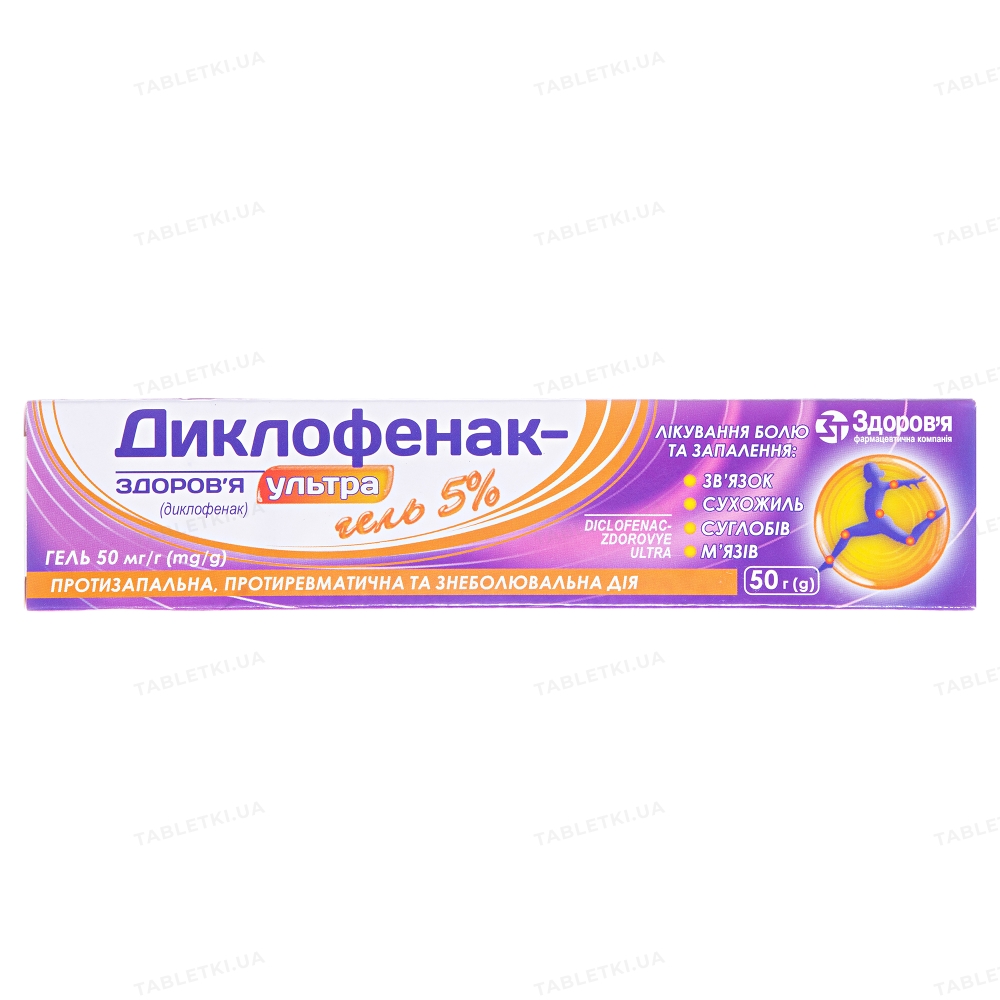
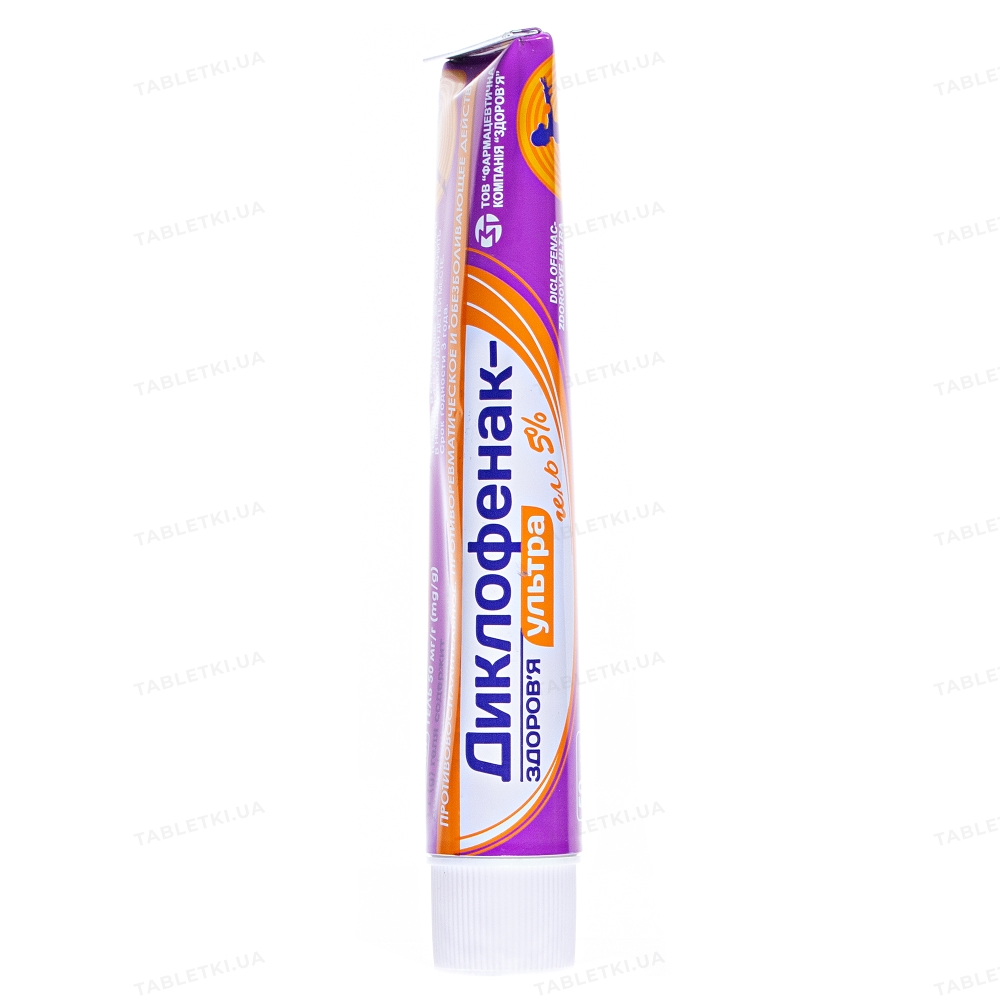
Diclofenac-Zdorovye Ultra Gel 50 mg/g, 50 g in tubes
Ingredients
Active ingredient: diclofenac;
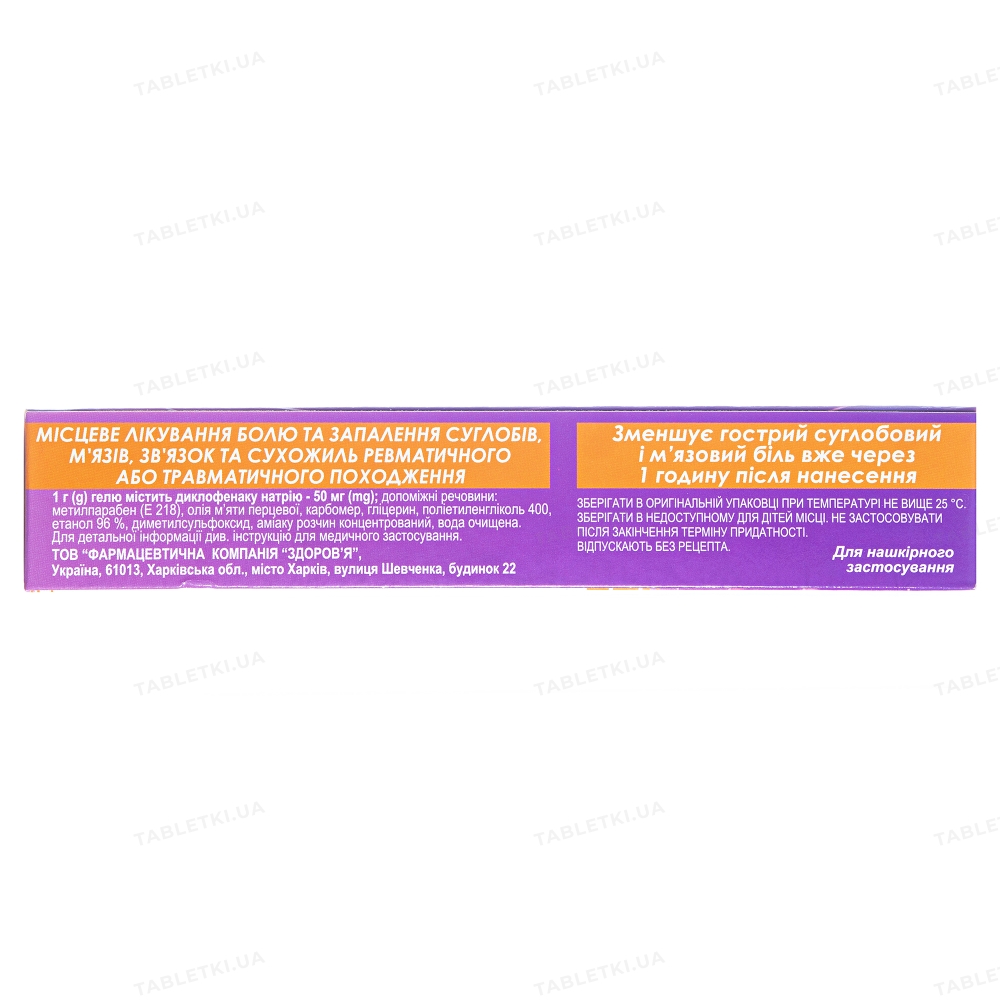
1 g of gel contains 50 mg of diclofenac sodium;
inactive ingredients: methylparaben (E 218), peppermint oil, carbomer, glycerin, polyethylene glycol 400, 96% ethanol, dimethyl sulfoxide, concentrated ammonia solution, purified water.
Dosage Form
Gel.
Main physical and chemical properties: a white gel with a uniform consistency and a characteristic odor.
Pharmacotherapeutic group
Topical agents for joint and muscle pain. Nonsteroidal anti-inflammatory drugs for topical use. Diclofenac.
ATC code M02A A15.
Pharmacological properties
Pharmacodynamics.
Diclofenac is a nonsteroidal anti-inflammatory drug (NSAID) with pronounced antirheumatic, analgesic, anti-inflammatory, and antipyretic effects. The primary mechanism of action is the inhibition of prostaglandin biosynthesis.
In cases of inflammation caused by trauma or rheumatic diseases, the drug reduces pain and tissue swelling and accelerates the restoration of function in damaged joints, ligaments, tendons, and muscles. The medication reduces acute pain as early as 1 hour after initial application. Thanks to its water-alcohol base, the medication has a local anesthetic and cooling effect.
Pharmacokinetics.
The amount of diclofenac absorbed through the skin is proportional to the area of application and depends on both the total dose applied and the degree of skin hydration. After topical application of 2.5 g of the drug to a skin surface area of 500 cm², the absorption rate of diclofenac is approximately 6%. The use of an occlusive dressing for 10 hours increases the absorption of diclofenac threefold.
After application of the drug to the skin over the wrist and knee joints, diclofenac is detected in blood plasma (where its maximum concentration is approximately 100 times lower than after oral administration), in the synovial membrane and synovial fluid. The protein binding of diclofenac is 99.7%.
Diclofenac accumulates in the skin, which acts as a reservoir from which the substance is gradually released into adjacent tissues. From there, diclofenac primarily reaches deeper inflamed tissues, such as joints, where it continues to act and is detected at concentrations up to 20 times higher than in blood plasma.
Diclofenac is metabolized primarily by hydroxylation to form several phenolic derivatives, two of which are pharmacologically active, but to a much lesser extent than diclofenac.
Diclofenac and its metabolites are excreted primarily in the urine. The total systemic plasma clearance of diclofenac is 263 ± 56 mL/min, and the terminal half-life averages 1–3 hours.
In patients with renal or hepatic insufficiency, the metabolism and excretion of diclofenac remain unchanged.
Indications
Topical treatment of pain and inflammation of joints, muscles, ligaments, and tendons of rheumatic or traumatic origin.
Contraindications
Hypersensitivity to diclofenac, other NSAIDs, or any other components of the medication. A history of bronchial asthma attacks, angioedema, urticaria, or acute rhinitis caused by acetylsalicylic acid or other NSAIDs; the third trimester of pregnancy.
Interactions with Other Medications and Other Types of Interactions
Since systemic absorption of diclofenac is very low when the drug is applied topically, interactions are unlikely.
Special Instructions for Use
The gel should be applied only to intact skin, avoiding contact with inflamed, injured, or infected skin. Avoid contact with the eyes and mucous membranes. Do not swallow the gel.
Use with caution when taking oral NSAIDs. The likelihood of systemic side effects with topical application of diclofenac is low compared to its oral forms, but it cannot be ruled out when the product is applied to relatively large areas of skin for an extended period. In such cases, the drug should be used with caution in patients with hepatic, renal, or cardiac insufficiency, as well as in those with active peptic ulcer disease.
If any skin rashes appear, treatment with this medication should be discontinued.
The drug should not be applied under an airtight occlusive dressing, but its use under a non-occlusive dressing is permitted. In the event of a sprain, the affected area may be bandaged.
Due to the possibility of photosensitivity, direct sunlight and visits to tanning beds should be avoided during treatment and for 2 weeks after treatment is discontinued.
Methylparaben (E 218) may cause allergic reactions (possibly delayed). Dimethyl sulfoxide may cause skin irritation.
Use During Pregnancy or Breastfeeding.
Clinical experience with diclofenac in pregnant women is limited; therefore, use of this medication is not recommended during pregnancy or while breastfeeding. The drug is contraindicated during the third trimester of pregnancy due to the potential for weakened labor, prolonged bleeding time, impaired fetal renal function leading to oligohydramnios and/or the development of cardiopulmonary toxicity with premature closure of the ductus arteriosus and pulmonary hypertension.
In animals, no evidence of adverse effects of the drug on pregnancy, embryonic development, labor, or postnatal development of the offspring has been observed.
It is unknown whether diclofenac is excreted into breast milk following topical application; therefore, use of the drug during breastfeeding is permitted only when the expected benefit, in the physician’s opinion, outweighs the potential risk to the infant. If there are compelling reasons to use the drug during breastfeeding, it should not be applied to the breasts or large areas of skin, and it should not be used for prolonged periods.
There are no data on the effect of diclofenac on human fertility when used topically.
Effect on reaction time when operating motor vehicles or other machinery.
No effect.
Dosage and Administration
Adults should apply 3–4 times daily, gently rubbing it into the skin. The amount of medication used depends on the size of the affected area. Typically, 2–4 g of gel—equivalent in volume to a cherry or a walnut—is sufficient to cover an area of 400–800 cm². Wash your hands after applying the medication, unless the area being treated is your hands.
The duration of therapy depends on the nature of the condition and the effectiveness of treatment. The product should not be used for more than 14 consecutive days.
Children. There are no dosage recommendations or therapeutic indications for the use of this medication in children.
Overdose
Overdose is unlikely due to the low absorption of diclofenac into the systemic circulation when applied topically. In case of accidental ingestion, the possibility of systemic adverse reactions should be considered.
In case of accidental ingestion, the stomach should be emptied immediately and an adsorbent administered. Symptomatic treatment is indicated, along with therapeutic measures used for NSAID poisoning.
Side Effects
The drug is generally well tolerated. Adverse reactions include mild, temporary skin reactions at the application site. In rare cases, allergic reactions may occur.
Infections and infestations: pustular rashes.
Immune system disorders: hypersensitivity reactions (including urticaria), angioedema.
Respiratory system: bronchial asthma.
Skin and connective tissue disorders: rash, redness, eczema, exanthema, erythema, edema and vesicles, papules, pustules, scaling and dry skin, dermatitis (including contact and bullous dermatitis), photosensitivity reactions, burning sensation, itching.
Shelf life
3 years.
Storage conditions
Store in the original packaging at a temperature not exceeding 25 °C.
Keep out of reach of children.
Packaging
50 g or 100 g in a tube inside a box.
Dispensing Category
Available without a prescription.
Manufacturer
Limited Liability Company “Pharmaceutical Company ‘Zdorov’ya’”.
Address
Ukraine, 61013, Kharkiv Oblast, city of Kharkiv, Shevchenko Street, Building 22.