
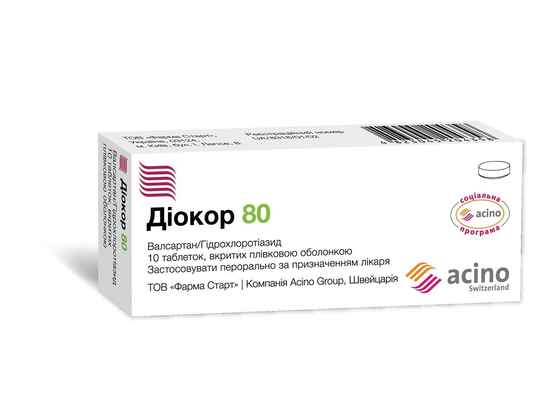
Diocor 80 tablets, film-coated, 80 mg/12.5 mg, No. 10
Composition
Active ingredients: valsartan, hydrochlorothiazide;
1 film-coated tablet contains:
80 mg of valsartan and 12.5 mg of hydrochlorothiazide (Diocor 80)
or 160 mg of valsartan and 12.5 mg of hydrochlorothiazide (Diocor 160);
inactive ingredients: microcrystalline cellulose, potato starch, corn starch, sodium lauryl sulfate, talc, sodium croscarmellose, colloidal anhydrous silicon dioxide, magnesium stearate, coating for Diocor 80 – Opadry II White (polyethylene glycol, polyvinyl alcohol, talc, titanium dioxide (E 171)); Diocor 160 – Opadry II Orange (talc, polyvinyl alcohol, quinoline yellow (E 104), polyethylene glycol, red iron oxide (E 172), yellow iron oxide (E 172), titanium dioxide (E 171)).
Dosage Form
Film-coated tablets.
Main physical and chemical properties:
Diocor 80—round tablets with a biconvex surface, coated with a white film coating.
Diocor 160—round, biconvex tablets coated with a brown-orange film coating.
Pharmacotherapeutic group
Combination drugs containing angiotensin II inhibitors. Valsartan and diuretics.
ATC code C09D A03.
Pharmacological Properties
Pharmacodynamics.
Diocor is an antihypertensive drug containing an angiotensin II receptor antagonist and a thiazide diuretic.
The active hormone of the renin-angiotensin-aldosterone system is angiotensin II, which is formed from angiotensin I with the involvement of angiotensin-converting enzyme (ACE).
Angiotensin II binds to specific receptors located on cell membranes in various tissues. It has a broad spectrum of physiological effects, including both direct and indirect involvement in the regulation of blood pressure.
As a potent vasoconstrictor, angiotensin II exerts a direct vasopressor effect. In addition, it promotes sodium retention and stimulates aldosterone secretion.
Valsartan is an active and specific angiotensin II receptor antagonist intended for oral administration. It acts selectively on AT1 subtype receptors, which are responsible for the effects of angiotensin II. Elevated levels of angiotensin II resulting from the blockade of AT1 receptors by valsartan may stimulate free AT2 receptors, thereby counterbalancing the effect of AT1 receptors. Valsartan has no partial agonist activity at AT1 receptors and has a much higher (approximately 20,000-fold) affinity for AT1 receptors than for AT2 receptors.
Valsartan does not inhibit ACE (kininase II), which converts angiotensin I to angiotensin II and degrades bradykinin. No side effects related to bradykinin have been observed.
In clinical trials comparing valsartan with an ACE inhibitor, the incidence of dry cough was significantly lower (P < 0.05) in patients treated with valsartan than in those treated with an ACE inhibitor (2.6% versus 7.9%, respectively). It is known that patients previously treated with an ACE inhibitor developed a dry cough; with valsartan treatment, this complication was observed in 19.5% of cases, and in 19% of cases with thiazide diuretic therapy, whereas in the group of patients treated with an ACE inhibitor, cough was observed in 68.5% of cases (P < 0.05). Valsartan does not interact with or block the receptors of other hormones or ion channels that play an important role in regulating cardiovascular function.
In patients with hypertension, the drug lowers blood pressure without affecting heart rate.
In most patients, after a single dose, the onset of antihypertensive activity occurs within 2 hours, and the maximum reduction in blood pressure is achieved within 4–6 hours.
The antihypertensive effect persists for more than 24 hours after a single dose. With regular use, the maximum therapeutic effect is usually achieved within 2–4 weeks and is maintained at that level during long-term therapy. When taken in combination with hydrochlorothiazide, a more effective reduction in blood pressure is observed.
The site of action of thiazide diuretics is the cortical segment of the distal convoluted renal tubules, where receptors highly sensitive to the action of diuretics are located, and where the transport of sodium and chloride ions is inhibited. The mechanism of action of thiazides is associated with the inhibition of the Na+Cl− pump, which occurs due to competition for Cl− transport sites. As a result, the excretion of sodium and chloride ions increases approximately equally. As a result of the diuretic effect, a decrease in circulating blood volume is observed, leading to increased renin activity, aldosterone secretion, urinary potassium excretion, and, consequently, a decrease in serum potassium concentration. The relationship between renin and aldosterone is mediated by angiotensin II; therefore, the use of an angiotensin II receptor antagonist will reduce the potassium loss associated with the use of a thiazide diuretic.
Non-melanoma skin cancer: Epidemiological studies have shown a cumulative, dose-dependent association between hydrochlorothiazide use and the development of non-melanoma skin cancer. Data indicate that one study included a population consisting of 71,533 cases of basal cell carcinoma and 8,629 cases of squamous cell carcinoma, compared with 1,430,833 and 172,462 cases, respectively, in the control group. The use of high doses of hydrochlorothiazide (total dose ≥50,000 mg) was associated with the following adjusted odds ratios: 1.29 (95% CI: 1.23–1.35) for basal cell carcinoma and 3.98 (95% CI: 3.68–4.31) for squamous cell carcinoma. A pronounced cumulative dose-response relationship was observed for both basal cell carcinoma and squamous cell carcinoma. Another study showed a possible association between lip cancer (squamous cell carcinoma) and hydrochlorothiazide exposure: 633 cases of lip cancer corresponded to 63,067 cases in the control group (a risk-adjusted sampling strategy was used). A cumulative dose-response relationship was demonstrated using adjusted odds ratios, which were 2.1 (95% CI: 1.7–2.6). The ratio increased to 3.9 (3.0–4.9) with high doses of hydrochlorothiazide (~25,000 mg) and up to 7.7 (5.7–10.5) with the highest cumulative doses of the drug (~100,000 mg).
Pharmacokinetics.
Valsartan.
Following oral administration, valsartan and hydrochlorothiazide are rapidly absorbed; however, the extent of absorption varies widely. The mean absolute bioavailability of Diocor is 23%. The pharmacokinetic curve of valsartan is characterized by a descending multi-exponential profile (T1/2α < 1 hour and T1/2β approximately 9 hours). Within the range of doses studied, the kinetics of valsartan are linear. No changes in kinetic parameters were observed with repeated administration of the drug. When taken once daily, accumulation is negligible. Plasma concentrations of the drug were similar in women and men. Valsartan is extensively (94–97%) bound to serum proteins, primarily to albumin. The steady-state volume of distribution is low (approximately 17 L). Compared to hepatic blood flow (approximately 30 L/h), the plasma clearance of valsartan is relatively slow (approximately 2 L/h). The excretion of valsartan in feces accounts for 70% (of the orally administered dose). About 30% is excreted in the urine, primarily in an unchanged form.
When valsartan is taken with food, the area under the concentration-time curve (AUC) decreases by 48%, although, starting approximately 8 hours after administration, plasma concentrations are the same whether the drug is taken on an empty stomach or with food. The reduction in the area under the concentration-time curve is not accompanied by a significant decrease in therapeutic effect.
Hydrochlorothiazide.
After oral administration, hydrochlorothiazide is absorbed very rapidly (tmax is approximately 2 hours). The pharmacokinetics of the drug during the distribution and elimination phases are generally described by a bi-exponential decay curve; the terminal half-life is 6–15 hours. Within the therapeutic dose range, the mean AUC increases in direct proportion to the dose. With repeated dosing, the pharmacokinetics of hydrochlorothiazide remain unchanged; when administered once daily, accumulation is negligible. When administered orally, the absolute bioavailability of hydrochlorothiazide is 60–80%. It is excreted in the urine: more than 95% of the dose is excreted unchanged, and approximately 4% is excreted as the hydrolyzate 2-amino-4-chloro-m-benzenedisulfonamide.
When hydrochlorothiazide is taken with food, both increases and decreases in its systemic bioavailability have been observed compared to the corresponding value when taken on an empty stomach. The range of these changes is small and clinically insignificant.
Valsartan/hydrochlorothiazide.
When taken concomitantly with valsartan, the systemic bioavailability of hydrochlorothiazide is reduced by approximately 30%. Concomitant use of hydrochlorothiazide has no significant effect on the kinetics of valsartan. This interaction does not affect the efficacy of the combination of valsartan and hydrochlorothiazide. In controlled clinical trials, a clear antihypertensive effect of this combination was observed, which exceeded the effect of each component alone, as well as the effect of placebo.
Pharmacokinetics in Specific Patient Populations.
Elderly patients.
It is known that in some elderly patients, the systemic exposure to valsartan was slightly greater than in younger patients; however, this difference was not clinically significant.
Available data suggest that in elderly patients, both healthy and those with hypertension, the systemic clearance of hydrochlorothiazide is lower than in healthy young volunteers.
Patients with impaired renal function.
No dose adjustment is required for patients with creatinine clearance of 30–70 mL/min.
There are no data on the use of the valsartan/hydrochlorothiazide combination in patients with severe renal impairment (creatinine clearance < 30 mL/min) or in patients undergoing hemodialysis.
Valsartan is highly bound to plasma proteins and is not removed by hemodialysis; hydrochlorothiazide, on the other hand, is removed from the body by hemodialysis.
Renal excretion of hydrochlorothiazide occurs via passive filtration and active secretion into the lumen of the renal tubules. Renal function plays a major role in the pharmacokinetics of hydrochlorothiazide, given that this drug is excreted exclusively by the kidneys.
Hepatic impairment.
It is known that the systemic exposure to valsartan in patients with mild (n=6) and moderate (n=5) hepatic impairment was twice as high as in healthy volunteers. There are no data on the use of valsartan in patients with severe hepatic impairment. Liver disease does not significantly affect the pharmacokinetics of hydrochlorothiazide; therefore, a dose reduction is not necessary.
Indications
Essential hypertension in patients whose blood pressure is not adequately controlled by monotherapy.
Contraindications
Hypersensitivity to any component of the drug or to other sulfonamide-derived medications.
Severe hepatic impairment, cirrhosis, and cholestasis.
Severe renal impairment (creatinine clearance < 30 mL/min), anuria.
Refractory hypokalemia, hyponatremia, hypercalcemia, symptomatic hyperuricemia.
Pregnant women and women planning to become pregnant (see the section “Use During Pregnancy or Breastfeeding”).
Concomitant use of angiotensin receptor antagonists (ARAs), including valsartan, or angiotensin-converting enzyme (ACE) with aliskiren in patients with diabetes mellitus or impaired renal function (glomerular filtration rate (GFR) < 60 mL/min/1.73 m²).
Drug Interactions and Other Interactions
Interactions associated with the valsartan/hydrochlorothiazide combination.
Concomitant use is not recommended.
Lithium. During concomitant use of lithium preparations with angiotensinconverting enzyme (ACE) inhibitors or thiazide diuretics, including hydrochlorothiazide, reversible increases in serum lithium concentrations and signs of toxicity have been observed. There is no experience with the concomitant use of valsartan and lithium-containing medications; therefore, this combination is not recommended. If concomitant use is necessary, it is recommended to monitor serum lithium levels during treatment.
Concomitant use requiring special caution.
Other antihypertensive agents. The antihypertensive effect of other antihypertensive drugs may be potentiated when used concomitantly with Diocor (e.g., guanethidine, methyldopa, vasodilators, ACE inhibitors, angiotensin receptor antagonists, beta-blockers, calcium channel blockers, and dopamine reuptake inhibitors).
Pressor amines (e.g., norepinephrine, epinephrine). A reduced response to pressor amines may be observed, but not to such an extent that their use should be discontinued.
Nonsteroidal anti-inflammatory drugs (NSAIDs), including selective COX-2 inhibitors, acetylsalicylic acid >3 g/day, and nonselective NSAIDs. The antihypertensive effect of both the angiotensin II antagonist and the thiazide component may be reduced when used concomitantly with nonsteroidal anti-inflammatory drugs. Concomitant use of these medications may lead to impaired renal function and increased serum potassium levels. Therefore, monitoring of renal function at the start of treatment, as well as ensuring adequate hydration of the patient, is recommended.
Interactions related to valsartan.
Dual blockade of the renin-angiotensin-aldosterone system (RAAS) with ARB, ACE inhibitor, or aliskiren. Caution should be exercised when administering ARB drugs, including valsartan, concomitantly with other RAAS-blocking agents, such as ACE inhibitors or aliskiren, because the incidence of hypotension, syncope, hyperkalemia, and renal dysfunction (including acute renal failure) increases compared with monotherapy. Dual blockade of the renin-angiotensin-aldosterone system (RAAS) using ACE inhibitors, ARBs, or aliskiren is not recommended. If dual blockade of the renin-angiotensin-aldosterone system is considered absolutely necessary, it should be administered only under the supervision of a specialist and with careful monitoring of renal function, electrolyte levels, and blood pressure.
Concomitant use of angiotensin receptor antagonists, including valsartan, or angiotensin-converting enzyme inhibitors with aliskiren in patients with type 1 or type 2 diabetes, diabetic nephropathy, or in patients with severe renal impairment (glomerular filtration rate (GFR) < 60 mL/min/1.73 m²) is contraindicated.
Concomitant use is not recommended.
Potassium-sparing diuretics, potassium-containing dietary supplements, potassium-containing salt substitutes, or other medications/substances that may increase serum potassium levels. Caution is advised, and serum potassium levels should be monitored frequently when it is necessary to use agents that affect potassium levels in combination with valsartan.
Transporters. Based on in vitro studies, valsartan is a substrate for the hepatic uptake transporters OATP1B1/OATP1B3 and the hepatic efflux transporter MRP2. The clinical significance of these findings is unknown. Concomitant use of inhibitors of the uptake transporter (e.g., rifampicin, cyclosporine) or the efflux transporter (e.g., ritonavir) may increase the systemic exposure to valsartan. Appropriate precautions should be taken at the start or end of concomitant use of these medications.
No interactions were observed. No clinically significant interactions were observed during valsartan monotherapy when the following drugs were administered: cimetidine, warfarin, furosemide, digoxin, atenolol, indomethacin, hydrochlorothiazide, amlodipine, and glibenclamide. Digoxin and indomethacin may interact with hydrochlorothiazide in the valsartan/hydrochlorothiazide combination (see “Interactions Related to Hydrochlorothiazide”).
Interactions related to hydrochlorothiazide.
Concomitant use requiring special caution.
Medications associated with potassium loss and hypokalemia. The risk of hypokalemia increases with the concomitant use of thiazide diuretics, laxatives, corticosteroids, ACTH, amphotericin, carbenoxolone, penicillin G, and salicylic acid derivatives. These medications may potentiate the effect of hydrochlorothiazide on serum potassium levels; therefore, serum potassium levels should be monitored.
Medications that may cause “pirouette” ventricular tachycardia. Given the risk of hypokalemia, hydrochlorothiazide should be used with caution when administered concomitantly with medications that may induce “pirouette”-type ventricular tachycardia, particularly Class Ia and Class III antiarrhythmic drugs, as well as certain antipsychotic drugs.
Medications that affect serum sodium levels. The hyponatremic effect of diuretics may be potentiated when taken concomitantly with medications such as antidepressants, antipsychotics, antiepileptic drugs, etc. Caution is recommended during long-term use of these medications.
Medications that may cause torsades de pointes.
- Class Ia antiarrhythmic agents (e.g., quinidine, hydroquinidine, disopyramide).
- Class III antiarrhythmic drugs (e.g., amiodarone, sotalol, dofetilide, ibutilide).
- Certain antipsychotics (e.g., thioridazine, chlorpromazine, levomepromazine, trifluoperazine, cyamemazine, sulpiride, sultopride, amisulpride, tiapride, pimozide, haloperidol, droperidol).
- Others (e.g., bepridil, cisapride, difenamyl, intravenous erythromycin, halofantrine, ketanserin, mizolastine, pentamidine, sparfloxacin, terfenadine, intravenous vincamine).
Due to the risk of hypokalemia, hydrochlorothiazide should be used with caution in combination with medications that may cause torsades de pointes.
Digitalis glycosides. Thiazide diuretics may cause adverse effects such as hypokalemia or hypomagnesemia, which, in turn, increase the risk of cardiac arrhythmia in cases of digitalis intoxication.
Calcium salts and vitamin D. When thiazide diuretics are used concomitantly with vitamin D or calcium salts, an increase in serum calcium levels may be potentiated.
Concomitant use of thiazide diuretics with calcium salts may cause hypercalcemia in patients predisposed to hypercalcemia (e.g., patients with hyperparathyroidism, malignant neoplasms, or vitamin D-mediated conditions) due to increased tubular reabsorption of calcium.
Antidiabetic agents (oral medications, insulin). Thiazide diuretics may cause changes in glucose tolerance. It may be necessary to adjust the dose of insulin or oral hypoglycemic agents in patients with diabetes mellitus. Concomitant use of metformin and hydrochlorothiazide in patients with renal impairment may lead to the development of lactic acidosis.
Beta-blockers and diazoxide. Concomitant use of thiazide diuretics, including hydrochlorothiazide, with beta-blockers may increase the risk of hyperglycemia. Thiazide diuretics, including hydrochlorothiazide, may enhance the hyperglycemic effect of diazoxide.
Medications used to treat gout (probenecid, sulfinpyrazone, and allopurinol). Dosage adjustment of uricosuric agents that promote uric acid excretion may be necessary, as hydrochlorothiazide may increase serum uric acid levels. It may be necessary to increase the dose of probenecid or sulfinpyrazone. Concomitant use of thiazide diuretics, including hydrochlorothiazide, may increase the incidence of hypersensitivity reactions to allopurinol.
Anticholinergic agents (e.g., atropine, biperiden). Increased bioavailability of the thiazide diuretic is observed with concomitant use of cholinergic receptor blockers (e.g., atropine, biperiden), which may be associated with reduced gastrointestinal motility and delayed gastric emptying. Conversely, it is expected that prokinetic drugs, such as cisapride, may reduce the bioavailability of thiazide-type diuretics.
Amantadine. Thiazides, including hydrochlorothiazide, may increase the risk of amantadine-related side effects.
Ion-exchange resins. The absorption of thiazide diuretics, including hydrochlorothiazide, is reduced by cholestyramine or colestipol. This may result in subtherapeutic effects of thiazide diuretics. However, staggering the timing of hydrochlorothiazide and resin administration so that hydrochlorothiazide is taken at least 4 hours before or 4–6 hours after the resin can minimize the risk of interaction.
Cytotoxic drugs (e.g., cyclophosphamide, methotrexate). Thiazides, including hydrochlorothiazide, may reduce the renal excretion of cytotoxic agents and enhance their myelosuppressive effects.
Non-depolarizing muscle relaxants (e.g., tubocurarine). Thiazides, including hydrochlorothiazide, potentiate the effects of curare-like muscle relaxants.
Cyclosporine. Concomitant use of cyclosporine may increase the risk of hyperuricemia and the onset of symptoms resembling a gout flare-up.
Alcohol, anesthetics, and sedatives. When thiazide diuretics are used concomitantly with drugs that may also lower blood pressure (e.g., by reducing the activity of the sympathetic central nervous system or through a direct vasodilatory effect), orthostatic hypotension may be potentiated.
Methyldopa. Cases of hemolytic anemia have been reported with the concomitant use of hydrochlorothiazide and methyldopa.
Carbamazepine. The risk of hyponatremia may increase. Such patients should be informed of the possibility of a hyponatremic reaction, as well as the need for clinical monitoring and laboratory blood tests.
Iodine-containing contrast media. Dehydration caused by diuretics may increase the risk of acute renal failure, especially with high doses of iodine-containing contrast media. Fluid balance must be restored before administering iodine.
Special Considerations for Use
Changes in electrolyte balance. Caution should be exercised when Diocor is used concomitantly with potassium-sparing diuretics, potassium supplements, potassium-containing salt substitutes, as well as with medications that may cause an increase in blood potassium levels (e.g., heparin). Cases of hypokalemia have been reported during treatment with thiazide diuretics. Regular monitoring of serum potassium levels is recommended. Treatment with thiazide diuretics is often associated with the development of hyponatremia and hypochloremic alkalosis. Thiazides increase urinary magnesium excretion, which may result in hypomagnesemia. As with any patient receiving diuretic therapy, serum electrolyte levels should be determined periodically at appropriate intervals.
Patients with sodium and/or circulating blood volume (CBV) depletion. In patients with severe sodium and/or BCC deficiency—such as those who have been taking high doses of diuretics—symptomatic hypotension may occasionally occur at the start of treatment with this medication. Therefore, it is recommended to correct sodium levels and/or circulating blood volume before starting treatment with Diocor. If hypotension develops, the patient should be placed in a supine position and, if necessary, receive an intravenous infusion of normal saline. Once blood pressure has stabilized, treatment may be continued.
Patients with severe heart failure or other conditions associated with activation of the renin-angiotensin-aldosterone system. In patients whose renal function depends on the activity of the renin-angiotensin-aldosterone system (e.g., patients with severe congestive heart failure), treatment with ACE inhibitors may cause oliguria and/or progressive azotemia; in rare cases, it may lead to the development of acute renal failure. Use of the drug in patients with severe chronic heart failure is not justified, since it cannot be ruled out that, due to inhibition of the renin-angiotensin-aldosterone system, the use of valsartan may also be associated with impaired renal function; therefore, Diocor should not be used in such patients.
Renal artery stenosis. In patients with unilateral or bilateral renal artery stenosis or stenosis of the artery to a solitary kidney, valsartan may lead to an increase in plasma creatinine or blood urea nitrogen levels; therefore, it should not be used in this patient population.
Primary hyperaldosteronism. The drug should not be used in patients with primary hyperaldosteronism, as their renin-angiotensin-aldosterone system is not activated.
Aortic and mitral stenosis, obstructive hypertrophic cardiomyopathy. As with other vasodilators, special caution is warranted when administering this drug to patients with aortic and mitral stenosis or hypertrophic obstructive cardiomyopathy (HOCM).
Renal impairment. When administering the drug to patients with mild or moderate renal impairment (creatinine clearance > 30 mL/min), no dose adjustment is necessary, but periodic monitoring of serum potassium, creatinine, and uric acid is recommended. Use with caution in patients with severe renal insufficiency (creatinine clearance < 30 mL/min). Thiazide diuretics may cause azotemia in patients with chronic renal impairment. They are ineffective as monotherapy in severe renal insufficiency (creatinine clearance < 30 mL/min), but they may be used with appropriate caution in combination with loop diuretics even in patients with a creatinine clearance < 30 mL/min. Concomitant use of angiotensin receptor antagonists, including valsartan, or angiotensin-converting enzyme inhibitors with aliskiren in patients with impaired renal function (glomerular filtration rate (GFR) < 60 mL/min/1.73 m²) is contraindicated.
Kidney transplantation. There are no data on the safety of valsartan in patients who have recently undergone kidney transplantation.
Hepatic impairment. No dose adjustment is required in patients with mild to moderate hepatic impairment without cholestasis. However, the drug should be used with caution. Liver disease does not significantly alter the pharmacokinetic parameters of hydrochlorothiazide.
Systemic lupus erythematosus. There have been reports that thiazide diuretics may cause exacerbations or trigger manifestations of systemic lupus erythematosus.
Other Metabolic Disorders. Thiazide diuretics may cause changes in glucose tolerance, as well as increases in serum cholesterol, triglycerides, and uric acid levels.
Patients with diabetes may require adjustment of their insulin dose or oral hypoglycemic agents. Thiazides may reduce urinary calcium excretion and lead to intermittent and mild elevations in serum calcium in the absence of known calcium metabolism disorders. Significant hypercalcemia may indicate latent hyperparathyroidism. Thiazide therapy should be discontinued prior to testing parathyroid function.
Photosensitivity. There have been reports of photosensitivity reactions associated with the use of thiazide diuretics.
If a photosensitivity reaction occurs during treatment, treatment with the drug should be discontinued. If re-administration of the diuretic is necessary, it is recommended to protect vulnerable areas from sunlight or artificial ultraviolet radiation.
Non-melanoma skin cancer. Two epidemiological studies based on data from the Danish National Cancer Registry have shown an increased risk of non-melanoma skin cancer (NMSC) (basal cell carcinoma (BCC) and squamous cell carcinoma (SCC)) following the use of higher cumulative doses of hydrochlorothiazide.
The photosensitizing effect of hydrochlorothiazide may be a possible mechanism for the development of NMSC. Patients taking hydrochlorothiazide should be informed of the risk of developing NMSC, the need for regular skin examinations to check for new lesions, and the importance of immediately reporting any suspicious skin lesions. To reduce the risk of skin cancer, patients should be advised of possible preventive measures, such as limiting exposure to sunlight and UV rays, and, if exposed, ensuring adequate protection of the skin. Suspicious skin lesions should be evaluated as soon as possible, including histological examination of biopsy specimens. Patients with a history of non-melanoma skin cancer may also need to reconsider the use of hydrochlorothiazide.
Pregnancy. Angiotensin II receptor antagonists should not be initiated during pregnancy. Unless continued therapy with angiotensin II receptor antagonists is considered necessary, patients planning a pregnancy should be switched to alternative antihypertensive treatments with an established safety profile for use during pregnancy. If pregnancy is confirmed, treatment with angiotensin II receptor antagonists should be discontinued immediately, and, if necessary, alternative therapy should be initiated.
General. Particular caution should be exercised when administering this drug to patients with a history of hypersensitivity to other angiotensin II receptor antagonists. Allergic reactions to hydrochlorothiazide are more likely to occur in patients with allergies and asthma.
Angioedema. Cases of angioedema (including laryngeal and glottic edema leading to airway obstruction and/or swelling of the face, lips, pharynx, and/or tongue) have been reported in patients receiving valsartan; some of these patients had a history of angioedema with other medications, including other angiotensin II receptor antagonists. If angioedema develops, treatment with the drug should be discontinued immediately. Re-administration of the drug is contraindicated.
Choroidal effusion, acute myopia, and secondary angle-closure glaucoma.
Drugs containing sulfonamide or sulfonamide derivatives may cause an idiosyncratic reaction resulting in choroidal effusion with visual field defects, transient myopia, and acute angle-closure glaucoma. Symptoms include an acute onset of decreased visual acuity or eye pain and typically occur within a few hours or weeks of starting the medication.
Untreated acute angle-closure glaucoma can lead to permanent vision loss. The primary treatment is to discontinue the medication as soon as possible. If intraocular pressure remains uncontrolled, medical or surgical treatment may be necessary. Risk factors for developing acute angle-closure glaucoma may include a history of allergy to sulfonamides or penicillin.
Acute Respiratory Toxicity. Very rare, severe cases of acute respiratory toxicity (ART), including acute respiratory distress syndrome (ARDS), have been reported following the administration of hydrochlorothiazide. Initial symptoms of ART include shortness of breath, fever, worsening pulmonary condition, and hypotension. Pulmonary edema typically develops within minutes or hours after taking hydrochlorothiazide. If ARDS is suspected, hydrochlorothiazide should be discontinued and appropriate treatment initiated. This medication should not be prescribed to patients who have previously experienced ARDS following hydrochlorothiazide administration.
No dose adjustment is necessary for elderly patients.
Hydrochlorothiazide may reduce the level of protein-bound iodine in blood plasma.
Hydrochlorothiazide may increase the concentration of free bilirubin in serum.
Use during pregnancy or breastfeeding.
Pregnancy.
Valsartan.
The use of angiotensin II receptor antagonists is contraindicated in pregnant women and women planning to become pregnant.
If pregnancy is confirmed during treatment with Diocor, the drug should be discontinued immediately and, if necessary, replaced with another medication approved for use in pregnant women.
Women planning to become pregnant should be prescribed alternative antihypertensive therapy with an established safety profile for use during pregnancy.
It is known that the use of angiotensin II receptor antagonists during the second and third trimesters may induce fetal toxicity (decreased renal function, oligohydramnios, delayed cranial ossification) and neonatal toxicity (renal failure, hypotension, hyperkalemia).
If angiotensin II receptor antagonists were used starting in the second trimester of pregnancy, ultrasound monitoring of kidney and skull function is recommended.
Infants whose mothers took angiotensin II receptor antagonists require close monitoring for hypotension.
Hydrochlorothiazide.
Given the mechanism of action of angiotensin II receptor antagonists, a risk to the fetus cannot be ruled out when using Diocor during the first trimester of pregnancy. It is known that animal studies are insufficient.
Hydrochlorothiazide crosses the placenta. Based on the pharmacological mechanisms of action of hydrochlorothiazide, its use during the second and third trimesters of pregnancy may lead to impaired fetoplacental blood flow and cause effects in the fetus and newborn such as jaundice, electrolyte imbalance, and thrombocytopenia.
Breastfeeding.
If use of the drug is absolutely necessary, breastfeeding should be discontinued. There is no information available regarding the use of valsartan during breastfeeding. Hydrochlorothiazide passes into breast milk in small amounts. Thiazides in high doses cause diuresis, which may lead to a decrease in breast milk production. During breastfeeding, preference should be given to alternative treatments with better-established safety profiles for use while nursing a newborn or preterm infant.
Effect on reaction time when operating motor vehicles or other machinery.
At the start of treatment with this medication (the duration of which is determined individually by the physician), driving and performing work that could lead to an accident are prohibited. Subsequently, the extent of these restrictions is determined by the physician.
Dosage and Administration
The recommended dose is 1 tablet of 80 mg/12.5 mg (Diocor 80) once daily.
If blood pressure does not decrease sufficiently after 3–4 weeks of treatment, it is recommended to consider continuing treatment with a dose of 1 tablet of 160 mg/12.5 mg (Diocor 160) once daily.
The maximum daily dose is 320 mg/25 mg. The maximum antihypertensive effect is achieved within 2–4 weeks of treatment. Some patients may require 4–8 weeks of treatment. The medication may be taken with or without food, with a small amount of water.
In cases of renal impairment. No dose adjustment is required for patients with mild to moderate renal impairment (creatinine clearance > 30 mL/min).
In patients with hepatic impairment. For patients with mild to moderate hepatic impairment of non-biliary origin and without cholestasis, the dose of valsartan should not exceed 80 mg; the drug should be prescribed with caution.
Elderly patients. No dose adjustment is required for elderly patients.
The duration of treatment is determined individually by the physician.
Children.
The safety and efficacy of Diocor in children have not been established; therefore, it should not be used in pediatric practice.
Overdose
The main manifestation of an overdose may be severe hypotension, which in turn may lead to impaired consciousness, heart failure, and/or shock.
In the event of a hydrochlorothiazide overdose, the following signs and symptoms may occur: nausea, drowsiness, hypovolemia, and electrolyte imbalances associated with arrhythmias and muscle cramps. Other characteristic signs of overdose include: tachycardia, hypotension, shock, weakness, confusion, dizziness, muscle spasms, paresthesia, exhaustion, altered consciousness, vomiting, thirst, polyuria, oliguria, anuria, alkalosis, and elevated blood urea nitrogen levels (primarily due to renal failure).
Therapeutic measures depend on how long ago a large dose of the drug was taken, as well as the severity of the symptoms; the primary goal is to stabilize the circulatory system.
If the drug was taken recently, induce vomiting or perform gastric lavage. If a significant amount of time has passed since administration, the patient should be given a sufficient amount of activated charcoal. If hypotension occurs, the patient should be placed in a supine position, and electrolyte and fluid levels should be replenished as quickly as possible via intravenous administration of an isotonic saline solution. Valsartan cannot be removed from the body by hemodialysis due to its extensive binding to plasma proteins, although hemodialysis is effective for removing hydrochlorothiazide from the body.
Side Effects
Adverse reactions most frequently reported during clinical trials and laboratory studies involving the use of valsartan with hydrochlorothiazide compared to placebo, as well as in individual postmarketing reports, are listed below by organ system.
Adverse reactions that may occur with the use of each component separately but were not observed in clinical trials may occur during treatment with the valsartan/hydrochlorothiazide combination.
Adverse reactions are listed by frequency under the following headings: very common (≥1/10); common (≥1/100, <1/10); uncommon (≥1/1,000, <1/100); rare (≥1/10,000, <1/1,000); very rare (≥1/10,000); unknown (cannot be estimated from the available data). Within each frequency group, adverse reactions are listed in order of decreasing severity.
Frequency of adverse reactions to valsartan/hydrochlorothiazide.
Infections: uncommon—viral infections, fever.
Metabolic and nutritional disorders: uncommon—dehydration; unknown—hypokalemia, hyponatremia.
Nervous system disorders: common – headache, fatigue; uncommon – asthenia, dizziness, insomnia, anxiety, paresthesia; rare – depression; frequency unknown – syncope.
Eye disorders: uncommon—visual disturbances, blurred vision, xanthopsia; rare—conjunctivitis.
Cardiac disorders: uncommon—palpitations, tachycardia.
Vascular system: uncommon—edema, hypotension, hyperhidrosis.
Ear and vestibular system disorders: uncommon—otitis media, tinnitus.
Respiratory, thoracic, and mediastinal disorders: common—cough, runny nose, pharyngitis, upper respiratory tract infections; uncommon – bronchitis, shortness of breath, sinusitis, pharyngolaryngeal pain, dry mouth, nasal congestion, respiratory distress; very rare – nosebleeds; unknown – non-cardiogenic pulmonary edema (may be immunologically mediated by an idiosyncratic reaction to hydrochlorothiazide, which occurs rarely).
Gastrointestinal system: very rare—diarrhea; uncommon—abdominal pain, dyspepsia, nausea, gastroenteritis.
Musculoskeletal and connective tissue disorders: common – back pain, arthralgia; uncommon – pain in the arms or legs, chest pain, neck pain, arthritis, sprains and deformities, muscle cramps, myalgia.
Urinary system: uncommon – frequent urination, urinary tract infections; frequency unknown – renal impairment.
Reproductive system: rare—erectile dysfunction.
General disorders and administration site conditions: uncommon – increased fatigue.
Benign, malignant, and unspecified neoplasms (including cysts and polyps): frequency unknown—non-melanoma skin cancer (basal cell carcinoma and squamous cell carcinoma).
Description of adverse reactions: non-melanoma skin cancer—based on available data from epidemiological studies, a cumulative dose-dependent association has been identified between hydrochlorothiazide and non-melanoma skin cancer.
Laboratory tests: Unknown – elevated plasma uric acid, elevated plasma bilirubin and creatinine, hypokalemia, hyponatremia, elevated blood urea nitrogen, neutropenia.
The following reactions have been reported during clinical trials in patients with hypertension, regardless of their causal relationship to the study drug: abdominal pain, upper abdominal pain, anxiety, arthritis, back pain, bronchitis, acute bronchitis, chest pain, dizziness, dyspepsia, dyspnea, dry mouth, nosebleeds, impotence, gastroenteritis, headache, increased sweating, hypoesthesia, flu, insomnia, ligament sprains, muscle cramps, muscle strains, nausea, nasal congestion, sinus congestion, neck pain, edema, peripheral edema, otitis media, pain in the extremities, palpitations, pharyngolaryngeal pain, pollakiuria, fever, nasopharyngitis, sinusitis, drowsiness, tachycardia, upper respiratory tract infections, urinary tract infections, vertigo, viral infections, visual disturbances. It is unknown whether these effects were causally related to therapy.
Additional information regarding individual components. It is known that adverse reactions previously reported with each component when used alone may also be potential adverse effects of Diocor, even if they were not observed in clinical trials or during the postmarketing period.
Frequency of adverse reactions to valsartan.
Blood and lymphatic system disorders: unknown—decreased hemoglobin, decreased hematocrit, thrombocytopenia.
Immune system disorders: very rare—necrotizing vasculitis, hypersensitivity/allergic reactions, including serum sickness.
Metabolic disorders: common—hyponatremia, hypomagnesemia, hyperuricemia, loss of appetite.
Ear and vestibular system disorders: uncommon—vestibular dizziness (vertigo).
Vascular disorders: frequency unknown—vasculitis.
Gastrointestinal disorders: uncommon—abdominal pain.
Hepatobiliary system: frequency unknown—elevated liver function tests.
Skin and subcutaneous tissue disorders: unknown – angioedema, rash, pruritus, bullous dermatitis.
Urinary system: unknown – renal failure.
The following reactions have been reported during clinical trials in patients with hypertension, regardless of their causal relationship to the study drug: arthralgia, asthenia, back pain, diarrhea, dizziness, headache, insomnia, decreased libido, nausea, edema, pharyngitis, rhinitis, sinusitis, upper respiratory tract inflammation, and viral infections.
Frequency of adverse reactions to hydrochlorothiazide.
Hydrochlorothiazide has been widely used for many years, often at higher doses than those contained in Diocor.
Thiazide diuretics may cause an increase in serum cholesterol, triglycerides, and uric acid levels, which may trigger gout attacks in patients with asymptomatic gout.
A decrease in glucose tolerance is possible, which may lead to the manifestation of latent diabetes mellitus.
The following adverse reactions have been reported in patients receiving thiazide diuretics, including hydrochlorothiazide, as monotherapy.
Metabolic disorders: very common—increased blood lipid levels when high doses are used; common – hypomagnesemia, hyperuricemia; rare – hypercalcemia, hyperglycemia, glucosuria, and metabolic disturbances in patients with diabetes; very rarely – hypochloremic alkalosis (which may induce hepatic encephalopathy or hepatic coma).
Blood and lymphatic system disorders: rare—thrombocytopenia, sometimes with purpura; very rarely – agranulocytosis, leukopenia, hemolytic anemia, bone marrow depression; frequency unknown – aplastic anemia.
Immune system disorders: very rare—hypersensitivity reactions.
Psychiatric disorders: rare—depression, sleep disorders.
Nervous system disorders: rarely—headache, dizziness, paresthesia.
Eye disorders: uncommon—blurred vision in the first few weeks after starting treatment; frequency unknown—acute angle-closure glaucoma, choroidal hemorrhage.
Cardiac: rare—cardiac arrhythmia.
Vascular system: common – postural hypotension, which may be exacerbated by the use of alcohol, anesthetics, anesthetic agents, or sedatives.
Respiratory, thoracic, and mediastinal disorders: very rare—respiratory failure, including pneumonia and pulmonary edema (with granulocytic infiltration and IgG deposition in the alveolar membranes, associated with the use of hydrochlorothiazide), pneumonitis, acute respiratory distress syndrome (ARDS) (see the “Special Considerations for Use” section).
Gastrointestinal system: common—loss of appetite, mild nausea, and vomiting; rare—constipation, gastrointestinal discomfort, diarrhea; very rare—pancreatitis.
Hepatobiliary system: rare—intrahepatic cholestasis or jaundice.
Skin and subcutaneous tissue disorders: common—urticaria and other types of rash; rare—photosensitivity; very rarely—necrotizing vasculitis and toxic epidermal necrolysis, lupus-like skin reactions, reactivation of cutaneous lupus erythematosus; frequency unknown—erythema multiforme.
Reproductive system: common – impotence.
Urinary system: unknown – acute renal failure, renal disorders.
General disorders and administration site conditions: unknown – fever, fatigue.
Musculoskeletal and connective tissue disorders: unknown – muscle spasms.
Shelf life
3 years.
Storage conditions
Store in the original packaging, out of reach of children, at a temperature not exceeding 25 °C.
Packaging
10 tablets per blister pack; 1, 3, 4, or 9 blister packs per cardboard box.
Manufacturer
Pharma Start LLC, Ukraine.
Address
8 Vaclav Havel Boulevard, Kyiv, 03124, Ukraine.
If you experience any side effects or have questions regarding the safety of this medication, please contact the pharmacovigilance department of ASINO UKRAINE LLC at the following address: 8 Václav Havel Boulevard, Kyiv, 03124, Tel/Fax: +38 044 281 2333.







