
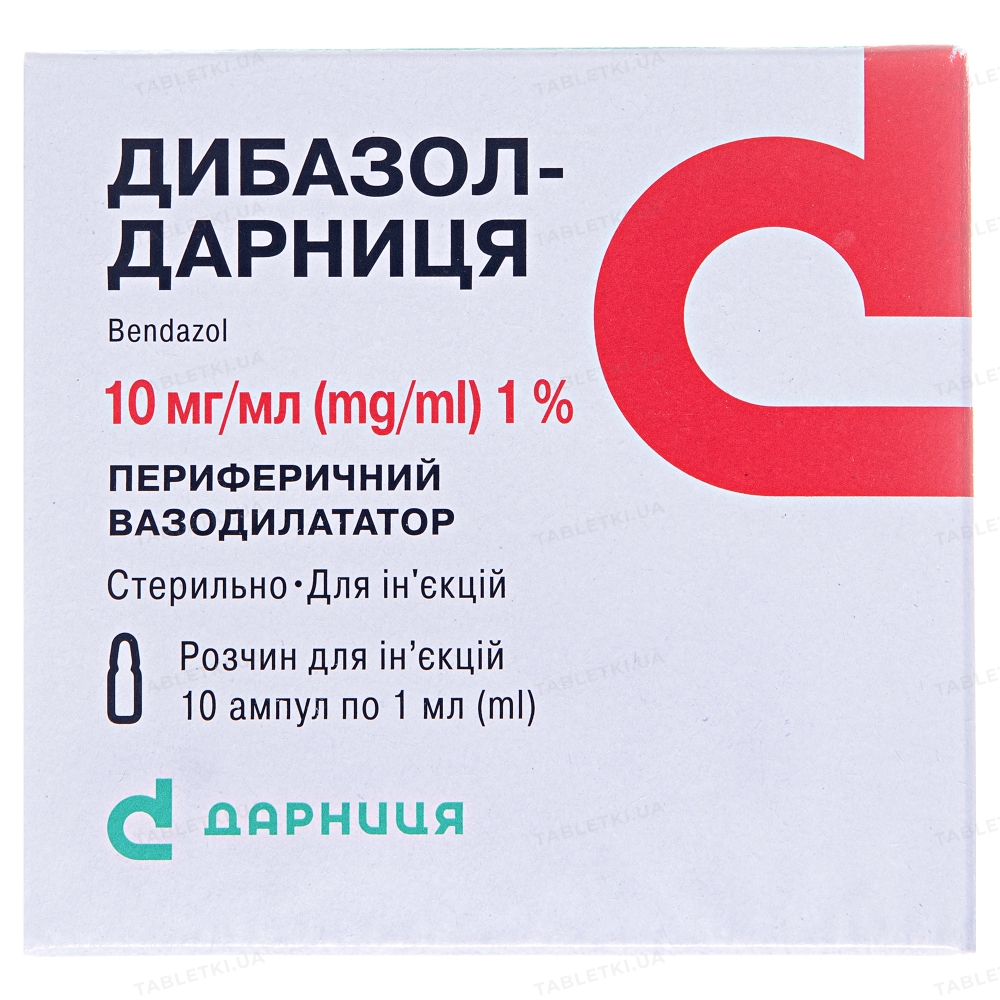
Dibazol-Darnitsa Solution for Injection, 10 mg/mL, 1 mL, No. 10 in ampoules
Ingredients
Active ingredient: bendazol;
1 mL of solution contains 10 mg of bendazol hydrochloride;
excipients: 96% ethanol, glycerin, hydrochloric acid, water for injection.
Dosage Form
Solution for injection.
Main physical and chemical properties: a clear, colorless liquid with a slightly yellowish or greenish tint.
Pharmacotherapeutic group
Peripheral vasodilators. ATC code C04A X.
Pharmacological properties
Pharmacodynamics.
A vasodilator and antispasmodic agent. It has hypotensive and vasodilatory effects, stimulates spinal cord function, and exhibits moderate immunostimulatory activity.
It exerts a direct antispasmodic effect on the smooth muscles of blood vessels and internal organs. The drug produces a short-lived (2–3 hours) and moderate hypotensive effect and is well tolerated. It causes a short-term dilation of cerebral blood vessels in cases of chronic cerebral hypoxia caused by localized circulatory disorders (cerebral artery sclerosis). It facilitates synaptic transmission in the spinal cord. It has immunomodulatory activity. By regulating the ratio of cyclic guanosine monophosphate (cGMP) to cyclic adenosine monophosphate (cAMP) concentrations in immune cells, it increases cGMP levels, which promotes the proliferation of mature, sensitized T- and B-lymphocytes, their secretion of mutual regulatory factors, cooperative responses, and the activation of the cells’ final effector function. The drug stimulates antibody production, enhances the phagocytic activity of leukocytes and macrophages, and improves interferon synthesis; however, the immunomodulatory effect develops slowly.
Pharmacokinetics.
When administered intramuscularly, the drug rapidly enters the systemic circulation. Peak blood concentration is observed 15–30 minutes after administration. Duration of action: 2–3 hours. It is metabolized in the liver.
The biotransformation products of dibazol are two conjugates formed as a result of methylation and carbethoxylation of the imino group of the imidazole ring of dibazol: 1-methyl-2-benzylbenzimidazole and 1-carboethoxy-2-benzylbenzimidazole.
Metabolites are excreted primarily in the urine.
Indications
As an adjunctive treatment for spasms of blood vessels (exacerbations of hypertension, hypertensive crises) and smooth muscles of internal organs (spasms of the pylorus of the stomach, intestines); in the treatment of neurological disorders (primarily residual effects of poliomyelitis, peripheral facial nerve paralysis, and polyneuritis).
Contraindications
Hypersensitivity to bendazole hydrochloride or to any of the drug’s excipients. Conditions characterized by decreased muscle tone, convulsive syndrome, or severe heart failure. Hypotension. Chronic nephritis with edema and impaired renal nitrogen excretion. Bleeding gastric or duodenal ulcers. Diabetes mellitus.
Interactions with Other Medications and Other Types of Interactions
If the patient is taking any other medications, it is essential to consult a doctor regarding the possibility of using this medication.
Papaverine hydrochloride, theobromine, and salsolin—when used in combination with Dibazol, the pharmacological spectrum of action of papaverine hydrochloride, theobromine, and salsolin is broadened.
Barbiturates—when used in combination with dibazol, the efficacy of long-acting barbiturates, particularly phenobarbital, is enhanced.
Phentolamine, antihypertensive drugs (agents that affect the renin-angiotensin system), and saluretics—when used in combination with dibazol, the antihypertensive effect is enhanced.
β-blockers – when used in combination with dibazol, the antihypertensive effect of dibazol remains unchanged; however, with long-term use, dibazol prevents the increase in total peripheral resistance caused by β-blockers.
Special Considerations for Use
Consult a doctor before starting treatment!
Dibazol-Darnitsa in injectable form is an adjunctive therapy used for arterial hypertension in patients who are unresponsive to other antihypertensive agents. When treating hypertension, it is recommended to combine it with other antihypertensive medications.
Long-term use of Dibazol-Darnitsa as an antihypertensive agent is not recommended for elderly patients due to the potential for worsening ECG parameters and reduced cardiac output.
It is not recommended for the long-term treatment of hypertension, especially in elderly patients.
Important information about excipients.
This medication contains a small amount of ethanol (alcohol), less than 100 mg per dose.
Use during pregnancy or breastfeeding.
Do not use this medication during pregnancy or while breastfeeding.
Effect on reaction time when driving or operating machinery.
During treatment, exercise caution when driving or operating complex machinery; if dizziness occurs, refrain from potentially hazardous activities that require increased concentration and rapid psychomotor reactions.
Dosage and Administration
For adults and children 12 years of age and older, Dibazol-Darnitsa should be administered intravenously, intramuscularly, or subcutaneously. To relieve hypertensive crises, administer 3–5 mL of a 1% solution (30–50 mg) intravenously or intramuscularly. In cases of significantly elevated blood pressure, intramuscular administration of 2–3 mL of a 1% solution (20–30 mg) 2–3 times daily is indicated. The course of treatment is determined by the physician on an individual basis; on average, it lasts 8–14 days.
Children.
Do not administer this medication to children under 12 years of age.
Overdose
Symptoms: hypotension, sweating, a sensation of heat, dizziness, nausea, and mild headache, which quickly subside upon discontinuation of the drug.
Treatment: Discontinue the medication. In cases of severe hypotension, while monitoring blood pressure, administer fluid therapy, vasoconstrictors, and cardiac glycosides. Further treatment is symptomatic.
Side Effects
Respiratory system, thoracic, and mediastinal disorders: dry cough, runny nose, difficulty breathing.
Gastrointestinal system: nausea, burning sensation in the throat.
Nervous system: dizziness, headache.
Cardiovascular system: palpitations, pain in the heart region; with prolonged use—deterioration of ECG parameters due to decreased cardiac output; decreased blood pressure.
Immune system: itching, redness, rash, hives.
General disorders: sensation of heat, increased sweating, facial flushing.
Reactions at the injection site: local tenderness, changes at the injection site.
Reporting of Suspected Adverse Reactions.
Reporting suspected adverse reactions after a drug’s approval is an important procedure. It allows for continued monitoring of the benefit-risk profile of the drug in question. Healthcare professionals should report any suspected adverse reactions through the national reporting system.
Shelf life
4 years.
Storage Conditions
Store in the original packaging at a temperature not exceeding 25 °C. Do not freeze.
Keep out of reach of children.
Incompatibility
Dibazol-Darnitsa is incompatible with salicylates and benzoates, as this causes the salicylate or benzoate component of Dibazol to precipitate.
Packaging
1 mL or 5 mL per ampoule; 5 ampoules per blister pack; 2 blister packs per carton.
Manufacturer
PJSC “Pharmaceutical Firm “Darnitsa.”
Address
Ukraine, 02093, Kyiv, 13 Boryspilskaya St.







