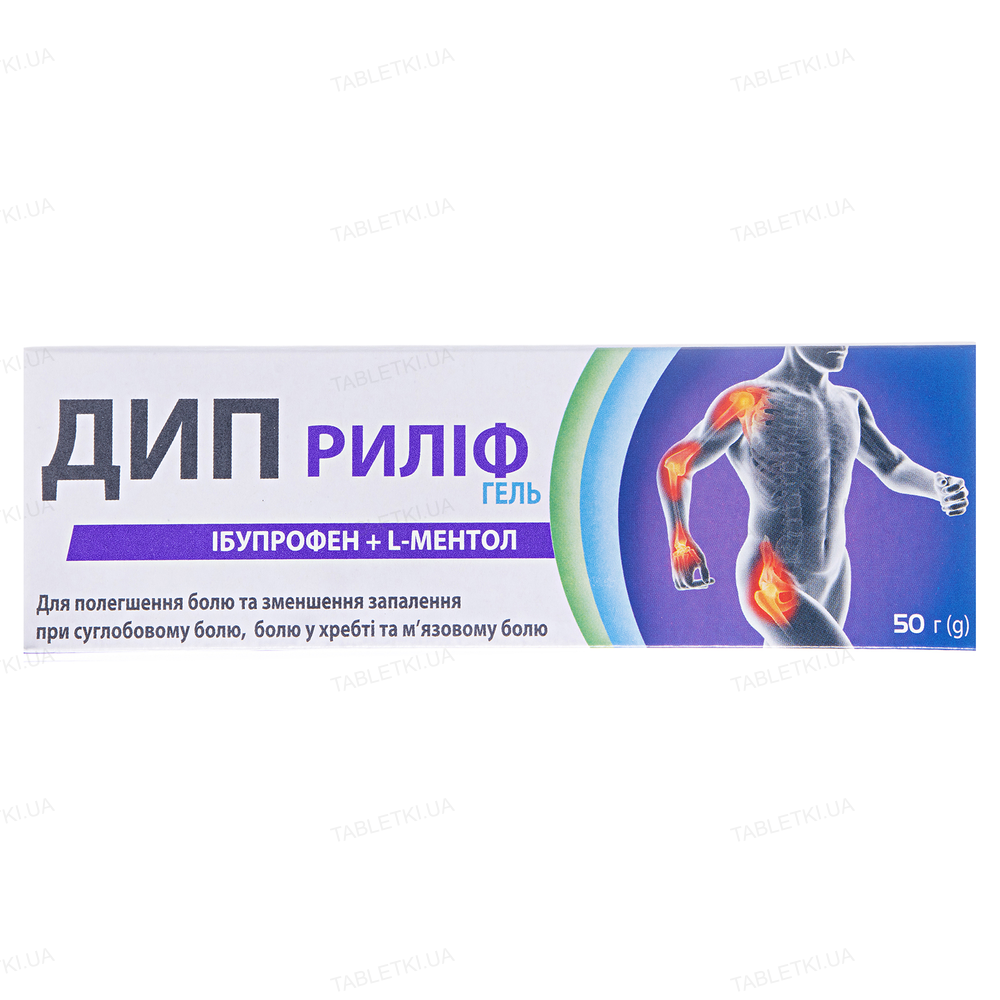
Dip Relief Gel, 50 g tubes
Ingredients
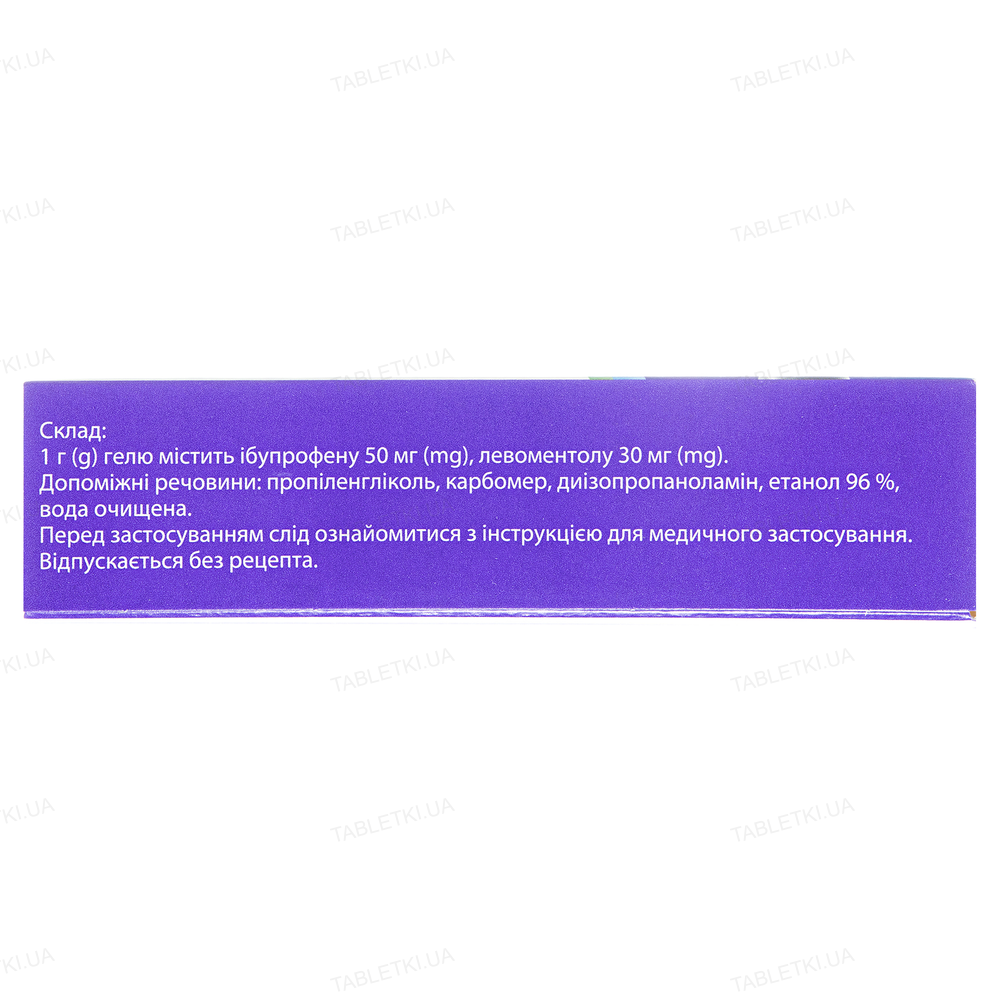
Active ingredients: ibuprofen, levomenthol;
1 g of gel contains 50 mg of ibuprofen and 30 mg of levomenthol;
Inactive ingredients: propylene glycol, carbomer, diisopropanolamine, 96% ethanol, purified water.
Dosage Form
Gel.
Main physical and chemical properties: a clear gel free of foreign particles with a menthol odor.
Pharmacotherapeutic group
Topical agents used for joint and muscle pain. ATC code M02A X10.
Pharmacological properties
Pharmacodynamics.
Dip Relief is a combination product for external use containing ibuprofen and naturally derived menthol. Ibuprofen, a derivative of phenylpropionic acid, belongs to the group of nonsteroidal anti-inflammatory drugs (NSAIDs) and has analgesic and anti-inflammatory effects resulting from the inhibition of prostaglandin synthase. The action of levomenthol, an optical isomer of menthol, is due to reflex reactions associated with the irritation of sensitive nerve endings in the skin. Menthol stimulates the skin’s nociceptors. This results in the release of peptides that have a vasodilatory effect. The drug has a distracting, irritating effect and relieves pain.
Pharmacokinetics.
When applied topically, ibuprofen is well and rapidly absorbed through the skin. Only a very small amount enters the systemic circulation. The maximum plasma concentration of ibuprofen is reached 2 hours after application and is 0.6 μg/mL. The extent of ibuprofen absorption following topical application is approximately 5% of that following oral administration.
Levomenthol, which is absorbed through the skin, is transported to the liver. Some Phase I metabolism may occur in the skin, but most takes place in the liver. Menthol is hydroxylated and then conjugated with glucuronide before circulating to the kidneys for excretion in the urine.
Indications
Dip Relief is recommended for relieving pain and reducing inflammation associated with rheumatic, muscular, and joint pain, spinal pain, as well as pain and swelling resulting from injuries, sprains, and sports injuries.
Contraindications
This medication is contraindicated:
- in cases of hypersensitivity to ibuprofen, levomenthol, acetylsalicylic acid, or any component of the medication or other nonsteroidal anti-inflammatory drugs (including oral use);
- in cases of asthma and a history of bronchial asthma attacks, urticaria, angioedema, or acute rhinitis caused by the use of acetylsalicylic acid or other nonsteroidal anti-inflammatory drugs;
- for use on damaged or exposed (epithelial-free) skin;
- for use on open wounds, in cases of inflammatory and infectious skin diseases such as weeping eczema, as well as for use on mucous membranes;
- in cases of dermatoses;
- in the presence of a local infection;
- for concurrent use on the same area with other topical medications;
- in cases of ulcerative lesions of the gastrointestinal tract.
Interactions with Other Medications and Other Types of Interactions
When used in combination with acetylsalicylic acid or other nonsteroidal anti-inflammatory drugs (NSAIDs), the risk of side effects increases. Nonsteroidal anti-inflammatory drugs may interact with medications used to lower blood pressure, may reduce the diuretic effect of furosemide, and may enhance the effect of anticoagulants, although this likelihood is very low for topically applied medications.
Special Instructions for Use
The product contains propylene glycol, which may cause skin irritation; therefore, before first use, the patient’s sensitivity to Dip Relief should be tested on a small area of skin.
It is known that oral ibuprofen may exacerbate renal insufficiency or worsen active peptic ulcer disease. Patients with impaired renal function, asthma, or a history of active gastric or duodenal ulcers, as well as patients currently being treated with oral nonsteroidal anti-inflammatory drugs (NSAIDs), should consult a doctor before using this product.
Do not apply the gel to mucous membranes, near mucous membranes, on the lips, nostrils, areas around the eyes, genitals, or the anus, or on damaged, inflamed, or irritated skin. If the gel comes into contact with any of the above-mentioned areas, rinse it off immediately with plenty of clean water.
After applying Dip Relief gel, always wash your hands unless they are the area being treated.
If the product is swallowed, the patient must immediately seek medical attention or go to the nearest emergency room.
Do not apply an occlusive dressing to the area where the gel was applied.
Discontinue use if a rash or irritation develops, and consult a doctor.
Adverse reactions can be minimized by using the lowest effective dose for the shortest possible period.
If any adverse effects occur, or if there is no improvement or the condition worsens, the patient should consult a doctor.
The use of Dip Relief, like other medications that inhibit cyclooxygenase/prostaglandin synthesis, may impair fertility, although this risk is lower for nonsteroidal anti-inflammatory drugs (NSAIDs) intended for topical use compared to oral medications. For women who have difficulty conceiving or who are undergoing fertility testing, it may be advisable to discontinue use of Dip Relief.
In patients with bronchial asthma, hay fever, or chronic lung disease, as well as in patients with hypersensitivity to analgesics and antirheumatic drugs, there is a greater risk of developing asthma attacks, mucosal edema (Quincke’s edema), or hives than in other patients. Systemic absorption of ibuprofen following topical application is lower than after oral administration; therefore, the complications listed above may occur only rarely. Use of the drug in these patients should be under medical supervision.
Care should be taken to ensure that children do not touch the areas of skin where the medication has been applied.
Areas of skin where the medication has been applied should not be exposed to prolonged sunlight to avoid skin photosensitivity.
Use During Pregnancy or Breastfeeding.
Pregnancy
Inhibition of prostaglandin synthesis may adversely affect pregnancy and/or embryo/fetal development. Data from epidemiological studies indicate an increased risk of miscarriage, congenital heart defects, and gastroschisis following the use of prostaglandin synthesis inhibitors in early pregnancy. The absolute risk of cardiovascular malformations increased from less than 1% to approximately 1.5%. It is believed that the risk increases with higher doses and longer duration of therapy. It has been shown that, in animals, administration of prostaglandin synthesis inhibitors leads to an increase in pre- and post-implantation loss and embryo-fetal mortality. In addition, an increased incidence of various malformations, including cardiovascular malformations, has been reported in animals that received a prostaglandin synthesis inhibitor during the organogenesis period. During the first and second trimesters of pregnancy, ibuprofen should not be prescribed unless absolutely necessary. If ibuprofen is used by a woman trying to conceive or who is pregnant during the first and second trimesters, the dose should be as low as possible, and the duration of treatment should be as short as possible.
The use of any prostaglandin synthesis inhibitor during the third trimester of pregnancy may lead to the following in the fetus:
- cardiopulmonary toxicity (due to premature closure of the ductus arteriosus and pulmonary hypertension);
- impaired renal function, which may progress to renal failure with oligohydramnios;
in the mother and newborn at the end of pregnancy:
- possible prolongation of bleeding time and an antiplatelet effect, which may occur even at very low doses;
- inhibition of uterine contractions, leading to delayed or prolonged labor.
Therefore, ibuprofen is contraindicated during the third trimester of pregnancy.
Breastfeeding
Ibuprofen is excreted into breast milk in minimal amounts, and no effect on the breastfed infant is expected. Topical ibuprofen as a single agent may be used during breastfeeding. However, there is insufficient information regarding the excretion of levomenthol and its metabolites into breast milk. In the absence of sufficient data, its use during breastfeeding is not recommended.
Effect on reaction time when driving or operating machinery.
Not established.
Directions for Use and Dosage
For external use only.
Pierce the sealed opening of the tube with the spike located on the upper outer part of the cap.
For each application, use a 1–4 cm strip of gel from a tube containing 50 g or 100 g of gel, and a 4–10 cm strip from a tube containing 15 g of gel.
Apply the gel to the painful area and rub it in gently until fully absorbed. If necessary, apply up to 3 times a day, but no more frequently than every 4 hours. If no improvement is observed after two weeks, consult a doctor.
Do not apply a bandage over the area where the gel was applied.
Children.
Dip Relief is contraindicated for use in children under 12 years of age.
Overdose
The likelihood of an overdose when using ibuprofen in the form of a topical gel is negligible. However, in the event of an overdose, side effects similar to those observed with systemic use of ibuprofen may occur (gastrointestinal symptoms: nausea, heartburn, vomiting, bloating; skin allergic reactions; headache, drowsiness, dizziness; hypotension). If symptoms of overdose occur, discontinue use of the medication and consult a doctor.
If the recommended dose is exceeded, rinse the gel off with water. There is no known specific antidote. Correction of electrolyte balance is indicated.
Side Effects
Skin and subcutaneous tissue disorders: hypersensitivity reactions, which may manifest as cutaneous purpura, angioedema, bullous dermatoses (including epidermal necrolysis and erythema multiforme); skin redness, skin irritation. The most commonly observed skin disorders are: rashes, hives, itching, dry skin, burning sensation, and contact dermatitis. Photosensitivity reaction—frequency unknown.
Respiratory, thoracic, and mediastinal disorders: hypersensitivity reactions in the form of bronchial asthma attacks or worsening of asthma, shortness of breath, dyspnea, and bronchospasm may occur in patients with a history of bronchial asthma attacks or allergic diseases.
Gastrointestinal system: Depending on the amount of gel applied, the application site, skin integrity, duration of treatment, and the presence of an occlusive dressing, the following are possible, although unlikely: abdominal pain, dyspepsia.
Renal and urinary tract: Renal dysfunction in patients with a history of kidney disease.
Immune system disorders: hypersensitivity reactions, including anaphylactic shock, angioedema, and nonspecific allergic reactions.
Other systemic adverse reactions to nonsteroidal anti-inflammatory drugs depend on the amount of gel applied, the area of application, the integrity of the skin, the duration of treatment, and the use of an occlusive dressing.
Shelf life
3 years.
Storage Conditions
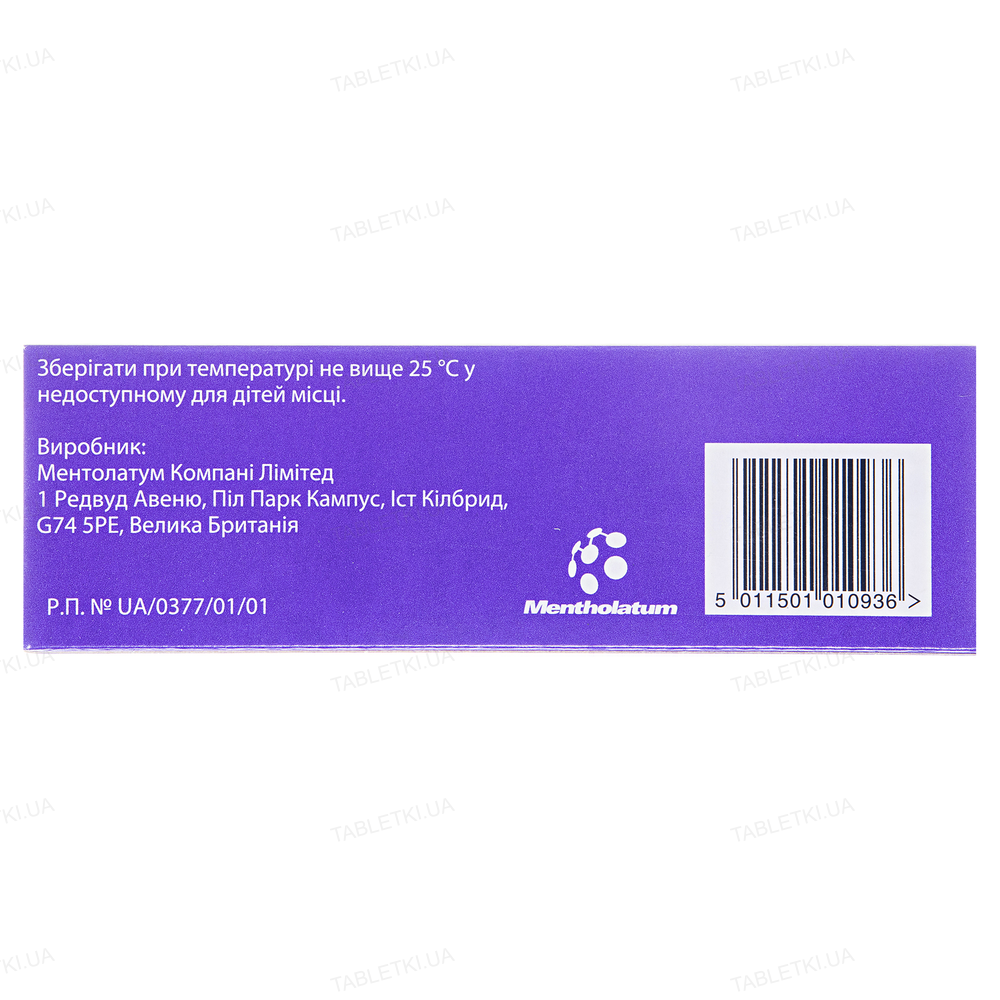
Store at a temperature not exceeding 25°C, out of reach of children.
Incompatibility
Do not use with other topical medications.
Packaging
15 g, 50 g, or 100 g of gel in a tube; one tube per cardboard box.
Dispensing Category
Over-the-counter.
Manufacturer
Mentholatum Company Limited.
Address
1 Redwood Avenue, Peel Park Campus, East Kilbride, G74 5PE, United Kingdom.