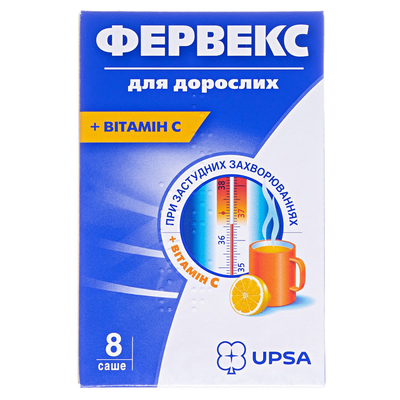
Fervex for Adults, Powder for Oral Solution No. 8 in Sachets
Composition
Active ingredients: acetaminophen, ascorbic acid (vitamin C), pheniramine maleate;
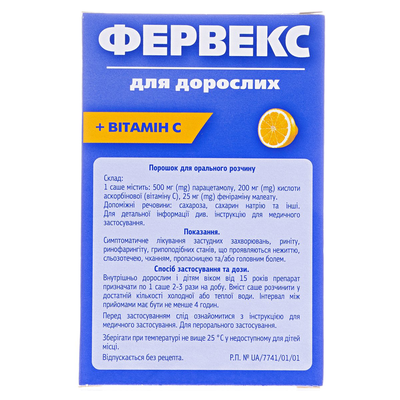
1 sachet contains 500 mg of acetaminophen, 200 mg of ascorbic acid (vitamin C), and 25 mg of pheniramine maleate;
inactive ingredients: sucrose, anhydrous citric acid, acacia, sodium saccharin, Antilles flavoring, which contains maltodextrin, acacia, α-pinene, β-pinene, limonene,
γ-terpinene, linalool, nerol, α-terpineol, geranial.
Dosage Form
Powder for oral solution.
Main physical and chemical properties: light beige granulated powder.
Pharmacotherapeutic group
Other combination medicinal products used for the treatment of the common cold.
ATC code N02B E51.
Pharmacological properties
Pharmacodynamics.
Pharmacological effects caused by the drug’s components:
- pheniramine maleate—an H1-histamine receptor blocker—provides a desensitizing effect, manifested by a reduction in the inflammatory response of the mucous membranes of the upper respiratory tract (improved nasal breathing, reduced runny nose, sneezing, and watery eyes);
- paracetamol has antipyretic and analgesic effects, which relieve pain and fever (headache, myalgia);
- ascorbic acid meets the body’s need for vitamin C.
Pharmacokinetics.
After oral administration, paracetamol is rapidly and almost completely absorbed in the gastrointestinal tract. Maximum plasma concentrations of paracetamol are reached 30–60 minutes after administration. Paracetamol is rapidly distributed throughout all tissues. Concentrations in blood, saliva, and plasma are similar. Protein binding is weak. Paracetamol is metabolized primarily in the liver to form glucuronide and sulfate conjugates. A minor metabolic pathway, catalyzed by cytochrome P450, leads to the formation of an intermediate metabolite (N-acetylbenzoquinone imine), which, under normal conditions of use, is rapidly inactivated by reduced glutathione and excreted in the urine after conjugation with cysteine and mercapturic acid. However, in cases of severe poisoning, the amount of this toxic metabolite increases.
It is excreted in the urine, mainly as metabolites. 90% of the administered dose is excreted by the kidneys within 24 hours, predominantly as glucuronide conjugates (60–80%) and sulfate conjugates (20–30%).
Approximately 5% of the administered dose is excreted unchanged. The half-life is approximately 2 hours.
Pheniramine maleate is well absorbed in the gastrointestinal tract. It is excreted primarily via the kidneys. The half-life in plasma is 60–90 minutes.
Ascorbic acid is well absorbed in the gastrointestinal tract. It is excreted primarily in the urine.
Indications
Symptomatic treatment of the common cold, rhinitis, rhinopharyngitis, and flu-like conditions manifested by a runny nose, watery eyes, sneezing, fever, and/or headache.
Contraindications
Hypersensitivity to the components of the drug or to other antihistamines; severe liver and/or kidney dysfunction; congenital hyperbilirubinemia; glucose-
6-phosphate dehydrogenase deficiency, alcoholism, blood disorders, severe anemia, leukopenia, severe hypertension, unstable angina; severe cardiac conduction disturbances, the acute phase of myocardial infarction, severe atherosclerosis, decompensated heart failure, hyperthyroidism, acute urinary retention due to prostatic hypertrophy, bladder neck obstruction, pyloroduodenal obstruction, active gastric and duodenal ulcers, angle-closure glaucoma, thrombosis, thrombophlebitis, severe forms of diabetes mellitus, epilepsy, advanced age; fructose intolerance, glucose-galactose malabsorption syndrome, or sucrose-isomaltose insufficiency (due to sucrose content), phenylketonuria.
Do not use concomitantly with MAO inhibitors or within two weeks after discontinuing MAO inhibitors. Fervex for Adults is contraindicated in patients taking tricyclic antidepressants or beta-blockers for urolithiasis—provided that ascorbic acid is administered at a dose exceeding 1 g per day.
Interactions with Other Medications and Other Types of Interactions
Undesirable combinations.
Due to the presence of pheniramine, ethanol enhances the sedative effect of H1-blockers; therefore, patients should refrain from driving or operating machinery. During treatment, avoid consuming alcoholic beverages and using medications containing ethyl alcohol.
Combinations to Consider.
Due to the presence of pheniramine, other sedatives may cause central nervous system depression; such as: morphine derivatives (analgesics, cough suppressants, and substitution therapy), neuroleptics, barbiturates, benzodiazepines, anxiolytics, non-benzodiazepines (e.g., meprobamate), hypnotics, sedative antidepressants (amitriptyline, doxepin, mianserin, mirtazapine, trimipramine), sedative H1-blockers, centrally acting antihypertensives, baclofen, and thalidomide.
Due to the presence of pheniramine, drugs with atropine-like effects, such as: imipramine-type antidepressants, most atropine-like H1-blockers, anticholinergics, and antiparkinsonian agents, atropine-like antispasmodics, disopramide, phenothiazine neuroleptics, and clozapine may cause unwanted atropine-like effects, such as urinary retention, constipation, and dry mouth.
When taken concomitantly with oral anticoagulants, there is a risk of enhanced anticoagulant effects and an increased risk of bleeding when paracetamol is taken at maximum doses (4 g/day) for at least 4 days. The INR (International Normalized Ratio) should be monitored regularly. If necessary, the dose of the oral anticoagulant may be adjusted during paracetamol therapy and after discontinuation of paracetamol treatment.
Paracetamol administration may affect blood glucose test results obtained using the glucose oxidase-peroxidase method, leading to abnormally high concentrations, and may also affect blood urea test results obtained using the phosphotungstic acid method.
The rate of paracetamol absorption may increase with concomitant use of metoclopramide and domperidone and may decrease with concomitant use of cholestyramine. Barbiturates reduce the antipyretic effect of paracetamol.
Anticonvulsants (including phenytoin, barbiturates, and carbamazepine), which stimulate the activity of hepatic microsomal enzymes, may enhance the toxic effect of acetaminophen on the liver by increasing the extent of the drug’s conversion to hepatotoxic metabolites. Concomitant use of paracetamol with isoniazid increases the risk of developing hepatotoxic syndrome. Paracetamol reduces the effectiveness of diuretics.
Ascorbic acid increases the absorption of iron in the intestine and raises the levels of ethinyl estradiol, penicillins, and tetracyclines; it reduces the blood levels of antipsychotic drugs and phenothiazine derivatives. Glucocorticosteroids reduce ascorbic acid stores. Concomitant use of ascorbic acid and deferoxamine increases tissue toxicity of iron, particularly in the heart muscle, which may lead to circulatory decompensation. It should be administered only 2 hours after a deferoxamine injection. High doses of ascorbic acid reduce the effectiveness of tricyclic antidepressants. The absorption of ascorbic acid is reduced when taken concurrently with oral contraceptives, fruit or vegetable juices, or alkaline beverages.
Special Considerations for Use
In the event of a high body temperature or prolonged fever lasting 5 days or more while taking this medication, or if signs of superinfection appear, consult a doctor to determine whether continued use of the medication is appropriate.
Use with caution in patients with diabetes.
Alcohol enhances the sedative effect of pheniramine maleate and the hepatotoxicity of acetaminophen.
Ascorbic acid may alter the results of laboratory tests (glucose, blood bilirubin, transaminase activity).
A risk of primarily psychological dependence arises when recommended doses are exceeded and during long-term treatment.
To prevent overdose, check for and exclude all medications containing acetaminophen.
For adults weighing more than 50 kg, the total daily dose of acetaminophen should not exceed 4 g.
Precautions.
Consumption of alcoholic beverages or use of sedatives (especially barbiturates) increases the sedative effect of pheniramine maleate; therefore, these substances should be avoided during treatment.
Each sachet contains 11.5 g of sucrose, which should be taken into account by patients with diabetes and those on a low-sugar diet.
Use During Pregnancy or Breastfeeding.
Since the effects of this medication on pregnancy or breastfeeding have not been sufficiently studied, it should not be prescribed during these periods.
Effect on reaction time when driving or operating machinery.
This medication may cause drowsiness; therefore, patients should refrain from driving or operating machinery while taking it.
Dosage and Administration
Adults and children 15 years of age and older should take 1 sachet 2–3 times daily. Dissolve the contents of the sachet in a sufficient amount of cold or warm water. Take the solution immediately after preparation. Patients with cold symptoms are advised to take the warm solution in the evening. The interval between doses should be at least 4 hours.
The maximum duration of treatment is 5 days.
For patients with impaired renal function (creatinine clearance less than 10 mL/min), the interval between doses should be at least 8 hours.
If symptoms do not subside or worsen, consult a doctor.
Children.
Do not use in children under 15 years of age.
Overdose
Related to pheniramine.
An overdose of pheniramine may cause seizures (especially in children), impaired consciousness, or coma.
Related to acetaminophen.
There is a risk of toxicity in the elderly and especially in young children (cases of therapeutic overdose and accidental poisoning occur quite frequently).
A paracetamol overdose can be fatal.
Symptoms
Nausea, vomiting, loss of appetite, pallor, profuse sweating, and abdominal pain, which usually appear within the first 24 hours.
An overdose of more than 10 g of paracetamol in a single dose in adults and 150 mg/kg of body weight in
a single dose in children causes hepatic cytolysis, which can lead to complete and irreversible necrosis and to hepatocellular failure, metabolic acidosis, and encephalopathy, which, in turn, can lead to coma and death.
At the same time, elevated levels of liver transaminases, lactate dehydrogenase, and bilirubin are observed against a background of elevated prothrombin levels, which may become apparent 12–48 hours after administration.
Emergency measures:
- immediate hospitalization;
- determination of the initial plasma paracetamol level;
- immediate removal of the ingested drug by gastric lavage;
- standard treatment for overdose includes administration of the antidote N-acetylcysteine intravenously or orally. The antidote should be administered as soon as possible, preferably within 10 hours of the overdose;
- methionine as symptomatic therapy.
Side Effects
Hematopoietic and lymphatic system: anemia, sulfhemoglobinemia, and methemoglobinemia (cyanosis, shortness of breath, chest pain), hemolytic anemia; thrombosis, hyperprothrombinemia, erythrocytopenia, thrombocytopenia, agranulocytosis, neutrophilic leukocytosis, purpura, leukopenia, neutropenia.
Immune system disorders: anaphylaxis, anaphylactic shock, hypersensitivity skin reactions, including itching, rashes on the skin and mucous membranes (usually erythematous, urticaria), angioedema, erythema multiforme (including Stevens-Johnson syndrome), toxic epidermal necrolysis (Lyell’s syndrome).
Respiratory system: bronchospasm in patients sensitive to acetylsalicylic acid and other NSAIDs.
Gastrointestinal system: dry mouth, nausea, heartburn, vomiting, constipation, epigastric pain, diarrhea, liver dysfunction, elevated liver enzymes (usually without jaundice), and hepatic necrosis (a dose-dependent effect).
Endocrine system: hypoglycemia, up to hypoglycemic coma.
Nervous system disorders: rarely—headache, dizziness, sleep disturbances, insomnia, drowsiness, confusion, hallucinations, nervousness, tremors; in isolated cases—coma, seizures, dyskinesia, behavioral changes, increased excitability; disturbances of balance and memory, inattention, especially in elderly patients.
Cardiovascular system: in rare cases—tachycardia, myocardial dystrophy (a dose-dependent effect with long-term use), orthostatic hypotension.
Metabolic disorders: disturbances in zinc and copper metabolism.
Urinary system: urinary retention and difficulty urinating, aseptic pyuria, renal colic.
Skin disorders: eczema.
Ocular: dry eyes, mydriasis, accommodation disorders.
With prolonged use in high doses: damage to the glomerular apparatus of the kidneys, crystalluria, formation of urate, cystine, and/or oxalate stones in the kidneys and urinary tract; damage to the pancreatic islets (hyperglycemia, glucosuria) and impaired glycogen synthesis, potentially leading to the development of diabetes mellitus.
Shelf life
3 years.
Storage Conditions
Store at a temperature not exceeding 25 °C, out of reach of children.
Packaging
8 sachets in a cardboard box.
Dispensing Category
Available without a prescription.