
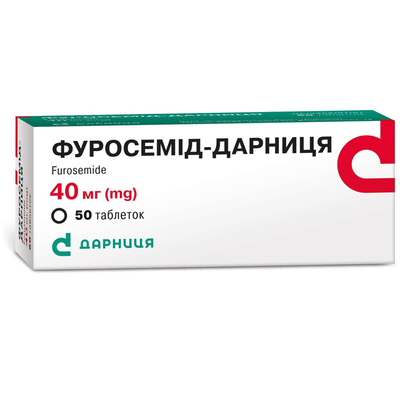
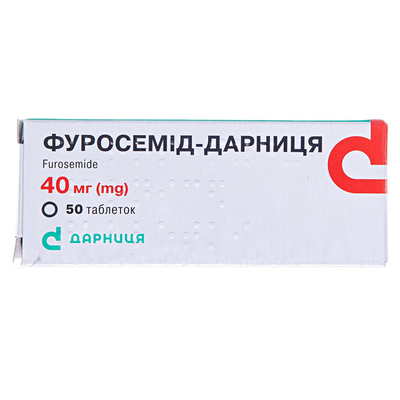
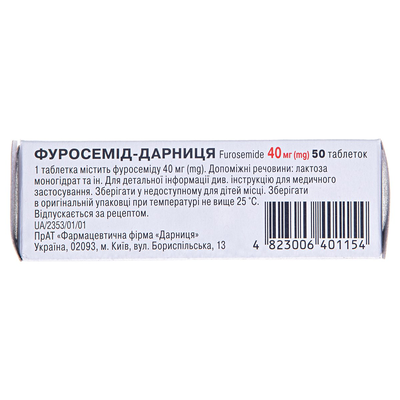

Furosemide-Darnitsa, 40 mg tablets, No. 50 (10 x 5)
Ingredients
Active ingredient: furosemide;
1 tablet contains 40 mg of furosemide;
excipients: potato starch, lactose monohydrate, croscarmellose sodium, sodium lauryl sulfate, magnesium stearate.
Dosage Form
Tablets.
Main physical and chemical properties: flat-cylindrical tablets that are white or white with a creamy tint.
Pharmacotherapeutic group
Highly active diuretics. Simple sulfonamide preparations. Furosemide. ATC code C03C A01.
Pharmacological properties
Pharmacodynamics.
Furosemide is a fast-acting loop diuretic with a relatively strong and short-lived diuretic effect. Furosemide blocks the Na+K+2Cl- cotransporter located in the basal membranes of cells in the thick ascending limb of Henle’s loop: the efficacy of furosemide’s saluretic action, therefore, depends on the drug reaching the tubules at the luminal sites via an anion-transport mechanism. The diuretic effect results from the reabsorption of sodium chloride in this segment of Henle’s loop. Consequently, the fractional excretion of sodium can reach 35% of glomerular filtration of sodium. Secondary effects of increased sodium excretion include increased urine output (due to osmotically bound water) and increased distal tubular secretion of potassium. The excretion of calcium and magnesium ions is also increased.
Furosemide causes a dose-dependent stimulation of the renin-angiotensin-aldosterone system. In heart failure, furosemide leads to an acute reduction in cardiac afterload (through constriction of capacitive venous vessels). This early vascular effect is prostaglandin-mediated and occurs in the presence of adequate renal function with activation of the renin-angiotensin system and intact prostaglandin synthesis. In addition, due to its inherent natriuretic effect, furosemide reduces the increased vascular reactivity to catecholamines observed in patients with hypertension.
The antihypertensive efficacy of furosemide is attributed to increased sodium excretion, reduced blood volume, and a diminished response of vascular smooth muscle to stimulation by vasoconstrictors or vasoconstrictive agents.
The onset of the diuretic effect is observed within 1 hour after oral administration of the drug.
A dose-dependent increase in diuresis and natriuresis was observed in healthy patients receiving furosemide at doses of 10–100 mg. The duration of action in healthy individuals is approximately 3–6 hours after oral administration of 40 mg of furosemide.
The effect of furosemide is reduced if there is decreased tubular secretion or if the drug interacts with albumin within the tubules.
Pharmacokinetics.
Furosemide is rapidly absorbed from the gastrointestinal tract. The time to peak concentration ranges from 1 to 1.5 hours. Absorption of the drug shows significant interindividual variability.
The bioavailability of furosemide in healthy volunteers is approximately 50–70% for tablets. In patients, the bioavailability of the drug is influenced by various factors, including underlying medical conditions. For example, in patients with nephrotic syndrome, bioavailability may be reduced to 30%.
Taking food at the same time as furosemide may affect the absorption of furosemide.
The volume of distribution of furosemide ranges from 0.1 to 0.2 liters per 1 kg of body weight. The volume of distribution may be higher depending on the underlying condition.
Furosemide (more than 98%) forms strong bonds with plasma proteins, particularly with albumin.
Furosemide is excreted primarily as the unchanged drug via secretion into the proximal tubule.
The furosemide metabolite—glucuronide—accounts for 10–20% of the substances present in urine. The residual dose is excreted in the feces, likely via biliary secretion.
Furosemide passes into breast milk; it crosses the placental barrier and slowly reaches the fetus. Furosemide is detected in the fetus or newborn at the same concentrations as in the mother.
Kidney disease.
In renal insufficiency, the elimination of furosemide is slowed, and the half-life is prolonged; the terminal half-life may be up to 24 hours in patients with severe renal insufficiency.
In nephrotic syndrome, reduced plasma protein concentrations lead to increased concentrations of unbound (free) furosemide. Conversely, the efficacy of furosemide in these patients is reduced due to binding to intratubular albumin and decreased tubular secretion.
Furosemide is poorly removed by dialysis in patients undergoing hemodialysis, peritoneal dialysis, and chronic ambulatory peritoneal dialysis.
Hepatic impairment.
In patients with hepatic insufficiency, the half-life of furosemide increases by 30–90%, primarily due to a larger volume of distribution. A wide range of pharmacokinetic parameters is observed in this patient group.
Congestive heart failure, severe hypertension, elderly patients.
Due to reduced renal function, furosemide clearance is slowed in these patients.
Preterm and full-term infants.
Depending on the degree of renal development, the elimination of furosemide may be delayed. The metabolism of the drug is also reduced if the infants’ ability to glucuronidate is impaired. The terminal half-life is less than 12 hours in fetuses older than 33 weeks after fertilization. In infants older than 2 months, the terminal clearance is the same as in adult patients.
Indications
- Edema associated with chronic congestive heart failure (if treatment with diuretics is necessary).
- Edema associated with nephrotic syndrome (if treatment with diuretics is necessary).
- Edema associated with chronic renal failure.
- Acute renal failure, including in pregnant women or during labor.
- Edema associated with liver disease (if necessary, to supplement treatment with aldosterone antagonists).
- Hypertension.
Contraindications
- Hypersensitivity to furosemide or to any other components of the medication. Patients with an allergy to sulfonamides (e.g., sulfonamide antibiotics or sulfonylureas) may exhibit cross-sensitivity to furosemide.
- Hypovolemia or dehydration.
- Renal failure manifesting as anuria in the absence of a therapeutic response to furosemide.
- Renal failure resulting from poisoning with nephrotoxic or hepatotoxic drugs.
- Severe hypokalemia.
- Severe hyponatremia.
- Precomatose and comatose states associated with hepatic encephalopathy.
- Addison’s disease.
- Digitalis intoxication.
- Breastfeeding.
Interactions with other medications and other types of interactions
Combinations not recommended.
In rare cases, taking furosemide within 24 hours after administration of chloral hydrate may cause flushing, increased sweating, agitation, nausea, elevated blood pressure, and tachycardia. Therefore, the combined use of furosemide and chloral hydrate is not recommended.
Furosemide may potentiate the ototoxicity of aminoglycosides and other ototoxic drugs. Since this can lead to irreversible damage, these drugs should not be used concomitantly with furosemide. Furosemide may reduce serum vancomycin levels.
Furosemide, when combined with antihistamines, may cause hypokalemia and increase the risk of cardiac toxicity.
Combinations Requiring Precautions.
When cisplatin and furosemide are used concomitantly, there is a risk of ototoxic effects. In addition, the nephrotoxicity of cisplatin may be exacerbated unless furosemide is administered at low doses (e.g., 40 mg in patients with normal renal function) and in the presence of a positive fluid balance, when used to achieve forced diuresis during cisplatin therapy.
Oral furosemide and sucralfate should not be administered less than 2 hours apart, as sucralfate reduces the absorption of furosemide from the intestine, thereby diminishing its effect.
Furosemide reduces the excretion of lithium salts and may lead to increased serum lithium levels, resulting in an increased risk of lithium toxicity, including a higher risk of cardiotoxic and neurotoxic effects. Therefore, careful monitoring of lithium levels is recommended in patients receiving this combination therapy.
Patients receiving diuretics may experience severe hypotension and impaired renal function, including cases of renal failure, especially upon initial administration of an angiotensin-converting enzyme (ACE) inhibitor or an angiotensin II receptor antagonist, or upon initial administration of these drugs at an increased dose. A decision must be made as to whether to temporarily discontinue furosemide or, at a minimum, reduce the furosemide dose 3 days prior to initiating treatment, or to increase the dose of the ACE inhibitor or angiotensin II receptor antagonist.
Antipsychotics: Furosemide-induced hypokalemia increases the risk of cardiac toxicity. Avoid concomitant use with pimozide; there is an increased risk of ventricular arrhythmias when used with amisulpride or sertindole. Enhanced hypotensive effect when used with phenothiazine derivatives (chlorpromazine).
Risperidone: Caution is advised, and the risks and benefits should be carefully weighed before deciding on combination therapy or concomitant use with furosemide or other potent diuretics.
Levothyroxine: High doses of furosemide may inhibit the binding of thyroid hormones to carrier proteins, and thus initially lead to a temporary increase in the levels of free thyroid hormones, followed by an absolute decrease in the levels of total thyroid hormones.
Thyroid hormone levels should be monitored.
Combinations for which there are precautions
Concomitant use of nonsteroidal anti-inflammatory drugs (NSAIDs), including acetylsalicylic acid, may reduce the effect of furosemide. In patients with dehydration or hypovolemia, nonsteroidal anti-inflammatory drugs may lead to acute heart failure. The toxicity of salicylates may increase under the influence of furosemide.
Indomethacin and ketorolac may antagonize the effects of furosemide. In patients with dehydration or hypovolemia, NSAIDs may cause acute renal failure.
The efficacy of furosemide may be reduced following concomitant use with phenytoin.
There is an increased risk of hyponatremia when this medication is taken with carbamazepine.
The use of corticosteroids, carbenoxolone, licorice root in high doses, and long-term use of laxatives increases the risk of hypokalemia.
Certain electrolyte imbalances (such as hypokalemia and hypomagnesemia) may increase the toxicity of certain other medications (e.g., digitalis preparations and medications that cause QT prolongation syndrome).
If antihypertensive agents, diuretics, or other medications that lower blood pressure are used concomitantly with furosemide, a further decrease in blood pressure (BP) should be expected.
Probenecid, methotrexate, and other drugs that, like furosemide, are subject to significant tubular secretion in the kidneys may reduce the effectiveness of furosemide. Conversely, furosemide may reduce the renal excretion of these medications. Treatment with high doses (of both furosemide and other medications) may lead to increased serum levels of these drugs and an increased risk of side effects caused by furosemide or concomitant therapy.
The effectiveness of antidiabetic drugs and sympathomimetics that raise blood pressure (e.g., epinephrine, norepinephrine) may be reduced.
The effects of curare-like muscle relaxants or theophylline may be potentiated.
The harmful effects of nephrotoxic drugs on the kidneys may be exacerbated.
Renal dysfunction may develop in patients receiving concomitant therapy with furosemide and high doses of certain cephalosporins.
Concomitant use of cyclosporine A and furosemide is associated with an increased risk of gouty arthritis secondary to furosemide-induced hyperuricemia, and impaired renal excretion of urates caused by cyclosporine.
In patients who were at high risk for nephropathy due to radiocontrast agent therapy, a higher incidence of renal function deterioration following the administration of radiocontrast agents was observed during furosemide treatment compared to that in high-risk patients who received only intravenous hydration prior to the administration of radiocontrast agents.
Alcohol consumption increases the risk of potassium loss.
Special Considerations for Use
During treatment with furosemide, it is essential to ensure a constant urine output. Patients with partial urinary outlet obstruction require close monitoring, especially during the initial stages of treatment.
Treatment with furosemide requires regular medical supervision. Particularly careful monitoring is necessary for:
- patients with hypotension;
- patients who are at particular risk due to a significant drop in blood pressure, such as those with severe stenosis of the coronary arteries or the blood vessels supplying the brain;
- patients with latent or severe diabetes;
- patients with gout;
- patients with hepatorenal syndrome, i.e., functional renal insufficiency associated with severe liver disease;
- patients with hypoproteinemia associated with nephrotic syndrome (the effect of furosemide may be attenuated while ototoxicity may be potentiated). Careful dose titration is required;
- preterm infants (nephrocalcinosis/nephrolithiasis may develop); monitoring of renal function and renal ultrasonography are required.
Regular monitoring of serum sodium, potassium, and creatinine is recommended during furosemide therapy. Patients at high risk for electrolyte imbalances or those experiencing significant additional fluid loss (e.g., due to vomiting, diarrhea, or profuse sweating) require particularly careful monitoring. Hypovolemia or dehydration, as well as any significant disturbances in electrolyte and acid-base balance, should be corrected. This may require temporary discontinuation of furosemide therapy.
Factors such as pre-existing medical conditions (e.g., liver cirrhosis, heart failure), concomitant medication use, and diet can influence the development of electrolyte imbalances. For example, vomiting or diarrhea may lead to potassium deficiency.
When prescribing furosemide, it is advisable to recommend that the patient consume foods high in potassium (baked potatoes, bananas, tomatoes, spinach, dried fruit). It is important to note that when using furosemide, it may be necessary to treat a potassium deficiency with medication.
Concomitant use with risperidone. In placebo-controlled studies of risperidone involving elderly patients with dementia, a higher mortality rate was observed in patients receiving furosemide and risperidone together compared to patients receiving only risperidone or only furosemide.
Caution should be exercised, and the risks and benefits should be carefully weighed before deciding to use this combination or to administer concomitant therapy with other potent diuretics. Dehydration should be avoided.
The medication should be discontinued prior to a glucose tolerance test.
Important information about excipients.
This medication contains lactose monohydrate; therefore, patients with known intolerance to certain sugars should consult a doctor before taking this medication.
Use during pregnancy or breastfeeding.
Pregnancy. Furosemide crosses the placental barrier. This medication should not be used by pregnant women unless there is a compelling medical need. Treatment with this medication during pregnancy requires monitoring of fetal growth.
Breastfeeding. Furosemide passes into breast milk and may inhibit lactation. Women should discontinue breastfeeding during treatment with furosemide.
Effect on reaction time when operating motor vehicles or other machinery.
Certain side effects (e.g., an unexpected significant drop in blood pressure) may impair a patient’s ability to concentrate and slow their reaction time; therefore, patients should refrain from driving or operating machinery during treatment.
Dosage and Administration
The dosing regimen is determined by the physician on an individual basis, depending on the severity of water-electrolyte imbalance, glomerular filtration rate, and the patient’s condition. The medication is usually taken on an empty stomach.
For adults, the maximum total daily dose of Furosemide-Darnitsa should not exceed 1,500 mg.
Special Dosage Recommendations for Adults.
For edema associated with chronic congestive heart failure, the recommended initial dose of the oral medication is 40 mg per day. If necessary, the dose may be adjusted based on the patient’s therapeutic response. It is recommended to take the daily dose divided into 2 or 3 doses.
For edema associated with chronic renal failure, the dose should be titrated cautiously to ensure a gradual initial fluid loss. For adult patients, this means administering a dose that results in a daily weight loss of approximately 2 kg (approximately 280 mmol Na+). The recommended initial daily dose for oral administration is 40–80 mg. If necessary, the dose may be adjusted based on the patient’s therapeutic response. The total daily dose may be administered as a single dose or divided into two doses. For patients on hemodialysis, the total daily oral dose is 250–1,500 mg.
In cases of acute renal failure, hypovolemia, hypotension, and significant electrolyte and acid-base imbalances must be corrected before initiating furosemide therapy. It is recommended to switch from intravenous administration to oral administration as soon as possible.
For edema associated with nephrotic syndrome, the recommended initial oral dose is 40–80 mg per day. If necessary, the dose may be adjusted based on the patient’s therapeutic response. The total daily dose may be administered as a single dose or divided into several doses.
For edema associated with liver disease, Furosemide-Darnitsa is prescribed as an adjunct to therapy with aldosterone antagonists in cases where the use of aldosterone antagonists alone is insufficient. To prevent complications such as orthostatic hypotension or disturbances in electrolyte and acid-base balance, the dose should be titrated carefully to ensure a gradual initial fluid loss. For adult patients, this means prescribing a dose that results in a daily weight loss of approximately 0.5 kg. The recommended initial daily oral dose is 40–80 mg. If necessary, the dose may be adjusted based on the patient’s therapeutic response. The total daily dose may be administered as a single dose or divided into several doses.
For children who cannot take the oral dosage form—such as premature infants and newborns—the use of a parenteral formulation should be considered. For children, the recommended oral dose of furosemide is 2 mg/kg of body weight, but the maximum daily dose should not exceed 40 mg. The dose should be reduced in proportion to body weight.
Children.
This dosage form should be prescribed to children weighing more than 10 kg (see the “Dosage and Administration” section).
Overdose
Symptoms: The clinical picture of acute or chronic overdose depends primarily on the degree and consequences of electrolyte and fluid loss and includes signs such as hypovolemia, dehydration, hemoconcentration, and cardiac arrhythmias (including atrioventricular block and ventricular fibrillation). Symptoms of these conditions include severe hypotension (progressing to shock), acute renal failure, thrombosis, delirium, peripheral paralysis, apathy, and confusion.
In patients with cirrhosis, an overdose may lead to hepatic coma.
Treatment: There are no specific antidotes for furosemide. Treatment is symptomatic. Therapy should be directed toward fluid replacement and correction of electrolyte imbalances.
Side Effects
The following classification is used to assess the frequency of adverse reactions: very common (≥ 1/10), common (≥ 1/100 and < 1/10), uncommon (≥ 1/1,000 and < 1/100), rare (≥ 1/10,000 and < 1/1,000), very rare (< 1/10,000), frequency unknown (cannot be estimated from the available data).
Eye disorders:
rare: visual disturbances, decreased visual acuity, blurred vision.
Ear and vestibular system disorders:
uncommon: hearing disturbances, which are usually transient, especially in patients with renal insufficiency, hypoproteinemia (e.g., in nephrotic syndrome), and/or in cases of excessively rapid intravenous administration of furosemide. Cases of deafness, sometimes irreversible, have been reported following oral administration or intravenous administration of furosemide;
Rarely: ringing in the ears.
Gastrointestinal disorders:
uncommon: nausea;
Rare: vomiting, diarrhea;
very rare: acute pancreatitis;
frequency unknown: dry mouth, impaired bowel motility, constipation.
Liver and biliary tract disorders:
very rare: cholestasis, elevated transaminase levels.
Renal and urinary system disorders:
common: increased urine output;
Rare: tubulointerstitial nephritis;
frequency unknown:
- elevated urinary sodium levels;
- increased urinary chloride levels, urinary retention (in patients with partial obstruction of urine outflow);
- nephrocalcinosis/nephrolithiasis in premature infants;
- renal failure;
- urinary incontinence;
- elevated blood creatinine levels.
Metabolism and nutrition disorders:
very common: electrolyte imbalance (including clinical manifestations), dehydration, and hypovolemia, especially in elderly patients; elevated blood triglyceride levels;
common: hyponatremia, hypochloremia, hypokalemia, elevated blood cholesterol levels, elevated blood urea levels, gout attacks;
uncommon: decreased glucose tolerance; diabetes mellitus may progress from a latent form to a manifest form; tetany;
frequency unknown: hypocalcemia, hypomagnesemia, elevated blood uric acid levels, metabolic alkalosis, pseudobartter syndrome due to improper and/or prolonged use of furosemide.*
Nervous system:
Rare: paresthesia, headache;
common: hepatic encephalopathy in patients with hepatocellular insufficiency;
frequency unknown: dizziness, loss of consciousness (caused by symptomatic hypotension).
Cardiovascular system:
very common: (when administered as an intravenous infusion): hypotension, including orthostatic hypotension;
rare: vasculitis;
frequency unknown: thrombosis.
Blood and lymphatic system disorders:
common: hemoconcentration;
uncommon: thrombocytopenia;
Rare: leukopenia, eosinophilia;
very rare: agranulocytosis, aplastic anemia, or hemolytic anemia.
Immune system disorders:
Rare: severe anaphylactic or anaphylactoid reactions (particularly those accompanied by shock);
frequency unknown: there is a possibility of exacerbation or activation of systemic lupus erythematosus.
Skin and subcutaneous tissue disorders:
uncommon: pruritus, urticaria, rash, bullous dermatitis, erythema multiforme, pemphigoid, exfoliative dermatitis, purpura, photosensitivity reaction;
frequency unknown: Stevens-Johnson syndrome, toxic epidermal necrolysis, acute generalized exanthematous pustulosis, and DRESS syndrome (drug rash with eosinophilia and systemic symptoms).
Musculoskeletal and connective tissue disorders:
rare: muscle weakness, muscle cramps;
frequency unknown: rhabdomyolysis, often against a background of severe hypokalemia (see the “Contraindications” section).
General disorders and administration site conditions:
Rare: increased body temperature.
Congenital and hereditary/genetic disorders:
frequency unknown: increased risk of patent ductus arteriosus if furosemide is administered to premature infants during the first weeks of life.
*Potassium deficiency manifests as neuromuscular symptoms (muscle weakness, paralysis), gastrointestinal symptoms (vomiting, constipation, and flatulence), renal symptoms (polyuria), and cardiac symptoms. Severe hypokalemia can lead to coma.
Reporting of Suspected Adverse Reactions.
Reporting suspected adverse reactions after a drug’s approval is an important procedure. It allows for continued monitoring of the benefit-risk profile of the drug in question. Healthcare professionals should report any suspected adverse reactions through the national reporting system.
Shelf life
3 years.
Storage Conditions
Store in the original packaging at a temperature not exceeding 25 °C.
Keep out of reach of children.
Packaging
10 tablets per blister pack; 5 blister packs per carton.
Dispensing Category
By prescription only.
Manufacturer
PJSC “Darnitsa Pharmaceutical Company.”







