
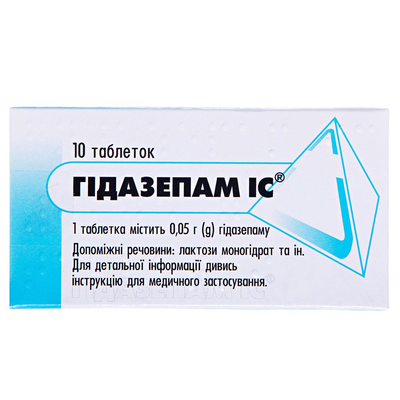
Gidazepam IC tablets, 0.05 g each, No. 10
Composition
Active ingredient: gidazepam;
1 tablet contains 20 mg (0.02 g) or 50 mg (0.05 g) of hydazepam;
Excipients: lactose monohydrate, potato starch, calcium stearate, povidone.
Dosage Form
Tablets.
Main physical and chemical properties: white or white tablets with a cream-colored tint, flat-cylindrical in shape, with a beveled edge; the company’s trademark is imprinted on one side of the tablet.
Pharmacotherapeutic group
Psycholeptic agents. Anxiolytics. Benzodiazepine derivatives. ATC code N05BA.
Pharmacological properties
Pharmacodynamics.
Gidazepam belongs to the group of benzodiazepine derivatives. It possesses a unique spectrum of pharmacological activity, combining anxiolytic and stimulating effects with antidepressant action, accompanied by minimal side effects and low toxicity. It acts as a daytime tranquilizer and a selective anxiolytic. It differs from other benzodiazepines in that it has a pronounced stimulating effect and a mild muscle-relaxing effect. At moderate therapeutic doses, it does not cause drowsiness and does not accelerate fatigue during operant activity.
In patients with alcoholism during therapeutic remission, mild sedative and anxiolytic effects were observed in the first few days of treatment, and psychomotor agitation, anxiety, and irritability were significantly reduced. The drug has the greatest effect on the symptoms of withdrawal syndrome and during the remission period in patients with alcoholism.
Pharmacokinetics.
When taken orally, gidazepam is rapidly absorbed. After a single dose, the drug’s effect becomes apparent within 30–60 minutes, reaching its peak within 1–4 hours, followed by a gradual decline. Gidazepam is most concentrated in the liver, kidneys, and adipose tissue. Bioavailability is quite high. It has been shown that only the desalted metabolite is detected in blood plasma; the unchanged drug is not detected even in trace amounts.
A distinctive feature of the pharmacokinetics of gidazepam is the slow rate of elimination of its major metabolite following a single dose. The plasma half-life is 86.7 hours, clearance is 3.03 L/h, and the mean residence time is 127.32 hours.
The pharmacokinetic characteristics of hydazepam allow it to be used as a tranquilizer with a reduced risk of side effects.
Indications
It is used as a daytime tranquilizer for neurotic and psychopathic asthenia, in conditions accompanied by anxiety, fear (including fear of surgical procedures and painful diagnostic tests), increased irritability, sleep disturbances, and emotional lability. It is also used to relieve alcohol withdrawal syndrome and for maintenance therapy during remission in chronic alcoholism, as well as for logoneuroses and migraines.
Contraindications
Hypersensitivity to any of the drug’s components. Severe myasthenia gravis, significant impairment of liver function (cirrhosis, Botkin’s disease), and kidney function.
Drug Interactions and Other Interactions
The drug is compatible with other psychotropic, hypnotic, and anticonvulsant medications. Gidazepam potentiates the effects of phenamine and 5-hydroxytryptophan and enhances the effects of alcohol, hypnotics, neuroleptics, and narcotic analgesics.
Special Considerations
The use of gidazepam should be restricted in patients with open-angle glaucoma, chronic renal and hepatic insufficiency, and alcohol-induced liver damage.
The drug contains lactose; therefore, it should not be prescribed to patients with rare hereditary forms of galactose intolerance, Lapp lactase deficiency, or glucose-galactose malabsorption syndrome.
Pregnancy and lactation.
Do not use during pregnancy or lactation.
Affects the ability to operate vehicles and machinery.
During treatment, patients should refrain from activities requiring increased attention and quick reactions.
Dosage and Administration
The drug should be taken orally.
Take 20–50 mg without chewing, up to 3 times a day; if necessary, the dose may be gradually increased to 200 mg per day until a therapeutic effect is achieved. The optimal daily dose is 100 mg. Higher daily doses (150–200 mg) may be accompanied by increased daytime drowsiness and a feeling of muscle weakness.
As a daytime tranquilizer, Hidazepam IC® is recommended for the treatment of conditions involving asthenic, depressive, phobic, and hypochondriacal disorders at doses of 60–120 mg per day.
The average daily dose for treating patients with neurotic, neurosis-like, psychopathic, or psychopathic conditions is 60–200 mg; for migraines, it is 40–60 mg.
To relieve alcohol withdrawal, the initial dose is 50 mg, and the average daily dose is 150 mg. The maximum daily dose for alcohol withdrawal is 500 mg.
The duration of treatment ranges from several days to 1–4 months and is determined by the physician on a case-by-case basis, depending on the patient’s condition and the course of the disease.
The drug can be used in outpatient and clinic settings.
Children.
Use of the drug in children is contraindicated.
Overdose
Side effects common to other benzodiazepine tranquilizers may occur, such as drowsiness, lethargy, dizziness, nausea, mild ataxia, and allergic reactions. In such cases, the dose should be reduced or treatment with gidazepam should be discontinued.
Treatment: symptomatic therapy.
Side Effects
When hydazepam is used in high doses or in patients with increased individual sensitivity, some patients may experience effects characteristic of other benzodiazepine-derived tranquilizers.
Nervous system: headache, drowsiness, lethargy, slowed reaction time, decreased attention and performance, general weakness, dizziness.
Gastrointestinal disorders: nausea.
Cardiovascular disorders: hypotension.
Musculoskeletal disorders: muscle weakness.
Skin disorders: rash, itching, skin flushing, hives.
Immune system disorders: allergic reactions, including angioedema.
Other: ataxia (a case of ataxia has been reported that coincided with the use of gidazepam).
If adverse reactions occur, the dose should be reduced or the medication discontinued.
Shelf life
4 years.
Storage conditions
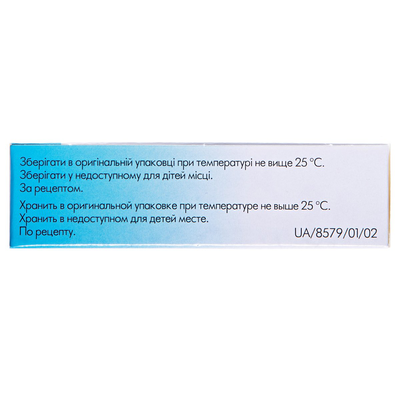
Store in the original packaging at a temperature not exceeding 25 °C.
Keep out of reach of children.
Packaging
10 tablets per blister; 1 (for the 50 mg strength) or 2 (for the 20 mg strength) blisters per package.
Manufacturer
INTERCHEM Limited Liability Company.







