
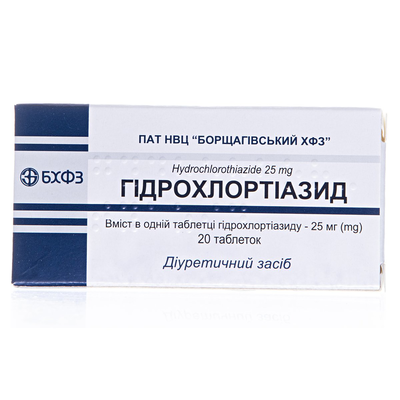
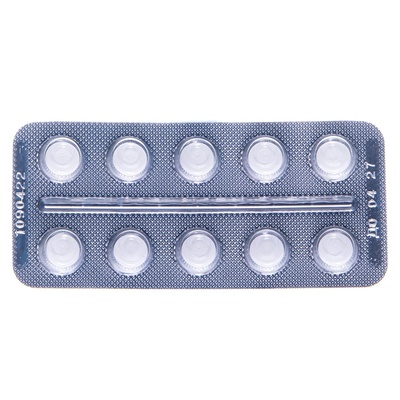
Hydrochlorothiazide 25 mg tablets, No. 20 (10 x 2)
Composition
Active ingredient: hydrochlorothiazide;
1 tablet contains 25 mg of hydrochlorothiazide (calculated as 100% dry weight);
excipients: lactose monohydrate, povidone, microcrystalline cellulose, corn starch, magnesium stearate.
Dosage Form
Tablets.
Main physical and chemical properties: white or white with a yellowish tint tablets with a biconvex surface. Marbling and gray speckles on the tablet surface are permissible.
Pharmacotherapeutic group
Diuretics with moderate activity, thiazide group. Simple thiazide diuretics. Hydrochlorothiazide. ATC code C03A03.
Pharmacological Properties
Pharmacodynamics.
Hydrochlorothiazide is a thiazide diuretic of moderate potency. It reduces the reabsorption of sodium ions in the cortical segment of Henle’s loop without affecting the segment that passes through the medullary layer of the kidney. Hydrochlorothiazide inhibits carbonic anhydrase in the proximal convoluted tubules and accelerates the excretion of potassium, bicarbonate, and phosphate ions in the urine. It has virtually no effect on acid-base balance (sodium ions are excreted either together with chloride ions or with bicarbonate ions; therefore, in alkalosis, bicarbonate excretion increases, and in acidosis, chloride excretion increases). Hydrochlorothiazide increases the excretion of magnesium ions and delays the excretion of urates. Hydrochlorothiazide reduces urinary calcium excretion, thereby decreasing the formation of calcium kidney stones.
Hydrochlorothiazide has a hypotensive effect. The antihypertensive effect begins after 3–4 days, but it may take 3–4 weeks to achieve the optimal therapeutic effect. The antihypertensive effect persists for one week after discontinuation of the drug.
The effect of hydrochlorothiazide is reduced as glomerular filtration rate decreases and ceases when creatinine clearance is less than 30 mL/min.
Non-melanoma skin cancer. The results of two pharmacoepidemiological studies based on data from the Danish National Cancer Registry demonstrated a cumulative dose-dependent association between hydrochlorothiazide (HCTZ) and the incidence of basal cell carcinoma (BCC) and squamous cell carcinoma (SCC).
One study included a population of 71,533 patients with BCC and 8,629 patients with SCC, who were compared with 1,430,833 and 172,462 patients in the control population, respectively. High-dose GHTZ use (≥ 50,000 mg cumulatively) was associated with an adjusted hazard ratio (HR) of 1.29 (95% confidence interval (CI): 1.23–1.35) for BCC and 3.98 (95% CI: 3.68–4.31) for SCC. A clear cumulative dose-dependent association was observed for both BCC and SCC.
Another study showed a possible association between lip cancer (PCCC) and the use of HRT: 633 cases of lip cancer (PCCC) were compared with 63,067 patients in the control population using a random-sample design. A cumulative dose-dependent association was demonstrated with an adjusted OR of 2.1 (95% CI: 1.7–2.6), which increased to an OR of 3.9 (3.0–4.9) for high doses (~25,000 mg) and an OR of 7.7 (5.7–10.5) for the highest cumulative dose (~100,000 mg) (see the “Special Considerations for Use” section).
Pharmacokinetics.
After administration, hydrochlorothiazide is rapidly but incompletely (60–80%) absorbed from the gastrointestinal tract. The diuretic effect develops within 1–2 hours, peaks after 4 hours, and lasts for 10–12 hours. Plasma protein binding is 40%. Hydrochlorothiazide crosses the placental barrier and passes into breast milk.
Hydrochlorothiazide is not significantly metabolized. The primary route of elimination is renal excretion in an unchanged form. The half-life in patients with normal renal function is approximately 6 hours; in patients with moderate renal impairment, it is 11.5 hours.
Indications
- Edema of various origins (in congestive heart failure, liver cirrhosis with ascites, nephrotic syndrome, chronic renal insufficiency, premenstrual syndrome, fluid retention associated with obesity, as well as edema caused by medication, such as corticosteroids);
- hypertension (as monotherapy or in combination with other antihypertensive drugs);
- symptomatic treatment of nephrogenic diabetes insipidus (to reduce polyuria);
- subcompensated forms of glaucoma;
- prevention of calcium kidney stones.
Contraindications
- Hypersensitivity to hydrochlorothiazide, other sulfonamides, or any component of the drug;
- disturbances in water-salt metabolism (hypokalemia, hypercalcemia, hyponatremia);
- decompensated diabetes mellitus;
- hypovolemia;
- gout (severe forms);
- anuria;
- severe liver failure, hepatic encephalopathy;
- mechanical obstruction of the urinary tract;
- severe renal failure (creatinine clearance below 30 mL/min).
Drug Interactions and Other Interactions
Cardiac glycosides: the likelihood of toxic effects of glycosides (including increased ventricular excitability) increases due to the development of thiazide-induced hypokalemia and hypomagnesemia.
Amphotericin B (parenteral), laxatives that stimulate intestinal motility, glucocorticosteroids, adrenocorticotropic hormone, calcitonin: hydrochlorothiazide may exacerbate electrolyte imbalances, particularly hypokalemia.
Calcium salts and vitamin D: Thiazide diuretics reduce calcium excretion and may increase plasma calcium levels. Serum calcium levels should be monitored, and the dose of calcium/vitamin D should be adjusted.
Drugs that cause changes in serum potassium levels: the risk of developing cardiac arrhythmias, including ventricular tachycardia (e.g., torsade de pointes), is increased:
- Class Ia antiarrhythmic drugs (e.g., quinidine, hydroquinidine, disopyramide);
- Class III antiarrhythmic drugs (e.g., amiodarone, sotalol, dofetilide, ibutilide);
- neuroleptics (e.g., thioridazine, chlorpromazine, levomepromazine, trifluoperazine, cyamemazine, sulpiride, sultopride, amisulpride, tiapride, pimozide, haloperidol, droperidol);
- others (e.g., bepridil, cisapride, difemanil, erythromycin, halofantrine, mizolastine, pentamidine, terfenadine, vincamine).
Carbamazepine: development of hyponatremia. Electrolyte levels should be monitored; if necessary, diuretics from other classes should be used.
Nonsteroidal anti-inflammatory drugs (NSAIDs), including selective COX-2 inhibitors, acetylsalicylic acid > 3 g/day, and nonselective NSAIDs: when taken concomitantly, NSAIDs may attenuate the antihypertensive effect of hydrochlorothiazide and enhance the effect of hydrochlorothiazide on serum potassium levels.
Diflusanil: plasma concentrations of hydrochlorothiazide increase, and its hyperuricemic effect is reduced.
Ethanol, barbiturates (e.g., phenobarbital), diazepam, narcotic analgesics, antidepressants: may enhance the hypotensive effect of hydrochlorothiazide.
Pressor amines (e.g., epinephrine, norepinephrine): hydrochlorothiazide reduces their effect on blood pressure.
Antihypertensive drugs: When used concomitantly with hydrochlorothiazide, it may be necessary to reduce the dose of antihypertensive drugs to prevent an excessive decrease in blood pressure.
Lithium salts: Concomitant use with hydrochlorothiazide should be avoided due to the potential for an increase in plasma lithium concentrations to toxic levels.
Antidiabetic drugs (oral medications, insulin): During treatment with thiazides, impaired glucose tolerance and the development of hyperglycemia may occur. A dosage adjustment may be necessary.
Metformin: Use with caution due to the risk of lactic acidosis resulting from possible hydrochlorothiazide-induced functional renal impairment.
Non-depolarizing muscle relaxants (e.g., tubocurarine): the muscle-relaxing effect may be potentiated.
Cytotoxic drugs (e.g., cyclophosphamide, methotrexate): Thiazides may reduce the renal excretion of cytotoxic drugs and enhance their myelosuppressive effects.
Cholestyramine and colestipol resins: even with a single dose, cholestyramine or colestipol resins bind hydrochlorothiazide and reduce its absorption from the gastrointestinal tract by 85% and 43%, respectively.
Antigout agents (probenecid, sulfinpyrazone, and allopurinol): Dose adjustment of uricosuric agents is necessary, as hydrochlorothiazide may increase serum uric acid levels. It may be necessary to increase the dose of probenecid or sulfinpyrazone. Concomitant use of thiazide diuretics, including hydrochlorothiazide, may increase the frequency of hypersensitivity reactions to allopurinol.
Anticholinergic agents (e.g., atropine, biperiden): increase the bioavailability of thiazide diuretics by reducing gastrointestinal motility and the rate of gastric emptying.
Salicylates: At high doses of salicylates, hydrochlorothiazide may enhance their toxic effects on the central nervous system.
Methyldopa: Isolated cases of hemolytic anemia have been reported with concomitant use of hydrochlorothiazide.
Cyclosporine: The risk of hyperuricemia and gout is increased.
Beta-blockers and diazoxide: Thiazides may enhance their hyperglycemic effect.
Amantadine: Hydrochlorothiazide may increase the risk of adverse reactions to amantadine.
Iodine-containing contrast agents: In cases of diuretic-induced dehydration, the risk of acute renal failure increases, especially when high doses of iodine-containing agents are used. Rehydration should be performed prior to administration.
Special Considerations for Use
Non-melanoma skin cancer.
An increased risk of non-melanoma skin cancer (NMSC) with increasing cumulative doses of GHTZ was observed in two pharmacoepidemiological studies. The photosensitizing effect of GHTZ may be a mechanism underlying the development of this condition.
Patients taking GHTZ alone or in combination with other medications should be informed of the risk of developing NMSC, especially with long-term use, about the need to regularly examine their skin and immediately notify their doctor of new lesions or any suspicious skin growths, changes in existing skin lesions, or moles.
To reduce the risk of skin cancer, patients should be informed about possible preventive measures, such as limiting exposure to sunlight and UV radiation, and, if exposed, about the need for adequate skin protection. Suspected skin lesions should be evaluated as soon as possible, including histological examination of biopsy specimens.
Patients with a history of non-melanoma skin cancer may also require a review of their hormone therapy regimen.
Renal impairment.
Patients with severe renal impairment should use diuretics, including hydrochlorothiazide, with caution. Thiazides may cause or accelerate the development of azotemia and exacerbate existing renal impairment. Cumulative effects of the drug are possible. If renal impairment progresses, azotemia worsens significantly, or oliguria develops, diuretic therapy should be discontinued.
Liver dysfunction.
Thiazides should be used with caution in patients with hepatic impairment or progressive liver disease, as these drugs may cause intrahepatic cholestasis, and even minor changes in water-electrolyte balance or blood ammonia levels may trigger or accelerate the development of hepatic coma, hepatic encephalopathy, or hepatorenal syndrome. In such cases, treatment with diuretics should be discontinued.
Hypersensitivity reactions.
The possibility of their occurrence should be kept in mind in patients with or without a history of allergic diseases or bronchial asthma. There have been reports of the development or exacerbation of connective tissue diseases, such as systemic lupus erythematosus, while taking thiazides.
Choroidal effusion with visual field defects, acute myopia, and secondary angle-closure glaucoma.
Hydrochlorothiazide may cause an idiosyncratic reaction leading to the development of choroidal effusion with visual field defects, acute transient myopia, and acute angle-closure glaucoma. Symptoms are characterized by an acute onset of decreased visual acuity and/or eye pain and typically develop within a few hours to a few weeks after the start of hydrochlorothiazide treatment.
Untreated acute angle-closure glaucoma can lead to permanent vision loss. The primary treatment is to discontinue hydrochlorothiazide as soon as possible. Subsequently, urgent medical or surgical treatment should be considered if intraocular pressure remains uncontrolled. A history of allergy to sulfonamides or penicillin may be a risk factor for the development of acute angle-closure glaucoma.
Fluid and electrolyte balance.
Thiazide therapy should be initiated only after correction of any pre-existing fluid and electrolyte imbalances.
All patients receiving diuretic therapy should be evaluated for possible fluid and electrolyte imbalances, including hypovolemia, hyponatremia, hypokalemia, hypomagnesemia, and hypochloremic alkalosis. Potassium, magnesium, sodium, and other blood electrolyte concentrations, as well as plasma creatinine clearance, should be monitored regularly during long-term diuretic therapy.
Measuring electrolyte levels in serum and urine is particularly important when a patient is experiencing excessive vomiting and/or diarrhea or is receiving parenteral fluids.
Serum electrolyte levels may also be affected by the concomitant use of medications such as cardiac glycosides, glucocorticosteroids, and adrenocorticotropic hormone.
Thiazides should be used with caution in conditions associated with increased potassium loss. Hypokalemia may increase the toxic effects of cardiac glycosides (e.g., ventricular excitability). A concurrent magnesium deficiency may complicate the correction of hypokalemia. During long-term use of hydrochlorothiazide, patients are advised to follow a potassium-rich diet and/or take potassium supplements.
Patients with edema may develop dilutional hyponatremia in hot weather; appropriate corrective measures include water restriction rather than salt administration, unless hyponatremia is life-threatening.
Monitoring of serum electrolytes is particularly indicated in elderly patients, patients with ascites due to liver cirrhosis, or patients with edema due to nephrotic syndrome. In cases of nephrotic syndrome, hydrochlorothiazide should be used only under strict supervision in patients with normal serum potassium levels and no signs of hypovolemia or severe hypoalbuminemia.
Warning signs of fluid and electrolyte imbalance, regardless of the cause, include dry mouth, thirst, weakness, lethargy, drowsiness, restlessness, confusion, convulsions, muscle pain or spasms (cramps), muscle fatigue, hypotension, oliguria, tachycardia, nausea, and vomiting.
Hypotension and Antihypertensive Medications.
As with other antihypertensive medications, symptomatic hypotension may occur in some patients. Thiazides may potentiate the effects of other antihypertensive drugs. When used concomitantly with hydrochlorothiazide, it may be necessary to reduce the dose of antihypertensive drugs to prevent an excessive decrease in blood pressure.
The antihypertensive effect of hydrochlorothiazide may be enhanced following sympathectomy.
Ischemic heart disease, cerebrovascular disease, aortic and mitral valve stenosis. The drug should be prescribed with caution due to the potential for excessive blood pressure reduction, which may lead to myocardial infarction or stroke. Use with particular caution in patients with cerebral and coronary atherosclerosis.
Elderly patients.
When prescribing hydrochlorothiazide, it should be noted that patients in this age group may be more sensitive to the drug; therefore, a therapeutic dose reduced by half may be sufficient. It is important to note that in elderly patients, creatinine clearance depends on age, body weight, and sex.
Metabolic and Endocrinological Effects.
Diuretics, including hydrochlorothiazide, may cause impaired glucose tolerance and the development of hyperglycemia. It may be necessary to adjust doses of insulin and oral hypoglycemic agents (see the section “Interactions with Other Medications and Other Types of Interactions”). Latent diabetes may become apparent during therapy with thiazides.
Diuretics may reduce urinary calcium excretion and, as a result, cause a slight transient increase in plasma calcium levels. Significant hypercalcemia may be a manifestation of latent hyperparathyroidism. Pathological changes in the parathyroid glands, accompanied by hypercalcemia and hypophosphatemia, have been observed in some patients during long-term therapy with thiazides. Thiazide therapy should be discontinued prior to parathyroid function testing.
When hydrochlorothiazide is used, the concentration of free bilirubin in serum may increase (due to displacement from its binding to albumin). Elevated levels of cholesterol, LDL-C, and triglycerides are possible.
Thiazides may lower plasma levels of protein-bound iodine without signs of thyroid dysfunction.
In some patients, treatment with thiazides may cause hyperuricemia and worsen the course of or trigger a gout attack in patients predisposed to it.
False-positive results on anti-doping tests may occur with hydrochlorothiazide use.
This medication contains lactose; therefore, patients with rare hereditary forms of galactose intolerance, lactase deficiency, or glucose-galactose malabsorption should not take this medication.
Use During Pregnancy or Breastfeeding.
Hydrochlorothiazide may be prescribed during pregnancy only after evaluating the benefit to the mother versus the risk to the fetus, as the drug reduces maternal plasma volume and uteroplacental blood flow and crosses the placental barrier. There is a risk of embryonic or neonatal jaundice, thrombocytopenia, and other adverse effects in the fetus.
Since hydrochlorothiazide passes into breast milk, breastfeeding should be discontinued if the drug is necessary.
Effect on reaction time when driving or operating machinery.
Until an individual’s response to the drug is determined, patients should refrain from driving or operating machinery, as treatment may cause a decrease in the ability to concentrate and in the speed of psychomotor reactions, as well as dizziness and visual disturbances.
Dosage and Administration
The dose of hydrochlorothiazide is determined by the physician on an individual basis. The tablets should be taken after meals.
Due to increased excretion of potassium and magnesium during treatment, replacement therapy with potassium (K+ < 3.0 mmol/L) and magnesium may be necessary.
For edema, the initial dose is 25–75 mg (depending on clinical efficacy) once daily or once every 2 days. The maximum daily dose is 100 mg.
As an antihypertensive agent, hydrochlorothiazide should be prescribed at an initial daily dose of 25–50 mg in a single dose, either as monotherapy or in combination with other antihypertensive drugs.
In some cases, an initial dose of 12.5* mg is effective. If necessary, the dose may be increased, but the maximum daily dose should not exceed 100 mg per day.
*If a 12.5 mg dose of hydrochlorothiazide is required, a formulation available in that dosage should be used.
The antihypertensive effect of hydrochlorothiazide becomes apparent within 3–4 days; however, it may take up to 3–4 weeks to achieve the optimal effect. After discontinuation of treatment, the antihypertensive effect persists for about 1 week.
For premenstrual edema, the usual dose is 25 mg per day; it should be taken from the onset of symptoms until the start of menstruation.
For nephrogenic diabetes insipidus, the average therapeutic dose is 50 mg per day. If necessary, the dose may be increased to 100 mg per day.
To prevent the formation of calculi (stones), administer 50 mg twice daily.
To reduce intraocular pressure in glaucoma, administer 25 mg once every 1–6 days; the effect occurs within 24–48 hours.
The daily dose for children aged 2 years and older is 1–2 mg/kg of body weight. Depending on body weight, children aged 2 to 12 years should receive 37.5–100 mg per day. Dosage frequency: 1–2 times daily.
Children.
Use in children aged 2 years and older.
Overdose
Symptoms: dehydration, hypokalemia, hyponatremia, hypochloremia. This may result in: thirst, nausea, vomiting, tachycardia, fatigue, weakness, dizziness, altered consciousness, hypotension, bradycardia, cardiac arrhythmias, cramps/spasms in the calf muscles, paresthesias, polyuria, oliguria, or anuria, shock, alkalosis, and elevated blood urea nitrogen levels (especially in patients with renal insufficiency).
Treatment: symptomatic and supportive care; there is no specific antidote. Gastric lavage and administration of activated charcoal are recommended to reduce drug absorption. In the event of hypotension, the patient should be placed in a supine position with the legs elevated. Fluid volume should be replenished and electrolyte imbalances corrected (in cases of hypotension or shock). If necessary, provide oxygen or perform artificial respiration. Monitor fluid and electrolyte balance (especially serum potassium levels) and laboratory parameters of renal function until they return to normal.
Side Effects
Blood and lymphatic system: leukopenia, neutropenia/agranulocytosis, thrombocytopenia with or without purpura, hemolytic and aplastic anemias, decreased hematocrit, myelosuppression, lymphadenopathy.
Immune system: hypersensitivity reactions, including anaphylactic reactions, anaphylactic shock, angioedema (including swelling of the face, lips, tongue, larynx, extremities, and intestinal swelling).
Metabolic disorders: hyperuricemia, which may trigger gout attacks in patients with asymptomatic disease; electrolyte imbalances, including hyponatremia and hypokalemia, hypomagnesemia, hypercalcemia, elevated blood lipid levels; gout, hyperglycemia, glucosuria, impaired glucose tolerance, which may lead to the manifestation of latent diabetes mellitus, hypochloremic alkalosis; elevated levels of urea and creatinine, liver enzymes and bilirubin, cholesterol, and triglycerides in blood plasma.
Psychiatric disorders: restlessness, depression, sleep disturbances, confusion, disorientation, drowsiness, mood and mental changes, nervousness.
Nervous system: dizziness, headache, paresthesias, convulsions, unusual fatigue and weakness, apathy, slowed thinking, loss of consciousness, asthenia.
Eyes: blurred vision, xanthopsia, conjunctivitis, acute myopia and secondary acute angle-closure glaucoma, choroidal effusion.
Ear and balance: vertigo, tinnitus.
Cardiovascular system: arrhythmias, orthostatic hypotension, arterial hypotension, tachycardia.
Respiratory system, thoracic and mediastinal organs: respiratory distress syndrome, including pneumonitis and pulmonary edema.
Gastrointestinal system: anorexia, nausea, vomiting, diarrhea, constipation, dry mouth, increased thirst, stomatitis/aphthous ulcers, glossitis, altered sense of taste, pain/spasm in the epigastric region, pancreatitis.
Hepatobiliary system: development of hepatic encephalopathy or hepatic coma, hepatocellular or cholestatic jaundice, cholecystitis.
Skin and subcutaneous tissue: skin rash, photosensitivity, pruritus, urticaria, purpura, erythroderma, necrotizing vasculitis, Stevens-Johnson syndrome, erythema multiforme, exfoliative dermatitis, toxic epidermal necrolysis, lupus-like skin reactions, alopecia.
Musculoskeletal system: muscle cramps or pain.
Urinary system: renal dysfunction, interstitial nephritis, renal failure.
Neoplasms: non-melanoma skin cancer (basal cell carcinoma and squamous cell carcinoma) (see the “Pharmacodynamics” and “Special Precautions for Use” sections).
Other: decreased potency/impotence, fever, sialadenitis.
Shelf life
5 years.
Storage conditions
Store in the original packaging at a temperature not exceeding 25 °C.
Keep out of reach of children.
Packaging
10 tablets per blister, 2 blisters per pack; 20 tablets per blister.
Dispensing Category
By prescription.







