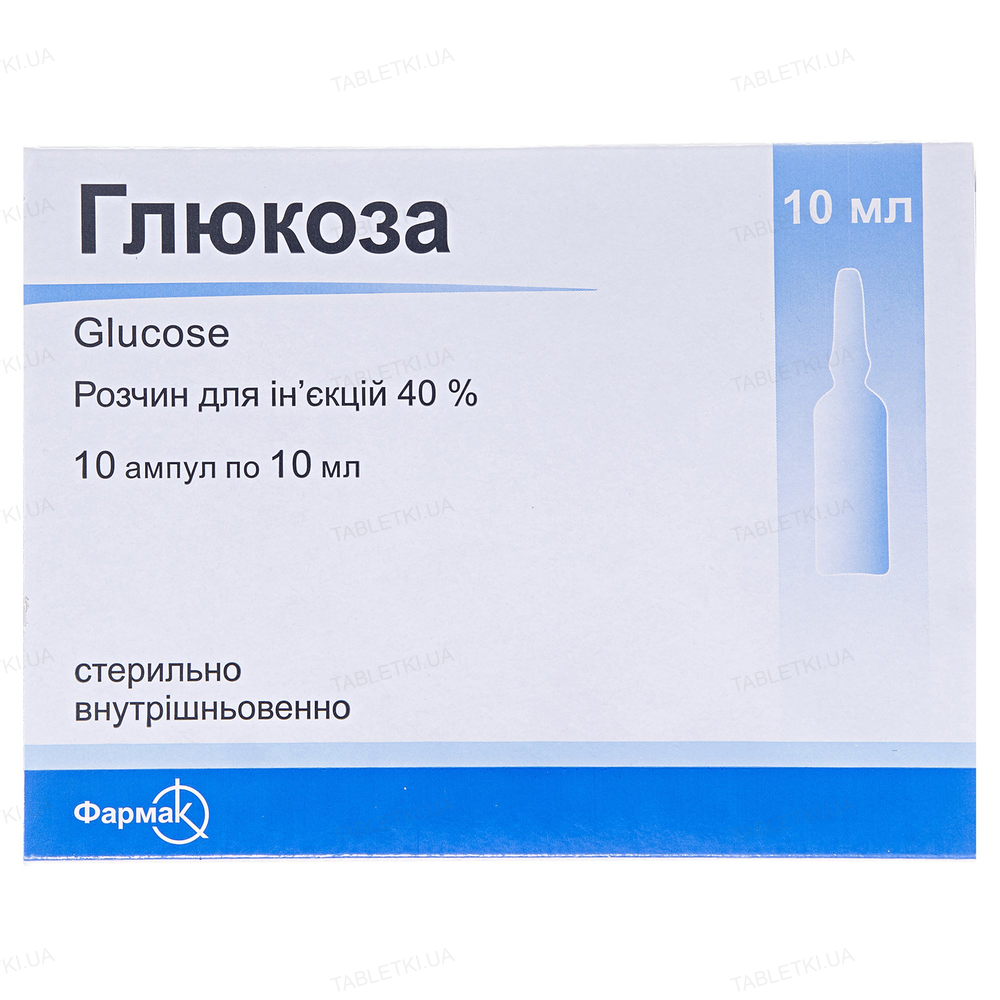
Glucose Solution for Injection, 40%, 10 mL, No. 10, in ampoules
Ingredients
Active ingredient: glucose;
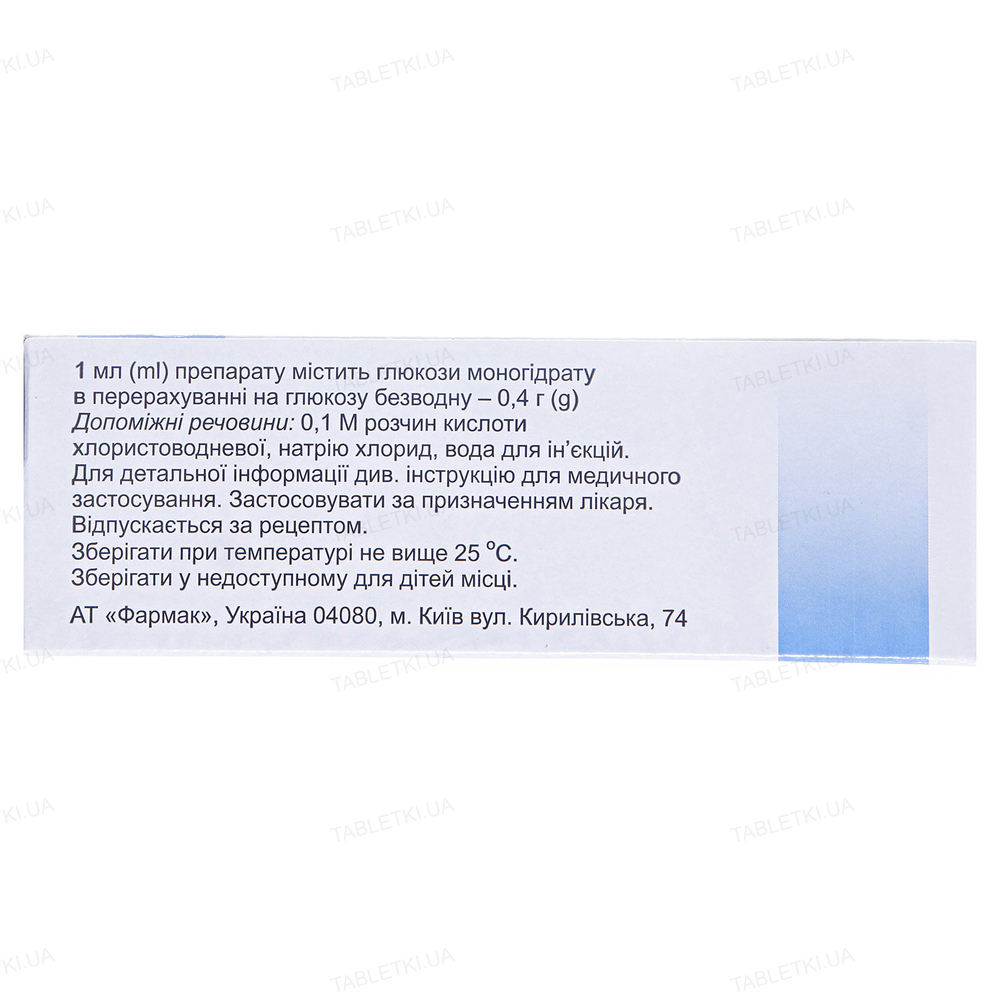
1 mL of the product contains 0.4 g of glucose monohydrate, equivalent to anhydrous glucose;
excipients: 0.1 M hydrochloric acid solution, sodium chloride, water for injection.
Dosage Form
Solution for injection.
Main physical and chemical properties: a clear, colorless or slightly yellowish liquid.
Pharmacotherapeutic group
Solutions for intravenous administration. Carbohydrates.
ATC code B05C X01.
Pharmacological properties
Pharmacodynamics.
Glucose provides a substrate to replenish energy expenditure. When hypertonic solutions are administered intravenously, intravascular osmotic pressure increases, fluid shifts from tissues into the blood, metabolic processes are accelerated, the liver’s detoxification function is improved, cardiac contractility is enhanced, and diuresis increases. When a hypertonic glucose solution is administered, redox processes are enhanced, and glycogen storage in the liver is activated.
Pharmacokinetics.
After intravenous administration, glucose is carried by the bloodstream to organs and tissues, where it is incorporated into metabolic processes. Glucose reserves are stored in the cells of many tissues in the form of glycogen. Upon entering the glycolysis process, glucose is metabolized to pyruvate or lactate; under aerobic conditions, pyruvate is completely metabolized to carbon dioxide and water, with the release of energy in the form of ATP. The end products of complete glucose oxidation are excreted by the lungs and kidneys.
Indications
Hypoglycemia.
Contraindications
The 40% glucose solution is contraindicated in patients with:
- intracranial and intraspinal hemorrhages, ischemic stroke, except for conditions associated with hypoglycemia;
- severe dehydration, including alcohol-induced delirium;
- hypersensitivity to glucose or other components of the drug, or a known allergy to corn and corn products;
- conditions accompanied by hyperglycemia, including diabetes mellitus;
- anuria.
Do not administer this medication concurrently with blood products.
Interactions with Other Medications and Other Types of Interactions
Thiazide diuretics and furosemide. These medications reduce glucose tolerance.
Insulin facilitates the uptake of glucose into peripheral tissues and stimulates glycogen formation, as well as the synthesis of proteins and fatty acids.
Pyrazinamide. Glucose solution reduces the toxic effects of pyrazinamide on the liver.
Digitalis preparations. Administration of large volumes of glucose solution promotes the development of hypokalemia, which increases toxicity when used concomitantly with digitalis preparations.
Special Considerations for Use
Glucose solutions should be used with caution in patients with impaired carbohydrate tolerance of any origin, severe malnutrition, thiamine deficiency, hypophosphatemia, hemodilution, sepsis, trauma, shock, metabolic acidosis, or severe dehydration.
Monitor fluid and electrolyte balance and serum glucose levels.
During prolonged intravenous administration of the drug, blood glucose levels must be monitored. To improve glucose utilization in normoglycemic patients, it is advisable to combine administration of the drug with the subcutaneous administration of short-acting insulin at a rate of 1 IU per 4–5 g of glucose (dry weight).
The drug is contraindicated during the acute phase of severe traumatic brain injury, or during acute cerebral circulation disorders, as the drug may increase damage to brain structures and worsen the course of the disease (except in cases of hypoglycemia correction).
Administration of a 40% glucose solution, with or without insulin, may be used to correct hyperkalemia in renal failure.
In cases of hypokalemia, administration of the drug must be combined with simultaneous correction of the potassium deficiency due to the risk of exacerbating hypokalemia; in cases of hypotonic dehydration, it must be administered simultaneously with hypertonic saline solutions.
Do not administer the solution subcutaneously or intramuscularly.
The contents of an ampoule may be used for only one patient; once the ampoule has been opened, any unused portion of the contents must be discarded.
Use During Pregnancy or Breastfeeding
Use of this medication in pregnant women with normoglycemia may cause fetal hyperglycemia and lead to metabolic acidosis in the fetus. This is particularly important to consider when fetal distress or hypoxia is already caused by other perinatal factors.
Intravenous administration of glucose to the mother during labor may affect intrauterine insulin production, with a risk of fetal hyperglycemia and metabolic acidosis, or hypoglycemia in the newborn due to the “rebound phenomenon.”
The ability to affect reaction time while driving or operating other machinery
Has not been studied.
Dosage and Administration
Administer 40% Glucose Solution intravenously (very slowly); for adults, 20–40–50 mL per administration. If necessary, administer by drip at a rate of up to 30 drops/min (1.5 mL/kg/hour). The dose for adults when administered intravenously by drip is up to 300 mL per day. The maximum daily dose for adults is 15 mL/kg, but not more than 1,000 mL per day.
Children
This medication should be used in children only as prescribed and under the supervision of a doctor.
Overdose
Symptoms. Overdose of the drug leads to hyperglycemia, glucosuria, increased blood osmotic pressure (up to the development of hyperglycemic hyperosmolar coma), and disturbances in water-electrolyte balance.
Treatment. Discontinue the medication and administer insulin at a rate of 1 IU for every 0.45–0.9 mmol of blood glucose until blood glucose reaches 9 mmol/L. Blood glucose levels should be lowered gradually. Concurrently with insulin administration, an infusion of balanced saline solutions must be administered. If necessary, symptomatic treatment should be prescribed.
Side Effects
Endocrine and metabolic disorders: hyperglycemia, hypokalemia, hypophosphatemia, hypomagnesemia, acidosis.
Gastrointestinal system: polydipsia, nausea.
Immune system, skin, and subcutaneous tissue disorders: allergic reactions, including fever, skin rash, angioedema, shock.
Renal and urinary tract disorders: polyuria, glucosuria.
General reactions: disturbances in water and electrolyte balance.
Administration of glucose in the presence of thiamine (vitamin B1) deficiency, including in patients with alcohol-induced delirium, may trigger the development of deficiency states, such as Wernicke’s encephalopathy. In patients with severe malnutrition, sodium retention, edema, pulmonary edema, and congestive heart failure may occur.
Injection-site reactions: changes at the injection site, including pain at the injection site, vein irritation, phlebitis, and venous thrombosis.
If adverse reactions occur, administration of the solution should be discontinued, the patient’s condition assessed, and appropriate care provided. Any remaining solution should be retained for subsequent analysis.
Incompatibility
Glucose is incompatible in solution with aminophylline, soluble barbiturates, erythromycin, hydrocortisone, warfarin, kanamycin, soluble sulfonamides, and cyanocobalamin.
It should not be administered in the same syringe as hexamethylenetetramine, as glucose is a strong oxidizing agent. It is not recommended to mix it in the same syringe with alkaline solutions: general anesthetics and sedatives, as this reduces their activity; alkaloid solutions; it inactivates streptomycin and reduces the effectiveness of nystatin.
Shelf life
5 years.
Do not use the drug after the expiration date indicated on the packaging.
Storage Conditions
Store at a temperature not exceeding 25 °C.
Keep out of reach of children.
Packaging
10 mL or 20 mL per ampoule. 5 or 10 ampoules per pack. 5 ampoules per blister pack, 1 or 2 blister packs per pack.
Manufacturer
JSC “Farmak”.
Address
Ukraine, 04080, Kyiv, 74 Kyrylivska St.