
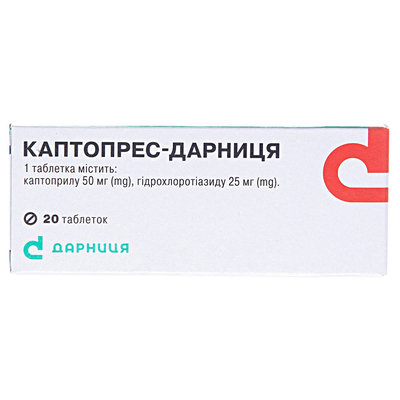
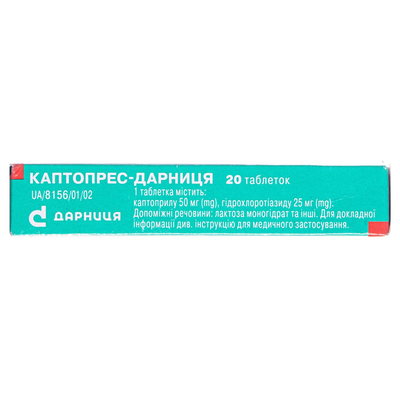
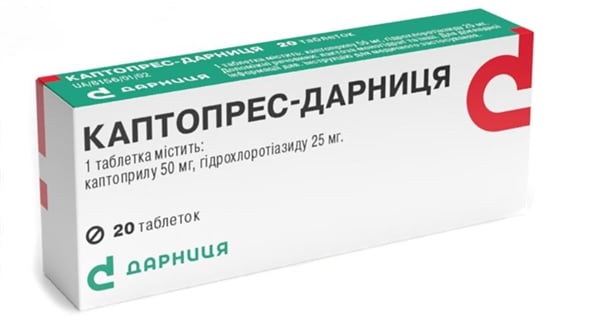
Kaptopres-Darnitsa Tablets No. 20 (10 x 2)
Ingredients
Active ingredients: captopril, hydrochlorothiazide;
1 tablet contains: 50 mg of captopril, 25 mg of hydrochlorothiazide;
Inactive ingredients: potato starch, lactose monohydrate, colloidal anhydrous silicon dioxide, povidone, magnesium stearate.
Dosage Form
Tablets.
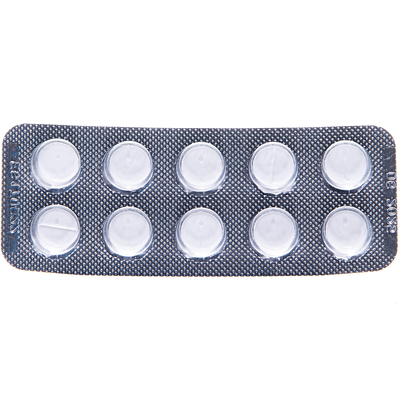
Main physical and chemical properties: white, flat-cylindrical tablets with a bevel and a score line, having a characteristic odor.
Pharmacotherapeutic group
Combination ACE inhibitor preparations. Captopril and diuretics. ATC code C09B A01.
Pharmacological properties
Pharmacodynamics.
Captopres-Darnitsa is a combined antihypertensive medication containing a measured combination of captopril and hydrochlorothiazide.
Captopril is an angiotensin-converting enzyme (ACE) inhibitor. It inhibits the formation of angiotensin II, thereby blocking its vasoconstrictive action and its stimulatory effect on aldosterone secretion in the adrenal glands. It reduces total peripheral vascular resistance and blood pressure, decreases myocardial preload, and lowers pressure in the right atrium and the pulmonary circulation.
Hydrochlorothiazide produces a moderately pronounced diuretic effect by increasing the excretion of sodium, chloride, potassium, and water from the body. It reduces the concentration of sodium ions in the vascular wall, decreasing its sensitivity to vasoconstrictor effects and thereby enhancing the antihypertensive effect of captopril.
Pharmacokinetics.
When taken orally, captopril is actively absorbed in the gastrointestinal tract. The time to reach peak plasma concentration is approximately 1 hour. 25–30% of captopril binds to plasma proteins. It is metabolized in the liver. The major metabolites are captopril cysteine and the disulfide dimer of captopril. The half-life (T½) is approximately 2–3 hours. 95% of captopril is excreted by the kidneys: 50% as metabolites and up to 50% unchanged.
When taken orally, hydrochlorothiazide is absorbed in the gastrointestinal tract at a rate of 68–78%. The half-life (T½) is approximately 3–4 hours. 20–75% of hydrochlorothiazide is excreted by the kidneys unchanged.
In patients with renal insufficiency, the elimination of the drug is slowed.
Indications
Hypertension.
Contraindications
- Hypersensitivity to captopril, other ACE inhibitors, hydrochlorothiazide, other sulfonamide derivatives, or any other components of the drug.
- A history of angioedema during treatment with other ACE inhibitors.
- Congenital (idiopathic) angioedema.
- Severe renal impairment (plasma creatinine concentration greater than 1.8 mg/100 mL or creatinine clearance less than 30 mL/min), severe renal failure.
- Bilateral renal artery stenosis or stenosis of the artery to a solitary kidney with progressive azotemia.
- Post-kidney-transplant status.
- Anuria.
- Aortic stenosis and other obstructive disorders that impair left ventricular ejection.
- Hypertrophic cardiomyopathy with low cardiac output.
- Severe liver dysfunction (precoma, hepatic coma, liver failure).
- Primary hyperaldosteronism.
- Porphyria.
- Hypokalemia, hyperkalemia, hyponatremia associated with hypovolemia, hypercalcemia, gout.
- Pregnant women or women planning to become pregnant (see “Use During Pregnancy or Breastfeeding”).
Drug Interactions and Other Interactions
When this medication is used concomitantly with the following drugs, the following may occur:
with diuretics (thiazides or loop diuretics)—a risk of developing hypotension due to dehydration caused by high doses of diuretics. The hypotensive effect can be reduced by discontinuing diuretics, increasing fluid and salt intake, or reducing the initial dose of captopril;
with α- and β-adrenergic blockers, long-acting calcium channel blockers, and other antihypertensive agents, organic nitrates, MAO inhibitors, hypnotics (nitrazepam), tranquilizers (alprazolam)—enhancement of the drug’s hypotensive effect; use this combination of drugs with caution;
with ethanol-containing medications and beverages, barbiturates, narcotic drugs, neuroleptics, and tricyclic antidepressants—increased hypotensive effect of the drug and orthostatic hypotension;
with sympathomimetics, estrogens, and metanamine—the drug’s hypotensive effect is reduced; therefore, the patient’s blood pressure should be carefully monitored;
with nonsteroidal anti-inflammatory drugs (NSAIDs)—the drug’s hypotensive effect is reduced, and renal function may be impaired with an increase in plasma potassium concentration; Acute renal failure may rarely develop, especially in patients with impaired renal function. Use this combination of medications with caution. Before starting treatment, fluid and electrolyte balance should be normalized; during treatment, renal function should be monitored periodically. When high doses of salicylates are used, hydrochlorothiazide may enhance their toxic effects on the central nervous system;
with drugs that increase serum potassium levels (heparin, cyclosporine, potassium-sparing diuretics—amiloride, spironolactone, triamterene), and medications and supplements containing potassium—a marked increase in plasma potassium concentration may occur; concomitant use of these medications is not recommended. If co-administered due to existing hypokalemia, they should be used with great caution and with frequent monitoring of serum potassium levels;
with allopurinol, procainamide, immunosuppressants (azathioprine), and cytostatic agents—suppression of hematopoiesis;
with diazoxide—enhancement of hyperglycemic, hyperuricemic, and hypotensive effects; periodic monitoring of blood glucose levels and uric acid concentrations may be necessary;
with anesthetics, non-depolarizing muscle relaxants, and agents used to induce anesthesia (tubocurarine chloride, galamine trietiodide)—potentiation of the effects of the aforementioned drugs; it may be necessary to adjust the dose and fluid and electrolyte balance prior to surgery;
with lithium preparations and calcium salts—enhanced effects of the aforementioned drugs; concomitant use of these drugs is not recommended. Concomitant use of ACE inhibitors and lithium may cause a temporary increase in serum lithium levels and lithium toxicity. Concomitant use of ACE inhibitors and thiazide diuretics may further increase serum lithium levels and raise the risk of lithium toxicity. Therefore, the simultaneous use of captopril with lithium is not recommended. If such a combination of medications is necessary, serum lithium levels should be carefully monitored;
with cardiac glycosides—increased toxicity of digitalis preparations (arrhythmias) against a background of hypokalemia caused by hydrochlorothiazide;
with carbamazepine – increased risk of hyponatremia; periodic monitoring of electrolyte levels may be necessary;
with amphotericin B, carbenoxolone, glucocorticosteroids, corticotropin, and stimulant laxatives—exacerbation of electrolyte imbalance, particularly the onset of hypokalemia;
with metformin – metabolic acidosis in patients with impaired renal function;
with methyldopa—in rare cases—hemolytic anemia;
with antidiabetic drugs, oral anticoagulants, and drugs for the treatment of gout—reduced efficacy of the aforementioned medications; dose adjustment may be necessary;
with drugs whose effects are influenced by changes in plasma potassium levels, including:
- Class IA antiarrhythmics (quinidine, hydroquinidine, disopyramide), Class III antiarrhythmics (amiodarone, sotalol, dofetilide, ibutilide);
- neuroleptics (thioridazine, chlorpromazine, levomepromazine, trifluoperazine, cyamemazine, sulpiride, sultopride, amisulpride, tiapride, pimozide, haloperidol, droperidol);
- other agents: bepridil, cisapride, difemanil, intravenous erythromycin, halofantrine, ketanserin, mizolastine, pentamidine, sparfloxacin, terfenadine, intravenous vincamine—there is a risk of developing “pirouette” arrhythmia against a background of possible hypokalemia and hypomagnesemia; periodic monitoring of plasma potassium levels and electrocardiograms is necessary;
with pressor amines (norepinephrine)—treatment with this drug should be discontinued one week before surgery;
with antacids, food, cholestipol, or cholestyramine—reduced absorption and decreased bioavailability of the drug;
with probenecid – reduced excretion of captopril;
with iodine-containing contrast media—increased risk of acute renal failure, especially with high doses, due to dehydration caused by hydrochlorothiazide. Fluid balance must be normalized prior to the administration of iodine.
Cytotoxic agents (e.g., cyclophosphamide, methotrexate). Thiazides may reduce the renal excretion of cytotoxic drugs and potentiate their myelosuppressive effect.
Anticholinergic agents (e.g., atropine, biperiden). Due to reduced gastrointestinal motility and a decrease in gastric emptying rate, the bioavailability of thiazide-type diuretics increases.
Cyclosporine. Concomitant use of cyclosporine may exacerbate hyperuricemia and increase the risk of complications such as gout.
Amantadine. Thiazides, including hydrochlorothiazide, may increase the risk of side effects caused by amantadine.
Nonsteroidal anti-inflammatory drugs (NSAIDs), including selective cyclooxygenase-2 (COX-2) inhibitors, acetylsalicylic acid >3 g/day, and nonselective NSAIDs. When taken concomitantly, NSAIDs may attenuate the antihypertensive effect of hydrochlorothiazide and enhance the effect of hydrochlorothiazide on serum potassium levels.
Medications whose effects are influenced by changes in serum potassium levels. Periodic monitoring of serum potassium levels and ECG examinations are recommended if hydrochlorothiazide is taken concomitantly with medications whose effects are influenced by changes in serum potassium levels (e.g., digitalis glycosides and antiarrhythmic drugs), and medications that cause polymorphic pirouette-type tachycardia (ventricular tachycardia) (including certain antiarrhythmic agents), since hypokalemia is a factor contributing to the development of pirouette-type tachycardia.
Data from clinical trials have shown that dual blockade of the renin-angiotensin-aldosterone system (RAAS) through the combined use of ACE inhibitors, angiotensin II receptor blockers, or aliskiren is associated with a higher incidence of adverse reactions, such as hypotension, hyperkalemia, and impaired renal function (including acute renal failure) compared with the separate use of drugs that act on the RAAS.
Use of this medication may result in a positive urine test for acetone.
This medication may be used to treat acute myocardial infarction in combination with acetylsalicylic acid (cardiac doses), thrombolytic agents, β-blockers, and/or nitrates.
Special Considerations for Use
Before starting treatment with this drug, diuretic therapy should be reduced or discontinued entirely.
Before prescribing ACE inhibitors, circulating blood volume (CBV) should be corrected, and the lowest effective optimal dose of the drug should be determined.
During treatment, electrolyte levels (particularly potassium), plasma urea and creatinine levels, and a complete blood count should be monitored periodically.
A low-sodium diet is recommended during treatment with this medication.
Consumption of alcoholic beverages is not recommended during treatment with this medication.
Use this medication with caution in patients with impaired water-electrolyte balance (due to intensive diuretic therapy, diarrhea, vomiting, or a low-sodium diet) and in patients on hemodialysis, as hypotension may develop. Water and electrolyte balance should be corrected before using this medication.
Use this medication with caution in patients with severe cardiac dysfunction and in elderly patients (65 years of age and older). Prescribing this medication to this patient population is only possible under close monitoring of blood pressure, renal function, and fluid and electrolyte balance.
If hypotension occurs, the patient should be placed in a supine position (on their back), and, if necessary, the circulating blood volume should be increased by administering a 0.9% sodium chloride solution.
Special considerations related to the presence of hydrochlorothiazide in the medication.
As with other antihypertensive medications, symptomatic hypotension may occur in some patients.
Treatment with thiazides may lead to a decrease in glucose tolerance. It may be necessary to adjust the doses of antidiabetic agents, including insulin. Latent diabetes mellitus may become apparent during thiazide therapy.
Thiazides may reduce renal excretion of calcium and may also cause a slight, transient increase in serum calcium levels. Significant hypercalcemia may be a manifestation of latent hyperparathyroidism.
Patients receiving thiazides may develop hypersensitivity reactions if they have a history of allergies or bronchial asthma, as well as in patients who have not previously suffered from these conditions. There have been reports of exacerbation or activation of systemic lupus erythematosus during thiazide therapy.
This medication may affect the results of the following laboratory tests:
- the drug may lower the level of protein-bound iodine in blood plasma;
- Treatment with this medication should be discontinued prior to laboratory testing to assess parathyroid function;
- this medication may increase the concentration of free bilirubin in serum.
Use this medication with caution in patients with impaired liver function or progressive liver disease, as thiazide diuretics may cause disturbances in water and electrolyte balance, which can lead to the rapid development of hepatic coma. Prescribing this medication to this category of patients is possible only under close monitoring of blood pressure, kidney function, and water-electrolyte balance.
The drug should be used with caution in patients with impaired renal function, as thiazide diuretics may cause azotemia. Drug accumulation is also possible. As kidney disease progresses, characterized by elevated blood urea nitrogen levels, the appropriateness of continuing therapy should be carefully evaluated, and treatment should be discontinued if necessary.
The antihypertensive effect of hydrochlorothiazide may be enhanced following sympathectomy.
In patients taking hydrochlorothiazide, exacerbation of gout may occur due to increased uric acid concentrations, clinical detection of latent diabetes mellitus, or exacerbation of systemic lupus erythematosus.
Cases of photosensitivity reactions have been reported during treatment with thiazide diuretics. If photosensitivity reactions occur during treatment, it is recommended to discontinue the medication. If the physician deems it necessary to re-prescribe the diuretic, it is recommended to protect areas of the body exposed to sunlight or artificial UV radiation.
Hydrochlorothiazide may cause fluid and electrolyte imbalances (hypokalemia, hyponatremia, and hypochloremic alkalosis). Symptoms: dry mouth, thirst, weakness, lethargy, drowsiness, restlessness, muscle pain or cramps, muscle weakness, hypotension, oliguria, tachycardia, and gastrointestinal disturbances such as nausea and vomiting. Although concomitant use with captopril reduces the risk of hydrochlorothiazide-induced hypokalemia, patients with liver cirrhosis, excessive diuresis, inadequate oral replacement of lost electrolytes, as well as those receiving therapy with glucocorticosteroids or adrenocorticotropic hormone. In hot weather, patients prone to edema may develop hyponatremia, which is usually mild and does not require treatment.
Hydrochlorothiazide may cause hypercalcemia. Therefore, the drug should be discontinued prior to testing parathyroid function.
Hydrochlorothiazide may increase cholesterol and triglyceride levels and decrease blood levels of magnesium and iodine-binding thyroglobulin (without signs of thyroid dysfunction).
Hydrochlorothiazide may cause a positive doping test.
Special considerations related to the presence of captopril in the medication.
This medication should be used with caution in patients with impaired renal function (creatinine clearance less than 40 mL/min). Initial doses of captopril should be determined based on creatinine clearance and subsequently adjusted according to the patient’s response to treatment. Renal function should be monitored regularly (at the start of treatment and periodically thereafter) by measuring plasma potassium and creatinine levels.
This medication should be used with caution in patients with uncomplicated hypertension, as symptomatic hypotension may develop in isolated cases. The likelihood of its development increases in patients with impaired water-electrolyte balance (due to intensive diuretic therapy, diarrhea, vomiting, or a low-sodium diet) and in patients on hemodialysis. Symptomatic hypotension has also been observed in patients with heart failure. Treatment of such patients should be initiated under medical supervision with low doses, and doses should be carefully titrated. This also applies to patients with ischemic heart disease or cerebrovascular disease, in whom a significant decrease in blood pressure may lead to myocardial infarction or cerebrovascular accident (stroke).
Captopril should be avoided in cases of cardiogenic shock and in the presence of significant hemodynamic disturbances.
This medication should be used with caution in patients with renovascular hypertension, as concomitant use with ACE inhibitors increases the risk of severe hypotension and renal failure. Treatment of such patients should be initiated under medical supervision, starting with low doses, and titrated carefully.
It is evident that the combined use of ACE inhibitors, angiotensin II receptor blockers, or aliskiren increases the risk of hypotension and hyperkalemia and leads to a decline in renal function (including acute renal failure). Therefore, dual blockade of the renin-angiotensin-aldosterone system (RAAS) through the combined use of ACE inhibitors, angiotensin II receptor blockers, or aliskiren is not recommended.
If dual blockade therapy is absolutely necessary, it should be administered under medical supervision with frequent monitoring of renal function, electrolytes, and blood pressure.
ACE inhibitors and angiotensin II receptor blockers must not be used concomitantly in patients with diabetic nephropathy.
This medication should be used with caution in patients with diabetes who are taking oral antidiabetic agents or insulin, and blood glucose levels should be monitored regularly, especially during the first month of treatment.
Very rarely, the use of ACE inhibitors has been associated with a syndrome that begins with cholestatic jaundice and rapidly progresses to liver necrosis and (sometimes) leads to death. The mechanism of this syndrome is unknown. Patients receiving ACE inhibitors who develop jaundice or a marked increase in liver enzyme levels should discontinue ACE inhibitors and consult a physician.
Proteinuria may develop in patients, particularly those taking relatively high doses of captopril (more than 150 mg/day) or those with impaired renal function. Urinary protein levels exceeding 1 g per day were reported in approximately 0.7% of patients receiving captopril. Nephrotic syndrome was diagnosed in 20% of patients with proteinuria. In most cases, proteinuria resolved within 6 months after discontinuation of the drug. Renal function parameters, such as blood urea nitrogen and creatinine levels, rarely changed. In patients with impaired renal function, urinary protein levels should be determined prior to treatment and monitored periodically during therapy.
Cases of neutropenia, agranulocytosis, thrombocytopenia, and anemia have been reported in patients taking ACE inhibitors. In patients with normal renal function and in the absence of other risk factors, neutropenia is rare. This medication should be prescribed with extreme caution to patients with collagenoses, patients undergoing treatment with immunosuppressants, taking allopurinol or procainamide, as well as in cases where these conditions coexist, especially in the presence of impaired renal function. Some of these patients develop severe infections that do not always respond to intensive antibiotic therapy. When administering this medication to such patients, periodic monitoring of the white blood cell count and differential count should be performed (prior to treatment, every 2 weeks during the first three months of therapy, and periodically thereafter) and advise the patient to report any signs of infection (fever, swollen lymph nodes, sore throat). If neutropenia occurs (neutrophil count < 1,000/mm³), the drug should be discontinued. After discontinuation of therapy, the neutrophil count rapidly returns to normal in most patients.
In some patients taking ACE inhibitors, including captopril, an increase in serum potassium levels has been observed. Patients at risk for hyperkalemia include those with renal insufficiency, diabetes mellitus, those taking potassium-sparing diuretics or potassium supplements, as well as patients taking other medications that increase serum potassium levels. If administration of the aforementioned medications is necessary during treatment with ACE inhibitors, serum potassium levels should be monitored regularly.
Cases of angioedema of the face, extremities, lips, tongue, glottis, and larynx have been reported in some patients taking ACE inhibitors, particularly during the first few weeks of treatment. In rare cases, angioedema may develop even after prolonged treatment with ACE inhibitors. Isolated fatal cases due to angioedema of the larynx or tongue have been reported. If angioedema develops, captopril should be discontinued immediately and appropriate treatment initiated. The patient must be hospitalized and monitored for at least 12–24 hours until symptoms have completely resolved. Patients of African descent are at increased risk of developing angioedema.
In patients undergoing surgery or anesthesia with medications that lower blood pressure, captopril may block the increase in angiotensin II production caused by a compensatory release of renin. Hypotension resulting from this mechanism should be corrected by administering additional fluid volume.
During treatment with ACE inhibitors, patients may develop a persistent nonproductive cough, which resolves after discontinuation of therapy.
In patients taking ACE inhibitors during desensitization with hymenoptera venom allergens, persistent anaphylactoid reactions may develop. These reactions can be avoided by temporarily discontinuing ACE inhibitors.
In patients taking ACE inhibitors during hemodialysis with high-flux membranes, persistent anaphylactoid reactions may develop. These reactions can be avoided by replacing the dialysis membranes with a different type or by using antihypertensive agents from a different class.
In patients taking ACE inhibitors, persistent anaphylactoid reactions may develop during LDL apheresis. These reactions can be avoided by temporarily discontinuing ACE inhibitors before each apheresis session.
Cross-hypersensitivity may occur with medications containing ACE inhibitors.
The use of ACE inhibitors, including captopril, in Black patients is less effective in lowering blood pressure than in patients of other races, due to a predominance of low renin fractions.
Concomitant use of this medication with lithium is not recommended due to increased toxicity of lithium.
This medication contains lactose; therefore, it should not be used in patients with rare hereditary forms of galactose intolerance, lactase deficiency, or glucose-galactose malabsorption.
Use During Pregnancy or Breastfeeding.
This medication is contraindicated in pregnant women or women planning to become pregnant. If pregnancy is confirmed during treatment with this medication, its use must be discontinued immediately and replaced with another medication approved for use in pregnant women.
This medication should not be used while breastfeeding.
Effect on reaction time when driving or operating machinery.
While taking this medication, patients should refrain from driving or operating machinery, as dizziness and drowsiness may occur, especially at the start of therapy.
Dosage and Administration
Take the medication orally 1 hour before a meal, as absorption is reduced when food is present in the stomach.
The dose is determined by the physician on an individual basis depending on the clinical presentation of the disease.
The initial dose is ½ tablet (25 mg of captopril and 12.5 mg of hydrochlorothiazide) once daily.
Subsequently, if necessary, the maintenance dose may be increased to 1 tablet (50 mg of captopril and 25 mg of hydrochlorothiazide) once daily.
The maximum therapeutic effect is achieved 6–8 weeks after the start of treatment. Dose adjustments should be made at 6-week intervals, unless clinical symptoms require a more rapid change in dosage. If blood pressure does not decrease sufficiently, captopril and hydrochlorothiazide may be added to the treatment regimen as monotherapies. In this case, the daily dose of captopril should not exceed 150 mg, and that of hydrochlorothiazide should not exceed 50 mg.
Patients with impaired renal function.
Since captopril and hydrochlorothiazide are excreted from the body primarily by the kidneys, drug levels may increase in patients with impaired renal function. A reduction in the drug dose is recommended: for creatinine clearance between 30 and 80 mL/min, the initial dose is ½ tablet (25 mg of captopril and 12.5 mg of hydrochlorothiazide) once daily in the morning.
Children.
There are no data on the use of this medication in children.
Overdose
Captopril.
Symptoms: a sharp drop in blood pressure, tachycardia, headache, loss of appetite, taste disturbances, skin allergic reactions, neutropenia. In severe cases, convulsions, paresis, shock, stupor, cardiac arrhythmias, bradycardia, renal failure, and electrolyte imbalance may occur. If these symptoms appear, stop taking the medication immediately and consult a doctor.
Treatment: The patient should be placed in a horizontal position and the stomach should be lavaged.
In cases of severe overdose symptoms, the patient must be hospitalized immediately for intensive detoxification, including hemodialysis, and measures aimed at increasing circulating blood volume, normalizing the functions of the cardiovascular, respiratory, and nervous systems, and restoring kidney function. Hemodialysis using high-flux polyacrylonitrile metal sulfate (AN69) membranes and hemofiltration should be avoided due to the risk of anaphylactoid reactions. Peritoneal dialysis is ineffective.
Symptomatic therapy aimed at normalizing blood pressure and alleviating other symptoms.
Hydrochlorothiazide.
Symptoms: weakness, nausea, vomiting, thirst, diarrhea. These symptoms resolve rapidly upon dose reduction or discontinuation of the drug. In some cases, when taking high doses of the drug, the following symptoms have been reported: tachycardia, hypotension, shock, dizziness, confusion, altered consciousness, muscle spasms, paresthesia, exhaustion, polyuria, oliguria, anuria, hypokalemia, hyponatremia, hypochloremia, alkalosis, and elevated blood urea nitrogen levels (in patients with renal insufficiency). Severe manifestations of overdose may include severe disturbances in water and electrolyte balance and the development of a comatose state as a result of the direct pathological effect of hydrochlorothiazide on the central nervous system.
Treatment. To remove the drug from the stomach, it is recommended to induce vomiting; gastric lavage and the use of sorbents may also be indicated. In the event of severe overdose symptoms, the patient must be immediately hospitalized in a specialized medical facility for intensive detoxification measures (hemodialysis), as well as to correct fluid and electrolyte imbalances, normalize the function of the cardiovascular, respiratory, and central nervous systems, and restore kidney function. There is no specific antidote.
Side Effects
Captopril.
Vision: blurred vision.
Respiratory, thoracic, and mediastinal system: dry, irritating (nonproductive) cough, dyspnea, bronchospasm, rhinitis, laryngitis, allergic alveolitis/eosinophilic pneumonia, chest pain.
Gastrointestinal system: dry mouth, nausea, vomiting, epigastric discomfort, abdominal pain, diarrhea, constipation, stomatitis/aphthous ulcers, glossitis, peptic ulcer, pancreatitis.
Hepatic and biliary tract disorders: abnormal liver function and cholestasis (including jaundice), hepatitis (including necrosis), elevated liver enzymes, hyperbilirubinemia.
Renal and urinary system disorders: impaired renal function (including renal failure), proteinuria, polyuria, oliguria, increased urinary frequency, nephrotic syndrome.
Metabolism and nutrition disorders: anorexia, hypoglycemia, hyperkalemia, hyponatremia.
Nervous system disorders: headache, drowsiness, taste disturbances, dizziness, asthenia, paresthesia, cerebrovascular disorders (including stroke and syncope).
Psychiatric disorders: sleep disturbances, confusion, depression.
Cardiovascular system: arterial hypotension, orthostatic hypotension, Raynaud’s syndrome, hot flashes, pallor, tachycardia or tachyarrhythmia, angina, palpitations, cardiogenic shock, cardiac arrest.
Blood and lymphatic system disorders: eosinophilia, pancytopenia (especially in patients with impaired renal function), thrombocytopenia, anemia (including aplastic and hemolytic), leukopenia, neutropenia, agranulocytosis.
Immune system disorders: pruritus with or without rash, rash, alopecia, angioedema of the face, eyelids, or tongue; interstitial angioedema; peripheral edema; urticaria; Stevens-Johnson syndrome, polymorphic erythema, photosensitivity, erythroderma, pemphigoid reactions, exfoliative dermatitis, autoimmune diseases, fever.
Skin and subcutaneous tissue disorders: pruritus with or without rash, rash, alopecia, polymorphic erythema, photosensitivity, erythroderma, pemphigoid-like reactions, exfoliative dermatitis.
Musculoskeletal and connective tissue disorders: myalgia, arthralgia.
Reproductive system and breast disorders: impotence, gynecomastia.
General disorders: weakness, fatigue, lymphadenopathy.
Laboratory findings: increased BUN and serum creatinine levels; decreased hemoglobin and hematocrit levels; increased erythrocyte sedimentation rate (ESR); elevated antinuclear antibody levels; may cause a false-positive result in urine tests for acetone.
Hydrochlorothiazide.
Ocular side effects: xanthopsia, transient blurred vision, acute myopia, acute angle-closure glaucoma.
Respiratory, thoracic, and mediastinal disorders: respiratory disorders (including pneumonitis and pulmonary edema).
Gastrointestinal system: sialadenitis, loss of appetite, thirst, dry mouth, nausea, vomiting, stomach irritation, diarrhea, constipation, pancreatitis.
Hepatic and biliary tract disorders: jaundice (intrahepatic cholestatic jaundice), cholecystitis.
Renal and urinary system disorders: impaired renal function, renal failure, interstitial nephritis.
Metabolic disorders: anorexia, hyperglycemia, glucosuria, impaired glucose tolerance, which may trigger the manifestation of latent diabetes mellitus; hyperuricemia, which may trigger gout attacks in patients with asymptomatic disease; electrolyte imbalances, particularly hypochloremic alkalosis, which may induce hepatic encephalopathy and coma; acidosis; hypokalemia; hyponatremia; hypomagnesemia; hypercalcemia; elevated cholesterol and triglyceride levels.
Nervous system: headache, drowsiness, seizures, paresthesia, vertigo, dizziness.
Psychiatric: anxiety, nervousness, depression, mood swings, sleep disturbances, disorientation, confusion.
Cardiovascular system: postural hypotension, cardiac arrhythmia; necrotizing vasculitis (vasculitis, cutaneous vasculitis).
Blood and lymphatic system disorders: leukopenia, neutropenia, agranulocytosis, thrombocytopenia, aplastic anemia, hemolytic anemia, bone marrow dysfunction.
Immune system disorders: photosensitivity reactions, rash, eczema, purpura, lupus-like syndrome, reactivation of cutaneous lupus erythematosus, urticaria, anaphylactic reactions, anaphylactic shock, toxic epidermal necrolysis, Stevens-Johnson syndrome.
Skin and subcutaneous tissue disorders: photosensitivity reactions, rash, eczema, purpura, lupus-like syndrome, reactivation of cutaneous lupus erythematosus, urticaria, toxic epidermal necrolysis, Stevens-Johnson syndrome.
Musculoskeletal and connective tissue disorders: muscle pain, muscle spasm.
Reproductive system and breast disorders: sexual dysfunction
General disorders: fever, weakness, exhaustion.
Shelf life
3 years.
Storage conditions
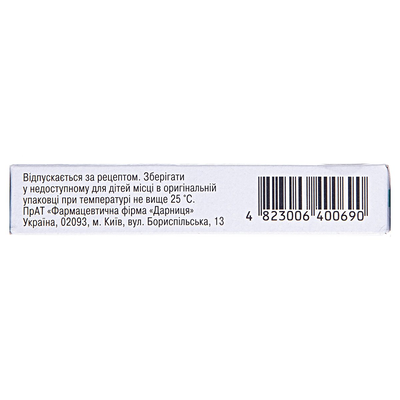
Store out of the reach of children in the original packaging at a temperature not exceeding 25 °C.
Packaging
10 tablets per blister pack, 2 blister packs per package.
Dispensing Category
By prescription only.
Manufacturer
PJSC “Darnitsa Pharmaceutical Company.”







