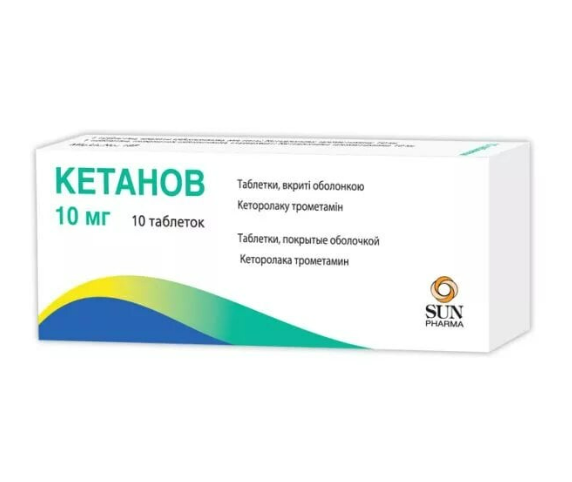
Ketanov tablets, coated, 10 mg each, No. 10
Composition
Active ingredient: ketorolac tromethamine;
1 film-coated tablet contains 10 mg of ketorolac tromethamine;
Excipients: microcrystalline cellulose, corn starch, colloidal anhydrous silicon dioxide, magnesium stearate, hydroxypropyl methylcellulose, polyethylene glycol 400, talc, titanium dioxide (E 171).
Dosage Form
Film-coated tablets.
Main physical and chemical properties: white or cream-white, round, biconvex, film-coated tablets marked “KVT” on one side.
Pharmacotherapeutic group
Nonsteroidal anti-inflammatory and antirheumatic drugs. ATC code M01A B15.
Pharmacological Properties
Pharmacodynamics.
The analgesic ketorolac tromethamine is a non-narcotic analgesic. It is a nonsteroidal anti-inflammatory drug (NSAID) that exhibits strong analgesic and anti-inflammatory activity, as well as mild antipyretic activity. Ketorolac tromethamine inhibits prostaglandin synthesis and is considered a peripheral analgesic. It has no known effect on opioid receptors. Following administration of ketorolac tromethamine in controlled clinical trials, no events indicative of respiratory depression were observed. Ketorolac tromethamine does not cause miosis.
Pharmacokinetics.
Ketorolac tromethamine is rapidly and completely absorbed after oral administration, with a peak plasma concentration of 0.87 mg/kg 45 minutes after a single 10-mg dose. In healthy volunteers, the plasma half-life averages 5.4 hours. In the elderly (mean age 72 years), it is 6.2 hours. More than 99% of ketorolac in plasma is bound to proteins. Ketorolac penetrates brain tissue with great difficulty. A small amount can be found in breast milk. In a healthy person, less than 50% of the administered dose is metabolized. Important metabolites include the glucuronide conjugate and 4-hydroxyketorolac, both of which are pharmacologically inactive. In humans, the pharmacokinetics of ketorolac are linear following single or multiple doses. Steady-state plasma levels are reached after 1 day with administration 4 times daily. No changes were observed with long-term dosing. In healthy volunteers, the terminal plasma half-life ranges from 4 to 6 hours (average 5.4 hours). The plasma half-life is prolonged in patients with renal insufficiency and in elderly patients. In the elderly (mean age 72 years), it is 6.2 hours. After a single intravenous administration, the volume of distribution is 0.25 L/kg, the half-life is 5 hours, and the clearance is 0.55 mL/min/kg. The primary route of excretion for ketorolac and its metabolites (conjugates and p-hydroxy metabolites) is via urine (90%), with the remainder excreted in the feces. Foods that are high in fat and difficult to digest reduce the rate of absorption but not the extent of absorption, whereas antacids do not affect the absorption of ketorolac.
Indications
Short-term treatment of moderate pain, including postoperative pain.
The maximum duration of treatment is 5 days.
Contraindications
- Hypersensitivity to ketorolac or other NSAIDs or to any other components of the medication;
- history of hypersensitivity, such as asthma, rhinitis, angioedema, or urticaria caused by acetylsalicylic acid or other NSAIDs (due to the possibility of severe anaphylactic reactions);
- active or a history of gastrointestinal bleeding or perforation associated with NSAIDs;
- active recurrent peptic ulcers or gastrointestinal bleeding (two or more episodes) currently active or in the medical history;
- Do not use as a pain reliever before, during, or after coronary artery procedures due to inhibition of platelet aggregation, which may cause bleeding;
- suspected or confirmed cerebrovascular hemorrhage, hemorrhagic diathesis, including coagulation disorders and a high risk of bleeding, as well as during the postoperative period when there is a high risk of bleeding or incomplete hemostasis;
- complete or partial nasal polyp syndrome, angioedema, or bronchospasm;
- concomitant treatment with other nonsteroidal anti-inflammatory drugs (NSAIDs) (including selective cyclooxygenase inhibitors), acetylsalicylic acid, warfarin, oxpentoxifylline, probenecid or lithium salts, anticoagulants, including low doses of heparin (2,500–5,000 IU every 12 hours);
- blood disorders of unknown etiology
- severe heart failure;
- history of bronchial asthma;
- hepatic or moderate to severe renal insufficiency (serum creatinine level greater than 160 μmol/L);
- risk of developing renal failure due to volume depletion;
- hypovolemia, dehydration;
- This medication is contraindicated during pregnancy, labor, and delivery, and while breastfeeding;
- Do not use in children and adolescents under 16 years of age.
Drug Interactions and Other Interactions
Ketorolac binds readily to plasma proteins (on average, 99.2%), and the degree of binding depends on concentration.
Do not use concomitantly with ketorolac.
Ketorolac should not be used in combination with other NSAIDs, including selective cyclooxygenase-2 inhibitors, particularly in patients receiving acetylsalicylic acid, due to the risk of severe adverse reactions.
Ketorolac inhibits platelet aggregation, reduces thromboxane levels, and prolongs bleeding time. In contrast to the long-term effects of acetylsalicylic acid, platelet function returns to normal within 24–48 hours after discontinuation of ketorolac.
Anticoagulants. Although studies have not identified any significant interaction between ketorolac and warfarin or heparin, the concurrent use of ketorolac and therapy that affects hemostasis—including therapeutic doses of anticoagulants (warfarin), low doses of heparin (2,500 to 5,000 units every 12 hours), and dextran—may increase the risk of bleeding. Concomitant use with anticoagulants (e.g., warfarin) is contraindicated.
Inhibition of lithium renal clearance by certain drugs that inhibit prostaglandin synthesis has led to increased plasma lithium concentrations. Cases of elevated plasma lithium concentrations have been reported during ketorolac therapy.
Probenecid should not be administered concomitantly with ketorolac due to a reduction in the plasma clearance and volume of distribution of ketorolac, an increase in plasma concentrations of ketorolac, and an increase in its half-life.
Nonsteroidal anti-inflammatory drugs (NSAIDs) should not be used for 8–12 days after taking mifepristone, as NSAIDs may reduce the effect of mifepristone.
When ketorolac is used concomitantly with oxpentifylline, an increased tendency to bleed is observed.
Medications that should be prescribed with caution when used in combination with ketorolac.
As with all NSAIDs, corticosteroids should be used concomitantly with caution due to an increased risk of gastrointestinal ulcers or bleeding. There is an increased risk of gastrointestinal bleeding when NSAIDs are prescribed in combination with antiplatelet agents and selective serotonin reuptake inhibitors.
Caution is advised when methotrexate is used concomitantly, as it has been reported that some prostaglandin synthesis inhibitors reduce methotrexate clearance and, consequently, may increase its toxicity.
In healthy, euvolemic individuals, ketorolac reduces the diuretic effect of furosemide by approximately 20%. Concomitant use with diuretics may lead to a reduction in the diuretic effect and an increased risk of NSAID-induced nephrotoxicity.
Ketorolac should be used with caution when administered concomitantly with cyclosporine due to an increased risk of nephrotoxicity.
There is a risk of nephrotoxicity when NSAIDs are used concomitantly with tacrolimus.
Particular caution should be exercised when prescribing this medication to patients with cardiac decompensation. NSAIDs may exacerbate heart failure, reduce glomerular filtration rate, and increase plasma levels of cardiac glycosides when used concomitantly with cardiac glycosides.
Ketorolac and other nonsteroidal anti-inflammatory drugs may reduce the effect of antihypertensive medications. When ketorolac is used concomitantly with ACE inhibitors (angiotensin-converting enzyme inhibitors) or ARB antagonists, there is an increased risk of developing renal failure (usually reversible), especially in patients with low blood volume or in elderly patients. When using this combination, such patients should undergo careful monitoring of renal function at the start of treatment and periodically throughout therapy.
Opioid analgesics (e.g., morphine, pethidine) may be administered concomitantly; ketorolac does not affect the binding of opioid drugs and does not exacerbate the respiratory depression or sedative effects caused by opioids. It has been shown that, in cases of postoperative pain, the concurrent use of ketorolac with opioid analgesics reduced the need for the latter.
Oral administration of ketorolac tablets after a high-fat meal resulted in a decrease in peak plasma concentrations of ketorolac and prolonged the time to reach peak concentration by approximately 1 hour. Antacids do not affect the extent of absorption.
Patients taking NSAIDs and quinolones are at increased risk of developing seizures.
Concomitant use of NSAIDs with zidovudine leads to an increased risk of hematologic toxicity. There is an increased risk of hemarthrosis and hematoma in HIV-infected individuals with hemophilia who are being treated concurrently with zidovudine and ibuprofen.
The following medications are unlikely to interact with ketorolac.
Ketorolac did not affect the plasma protein binding of digoxin. In vitro studies show that at therapeutic concentrations of salicylate (300 μg/mL) and above, the binding of ketorolac decreased from approximately 99.2% to 97.5%. Therapeutic concentrations of digoxin, warfarin, ibuprofen, naproxen, piroxicam, acetaminophen, phenytoin, and tolbutamide did not affect the plasma protein binding of ketorolac. Since ketorolac is a highly active drug and its available concentration in blood plasma is low, it is not expected to be a viable substitute for other drugs that bind to blood proteins.
In animal and human studies, there was no evidence that ketorolac tromethamine induces or inhibits liver enzymes capable of metabolizing it or other drugs. Therefore, ketorolac is not expected to alter the pharmacokinetics of other drugs through enzyme induction or inhibition.
Antiepileptic drugs.
Isolated cases of epileptic seizures have been reported with the concomitant use of ketorolac and antiepileptic drugs (phenytoin, carbamazepine).
Psychotropic drugs.
Hallucinations have been reported with the concomitant use of ketorolac and psychotropic drugs (fluoxetine, tiotexen, alprazolam).
Effects on laboratory test results.
Ketorolac inhibits platelet aggregation and may prolong bleeding time.
Special Considerations
Epidemiological data suggest that ketorolac may be associated with a higher risk of gastrointestinal toxicity compared to other NSAIDs, especially when used off-label and/or for prolonged periods.
To reduce the risk of adverse effects, treatment with ketorolac should be as short as possible and at the lowest doses necessary to relieve pain. The maximum duration of treatment should not exceed 5 days.
Gastrointestinal bleeding, ulcers, and perforation.
Cases of gastrointestinal bleeding, ulcers, or perforation—which may be fatal—have been reported when taking NSAIDs at any time during treatment, with or without warning symptoms, or in patients with a history of severe gastrointestinal disorders. The risk of severe gastrointestinal bleeding depends on the dosage of the drug. The risk of gastrointestinal bleeding, ulceration, or perforation increases with higher doses of NSAIDs, including ketorolac, in patients with a history of ulceration, especially if complicated by bleeding or perforation, as well as in elderly patients. The risk of a clinically significant bleeding episode is dose-dependent. These patients should begin treatment with the lowest available dose. This applies, in particular, to elderly and debilitated patients who use ketorolac at a mean daily dose exceeding 60 mg. The highest number of fatalities due to gastrointestinal adverse reactions associated with NSAID use has been observed in elderly patients or malnourished patients. Such patients should be advised to report any unusual gastrointestinal symptoms (especially gastrointestinal bleeding), particularly during the initial stages of treatment. For these patients, as well as for patients concurrently taking low doses of acetylsalicylic acid or other medications that may increase the risk to the gastrointestinal tract, the possibility of combination therapy with protective agents (e.g., misoprostol or proton pump inhibitors). Ketanov should be used with caution in patients receiving concomitant medication that may increase the risk of ulceration or bleeding, such as oral corticosteroids, selective serotonin reuptake inhibitors, or antiplatelet agents such as acetylsalicylic acid. NSAIDs should be used with caution in patients with inflammatory bowel diseases (Crohn’s disease, ulcerative colitis).
In the event of gastrointestinal bleeding or ulceration in patients receiving Ketanov, treatment should be discontinued.
Hematologic effects.
Ketanov should not be prescribed to patients with coagulation disorders. Patients receiving anticoagulant therapy may be at increased risk of bleeding when ketorolac is used concomitantly. (See Interactions with Other Medications.) Patients receiving other medications that may affect the rate at which bleeding stops should be closely monitored when ketorolac is prescribed. In controlled clinical trials, the incidence of major postoperative bleeding was less than 1%. Ketorolac inhibits platelet aggregation and prolongs bleeding time. In patients with normal bleeding times, the duration of bleeding increased but did not exceed the normal range of 2 to 11 minutes. In contrast to the prolonged effects of acetylsalicylic acid, platelet function returns to normal within 24–48 hours after discontinuation of ketorolac. Ketorolac should not be prescribed to patients who have undergone surgery with a high risk of bleeding or incomplete hemorrhage. Caution should be exercised if it is critical to stop bleeding. Hypovolemia must be corrected before starting ketorolac.
Dermatological.
Very rare cases of severe skin reactions, sometimes fatal, have been reported, including exfoliative dermatitis, Stevens-Johnson syndrome, and toxic epidermal necrolysis, associated with the use of NSAIDs (see the “Side Effects” section).
There is an increased risk of such reactions at the start of treatment: these reactions occur in most cases within the first month of treatment. Treatment with Ketanova should be discontinued at the first signs of skin rashes, mucosal lesions, or any other signs of hypersensitivity (see the “Side Effects” section).
Increasing the dose of ketorolac tablets above the daily dose of 40 mg does not increase its effectiveness but does increase the risk of side effects.
Ketorolac is not addictive; no withdrawal syndrome has been reported upon discontinuation of the drug.
Systemic lupus erythematosus and mixed connective tissue diseases.
Patients with systemic lupus erythematosus and various mixed connective tissue diseases are at increased risk of developing aseptic meningitis.
Sodium, fluid retention, and edema.
Fluid retention, hypertension, and edema have been reported with the use of ketorolac, and it should be used with caution in patients with mild to moderate heart failure, hypertension, or similar conditions.
Cardiovascular and cerebrovascular effects.
Patients with uncontrolled hypertension, congestive heart failure, diagnosed ischemic heart disease, peripheral arterial disease, and/or cerebrovascular disease should be monitored by a physician, as the drug may be associated with a slightly increased risk of arterial thrombotic events (e.g., myocardial infarction or stroke). Clinical trials and epidemiological data suggest that the use of coxibs and certain NSAIDs (primarily at high doses) may be associated with a slightly increased risk of arterial thrombotic events (such as myocardial infarction or stroke). Although treatment with ketorolac has not been shown to increase the incidence of thrombotic events such as myocardial infarction, there are insufficient data to rule out such a risk for ketorolac trometamol.
Disorders of the cardiovascular system, kidneys, and liver.
Caution should be exercised when prescribing this medication to patients with conditions leading to a decrease in blood volume and/or renal blood flow, where renal prostaglandins play a supportive role in maintaining renal perfusion. Renal function should be monitored in such patients. Dehydration should be corrected, and serum urea and creatinine levels, as well as urine output, should be closely monitored until the patient becomes euvolemic, as there is a risk of developing renal failure if these recommendations are not followed. In patients on hemodialysis, creatinine clearance was approximately half the normal value, and the terminal half-life increased approximately threefold. In patients with impaired liver function due to liver cirrhosis, no clinically significant changes in ketorolac clearance or terminal half-life were observed. A borderline increase in one or more liver function tests (ALT/AST) may be observed. These abnormalities may be transient, may remain unchanged, or may progress with continued treatment. If clinical signs and symptoms indicate the development of liver disease or systemic manifestations are observed, Ketanov should be discontinued.
Caution should be exercised when prescribing ketorolac to patients with a history of cardiovascular disorders.
Effects on the kidneys.
Prostaglandin biosynthesis inhibitors (including NSAIDs) have been reported to have nephrotoxic effects. Caution should be exercised when prescribing this medication to patients with impaired renal, cardiac, or hepatic function, as well as in the presence of pre-existing kidney disease, as the use of NSAIDs may lead to worsening of renal function due to inhibition of prostaglandin synthesis (see above). Since ketorolac trometamol and its metabolites are primarily excreted by the kidneys, patients with moderate to severe renal insufficiency (serum creatinine > 160 μmol/L) should not take Ketanov. Patients with mild renal insufficiency should be prescribed lower doses of ketorolac (no more than 60 mg per day intramuscularly), and renal function in such patients should be carefully monitored. As with other drugs that inhibit prostaglandin synthesis, cases of elevated serum urea, creatinine, and potassium levels have been reported during treatment with ketorolac tromethamine, which may occur after a single dose. Discontinuation of the drug usually leads to the restoration of renal function.
Respiratory dysfunction.
Caution is advised when administering the drug to patients with bronchial asthma (or a history of asthma), as it has been reported that NSAIDs may precipitate bronchospasm in such patients.
Anaphylactic reactions
Anaphylactic/anaphylactoid reactions (including, among others, anaphylaxis, bronchospasm, flushing, rash, hypotension, laryngeal edema, and angioedema) have occurred in patients with a history of hypersensitivity to acetylsalicylic acid, to any other NSAID, or to intravenous ketorolac trometamol. They may also occur in individuals with angioedema, bronchospasm (e.g., asthma), and adenoid hypertrophy. Anaphylactoid reactions, such as anaphylaxis, may develop slowly. Therefore, ketorolac trometamol is contraindicated in patients with a history of bronchial asthma and in patients with total or partial nasal polyp syndrome, angioedema, and bronchospasm.
Effect on Fertility.
The use of ketorolac, like any drug that inhibits cyclooxygenase/prostaglandin synthesis, may impair fertility and is not recommended for women planning to become pregnant. Women who are unable to conceive or who are undergoing fertility testing should consider discontinuing ketorolac.
Pregnancy and Lactation
The safety of ketorolac use during human pregnancy has not been established. Approximately 10% of ketorolac crosses the placenta.
Given the known effects of NSAIDs on the fetal cardiovascular system (risk of premature closure of the ductus arteriosus and pulmonary hypertension), ketorolac is contraindicated during pregnancy, labor, and delivery. The safety of ketorolac use during pregnancy has not been established. There was no evidence of teratogenicity in rats or rabbits studied at maternal toxic doses of ketorolac. In rats, prolongation of gestation and/or delayed labor were observed. Congenital abnormalities associated with the use of NSAIDs have been reported in humans, but their incidence is very low, and a causal relationship cannot be established. The onset of labor may be delayed, and its duration may be prolonged due to inhibition of uterine contractility. There is an increased risk of bleeding in both the mother and the infant.
Inhibition of prostaglandin synthesis during early pregnancy with NSAIDs may lead to embryonic/fetal malformations; heart defects and gastroschisis, as well as urinary system disorders with the development of oligohydramnios following the use of prostaglandin synthesis inhibitors in early pregnancy. The absolute risk of cardiovascular malformations increases from less than 1% to approximately 1.5%. It is believed that the risk increases with higher doses and longer duration of therapy.
Data from epidemiological studies indicate an increased risk of spontaneous abortion (miscarriage).
Ketorolac passes into breast milk in small amounts; therefore, Ketanov is contraindicated during breastfeeding.
Effects on the Ability to Drive and Operate Machinery
Some patients may experience drowsiness, dizziness, vertigo, insomnia, fatigue, visual disturbances, headache, or depression when taking ketorolac. If patients experience the above or other similar effects, they should not drive or operate machinery.
Dosage and Administration
It is recommended to take the tablets with or after meals.
Side effects can be minimized by using the lowest effective dose for the shortest period necessary to control symptoms.
The total duration of treatment (parenteral administration followed by oral administration) should not exceed 5 days.
Adults.
The usual recommended dose is 10 mg every 4 or 6 hours. Do not take more than 40 mg per day.
If treatment is a continuation of injection therapy:
- for patients aged 16 to 64 years, weighing at least 50 kg, and with normal renal function—initially administer 20 mg, followed by 10 mg each time, up to 4 times daily at intervals of 4 to 6 hours;
- patients weighing less than 50 kg, elderly patients, or patients with impaired renal function should receive 10 mg up to 4 times daily at intervals of 4 to 6 hours.
For patients receiving ketorolac parenterally and subsequently switching to oral administration, the combined dose of ketorolac should not exceed 90 mg in adults and 60 mg in elderly patients with impaired renal function and patients weighing less than 50 kg.
Patients should be switched to oral administration as soon as possible.
Elderly patients.
Elderly patients are at greater risk of developing serious complications, particularly involving the gastrointestinal tract. During treatment with NSAIDs, the patient’s condition should be monitored regularly; a longer dosing interval, such as 6–8 hours, is generally recommended.
Children
Do not use in children under 16 years of age.
Overdose
Symptoms: headache, nausea, vomiting, epigastric pain, peptic ulcer, erosive gastritis, gastrointestinal bleeding; hyperventilation, hypertension, rarely diarrhea, disorientation, agitation, coma, drowsiness, dizziness, tinnitus, loss of consciousness, seizures. In cases of severe poisoning, acute renal failure and liver damage may occur.
Treatment: gastric lavage, activated charcoal. Adequate diuresis must be ensured. Renal and hepatic function should be closely monitored. Patients should be monitored for at least 4 hours after ingesting a potentially toxic dose. Frequent or prolonged seizures should be treated with intravenous diazepam. Depending on the patient’s clinical condition, other measures may be prescribed. Treatment is symptomatic. There is no specific antidote. Dialysis does not remove ketorolac from the bloodstream.
Side Effects
Gastrointestinal disorders: peptic ulcer disease, perforation, or gastrointestinal bleeding, sometimes fatal (especially in the elderly); nausea; dry mouth; dyspepsia; pain in the gastrointestinal tract, abdominal discomfort, cramping or burning in the epigastric region, vomiting blood, gastritis, esophagitis, diarrhea, belching, constipation, flatulence, feeling of stomach fullness, melena, rectal bleeding, stomatitis, ulcerative stomatitis, vomiting, hemorrhage, perforation, pancreatitis, exacerbation of colitis, Crohn’s disease.
Blood and lymphatic system disorders: purpura, thrombocytopenia, neutropenia, agranulocytosis, aplastic and hemolytic anemia, eosinophilia.
Immune system disorders (hypersensitivity): Hypersensitivity reactions have been reported, including nonspecific allergic reactions and anaphylactoid reactions, such as anaphylaxis, airway reactivity (including asthma, worsening of asthma, and bronchospasm), laryngeal edema, or dyspnea, as well as various skin disorders, including various types of rashes, pruritus, urticaria, flushing, purpura, Quincke’s edema, hypotension, and, in rare cases, exfoliative and bullous dermatitis (including epidermal necrolysis and erythema multiforme).
Such reactions may occur in patients with or without a known hypersensitivity to ketorolac or other nonsteroidal anti-inflammatory drugs (NSAIDs). They may also occur in individuals with a history of angioedema or bronchospastic reactivity (e.g., asthma and nasal polyps). Anaphylactic reactions may be fatal.
Metabolic and nutritional disorders: hyponatremia, hyperkalemia, anorexia.
Central Nervous System and Psychiatric Disorders: dizziness, headache, hyperkinesia, nervousness, paresthesia, functional disorders, depression, euphoria, seizures, inability to concentrate, insomnia, malaise, anxiety, drowsiness, fatigue, agitation, unusual dreams, confusion, hallucinations, dysgeusia, aseptic meningitis with associated symptoms (neck stiffness, headache, nausea, vomiting, fever, or disorientation), psychotic reactions, and impaired thinking.
Eye disorders: visual disturbances, blurred vision, optic neuritis.
Hearing disorders: hearing loss, tinnitus, dizziness.
Cardiovascular disorders: hot flashes, bradycardia, pallor, hypertension, hypotension, palpitations, chest pain, edema, heart failure. Data from clinical and epidemiological studies indicate that the use of certain NSAIDs, especially at high doses and over a long period of time, may be associated with an increased risk of arterial thromboembolic complications (myocardial infarction or stroke). Although such reactions have not been observed with the use of ketorolac, the risk of their occurrence cannot be ruled out.
Respiratory system: shortness of breath, asthma, pulmonary edema.
Hepatobiliary system: liver dysfunction, hepatitis, jaundice, and liver failure; hepatomegaly; abnormal laboratory test results.
Skin disorders: itching, hives, sweating, photosensitivity, Lyell’s syndrome, bullous reactions, including Stevens-Johnson syndrome and toxic epidermal necrolysis (very rare), exfoliative dermatitis, maculopapular rash.
Musculoskeletal and connective tissue disorders: myalgia, functional disorders.
Urinary system disorders: frequent urination, oliguria, acute renal failure, hemolytic-uremic syndrome, flank pain (with or without hematuria), elevated serum urea and creatinine levels, interstitial nephritis, urinary retention, nephrotic syndrome, renal failure.
Reproductive system: female infertility.
Other: postoperative wound bleeding, hematoma, nosebleeds, prolonged bleeding time, asthenia, malaise, anorexia, weight gain, edema, fever, elevated body temperature, increased thirst.
Shelf life
3 years.
Storage conditions
Store in the original packaging at a temperature not exceeding 25 °C, out of the reach of children.
Packaging
10 tablets per blister pack; 1, 2, or 10 blister packs per cardboard box.
Manufacturer
CC Therapy AT, Romania.