
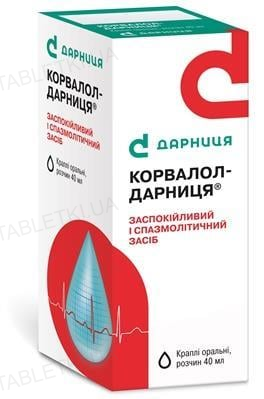
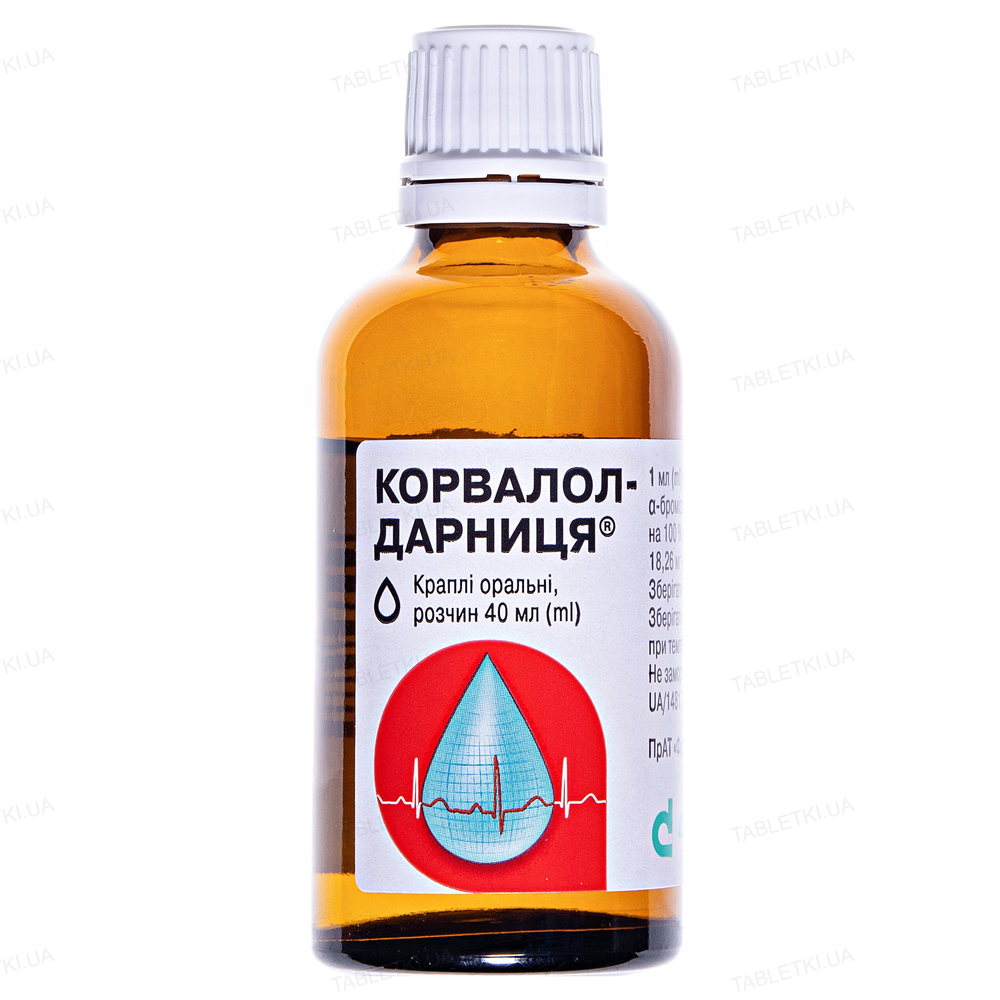
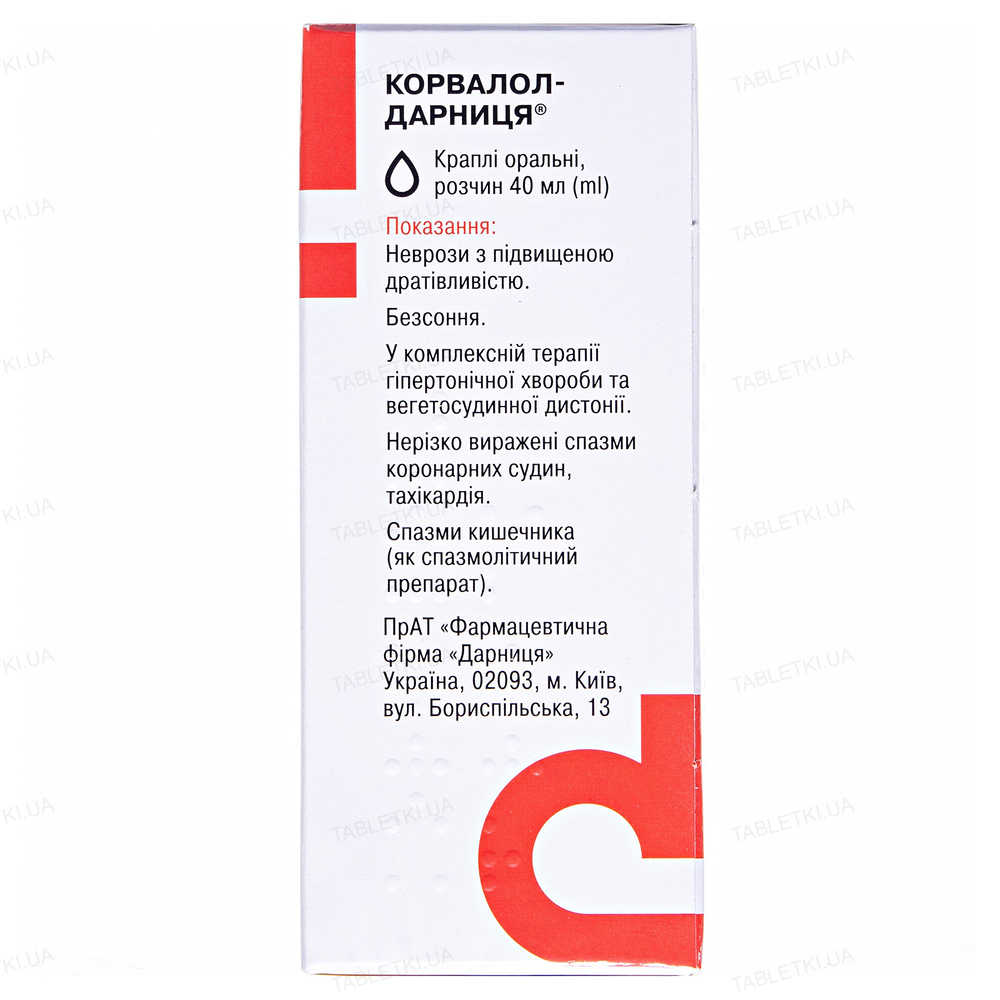
Corvalol-Darnitsa oral drops, 40 ml per bottle.
Composition
Active ingredients: ethyl ester of α-bromizovaleric acid, phenobarbital, peppermint oil;
1 mL of the preparation contains: α-bromovaleric acid ethyl ester, calculated as 100% active ingredient, 20.0 mg; 18.26 mg of phenobarbital, 1.42 mg of peppermint oil;
excipients: 96% ethanol, potassium isovalerate, purified water.
Dosage Form
Oral drops, solution.
Main physical and chemical properties: a colorless, clear liquid with a characteristic aromatic odor.
Pharmacotherapeutic group
Hypnotics and sedatives. Barbiturates in combination with other medicinal products. ATC code N05C B02.
Pharmacological properties
Pharmacodynamics.
Corvalol-Darnitsa® is a sedative and antispasmodic agent whose action is determined by its constituent components.
The ethyl ester of α-bromizovaleric acid exerts a reflex sedative and antispasmodic effect, resulting from the stimulation of receptors primarily in the oral cavity and nasopharynx, a decrease in reflex excitability in the central nervous system, enhanced inhibitory processes in the neurons of the cerebral cortex and subcortical structures of the brain, as well as a reduction in the activity of the central vasomotor centers and a direct local antispasmodic effect on vascular smooth muscle.
Phenobarbital inhibits the excitatory influences of the reticular formation centers in the midbrain and medulla oblongata on the cerebral cortex, thereby reducing the flow of excitatory impulses to the cerebral cortex and subcortical structures. This reduction in excitatory influences produces, depending on the dose, sedative, tranquilizing, or hypnotic effects. Corvalol-Darnitsa® reduces excitatory effects on vasomotor centers, coronary, and peripheral blood vessels, lowering overall blood pressure and relieving and preventing vascular spasms, particularly in the heart.
Peppermint oil contains a large amount of essential oils, including approximately 50% menthol and 4–9% menthol esters. These compounds stimulate the “cold” receptors in the oral cavity and reflexively dilate primarily the blood vessels of the heart and brain, relieving spasms of smooth muscle and exerting a calming and mild cholagogue effect. Peppermint oil has antiseptic and antispasmodic effects and helps relieve flatulence. By stimulating receptors in the mucous membranes of the stomach and intestines, it enhances intestinal peristalsis.
Pharmacokinetics.
When taken orally, absorption begins as early as the sublingual region, and the bioavailability of the components is high (approximately 60–80%). The effect develops particularly quickly (within 5–10 minutes) when held in the mouth (sublingual absorption) or taken on a sugar cube. The effect begins within 15–45 minutes and lasts for 3–6 hours. In individuals who have previously taken barbiturate-based medications, the duration of action is shortened due to accelerated metabolism of phenobarbital in the liver, where barbiturates induce enzymes. In the elderly and in patients with liver cirrhosis, the metabolism of Korvalol-Darnitsa® is reduced; therefore, their half-life is prolonged, requiring a reduced dose and longer intervals between doses.
Indications
- Neuroses with increased irritability.
- Insomnia.
- As part of complex therapy for hypertension and vegetative-vascular dystonia.
- Mild coronary vasospasm and tachycardia.
- Intestinal spasms (as an antispasmodic medication).
Contraindications
- Hypersensitivity to the drug’s components or to bromine.
- Severe liver and/or kidney dysfunction.
- Acute hepatic porphyria.
- Severe heart failure.
- Medications containing phenobarbital are contraindicated in cases of severe hypotension, acute myocardial infarction, diabetes mellitus, depression and depressive disorders with a patient’s predisposition to suicidal behavior, myasthenia gravis, alcoholism, drug and medication dependence (including a history thereof), respiratory diseases with shortness of breath, and obstructive syndrome.
- Pregnancy and breastfeeding.
- Children under 18 years of age.
Interactions with other medications and other types of interactions
Concomitant use with drugs that depress the central nervous system (neuroleptics and tranquilizers) enhances the sedative and hypnotic effects of Corvalol-Darnitsa®, which may be accompanied by respiratory depression; when used with central nervous system stimulants, it weakens the effect of each of its components.
The drug’s effect is enhanced when used with valproic acid or alcohol, which may increase its toxicity.
Since phenobarbital induces liver enzymes, its concomitant use with certain medications metabolized by liver enzymes (including indirect anticoagulants, coumarin derivatives, antibiotics, sulfonamides, griseofulvin, glucocorticoids, oral contraceptives, cardiac glycosides, antimicrobials, antivirals, antifungals (azole group), antiepileptic, anticonvulsant, psychotropic, oral hypoglycemic, hormonal, immunosuppressive, cytostatic, antiarrhythmic, and antihypertensive drugs), due to a reduction in their efficacy resulting from a higher metabolic rate.
Phenobarbital reduces the effects of acetaminophen, indirect anticoagulants, metronidazole, tricyclic antidepressants, salicylates, and cardiac glycosides (digoxin). Phenobarbital enhances the effects of analgesics, anesthetics, anesthetic agents, neuroleptics, tranquilizers, and hypnotics. It may affect the blood levels of phenytoin, as well as carbamazepine and clonazepam.
It is not recommended to use Corvalol-Darnitsa® (due to its phenobarbital content) with lamotrigine, thyroid hormones, doxycycline, or chloramphenicol, as this may weaken their effects.
MAO inhibitors prolong the effect of phenobarbital.
Rifampicin may reduce the effect of phenobarbital. When used with gold-containing drugs, the risk of kidney damage increases. With prolonged concomitant use with nonsteroidal anti-inflammatory drugs, there is a risk of gastric ulcers and bleeding. Concomitant use of phenobarbital-containing medications with zidovudine increases the toxicity of both drugs.
Corvalol-Darnitsa® increases the toxicity of methotrexate.
Special Considerations for Use
During treatment, it is not recommended to engage in activities that require increased attention, rapid mental, or motor responses.
While taking this medication, avoid consuming alcoholic beverages due to the potential increase in its toxicity.
The presence of phenobarbital in the drug may cause the development of Stevens-Johnson and Lyell’s syndromes, most often during the first weeks of treatment.
Patients should be warned about the signs and symptoms and should be closely monitored for skin reactions. If symptoms of Stevens-Johnson syndrome or toxic epidermal necrolysis (e.g., progressive skin rashes, often with blisters, and mucosal lesions) are observed, treatment should be discontinued.
The best outcomes in the treatment of Stevens-Johnson syndrome or toxic epidermal necrolysis have been observed with early diagnosis and immediate discontinuation of any medication that may have caused these symptoms.
If a patient develops Stevens-Johnson syndrome or toxic epidermal necrolysis while taking Corvalol-Darnitsa®, do not continue to administer the medication to these patients.
Long-term use of this medication is not recommended due to the risk of drug dependence, possible accumulation of bromine in the body, and the development of bromine poisoning.
If chest pain persists after taking the medication, consult a doctor to rule out acute coronary syndrome. Use with caution in cases of severe hypotension, hyperkinesis, hyperthyroidism, adrenal insufficiency, decompensated heart failure, acute and chronic pain syndromes, and acute drug intoxication.
Important information about excipients.
This medication contains 56% v/v ethanol (alcohol).
The minimum dose of the medication (15 drops) contains 254 mg of ethanol, which is equivalent to 6.4 mL of beer or 2.7 mL of wine. Harmful to patients with alcoholism. Caution is advised when administering this medication to patients with liver disease or epilepsy.
This medication contains potassium compounds. Caution is advised when administering to patients with impaired renal function or those on a potassium-restricted diet.
Use during pregnancy or breastfeeding.
Do not use during pregnancy or while breastfeeding.
Effect on reaction time when operating motor vehicles or other machinery.
Corvalol-Darnitsa® contains phenobarbital and ethanol, which may cause impaired coordination, slowed psychomotor reactions, drowsiness, and dizziness during treatment. Therefore, it is not recommended to engage in activities requiring increased attention, including driving a vehicle or operating other machinery.
Directions for Use and Dosage
Take Corvalol-Darnitsa® orally, regardless of meals, 2–3 times a day, 15–30 drops with water or on a sugar cube. If necessary (in cases of severe tachycardia and coronary vasospasm), a single dose may be increased to 40–50 drops.
The duration of treatment is determined by the physician based on clinical response and tolerability.
Children.
There is no experience with the use of this medication in children; therefore, it should not be used in pediatric practice.
Overdose
Overdose is possible with frequent or prolonged use of the drug, due to the accumulation of its components. Prolonged and continuous use may lead to dependence, withdrawal syndrome, and psychomotor agitation.
Symptoms.
Acute (mild to moderate) barbiturate poisoning: dizziness, fatigue, and even deep sleep from which the patient is very difficult to awaken.
Hypersensitivity reactions may occur: angioedema, hives, itching, rash.
Acute severe poisoning: respiratory depression, up to respiratory arrest; central nervous system depression, up to coma; hypoxia, shallow breathing (initially rapid, then slow), rapid heartbeat, cardiovascular depression, including arrhythmias; decreased blood pressure, up to a collapse-like state, bradycardia, slow pulse, weakening or loss of reflexes, nystagmus, headache, nausea, weakness, decreased body temperature, and reduced urine output.
Long-term use of medications containing bromine can lead to bromine poisoning, which is characterized by the following symptoms: confusion, ataxia, apathy, depressed mood, conjunctivitis, a cold, acne, or purpura.
If left untreated, poisoning may be fatal as a result of circulatory failure, respiratory paralysis, or pulmonary edema.
Treatment.
Cases of acute poisoning should be treated in the same manner as poisoning with other hypnotics and barbiturates, depending on the severity of the symptoms. The patient should be transferred to the intensive care unit. Respiration and circulation must be stabilized and normalized. Respiratory failure is managed with artificial ventilation, and shock is treated with infusions of plasma and plasma substitutes. If a significant amount of time has passed since ingestion, gastric lavage is necessary (10 g of activated charcoal powder and sodium sulfate are administered into the stomach). To rapidly eliminate the barbiturate from the body, forced diuresis with alkalis, as well as hemodialysis and/or hemoperfusion, may be performed.
If hypersensitivity reactions occur, prescribe desensitizing medications.
Treatment of bromine poisoning: The elimination of bromine ions from the body can be accelerated by administering a significant amount of a table salt solution along with diuretics.
Side Effects
Corvalol-Darnitsa® is generally well tolerated. In rare cases, the following side effects may occur:
Ocular side effects: conjunctivitis, tearing;
Respiratory system, chest, and mediastinum: difficulty breathing;
gastrointestinal system: constipation, a feeling of heaviness in the epigastric region; with prolonged use—liver dysfunction, nausea, vomiting;
nervous system: asthenia, weakness, ataxia, impaired coordination, nystagmus, hallucinations, paradoxical excitement, fatigue, slowed reactions, headache, cognitive impairment, confusion, drowsiness, insomnia (in elderly patients), mild dizziness, decreased concentration;
cardiovascular system: bradycardia, hypotension;
blood and lymphatic system: anemia, megaloblastic anemia, thrombocytopenia, agranulocytosis;
Immune system: hypersensitivity reactions, including angioedema, facial swelling, rhinitis;
skin and subcutaneous tissue disorders: allergic reactions, including skin rash, itching. Serious skin adverse reactions reported with phenobarbital use: urticaria, Stevens-Johnson syndrome, toxic epidermal necrolysis (Lyell’s syndrome), acne, purpura;
Musculoskeletal and connective tissue disorders: with long-term use of phenobarbital-containing medications, there is a risk of impaired osteogenesis. There have been reports of decreased bone mineral density, osteopenia, osteoporosis, and fractures in patients receiving long-term phenobarbital therapy. The mechanism by which phenobarbital affects bone metabolism is unknown.
Prolonged use may lead to bromine poisoning. Symptoms: central nervous system depression, depression, ataxia, apathy, rhinitis, conjunctivitis, acne or purpura, lacrimation, and confusion.
These symptoms resolve upon dose reduction or discontinuation of the drug.
Reporting Suspected Adverse Reactions.
Reporting suspected adverse reactions after a drug’s approval is an important procedure. It allows for continued monitoring of the “benefit-risk” ratio for the drug in question. Healthcare professionals should report any suspected adverse reactions through the national reporting system.
Shelf life
2 years.
Storage Conditions
Store in the original packaging at a temperature not exceeding 25 °C. Do not freeze. Keep out of the reach of children.
Packaging
25 mL or 40 mL per vial; 1 vial per pack.
Manufacturer
PJSC “Darnitsa Pharmaceutical Company.”
Address
13 Boryspilskaya St., Kyiv, 02093, Ukraine.







