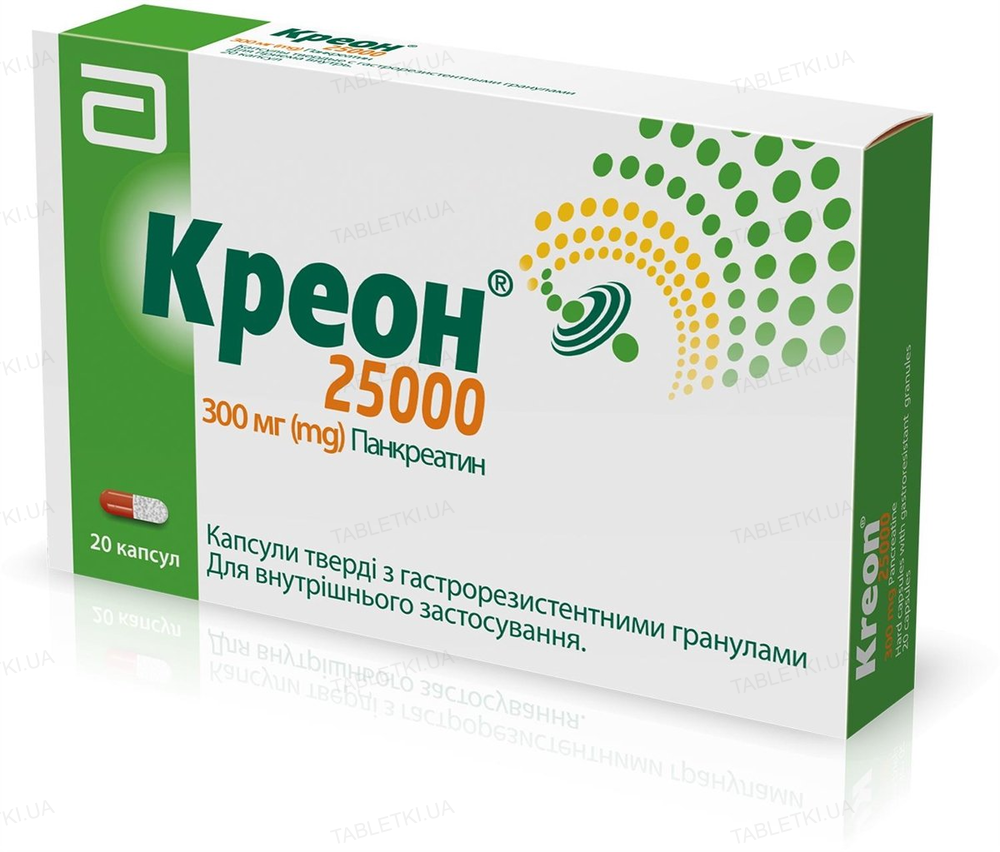
Creon 25,000 hard capsules with gastro-resistant coating, 300 mg each, No. 20 (10 x 2)
Ingredients
Active ingredient: pancreatin;
CREON® 10,000: 1 capsule contains 150 mg of pancreatin in gastro-resistant granules (Creon Minimicrospheres®), which have the following enzymatic activity: lipase 10,000 units EF, amylase 8,000 units EF, protease 600 units EF;
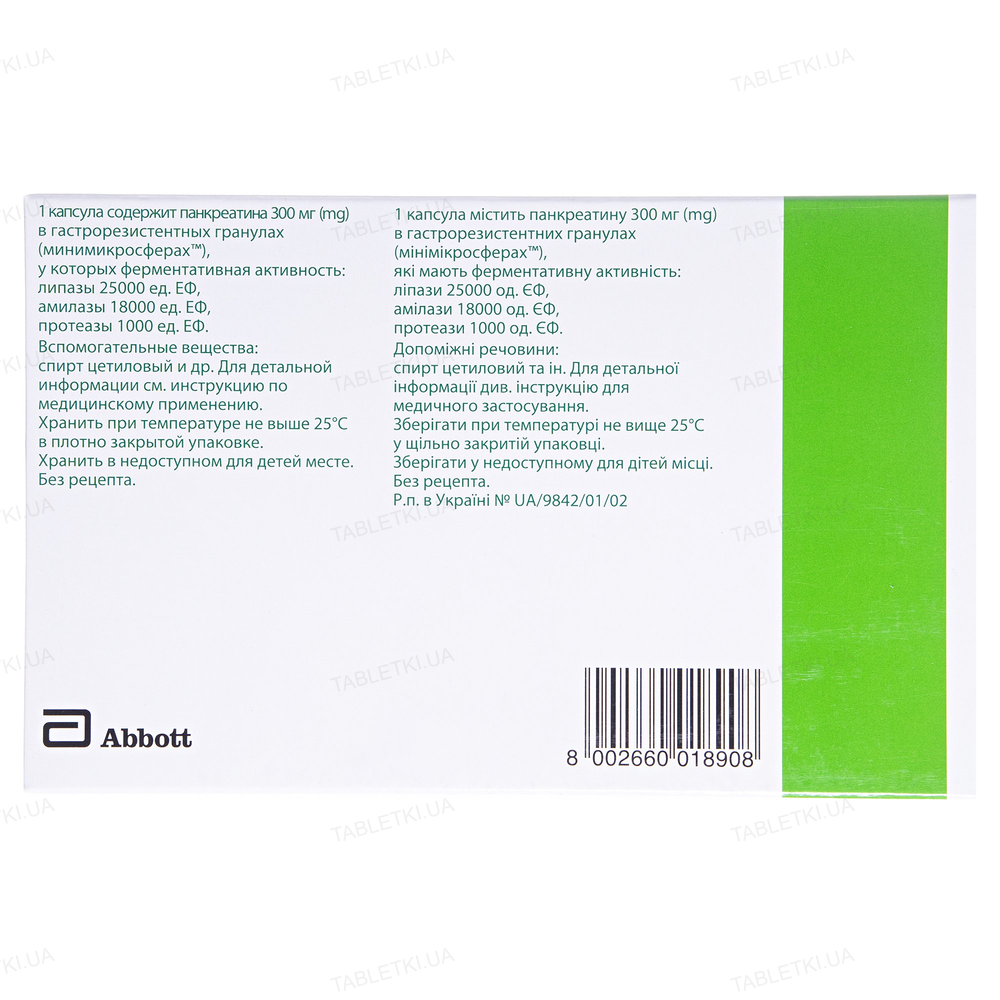
CREON® 25,000: 1 capsule contains 300 mg of pancreatin in gastro-resistant granules (CREON Minimicrospheres®), which have the following enzymatic activity: lipase 25,000 units EF, amylase 18,000 units EF, protease 1,000 units EF;
CREON® 40,000: 1 capsule contains 400 mg of pancreatin in gastro-resistant granules (CREON Minimicrospheres®), which have the following enzymatic activity: lipase 40,000 units EF, amylase 25,000 units EF, protease 1,600 units EF;
excipients: polyethylene glycol 4000, hypromellose phthalate, cetyl alcohol, triethyl citrate, dimethicone 1000, hard capsule: gelatin, iron oxide (E 172), titanium dioxide (E 171), sodium lauryl sulfate.
Dosage Form
Hard capsules containing gastro-resistant granules.
Main physical and chemical properties:
CREON® 10,000—two-colored hard gelatin capsules, size 2, with a brown opaque cap and a colorless transparent body, filled with brownish granules (Creon Minimicrospheres®);
CREON® 25,000—two-color hard gelatin capsules, size 0, with an orange opaque cap and a colorless transparent body, filled with brownish granules (Creon Minimicrospheres®);
CREON® 40,000 — two-color size 00 hard gelatin capsules with a brown opaque cap and a colorless transparent body, filled with brownish granules (Creon Minimicrospheres®).
Pharmacotherapeutic group
Digestive aids, including enzymes. Polyenzyme preparations. ATC code A09A A02.
Pharmacological Properties
Pharmacodynamics.
CREON® contains porcine pancreatin in the form of granules coated with an enteric (acid-resistant) coating, enclosed in gelatin capsules. The capsules dissolve rapidly in the stomach, releasing a large number of granules in a multi-dose manner, which ensures thorough mixing with the stomach contents, transport from the stomach along with its contents, and, after release, good distribution of the enzymes throughout the intestinal contents. When the granules reach the small intestine, the coating dissolves rapidly (at pH > 5.5), releasing enzymes with lipolytic, amylolytic, and proteolytic activity, which ensures the breakdown of fats, carbohydrates, and proteins. The products of pancreatic digestion are then absorbed either immediately or after further hydrolysis by intestinal enzymes.
Clinical Efficacy.
A total of 30 studies were conducted to evaluate the efficacy of CREON® in patients with exocrine pancreatic insufficiency (EPI). Ten of these were placebo-controlled. These studies included patients with cystic fibrosis, chronic pancreatitis, or postoperative conditions.
In all randomized, placebo-controlled efficacy studies, the predefined primary objective was to demonstrate the superior efficacy of CREON® compared to placebo based on the primary efficacy endpoint—the fat absorption coefficient (FAC).
The fat absorption coefficient determines the percentage of fat absorbed by the body, taking into account fat intake and fat excretion in the stool. In placebo-controlled studies involving patients with SIBO, the mean FAI (%) was higher in patients taking CREON® (83.0%) compared with the placebo group (62.6%). Across all studies, regardless of their design, the mean FFA (%) at the end of the treatment period with CREON® was similar to the mean FFA values for CREON® observed in placebo-controlled studies.
Treatment with CREON® significantly reduces symptoms caused by impaired exocrine pancreatic function, including stool consistency, abdominal pain, bloating, and stool frequency, regardless of the underlying disease.
Children.
The efficacy of CREON® was demonstrated in 288 children ranging from newborns to adolescents with cystic fibrosis. In all studies, the mean FVG at the end of the treatment period with CREON® exceeded 80% in children of all age groups.
Preclinical safety data.
Data from preclinical studies do not indicate any acute, subchronic, or chronic toxicity. No studies on genotoxicity, carcinogenicity, or reproductive toxicity have been conducted.
Pharmacokinetics.
Animal studies showed no evidence of absorption of the enzymes in their unchanged form; therefore, no classical pharmacokinetic studies were conducted. Pancreatic enzyme preparations do not require absorption to exert their effect. On the contrary, their full therapeutic effect is manifested within the lumen of the gastrointestinal tract. Furthermore, as proteins, they undergo proteolytic digestion as they pass through the gastrointestinal tract before being absorbed in the form of peptides and amino acids.
Indications
Treatment of exocrine pancreatic insufficiency in adults and children caused by various diseases and conditions, including but not limited to the following:
- cystic fibrosis;
- chronic pancreatitis;
- pancreatectomy;
- gastrectomy;
- surgery involving the creation of a gastrointestinal anastomosis (e.g., Billroth II gastroenterostomy);
- Schwachman–Diamond syndrome;
- the period following an acute pancreatitis attack and the resumption of enteral or oral feeding.
Contraindications
Hypersensitivity to the active ingredient or to any other component of the drug.
Drug Interactions and Other Interactions
No interaction studies have been conducted.
Special Considerations for Use
In patients with cystic fibrosis who received high doses of pancreatin preparations, narrowing of the ileocecal region and the large intestine (fibrosing colopathy) has been observed. As a precaution, if unusual abdominal symptoms appear or the nature of abdominal symptoms changes, it is recommended to seek medical advice to rule out the possibility of fibrosing colopathy, especially if the patient is taking more than 10,000 units EF lipase units/kg/day.
Use during pregnancy or breastfeeding.
Since there are no data from clinical studies on the effect of pancreatic enzymes on the course of pregnancy, the drug should be prescribed with caution to pregnant women. Animal studies have shown no evidence of absorption of pancreatic enzymes. Therefore, no toxic effects on reproductive function or fetal development are expected.
Since animal studies indicate no systemic exposure to pancreatic enzymes in lactating women, no effect on a breastfed infant is anticipated. Therefore, pancreatic enzymes may be used by women who are breastfeeding.
If necessary, pregnant or breastfeeding women may take CREON® in doses sufficient to ensure adequate nutritional status.
Effect on reaction time when driving or operating machinery.
CREON® has no or negligible effect on the ability to drive or operate machinery.
Dosage and Administration
The dosage is based on the patient’s individual needs and depends on the severity of the condition and the composition of the diet.
It is recommended to take the medication during or immediately after a meal.
Capsules and granules should be swallowed whole, without breaking or chewing, and taken with a sufficient amount of liquid during or after a meal, including a light snack. If a patient is unable to swallow the capsule whole (e.g., children and elderly patients), it may be carefully opened and the granules added to soft food with an acidic environment (pH < 5.5) that does not require chewing, or to a liquid with an acidic environment (pH < 5.5). This could be applesauce, yogurt, or fruit juice with a pH < 5.5, such as apple, orange, or pineapple juice. This mixture should not be stored. Breaking up or chewing the granules, or adding them to food or liquids with a pH > 5.5, may destroy their protective enteric coating. This can lead to premature release of enzymes in the mouth, as well as reduced efficacy of the medication and irritation of the mucous membranes.
Care must be taken to ensure that no residue of the medication remains in the mouth.
During treatment with CREON® 10,000, CREON® 25,000, or CREON® 40,000, it is very important to consume an adequate amount of fluid, especially during periods of increased fluid loss. Fluid deficiency may worsen constipation. Any mixture of granules with food or liquids should be taken immediately and not stored.
Dosage for Cystic Fibrosis.
Based on the recommendations of the Cystic Fibrosis (CF) Consensus Conference, a case-control study by the U.S. Cystic Fibrosis Association and a case-control study in the United Kingdom, the following general dosage recommendations for pancreatic enzyme replacement therapy can be proposed:
- the initial dose for children under 4 years of age is 1,000 units of lipase activity per kilogram of body weight with each meal, and for children 4 years of age and older, 500 units EF lipase per kilogram of body weight with each meal;
- the dose should be adjusted individually, depending on the severity of the disease, control of steatorrhea, and maintenance of adequate nutritional status;
- the maintenance dose for most patients should not exceed 10,000 lipase units per kilogram of body weight per day or 4,000 lipase units per gram of fat consumed.
Dosage for other types of exocrine pancreatic insufficiency:
- The dose should be individualized based on the severity of digestive impairment and the fat content of the meal. Doses ranging from 25,000 to 80,000 EF units of lipase are required with a full meal, and half the individualized dose is required with a light snack.
Children.
CREON® may be used in children.
Overdose
Cases of hyperuricosuria and hyperuricemia have been reported in association with the use of extremely high doses of pancreatin.
Side Effects
In clinical trials, the effects of CREON® were studied in more than 900 patients. The most commonly reported adverse events were gastrointestinal disorders, predominantly mild to moderate in severity.
Adverse reactions observed during clinical trials and their frequencies are presented below.
Gastrointestinal disorders: very common (≥ 1/10) – abdominal pain*; common (≥ 1/100 to <1/10) – nausea, vomiting, constipation, bloating, diarrhea*; frequency unknown – narrowing of the ileocecal junction and the large intestine (fibrosing colopathy).
*Gastrointestinal disorders were primarily related to the underlying disease. Diarrhea and abdominal pain were reported at a frequency similar to or lower than that observed with placebo.
Skin and subcutaneous tissue disorders: uncommon (≥ 1/1,000 to < 1/100) – rash; frequency unknown – pruritus, urticaria.
Immune system disorders: frequency unknown – hypersensitivity (anaphylactic reactions).
Cases of narrowing of the ileocecal region and the colon (fibrosing colopathy) have been reported in patients with cystic fibrosis who were taking high doses of pancreatin preparations (see the “Special Considerations for Use” section).
Allergic reactions, which primarily manifested as skin reactions but were not limited to the skin, have been identified as adverse reactions during postmarketing use. Since reports of these reactions were spontaneous and came from an unknown number of patients, it is not possible to estimate the exact frequency of these reactions.
Children
No specific adverse reactions have been identified in children. The frequency, type, and severity of adverse reactions in children with cystic fibrosis were similar to those in adults.
Shelf life
2 years. Shelf life after first opening: 6 months.
Storage Conditions
Store at a temperature not exceeding 25 °C in a tightly closed container.
Keep out of reach of children.
Packaging
20, 50, or 100 capsules per high-density polyethylene bottle; 1 bottle per cardboard box.
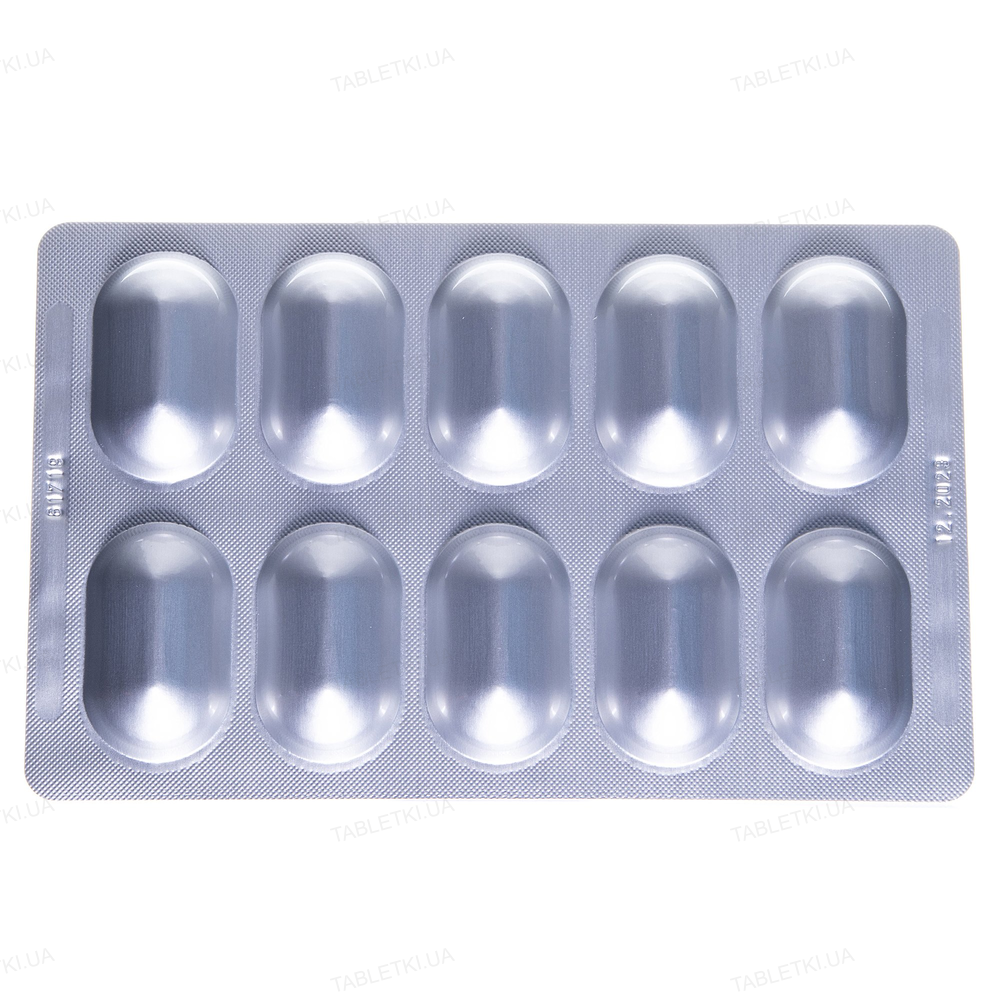
CREON® 25000, CREON® 40000: 10 capsules per blister pack, 2 blister packs per cardboard box.
CREON® 10,000: 10 capsules per blister pack; 1, 2, or 3 blister packs per cardboard box.
Dispensing Category
Over-the-counter.
Manufacturer
Abbott Laboratories GmbH, Germany.
Address
Justus-von-Liebig-Strasse 33, Neustadt, Lower Saxony, 31535, Germany.