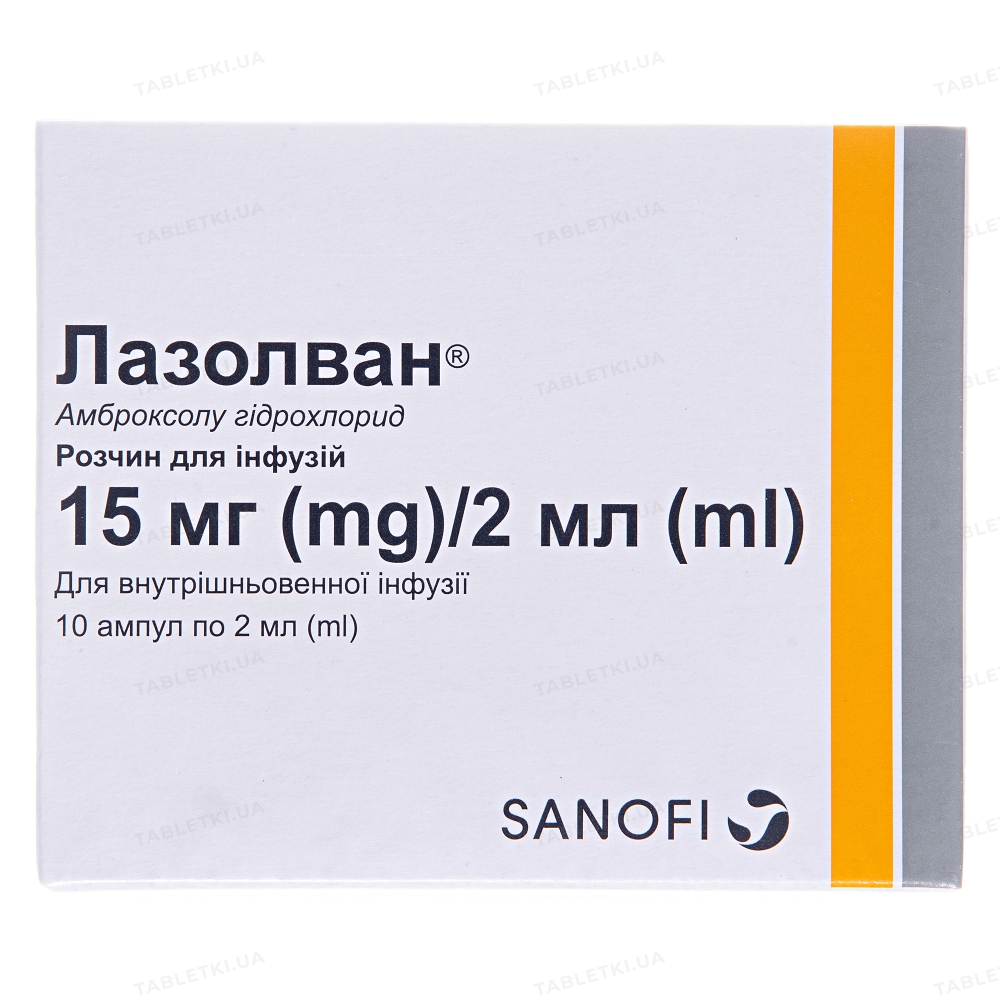
Lasolvan Solution for Infusion, 15 mg/2 mL, 2 mL per ampoule, No. 10
Composition
Active ingredient: ambroxol hydrochloride;
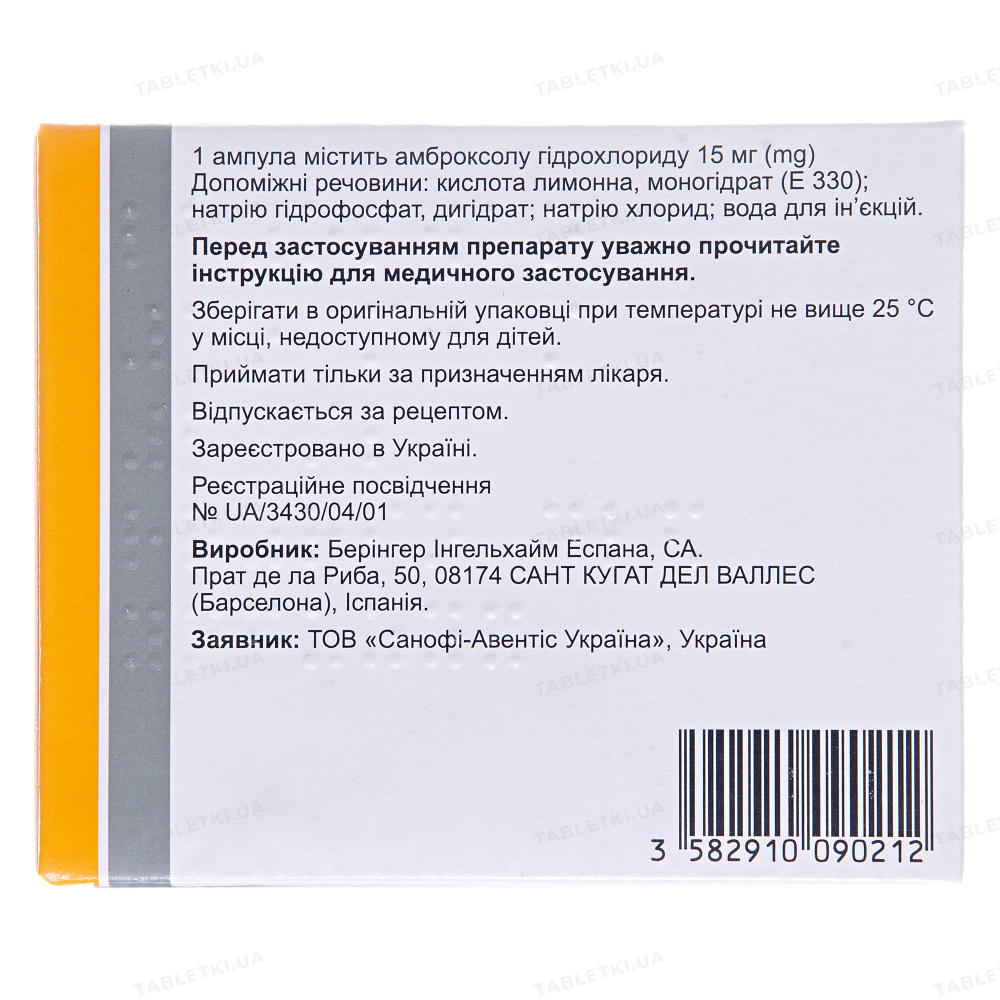
1 ampule contains 15 mg of ambroxol hydrochloride;
Excipients: citric acid monohydrate (E 330); sodium hydrophosphate dihydrate; sodium chloride; water for injection.
Dosage Form
Solution for infusion.
Main physical and chemical properties: a clear, colorless solution, practically free of particles.
Pharmacotherapeutic group
Agents used for cough and the common cold. Mucolytics. ATC code R05C B06.
Pharmacological properties
Pharmacodynamics.
Ambroxol hydrochloride, a substituted benzylamine, is a metabolite of bromhexine. It differs from bromhexine in the absence of a methyl group and the presence of a hydroxyl group in the para-trans position of the cyclohexyl ring.
Ambroxol exerts secretolytic and secretomotor effects in the bronchial tract.
In preclinical studies, it increased the proportion of the serous component of bronchial secretions. Ambroxol promotes mucus clearance by reducing viscosity and activating the ciliated epithelium.
Ambroxol activates the surfactant system by directly acting on type II pneumocytes in the alveoli and Clara cells in the small airways. It enhances the formation and clearance of surfactant in the alveoli and bronchial tree of both the fetus and the adult. These effects have been demonstrated in various biological species in cell cultures and in vivo.
In addition, various preclinical studies have demonstrated the antioxidant effects of ambroxol.
Pharmacokinetics.
When administered intravenously, the bioavailability of the drug is 100%. Following intravenous administration, the kinetics of ambroxol within the therapeutic dose range of 15–90 mg exhibit a linear dose-response relationship, and even with an intravenous dose of 1.0 g, no significant deviations from linearity are observed.
Distribution
Approximately 85% (80–90%) of the drug binds to plasma proteins. In lung tissue, ambroxol reaches a higher concentration than in plasma following parenteral administration. Ambroxol can penetrate the cerebrospinal fluid, cross the placental barrier, and is excreted into breast milk.
Biotransformation
Metabolites capable of being excreted by the kidneys (e.g., dibromantranilic acid, glucuronide) are formed in the liver.
Excretion
Nearly 90% of the drug is excreted by the kidneys in the form of metabolites formed in the liver. Less than 10% of ambroxol is excreted by the kidneys unchanged. Due to the high degree of protein binding, large volume of distribution, and slow redistribution of the drug from tissues into the blood during dialysis or forced diuresis, significant excretion of ambroxol is unlikely.
The terminal half-life in blood plasma is 7–12 hours. The plasma half-life of ambroxol and its metabolites is approximately 22 hours.
Patients with Impaired Liver or Kidney Function
In patients with severe liver dysfunction, the clearance of ambroxol is reduced by 20–40%. In patients with severe renal impairment, the accumulation of ambroxol metabolites must be taken into account.
Children
In newborns who received repeated intravenous doses of ambroxol, the half-life approximately doubled, indicating reduced clearance.
Indications
To enhance pulmonary surfactant production in premature infants and newborns with respiratory distress syndrome.
Contraindications
Known hypersensitivity to ambroxol hydrochloride or other components of the drug.
Drug Interactions and Other Interactions
To date, no clinically significant interactions between this medication and other drugs have been identified.
Concomitant use of Lazolvan® and cough suppressants may lead to excessive mucus accumulation due to suppression of the cough reflex; such a combination is permissible only after a physician has carefully assessed the balance between the expected benefits and the potential risks of use.
Laboratory Tests
Concomitant use of ambroxol and antibiotics (amoxicillin, cefuroxime, doxycycline, and erythromycin) leads to increased concentrations of antibiotics in bronchopulmonary secretions and sputum.
Special Considerations for Use
There have been reports of severe skin reactions, such as erythema multiforme, Stevens-Johnson syndrome/toxic epidermal necrolysis, and acute generalized exanthematous pustulosis associated with the use of ambroxol hydrochloride. If symptoms of a worsening skin rash are present (sometimes associated with the appearance of blisters or mucosal lesions), treatment with ambroxol hydrochloride should be discontinued immediately and medical attention sought.
If intravenous administration is performed too rapidly, headaches, increased fatigue, exhaustion, and a feeling of heaviness in the legs may occur in very rare cases.
Since ambroxol may increase mucus secretion, Lazolvan®, solution for infusion, should be used with caution in cases of impaired bronchial motility and increased mucus secretion (for example, in a rare condition such as primary ciliary dyskinesia).
Lasolvan®, solution for infusion, contains less than 1 mmol (23 mg) of sodium per ampule, i.e., it is essentially sodium-free.
Lasolvan®, solution for infusion, should be used with caution in patients with impaired renal function or severe liver disease. When using ambroxol, as with any active ingredient metabolized by the liver, and is subsequently excreted by the kidneys, accumulation of metabolites formed in the liver may be expected in patients with severe renal insufficiency.
Use during pregnancy or breastfeeding.
No data are available due to the lack of indications.
Effect on reaction time when operating motor vehicles or machinery.
Not applicable, as the drug is used in premature infants and newborns.
Dosage and Administration
For intravenous infusion.
Dosage
30 mg per 1 kg of body weight per day, divided into 4 single doses.
Dosage in Renal and/or Hepatic Impairment
In cases of severe renal insufficiency or severe hepatic insufficiency, the maintenance dose should be reduced accordingly, or the interval between doses should be increased.
The solution should be administered using an infusion pump via a short infusion lasting at least 5 minutes.
Duration of treatment: 5 days.
The contents of 1–6 ampules should be diluted in 250–500 mL of saline or Ringer’s solution. The solution, diluted with saline or Ringer’s solution, is physicochemically stable for 24 hours at a temperature of 15–25°C. From a microbiological standpoint, if opening the ampoules and diluting the solution poses a risk of microbiological contamination, the solution should be used immediately after preparation. If this is not done, the user is responsible for the storage conditions and duration. If none of these solvents are available, a 5% glucose solution may be used as an alternative. When using a 5% glucose solution, the contents of the ampoules should be diluted immediately before use. If the solution is not used immediately after preparation, it must be discarded.
Children
Administer to premature infants and newborns as indicated.
Overdose
There are currently no reports of specific symptoms of overdose. Symptoms observed in cases of accidental overdose or medical error are similar to the known adverse reactions when used at recommended doses and may require symptomatic treatment.
Side Effects
The following classification was used to assess the frequency of adverse events:
| very common | ≥1/10; |
| common | ≥ 1/100 – < 1/10; |
| uncommon | ≥ 1/1,000 – < 1/100; |
| rare | ≥ 1/10,000 – < 1/1,000; |
| very rare | < 1/10,000; |
| unknown | cannot be estimated based on available data. |
Immune system disorders:
rare – hypersensitivity reactions;
unknown – anaphylactic reactions, including anaphylactic shock, angioedema, and pruritus.
Skin and subcutaneous tissue disorders
uncommon – erythema;
rare – rash, urticaria;
unknown – serious skin adverse reactions (including erythema multiforme, Stevens-Johnson syndrome/toxic epidermal necrolysis, and acute generalized exanthematous pustulosis).
Gastrointestinal disorders:
uncommon – dry mouth, constipation, hypersalivation, dry throat;
frequency unknown – nausea, vomiting, diarrhea, dyspepsia, abdominal pain.
Respiratory, thoracic, and mediastinal disorders:
uncommon – rhinorrhea, dyspnea (as a symptom of a hypersensitivity reaction).
Renal and urinary system:
Uncommon – urinary disorders.
General disorders and administration site conditions:
Uncommon – fever and chills, mucosal reactions.
Reporting Suspected Adverse Reactions
Reporting suspected adverse reactions after a drug’s approval is an important procedure. It allows for continued monitoring of the benefit-risk profile of this drug. Healthcare professionals are asked to report all suspected adverse reactions to the State Expert Center of the Ministry of Health of Ukraine.
Shelf life
3 years.
Storage Conditions
Store in the original packaging at a temperature not exceeding 25 °C in a place inaccessible to children.
Incompatibility
Lasolvan®, solution for infusion, should not be mixed with other solutions except for saline solution and Ringer’s solution.
Packaging
2 mL in glass ampoules; 10 ampoules per cardboard box.
Manufacturer
Boehringer Ingelheim España, S.A., Spain/
Boehringer Ingelheim Espana, S.A., Spain.
SANOFI S. R. L., Italy.
Manufacturer’s location and business address.
Prat de la Riba, 50, 08174 SANT CUGAT DEL VALLES (Barcelona), Spain/
Prat de la Riba, 50, 08174 SANT CUGAT DEL VALLES (Barcelona), Spain.
Via Valcanello, 4 – 03012 ANAGNI (FR), Italy/ Via Valcanello, 4 – 03012 ANAGNI (FR), Italy.
Applicant
Opella HealthCare Ukraine LLC, Ukraine.
Applicant’s address.
Ukraine, 01033, Kyiv, 48-50A Zhylianska St.