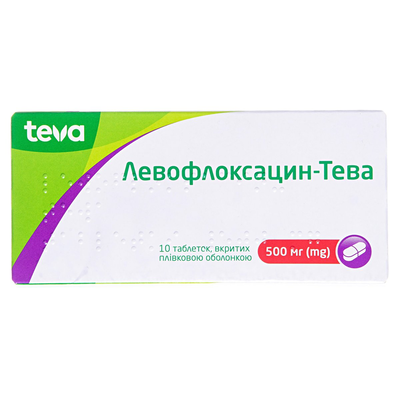
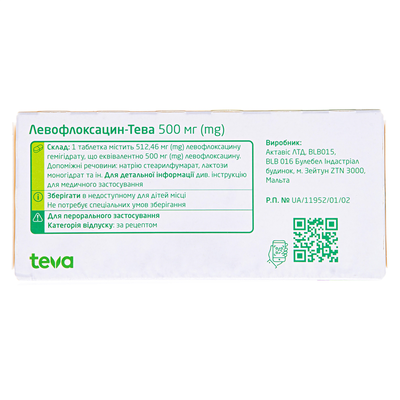
Levofloxacin-Teva tablets, film-coated, 500 mg, No. 10 (5 x 2)
Composition
Active ingredient: levofloxacin;
1 film-coated tablet contains 256.23 mg of levofloxacin hemihydrate, equivalent to 250 mg of levofloxacin, or 512.46 mg of levofloxacin hemihydrate, equivalent to 500 mg of levofloxacin;
excipients:
core: sodium stearyl fumarate, crospovidone, colloidal anhydrous silicon dioxide, copovidone, microcrystalline cellulose;
film coating: lactose monohydrate, hypromellose, titanium dioxide (E 171), triacetin, red iron oxide (E 172), yellow iron oxide (E 172).
Dosage Form
Film-coated tablets.
Main physical and chemical properties: pink, oval, biconvex tablets, measuring 6 × 13 mm or 8 × 16 mm, film-coated, with a score line on one side and on the edges; with “L” engraved on the side without the score line.
Pharmacotherapeutic group
Antibacterial agents of the quinolone group. Fluoroquinolones.
ATC code J01M A12.
Pharmacological Properties
Pharmacodynamics.
Levofloxacin is a synthetic antibacterial agent from the fluoroquinolone group, the S(-) enantiomer of the racemic mixture of the drug ofloxacin.
Mechanism of action
As an antibacterial agent in the fluoroquinolone class, levofloxacin acts on the DNA-DNA gyrase and topoisomerase IV complex.
Pharmacokinetic/Pharmacodynamic Ratio
The degree of bacterial activity of levofloxacin depends on the ratio of the maximum serum concentration (Cmax) or the area under the pharmacokinetic “concentration-time” curve (AUC) and the minimum inhibitory concentration (MIC).
Mechanism of resistance development
Resistance to levofloxacin develops gradually through mutations at the target site in type II topoisomerases, DNA gyrase, and topoisomerase IV. Other mechanisms of resistance, such as penetration barriers (typical of Pseudomonas aeruginosa) and efflux mechanisms, may also affect susceptibility to levofloxacin.
Cross-resistance has been observed between levofloxacin and other fluoroquinolones. Given its mechanism of action, there is generally no cross-resistance between levofloxacin and other classes of antibacterial agents.
Breakpoints
EUCAST (European Committee on Antimicrobial Susceptibility Testing) the MIC cut-off values for levofloxacin, which distinguish susceptible microorganisms from moderately susceptible microorganisms and moderately susceptible microorganisms from resistant microorganisms, are presented in the table below for MIC testing (mg/L).
Table 1
Clinically defined EUCAST MICs for levofloxacin (version 2.0, January 1, 2012)
| Pathogen | Susceptible | Resistant |
| Enterobacteriaceae | ≤ 1 mg/L | > 2 mg/L |
| Pseudomonas spp. | ≤ 1 mg/L | > 2 mg/L |
| Acinetobacter spp. | ≤ 1 mg/L | > 2 mg/L |
| Staphylococcus spp. | ≤ 1 mg/L | > 2 mg/L |
| S. pneumoniae 1 | ≤ 2 mg/L | > 2 mg/L |
| Streptococcus A, B, C, G | ≤ 1 mg/L | > 2 mg/L |
| H. influenzae 2, 3 | ≤ 1 mg/L | > 1 mg/L |
| M. catarrhalis 3 | ≤ 1 mg/L | > 1 mg/L |
| Monitoring points not species-specific 4 | ≤ 1 mg/L | > 2 mg/L |
| 1. Breakpoints for levofloxacin associated with high-dose therapy.
2. A low level of resistance to fluoroquinolones is possible (cyprofloksacin MIC 0.12–0.5 mg/L), but there is no evidence of clinical significance of this resistance in respiratory tract infections caused by Haemophilus influenzae. 3. Strains with MIC values above the breakpoints are very rare or have not yet been reported. Identification and antimicrobial susceptibility testing for any such isolate must be repeated, and if the result is confirmed, the isolate should be sent to a reference laboratory. Until a clinical response is demonstrated for confirmed isolates with MICs above the current resistance breakpoint, they are considered resistant. 4. Breakpoints apply to oral doses of 500 mg × 1 to 500 mg × 2 and intravenous doses of 500 mg × 1 to 500 mg × 2. |
||
The prevalence of resistance for specific species may vary geographically and over time; therefore, local information on resistance is very important, especially when treating severe infections. If necessary, expert advice should be sought when the local prevalence of resistance is such that the appropriateness of using the drug, at least for certain types of infections, is in question.
Typically susceptible species
Aerobic Gram-positive bacteria: Bacillus anthracis, methicillin-susceptible Staphylococcus aureus, Staphylococcus saprophyticus, Streptococci, groups C and G, Streptococcus agalactiae, Streptococcus pneumoniae, Streptococcus pyogenes.
Aerobic Gram-negative bacteria: Eikenella corrodens, Haemophilus influenzae, Haemophilus parainfluenzae, Klebsiella oxytoca, Moraxella catarrhalis, Pasteurella multocida, Proteus vulgaris, Providencia rettgeri.
Anaerobic bacteria: Peptostreptococcus.
Others: Chlamydophila pneumoniae, Chlamydophila psittaci, Chlamydia trachomatis, Legionella pneumophila, Mycoplasma pneumoniae, Mycoplasma hominis, Ureaplasma urealyticum.
Species with possible acquired resistance
Aerobic Gram-positive bacteria: Enterococcus faecalis, methicillin-resistant Staphylococcus aureus (highly likely to exhibit co-resistance to fluoroquinolones, including levofloxacin), coagulase-negative Staphylococcus spp.
Aerobic Gram-negative bacteria: Acinetobacter baumannii, Citrobacter freundii, Enterobacter aerogenes, Enterobacter cloacae, Escherichia coli, Klebsiella pneumoniae, Morganella morganii, Proteus mirabilis, Providencia stuartii, Pseudomonas aeruginosa, Serratia marcescens.
Anaerobic bacteria: Bacteroides fragilis.
Naturally resistant strains
Aerobic Gram-positive bacteria: Enterococcus faecium.
Pharmacokinetics.
Absorption. When taken orally, levofloxacin is rapidly and almost completely absorbed; Cmax in plasma is reached 1–2 hours after administration. Absolute bioavailability is 99–100%. Food intake has a slight effect on its absorption. Steady-state levels are achieved within 48 hours after administration of a 500-mg dose 1–2 times daily.
Distribution. Approximately 30–40% of levofloxacin is bound to serum proteins. The mean volume of distribution of levofloxacin is approximately 100 L following a single and repeated 500-mg dose, indicating extensive distribution throughout body tissues.
Penetration into body tissues and fluids. Levofloxacin has been shown to penetrate the bronchial mucosa, epithelial lining fluid, alveolar macrophages, lung tissue, skin (blister fluid), prostate tissue, and urine. However, the penetration of levofloxacin into cerebrospinal fluid is poor.
Metabolism. Levofloxacin is metabolized to a very limited extent; its metabolites are dimethyl-levofloxacin and levofloxacin N-oxide. These metabolites account for less than 5% of the drug excreted in the urine. The levofloxacin molecule is stereochemically stable and does not undergo chiral inversion.
Elimination. Following oral and intravenous administration, levofloxacin is eliminated from plasma relatively slowly (the half-life is 6–8 hours). Excretion occurs primarily via the kidneys (more than 85% of the administered dose). The mean apparent total clearance of levofloxacin after a single 500-mg dose is 175 ± 29.2 mL/min. There is no significant difference in the pharmacokinetics of levofloxacin following intravenous and oral administration, indicating that these routes are interchangeable.
Linearity. Levofloxacin exhibits linear pharmacokinetics in the range of 50 to 1000 mg.
Patients with renal impairment. Renal impairment affects the pharmacokinetics of levofloxacin. As renal function decreases, renal excretion and creatinine clearance decrease, and the half-life increases (see Table 2).
Table 2
Pharmacokinetics in Renal Impairment
following a single oral dose of 500 mg
| Clcr [mL/min] | < 20 | 20–49 | 50–80 |
| ClR [mL/min] | 13 | 26 | 57 |
| t1/2 [hours] | 35 | 27 | 9 |
Elderly patients. There are no significant differences in the pharmacokinetics of levofloxacin between younger and elderly patients, except for differences related to creatinine clearance.
Gender. A separate analysis of female and male patients showed minor differences in the pharmacokinetics of levofloxacin based on gender. There is no evidence that these differences are clinically significant.
Indications
Levofloxacin-Teva is indicated for the treatment in adults of the following infections caused by microorganisms susceptible to levofloxacin:
- acute bacterial sinusitis;
- exacerbations of chronic obstructive pulmonary disease, including bronchitis;
- community-acquired pneumonia;
- complicated skin and soft tissue infections;
- uncomplicated cystitis.
When treating the above-mentioned infections, this medication should be used only when other antibacterial agents, which are usually prescribed for the initial treatment of these infections, cannot be used.
- Complicated urinary tract infections and acute pyelonephritis;
- chronic bacterial prostatitis;
- pulmonary anthrax: post-exposure prophylaxis and treatment.
Levofloxacin-Teva in this dosage form (film-coated tablets) may be used to complete a course of therapy in patients who have shown improvement during initial treatment with levofloxacin for infusion.
Official recommendations regarding the proper use of antibacterial agents must be followed.
Contraindications
Hypersensitivity to levofloxacin, other fluoroquinolones, or any component of the drug.
Epilepsy.
History of tendon damage associated with the use of fluoroquinolones.
Pediatric patients.
Pregnancy and breastfeeding.
Drug Interactions and Other Interactions
Effects of other medications on levofloxacin
Iron salts, zinc salts, antacids containing magnesium and aluminum, didanosine
The absorption of levofloxacin is significantly reduced when iron salts or magnesium- or aluminum-containing antacids, or didanosine (only for formulations containing aluminum or magnesium buffering agents) when taken concomitantly with levofloxacin tablets. Concomitant use of fluoroquinolones with multivitamin preparations containing zinc leads to a decrease in their absorption when taken orally. It is not recommended to use medications containing divalent or trivalent cations, such as iron salts, zinc salts, antacids containing magnesium or aluminum, or didanosine (this applies only to didanosine formulations containing aluminum or magnesium buffering agents) within 2 hours before or after taking levofloxacin tablets (see the “Dosage and Administration” section).
Calcium salts have a minimal effect on the absorption of levofloxacin when taken orally.
Sucralfate
The bioavailability of levofloxacin tablets is significantly reduced when the drug is administered concomitantly with sucralfate. If a patient needs to take both sucralfate and levofloxacin, it is best to take sucralfate 2 hours after taking levofloxacin tablets.
Theophylline, fenbufen, or similar nonsteroidal anti-inflammatory drugs (NSAIDs)
No pharmacokinetic interaction between levofloxacin and theophylline has been observed. However, a significant reduction in the seizure threshold is possible when quinolones are used concomitantly with theophylline, NSAIDs, and other agents that lower the seizure threshold. The concentration of levofloxacin when administered with fenbufen was approximately 13% higher than when levofloxacin was administered alone.
Probenecid and cimetidine
Probenecid and cimetidine have a statistically significant effect on the elimination of levofloxacin. Renal clearance of levofloxacin is reduced by 24% in the presence of cimetidine and by 34% in the presence of probenecid. This is because both drugs are capable of inhibiting the tubular secretion of levofloxacin. However, at the doses tested in the study, it is unlikely that statistically significant kinetic differences will have clinical significance. Levofloxacin should be administered with caution when co-administered with drugs that affect tubular secretion, such as probenecid and cimetidine, especially in patients with renal impairment.
Other Medications
It is known that the pharmacokinetics of levofloxacin were not clinically significantly affected when levofloxacin was administered concomitantly with calcium carbonate, digoxin, glibenclamide, or ranitidine.
Effect of Levofloxacin on Other Medications
Cyclosporine
The half-life of cyclosporine is increased by 33% when administered concomitantly with levofloxacin.
Vitamin K antagonists
When used concomitantly with vitamin K antagonists (e.g., warfarin), elevations in coagulation tests (prothrombin time [PT]/international normalized ratio [INR]) and/or bleeding, which may be severe. Therefore, coagulation parameters should be monitored in patients receiving concomitant vitamin K antagonists.
Medications that prolong the QT interval
Levofloxacin, like other fluoroquinolones, should be used with caution in patients receiving medications that may prolong the QT interval (e.g., Class IA and III antiarrhythmics, tricyclic antidepressants, macrolides, and antipsychotics) (see the section “Special Considerations for Use: QT Interval Prolongation”).
Other Important Information
No effect of levofloxacin on the pharmacokinetics of theophylline (which is a marker substrate for the CYP1A2 enzyme) has been observed, indicating that levofloxacin is not a CYP1A2 inhibitor.
Other Types of Interactions
Corticosteroids
The risk of tendinitis and tendon rupture increases in patients receiving concomitant treatment with corticosteroids and levofloxacin. Therefore, the concomitant use of corticosteroids with levofloxacin should be avoided.
Food
No clinically significant interactions with food have been observed; therefore, Levofloxacin-Teva tablets may be taken with or without food.
Special Considerations
Levofloxacin should be avoided in patients with a history of serious adverse reactions to quinolones or fluoroquinolones (see the “Adverse Reactions” section). Treatment of these patients with levofloxacin should be initiated only if there are no alternative treatment options and after a careful assessment of the benefit-risk ratio (see the “Contraindications” section).
Methicillin-resistant S. aureus
Methicillin-resistant S. aureus (MRSA) is highly likely to be co-resistant to fluoroquinolones, particularly levofloxacin. Therefore, levofloxacin is not recommended for the treatment of infections known or suspected to be caused by MRSA, except in cases where laboratory test results have confirmed the pathogen’s susceptibility to levofloxacin (and if the use of commonly recommended antibacterial agents for the treatment of MRSA infections is deemed impossible).
Levofloxacin may be used to treat acute bacterial sinusitis and exacerbations of chronic bronchitis, provided these infections have been appropriately diagnosed.
Resistance of E. coli (the most common causative agent of urinary tract infections) to fluoroquinolones varies among countries. When prescribing fluoroquinolones, the local prevalence of E. coli resistance to fluoroquinolones should be taken into account.
In cases of pulmonary anthrax, the use of this medication is based on in vitro susceptibility data for Bacillus anthracis, experimental data in animals, and limited data from human use. Physicians should follow national and/or international guidelines for the treatment of anthrax.
Prolonged, disabling, and potentially irreversible serious adverse reactions
In patients treated with quinolones and fluoroquinolones, regardless of age or the presence of risk factors, very rare cases of prolonged (lasting months or years) disabling, and potentially irreversible serious adverse drug reactions affecting various, and sometimes multiple, body systems (musculoskeletal, nervous, mental, and sensory systems). Treatment with levofloxacin must be discontinued immediately upon the first signs or symptoms of any serious adverse reaction, and a physician should be consulted.
Tendinitis and tendon rupture
Tendinitis and tendon ruptures (particularly, but not limited to, the Achilles tendon), sometimes bilateral, may occur as early as 48 hours after the start of treatment with quinolones and fluoroquinolones; cases have been reported even several months after discontinuation of treatment. The risk of tendinitis and tendon rupture is increased in elderly patients, patients receiving 1,000 mg of levofloxacin daily, in patients with impaired renal function, in patients who have undergone parenchymal organ transplantation, and in patients receiving concomitant corticosteroid therapy. Therefore, concomitant corticosteroid therapy should be avoided.
If the first symptoms of tendinitis appear (e.g., painful swelling, inflammation), treatment with levofloxacin should be discontinued and alternative treatment considered. Appropriate treatment of the affected limb(s) (e.g., immobilization) must be provided. Corticosteroids should not be used if signs of tendinopathy appear.
The daily dose should be adjusted for elderly patients based on creatinine clearance. Elderly patients should be monitored closely if they are prescribed levofloxacin.
Myoclonus
Cases of myoclonus have been reported in patients receiving levofloxacin (see the “Adverse Reactions” section). The risk of myoclonus is increased in elderly patients and patients with impaired renal function if the levofloxacin dose is not adjusted according to creatinine clearance. At the first sign of myoclonus, levofloxacin should be discontinued immediately and appropriate treatment initiated.
Clostridium difficile-associated disease
Diarrhea, particularly severe, persistent, and/or bloody diarrhea during or after treatment with levofloxacin (including several weeks after treatment) may be a symptom of Clostridium difficile-associated disease. Clostridium difficile-associated disease can range in severity from mild to life-threatening; the most severe form of this disease is pseudomembranous colitis (see the “Adverse Reactions” section). Therefore, it is important to consider the possibility of this diagnosis in patients who develop severe diarrhea during or after treatment with levofloxacin. If Clostridium difficile-associated disease is suspected or confirmed, the drug should be discontinued immediately and appropriate treatment initiated without delay. Medications that inhibit intestinal motility are contraindicated in this clinical situation.
Patients Prone to Seizures
Quinolones may lower the seizure threshold and trigger seizures. Levofloxacin is contraindicated in patients with a history of epilepsy (see the “Contraindications” section). As with other quinolones, Levofloxacin-Teva should be used with extreme caution in patients prone to seizures and when used concomitantly with drugs that lower the seizure threshold, such as theophylline (see the “Interactions with Other Medications and Other Interactions” section). If a seizure occurs, levofloxacin should be discontinued.
Patients with glucose-6-phosphate dehydrogenase deficiency
Patients with latent or known defects in glucose-6-phosphate dehydrogenase activity may be prone to hemolytic reactions when treated with quinolone antibiotics; therefore, levofloxacin should be used with caution in these patients, and they should be monitored for possible hemolysis.
Patients with renal impairment
Since levofloxacin is primarily excreted by the kidneys, patients with impaired renal function (renal insufficiency) require dose adjustment (see the “Dosage and Administration” section).
Hypersensitivity Reactions
Levofloxacin may cause serious, potentially life-threatening hypersensitivity reactions (e.g., angioedema up to anaphylactic shock), in some cases as early as after the first dose (see the “Adverse Reactions” section). Patients should discontinue treatment immediately and contact their doctor or seek emergency medical care.
Severe skin adverse reactions
Serious skin reactions, such as toxic epidermal necrolysis (also known as Lyell’s syndrome), Stevens-Johnson syndrome, and drug reaction with eosinophilia and systemic symptoms (DRESS syndrome), which may be life-threatening or fatal (see the “Adverse Reactions” section). When prescribing this medication, patients should be warned about the signs and symptoms of these severe skin reactions and should be closely monitored. If signs and symptoms suggestive of these reactions occur, levofloxacin should be discontinued immediately and alternative treatment considered. If a patient develops a serious reaction such as Stevens-Johnson syndrome, toxic epidermal necrolysis, or DRESS syndrome while taking levofloxacin, the patient must not be treated with levofloxacin again.
Changes in Blood Glucose Levels
When quinolones are used, especially in patients with diabetes mellitus who are concurrently taking oral hypoglycemic agents (including glibenclamide) or insulin, changes in blood glucose levels (including both hyperglycemia and hypoglycemia) have been reported (see the “Adverse Reactions” section). Cases of hypoglycemic coma have been reported. In patients with diabetes, blood glucose levels must be monitored. If a patient’s blood glucose levels change, treatment with levofloxacin must be discontinued immediately, and the possibility of alternative therapy with antibiotics not belonging to the fluoroquinolone group should be considered.
Prevention of Photosensitivity
Although photosensitization occurs very rarely with the use of levofloxacin, to prevent its development, patients are advised to avoid intense sunlight or artificial UV radiation (e.g., artificial ultraviolet lamps, tanning beds) during treatment and for 48 hours after discontinuation.
Patients receiving vitamin K antagonists
Due to the potential for increased coagulation test results (PT/INR) and/or bleeding in patients who have taken levofloxacin in combination with a vitamin K antagonist (e.g., warfarin), coagulation parameters should be monitored if these medications are used concomitantly (see the “Interactions with Other Medications and Other Interactions” section).
Psychotic reactions
Psychotic reactions have been reported in patients taking quinolones, including levofloxacin. In very rare cases, these reactions have progressed to suicidal thoughts and self-destructive behavior, sometimes after just a single dose of levofloxacin (see the “Adverse Reactions” section). If such reactions occur, levofloxacin should be discontinued and appropriate measures taken. It is recommended to use Levofloxacin-Teva with caution in patients with psychotic disorders or a history of mental illness.
QT Interval Prolongation
Fluoroquinolones, including levofloxacin, should be used with caution in patients with known risk factors for QT interval prolongation:
- congenital long QT syndrome;
- concomitant use of medications capable of prolonging the QT interval (e.g., Class IA and III antiarrhythmics, tricyclic antidepressants, macrolides, antipsychotics);
- uncorrected electrolyte imbalance (e.g., hypokalemia, hypomagnesemia);
- heart disease (e.g., heart failure, myocardial infarction, bradycardia).
Elderly patients and women may be more sensitive to drugs that prolong the QTc interval; therefore, caution should be exercised when administering fluoroquinolones, including levofloxacin, to these patient groups (see the sections “Interactions with Other Medications and Other Types of Interactions,” “Dosage and Administration. Elderly Patients,” “Overdose,” and “Adverse Reactions”).
Peripheral neuropathy
Cases of sensory or sensorimotor polyneuropathy, leading to paresthesia, hypoesthesia, dysesthesia, or weakness, have been reported in patients taking quinolones and fluoroquinolones. To prevent the development of a potentially irreversible condition, if symptoms of neuropathy—such as pain, burning, tingling, numbness, or weakness—occur, patients taking levofloxacin should inform their doctor before continuing treatment (see the “Adverse Reactions” section).
Hepatobiliary disorders
Cases of liver necrosis, including liver failure with fatal outcomes, have been reported with levofloxacin (primarily in patients with severe underlying conditions, such as sepsis) (see the “Adverse Reactions” section). Patients should be advised to discontinue treatment and consult a physician if signs and symptoms of liver disease, such as anorexia, jaundice, dark urine, itching, or abdominal pain, occur.
Exacerbation of myasthenia gravis
Fluoroquinolones, including levofloxacin, block neuromuscular transmission and may exacerbate muscle weakness in patients with myasthenia gravis. During the postmarketing period, serious adverse reactions, including fatalities and the need for respiratory support, have been reported in patients with myasthenia gravis while taking fluoroquinolones. Levofloxacin is not recommended for use in patients with a history of myasthenia gravis.
Visual disturbances
If visual disturbances or other effects on the visual system are observed, consult an ophthalmologist immediately (see the sections “Ability to Affect Reaction Time When Driving or Operating Machinery” and “Adverse Reactions”).
Superinfection
During treatment with levofloxacin, especially long-term treatment, excessive growth of microorganisms resistant to the drug may occur. If a superinfection develops during therapy, appropriate measures must be taken.
Aortic aneurysm and dissection, cardiac valve regurgitation/insufficiency
Epidemiological studies indicate an increased risk of aortic aneurysm and dissection, particularly in elderly patients, as well as aortic and mitral valve regurgitation following the use of fluoroquinolones. Cases of aortic aneurysm and dissection have been reported, sometimes complicated by rupture (including fatal cases), as well as regurgitation/insufficiency of any of the heart valves in patients receiving fluoroquinolones (see the “Adverse Reactions” section). Therefore, fluoroquinolones should be used only after a careful assessment of the benefit-risk ratio and after considering other therapeutic options in patients with a family history of aneurysm or congenital heart valve defects, or in patients with a previously diagnosed aortic aneurysm and/or aortic dissection, or heart valve disease, or in the presence of other risk factors or predisposing conditions:
- as well as for aortic aneurysms and dissections, and in cases of heart valve regurgitation/insufficiency (e.g., connective tissue disorders such as Marfan syndrome or Ehlers-Danlos syndrome, Turner syndrome, Behçet’s disease, hypertension, or rheumatoid arthritis) or, additionally,
- in cases of aortic aneurysm and dissection (e.g., vascular disorders such as Takayasu’s arteritis or giant cell arteritis, or diagnosed atherosclerosis, or Sjögren’s syndrome) or additionally,
- in cases of cardiac valve regurgitation/insufficiency (e.g., infective endocarditis).
The risk of aortic aneurysm and dissection, as well as their rupture, may be increased in patients who are concurrently receiving systemic corticosteroids.
In the event of sudden abdominal, chest, or back pain, patients should seek immediate medical attention at an emergency department.
Patients should be advised to seek immediate medical attention in the event of acute shortness of breath, a new episode of palpitations, or the development of abdominal or lower extremity edema.
Effect on Laboratory Tests
In patients who have taken levofloxacin, urine tests for opioids may yield false-positive results. It may be necessary to confirm positive opioid test results using more specific methods.
Levofloxacin inhibits the growth of Mycobacterium tuberculosis; therefore, false-negative results may occur during bacteriological testing in patients with tuberculosis.
Blood Disorders
During treatment with levofloxacin, bone marrow suppression may develop, including leukopenia, neutropenia, pancytopenia, hemolytic anemia, thrombocytopenia, aplastic anemia, or agranulocytosis (see the “Adverse Reactions” section). If any of these blood disorders are suspected, blood counts should be monitored. If test results deviate from normal ranges, consider discontinuing treatment with levofloxacin.
Excipients
This medication contains lactose and should not be administered to patients with rare hereditary forms of galactose intolerance, lactase deficiency, or glucose-galactose malabsorption.
The sodium content in one tablet of this medication is less than 1 mmol (23 mg), meaning it is practically sodium-free.
Use during pregnancy or breastfeeding.
Pregnancy. Data on the use of levofloxacin in pregnant women are limited. Animal studies do not indicate any direct or indirect harmful effects that would constitute reproductive toxicity.
Due to the lack of human studies and the potential for quinolones to damage joint cartilage in a growing organism, levofloxacin is contraindicated in pregnant and breastfeeding women. If pregnancy occurs during treatment with this medication, the doctor should be informed.
Breastfeeding. Levofloxacin is contraindicated during breastfeeding. There is insufficient information regarding the excretion of levofloxacin into breast milk, although other fluoroquinolones are excreted into breast milk. Due to the lack of human studies and the potential for fluoroquinolones to damage joint cartilage in a growing body, Levofloxacin-Teva should not be prescribed to breastfeeding women.
Fertility. Levofloxacin did not cause impairment of fertility or reproductive function in rats.
Ability to affect reaction time when operating motor vehicles or other machinery.
Certain adverse reactions (e.g., dizziness/vertigo, drowsiness, visual disturbances) may impair a patient’s ability to concentrate and their reaction time and, thus, pose an increased risk in situations where these qualities are particularly important (e.g., when driving a car or operating other machinery).
Dosage and Administration
Levofloxacin-Teva tablets are taken once or twice daily. The dose depends on the type and severity of the infection and the susceptibility of the likely pathogen.
Levofloxacin-Teva in this dosage form (film-coated tablets) may be used to complete the course of therapy in patients who have shown improvement during initial treatment with levofloxacin for infusion, using the same dosages, given the bioequivalence of the parenteral and oral forms of the drug.
Levofloxacin-Teva tablets should be swallowed whole, without chewing, with a sufficient amount of liquid. For ease of dosing, the tablet can be split along the score line. The tablets may be taken with or without food.
The drug should be taken at least 2 hours before or after taking iron salts, zinc salts, antacids containing magnesium or aluminum, didanosine (only for formulations containing aluminum or magnesium in buffer agents), and sucralfate (see the section “Interactions with Other Medications and Other Types of Interactions”).
Table 3
Recommended Dosage for Adult Patients with Normal Renal Function
(creatinine clearance >50 mL/min)
| Indications | Daily dose (depending on severity) | Number of
doses per day |
Duration of treatment (depending on severity) |
| Acute bacterial sinusitis | 500 mg | Once | 10–14 days |
| Exacerbation of chronic obstructive pulmonary disease of bacterial origin, including bronchitis | 500 mg | Once | 7–10 days |
| Community-acquired pneumonia | 500 mg | 1–2 times | 7–14 days |
| Acute pyelonephritis | 500 mg | Once | 7–10 days |
| Complicated urinary tract infections | 500 mg | Once | 7–14 days |
| Uncomplicated cystitis | 250 mg | Once | 3 days |
| Chronic bacterial prostatitis | 500 mg | Once | 28 days |
| Complicated skin and soft tissue infections | 500 mg | 1–2 times | 7–14 days |
| Pulmonary form of anthrax | 500 mg | 1 time | 8 weeks |
Special populations
Table 4
Dosage for patients with impaired renal function (creatinine clearance ≤ 50 mL/min)
| Dosage regimen
(depending on the severity of the infection and the clinical presentation) |
|||
| 250 mg/24 hours | 500 mg every 24 hours | 500 mg every 12 hours | |
| Creatinine clearance | First dose – 250 mg
|
initial dose – 500 mg
|
Initial dose – 500 mg
|
| 50–20 mL/min | Subsequent doses – 125 mg/24 hours | Subsequent doses – 250 mg/24 hours | Subsequent doses – 250 mg every 12 hours |
| 19–10 mL/min | Subsequent doses – 125 mg/48 hours | Subsequent doses – 125 mg/24 hours | subsequent doses – 125 mg/12 hours |
| < 10 mL/min
(as well as during hemodialysis and CAPD¹) |
Subsequent doses – 125 mg/48 hours | Subsequent doses – 125 mg/24 hours | Subsequent doses: 125 mg every 24 hours |
1 No additional doses are required after hemodialysis or chronic ambulatory peritoneal dialysis (CAPD).
Patients with hepatic impairment. No dose adjustment is necessary, as levofloxacin is metabolized to a minor extent in the liver and is excreted primarily by the kidneys.
Elderly patients. If renal function is normal, no dose adjustment is necessary (see the “Special Considerations” section: tendinitis and tendon ruptures, QT interval prolongation).
Children. The use of Levofloxacin-Teva is contraindicated in children, as damage to articular cartilage cannot be ruled out (see the “Contraindications” section).
Overdose
Symptoms. Based on animal toxicity studies and clinical pharmacology studies conducted at doses higher than therapeutic doses, the most significant signs that can be expected following an acute overdose of levofloxacin are central nervous system symptoms (confusion, dizziness, altered consciousness, and seizures); QT interval prolongation may occur; gastrointestinal reactions, such as nausea and erosion of the mucous membranes.
During the postmarketing period, cases of CNS effects have been observed, including confusion, seizures, myoclonus, hallucinations, and tremor.
Treatment. Treatment is symptomatic. ECG monitoring should be considered, as QT interval prolongation is possible. Antacids are used to protect the gastric mucosa. Hemodialysis, including peritoneal dialysis or continuous ambulatory peritoneal dialysis (CAPD), is not effective for removing levofloxacin from the body. There are no specific antidotes.
Side Effects
The frequency of the adverse reactions listed below was determined using the following criteria: very common (≥ 1/10), common (≥ 1/100 to < 1/10), uncommon (≥ 1/1,000 to < 1/100), rare (≥ 1/10,000 to < 1/1,000), very rare (< 1/10,000), frequency unknown (cannot be estimated from the available data).
Within each group, adverse reactions are listed in order of decreasing severity.
Infections and infestations. Uncommon: fungal infections, including Candida species; microbial resistance.
Endocrine system disorders. Rare: syndrome of inappropriate antidiuretic hormone secretion (SIADH).
Blood and lymphatic system disorders. Uncommon: leukopenia, eosinophilia. Rare: thrombocytopenia, neutropenia. Frequency unknown: bone marrow dysfunction, including aplastic anemia, pancytopenia, agranulocytosis, hemolytic anemia.
Immune system disorders. Rare: angioedema, hypersensitivity (see the “Special Precautions for Use” section). Frequency unknown: anaphylactic/anaphylactoid shock (see the “Special Precautions for Use” section).
Metabolism and nutrition disorders. Uncommon: anorexia. Rare: hypoglycemia, mainly in patients with diabetes mellitus; hypoglycemic coma (see the “Special Precautions for Use” section). Frequency unknown: hyperglycemia (see “Special Precautions for Use”).
Psychiatric disorders*. Common: insomnia. Uncommon: anxiety, confusion, nervousness. Rare: psychotic reactions (including hallucinations, paranoia), depression, agitation, unusual dreams, nightmares, delirium, memory impairment. Frequency unknown: psychotic reactions with self-destructive behavior, including suicidal thoughts or actions (see the “Special Precautions for Use” section), mania.
Nervous system disorders*. Common: headache, dizziness. Uncommon: drowsiness, tremor, dysgeusia (subjective taste disturbance). Rare: convulsions (see sections “Contraindications” and “Special Precautions for Use”), paresthesia. Frequency unknown: peripheral sensory or sensorimotor neuropathy (see the “Special Precautions for Use” section), olfactory disturbances (parosmia), including anosmia (loss of smell), dyskinesia (impaired coordination of movements), extrapyramidal disorders, ageusia, syncope (fainting), benign intracranial hypertension, myoclonus.
Eye disorders*. Rare: visual disturbances, such as blurred vision (see the “Special Precautions for Use” section). Frequency unknown: temporary loss of vision (see the “Special Precautions for Use” section), uveitis.
Ear and balance disorders*. Uncommon: vertigo. Rare: tinnitus. Frequency unknown: hearing loss, hearing impairment.
Cardiac disorders**. Rare: tachycardia, palpitations. Frequency unknown: ventricular tachycardia, which may lead to cardiac arrest, ventricular arrhythmia, and torsade de pointes (predominantly in patients with risk factors for QT interval prolongation), QT interval prolongation on the ECG (see sections “Special Precautions for Use. QT Interval Prolongation” and “Overdose”).
Vascular system**. Rare: arterial hypotension.
Respiratory system. Uncommon: shortness of breath (dyspnea). Frequency unknown: bronchospasm, allergic pneumonitis.
Gastrointestinal system. Common: diarrhea, vomiting, nausea. Uncommon: abdominal pain, dyspepsia, flatulence/bloating, constipation. Frequency unknown: hemorrhagic diarrhea, which may indicate enterocolitis, including pseudomembranous colitis (see the “Special Considerations for Use” section), pancreatitis.
Hepatobiliary system disorders. Common: elevated liver enzyme levels (ALT/AST, alkaline phosphatase, GGT). Uncommon: elevated serum bilirubin levels. Frequency unknown: jaundice and severe liver damage, including cases of acute liver failure (sometimes fatal), predominantly in patients with severe underlying diseases (see the “Special Considerations for Use” section), hepatitis.
Skin and subcutaneous tissue disorders. Uncommon: rash, pruritus, urticaria, hyperhidrosis. Rare: drug reaction with eosinophilia and systemic symptoms (DRESS syndrome) (see “Special Precautions for Use” section), persistent drug-induced rash. Frequency unknown: toxic epidermal necrolysis (Lyell’s syndrome), Stevens-Johnson syndrome, erythema multiforme, photosensitivity reactions (see the “Special Precautions for Use” section), leukocytoclastic vasculitis, stomatitis, skin hyperpigmentation.
Musculoskeletal and connective tissue disorders*. Uncommon: arthralgia, myalgia. Rare: tendon disorders (see sections “Contraindications,” “Special Precautions for Use”), including tendinitis (e.g., of the Achilles tendon), muscle weakness, which may be of particular concern in patients with myasthenia gravis (see section “Special Precautions for Use”). Frequency unknown: rhabdomyolysis, tendon rupture (e.g., Achilles tendon) (see the “Special Precautions for Use” section), ligament rupture, muscle rupture, arthritis.
Renal and urinary system disorders. Uncommon: elevated serum creatinine levels. Rare: acute renal failure (e.g., due to interstitial nephritis).
General disorders*. Uncommon: asthenia. Rare: increased body temperature (pyrexia). Frequency unknown: pain (including pain in the back, chest, and extremities).
a Anaphylactic and anaphylactoid reactions may occasionally occur even after the first dose.
b Skin and mucous membrane reactions may sometimes occur even after the first dose.
* Very rare cases of prolonged (lasting for months or years), disabling, and potentially irreversible serious drug reactions, which sometimes affected multiple organ systems and the senses (including reactions such as tendinitis, tendon rupture, arthralgia, pain in the extremities, gait disturbances, neuropathies associated with paresthesia and neuralgia, fatigue, psychiatric symptoms (including sleep disorders, anxiety, panic attacks, depression, and suicidal thoughts), memory and concentration disorders, and disturbances of hearing, vision, taste, and smell) have been reported in some cases regardless of the presence of risk factors (see the “Special Considerations for Use” section).
** Cases of aortic aneurysm and aortic dissection have been reported in patients treated with fluoroquinolones; sometimes complicated by rupture (including fatal cases), and regurgitation/insufficiency of any of the heart valves (see the “Special Precautions for Use” section).
Among other adverse effects associated with fluoroquinolone use, porphyria attacks have been reported in patients with porphyria.
Reporting Suspected Adverse Reactions
Reporting suspected adverse reactions after a drug’s approval is an important procedure. It allows for continued monitoring of the drug’s benefit-risk profile. Healthcare professionals are asked to report any suspected adverse reactions.
Shelf life
3 years.
Storage Conditions
No special storage conditions required. Keep out of reach of children.
Packaging
5 tablets per blister pack; 2 blister packs per cardboard box.
Manufacturer
Actavis Ltd.
Manufacturer’s location and address of its place of business.
BLB015, BLB 016, Bulebbel Industrial Building, Zeytun ZTN 3000, Malta.