
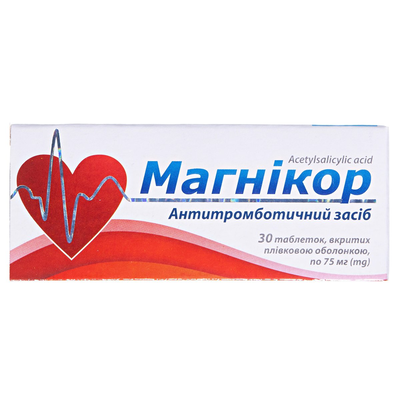
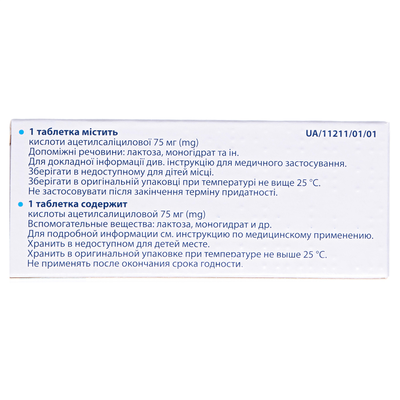
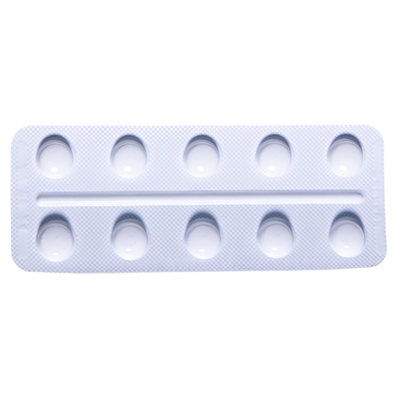
Magnicor (Aspirin Cardio) tablets, film-coated, No. 30 (10 x 3)
Composition
Active ingredient: 1 tablet contains 75 mg of acetylsalicylic acid;
excipients: magnesium hydroxide; corn starch; microcrystalline cellulose; potato starch; magnesium stearate;
Coating: Oradry II White film-coating mixture ((hypromellose (hydroxypropyl methylcellulose); lactose monohydrate; polyethylene glycol (macrogol); titanium dioxide (E 171); triacetin)).
Dosage Form
Film-coated tablets.
Main physical and chemical properties: round tablets with a biconvex surface, coated with a white or almost white film coating.
Pharmacotherapeutic group
Antithrombotic agents. Platelet aggregation inhibitors, excluding heparin. ATC code B01A C06.
Pharmacological Properties
Pharmacodynamics.
Acetylsalicylic acid is an analgesic, anti-inflammatory, antipyretic, and antiplatelet agent. Its antiplatelet properties prolong bleeding time.
The primary pharmacological effect is the inhibition of prostaglandin and thromboxane formation. The analgesic effect is a secondary effect caused by the inhibition of the cyclooxygenase enzyme. The anti-inflammatory effect is associated with reduced blood flow caused by the inhibition of PGE2 synthesis.
Acetylsalicylic acid irreversibly inhibits the synthesis of prostaglandins G/H; its effect on platelets lasts longer than the time acetylsalicylic acid remains in the body. The effect of acetylsalicylic acid on thromboxane biosynthesis in platelets and on bleeding time persists for a long time after treatment is discontinued. The effect ceases only after new platelets appear in the blood plasma.
Salicylic acid (the active metabolite of acetylsalicylic acid) has anti-inflammatory effects and also influences respiratory processes, acid-base balance, and the gastric mucosa. Salicylates stimulate respiration, primarily by acting directly on the bone marrow. Salicylates exert an indirect effect on the gastric mucosa by inhibiting its vasodilatory and cytoprotective prostaglandins and increase the risk of ulcers.
Pharmacokinetics.
Absorption. After oral administration, acetylsalicylic acid is rapidly absorbed from the gastrointestinal tract. Following oral administration, the un ionized form of acetylsalicylic acid is absorbed in the stomach and intestines. The rate of absorption decreases with food intake and in patients with migraine attacks; it increases in patients with achlorhydria or in patients taking polysorbates or antacids. Maximum serum concentration is reached in 1–2 hours.
Distribution. Acetylsalicylic acid is 80–90% bound to plasma proteins. The volume of distribution for adults is 170 mL/kg of body weight. As plasma concentrations rise, the active sites of proteins become saturated, leading to an increase in the volume of distribution. Salicylates bind extensively to plasma proteins and are rapidly distributed throughout the body. Salicylates pass into breast milk and may cross the placental barrier.
Metabolism. Acetylsalicylic acid is hydrolyzed to its active metabolite, salicylic acid, in the stomach wall. After absorption, acetylsalicylic acid is rapidly converted to salicylic acid, but it remains the predominant form in blood plasma during the first 20 minutes after oral administration.
Elimination. Salicylic acid is metabolized primarily in the liver. Consequently, the steady-state concentration of salicylic acid in plasma increases disproportionately to the orally administered dose. At a dose of 325 mg of acetylsalicylic acid, elimination follows first-order kinetics. The half-life is 2–3 hours. At high doses of acetylsalicylic acid, the half-life increases to 15–30 hours. Salicylic acid is also excreted unchanged in the urine. The volume of salicylic acid excreted depends on the dose and the pH of the urine. Approximately 30% of the salicylic acid dose is excreted in the urine if the urine is alkaline, and only 2% if it is acidic. Renal excretion occurs through glomerular filtration, active secretion by the renal tubules, and passive tubular reabsorption.
Indications
- Acute and chronic ischemic heart disease.
- Prevention of recurrent thrombosis.
- Primary prevention of thrombosis and cardiovascular diseases, such as acute coronary syndrome, in patients aged 50 years and older who have risk factors for cardiovascular disease: hypertension, hypercholesterolemia, diabetes mellitus, obesity (body mass index > 30), and family history (myocardial infarction in at least one parent, brother, or sister in patients under 55 years of age).
Contraindications
- Hypersensitivity to acetylsalicylic acid, other salicylates, or any component of the drug.
- A history of asthma caused by the use of salicylates or substances with similar effects, particularly nonsteroidal anti-inflammatory drugs (NSAIDs).
- Acute peptic ulcers.
- Hemorrhagic diathesis.
- Severe renal insufficiency.
- Severe hepatic insufficiency.
- Severe heart failure.
- Combination with methotrexate at a dose of 15 mg/week or higher (see the section “Interactions with Other Medications and Other Types of Interactions”).
Interactions with Other Medications and Other Types of Interactions
Contraindications for concomitant use.
Methotrexate. The use of acetylsalicylic acid and methotrexate at doses of 15 mg/week or higher increases the hematologic toxicity of methotrexate (decreased renal clearance of methotrexate by anti-inflammatory agents and displacement of methotrexate from plasma protein binding by salicylates).
ACE inhibitors. Angiotensin-converting enzyme inhibitors, when used in combination with high doses of acetylsalicylic acid, cause a decrease in glomerular filtration rate due to inhibition of the vasodilatory effect of prostaglandins and athe antihypertensive effect.
Acetazolamide. A possible increase in acetazolamide concentration may lead to the transfer of salicylates from the blood plasma into tissues and cause acetazolamide toxicity (fatigue, lethargy, drowsiness, confusion, hyperchloremic metabolic acidosis) and salicylate toxicity (vomiting, tachycardia, hyperpnea, confusion).
Combinations not recommended for concurrent use.
Uricosuric agents (probenecid, sulfinpyrazone). When probenecid is used with high doses of salicylates (>500 mg), the metabolism of both drugs is inhibited, and uric acid excretion may be reduced. Therefore, combinations of these drugs should be avoided.
Combinations that should be used with caution.
Methotrexate. When acetylsalicylic acid and methotrexate are used at doses less than 15 mg/week, the hematologic toxicity of methotrexate increases (due to a decrease in methotrexate renal clearance caused by anti-inflammatory agents and the displacement of methotrexate from plasma protein binding by salicylates).
Clopidogrel, ticlopidine. The combined use of clopidogrel and acetylsalicylic acid has a synergistic effect. This combination should be used with caution, as it increases the risk of bleeding.
Anticoagulants (warfarin, phenprocoumon). Thrombin production may be reduced, resulting in an indirect effect on platelet activity (vitamin K antagonist) and an increased risk of bleeding.
Absiximab, tirofiban, eptifibatide. Inhibition of glycoprotein IIb/IIIa receptors on platelets is possible, leading to an increased risk of bleeding.
Heparin. May reduce thrombin production, resulting in an indirect reduction in platelet activity, which leads to an increased risk of bleeding.
If two or more of the above-mentioned substances are used in combination with acetylsalicylic acid, this may result in a synergistic effect of enhanced inhibition of platelet activity and, consequently, an increase in hemorrhagic diathesis.
NSAIDs and COX-2 inhibitors (celecoxib). Concomitant use increases the risk of gastrointestinal disorders, which may lead to gastrointestinal bleeding.
Ibuprofen. Concomitant use of ibuprofen inhibits the irreversible platelet aggregation caused by acetylsalicylic acid. Treatment with ibuprofen in patients at increased risk of cardiovascular effects may limit the cardioprotective effect of acetylsalicylic acid.
Patients who take acetylsalicylic acid once daily for the prevention of cardiovasculardiseases and who occasionally take ibuprofen should take acetylsalicylic acid at least 2 hours before taking ibuprofen.
Metamizole. When used concomitantly with acetylsalicylic acid, metamizole may reduce the effect of acetylsalicylic acid on platelet aggregation. Therefore, caution is advised when acetylsalicylic acid (as a cardioprotective agent) and metamizole are used concomitantly.
Cyclosporine, tacrolimus. Concomitant use of NSAIDs with cyclosporine or tacrolimus may increase the nephrotoxicity of cyclosporine and tacrolimus. Renal function should be monitored when these drugs are used concomitantly with acetylsalicylic acid.
Furosemide. Inhibition of proximal tubular excretion of furosemide is possible, leading to a reduction in the diuretic effect of furosemide.
Quinidine. There may be an additive effect on platelets, leading to prolonged bleeding time.
Spironolactone. A modified effect on renin is possible, leading to a reduction in the efficacy of spironolactone.
Selective serotonin reuptake inhibitors (SSRIs). Concomitant use increases the risk of gastrointestinal disorders, which may lead to gastrointestinal bleeding.
Antiepileptic drugs (valproate, phenytoin). When used concomitantly with valproate, acetylsalicylic acid displaces it from its binding to plasma proteins, increasing the toxicity of valproate (central nervous system depression, gastrointestinal disorders).
Systemic glucocorticosteroids (excluding hydrocortisone, which is used for replacement therapy in Addison’s disease) reduce blood salicylate levels and increase the risk of overdose after treatment is discontinued.
Antidiabetic drugs. Concomitant use of acetylsalicylic acid and antidiabetic drugs increases the risk of hypoglycemia.
Antacids. There may be an increase in renal clearance and a decrease in renal absorption (due to an increase in urine pH), which leads to a reduction in the effect of acetylsalicylic acid.
Chickenpox vaccine. Concomitant use increases the risk of Reye’s syndrome.
Ginkgo biloba. Concomitant use with ginkgo biloba inhibits platelet aggregation, leading to an increased risk of bleeding.
Digoxin. When used concomitantly with digoxin, the concentration of digoxin in plasma increases due to reduced renal excretion.
Barbiturates. Serum concentrations of barbiturates may increase when used concomitantly with acetylsalicylic acid.
Penicillin. The half-life of penicillin in plasma is prolonged.
Alcohol contributes to damage to the gastrointestinal mucosa and prolongs bleeding time due to the synergistic effect of acetylsalicylic acid and alcohol.
Special Considerations for Use
Use Magnikor with caution in the following cases:
- hypersensitivity to analgesics, anti-inflammatory drugs, or antirheumatic agents, as well as allergies to other substances;
- gastrointestinal ulcers, including chronic and recurrent peptic ulcers or a history of gastrointestinal bleeding;
- presence of symptoms of chronic gastric or duodenal dyspepsia or their recurrence;
- concomitant use of anticoagulants;
- hypertension;
- impaired renal function or cardiovascular circulation (e.g., renal vascular disease, congestive heart failure, hypovolemia, major surgery, sepsis, or severe bleeding)—since acetylsalicylic acid also increases the risk of impaired renal function and acute renal failure;
- liver dysfunction;
- severe glucose-6-phosphate dehydrogenase deficiency—acetylsalicylic acid may cause hemolysis or hemolytic anemia, especially in the presence of risk factors for hemolysis (e.g., high doses of the drug, fever, or an acute infectious process).
Acetylsalicylic acid is not recommended for women with menorrhagia (during menstruation), as it may increase menstrual bleeding.
Ibuprofen may reduce the inhibitory effect of acetylsalicylic acid on platelet aggregation. If a patient is taking Magnikor, they should consult a doctor before starting ibuprofen as a pain reliever.
Acetylsalicylic acid may cause bronchospasm, a bronchial asthma attack, or other hypersensitivity reactions. Risk factors include a history of asthma, hay fever, nasal polyps, or chronic respiratory disease, as well as a history of allergic reactions (e.g., skin reactions, itching, hives) to other substances in the medical history.
There have been reports of rare cases of serious skin reactions, including Stevens-Johnson syndrome, associated with the use of acetylsalicylic acid (see the “Adverse Reactions” section). Discontinue use of the drug if any clinical symptoms of hypersensitivity reactions appear, including rashes on the skin and mucous membranes.
Due to the inhibitory effect of acetylsalicylic acid on platelet aggregation, which persists for several days after administration, the use of medications containing acetylsalicylic acid increases the likelihood of bleeding or increased bleeding during surgical procedures (including minor surgical procedures, such as tooth extraction).
When low doses of acetylsalicylic acid are used, uric acid excretion may be reduced. This may lead to a gout attack in patients prone to it.
Medications containing acetylsalicylic acid should not be used in children and adolescents with an acute respiratory viral infection (ARVI), with or without a fever, without consulting a doctor. With certain viral diseases, particularly influenza A, influenza B, and chickenpox, there is a risk of developing Reye’s syndrome, which is a very rare but life-threatening condition requiring urgent medical intervention. The risk may be increased if acetylsalicylic acid is used as a concomitant medication; however, a causal relationship has not been established in this case. If these conditions are accompanied by persistent vomiting, this may be a sign of Reye’s syndrome.
This medication contains lactose; therefore, patients with rare hereditary disorders such as galactose intolerance, Lapp lactase deficiency, or glucose-galactose malabsorption should not take it.
Use during pregnancy or breastfeeding.
Pregnancy. Inhibition of prostaglandin synthesis may adversely affect pregnancy and/or embryonic/fetal development. Available data from epidemiological studies indicate a risk of miscarriage and fetal malformations (heart defects and gastroschisis) following the use of prostaglandin synthesis inhibitors early in pregnancy. The risk increases with higher doses and longer duration of therapy. According to available data, a link between the use of acetylsalicylic acid and an increased risk of miscarriage has not been confirmed.
The available epidemiological data on the occurrence of birth defects are inconsistent; however, an increased risk of gastroschisis cannot be ruled out with the use of acetylsalicylic acid. Available data on its effects during early pregnancy (1st–4th month) do not indicate any association with an increased risk of malformations.
Animal studies indicate reproductive toxicity.
During the first and second trimesters of pregnancy, medications containing acetylsalicylic acid should not be prescribed without a clear clinical need. For women who may be pregnant or who are in the first or second trimester of pregnancy, the dose of medications containing acetylsalicylic acid should be as low as possible, and the duration of treatment should be as short as possible.
Animal studies have shown that the use of prostaglandin inhibitors leads to an increase in pre- and post-implantation losses and embryo/fetal death. In addition, an increased incidence of severe malformations, including cardiovascular defects, was observed in animals treated with prostaglandin inhibitors during organogenesis.
Based on previous experience, the risk is low when the drug is used at therapeutic doses.
During the third trimester of pregnancy, all prostaglandin synthesis inhibitors may:
affect the fetus in the following ways:
- cardiopulmonary toxicity (with premature closure of the ductus arteriosus and pulmonary hypertension);
- impaired renal function, possibly leading to renal failure with oligohydramnios;
affect the mother and baby at the end of pregnancy in the following ways:
- prolonged bleeding time and an antiplatelet effect, which may occur even after administration of very low doses;
- inhibition of uterine contractions, which may lead to delayed labor or an increase in the duration of labor.
Given this, acetylsalicylic acid is contraindicated during the third trimester of pregnancy.
Breastfeeding. Salicylates and their metabolites pass into breast milk in small amounts. Concentrations in breast milk are equivalent to or even higher than those in the mother’s blood plasma.
Since no harmful effects of the drug on the infant have been observed following its use by lactating women, it is generally not necessary to discontinue breastfeeding. However, in cases of regular use or when high doses (>300 mg/day) are administered, breastfeeding should be discontinued at an early stage.
Fertility. There is some evidence that drugs that inhibit prostaglandin synthesis may impair reproductive function in women by affecting ovulation. This effect is reversible and resolves after discontinuation of treatment.
Effect on reaction time when operating motor vehicles or other machinery. No effect.
Dosage and Administration
Acute and chronic ischemic heart disease.
The recommended starting dose is 2 tablets (150 mg) per day. The maintenance dose is 1 tablet (75 mg) per day.
Acute myocardial infarction. Unstable angina.
The recommended dose is 2–6 tablets (150 mg–450 mg), to be taken as soon as possible after the onset of symptoms.
Prevention of recurrent thrombosis.
The recommended initial dose is 2 tablets (150 mg) per day. The maintenance dose is 1 tablet (75 mg) per day.
Primary prevention of thrombosis and cardiovascular diseases, such as acute coronary syndrome, in patients with risk factors for cardiovascular disease.
The recommended prophylactic dose is 1 tablet (75 mg) per day.
Swallow the tablets whole, with water if necessary. To ensure rapid absorption, the tablet may be chewed or dissolved in water.
Liver dysfunction. Do not use this medication in patients with severe liver dysfunction. Dosage adjustment may be necessary in patients with liver dysfunction.
Renal impairment. Do not use this medication to treat patients with severe renal insufficiency (glomerular filtration rate < 0.2 mL/s (10 mL/min)). Dosage adjustment may be necessary for patients with renal impairment.
Children.
According to the indications (see the “Dosage and Administration” section), Magnikor should not be used in children.
The use of acetylsalicylic acid in children under 15 years of age may cause serious side effects (including Reye’s syndrome, one of the symptoms of which is persistent vomiting).
Overdose
Toxicity.
Dangerous dose. Adults: 300 mg/kg of body weight.
Chronic salicylate poisoning may be insidious, as its signs and symptoms are nonspecific. Moderate chronic salicylate intoxication, or salicylism, generally occurs only after repeated administration of high doses.
Symptoms. Symptoms of moderate chronic poisoning (resulting from prolonged use of high doses of the drug): dizziness, vertigo, hearing loss, excessive sweating, fever, rapid breathing, tinnitus, respiratory alkalosis, metabolic acidosis, lethargy, moderate dehydration, headache, confusion, nausea, and vomiting.
Acute intoxication is indicated by a marked shift in the acid-base balance, which may vary depending on age and the severity of the intoxication. The most common manifestation in children is metabolic acidosis. The severity of the condition cannot be assessed solely on the basis of plasma salicylate concentration data. The absorption of acetylsalicylic acid may be slowed due to delayed gastric emptying, the formation of gastric stones, or when administered in the form of enteric-coated tablets.
Symptoms of severe and acute poisoning (due to overdose): hypoglycemia (primarily in children), encephalopathy, coma, hypotension, pulmonary edema, seizures, coagulopathy, cerebral edema, and cardiac arrhythmias.
More pronounced toxic effects are observed in patients with chronic overdose or drug abuse, as well as in elderly patients or children.
Treatment. In cases of acute overdose, gastric lavage and administration of activated charcoal are necessary. If a dose exceeding 120 mg/kg of body weight is suspected, activated charcoal should be administered repeatedly.
Serum salicylate levels should be measured at least every 2 hours after dosing until salicylate levels remain consistently low and acid-base balance is restored.
Prothrombin time and/or INR (International Normalized Ratio) should be monitored, particularly if bleeding is suspected.
Fluid and electrolyte balance must be restored. Effective methods for removing salicylate from blood plasma include alkaline diuresis and hemodialysis. Hemodialysis should be used in cases of severe intoxication, as this method significantly accelerates the elimination of salicylate and restores acid-base and water-salt balances.
Due to the complex pathophysiological effects of salicylate poisoning, signs, symptoms, and laboratory findings may include:
| Signs and Symptoms | Laboratory Findings | Therapeutic Measures |
| Mild or moderate intoxication | Gastric lavage, repeated administration of activated charcoal, forced alkaline diuresis | |
| Tachypnea, hyperventilation, respiratory alkalosis | Alkalemia, alkaluria | Restoration of electrolyte and acid-base balance |
| Diaphoresis (excessive sweating) | ||
| Nausea, vomiting | ||
| Moderate or severe intoxication | Gastric lavage, repeated administration of activated charcoal, forced alkaline diuresis, hemodialysis in severe cases | |
| Respiratory alkalosis with compensatory metabolic acidosis | Acidosis, aciduria | Restoration of electrolyte and acid-base balance |
| Hyperpyrexia | Restoration of electrolyte and acid-base balance | |
| Respiratory: hyperventilation, non-cardiogenic pulmonary edema, respiratory failure, asphyxia | ||
| Cardiovascular: arrhythmias, arterial hypotension, cardiovascular failure | Changes in blood pressure, ECG | |
| Fluid and electrolyte loss: dehydration, oliguria, renal failure | Hypokalemia, hypernatremia, hyponatremia, changes in renal function | Restoration of electrolyte and acid-base balance |
| Impaired glucose metabolism, ketoacidosis | Hyperglycemia, hypoglycemia (especially in children). Elevated ketone levels | |
| Tinnitus, deafness | ||
| Gastrointestinal: gastrointestinal (GI) bleeding | ||
| Hematologic: platelet inhibition, coagulopathy | Prolonged PT, hypoprothrombinemia | |
| Neurological: toxic encephalopathy and central nervous system (CNS) depression with manifestations such as lethargy, confusion, coma, and seizures |
Side effects
Gastrointestinal: common manifestations and symptoms of dyspepsia, nausea, vomiting, epigastric pain, and abdominal pain; in rare cases—inflammation of the gastrointestinal tract, erosive and ulcerative lesions of the gastrointestinal tract, which in rare cases may lead to gastrointestinal hemorrhage and perforation with corresponding laboratory findings and clinical manifestations.
Blood and lymphatic system disorders: Due to its antiplatelet effect, acetylsalicylic acid may be associated with the development of bleeding and prolonged bleeding time. The following types of bleeding have been observed: perioperative hemorrhages, hematomas, bleeding from the genitourinary system, nosebleeds, and bleeding from the gums; rarely or very rarely—serious bleeding, such as gastrointestinal hemorrhages, cerebral hemorrhages (especially in patients with uncontrolled hypertension and/or when used concomitantly with anticoagulants), which in isolated cases may have been life-threatening.
Hemorrhages may lead to acute and chronic posthemorrhagic anemia/iron-deficiency anemia (due to so-called occult microbleeding) with corresponding laboratory findings and clinical symptoms, such as asthenia, pallor of the skin, and hypoperfusion.
Hemolysis and hemolytic anemia have been observed in patients with severe forms of glucose-6-phosphate dehydrogenase deficiency.
Thrombocytopenia, agranulocytosis, pancytopenia, leukopenia, and aplastic anemia.
Renal and urinary tract disorders: Impaired renal function and the development of acute renal failure have been reported.
Hepatic and biliary tract disorders: Transient hepatic failure with elevated levels of transaminases and serum alkaline phosphatase has been reported very rarely.
Immune system disorders: asthma; hypersensitivity reactions, such as erythematous/eczematous skin reactions, urticaria, rhinitis, nasal congestion, bronchospasm, angioedema, and a drop in blood pressure leading to shock; severe skin reactions, including erythema multiforme, Stevens-Johnson syndrome, and toxic epidermal necrolysis.
Nervous system: headache, dizziness; confusion and ringing in the ears may indicate an overdose.
Metabolism and nutrition: hypoglycemia, acid-base imbalance.
Reproductive system: menorrhagia.
Hypersensitivity reactions with corresponding laboratory and clinical manifestations, including an asthmatic state, mild to moderate skin reactions, as well as reactions affecting the respiratory tract, gastrointestinal tract, and cardiovascular system, including symptoms such as rash, hives, edema, pruritus, rhinitis, nasal congestion, cardiorespiratory failure, and, very rarely, severe reactions, including anaphylactic shock.
Other: Reye’s syndrome (see the “Special Considerations for Use” section).
Shelf life
2 years.
Storage conditions
Store in the original packaging at a temperature not exceeding 25 °C.
Keep out of reach of children.
Packaging
10 tablets per blister; 3 blisters per pack.
10 tablets per blister; 10 blisters per pack.
Dispensing Category
Over-the-counter – 30 tablets.
By prescription – 100 tablets.
Manufacturer
JSC “KYIV VITAMIN PLANT.”







