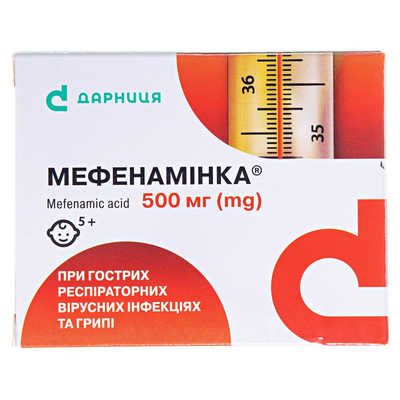
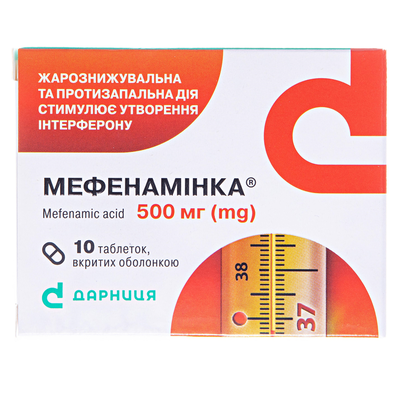
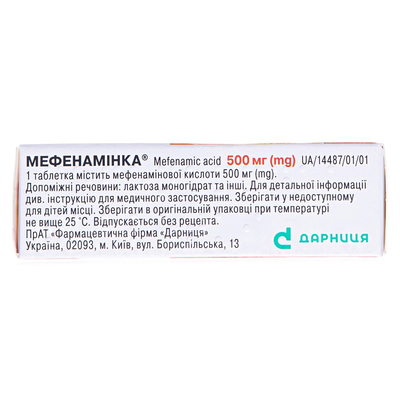
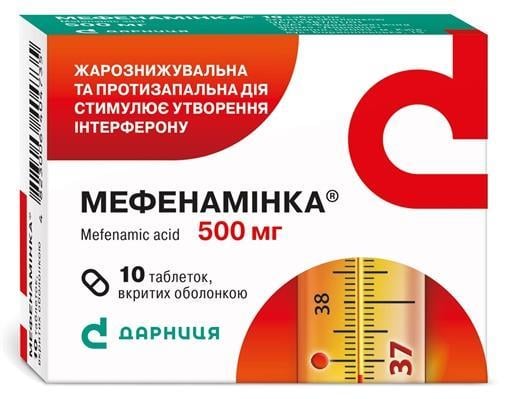
Mefenamink tablets, coated, 500 mg each, No. 10
Ingredients
Active ingredient: mefenamic acid;
1 tablet contains 500 mg of mefenamic acid;
inactive ingredients: lactose monohydrate, sodium lauryl sulfate, povidone, crospovidone, pregelatinized starch, colloidal anhydrous silicon dioxide, microcrystalline cellulose, talc, magnesium stearate, Opadry 200 White.
Dosage Form
Film-coated tablets.
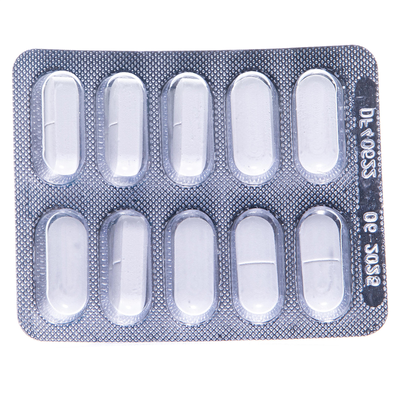
Main physical and chemical properties: oblong tablets with a biconvex surface and a score line, coated with a white or almost white film.
Pharmacotherapeutic group
Nonsteroidal anti-inflammatory and antirheumatic agents. Phenamates. ATC code M01A G01.
Pharmacological Properties
Pharmacodynamics.
Mefenamic acid is a nonsteroidal anti-inflammatory agent. Its anti-inflammatory mechanism of action is due to its ability to inhibit the synthesis of inflammatory mediators (prostaglandins, serotonin, kinins, etc.) and to reduce the activity of lysosomal enzymes involved in the inflammatory response. Mefenamic acid stabilizes protein ultrastructures and cell membranes, reduces vascular permeability, disrupts oxidative phosphorylation processes, inhibits the synthesis of mucopolysaccharides, inhibits cell proliferation at the site of inflammation, increases cellular resistance, and stimulates wound healing. Its antipyretic properties are associated with its ability to inhibit prostaglandin synthesis and influence the thermoregulatory center.
Mefenamic acid stimulates the production of interferon.
In the mechanism of its analgesic action, along with its effect on central mechanisms of pain sensitivity, the local effect on the site of inflammation and the ability to inhibit the formation of algogens (kinins, histamine, serotonin) play a significant role.
Pharmacokinetics.
After oral administration, mefenamic acid is rapidly and almost completely absorbed in the gastrointestinal tract. Peak blood concentrations are observed 2–4 hours after administration. Blood levels are proportional to the dose. Steady-state concentration (20 μg/mL) is reached on the second day of treatment (1 g four times daily). It is 90% bound to serum albumin. In the liver, it forms metabolites through oxidation, hydrolysis, and glucuronidation. The half-life (T1/2) is 2–4 hours. It is excreted from the body unchanged and as metabolites, primarily by the kidneys (67% of the dose) and in the feces (20–25%).
Indications
Acute respiratory viral infections and influenza.
Mild to moderate pain: muscle, joint, traumatic, dental, headaches of various etiologies, postoperative, and postpartum pain.
Primary dysmenorrhea. Dysfunctional menorrhagia, including that caused by intrauterine contraceptives, in the absence of pelvic pathology.
Inflammatory diseases of the musculoskeletal system: rheumatoid arthritis, rheumatism, ankylosing spondylitis.
Contraindications
Hypersensitivity to the components of the drug. Bronchospasm, angioedema, allergic rhinitis to mefenamic acid, a history of bronchial asthma or urticaria that occurred following the use of acetylsalicylic acid or other nonsteroidal anti-inflammatory drugs (NSAIDs). Concomitant use of specific COX-2 inhibitors. Gastric and duodenal ulcers, including a history thereof; inflammatory bowel disease; disorders of the hematopoietic system; severe heart failure; severe liver or kidney dysfunction, gastrointestinal bleeding, or perforation caused by NSAID use. Treatment of pain following aortocoronary bypass surgery.
Interactions with Other Medications and Other Types of Interactions
Concomitant use of mefenamic acid with other drugs that bind to plasma proteins may require dose adjustment.
Thiamine, pyridoxine hydrochloride, barbiturates, phenothiazine derivatives, narcotic analgesics, caffeine, dimedrol: increased analgesic effect of the drug.
When mefenamic acid is used concomitantly with methotrexate, the toxic effects of methotrexate are potentiated.
Antihypertensive agents (ACE inhibitors and angiotensin II receptor antagonists): reduced antihypertensive effect, increased risk of renal failure, especially in elderly patients. Patients should consume an adequate amount of fluids. Renal function should also be assessed at the start of treatment and during concomitant therapy.
Acetylsalicylic acid (aspirin): Data from experimental studies indicate that, when used concomitantly, mefenamic acid may inhibit the antiplatelet effect of low-dose aspirin and, therefore, may reduce the effectiveness of aspirin for the prevention of cardiovascular disease. However, due to the limitations of these experimental data and the uncertainty regarding the extrapolation of ex vivo data to the clinical setting, no clear conclusions can be drawn regarding the effects of mefenamic acid when used regularly.
Diuretics: reduced diuretic effect. Diuretics may increase the nephrotoxicity of NSAIDs.
Cardiac glycosides: NSAIDs may exacerbate heart failure, reduce glomerular filtration rate, and increase plasma levels of cardiac glycosides.
Cyclosporine: increased risk of nephrotoxicity.
Mifepristone: NSAIDs should not be taken for 8–12 days after taking mifepristone—NSAIDs may reduce the effect of mifepristone.
Corticosteroids: increased risk of gastrointestinal ulcers and bleeding.
Antiplatelet agents and selective serotonin reuptake inhibitors: increased risk of gastrointestinal bleeding.
Fluoroquinolones: NSAIDs increase the risk of seizures.
Aminoglycosides: NSAIDs increase the risk of nephrotoxicity.
Tacrolimus: a possible increased risk of nephrotoxicity.
Zidovudine: NSAIDs increase the risk of hematologic toxicity. There is an increased risk of joint hemorrhage and hematomas in HIV-positive patients with hemophilia who are concurrently receiving zidovudine therapy.
Lithium preparations: reduced lithium excretion and an increased risk of lithium toxicity. Patients taking mefenamic acid and lithium preparations should be under close medical supervision for the timely detection of signs of lithium toxicity.
Mefenamic acid increases the activity of oral anticoagulants; therefore, the risk of bleeding increases when they are used concomitantly. Concomitant use of mefenamic acid with oral anticoagulants requires careful monitoring of prothrombin time. NSAIDs should be used with warfarin or heparin with extreme caution and under mandatory medical supervision.
Oral hypoglycemic agents: inhibition of sulfonylurea metabolism, prolongation of the half-life, and increased risk of hypoglycemia.
Concomitant use with other NSAIDs increases the anti-inflammatory effect and the likelihood of gastrointestinal side effects.
Special Considerations for Use
Adverse reactions to mefenamic acid can be minimized by using the lowest effective dose for the shortest possible duration.
During long-term treatment with mefenamic acid, patients should be under constant medical supervision for signs of liver dysfunction, skin rashes, blood dyscrasias, or diarrhea. If any of these conditions or symptoms develop, treatment should be discontinued immediately.
Prolonged use of this medication to treat headaches may lead to an increase in headache severity. In such cases, treatment should be discontinued and a physician consulted.
Mefenamic acid should be used with caution in patients who are dehydrated due to vomiting, diarrhea, or increased urine output, as well as in patients with renal insufficiency, particularly the elderly.
Elderly patients have an increased incidence of adverse reactions associated with the use of NSAIDs, particularly gastrointestinal bleeding and perforation, which can be fatal. The drug should be used at the lowest effective dose for the shortest possible duration. During NSAID therapy, the gastrointestinal tract should be monitored for possible disorders, particularly gastrointestinal bleeding. Mefenamic acid should be used with caution in elderly patients with dehydration or kidney disease. Cases of non-oliguric renal failure and proctocolitis have been reported, primarily in elderly patients who did not discontinue mefenamic acid after the onset of diarrhea.
Taking mefenamic acid may cause gastrointestinal disturbances (e.g., diarrhea). These may occur either immediately after taking the medication or following long-term use. If such symptoms occur, discontinue use of the medication.
Use this medication with caution in patients with acute cardiovascular insufficiency, hypertension, or ischemic heart disease.
Use this medication with caution in patients with epilepsy.
Mefenamic acid should be used with caution in patients with bronchial asthma (including a history of the condition), as it has been reported that NSAIDs may accelerate the development of bronchospasm in such patients.
The use of NSAIDs may lead to a dose-dependent reduction in prostaglandin synthesis and may trigger the development of renal failure. Patients with impaired renal or hepatic function, heart failure, those taking diuretics, and elderly patients are at the highest risk of developing this reaction. Renal function should be monitored in such patients.
Moderate liver and kidney dysfunction may occur with the use of mefenamic acid. Patients who develop such abnormalities should discontinue the medication. Patients who use mefenamic acid for an extended period should be monitored by a physician due to the potential for liver and kidney dysfunction.
In cases of mild liver or kidney dysfunction, there are no specific recommendations regarding the use of this medication.
Data from clinical trials and epidemiological studies indicate that the use of certain NSAIDs (especially at high doses and over a long period of time) may be associated with a slight increase in the risk of arterial thrombotic events (e.g., myocardial infarction or stroke). There are insufficient data to rule out such a risk with mefenamic acid.
If mefenamic acid must be used in patients with cardiovascular or cerebrovascular diseases, they should consult a physician. During treatment, the recommended dose or duration of treatment must not be exceeded. In patients with uncontrolled hypertension, congestive heart failure, diagnosed ischemic heart disease, peripheral arterial disease, and/or cerebrovascular disease, treatment with mefenamic acid may be prescribed by a physician only after a thorough benefit-risk assessment. For patients with a history of hypertension and/or mild to moderate congestive heart failure, an appropriate medical evaluation and physician’s recommendations are required, as cases of fluid retention and edema have been reported in association with the use of NSAIDs. For patients with risk factors for cardiovascular complications (such as hypertension, hyperlipidemia, diabetes mellitus, and smoking), long-term treatment with mefenamic acid may be prescribed by a physician only after a thorough analysis of the benefit-risk ratio.
Mefenamic acid should be used with caution in patients with intracranial hemorrhage and hemorrhagic diathesis due to the ability of NSAIDs to inhibit platelet function.
There have been reports of potentially fatal gastrointestinal bleeding, ulcers, or perforations that have occurred at any stage of NSAID treatment, regardless of the presence of warning symptoms or a history of severe gastrointestinal disorders. Smoking and alcohol consumption are additional risk factors.
NSAIDs should be used with caution in patients with a history of gastrointestinal disease (ulcerative colitis, Crohn’s disease), as exacerbation of the disease is possible. If the use of mefenamic acid has led to gastrointestinal bleeding or perforation, treatment with the drug must be discontinued.
Elderly patients are generally at increased risk of gastrointestinal side effects, particularly gastrointestinal bleeding and perforation, which can be fatal; therefore, treatment should be initiated at the lowest possible dose.
The risk of gastrointestinal bleeding, ulcers, or perforation increases with higher doses of NSAIDs, in patients with a history of ulcers, especially if complicated by bleeding or perforation, and in elderly patients. Patients at risk of gastrointestinal bleeding, such as the elderly, as well as patients who are concurrently taking low doses of acetylsalicylic acid (aspirin) or other medications that may increase the risk to the gastrointestinal tract, should consult a physician regarding the possibility of combination therapy with protective agents (e.g., misoprostol or proton pump inhibitors).
Patients with systemic lupus erythematosus and mixed connective tissue diseases are at increased risk of developing aseptic meningitis.
Mefenamic acid should be prescribed with caution to patients at high risk of serious skin reactions, including exfoliative dermatitis, Stevens-Johnson syndrome, and toxic epidermal necrolysis. Treatment with mefenamic acid must be discontinued at the first sign of a skin rash, mucosal damage, or any other manifestation of hypersensitivity.
During long-term use of this medication, blood parameters must be monitored, as mefenamic acid may cause pathological changes in the blood. If any signs of dyscrasia occur, treatment with this medication must be discontinued.
Caution should be exercised when mefenamic acid is used concomitantly in patients receiving concomitant therapy with medications that increase the risk of gastrotoxicity or bleeding, such as corticosteroids, anticoagulants (e.g., warfarin), selective serotonin reuptake inhibitors, or antiplatelet agents.
There is limited evidence that drugs that inhibit cyclooxygenase/prostaglandin synthesis may impair female fertility by affecting ovulation. This effect is reversible after discontinuation of treatment. Taking mefenamic acid may impair female fertility and is not recommended for women trying to conceive. If women experience symptoms of dysmenorrhea or menorrhagia while taking this medication and do not see a therapeutic effect, they should consult a doctor.
Mefenamic acid should be used with caution in patients with slow CYP2C9 metabolism, as well as in patients expected to have slow CYP2C9 metabolism, given the metabolism of other CYP2C9 substrates, as abnormally high plasma levels of mefenamic acid may occur in such patients due to reduced metabolic clearance.
Important information about excipients.
If you have been diagnosed with an intolerance to certain sugars, consult your doctor before taking this medication.
This medication contains less than 1 mmol (23 mg) of sodium per dose, meaning it is essentially sodium-free.
Use During Pregnancy or Breastfeeding.
This medication should not be used by women who are pregnant or breastfeeding.
Effect on reaction time when driving or operating machinery.
Caution should be exercised when driving or operating machinery that requires increased attention, as use of this medication may occasionally cause drowsiness, blurred vision, or seizures.
Dosage and Administration
This medication should be used under the supervision of a doctor, who will determine the dose and duration of treatment. It is taken orally. The medication should be taken after meals.
Adults and children 12 years of age and older are prescribed 250–500 mg 3–4 times daily. If indicated and well tolerated, the daily dose may be increased to a maximum of 3,000 mg; once a therapeutic effect is achieved, the dose should be reduced to 1,000 mg/day.
Children aged 5 to 12 years should take 250 mg 3–4 times a day.
The course of treatment for joint diseases may last from 20 days to 2 months or longer. For the treatment of pain, the course of therapy lasts up to 7 days.
Children.
This medication is contraindicated in children under 5 years of age.
Overdose
Symptoms: pain in the epigastric region, nausea, vomiting, drowsiness. In severe cases: gastrointestinal bleeding, respiratory depression, hypertension, twitching of specific muscle groups, coma.
Treatment: There is no specific antidote. Gastric lavage with activated charcoal suspension. Alkalinization of urine, forced diuresis. Symptomatic therapy. Hemadsorption and hemodialysis are ineffective due to the strong binding of mefenamic acid to blood proteins.
Side Effects
Ocular: visual disturbances, reversible loss of color vision, eye irritation.
Ear and vestibular system: tinnitus, otalgia.
Respiratory system, thoracic, and mediastinal disorders: dyspnea, bronchospasm.
Gastrointestinal system: epigastric pain, anorexia, heartburn, nausea, flatulence, vomiting, enterocolitis, colitis, exacerbation of colitis and Crohn’s disease, gastritis, hepatotoxicity, steatorrhea, cholestatic jaundice, hepatitis, pancreatitis, hepatorenal syndrome, hemorrhagic gastritis, peptic ulcer with or without bleeding. Gastrointestinal bleeding, perforation, or gastrointestinal hemorrhage, sometimes fatal, especially in elderly patients; dyspepsia; constipation; diarrhea.
Renal and urinary system disorders: dysuria, cystitis. Renal dysfunction, albuminuria, hematuria, oliguria or polyuria, renal failure, including papillary necrosis, acute interstitial nephritis, nephrotic syndrome, allergic glomerulonephritis, hyponatremia, hyperkalemia.
Nervous system disorders: drowsiness or insomnia, weakness, irritability, agitation, headache, blurred vision, seizures, optic neuritis, paresthesias, dizziness, nuchal rigidity, fever, disorientation.
Psychiatric: confusion, depression, hallucinations.
Cardiovascular system: hypertension, arrhythmia, rarely—congestive heart failure, peripheral edema, syncope, hypotension, palpitations, shortness of breath, thrombotic complications (e.g., myocardial infarction or stroke).
Blood and lymphatic system disorders: aplastic anemia, autoimmune hemolytic anemia, prolonged bleeding time, eosinophilia, leukopenia, thrombocytopenia, decreased hematocrit, thrombocytopenic purpura, agranulocytosis, neutropenia, pancytopenia, bone marrow hypoplasia.
Immune system disorders: hypersensitivity reactions, including skin rashes, pruritus, facial edema, allergic rhinitis, angioedema, laryngeal edema, Stevens-Johnson syndrome, toxic epidermal necrolysis, erythema multiforme, urticaria, bullous pemphigus, photosensitivity, asthma, anaphylaxis.
Skin and subcutaneous tissue disorders: purpura, skin rashes, pruritus, erythema multiforme, urticaria, bullous pemphigus.
Laboratory findings: impaired glucose tolerance in patients with diabetes mellitus; positive results in some tests for the presence of mefenamic acid and its metabolites in bile and urine. Elevated levels of liver enzymes in blood plasma.
Other: aseptic meningitis, sweating, increased fatigue, malaise, multiple organ failure, hyperthermia.
Reporting of Suspected Adverse Reactions.
Reporting suspected adverse reactions after a drug’s approval is an important procedure. It allows for continued monitoring of the benefit-risk profile of the drug in question. Healthcare professionals must report any suspected adverse reactions through the national reporting system.
Shelf life
3 years.
Storage Conditions
Store in the original packaging at a temperature not exceeding 25 °C.
Keep out of reach of children.
Packaging
10 tablets per blister pack; 1 or 2 blister packs per package.
Dispensing Category
Over-the-counter.
Manufacturer
PJSC “Darnitsa Pharmaceutical Company.”