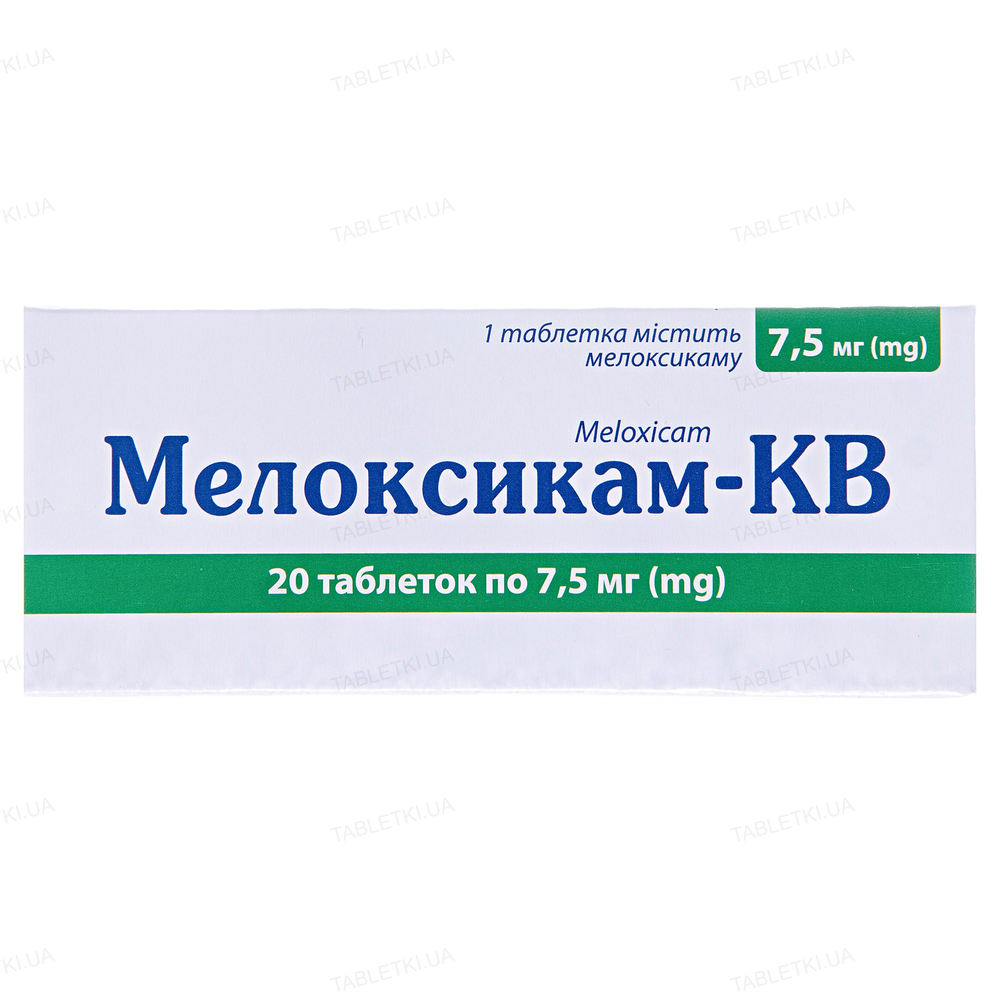

Meloxicam-KV 7.5 mg tablets, No. 20 (10 x 2)
Composition
Active ingredient: meloxicam;
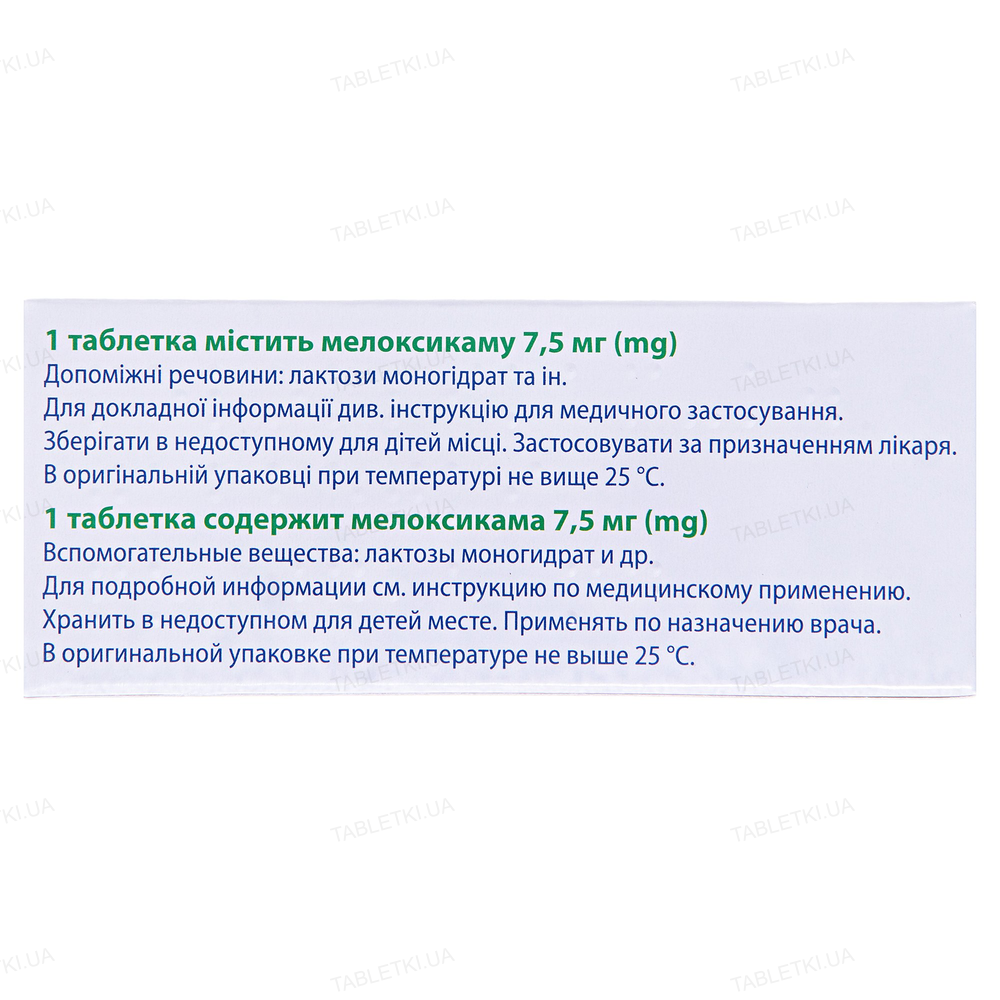
1 tablet contains 7.5 mg or 15 mg of meloxicam;
inactive ingredients: lactose monohydrate, sodium citrate, microcrystalline cellulose, colloidal anhydrous silicon dioxide, croscarmellose sodium, povidone, magnesium stearate.
Dosage Form
Tablets.
Main physical and chemical properties: flat-cylindrical tablets with a bevel, light yellow in color (7.5 mg); flat-cylindrical tablets with a score line and a bevel, light yellow in color (15 mg).
Pharmacotherapeutic group
Nonsteroidal anti-inflammatory drugs and antirheumatic agents. ATC code M01A C06.
Pharmacological properties
Pharmacodynamics.
Meloxicam-KV is a nonsteroidal anti-inflammatory drug (NSAID) of the enolic acid class that has anti-inflammatory, analgesic, and antipyretic effects.
Meloxicam has demonstrated high anti-inflammatory activity in all standard models of inflammation. As with other NSAIDs, its exact mechanism of action remains unknown. However, there is a common mechanism of action for all NSAIDs (including meloxicam): inhibition of the biosynthesis of prostaglandins, which are mediators of inflammation.
Pharmacokinetics.
Absorption.
Meloxicam is well absorbed from the gastrointestinal tract following oral administration; the absolute bioavailability of the drug is 90% (capsules). After a single dose of meloxicam, peak plasma concentrations are reached within 5–6 hours for solid oral dosage forms.
With repeated dosing, steady-state concentrations are reached on days 3–5. When administered once daily, the average plasma concentration, with relatively small fluctuations in peak levels, is 0.4–1.0 μg/mL for the 7.5 mg dose and 0.8–2.0 μg/mL for the 15 mg dose, respectively (Cmin and Cmax at steady state, respectively). Steady-state mean plasma concentrations of meloxicam are reached within 5–6 hours.
Concomitant food intake or administration of inorganic antacids does not affect the absorption of the drug.
Distribution. Meloxicam is highly bound to plasma proteins, primarily to albumin (99%). Meloxicam penetrates into synovial fluid, where its concentration is half that in plasma. The volume of distribution is low, averaging 11 L after intramuscular or intravenous administration, with individual variations ranging from 7% to 20%. The volume of distribution following repeated oral doses of meloxicam (7.5 to 15 mg) is 16 L, with a coefficient of variation ranging from 11 to 32%. Biotransformation.
Meloxicam undergoes extensive biotransformation in the liver.
Four different metabolites of meloxicam, which are pharmacodynamically inactive, have been identified in urine. The major metabolite, 5’-carboxymeloxicam (60% of the dose), is formed by the oxidation of the intermediate metabolite 5’-hydroxymethylmeloxicam, which is also excreted to a lesser extent (9% of the dose). In vitro studies suggest that CYP 2C9 plays an important role in the metabolic process, while CYP 3A4 isoenzymes contribute to a lesser extent. Peroxidase activity in patients may be responsible for the other two metabolites, which account for 16% and 4% of the prescribed dose, respectively.
Elimination.
Meloxicam is excreted primarily as metabolites in equal proportions in urine and feces. Less than 5% of the daily dose is excreted unchanged in feces, and a negligible amount is excreted in urine. The half-life ranges from 13 to 25 hours after oral administration. Plasma clearance is approximately 7–12 mL/min following a single oral dose.
Dose Linearity. Meloxicam exhibits linear pharmacokinetics within the therapeutic dose range of 7.5 mg to 15 mg following oral administration. Special Patient Populations.
Patients with hepatic/renal impairment.
Mild to moderate hepatic and renal impairment does not significantly affect the pharmacokinetics of meloxicam. In patients with moderate renal insufficiency, total clearance is significantly higher. Reduced plasma protein binding has been observed in patients with end-stage renal insufficiency. In end-stage renal failure, an increase in the volume of distribution may lead to an increase in the concentration of free meloxicam (see the “Contraindications” and “Dosage and Administration” sections).
Elderly patients.
In elderly male patients, the mean pharmacokinetic parameters are similar to those in young male volunteers. In elderly female patients, AUC values are higher and the half-life is longer compared to those in young volunteers of both sexes. The mean steady-state plasma clearance in elderly patients was slightly lower than in young volunteers.
Indications
Short-term symptomatic treatment of exacerbations of osteoarthritis.
Long-term symptomatic treatment of rheumatoid arthritis and ankylosing spondylitis.
Contraindications
- Hypersensitivity to meloxicam or to other components of the drug, or to active substances with similar effects, such as nonsteroidal anti-inflammatory drugs (NSAIDs) and aspirin. Meloxicam should not be prescribed to patients who have experienced symptoms of asthma, nasal polyps, angioedema, or hives after taking aspirin or other NSAIDs;
- Third trimester of pregnancy (see the section “Use During Pregnancy or Breastfeeding”);
- Children under 16 years of age;
- a history of gastrointestinal bleeding or perforation associated with previous NSAID therapy;
- history of active or recurrent peptic ulcer/bleeding (two or more separate confirmed episodes of ulcer or bleeding);
- severe hepatic insufficiency;
- severe renal insufficiency without dialysis;
- a history of gastrointestinal bleeding, cerebrovascular bleeding, or other coagulation disorders;
- severe heart failure;
- treatment of perioperative pain during coronary artery bypass grafting.
Drug Interactions and Other Interactions.
Interaction studies were conducted only in adults.
Risks associated with hyperkalemia.
Certain medications or therapeutic classes may contribute to hyperkalemia: potassium salts, potassium-sparing diuretics, angiotensin-converting enzyme (ACE) inhibitors, angiotensin II receptor antagonists, nonsteroidal anti-inflammatory drugs, (low-molecular-weight or unfractionated) heparins, cyclosporine, tacrolimus, and trimethoprim.
The onset of hyperkalemia may depend on the presence of associated factors. The risk of hyperkalemia increases when the aforementioned medications are used concomitantly with meloxicam.
Pharmacodynamic interactions.
Other nonsteroidal anti-inflammatory drugs (NSAIDs) and acetylsalicylic acid. Combination with other NSAIDs is not recommended (see the “Special Considerations” section), including acetylsalicylic acid at doses of ≥ 500 mg per dose or ≥ 3 g total daily dose.
Corticosteroids (e.g., glucocorticoids). Concomitant use with corticosteroids requires caution due to an increased risk of bleeding or the development of gastrointestinal ulcers.
Anticoagulants or heparin. The risk of bleeding is significantly increased due to inhibition of platelet function and damage to the gastroduodenal mucosa. NSAIDs may enhance the effects of anticoagulants such as warfarin (see the “Special Considerations for Use” section). Concomitant use of NSAIDs and anticoagulants or heparin is not recommended in geriatric practice or at therapeutic doses (see the “Special Considerations for Use” section).
In other cases (e.g., at prophylactic doses), caution is required when using heparin due to an increased risk of bleeding. Careful monitoring of the INR (International Normalized Ratio) is necessary if it is determined that this combination cannot be avoided.
Thrombolytic and antiplatelet agents. Increased risk of bleeding due to inhibition of platelet function and damage to the gastroduodenal mucosa.
Selective serotonin reuptake inhibitors (SSRIs). Increased risk of gastrointestinal bleeding.
Diuretics, ACE inhibitors, and angiotensin II antagonists. NSAIDs may reduce the effect of diuretics and other antihypertensive medications. In some patients with impaired renal function (e.g., dehydrated patients or elderly patients with impaired renal function), the concomitant use of ACE inhibitors or angiotensin II antagonists and medications that inhibit cyclooxygenase may lead to further deterioration of renal function, including possible acute renal failure, which is usually reversible. Therefore, this combination should be used with caution, especially in elderly patients. Patients should receive adequate fluid intake, and renal function should be monitored after initiation of combination therapy and periodically thereafter (see the “Special Considerations” section).
Other antihypertensive medications (e.g., beta-blockers). As with the drugs listed below, the antihypertensive effect of beta-blockers may be reduced (due to the inhibition of vasodilatory prostaglandins).
Calcineurin inhibitors (e.g., cyclosporine, tacrolimus). The nephrotoxicity of calcineurin inhibitors may be exacerbated by NSAIDs due to the mediation of renal prostaglandin effects. Renal function should be monitored during treatment. Close monitoring of renal function is recommended, especially in elderly patients.
Deferasirox. Concomitant use of meloxicam and deferasirox may increase the risk of gastrointestinal adverse reactions. Caution should be exercised when combining these drugs.
Pharmacokinetic interaction: effect of meloxicam on the pharmacokinetics of other drugs.
Lithium. There is evidence that NSAIDs increase plasma lithium concentrations (due to reduced renal excretion of lithium), which may reach toxic levels. Concomitant use of lithium and NSAIDs is not recommended (see the “Special Considerations for Use” section). If combination therapy is necessary, plasma lithium levels should be closely monitored at the start of treatment, during dose adjustment, and upon discontinuation of meloxicam.
Methotrexate. NSAIDs may reduce the tubular secretion of methotrexate, thereby increasing its plasma concentration. For this reason, concomitant use of NSAIDs is not recommended in patients receiving high-dose methotrexate (more than 15 mg/week) (see the “Special Considerations for Use” section). The risk of interaction between NSAIDs and methotrexate should also be considered when using low doses of methotrexate, particularly in patients with impaired renal function. If combination therapy is necessary, blood test results and renal function should be monitored. Caution should be exercised when NSAIDs and methotrexate are taken for 3 consecutive days, as plasma levels of methotrexate may increase and lead to increased toxicity. Although the pharmacokinetics of methotrexate (15 mg/week) were not affected by concomitant treatment with meloxicam, it should be noted that the hematologic toxicity of methotrexate may increase during NSAID therapy (see information above) (see the “Adverse Reactions” section).
Pemetrexed. When meloxicam is used concomitantly with pemetrexed in patients with creatinine clearance between 45 and 79 mL/min, meloxicam administration should be suspended 5 days prior to pemetrexed administration, on the day of administration, and for 2 days following administration. If the combination of meloxicam and pemetrexed is necessary, patients should be closely monitored, particularly for the development of myelosuppression and gastrointestinal adverse reactions. For patients with severe renal impairment (creatinine clearance below 45 mL/min), concomitant use of meloxicam with pemetrexed is not recommended.
In patients with normal renal function (creatinine clearance ≥ 80 mL/min), a 15-mg dose of meloxicam may reduce the elimination of pemetrexed, and consequently increase the incidence of pemetrexed-related adverse reactions. Therefore, caution should be exercised when prescribing 15 mg of meloxicam concomitantly with pemetrexed to patients with normal renal function (creatinine clearance ≥ 80 mL/min).
Pharmacokinetic interaction: effects of other drugs on the pharmacokinetics of meloxicam.
Cholestyramine. Cholestyramine accelerates the elimination of meloxicam by impairing intrahepatic circulation; consequently, meloxicam clearance increases by 50% and the half-life decreases to 13 ± 3 hours. This interaction is clinically significant.
Pharmacokinetic interaction: effect of the combination of meloxicam and other drugs on pharmacokinetics.
Oral antidiabetic agents (sulfonylureas, nateglinide). Meloxicam is almost entirely eliminated through hepatic metabolism, approximately two-thirds of which is mediated by cytochrome (CYP) P450 enzymes (the major pathway is CYP 2C9 and the minor pathway is CYP 3A4), and one-third via other pathways, such as peroxidase oxidation. The possibility of pharmacokinetic interactions should be considered when meloxicam is administered concomitantly with drugs that are known to inhibit or be metabolized by CYP 2C9 and/or CYP 3A4. Interactions mediated by CYP 2C9 can be expected when used in combination with drugs such as oral antidiabetics (sulfonylureas, nateglinide); this interaction may lead to increased plasma levels of these agents and meloxicam. Patients taking meloxicam and sulfonylureas or nateglinide should be closely monitored for the development of hypoglycemia.
No clinically significant pharmacokinetic interactions have been observed when taken concomitantly with antacids, cimetidine, and digoxin.
Special Considerations for Use.
Adverse reactions can be minimized by using the lowest effective dose for the shortest duration of treatment necessary to control symptoms (see the “Dosage and Administration” section and the information on gastrointestinal and cardiovascular risks below).
The recommended maximum daily dose should not be exceeded if the therapeutic effect is insufficient; additionally, other NSAIDs should not be used, as this may increase toxicity while the therapeutic benefits have not been established. Concomitant use of meloxicam with NSAIDs, including selective cyclooxygenase-2 inhibitors, should be avoided.
Meloxicam is not suitable for treating patients who require relief from acute pain.
If no improvement is observed after several days, the clinical benefits of treatment should be reevaluated.
Attention should be paid to a history of esophagitis, gastritis, and/or peptic ulcer to ensure their complete resolution before initiating meloxicam therapy. Patients treated with meloxicam and those with a history of such conditions should be monitored regularly for possible recurrence.
Gastrointestinal disorders.
As with other NSAIDs, potentially fatal gastrointestinal bleeding, ulcers, or perforation may occur at any time during treatment, with or without prior symptoms or a history of serious gastrointestinal disease.
The risk of gastrointestinal bleeding, ulceration, or perforation is higher with increasing NSAID doses in patients with a history of ulcer, particularly one complicated by bleeding or perforation (see the “Contraindications” section), and in elderly patients. Treatment for such patients should be initiated at the lowest effective dose. For such patients, combination therapy with protective medications (such as misoprostol or proton pump inhibitors) should be considered, as well as for patients who require concomitant use of low-dose aspirin or other medications that increase gastrointestinal risks (see the information below and the “Drug Interactions and Other Interactions” section).
Patients with a history of gastrointestinal toxicity, especially elderly patients, should report any unusual abdominal symptoms (particularly gastrointestinal bleeding), especially during the early stages of treatment.
Patients who are concurrently taking medications that may increase the risk of ulcers or bleeding, including heparin as radical therapy or in geriatric practice, anticoagulants such as warfarin, or other nonsteroidal anti-inflammatory drugs, including acetylsalicylic acid at doses of ≥ 500 mg per dose or ≥ 3 g total daily dose, the use of meloxicam is not recommended (see the section “Interactions with Other Medications and Other Types of Interactions”).
If gastrointestinal bleeding or ulcers occur in patients taking meloxicam, treatment should be discontinued.
NSAIDs should be used with caution in patients with a history of gastrointestinal diseases (ulcerative colitis, Crohn’s disease), as these conditions may be exacerbated (see the “Adverse Reactions” section).
Liver disorders.
Up to 15% of patients taking NSAIDs (including meloxicam) may experience elevated levels of one or more liver function tests. These laboratory abnormalities may progress, remain unchanged, or be transient with continued treatment. Marked elevations in ALT or AST (approximately three times or more above normal) were observed in 1% of patients during clinical trials with NSAIDs. In addition, rare cases of severe hepatic reactions have been reported, including jaundice, fulminant fatal hepatitis, hepatic necrosis, and hepatic failure, some of which were fatal.
Patients who present with symptoms of hepatic dysfunction, are suspected of having hepatic dysfunction, or have had abnormal liver function test results should be monitored for the development of symptoms of more severe liver failure during treatment with this medication. If clinical signs and symptoms are consistent with the development of liver disease or if systemic manifestations of the disease are observed (e.g., eosinophilia, rash, and others), treatment with Meloxicam-KV should be discontinued.
Cardiovascular disorders.
Close monitoring is recommended for patients with a history of hypertension and/or mild to moderate congestive heart failure, as fluid retention and edema have been observed during NSAID therapy.
For patients with risk factors, clinical monitoring of blood pressure is recommended at the start of therapy, especially at the beginning of a course of treatment with meloxicam.
Research and epidemiological data suggest that the use of certain NSAIDs (especially at high doses and during long-term treatment) may be associated with a slight increase in the risk of vascular thrombotic events (such as myocardial infarction or stroke). There are insufficient data to rule out such a risk with meloxicam.
In patients with uncontrolled hypertension, congestive heart failure, established ischemic heart disease, peripheral arterial disease, and/or cerebrovascular disease should receive meloxicam therapy only after careful evaluation. A similar assessment is necessary before initiating long-term treatment in patients with risk factors for cardiovascular disease (such as hypertension, hyperlipidemia, diabetes mellitus, and smoking).
NSAIDs may increase the risk of serious cardiovascular thrombotic complications, myocardial infarction, and stroke, which can be fatal. The increased risk is associated with the duration of use. In patients with cardiovascular disease or risk factors for cardiovascular disease, this risk may be increased.
Skin disorders.
There have been reports of life-threatening severe skin reactions—Stevens-Johnson syndrome and toxic epidermal necrolysis—associated with the use of meloxicam. Patients should be informed of the signs and symptoms of severe skin reactions and should closely monitor their skin for any reactions. The greatest risk of developing Stevens-Johnson syndrome or toxic epidermal necrolysis occurs during the first few weeks of treatment. If a patient exhibits symptoms or signs of Stevens-Johnson syndrome or toxic epidermal necrolysis (such as a progressive skin rash, often with blisters, or mucosal involvement), treatment with meloxicam must be discontinued. It is important to diagnose and discontinue any medications that may cause severe skin reactions—such as Stevens-Johnson syndrome or toxic epidermal necrolysis—as soon as possible. This ensures a better prognosis in cases of severe skin lesions. If a patient is diagnosed with Stevens-Johnson syndrome or toxic epidermal necrolysis during treatment with meloxicam, the drug must never be restarted in the future.
Anaphylactic reactions.
As with other NSAIDs, anaphylactic reactions may occur in patients with no known history of a reaction to meloxicam. Meloxicam-KV should not be used in patients with the aspirin triad. This syndrome occurs in patients with asthma who have a history of rhinitis with or without nasal polyps, or who have experienced severe, potentially life-threatening bronchospasm following the use of aspirin or other NSAIDs. Emergency measures should be taken immediately if an anaphylactoid reaction is detected.
Liver and kidney function.
As with treatment with most NSAIDs, isolated cases of elevated serum transaminase levels, elevated serum bilirubin levels, or other abnormalities in liver function tests, as well as elevated serum creatinine and blood urea nitrogen levels, and other laboratory abnormalities. In most cases, these abnormalities were mild and transient. If such abnormalities are significant or persistent, meloxicam should be discontinued and follow-up tests performed.
Functional renal insufficiency.
NSAIDs may induce functional renal insufficiency by inhibiting the vasodilatory effect of renal prostaglandins, resulting in a decrease in glomerular filtration rate. This adverse effect is dose-dependent. At the start of treatment or after a dose increase, careful monitoring of renal function, including urine output, is recommended in patients with the following risk factors:
- advanced age;
- concomitant use with ACE inhibitors, angiotensin II antagonists, sartans, or diuretics (see the section “Interactions with Other Medications and Other Types of Interactions”);
- hypovolemia (of any origin);
- congestive heart failure;
- renal insufficiency;
- nephrotic syndrome;
- lupus nephropathy;
- severe hepatic dysfunction (serum albumin < 25 g/L or ≥ 10 on the Child–Pugh scale).
In rare cases, NSAIDs may cause interstitial nephritis, glomerulonephritis, renal medullary necrosis, or nephrotic syndrome.
The dose of meloxicam for patients with end-stage renal failure who are on dialysis should not exceed 7.5 mg. For patients with mild to moderate renal insufficiency, the dose does not need to be reduced (creatinine clearance greater than 25 mL/min).
Sodium, potassium, and water retention.
NSAIDs may exacerbate sodium, potassium, and water retention and affect the natriuretic effects of diuretics. In addition, the antihypertensive effect of antihypertensive drugs may be reduced (see the “Interactions with Other Medications and Other Types of Interactions” section). Consequently, edema, heart failure, or hypertension may be accelerated or exacerbated in susceptible patients. Therefore, clinical monitoring is recommended for patients at such risk (see the sections “Contraindications” and “Dosage and Administration”).
Hyperkalemia.
Hyperkalemia may be exacerbated by diabetes mellitus or the concomitant use of medications that increase serum potassium levels (see the section “Interactions with Other Medications and Other Types of Interactions”). In such cases, potassium levels should be monitored regularly.
Combination with pemetrexed.
In patients with mild to moderate renal impairment receiving pemetrexed, treatment with meloxicam should be suspended at least 5 days prior to pemetrexed administration, on the day of administration, and for at least 2 days after administration (see the section “Interactions with Other Medications and Other Types of Interactions”).
Other Warnings and Precautions.
Adverse reactions are often less well tolerated by elderly patients, frail, or debilitated patients, who require close monitoring. As with treatment with other NSAIDs, caution is advised in elderly patients, who are more likely to have reduced renal, hepatic, and cardiac function. Elderly patients have a higher incidence of adverse reactions when using NSAIDs, particularly gastrointestinal bleeding and perforations, which can be fatal (see the “Dosage and Administration” section).
Meloxicam, like any other NSAID, may mask the symptoms of infectious diseases.
The use of meloxicam may adversely affect reproductive function and is not recommended for women who are trying to conceive. Therefore, for women planning a pregnancy or undergoing infertility testing, discontinuation of meloxicam should be considered (see the “Use During Pregnancy or Breastfeeding” section).
This medication contains lactose; therefore, it is not recommended for patients with rare hereditary galactose intolerance, lactase deficiency, or glucose-galactose malabsorption.
Masking of inflammation and fever.
Meloxicam’s pharmacological action in reducing fever and inflammation may complicate diagnosis in cases of suspected non-infectious pain.
Treatment with corticosteroids.
Meloxicam cannot be considered a substitute for corticosteroids in the treatment of corticosteroid insufficiency.
Hematologic effects.
Anemia may occur in patients receiving NSAIDs, including meloxicam. This may be associated with fluid retention, gastrointestinal bleeding of unknown origin, or a macroscopic or incompletely characterized effect on erythropoiesis. In patients undergoing long-term treatment with NSAIDs, including meloxicam, hemoglobin or hematocrit levels should be monitored if symptoms and signs of anemia are present.
NSAIDs inhibit platelet aggregation and may prolong bleeding time in some patients. Unlike aspirin, their effect on platelet function is quantitatively smaller, short-lived, and reversible. Patients taking meloxicam who are at risk for adverse effects related to changes in platelet function—particularly coagulation disorders—as well as patients receiving anticoagulants, should be closely monitored.
Use in patients with existing asthma.
Patients with asthma may have aspirin-sensitive asthma. The use of aspirin in patients with aspirin-sensitive asthma is associated with severe bronchospasm, which can be fatal. Given the cross-reactivity, including bronchospasm, between aspirin and other NSAIDs, meloxicam should not be used in patients sensitive to aspirin and should be prescribed with caution to patients with existing asthma.
Use during pregnancy or breastfeeding.
Pregnancy.
Inhibition of prostaglandin synthesis may adversely affect pregnancy and/or the development of the embryo and fetus. Data from epidemiological studies suggest an increased risk of miscarriage and the development of heart defects and gastroschisis following the use of prostaglandin synthesis inhibitors in early pregnancy. The absolute risk of heart defects increased from less than 1% to approximately 1.5%. It is believed that this risk increases with higher doses and longer duration of treatment.
Meloxicam should not be used during the first and second trimesters of pregnancy unless absolutely necessary. If a woman is trying to conceive or is using meloxicam during the first and second trimesters of pregnancy, the dosage and duration of treatment should be kept to a minimum.
During the third trimester of pregnancy, all prostaglandin synthesis inhibitors may pose a risk to the fetus:
- cardiopulmonary toxicity (with premature closure of the ductus arteriosus and pulmonary hypertension);
- impaired renal function, which may progress to renal failure with oligohydramnios;
potential risks in the late stages of pregnancy for the mother and newborn:
- the possibility of prolonged bleeding time and an antiplatelet effect even at very low doses;
- inhibition of uterine contractions, leading to delayed or prolonged labor.
Therefore, meloxicam is contraindicated during the third trimester of pregnancy.
Breastfeeding.
Although there are no specific data on this drug, it is known that NSAIDs can pass into breast milk. Therefore, its use is not recommended for women who are breastfeeding.
Fertility.
Meloxicam, like other drugs that inhibit cyclooxygenase/prostaglandin synthesis, may adversely affect reproductive function and is not recommended for women who are trying to conceive. Therefore, women who are planning a pregnancy or undergoing infertility testing should consider discontinuing meloxicam.
Effect on reaction time when driving or operating machinery.
No specific studies have been conducted on the drug’s effect on the ability to drive or operate machinery. However, based on the pharmacodynamic profile and the observed adverse reactions, it can be assumed that meloxicam has no or only a minor effect on these activities. Nevertheless, patients who have experienced visual disturbances, including blurred vision, dizziness, drowsiness, vertigo, or other central nervous system disorders, are advised to refrain from driving or operating machinery.
Drug Interactions and Other Interactions
Interaction studies were conducted only in adults.
Risks Associated with Hyperkalemia
Certain medications or therapeutic classes may contribute to hyperkalemia: potassium salts, potassium-sparing diuretics, angiotensin-converting enzyme (ACE) inhibitors, angiotensin II receptor antagonists, nonsteroidal anti-inflammatory drugs (NSAIDs), (low-molecular-weight or unfractionated) heparins, cyclosporine, tacrolimus, and trimethoprim.
The onset of hyperkalemia may depend on the presence of associated factors. The risk of hyperkalemia increases when the aforementioned medications are used concomitantly with meloxicam.
Pharmacodynamic interactions.
Other nonsteroidal anti-inflammatory drugs (NSAIDs) and acetylsalicylic acid. Combination with other NSAIDs is not recommended (see the “Special Considerations for Use” section), including acetylsalicylic acid at doses of ≥ 500 mg per dose or ≥ 3 g total daily dose.
Corticosteroids (e.g., glucocorticoids). Concomitant use with corticosteroids requires caution due to an increased risk of bleeding or the development of gastrointestinal ulcers.
Anticoagulants or heparin. The risk of bleeding is significantly increased due to inhibition of platelet function and damage to the gastroduodenal mucosa. NSAIDs may enhance the effects of anticoagulants such as warfarin (see the “Special Considerations for Use” section). Concomitant use of NSAIDs and anticoagulants or heparin is not recommended in geriatric practice or at therapeutic doses (see the “Special Considerations for Use” section).
In other cases (e.g., at prophylactic doses), caution is required when using heparin due to an increased risk of bleeding. Careful monitoring of the INR (International Normalized Ratio) is required if it is determined that this combination cannot be avoided.
Thrombolytic and antiplatelet agents: increased risk of bleeding due to inhibition of platelet function and damage to the gastroduodenal mucosa.
Selective serotonin reuptake inhibitors (SSRIs). Increased risk of gastrointestinal bleeding.
Diuretics, ACE inhibitors, and angiotensin II antagonists. NSAIDs may reduce the effect of diuretics and other antihypertensive medications. In some patients with impaired renal function (e.g., dehydrated patients or elderly patients with impaired renal function), the concomitant use of ACE inhibitors or angiotensin II antagonists and medications that inhibit cyclooxygenase may lead to further deterioration of renal function, including possible acute renal failure, which is usually reversible. Therefore, this combination should be used with caution, especially in elderly patients. Patients should receive adequate fluid intake, and renal function should be monitored after initiation of combination therapy and periodically thereafter (see the “Special Considerations for Use” section).
Other antihypertensive medications (e.g., beta-blockers). As with the drugs listed below, the antihypertensive effect of beta-blockers may be reduced (due to the inhibition of vasodilatory prostaglandins).
Calcineurin inhibitors (e.g., cyclosporine, tacrolimus). The nephrotoxicity of calcineurin inhibitors may be exacerbated by NSAIDs due to the mediation of renal prostaglandin effects. Renal function should be monitored during treatment. Close monitoring of renal function is recommended, especially in elderly patients.
Deferasirox.
Concomitant use of meloxicam and deferasirox may increase the risk of gastrointestinal adverse reactions. Caution should be exercised when combining these medications.
Pharmacokinetic interaction: effect of meloxicam on the pharmacokinetics of other drugs.
Lithium. There is evidence that NSAIDs increase plasma lithium concentrations (due to reduced renal excretion of lithium), which may reach toxic levels. Concomitant use of lithium and NSAIDs is not recommended (see the “Special Considerations” section). If combination therapy is necessary, plasma lithium levels should be carefully monitored at the start of treatment, during dose adjustment, and upon discontinuation of meloxicam.
Methotrexate. NSAIDs may reduce the tubular secretion of methotrexate, thereby increasing its plasma concentration. For this reason, concomitant use of NSAIDs is not recommended in patients receiving high-dose methotrexate (more than 15 mg/week) (see the “Special Considerations for Use” section). The risk of interaction between NSAIDs and methotrexate should also be considered in patients receiving low-dose methotrexate, particularly those with impaired renal function. If combination therapy is necessary, blood test results and renal function should be monitored. Caution should be exercised when NSAIDs and methotrexate are administered for 3 consecutive days, as plasma methotrexate levels may increase and lead to increased toxicity. Although the pharmacokinetics of methotrexate (15 mg/week) were not affected by concomitant treatment with meloxicam, it should be noted that the hematologic toxicity of methotrexate may increase during treatment with NSAIDs (see information above) (see the “Adverse Reactions” section).
Pemetrexed. When meloxicam is used concomitantly with pemetrexed in patients with mild to moderate renal impairment (creatinine clearance 45 to 79 mL/min), meloxicam administration should be suspended for 5 days prior to pemetrexed administration, on the day of administration, and for 2 days following administration. If the combination of meloxicam and pemetrexed is necessary, patients must be closely monitored, particularly for the development of myelosuppression and gastrointestinal adverse reactions. For patients with severe renal impairment (creatinine clearance below 45 mL/min), concomitant use of meloxicam with pemetrexed is not recommended.
For patients with normal renal function (creatinine clearance ≥ 80 mL/min), a 15-mg dose of meloxicam may reduce the elimination of pemetrexed and, consequently, increase the incidence of pemetrexed-related adverse reactions. Therefore, caution should be exercised when prescribing 15 mg of meloxicam concomitantly with pemetrexed to patients with normal renal function (creatinine clearance ≥ 80 mL/min).
Pharmacokinetic Interaction: Effect of Other Medications on the Pharmacokinetics of Meloxicam.
Cholestyramine. Cholestyramine accelerates the elimination of meloxicam by impairing intrahepatic circulation; consequently, meloxicam clearance increases by 50% and the half-life decreases to 13±3 hours. This interaction is clinically significant.
No clinically significant pharmacokinetic interactions have been observed when taken concomitantly with antacids, cimetidine, and digoxin.
Dosage and Administration
For oral use.
The total daily dose should be taken as a single dose with water or another liquid during a meal.
Adverse reactions can be minimized by using the lowest effective dose for the shortest duration of treatment necessary to control symptoms (see the “Special Considerations” section). The patient’s need for symptomatic relief and response to treatment should be assessed periodically.
Exacerbation of osteoarthritis:
7.5 mg/day (1 tablet of 7.5 mg or half a tablet of 15 mg). If necessary, the dose may be increased to 15 mg/day (1 tablet of 15 mg or 2 tablets of 7.5 mg).
Rheumatoid arthritis, ankylosing spondylitis:
15 mg/day (1 15-mg tablet or 2 7.5-mg tablets).
See also the “Special Patient Populations” section below.
Depending on the therapeutic response, the dose may be reduced to 7.5 mg/day (1 7.5-mg tablet or half a 15-mg tablet).
DO NOT EXCEED A DOSE OF 15 mg/day.
Special Patient Populations.
Elderly patients.
The recommended dose for long-term treatment of rheumatoid arthritis and ankylosing spondylitis in elderly patients is 7.5 mg per day (see also the “Dosage and Administration,” “Patients at Increased Risk of Adverse Reactions,” and “Special Considerations” sections).
Patients at increased risk of adverse reactions (see the “Special Considerations” section)
For patients at increased risk of adverse reactions, such as those with a history of gastrointestinal disorders or risk factors for cardiovascular disease, treatment should be initiated at a dose of 7.5 mg per day.
Renal impairment.
This medication is contraindicated in patients with severe renal insufficiency who are not on hemodialysis (see the “Contraindications” section).
For patients with end-stage renal insufficiency who are on hemodialysis, the dose should not exceed 7.5 mg per day. For patients with mild to moderate renal insufficiency (specifically, patients with a creatinine clearance greater than 25 mL/min), no dose reduction is necessary.
Hepatic impairment.
No dose reduction is necessary for patients with mild or moderate hepatic insufficiency (for patients with severe hepatic insufficiency, see the “Contraindications” section).
Children.
Meloxicam-KV, 7.5 mg and 15 mg tablets, is contraindicated in children under 16 years of age (see the “Contraindications” section).
Overdose
Symptoms.
Symptoms of acute NSAID overdose are usually limited to lethargy, drowsiness, nausea, vomiting, and epigastric pain, which are generally reversible with supportive therapy. Gastrointestinal bleeding may occur. Severe poisoning may lead to hypertension, acute renal failure, liver dysfunction, respiratory depression, coma, seizures, cardiovascular failure, and cardiac arrest. Anaphylactoid reactions have been reported with therapeutic use of NSAIDs and may also occur with overdose.
Treatment.
In cases of NSAID overdose, symptomatic and supportive measures are recommended for patients. Available data indicate that the elimination of meloxicam is accelerated by administering 4 oral doses of cholestyramine 3 times daily.
Adverse Reactions.
Available data suggest that the use of certain NSAIDs (especially at high doses and during long-term treatment) may be associated with a slight increase in the risk of vascular thrombotic events (e.g., myocardial infarction or stroke) (see the “Special Considerations for Use” section).
Edema, hypertension, and heart failure have been observed during treatment with NSAIDs.
Most of the observed side effects are of gastrointestinal origin. Peptic ulcers, perforation, or gastrointestinal bleeding, sometimes fatal, may occur, especially in elderly patients (see the “Special Considerations for Use” section). The following have been reported after use: nausea, vomiting, diarrhea, flatulence, constipation, dyspepsia, abdominal pain, melena, hematemesis, ulcerative stomatitis, and exacerbations of colitis and Crohn’s disease (see the “Special Considerations for Use” section). Gastritis has been observed less frequently.
Severe skin reactions have been reported: Stevens-Johnson syndrome and toxic epidermal necrolysis (see the “Special Considerations for Use” section).
Criteria for assessing the frequency of adverse drug reactions: very common (≥ 1/10); common (≥ 1/100, < 1/10); uncommon (≥ 1/1,000, < 1/100); rare (≥ 1/10,000, < 1/1,000); rare (<1/10,000); unknown (cannot be estimated from the available data).
Blood and lymphatic system disorders: uncommon—anemia; rare—abnormal blood test results (including changes in white blood cell count), leukopenia, thrombocytopenia.
Cases of agranulocytosis have been reported very rarely (see “Selected Serious and/or Frequent Adverse Reactions”).
Immune system disorders: uncommon—allergic reactions, other than anaphylactic or anaphylactoid; frequency unknown—anaphylactic reaction, anaphylactoid reaction, including shock.
Psychiatric disorders: rare—mood changes, nightmares; frequency unknown—confusion, disorientation, insomnia.
Nervous system disorders: common—headache; uncommon—dizziness, drowsiness.
Eye disorders: rare—visual disturbances, including blurred vision; conjunctivitis.
Ear and vestibular system disorders: uncommon—dizziness; rare—ringing in the ears.
Cardiac disorders: rare—palpitations. Cases of heart failure associated with NSAID therapy have been reported.
Vascular disorders: uncommon—increased blood pressure (see the “Special Precautions for Use” section), hot flashes.
Respiratory, thoracic, and mediastinal disorders: rare—asthma in patients allergic to aspirin and other NSAIDs; frequency unknown—upper respiratory tract infections, cough.
Gastrointestinal disorders: very common—gastrointestinal disturbances: dyspepsia, nausea, vomiting, abdominal pain, constipation, flatulence, diarrhea; uncommon – occult or macroscopic gastrointestinal bleeding, stomatitis, gastritis, belching; rare – colitis, gastroduodenal ulcer, esophagitis; rare – gastrointestinal perforation; unknown – pancreatitis.
Gastrointestinal bleeding, ulcers, or perforation can be severe and potentially life-threatening, especially in elderly patients (see the “Special Considerations” section).
Hepatobiliary system: uncommon—abnormal liver function tests (e.g., elevated transaminases or bilirubin); rare—hepatitis; frequency unknown—jaundice, hepatic failure.
Skin and subcutaneous tissue disorders: uncommon—angioedema, pruritus, rash; isolated cases—Stevens-Johnson syndrome, toxic epidermal necrolysis, urticaria; rare – bullous dermatitis, erythema multiforme; unknown – photosensitivity reactions, exfoliative dermatitis.
Urinary system: uncommon—sodium and water retention, hyperkalemia (see sections “Interactions with Other Medications and Other Interactions” and “Special Considerations for Use”), changes in renal function parameters (increased serum creatinine and/or urea); rare – acute renal failure, particularly in patients with risk factors (see the “Special Considerations for Use” section); unknown – urinary tract infections, changes in urinary frequency.
Reproductive system and breast disorders: unknown – female infertility, delayed ovulation.
General disorders and administration site conditions: uncommon – edema, including lower extremity edema; frequency unknown – flu-like symptoms.
Musculoskeletal system: unknown – arthralgia, back pain, signs and symptoms related to the joints.
Selected serious and/or common adverse reactions.
Very rare cases of agranulocytosis have been reported in patients treated with meloxicam and other potentially myelotoxic drugs (see the section “Interactions with Other Medications and Other Types of Interactions”).
Adverse reactions that have not been observed during use of this drug but are generally considered characteristic of other compounds in this class.
Organic renal damage, which is thought to lead to acute renal failure: cases of interstitial nephritis, acute tubular necrosis, nephrotic syndrome, and papillary necrosis have been reported very rarely (see the “Special Precautions for Use” section).
Special Considerations for Use
Adverse reactions can be minimized by using the lowest effective dose for the shortest duration of treatment necessary to control symptoms (see the “Dosage and Administration” section and the information on gastrointestinal and cardiovascular risks below).
The recommended maximum daily dose should not be exceeded if the therapeutic effect is insufficient, nor should additional NSAIDs be used, as this may increase toxicity while the therapeutic benefits have not been established. Concomitant use of meloxicam with NSAIDs, including selective cyclooxygenase-2 inhibitors, should be avoided.
Meloxicam is not suitable for treating patients who require relief from acute pain.
If there is no improvement after several days, the clinical benefits of treatment should be reevaluated.
Attention should be paid to a history of esophagitis, gastritis, and/or peptic ulcer to ensure their complete resolution before initiating meloxicam therapy. Regular monitoring for possible recurrence is warranted in patients who have been treated with meloxicam and in patients with a history of such events.
Gastrointestinal disorders. As with other NSAIDs, potentially fatal gastrointestinal bleeding, ulcers, or perforation may occur at any time during treatment, with or without prior symptoms or a history of serious gastrointestinal disease.
The risk of gastrointestinal bleeding, ulceration, or perforation is higher with increasing doses of NSAIDs in patients with a history of ulcer, particularly one complicated by bleeding or perforation (see the “Contraindications” section), and in elderly patients. Treatment for such patients should be initiated at the lowest effective dose. For such patients, combination therapy with protective medications (such as misoprostol or proton pump inhibitors) should be considered, as well as for patients who require concomitant use of low-dose aspirin or other medications that increase gastrointestinal risks (see the information below and the “Drug Interactions and Other Interactions” section).
Patients with a history of gastrointestinal toxicity, especially elderly patients, should report any unusual abdominal symptoms (particularly gastrointestinal bleeding), especially during the early stages of treatment.
Patients who are concurrently taking medications that may increase the risk of ulcers or bleeding, including heparin as radical therapy or in geriatric practice, anticoagulants such as warfarin, or other nonsteroidal anti-inflammatory drugs, including acetylsalicylic acid at doses of ≥ 500 mg per dose or ≥ 3 g total daily dose, the use of meloxicam is not recommended (see the section “Interactions with Other Medications and Other Types of Interactions”).
If gastrointestinal bleeding or ulcers occur in patients taking meloxicam, treatment should be discontinued.
NSAIDs should be used with caution in patients with a history of gastrointestinal diseases (ulcerative colitis, Crohn’s disease), as these conditions may be exacerbated (see the “Adverse Reactions” section).
Liver dysfunction. Up to 15% of patients taking NSAIDs (including meloxicam) may experience elevated levels of one or more liver function tests. Such laboratory abnormalities may progress, remain unchanged, or be transient with continued treatment. Marked elevations in ALT or AST (approximately three times or more the upper limit of normal) were observed in 1% of patients during clinical trials with NSAIDs. In addition, rare cases of severe hepatic reactions have been reported, including jaundice, fulminant fatal hepatitis, hepatic necrosis, and hepatic failure, some of which were fatal.
Patients with symptoms or suspected liver dysfunction, or those with abnormal liver function tests, should be monitored for the development of symptoms of more severe liver failure during treatment with this medication. If clinical signs and symptoms are consistent with the development of liver disease or if systemic manifestations of the disease are observed (e.g., eosinophilia, rash, and others), treatment with Meloxicam-KV should be discontinued.
Cardiovascular disorders. Close monitoring is recommended for patients with a history of hypertension and/or mild to moderate congestive heart failure, as fluid retention and edema have been observed during NSAID therapy.
For patients with risk factors, clinical monitoring of blood pressure is recommended at the start of therapy, especially at the beginning of a course of treatment with meloxicam. There is evidence that the use of some NSAIDs (especially at high doses and during long-term treatment) may be associated with a slight increase in the risk of vascular thrombotic events (e.g., myocardial infarction or stroke). There are insufficient data to rule out such a risk for meloxicam.
In patients with uncontrolled hypertension, congestive heart failure, established ischemic heart disease, peripheral arterial disease, and/or cerebrovascular disease should receive meloxicam therapy only after careful evaluation. A similar assessment is necessary before initiating long-term treatment in patients with risk factors for cardiovascular disease (such as hypertension, hyperlipidemia, diabetes mellitus, and smoking).
NSAIDs may increase the risk of serious cardiovascular thrombotic complications, myocardial infarction, and stroke, which can be fatal. The increased risk is associated with the duration of use. Patients with cardiovascular disease or risk factors for cardiovascular disease may be at increased risk.
Skin disorders. There have been reports of life-threatening severe skin reactions—Stevens-Johnson syndrome and toxic epidermal necrolysis—associated with the use of meloxicam. Patients should be informed of the signs and symptoms of severe skin reactions and should closely monitor their skin for any reactions. The greatest risk of developing Stevens-Johnson syndrome or toxic epidermal necrolysis occurs during the first few weeks of treatment. If a patient exhibits symptoms or signs of Stevens-Johnson syndrome or toxic epidermal necrolysis (e.g., a progressive skin rash, often with blisters, or mucosal involvement), treatment with meloxicam should be discontinued. It is important to diagnose and discontinue any medications that may cause severe skin reactions—such as Stevens-Johnson syndrome or toxic epidermal necrolysis—as soon as possible. This is associated with a better prognosis in cases of severe skin lesions. If a patient is diagnosed with Stevens-Johnson syndrome or toxic epidermal necrolysis while taking meloxicam, the medication must not be resumed at any time in the future.
Anaphylactic reactions. As with other NSAIDs, anaphylactic reactions may occur in patients with no known history of a reaction to meloxicam. Meloxicam-KV should not be used in patients with the aspirin triad. This syndrome occurs in patients with asthma who have a history of rhinitis with or without nasal polyps, or who have experienced severe, potentially life-threatening bronchospasm following the use of aspirin or other NSAIDs. Emergency measures should be taken immediately upon detection of an anaphylactoid reaction.
Liver and kidney function. As with treatment with most NSAIDs, isolated cases of elevated serum transaminase levels, increased serum bilirubin levels or other liver function parameters, as well as increased serum creatinine and blood urea nitrogen levels, and other laboratory abnormalities. In most cases, these abnormalities were minor and transient. If such abnormalities are significant or persistent, meloxicam should be discontinued and follow-up tests performed.
Functional renal insufficiency. NSAIDs may induce functional renal insufficiency by inhibiting the vasodilatory effect of renal prostaglandins, resulting in a decrease in glomerular filtration rate. This side effect is dose-dependent. At the start of treatment or after a dose increase, close monitoring of urine output and renal function is recommended in patients with the following risk factors:
- advanced age;
- concomitant use with ACE inhibitors, angiotensin II antagonists, sartans, or diuretics (see the section “Interactions with Other Medications and Other Types of Interactions”);
- hypovolemia (of any origin);
- congestive heart failure;
- renal insufficiency;
- nephrotic syndrome;
- lupus nephropathy;
- severe hepatic dysfunction (serum albumin < 25 g/L or ≥ 10 on the Child-Pugh scale).
In rare cases, NSAIDs may cause interstitial nephritis, glomerulonephritis, renal medullary necrosis, or nephrotic syndrome.
The dose of meloxicam for patients with end-stage renal failure who are on dialysis should not exceed 7.5 mg. For patients with mild to moderate renal insufficiency, the dose does not need to be reduced (creatinine clearance greater than 25 mL/min).
Sodium, potassium, and water retention. NSAIDs may exacerbate sodium, potassium, and water retention and affect the natriuretic effects of diuretics. In addition, the antihypertensive effect of antihypertensive medications may be reduced (see the “Drug Interactions and Other Interactions” section). Consequently, in susceptible patients, edema, heart failure, or hypertension may be accelerated or exacerbated. Therefore, clinical monitoring is recommended for patients at risk (see the “Dosage and Administration” and “Contraindications” sections).
Hyperkalemia. Hyperkalemia may be exacerbated by diabetes mellitus or the concomitant use of medications that increase serum potassium levels (see the section “Interactions with Other Medications and Other Types of Interactions”). In such cases, potassium levels should be monitored regularly.
Combination with pemetrexed. In patients with mild to moderate renal impairment receiving pemetrexed, treatment with meloxicam should be suspended at least 5 days prior to pemetrexed administration, on the day of administration, and for at least 2 days after administration (see the section “Interactions with Other Medications and Other Types of Interactions”).
Other Warnings and Precautions. Adverse reactions are often less well tolerated by elderly patients, frail, or debilitated patients, who require close monitoring. As with treatment with other NSAIDs, caution is advised in elderly patients, who are more likely to have reduced renal, hepatic, and cardiac function. Elderly patients have a higher incidence of adverse reactions to NSAIDs, particularly gastrointestinal bleeding and perforations, which can be fatal (see the “Dosage and Administration” section).
Meloxicam, like any other NSAID, may mask the symptoms of infectious diseases.
The use of meloxicam may adversely affect reproductive function and is not recommended for women who are trying to conceive. Therefore, for women planning a pregnancy or undergoing infertility testing, discontinuation of meloxicam should be considered (see the “Use During Pregnancy or Breastfeeding” section).
This medication contains lactose; therefore, it is not recommended for patients with rare hereditary galactose intolerance, lactase deficiency, or glucose-galactose malabsorption.
Masking of inflammation and fever. Meloxicam’s pharmacological action in reducing fever and inflammation may complicate diagnosis in cases of suspected non-infectious pain.
Treatment with corticosteroids. Meloxicam cannot be considered a substitute for corticosteroids in the treatment of corticosteroid insufficiency.
Hematologic effects. Anemia may occur in patients receiving NSAIDs, including meloxicam. This may be associated with fluid retention, gastrointestinal bleeding of unknown origin, or a macroscopic or incompletely characterized effect on erythropoiesis. In patients undergoing long-term treatment with NSAIDs, including meloxicam, hemoglobin or hematocrit levels should be monitored if symptoms and signs of anemia are present.
NSAIDs inhibit platelet aggregation and may prolong bleeding time in some patients. Unlike aspirin, their effect on platelet function is quantitatively smaller, short-lived, and reversible. Patients taking meloxicam who are at risk of adverse effects related to changes in platelet function—particularly coagulation disorders—or patients receiving anticoagulants should be closely monitored.
Use in patients with existing asthma. Patients with asthma may have aspirin-sensitive asthma. The use of aspirin in patients with aspirin-sensitive asthma is associated with severe bronchospasm, which can be fatal. Given the cross-reactivity, including bronchospasm, between aspirin and other NSAIDs, meloxicam should not be used in patients sensitive to aspirin and should be prescribed with caution in patients with existing asthma.
Use during pregnancy or breastfeeding.
Fertility. Meloxicam, like other drugs that inhibit cyclooxygenase/prostaglandin synthesis, may adversely affect reproductive function and is not recommended for women who wish to become pregnant. Therefore, for women planning a pregnancy or undergoing infertility evaluation, discontinuation of meloxicam should be considered.
Pregnancy. Inhibition of prostaglandin synthesis may adversely affect pregnancy and/or the development of the embryo and fetus. Data from epidemiological studies suggest an increased risk of miscarriage and the development of heart defects and gastroschisis following the use of prostaglandin synthesis inhibitors in early pregnancy. The absolute risk of heart defects increased from less than 1% to approximately 1.5%. It is believed that this risk increases with higher doses and longer duration of treatment.
Meloxicam should not be used during the first and second trimesters of pregnancy, except when absolutely necessary. If a woman is trying to conceive or is using meloxicam during the first and second trimesters of pregnancy, the dosage and duration of treatment should be kept to a minimum.
During the third trimester of pregnancy, all prostaglandin synthesis inhibitors may pose a risk to the fetus:
- cardiopulmonary toxicity (with premature closure of the ductus arteriosus and pulmonary hypertension);
- impaired renal function, which may progress to renal failure with oligohydramnios;
potential risks in the late stages of pregnancy for the mother and the newborn:
- the possibility of prolonged bleeding time and an antiplatelet effect even at very low doses;
- inhibition of uterine contractions, leading to delayed or prolonged labor.
Therefore, meloxicam is contraindicated during the third trimester of pregnancy.
Breastfeeding. Although there are no specific data on this drug, it is known that NSAIDs can pass into breast milk. Therefore, its use is not recommended for women who are breastfeeding.
Effect on reaction time when driving or operating machinery.
No specific studies have been conducted on the drug’s effect on the ability to drive or operate machinery. However, based on the pharmacodynamic profile and the observed adverse reactions, it can be assumed that meloxicam is unlikely to affect or has only a minor effect on these activities. Nevertheless, patients who have experienced visual disturbances, including blurred vision, dizziness, drowsiness, vertigo, or other central nervous system disorders, are advised to refrain from driving or operating machinery.
Shelf Life
5 years.
Storage conditions
Store in the original packaging at a temperature not exceeding 25 °C.
Keep out of reach of children.
Packaging
10 tablets per blister; 1 blister per pack.
10 tablets per blister; 2 blisters per pack.
Side Effects
Available data suggest that the use of certain NSAIDs (especially at high doses and during long-term treatment) may be associated with a slightly increased risk of vascular thrombotic events (e.g., myocardial infarction or stroke) (see the “Special Precautions for Use” section).
Edema, hypertension, and heart failure have been observed during treatment with NSAIDs.
Most of the observed side effects are of gastrointestinal origin. Peptic ulcers, perforation, or gastrointestinal bleeding, sometimes fatal, may occur, especially in elderly patients (see the “Special Considerations for Use” section). The following have been reported after use: nausea, vomiting, diarrhea, flatulence, constipation, dyspepsia, abdominal pain, melena, hematemesis, ulcerative stomatitis, and exacerbations of colitis and Crohn’s disease (see the “Special Precautions for Use” section). Gastritis has been observed less frequently.
Severe skin reactions have been reported: Stevens-Johnson syndrome and toxic epidermal necrolysis (see the “Special Considerations for Use” section).
Blood and lymphatic system disorders: anemia, abnormal blood test results (including changes in white blood cell count), leukopenia, thrombocytopenia. Very rare cases of agranulocytosis have been reported (see “Selected Serious and/or Frequent Adverse Reactions”).
Immune system disorders: allergic reactions, other than anaphylactic or anaphylactoid; anaphylactic reaction, anaphylactoid reaction, including shock.
Psychiatric disorders: mood changes, nightmares, confusion, disorientation, insomnia.
Nervous system disorders: headache, dizziness, drowsiness.
Eye disorders: visual disturbances, including blurred vision; conjunctivitis.
Ear and vestibular system disorders: dizziness, tinnitus.
Cardiac disorders: palpitations. Cases of heart failure associated with NSAID treatment have been reported.
Vascular disorders: increased blood pressure (see the “Special Considerations for Use” section), hot flashes.
Respiratory, thoracic, and mediastinal disorders: asthma in patients allergic to aspirin and other NSAIDs, upper respiratory tract infections, cough.
Gastrointestinal disorders: dyspepsia, nausea, vomiting, abdominal pain, constipation, flatulence, diarrhea, occult or macroscopic gastrointestinal bleeding, stomatitis, gastritis, belching, colitis, gastroduodenal ulcer, esophagitis, gastrointestinal perforation.
Gastrointestinal bleeding, ulcers, or perforation can be severe and potentially life-threatening, especially in elderly patients (see the “Special Considerations” section).
Hepatobiliary system: abnormal liver function tests (e.g., elevated transaminases or bilirubin), hepatitis, jaundice, hepatic failure.
Skin and subcutaneous tissue disorders: angioedema, pruritus, rash, Stevens-Johnson syndrome, toxic epidermal necrolysis, urticaria, bullous dermatitis, erythema multiforme, photosensitivity reactions, exfoliative dermatitis.
Urinary system: sodium and water retention, hyperkalemia (see sections “Special Considerations for Use” and “Drug Interactions and Other Interactions”), changes in renal function parameters (increased serum creatinine and/or urea), acute renal failure, particularly in patients with risk factors (see the “Special Considerations for Use” section), urinary tract infections, changes in urinary frequency.
General disorders and administration site conditions: edema, including edema of the lower extremities; flu-like symptoms.
Musculoskeletal system: arthralgia, back pain, signs and symptoms related to the joints.
Selected serious and/or frequent adverse reactions.
Very rare cases of agranulocytosis have been reported in patients treated with meloxicam and other potentially myelotoxic drugs (see the section “Interactions with Other Medications and Other Types of Interactions”).
Adverse reactions that have not been observed during use of this drug but are generally considered characteristic of other compounds in this class.
Organic renal damage, which is thought to lead to acute renal failure: Cases of interstitial nephritis, acute tubular necrosis, nephrotic syndrome, and papillary necrosis have been reported very rarely (see the “Special Precautions for Use” section).
Manufacturer
JSC “KYIV VITAMIN PLANT.”
Manufacturer’s location and address of its place of business.
Ukraine, 04073, Kyiv, 38 Kopylivska St.
Website: www.vitamin.com.ua
Address
38 Kopylivska St., Kyiv, 04073, Ukraine.
Website: www.vitamin.com.ua.