
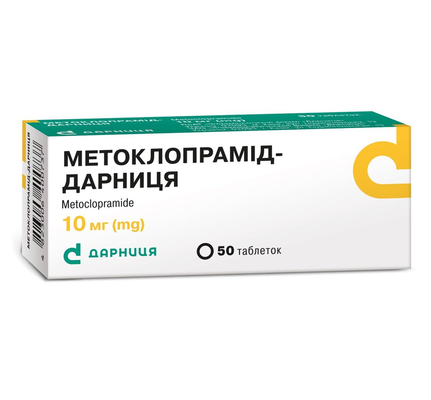
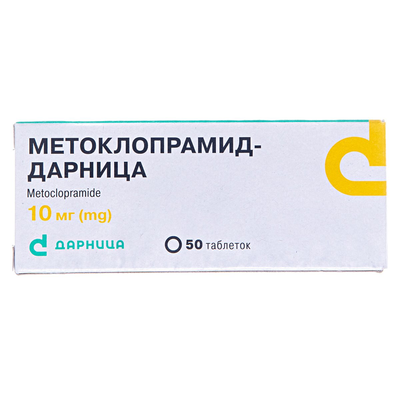

Metoclopramide-Darnitsa, 10 mg tablets, No. 50 (10 x 5)
Ingredients
Active ingredient: metoclopramide;
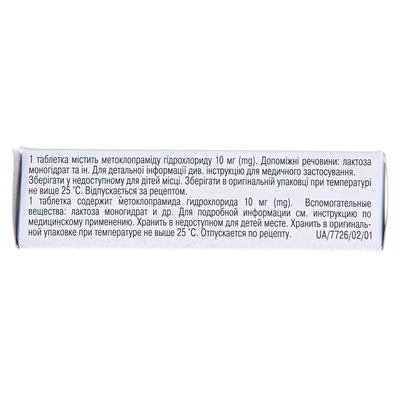
1 tablet contains 10 mg of metoclopramide hydrochloride;
excipients: potato starch, lactose monohydrate, microcrystalline cellulose, povidone, calcium stearate.
Dosage Form
Tablets.
Main physical and chemical properties: white or white with a yellowish tint tablets, flat-cylindrical in shape, with a bevel.
Pharmacotherapeutic group
Peristalsis stimulants (propulsants).
ATC code A03F A01.
Pharmacological properties
Pharmacodynamics.
Metoclopramide is a central dopamine antagonist that also exhibits peripheral cholinergic activity.
Two main effects are noted: an antiemetic effect and an effect that accelerates gastric emptying and passage through the small intestine.
The antiemetic effect is caused by action on a central site in the brainstem (chemoreceptors—the activating zone of the vomiting center), presumably through inhibition of dopaminergic neurons.
The enhancement of peristalsis is also partially controlled by higher centers, but a mechanism of peripheral action may also be partially involved, along with the activation of postganglionic cholinergic receptors and, possibly, the inhibition of dopaminergic receptors in the stomach and small intestine. Through the hypothalamus and the parasympathetic nervous system, it regulates and coordinates the motor activity of the upper gastrointestinal tract: it increases gastric and intestinal tone, accelerates gastric emptying, reduces gastroparesis, prevents pyloric and esophageal reflux, and stimulates intestinal peristalsis. It normalizes bile secretion, reduces spasm of the sphincter of Oddi without altering its tone, and eliminates gallbladder dyskinesia.
Adverse effects mainly involve extrapyramidal symptoms, which are primarily due to the dopamine receptor-blocking effect on the central nervous system.
Long-term treatment with metoclopramide may cause an increase in serum prolactin levels due to the absence of dopaminergic inhibition of prolactin secretion. Cases of galactorrhea and menstrual cycle disturbances have been reported in women, and gynecomastia in men. However, these symptoms resolved after discontinuation of treatment.
Pharmacokinetics.
After oral administration, the drug is rapidly and completely absorbed. Bioavailability averages 60–80%. Only a small portion of the administered dose of metoclopramide binds to plasma proteins. The volume of distribution ranges from 2.2 to 3.4 L/kg. Maximum plasma concentration is reached in 30–120 minutes, with a mean time of 1 hour. The onset of action on the gastrointestinal tract occurs 20–40 minutes after oral administration.
The antiemetic effect lasts for 12 hours. It is metabolized in the liver. It crosses the blood-brain and placental barriers and passes into breast milk. The half-life ranges from 2.6 to 4.6 hours. A portion of the dose (approximately 20%) is excreted in its original form, while the remainder (approximately 80%) is metabolized by the liver and excreted by the kidneys as conjugates with glucuronic or sulfuric acid.
In patients with severe renal insufficiency, creatinine clearance decreases by up to 70%, and the plasma half-life increases (approximately 10 hours for creatinine clearance of 10–50 mL/minute and 15 hours for creatinine clearance <10 mL/minute).
In patients with liver cirrhosis, accumulation of metoclopramide has been observed, accompanied by a 50% reduction in plasma clearance.
Indications
In adults, metoclopramide is indicated for the prevention of nausea and vomiting caused by radiation therapy, delayed nausea and vomiting caused by chemotherapy, as well as for the symptomatic treatment of nausea and vomiting, including those associated with acute migraine (in combination with oral analgesics to improve their absorption).
In children, metoclopramide should be used only as a second-line treatment for the prevention of delayed nausea and vomiting caused by chemotherapy.
Contraindications
- Hypersensitivity to metoclopramide or to any other component of the medication;
- gastrointestinal bleeding;
- mechanical intestinal obstruction;
- gastrointestinal perforation;
- confirmed or suspected pheochromocytoma due to the risk of severe episodes of hypertension;
- history of tardive dyskinesia caused by neuroleptics or metoclopramide;
- epilepsy (increased frequency and severity of seizures);
- Parkinson’s disease;
- concomitant use with levodopa or dopaminergic agonists;
- confirmed methemoglobinemia during metoclopramide use or a history of NADH-cytochrome b5 reductase deficiency;
- prolactin-dependent tumors;
- increased seizure susceptibility (extrapyramidal movement disorders).
Interactions with Other Medications and Other Types of Interactions
Contraindicated combinations.
Levodopa or dopaminergic agonists and metoclopramide exhibit mutual antagonism.
Combinations to be avoided.
Alcohol potentiates the sedative effect of metoclopramide.
Combinations to be aware of.
The prokinetic effect of metoclopramide may affect the absorption of certain medications.
Anticholinergic agents and morphine derivatives: Anticholinergic agents and morphine derivatives exhibit mutual antagonism with metoclopramide regarding their effects on gastrointestinal motility.
Central nervous system depressants (morphine derivatives, neuroleptics, sedative H1-antihistamines, sedative antidepressants, barbiturates, clonidine, and related drugs): potentiate the effects of metoclopramide.
Antipsychotics: When metoclopramide is used in combination with other antipsychotics, a cumulative effect may occur, leading to the development of extrapyramidal disorders.
Serotonergic drugs: the use of metoclopramide in combination with serotonergic drugs, such as selective serotonin reuptake inhibitors (SSRIs), may increase the risk of serotonin syndrome.
Digoxin: Metoclopramide may reduce the bioavailability of digoxin. Plasma digoxin concentrations should be carefully monitored.
Cyclosporine: Metoclopramide increases the bioavailability of cyclosporine (Cmax by 46% and AUC by 22%). Plasma concentrations of cyclosporine should be carefully monitored. The clinical implications of this interaction have not been fully determined.
Mivacurium and succinylcholine: Metoclopramide injection may prolong the duration of neuromuscular blockade (due to inhibition of plasma cholinesterase).
Potent CYP2D6 inhibitors: Metoclopramide exposure levels increase when it is used concomitantly with potent CYP2D6 inhibitors, such as fluoxetine and paroxetine. Although the clinical significance of this is not precisely known, patients should be monitored for the development of adverse reactions.
Metoclopramide tablets may prolong the effects of succinylcholine.
Metoclopramide may affect the absorption of other substances. For example, it may slow the absorption of cimetidine and accelerate the absorption of acetaminophen, various antibiotics (including tetracycline and pivampicillin), and lithium. Concomitant use of metoclopramide tablets and lithium may cause an increase in plasma lithium levels.
Special Considerations for Use
This medication should not be used to treat chronic conditions such as gastroparesis, dyspepsia, and gastroesophageal reflux disease, or as an adjunct during surgical or radiological procedures.
Neurological disorders.
Extrapyramidal symptoms may occur, particularly in children and/or when high doses are used. These reactions usually occur at the start of treatment and may arise after a single dose. If extrapyramidal symptoms develop, metoclopramide should be discontinued immediately. Generally, these effects resolve completely after discontinuation of treatment but may require symptomatic treatment (benzodiazepines for children and/or anticholinergic antiparkinsonian medications for adults).
To avoid overdose, an interval of at least 6 hours must be observed between each administration of metoclopramide, even in cases of vomiting where the dose is expelled with the vomitus.
Long-term treatment with metoclopramide may lead to tardive dyskinesia, which is potentially irreversible, especially in the elderly. Treatment should not exceed 3 months due to the risk of developing tardive dyskinesia. Treatment must be discontinued if clinical signs of tardive dyskinesia appear.
Cases of neuroleptic malignant syndrome have been reported with metoclopramide used in combination with neuroleptics, as well as with metoclopramide monotherapy. If symptoms of neuroleptic malignant syndrome occur, metoclopramide should be discontinued immediately and appropriate treatment initiated.
Particular caution is warranted in patients with concomitant neurological disorders and in patients receiving other medications that affect the central nervous system.
Symptoms of Parkinson’s disease may also be exacerbated by metoclopramide.
Methemoglobinemia.
Cases of methemoglobinemia have been reported, which may be associated with NADH-cytochrome b5 reductase deficiency. In such cases, metoclopramide should be discontinued immediately and appropriate measures taken (e.g., treatment with methylene blue).
Cardiac disorders.
Serious adverse cardiovascular reactions have been reported, including cases of acute circulatory failure, severe bradycardia, cardiac arrest, and QT interval prolongation, which have been observed following metoclopramide administration.
Special caution is required when administering metoclopramide to elderly patients, patients with cardiac conduction disorders (including QT interval prolongation), patients with electrolyte imbalances, bradycardia, and patients taking medications that prolong the QT interval.
Renal and hepatic impairment.
A dose reduction is recommended for patients with renal impairment or severe hepatic impairment.
Given the very rare reports of severe cardiovascular reactions associated with the use of metoclopramide, it should be used with particular caution in elderly patients, patients with cardiac conduction disorders, uncorrected electrolyte imbalances, or bradycardia, and patients taking medications that prolong the QT interval.
This medication contains lactose; therefore, it should not be prescribed to patients suffering from rare hereditary disorders such as galactose intolerance, lactase deficiency, or glucose-galactose malabsorption.
Use during pregnancy or breastfeeding.
Pregnancy. A large body of data from pregnant women (over 1,000 cases of drug use) indicates the absence of any teratogenicity or fetotoxicity. Metoclopramide may be used during pregnancy if clinically indicated. Due to its pharmacological properties (as with other neuroleptics), the possibility of extrapyramidal syndrome in the newborn cannot be ruled out when metoclopramide is used in the late stages of pregnancy. The use of metoclopramide during the final stages of pregnancy should be avoided. Newborns should be monitored when metoclopramide is used.
Breastfeeding. Metoclopramide passes into breast milk in small amounts. Therefore, the use of metoclopramide during breastfeeding is not recommended. Consider discontinuing metoclopramide in breastfeeding women.
Effect on reaction time when driving or operating machinery.
Metoclopramide may cause drowsiness, dizziness, dyskinesia, and dystonia, which may affect vision as well as the ability to operate motor vehicles or work with other automated systems.
Dosage and Administration
Take orally before meals, without chewing, with a sufficient amount of liquid.
To minimize the risk of adverse reactions affecting the nervous system and other adverse reactions, metoclopramide should be prescribed only for short-term treatment (up to 5 days).
Adults.
The usual therapeutic dose of metoclopramide is 10 mg up to 3 times daily. The maximum daily dose is 30 mg or 0.5 mg/kg of body weight. The maximum duration of metoclopramide treatment is 5 days.
Children.
The recommended dose of metoclopramide for the prevention of delayed nausea and vomiting caused by chemotherapy is 0.1–0.15 mg/kg of body weight up to 3 times daily. The maximum daily dose is 0.5 mg/kg of body weight.
Dosage Schedule
| Body weight, kg | Single dose, mg | Frequency |
| 10–14 | 1 | up to 3 times a day |
| 15–19 | 2 | up to 3 times a day |
| 20–29 | 2.5 | up to 3 times a day |
| 30–60 | 5 | up to 3 times a day |
| > 60 | 10 | up to 3 times a day |
The maximum duration of metoclopramide treatment is 5 days.
Elderly patients.
Consider reducing the dose in elderly patients due to age-related decreases in renal and hepatic function.
Renal impairment.
In patients with end-stage renal failure (creatinine clearance ≤ 15 mL/min), the metoclopramide dose should be reduced by 75%.
In patients with moderate to severe renal insufficiency (creatinine clearance 15–60 mL/min), the metoclopramide dose should be reduced by 50%.
Hepatic impairment.
Patients with severe hepatic impairment should receive half the metoclopramide dose.
Children.
Metoclopramide is contraindicated in children under 1 year of age due to an increased risk of extrapyramidal disorders. In children weighing < 30 kg, metoclopramide should be administered in dosage forms that allow for appropriate dosing.
Overdose
Symptoms: drowsiness, impaired consciousness, confusion, irritability, restlessness and its worsening, seizures, extrapyramidal disorders, cardiovascular dysfunction with bradycardia and increased or decreased blood pressure, hallucinations, respiratory arrest, and cardiac arrest. Isolated cases of methemoglobinemia have been reported.
Treatment. If extrapyramidal symptoms associated with overdose develop, only symptomatic treatment is provided (benzodiazepines for children and/or anticholinergic antiparkinsonian medications for adults). In the event of high doses of metoclopramide, it must be removed from the gastrointestinal tract by gastric lavage or by administering activated charcoal and sodium sulfate.
Depending on the clinical condition, symptomatic treatment and continuous monitoring of cardiovascular and respiratory functions are required.
Side Effects
Gastrointestinal: nausea, dry mouth, dyspepsia, constipation, diarrhea.
Nervous system: dyskinesia, mainly in children (involuntary spasmodic movements, particularly in the head, neck, and shoulders; tonic blepharospasm; spasm of the facial and masticatory muscles; tongue deviation, spasm of the pharyngeal and tongue muscles, abnormal head and neck posture, spinal strain, spastic flexion of the arms, spastic extension of the legs), headache, dizziness, increased fatigue, drowsiness, extrapyramidal disorders (which may occur even after a single dose, primarily in children and adolescents, and/or when the recommended dose is exceeded), parkinsonism (tremor, muscle rigidity, akinesia), akathisia, dystonia, dyskinesia, impaired consciousness, tardive dyskinesia (which may be persistent during or after long-term treatment, especially in elderly patients), neuroleptic malignant syndrome (characteristic symptoms: fever, muscle rigidity, loss of consciousness, fluctuations in blood pressure, seizures—predominantly in patients with epilepsy).
There is a risk of acute (short-term) neurological disorders, which is higher in children, and of tardive dyskinesia—in elderly patients. The risk of adverse reactions affecting the nervous system increases with high doses and during long-term treatment.
When high doses are used, the reactions listed below occur more frequently (sometimes simultaneously):
- extrapyramidal symptoms: acute dystonia and dyskinesia, parkinsonism, akathisia—even after a single dose of the drug, especially in children;
- drowsiness, impaired consciousness, confusion, hallucinations.
Psychiatric reactions: asthenia, depression, hallucinations, confusion, anxiety, restlessness, disorientation, tinnitus.
Cardiovascular system: bradycardia, atrioventricular block, sinus node block, QT interval prolongation, “pirouette” ventricular tachycardia, hypotension, shock, syncope, acute hypertension in patients with pheochromocytoma.
Blood and lymphatic system disorders: methemoglobinemia, which may be associated with NADH-cytochrome-b5-reductase deficiency, especially in infants; sulfhemoglobinemia, associated primarily with concomitant use of high doses of sulfur-releasing medications.
Immune system disorders: hypersensitivity reactions, including urticaria, angioedema, and anaphylactic reactions (including anaphylactic shock).
Skin and subcutaneous tissue disorders: rash, urticaria, erythema, and pruritus.
Reproductive system and breast disorders: amenorrhea, hyperprolactinemia, galactorrhea, gynecomastia, menstrual cycle disorders. In such cases, the medication must be discontinued.
Laboratory parameters: elevated liver enzymes, elevated serum creatine phosphokinase levels.
In adolescents and patients with severe renal impairment (renal failure), which impairs the elimination of metoclopramide, the development of adverse reactions should be monitored particularly closely. If adverse reactions occur, discontinue the medication immediately.
Shelf life
4 years.
Storage conditions
Store in the original packaging at a temperature not exceeding 25 °C.
Keep out of the reach of children.
Packaging
10 tablets per blister pack; 5 blister packs per carton.
Dispensing Category
By prescription only.
Manufacturer
PJSC “Darnitsa Pharmaceutical Company.”







