
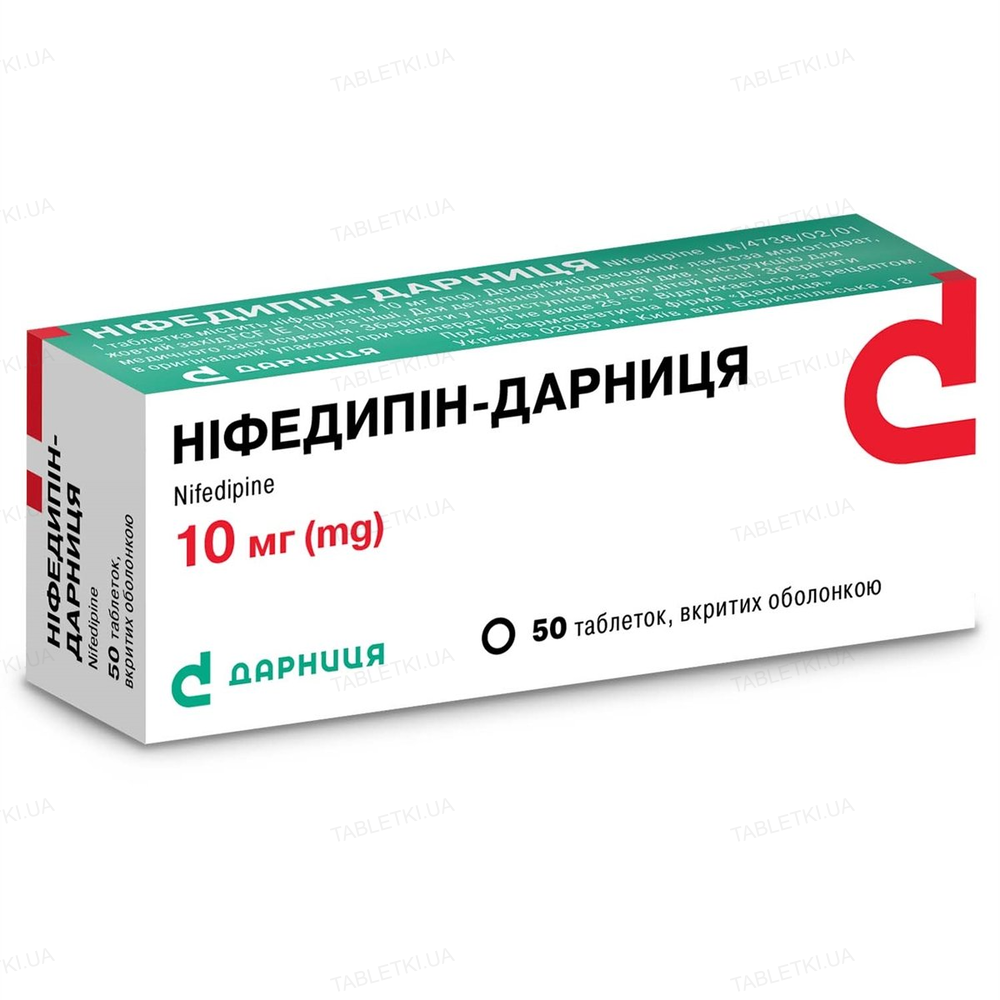
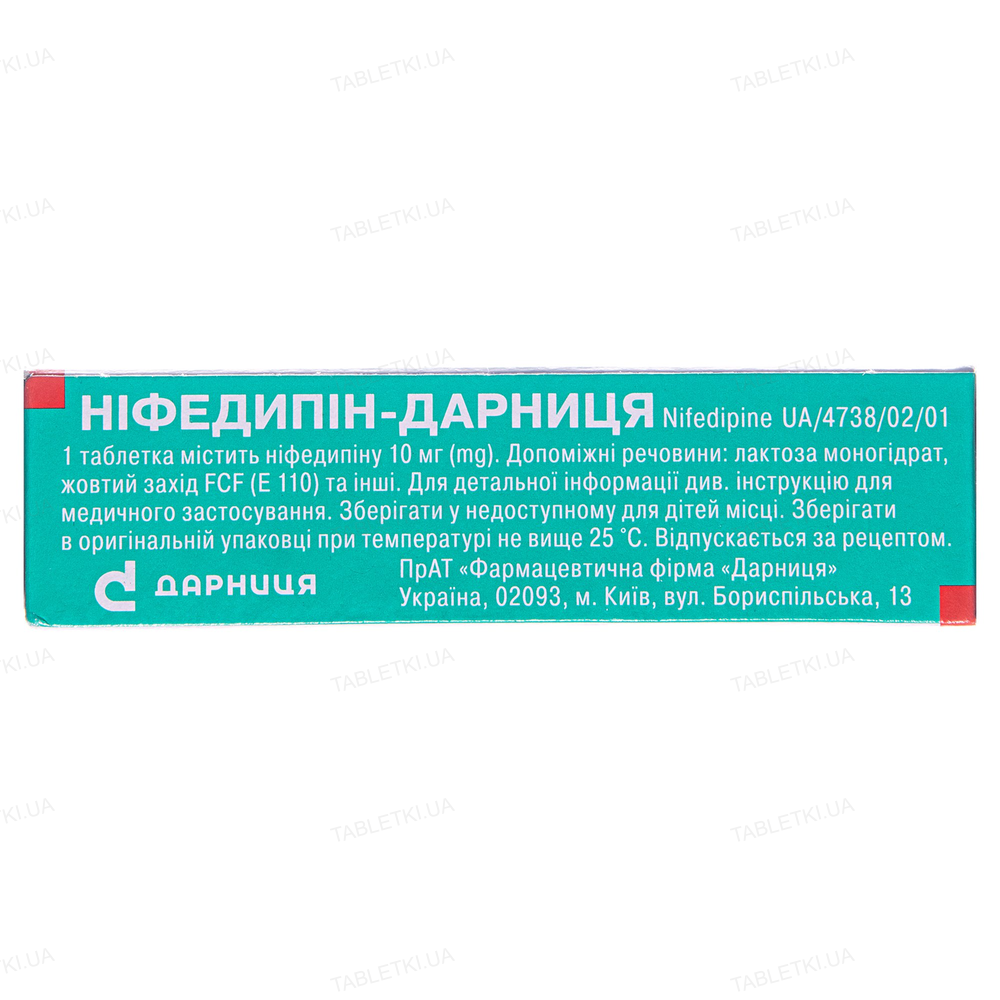
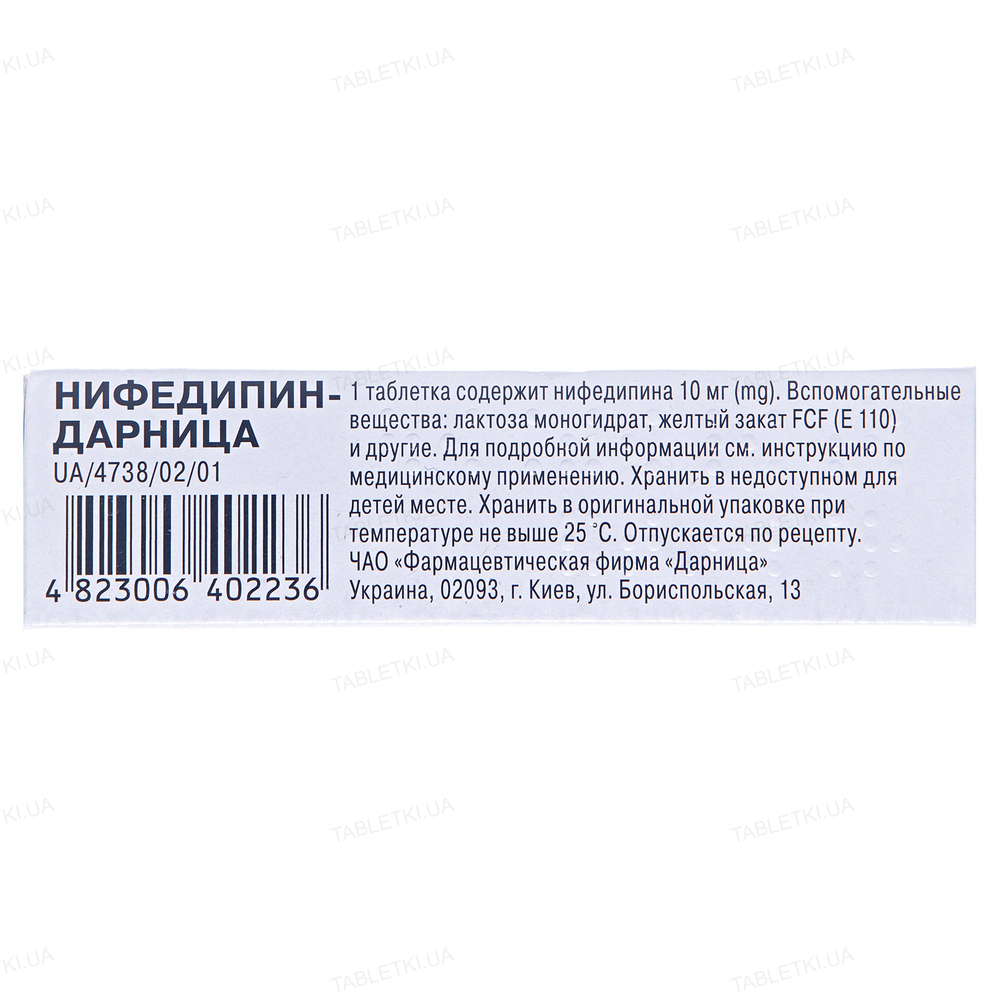
Nifedipine tablets, coated, 10 mg, No. 50 (10 x 5)
Composition
Active ingredient: nifedipine;
1 tablet contains 10 mg of nifedipine;
inactive ingredients: corn starch, lactose monohydrate, microcrystalline cellulose, povidone, magnesium stearate, Sepifilm 752 White, polyethylene glycol 6000, Sunset Yellow FCF (E 110).
Dosage Form
Film-coated tablets.
Main physical and chemical properties: orange-colored, round film-coated tablets with a biconvex surface.
Pharmacotherapeutic group
Selective calcium channel blockers with a predominant effect on blood vessels. Dihydropyridine derivatives. Nifedipine. ATC code C08C A05.
Pharmacological Properties
Pharmacodynamics.
Nifedipine—the active ingredient of the drug—is a selective calcium channel blocker and a dihydropyridine derivative. It has antianginal and antihypertensive effects. It inhibits the influx of calcium into cardiomyocytes and vascular smooth muscle cells. It reduces vascular smooth muscle tone. It dilates the coronary and peripheral arteries, reduces total peripheral vascular resistance, blood pressure, and, to a minor extent, myocardial contractility; it also reduces afterload and myocardial oxygen demand. It improves coronary blood flow. It does not impair myocardial conduction. With long-term use, nifedipine may prevent the formation of new atherosclerotic plaques in the coronary arteries. At the start of treatment with nifedipine, transient reflex tachycardia and an increase in cardiac output may occur, which do not compensate for the vasodilation caused by the drug. Nifedipine increases the excretion of sodium and fluid from the body. In Raynaud’s syndrome, the drug may prevent or alleviate vasospasm in the extremities.
Pharmacokinetics.
After oral administration, nifedipine is rapidly and almost completely absorbed. Bioavailability, due to presystemic metabolism in the liver, is 50%. Maximum plasma concentration (Tmax) is reached 1–3 hours after administration.
Nifedipine is metabolized in the intestinal wall and in the liver via the cytochrome P450 3A4 system. The metabolites exhibit no pharmacological activity. It is excreted from the body as metabolites primarily by the kidneys and approximately 5–15% via the intestines
in bile. A negligible amount of unchanged drug (less than 0.1%) has been detected in urine. The half-life (T1/2) of nifedipine in plasma is 2–5 hours.
Indications
Hypertension, ischemic heart disease: chronic stable angina, vasospastic angina (Prinzmetal angina).
Contraindications
- Hypersensitivity to nifedipine, other dihydropyridine derivatives, or other components of the drug;
- cardiogenic shock;
- severe aortic stenosis;
- unstable angina;
- acute myocardial infarction (within the first 4 weeks);
- ileostomy or colostomy;
- use in combination with rifampicin (due to the inability to achieve effective plasma concentrations of nifedipine);
- pregnancy and breastfeeding.
Drug Interactions and Other Interactions
Nifedipine is metabolized by the cytochrome P450 3A4 system, which is located in the intestinal mucosa and the liver. Therefore, drugs that inhibit or induce this enzyme system (e.g., erythromycin, clarithromycin, ciprofloxacin, norfloxacin, ketoconazole, itraconazole, fluconazole, progestin-containing agents, fluoxetine, indinavir, nelfinavir, ritonavir, amprenavir, and saquinavir) may alter the first-pass metabolism (following oral administration) or the clearance of nifedipine.
Although no in vivo interaction studies have been conducted with these drugs, concomitant use may potentially increase nifedipine concentrations in plasma. Therefore, blood pressure should be monitored, and a reduction in the nifedipine dose may be necessary.
The antihypertensive effect of nifedipine may be enhanced when used with other antihypertensive drugs and tricyclic antidepressants.
Drugs that affect the efficacy of nifedipine
With quinopristine/dalfopristine, cimetidine, and cisapride—due to inhibition of cytochrome P450 3A4, plasma concentrations of nifedipine increase; When these medications are used concomitantly, it is recommended to monitor blood pressure and, if necessary, reduce the dose of nifedipine.
With cytochrome P450 3A4 inhibitors, such as macrolide antibiotics (e.g., ketoconazole), HIV protease inhibitors (e.g., ritonavir), azole antifungals (e.g., ketoconazole), fluoxetine, and nefazodone—no clinical studies have been conducted on the interaction between these drugs and nifedipine. It is known that drugs in this class inhibit the cytochrome P450 3A4-mediated metabolism of nifedipine in vitro; therefore, when used concomitantly, an increase in nifedipine’s plasma concentration and a decrease in its clearance cannot be ruled out; it is recommended to monitor blood pressure and, if necessary, reduce the nifedipine dose.
Azithromycin, which is structurally similar to macrolide antibiotics, does not inhibit CYP3A4.
With rifampicin—due to the induction of cytochrome P450 3A4—the bioavailability and efficacy of nifedipine are significantly reduced; concomitant use of these medications is contraindicated.
With phenytoin—due to induction of cytochrome P450 3A4, the bioavailability and efficacy of nifedipine are reduced; when these medications are used concomitantly, it is recommended to monitor the clinical response to nifedipine therapy and, if necessary, increase the dose; if the nifedipine dose was increased during concomitant use, a corresponding dose reduction should be considered after discontinuation of phenytoin.
No clinical studies have been conducted on the interaction between nifedipine and cytochrome P450 3A4 inducers, such as carbamazepine, phenobarbital, and valproic acid. It is known that these drugs, due to their induction of cytochrome P450 3A4, reduce the plasma concentration of the structurally similar calcium channel blocker nimodipine; therefore, when used concomitantly with nifedipine, an increase in its plasma concentration cannot be ruled out.
With cimetidine and ranitidine—due to inhibition of cytochrome P450 3A4—cimetidine/ranitidine increases the plasma concentration of nifedipine and may potentiate its antihypertensive effect. Cimetidine acts as an inhibitor of the cytochrome isoenzyme CYP3A4. Nifedipine should be prescribed with caution to patients already taking cimetidine, and its dosage should be increased more gradually.
With cisapride—concomitant use of cisapride and nifedipine may lead to increased plasma concentrations of nifedipine. Therefore, continuous monitoring of blood pressure is necessary, and a reduction in the nifedipine dose may be required.
With diltiazem – diltiazem inhibits the metabolism and reduces the clearance of nifedipine, thereby increasing its concentration in the blood plasma. Therefore, nifedipine should be used with caution when administered concomitantly with diltiazem, and a reduction in the nifedipine dose may be necessary.
With antihypertensive agents (diuretics, α- and β-blockers, ACE inhibitors, calcium channel blockers, AT-1 receptor antagonists, PDE-5 inhibitors, α-methyldopa, magnesium sulfate)—the hypotensive effect may be potentiated; when nifedipine is used concomitantly with β-blockers, careful monitoring of the patient is required, as there have been isolated reports of exacerbation of heart failure.
When glyceryl trinitrate and long-acting isosorbide are used concomitantly, the synergistic effect of nifedipine should be taken into account.
Concomitant use of nifedipine and tricyclic antidepressants may lead to increased plasma concentrations of these drugs and an enhancement of nifedipine’s antihypertensive effect.
In patients being treated with nifedipine, fentanyl may cause hypotension. Nifedipine should be withheld for at least 36 hours prior to elective surgery involving fentanyl-based anesthesia.
Nifedipine may lead to toxic effects of magnesium sulfate, resulting in neuromuscular blockade. Concomitant use of nifedipine and magnesium sulfate is not recommended because it is dangerous and may be life-threatening.
In patients taking coumarin-based anticoagulants, prolongation of prothrombin time has been observed following the addition of nifedipine. The significance of this interaction has not been fully investigated.
Nifedipine may alter bronchial reactivity to methacholine. Nifedipine should be discontinued (if possible) prior to a nonspecific methacholine bronchial provocation test.
With theophylline—the appropriateness of using theophylline with nifedipine must be assessed, as the concentration of theophylline in blood plasma may increase when nifedipine is taken concurrently with theophylline.
With digoxin—digoxin clearance may be reduced and its plasma concentration may increase; it is recommended to monitor the patient for symptoms of digoxin overdose and, if necessary, adjust the dose based on the digoxin concentration in the blood plasma.
With amiodarone—certain medications belonging to the class of calcium channel blockers may potentiate the negative inotropic effect of antiarrhythmic agents such as amiodarone. However, there is no information regarding interactions specifically with nifedipine.
With quinidine—a decrease in quinidine concentrations has been reported, and upon discontinuation of nifedipine, a sharp increase in quinidine concentrations in plasma has been reported; it is recommended to monitor quinidine concentrations in plasma and adjust the dose if necessary; There have also been reports of increased nifedipine concentrations in plasma when these drugs are used concomitantly; however, no changes in nifedipine pharmacokinetics have been observed. In light of this, blood pressure should be carefully monitored when adding quinidine to a nifedipine treatment regimen. If necessary, the nifedipine dose should be reduced.
With tacrolimus—increased plasma concentrations of tacrolimus have been reported due to its metabolism via the cytochrome P450 3A4 system. Published data indicate that, in some cases, the tacrolimus dose may be reduced when used concomitantly with nifedipine. It is recommended to monitor tacrolimus plasma concentrations and adjust the dose as necessary.
When taken concomitantly with vincristine, the elimination of vincristine is reduced, which may lead to side effects; therefore, the need to reduce the dose should be considered;
cephalosporins (e.g., cefixime)—increased bioavailability and plasma levels of the cephalosporin.
Other types of interactions
Grapefruit juice inhibits the cytochrome P450 3A4 system. Consumption of grapefruit juice while taking nifedipine leads to increased plasma concentrations of the drug and a prolonged duration of action of nifedipine due to reduced first-pass metabolism or decreased clearance. As a result, the drug’s antihypertensive effect may be enhanced. After regular consumption of grapefruit juice, this effect may persist for at least 3 days after the last intake of juice. Therefore, consumption of grapefruit or grapefruit juice should be avoided during nifedipine therapy.
Use of the drug may lead to falsely elevated results in spectrophotometric determination of vanillylmandelic acid concentration in urine (however, this effect is not observed when using high-performance liquid chromatography).
Use of this medication may lead to false-positive results in X-ray examinations using a barium contrast agent (for example, filling defects may be interpreted as polyps).
Special Considerations for Use
This medication may be used in combination with other antihypertensive agents. However, the possibility of postural hypotension should be kept in mind.
When this medication is used concomitantly with β-blockers, it is recommended to monitor the patient’s condition, as this may result in a more pronounced decrease in blood pressure and a weakening of cardiac function.
This medication should not be used in patients experiencing an acute episode of stable angina.
There is limited evidence suggesting that patients with essential hypertension or chronic stable angina may experience a dose-dependent increase in the risk of cardiovascular complications (e.g., myocardial infarction) and mortality may occur in patients with essential hypertension or chronic stable angina. Therefore, nifedipine is recommended for the treatment of patients with essential hypertension or chronic stable angina only when other treatments are not suitable.
The drug should not be used if there is a possible association between prior use of nifedipine and ischemic pain. Within 1–4 hours after starting nifedipine, some patients reported mild ischemic pain. Although there is no evidence of steal syndrome, treatment with nifedipine should be discontinued in patients who exhibit such symptoms. In patients with angina, episodes may occur more frequently, and their duration and intensity may increase, especially at the start of treatment.
Nifedipine may slow the elimination of digoxin. Concomitant use of nifedipine with digoxin may lead to increased digoxin concentrations and may result in adverse reactions associated with elevated concentrations of cardiac glycoside medications.
Use this medication with caution in patients with severe hypotension (systolic blood pressure below 90 mm Hg), severe heart failure, severe cerebrovascular disorders, diabetes mellitus, or impaired liver function. It is recommended to monitor the patient’s condition and adjust the nifedipine dose as necessary.
Use this medication with extreme caution in patients with chronic renal failure who are undergoing hemodialysis, in cases of malignant hypertension or hypovolemia, as vasodilation may cause a significant decrease in blood pressure in these patients.
Use this medication with caution in patients who are concurrently taking cytochrome P450 3A4 inhibitors, as these may alter the first-pass metabolism or clearance of nifedipine.
Medications that are weak or moderate inhibitors of the cytochrome P450 3A4 system and may lead to increased plasma concentrations of nifedipine include, for example:
- macrolide antibiotics (e.g., erythromycin);
- anti-HIV protease inhibitors (e.g., ritonavir);
- azole antifungals (e.g., ketoconazole);
- antidepressants such as nefazodone and fluoxetine;
- quinupristin/dalfopristin;
- valproic acid;
- cimetidine.
It is recommended to monitor blood pressure and adjust the nifedipine dose if necessary.
Use this medication with caution in patients with severe narrowing of the gastrointestinal tract due to the potential for obstructive symptoms. Cases of obstructive symptoms have been reported in patients with no history of gastrointestinal disorders. Bezoars may develop, which may require surgical intervention.
In rare cases, obstructive symptoms have been reported in patients with no history of gastrointestinal disorders.
Do not use in patients with an ileal reservoir (ileostomy following proctocolectomy).
Excipients
This medication contains lactose; therefore, patients with rare hereditary forms of galactose intolerance, lactase deficiency, or glucose-galactose malabsorption should not take this medication.
Use during pregnancy or breastfeeding.
Pregnancy.
The use of nifedipine is contraindicated during pregnancy.
Animal studies have shown that the drug is embryotoxic, fetotoxic, and teratogenic, and that it has a negative effect on reproductive function. Nifedipine should not be used by women who are planning to become pregnant in the near future.
There are no results from relevant, well-controlled studies on the safety of this drug in pregnant women. Based on available clinical data, no specific prenatal risk has been established. However, there have been reports of an increased incidence of perinatal asphyxia, cesarean delivery, preterm birth, and intrauterine growth restriction. It has not been definitively established whether these cases are a consequence of hypertension, its treatment, or a specific effect of the drug. There is insufficient information to rule out serious adverse effects on the fetus or newborn.
With intravenous administration of calcium channel blockers, including nifedipine, to reduce labor and/or when used concomitantly with β2-adrenoreceptor agonists, acute pulmonary edema has been reported (especially in cases of multiple pregnancies).
When nifedipine is administered concurrently with intravenous magnesium sulfate, careful monitoring of blood pressure is required due to the possibility of a significant drop in blood pressure, which could harm the mother and the fetus.
Breastfeeding.
Breastfeeding should be discontinued for the duration of treatment.
Nifedipine passes into breast milk; the concentration of nifedipine in breast milk is nearly comparable to that in the mother’s blood plasma. The effect of small amounts of absorbed nifedipine is unknown.
Fertility.
In some in vitro experiments, a correlation has been found between the use of calcium channel blockers, particularly nifedipine, and reversible biochemical changes in sperm that impair their fertilization capacity. If in vitro fertilization attempts prove unsuccessful, and in the absence of other explanations, calcium channel blockers, particularly nifedipine, may be considered as a possible cause of this phenomenon.
Ability to affect reaction time when operating motor vehicles or other machinery.
Treatment with this medication requires constant medical supervision. Adverse reactions may occur with the use of this medication; due to varying individual responses to the medication that affect reaction time while driving or operating machinery, the ability to perform activities requiring a body position without support may be impaired. These precautions apply primarily to the start of treatment, the dose-escalation period, switching to another medication, or alcohol consumption.
Dosage and Administration
Adults should take this medication orally. Take the tablets at the same time each day, regardless of meals, without chewing, and with a sufficient amount of liquid (except grapefruit juice). Taking the tablet with food slows but does not reduce absorption.
The recommended interval between doses is 12 hours (but no less than 6 hours).
The dose of the medication and the duration of treatment are determined on an individual basis, taking into account the severity of the disease and the patient’s response to treatment.
Depending on the individual clinical presentation, the recommended dose should be increased gradually.
Hypertension.
Administer the drug at a dose of 20 mg twice daily.
Ischemic heart disease.
Administer the drug at a dose of 20 mg twice daily. If necessary, the dose of nifedipine may be increased to 60 mg/day. The dose should be increased gradually.
The maximum daily dose of the drug should not exceed 80 mg.
Patients concurrently taking cytochrome CYP 3A4 inhibitors or inducers. When used concomitantly with CYP 3A4 inhibitors or inducers, dose adjustment or discontinuation of the drug may be necessary.
Patients with hepatic impairment require close monitoring; a reduction in the drug dose may be necessary.
Due to the possibility of rebound syndrome, the drug should be discontinued gradually, especially when high doses are used or during long-term treatment.
The tablets should not be split, as doing so compromises the light protection provided by the coating.
Children.
Do not administer this medication to children, as the safety and efficacy of nifedipine in children (under 18 years of age) have not been established.
Overdose
Symptoms of acute intoxication: impaired consciousness up to the development of coma, decreased blood pressure, tachycardia/bradycardia, hyperglycemia, metabolic acidosis, hypoxia, cardiogenic shock accompanied by pulmonary edema.
Treatment. Emergency measures should primarily be directed toward removing the drug from the body and restoring stable hemodynamics. After oral administration, it is recommended to completely empty the stomach, if necessary in combination with gastric and small bowel lavage.
Consideration should be given to the use of activated charcoal. In cases of intoxication caused by extended-release medications, efforts should be made to remove the drug from the body as completely as possible, including from the small intestine, to prevent absorption of the active ingredient. Although it is generally assumed that the delayed administration of activated charcoal may be beneficial in cases of overdose with extended-release medications, it should be noted that there is no evidence to support this.
When treating a life-threatening overdose in adults, gastric lavage should be considered as an alternative one hour after ingestion of a potentially toxic dose.
If a clinically significant amount of a drug with slow elimination has been ingested, consider administering a single dose of an osmotic laxative (e.g., sorbitol, lactulose, and magnesium sulfate) within four hours, in conjunction with activated charcoal.
When using laxatives, it should be noted that calcium channel blockers lead to a decrease in intestinal muscle tone, potentially resulting in intestinal atony. Since nifedipine is characterized by a high degree of binding to plasma proteins and a relatively small volume of distribution, hemodialysis is ineffective; however, plasmapheresis is recommended.
In the event of bradycardia, β-sympathomimetics or atropine are recommended. In cases of life-threatening bradycardia, the use of an artificial pacemaker is recommended. Hypotension resulting from cardiogenic shock and vasodilation can be corrected with calcium preparations (administer 10–20 mL of a 10% solution of calcium chloride or gluconate intravenously slowly, then repeated as needed under ECG monitoring). As a result, serum calcium levels may reach the upper limit of normal or be slightly elevated. If calcium administration is not sufficiently effective, it is advisable to use sympathomimetics such as dopamine, dobutamine, epinephrine, or norepinephrine. Doses of these medications should be adjusted based on the therapeutic effect achieved. Additional fluid administration should be approached with great caution, as it increases the risk of cardiac overload. Since nifedipine is characterized by a high degree of binding to plasma proteins and a relatively small volume of distribution, hemodialysis is ineffective; however, plasmapheresis is recommended.
Patients without pronounced symptoms of intoxication should be monitored for at least 4 hours after taking an overdose of a short-acting drug and for at least 12 hours after taking a long-acting drug.
Side Effects
Most adverse reactions result from nifedipine’s vasodilatory effect and typically resolve upon discontinuation of therapy.
Ocular system: mild, temporary changes in visual perception, visual disturbances, eye pain, excessive tearing, amblyopia.
Respiratory system, thoracic, and mediastinal disorders: nosebleeds, nasal congestion, dyspnea, pulmonary edema (when used in pregnant women as a tocolytic agent), cough, spastic contraction of the bronchial muscles up to life-threatening shortness of breath, which resolves after discontinuation of treatment.
Gastrointestinal system: nausea, vomiting, dyspepsia, diarrhea, constipation, flatulence, discomfort/pain in the digestive tract, feeling of stomach fullness, stomach disorders, bloating, belching, loss of appetite, abdominal pain, intestinal obstruction, intestinal ulcer, gastroesophageal sphincter insufficiency, bezoar, dry mouth, gingival hyperplasia, dysphagia.
Liver and biliary tract disorders: liver dysfunction, transient elevation of liver enzymes, jaundice, intrahepatic cholestasis, elevated γ-glutamyltranspeptidase levels.
Renal and urinary system disorders: polyuria, dysuria; in patients with renal insufficiency—worsening of renal function, increased urinary frequency, increased daily urine output, nocturia.
Metabolism and nutrition disorders: hyperglycemia (especially in patients with diabetes mellitus).
Nervous system: headache, migraine, dizziness/vertigo, tremor, paresthesia, dysesthesia, hypesthesia, hyperesthesia, sleep disturbances, insomnia, drowsiness.
Psychiatric disorders: anxiety, mood changes, nervousness.
Cardiovascular system: tachycardia, palpitations, hypotension (symptomatic and orthostatic), edema, vasodilation, hyperemia, collapse, chest pain (including typical angina attacks), myocardial infarction, erythromelalgia, especially at the start of treatment, loss of consciousness.
Blood and lymphatic system disorders: changes in blood count, anemia, leukopenia, thrombocytopenia (sometimes with purpura), thrombotic microangiopathy, agranulocytosis.
Immune system disorders: hypersensitivity reactions, including: rash, pruritus, urticaria, allergic edema, angioedema (including laryngeal edema), anaphylactic/anaphylactoid reactions.
Skin and subcutaneous tissue disorders: rash, itching, hives, facial swelling, erythema, Mitchell’s disease, hypersensitivity reactions of the skin such as itching, exanthema, swelling of the skin and mucous membranes, edema or peripheral edema not caused by heart failure or weight gain, photosensitivity, photodermatitis, purpura, exfoliative dermatitis, toxic epidermal necrolysis (Lyell’s syndrome).
Musculoskeletal and connective tissue disorders: myalgia, arthralgia, muscle cramps, joint swelling.
Reproductive system and breast disorders: erectile dysfunction, gynecomastia (in elderly men).
General disorders: general weakness, malaise, increased fatigue, apathy, increased sweating, chills, nonspecific pain; fever may occur with prolonged use.
In patients with malignant hypertension and hypovolemia who are undergoing hemodialysis, a significant decrease in blood pressure may occur due to vasodilation.
Shelf life
2 years.
Storage conditions
Store in the original packaging at a temperature not exceeding 25 °C. Keep out of reach of children.
Packaging
10 tablets per blister pack; 5 blister packs per package.
Manufacturer
PJSC “Darnitsa Pharmaceutical Company.”
Address
Ukraine, 02093, Kyiv, 13 Boryspilskaya St.







