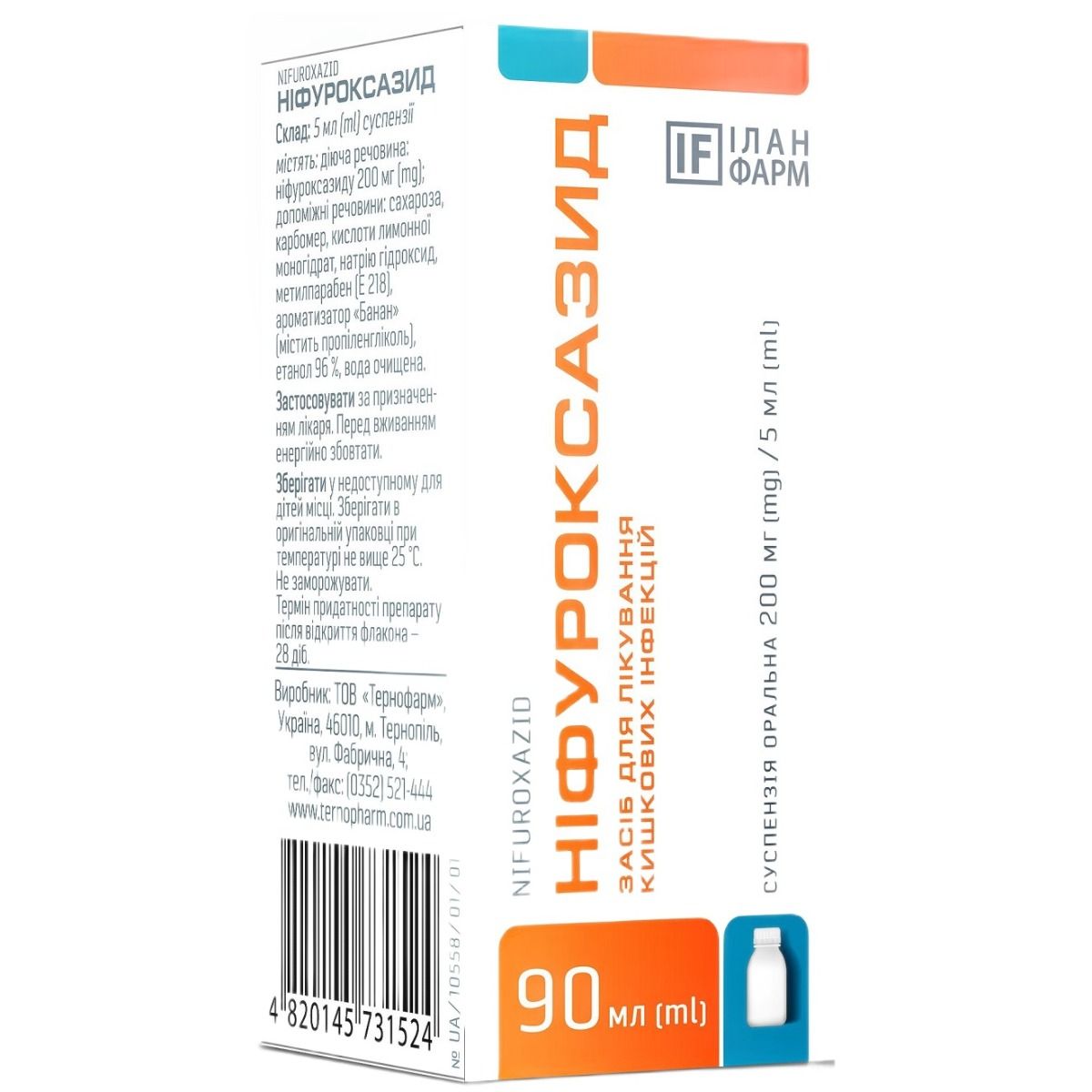
Nifuroxazide 200 mg/5 mL suspension, 90 mL
Ingredients
Active ingredient: nifuroxazide;
- 5 mL of suspension contains 200 mg of nifuroxazide
Inactive ingredients: sucrose, carbomer, citric acid, sodium hydroxide, methylparaben (E 218), “Banana” flavoring (contains propylene glycol), 96% ethanol, purified water.
Dosage Form
Oral suspension.
Main physical and chemical properties
A yellow liquid with a banana odor.
Pharmacological group
Antimicrobial agents used to treat intestinal infections. ATC code A07A X03.
Pharmacological properties
Pharmacological
Nifuroxazide is an antimicrobial drug, a nitrofuran derivative. The antimicrobial and antiparasitic properties of nifuroxazide are due to the presence of an amino group. Its local activity and lack of penetration into the body’s organs and tissues make nifuroxazide unique compared to other nitrofuran derivatives, as it has no systemic effects other than its antidiarrheal action. It is effective against Gram-positive and Gram-negative bacteria: Streptococcus pyogenes, Staphylococcus aureus, E. coli, Salmonella, and Shigella.
Pharmacokinetics
After administration, nifuroxazide is hardly absorbed from the gastrointestinal tract and does not enter organs or tissues; more than 99% of the administered drug remains in the intestine. Nifuroxazide is metabolized in the intestine. Nifuroxazide and its metabolites are excreted in the feces. The rate of drug elimination depends on the dose administered and gastrointestinal motility.
At therapeutic doses, nifuroxazide has virtually no inhibitory effect on normal intestinal microflora, does not cause the emergence of resistant microbial strains, and does not lead to the development of cross-resistance in bacteria to other antibacterial drugs.
Indications
Acute diarrhea of infectious origin.
Contraindications for Nifuroxazide
Hypersensitivity to nifuroxazide, other 5-nitrofuran derivatives, or other components of the drug.
Interactions with Other Medications and Other Types of Interactions
Nifuroxazide is not recommended for use concurrently with sorbents or with medications containing ethanol.
Nifuroxazide is not recommended for use concurrently with medications that may cause Antabuse-like reactions or with medications that depress the central nervous system.
Special Considerations for Use
Treatment with Nifuroxazide does not preclude dietary management and rehydration. If necessary, concomitant rehydration therapy should be administered depending on the patient’s age, condition, and the severity of diarrhea.
Rehydration should be a key component of treatment for acute diarrhea in children.
Children should be given fluids frequently (every ¼ hour).
Prevention or treatment of dehydration should be carried out orally or with rehydration solutions. If rehydration is prescribed, it is recommended to use solutions intended for this purpose, in accordance with the instructions for dilution and administration. The recommended volume of oral rehydration solutions depends on weight loss. In cases of severe diarrhea, intense vomiting, and refusal to eat, intravenous rehydration is required.
If such rehydration is not necessary, fluid loss should be compensated by consuming large amounts of beverages containing salt and sugar (based on an average daily requirement of 2 liters of water).
Dietary recommendations during diarrhea should be followed: avoid fresh fruits and vegetables, spicy foods, frozen foods, and beverages.
Rice should be preferred. Decisions regarding the use of dairy products should be made on a case-by-case basis.
If diarrhea is accompanied by clinical signs indicating severe symptoms (deterioration of general condition, fever, symptoms of intoxication), nifuroxazide should be prescribed in combination with antibacterial drugs used to treat intestinal infections, since the drug is not absorbed in the intestine and does not enter the systemic circulation.
The drug is not prescribed as monotherapy for the treatment of intestinal infections complicated by septicemia.
Nifuroxazide contains sucrose, which should be taken into account when prescribing the drug to patients with diabetes mellitus. It is not recommended for patients with hereditary sucrose or fructose intolerance.
The drug contains methyl parahydroxybenzoate (E218), which may cause an allergic reaction.
Alcohol consumption is strictly prohibited during treatment due to the risk of a disulfiram-like reaction, which manifests as worsening diarrhea, vomiting, abdominal pain, a sensation of heat in the face and upper torso, flushing, ringing in the ears, difficulty breathing, and tachycardia.
This medication contains a small amount of ethanol (alcohol), less than 100 mg per dose.
This medication contains 0.75 mmol (30 mg) of sodium per dose. Caution should be exercised when administering it to patients on a sodium-restricted diet.
Use During Pregnancy or Breastfeeding
There are insufficient data on the potential teratogenic and fetotoxic effects of nifuroxazide during pregnancy. Therefore, as a precaution, the use of nifuroxazide during pregnancy is not recommended.
The drug may be used by women who are breastfeeding for short-term treatment with nifuroxazide.
Effect on reaction time when driving or operating machinery
No effect.
Dosage and Administration of Nifuroxazide
Nifuroxazide should be taken orally, regardless of meals, at regular intervals. Shake the suspension well before use. The maximum daily dose is 800 mg (20 mL).
Children aged 2 years and older: 5 mL of suspension 3 times daily.
Adults: 5 mL of suspension 4 times daily.
Duration of treatment: no more than 7 days.
Children
Do not use in children under 2 years of age.
Overdose
No cases of overdose have been reported. In case of overdose, gastric lavage and symptomatic treatment are recommended.
Side Effects of Nifuroxazide
Rarely—abdominal pain, nausea, and worsening diarrhea. These symptoms do not require discontinuation of treatment. In rare cases, hypersensitivity reactions may occur, including rash, itching, shortness of breath, angioedema, and anaphylactic shock, which require discontinuation of the drug and symptomatic therapy.
This medication contains methyl parahydroxybenzoate (E218), which may cause an allergic reaction.
Shelf life
3 years. Shelf life after opening the vial: 28 days.
Storage Conditions
Store in the original packaging at a temperature not exceeding 25 °C. Do not freeze. Keep out of the reach of children.
Packaging
90 mL per jar or vial; 1 vial or jar per package, along with a measuring spoon.