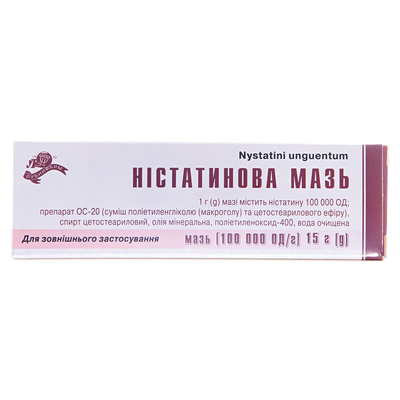
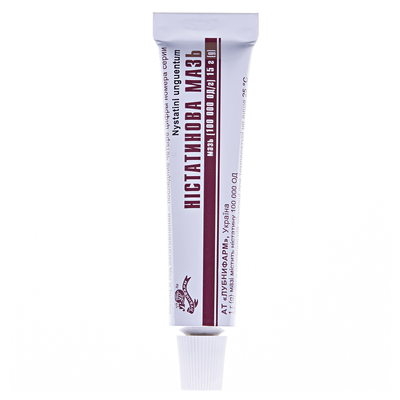
Nystatin ointment, 100,000 IU/g, 15 g per tube
Ingredients
Active ingredient: nystatin;
1 g of ointment contains 100,000 IU of nystatin;
excipients: OS-20 (a mixture of polyethylene glycol (macrogol) and cetostearyl ether), cetostearyl alcohol, mineral oil, polyethylene oxide-400, purified water.
Dosage Form
Ointment.
Main physical and chemical properties: a homogeneous mass of yellow or slightly brownish color with a faint characteristic odor.
Pharmacotherapeutic group
Antifungal agents for topical use in dermatology. Antibiotics.
ATC code D01A A01.
Pharmacological properties
Pharmacodynamics.
Nystatin is a polyene antibiotic. Its activity is expressed in international units of activity (IU). Nystatin acts on pathogenic fungi, particularly yeast-like fungi of the genus Candida, as well as Aspergillus; it is inactive against bacteria.
The drug has moderate hyperosmolar activity, resulting in an antiexudative effect.
Pharmacokinetics.
Not studied.
Indications
Skin diseases caused by fungi of the genus Candida.
Contraindications
Hypersensitivity to nystatin or to any other components of the drug.
Interactions with Other Medications and Other Types of Interactions
Cross-resistance has been observed with a number of polyene antibiotics, such as amphotericin B. The drug’s activity is reduced in the presence of divalent ions and fatty acids.
Special Instructions for Use
Avoid contact of the ointment with the eyes and other mucous membranes. If the ointment comes into contact with the eyes, rinse them thoroughly with running water.
Do not use Nystatin ointment for tuberculosis, viral skin infections, or staphylococcal pyoderma.
The medication contains cetostearyl alcohol, which may cause local skin reactions such as contact dermatitis.
Use during pregnancy or breastfeeding.
Do not use this medication during pregnancy or while breastfeeding.
Effect on reaction time when driving or operating machinery.
No effect.
Directions for Use and Dosage
Apply Nistatin ointment topically. Apply a thin layer of the ointment to the affected skin area 1–2 times daily for 7–10 days.
For chronic, recurrent, and generalized candidiasis, repeat treatment courses with 2–3-week intervals between them.
Children.
This medication is not indicated for use in children.
Overdose
None reported.
Side Effects
Allergic reactions, including itching, rash, fever, and chills.
Shelf life
3 years.
Storage conditions
Store in the original packaging at a temperature not exceeding 25 °C.
Keep out of reach of children.
Packaging
15 g in tubes No. 1.
Dispensing Category
By prescription.
Dispensing category
By prescription.