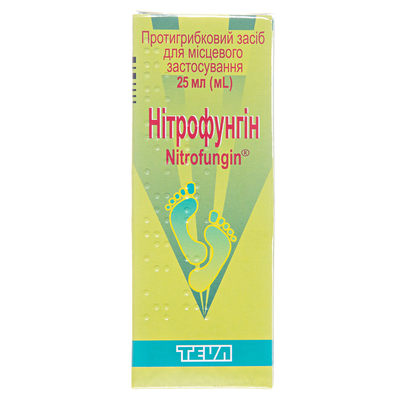
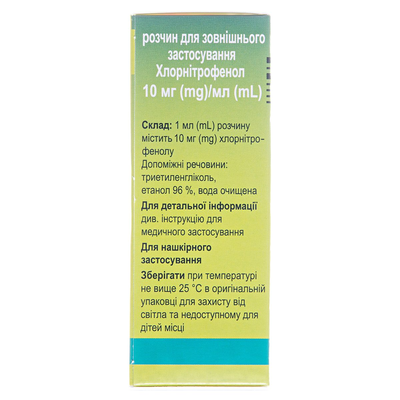
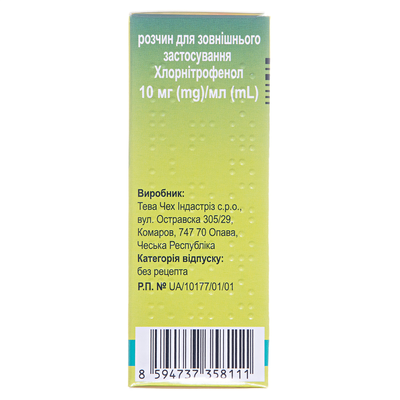
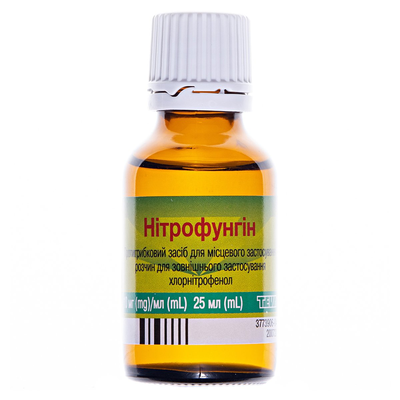
Nitrofungin solution for external use, 10 mg/mL, 25 mL per bottle.
Ingredients
Active ingredient: chloronitrophenol;
1 mL of solution contains 10 mg of chloronitrophenol;
excipients: triethylene glycol, 96% ethanol, purified water.
Dosage Form
Solution for external use.
Main physical and chemical properties: a clear solution ranging in color from yellow to greenish-yellow with a slight odor of alcohol.
Pharmacotherapeutic group
Antifungal agents for topical use. ATC code D01A E.
Pharmacological properties
Pharmacodynamics.
Nitrofungin is an antifungal agent for topical use. The drug has antiseptic and disinfectant effects against Gram-positive and Gram-negative bacteria, mycobacteria, and certain fungi. It is active against the causative agent of dermatomycoses. It acts as a fungistatic agent.
Pharmacokinetics.
Phenol is absorbed from the gastrointestinal tract, skin, and mucous membranes. It is metabolized to phenylglucuronide and phenyl sulfate. A small portion of phenol is oxidized to catecholamines and quinol. Metabolites are excreted in the urine, which may take on a light green color.
Indications
Dermatomycoses, including epidermophytosis, trichophytosis, candidiasis, mycotic eczema, and mycoses of the external auditory canal.
Contraindications
Hypersensitivity to chloronitrophenol or to any other components of the drug.
Interactions with Other Medications and Other Types of Interactions
The antimicrobial activity of phenol may be reduced by an elevated pH or by interaction with blood components or other organic substances.
Special Instructions for Use
If no therapeutic effect is observed within three days of using the drug or if symptoms worsen, the treatment strategy should be reviewed.
The application sites should be protected from direct sunlight.
The solution contains 42.4% (by volume) ethanol.
Use During Pregnancy or Breastfeeding.
During pregnancy or breastfeeding, this medication may be used only as prescribed by a doctor, who will assess the benefit-risk ratio.
Breastfeeding women should prevent any contact between the infant and the medication.
Effect on reaction time when driving or operating machinery.
This medication does not impair the ability to drive or operate machinery.
Directions for Use and Dosage
For use in adults and children 15 years of age and older. Apply the solution drop by drop or rub it into the affected areas of the skin 2–3 times a day until symptoms disappear completely. Continuing to use the medication even after the symptoms have disappeared has a significant impact on treatment outcomes. To prevent recurrence, it is recommended to use the medication 1–2 times a week, 2–3 times a day for 4 weeks.
The solution should generally be used undiluted. Only in cases of severe inflammatory skin manifestations or if skin irritation occurs during treatment should the medication be diluted with water in a 1:1 ratio.
Children
Do not use this medication in children under 15 years of age.
Overdose
Signs of overdose may occur if phenol is absorbed through damaged or intact skin following prolonged exposure over a large area of the skin. If phenol accidentally comes into contact with the skin, remove contaminated clothing and rinse the skin with plenty of water, followed by vegetable oil. Macrogol 300 or eucalyptus oil may also be used.
Accidental ingestion of phenol causes a local burn, accompanied by pain, nausea, vomiting, excessive sweating, and diarrhea. Initially, agitation may occur, after which the patient may lose consciousness. Depression of the central nervous system and subsequent cardiovascular and respiratory failure can even lead to death. Acidosis sometimes develops; rarely, hemolysis and methemoglobinemia with cyanosis may occur. Urine takes on a greenish tint. Pulmonary edema, myocardial damage, and, as a result, kidney and liver damage may occur, which can lead to failure of these organs.
If phenol enters the stomach, gastric lavage should be performed using a solution containing olive oil or another vegetable oil, which dilutes the phenol and prevents its further absorption. Activated charcoal may also be administered. Do not induce vomiting. Gastric lavage should be performed using warm water. Forced diuresis is also effective. In the event of hemolysis, a blood replacement transfusion is necessary.
Side Effects
Allergic reactions are possible. In rare cases, skin irritation may occur at the application site, or the skin may become hypersensitive to direct sunlight. If these adverse reactions occur, consult a doctor regarding continued use of the product.
Shelf Life
5 years.
Storage Conditions
Store at a temperature not exceeding 25 °C in the original packaging to protect from light and keep out of the reach of children.
Packaging
25 mL per vial; 1 vial per box.
Dispensing Category
Available without a prescription.