
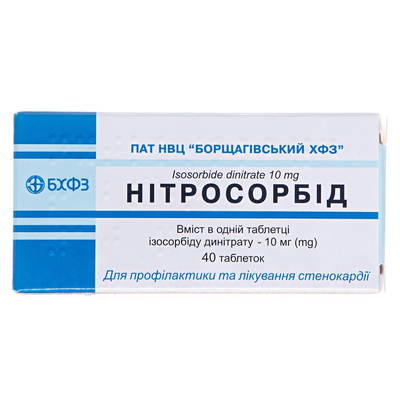
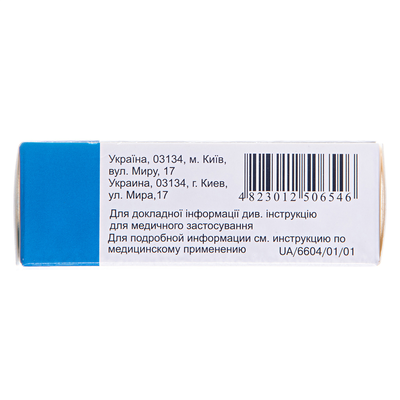
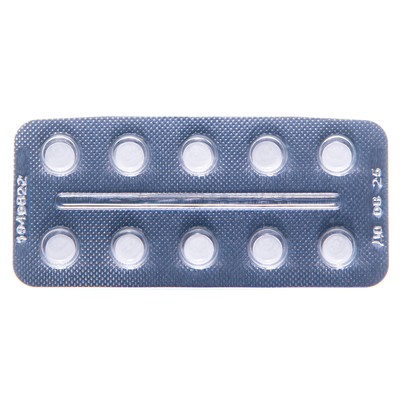
Nitrosorbid 10 mg tablets, No. 40 (10 x 4)
Ingredients
Active ingredient: isosorbide dinitrate;
1 tablet contains isosorbide dinitrate in the form of diluted isosorbide dinitrate (calculated as 100% dry weight) – 10 mg;
excipients: lactose monohydrate, crospovidone, calcium stearate.
Dosage Form
Tablets.
Main physical and chemical properties: round tablets with a flat surface and beveled edges, white in color.
Pharmacotherapeutic group
Cardiovascular drugs. Vasodilators used in cardiology. Isosorbide dinitrate. ATC code C01D A08.
Pharmacological properties
Pharmacodynamics.
Isosorbide dinitrate is one of the main antianginal agents in the group of organic nitrates, a peripheral vasodilator that primarily affects venous vessels.
Like all organic nitrates, isosorbide dinitrate acts as a nitric oxide (NO) donor. NO causes relaxation of vascular smooth muscle (primarily in veins and systemic arteries) by stimulating guanylate cyclase and subsequently increasing the concentration of intracellular cyclic guanylate monophosphate (cGMP). As a result, cGMP-dependent protein kinase is activated, and the phosphorylation of various proteins in smooth muscle cells is altered. This leads to the dephosphorylation of myosin light chains and a decrease in contractility.
The action of isosorbide dinitrate is associated with a reduction in myocardial oxygen demand due to a decrease in preload (dilatation of peripheral veins and reduced blood flow to the right atrium) and afterload (decrease in total peripheral vascular resistance), as well as with a direct coronary vasodilatory effect. Isosorbide dinitrate promotes the redistribution of coronary blood flow to areas with reduced blood supply. It increases exercise tolerance in patients with ischemic heart disease and angina.
The use of isosorbide dinitrate improves coronary perfusion without causing “steal syndrome.” It exhibits an antihypertensive effect. In severe forms of heart failure resulting from decreased tone of peripheral venous vessels, the drug reduces the load on the heart, pressure in the vessels of the pulmonary circulation, and shortness of breath.
Pharmacokinetics.
Bioavailability after oral administration is 22% (due to the “first-pass” effect through the liver). The onset of action occurs within 15–40 minutes; the maximum effect is reached after 1.5–2 hours; the total duration of action is 4–6 hours or longer. It is metabolized in the liver. The half-life is 4 hours and may be prolonged with prolonged use of the drug. It is excreted almost entirely in the urine as metabolites.
Indications
- Prevention and treatment of angina attacks, including post-myocardial infarction angina.
- Treatment of chronic congestive heart failure in combination with cardiac glycosides and diuretics.
Contraindications
- Hypersensitivity to isosorbide dinitrate, other nitrates, or any component of the drug;
- elevated intracranial pressure (including in cases of traumatic brain injury or hemorrhagic stroke), as venodilation may lead to a further increase in intracranial pressure;
- severe arterial hypotension (systolic blood pressure below 90 mm Hg), bleeding, hypovolemia (isosorbide dinitrate, by reducing venous return, may trigger syncope);
- acute circulatory failure (shock, vascular collapse);
- cardiogenic shock (if adequate end-diastolic pressure is not maintained by appropriate measures);
- angina caused by hypertrophic obstructive cardiomyopathy;
- cardiac tamponade, aortic stenosis, mitral stenosis, constrictive pericarditis;
- acute myocardial infarction;
- primary pulmonary diseases (due to the risk of hypoxemia, which may be caused by a redistribution of blood flow to areas of hyperventilation), toxic pulmonary edema, cor pulmonale;
- severe anemia;
- angle-closure glaucoma;
- severe hepatic and/or renal impairment, hyperthyroidism;
- concomitant use with phosphodiesterase inhibitors (e.g., sildenafil, tadalafil, vardenafil).
Interactions with Other Medications and Other Types of Interactions
Phosphodiesterase inhibitors (sildenafil, tadalafil, vardenafil)—treatment of erectile dysfunction with these drugs is contraindicated during treatment with isosorbide dinitrate, as there is a potential risk of uncontrolled hypotension and life-threatening cardiovascular complications. If necessary, phosphodiesterase inhibitors should be taken no earlier than 72 hours after taking nitrates.
Alcohol—severe disulfiram-alcohol reactions may occur, including severe hypotension and collapse.
Antihypertensive drugs (e.g., beta-blockers, ACE inhibitors, calcium channel blockers, vasodilators), phenothiazines, other nitrates/nitrites, quinidine, novocaineamide, cyclic antidepressants, MAO inhibitors, narcotic analgesics—potentiation of the hypotensive effect of isosorbide dinitrate; possible development of orthostatic collapse.
Disopyramide—may reduce the effectiveness of isosorbide dinitrate.
Dihydroergotamine—blood concentrations of dihydroergotamine may increase, leading to an enhancement of its hypertensive effect.
Norepinephrine, acetylcholine, histamine—their effects may be attenuated when used with nitrates, as isosorbide dinitrate may act as their physiological antagonist.
Sympathomimetic agents (including epinephrine, ephedrine, norepinephrine, naphazoline, mezaton, and isadrine)—the antianginal effect of nitrates may be reduced.
Heparin—its anticoagulant effect may be reduced.
Hydralazine—cardiac output improves in heart failure when used in combination with isosorbide dinitrate.
Miosis-inducing agents—isosorbide dinitrate reduces their effectiveness.
Atropine and other drugs with M-cholinergic blocking effects (e.g., etacizin, etmosin) — may reduce the vasodilatory effect of isosorbide dinitrate and increase intraocular pressure.
Sulfhydryl group donors (captopril, acetylcysteine, unitiol) restore reduced sensitivity to the drug.
Sapropterin (tetrahydrobiopterin, BH4) is a cofactor for nitric oxide synthase. Use drugs containing sapropterin with caution in combination with any medications that exert a vasodilatory effect through nitric oxide metabolism or contain nitric oxide donors (including nitroglycerin (NG), isosorbide dinitrate (ISDN), and isosorbide mononitrate).
Special Instructions for Use
Do not use this medication to relieve angina attacks.
Cases of tolerance and cross-tolerance to other nitrates have been reported with the use of this medication. To prevent a reduction or loss of efficacy, prolonged use of high doses should be avoided. In the event of “nitrate” tolerance, it is recommended to discontinue Nitrosorbide for 24–48 hours or, after 3–6 weeks of regular use, take a 3–5-day break, replacing Nitrosorbide with other antianginal medications during this time. Patients should be advised that the antianginal effect of isosorbide dinitrate is closely related to its dosing regimen; therefore, the recommended dosing schedule should be strictly followed.
The drug should be prescribed with caution to patients prone to orthostatic reactions, hypothyroidism, hypothermia, or malnutrition, as well as to elderly patients, given age-related changes in liver, kidney, and heart function, comorbidities, and the use of other medications.
During treatment, especially when gradually increasing the dose, blood pressure and heart rate must be monitored.
Nitrosorbide should be discontinued by gradually reducing the dose.
To prevent hypotension and “nitrate” headaches, treatment should begin with the lowest possible dose. Aspirin and/or acetaminophen may be used to reduce isosorbide dinitrate-induced headaches without adversely affecting the antianginal effect of isosorbide dinitrate.
Treatment with this drug may cause orthostatic reactions, which occur more frequently with concomitant use of alcohol or other vasodilators.
Alcohol should be avoided during treatment with Nitrosorbide.
In patients with glucose-6-phosphate dehydrogenase deficiency, acute hemolysis (favism) may develop with the use of isosorbide dinitrate.
Taking isosorbide dinitrate may affect the results of colorimetric cholesterol testing.
Patients receiving maintenance therapy with this medication should be informed that they must not take medications containing phosphodiesterase inhibitors (e.g., sildenafil, tadalafil, vardenafil), due to the risk of uncontrolled hypotension.
Patients with angle-closure glaucoma may experience an increase in intraocular pressure. This medication contains lactose; therefore, its use is contraindicated in patients with rare hereditary conditions such as galactose intolerance, lactase deficiency, or glucose-galactose malabsorption.
Use during pregnancy or breastfeeding.
There is insufficient data on the safety of isosorbide dinitrate during pregnancy. Nitrosorbide is contraindicated during the first trimester of pregnancy. During the second and third trimesters of pregnancy, the drug should be used only after weighing the expected benefit to the mother against the potential risk to the fetus.
If use of the drug is necessary during breastfeeding, breastfeeding should be discontinued.
Effect on reaction time when driving or operating machinery.
Until an individual’s response to the drug is determined, patients should refrain from driving or operating machinery, as treatment may cause a decrease in the ability to concentrate, slowed psychomotor reactions, dizziness, or visual disturbances.
Dosage and Administration
The dosage and duration of therapy should be determined individually by the physician.
Adults should take 10–20 mg orally 3–4 times daily, 30 minutes before meals; do not chew the tablets; take with a sufficient amount of liquid. If treatment is not sufficiently effective, the dose may be gradually increased to a maximum of 120 mg per day.
In patients with congestive heart failure, monitoring hemodynamics is essential for determining the individual dosage.
The interval between doses should be at least 4 hours.
Elderly patients: The dose may be reduced, especially in cases of impaired renal and/or hepatic function.
Children.
There is no experience with use in children.
Overdose
Symptoms: decreased blood pressure, pallor, profuse sweating, weak pulse, dizziness, headache, orthostatic hypotension, weakness, reflex tachycardia, hyperthermia, nausea, vomiting, diarrhea. Since nitrite ions are released during the biotransformation of isosorbide dinitrate, the possibility of methemoglobinemia with cyanosis, followed by tachypnea, anxiety, loss of consciousness, and cardiac arrest.
At excessive doses, increased intracranial pressure may occur, accompanied by cerebral symptoms, including seizures.
Treatment: In cases of hypotension, the patient should be placed in a supine position with the lower extremities elevated, and oxygen administration should be ensured. If blood pressure does not normalize, correct the circulating blood volume; in severe cases, administration of dopamine and sympathomimetics is indicated. The use of epinephrine (adrenaline) is contraindicated. In cases of methemoglobinemia, depending on the severity of the condition, the following antidotes may be used: vitamin C (1 g orally), methylene blue (up to 50 mL of a 1% solution intravenously), toluidine blue (initially 2–4 mg/kg of body weight intravenously, followed by additional doses depending on the severity of the condition), as well as oxygen therapy, hemodialysis, and transfusion therapy. If signs of respiratory or circulatory arrest occur, resuscitation measures should be initiated immediately.
Side Effects
Immune system: cutaneous allergic reactions (including itching, rash, hives, angioedema), cutaneous vasodilation, including facial and trunk flushing, sensation of heat, diaphoresis, hot flashes; exfoliative dermatitis/Stevens-Johnson syndrome, Quincke’s edema.
Cardiovascular system: arterial hypotension and/or orthostatic hypotension with reflex tachycardia, symptomatic palpitations, and symptoms of cerebral ischemia (including drowsiness, dizziness, weakness, and blurred vision), in most cases at the start of treatment and upon dose escalation; peripheral edema, usually in patients with left ventricular failure; exacerbations or increased frequency of angina attacks associated with a decrease in blood pressure, pallor of the skin; collapse associated with bradycardia, cardiac arrhythmias, and syncope; alveolar hypoventilation followed by hypoxemia and a risk of hypoxia or myocardial infarction in patients with ischemic heart disease.
Gastrointestinal tract: nausea, vomiting, heartburn, constipation, a mild burning sensation on the tongue, dry mouth.
Nervous system: headache (“nitrate headache”) at the start of treatment, which usually gradually subsides or disappears with continued use of the drug, but may be severe and persistent; pituitary hemorrhage in patients with an undiagnosed pituitary tumor.
Blood and lymphatic system: hematologic adverse reactions, including methemoglobinemia, a case of isosorbide dinitrate-induced hemolytic anemia in a patient with concomitant glucose-6-phosphate dehydrogenase deficiency.
Eyes: blurred vision; angle-closure glaucoma; cases of visual hallucinations; narrowing of the visual field.
Other: Cases of tolerance to isosorbide dinitrate, as well as cross-tolerance to other nitrates, have been reported. Prolonged use of high doses and/or shortening the interval between doses may lead to a reduction or even loss of the drug’s effect. Cases of a significant increase in plasma renin and aldosterone levels have been reported, associated with a decrease in glomerular filtration rate and osmotic-free water clearance in patients with liver cirrhosis, especially those with ascites.
Shelf life
3 years.
Storage conditions
Store in the original packaging at a temperature not exceeding 25 °C, away from fire.
Keep out of reach of children.
Packaging
10 tablets per blister pack, 4 blister packs per box.
Dispensing Category: By prescription only.
Dispensing category
By prescription.







