
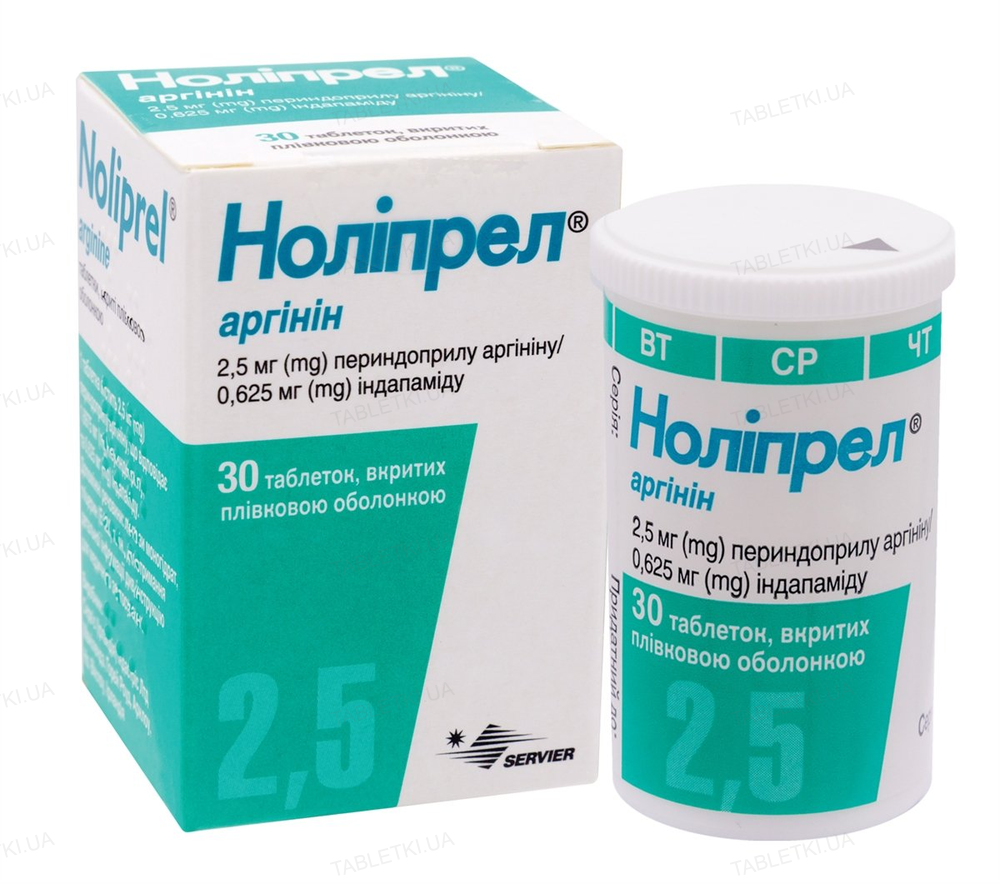
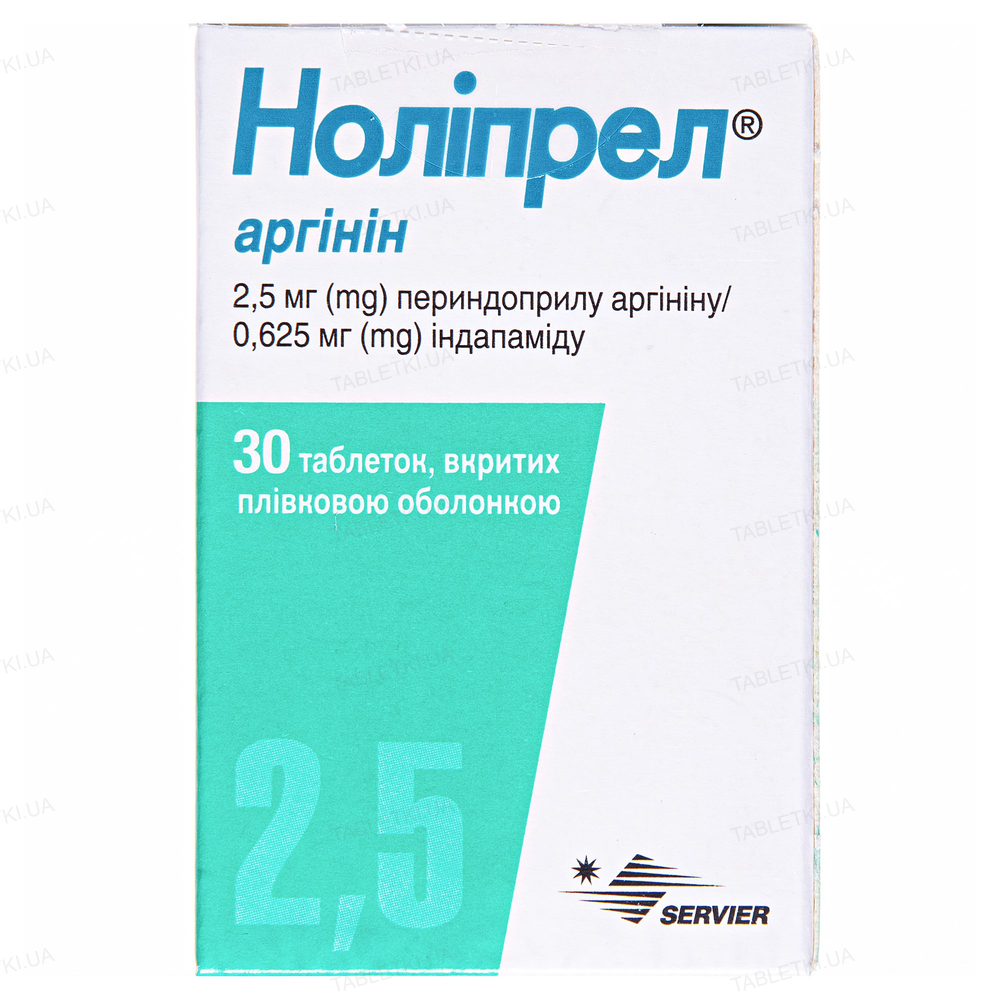
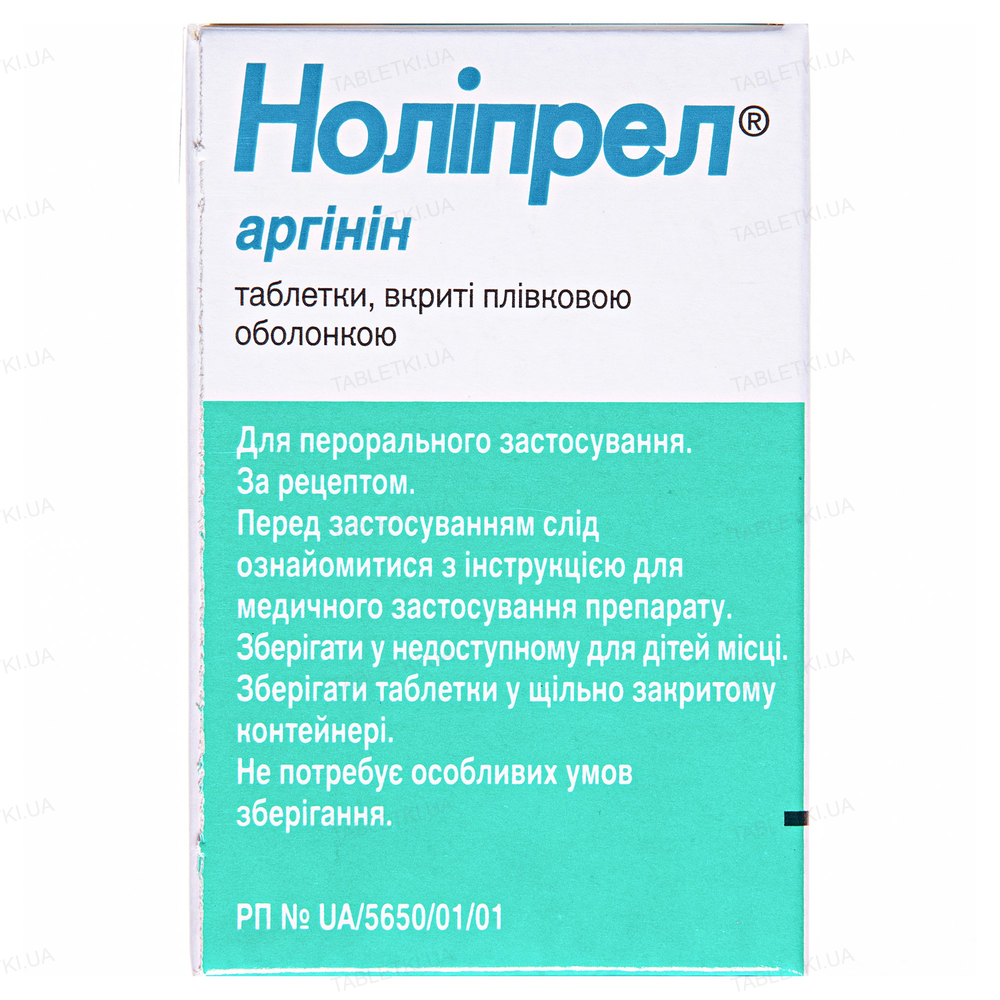
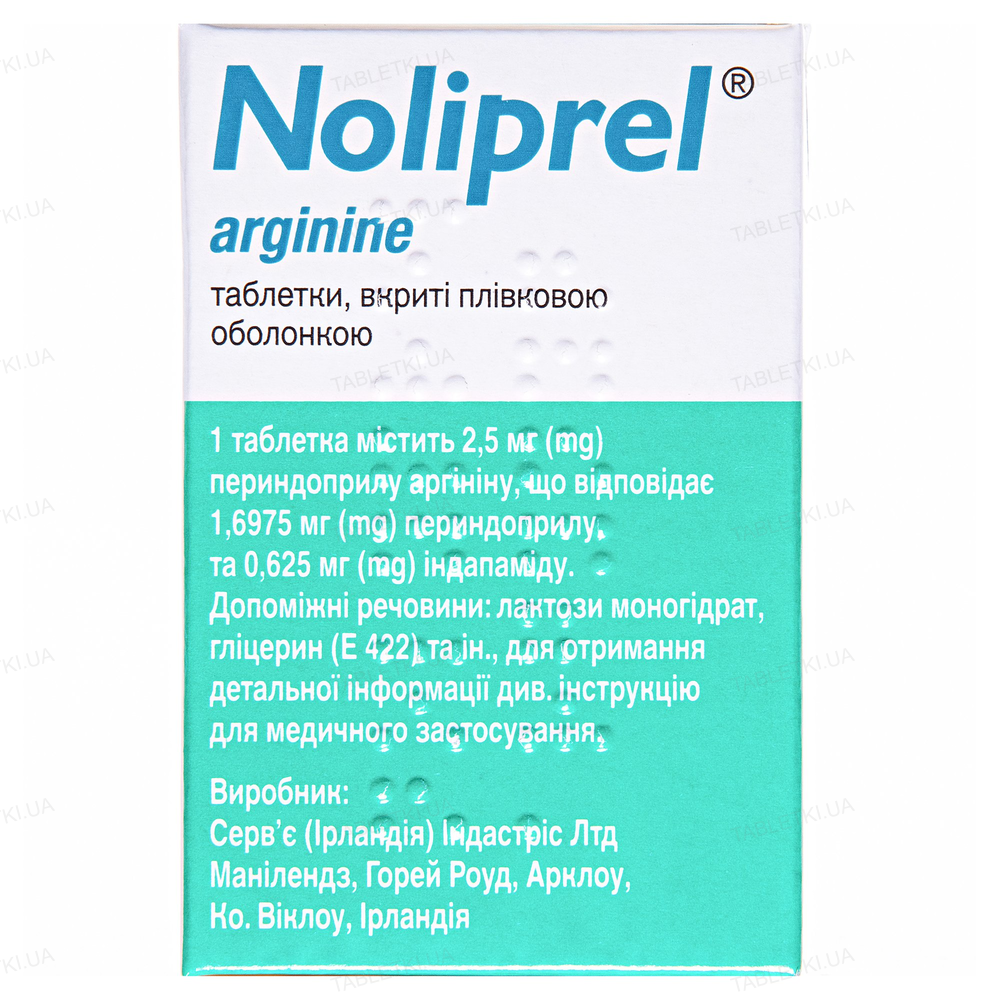
Noliprel Arginine Tablets, film-coated, No. 30 in a blister pack.
Composition
Active ingredients: perindopril arginine, indapamide;
1 tablet contains 2.5 mg of perindopril arginine, equivalent to 1.6975 mg of perindopril, and 0.625 mg of indapamide;
Excipients: lactose monohydrate, magnesium stearate (E 470 B), maltodextrin, colloidal anhydrous silicon dioxide (E 551), sodium starch glycolate (type A), polyethylene glycol 6000, glycerin (E 422), hypromellose (E 464), titanium dioxide (E 171).
Dosage Form
Film-coated tablets.
Main physical and chemical properties:
manufactured by “Servier Industries Laboratories,” France: white, oblong film-coated tablets, embossed with a score line on both sides;
manufactured by “Servier (Ireland) Industries Ltd,” Ireland: white, oblong film-coated tablets, embossed with “” on one side and a score line on both sides.
Pharmacotherapeutic group
Perindopril and diuretics. ATX code C09B A04.
Pharmacological Properties
Pharmacodynamics.
Noliprel® Arginine is a combination of the ACE inhibitor perindopril arginine and the sulfonamide diuretic indapamide. Its pharmacological action is due to the properties of each component (perindopril and indapamide) and their additive synergism.
Mechanism of Action
Noliprel® Arginine has an additive synergistic effect of the two antihypertensive components.
Mechanism of action of perindopril
Perindopril is an ACE inhibitor that converts angiotensin I to angiotensin II (a vasoconstrictor), and additionally stimulates aldosterone secretion by the adrenal cortex and the breakdown of bradykinin (a vasodilator) into inactive heptapeptides. ACE inhibition leads to: a decrease in aldosterone secretion; an increase in plasma renin activity, while aldosterone has no adverse effect; a reduction in total peripheral vascular resistance due to a predominant effect on the vessels of the muscles and kidneys; at the same time, no water and salt retention or reflex tachycardia is observed, even with long-term treatment. In addition, perindopril lowers blood pressure (BP) in patients with normal and low plasma renin levels. Perindopril acts through its active metabolite, perindoprilat. Other metabolites are inactive. Perindopril reduces the workload on the heart through its vasodilatory effect on veins (possibly due to changes in prostaglandin metabolism)—a reduction in preload, and by reducing total peripheral vascular resistance—thereby reducing afterload on the heart. Studies conducted in patients with heart failure have shown that perindopril treatment leads to a reduction in left and right ventricular filling pressures, a reduction in total peripheral vascular resistance, an increase in cardiac output and an improvement in cardiac index, and an increase in regional blood flow to the muscles. Exercise test results improve.
Mechanism of Action of Indapamide
Indapamide is a sulfonamide derivative with an indole ring, pharmacologically related to thiazide diuretics. Indapamide inhibits sodium reabsorption in the cortical segment of the kidneys. This increases the excretion of sodium and chloride, and to a lesser extent potassium and magnesium, in the urine, thereby increasing urine output and producing an antihypertensive effect.
Pharmacodynamic Effects
Noliprel® Arginine exerts a dose-dependent antihypertensive effect on systolic (SBP) and diastolic (DBP) blood pressure in patients with hypertension of anyage, whether in the supine or standing position. The drug’s antihypertensive effect lasts for 24 hours. A reduction in blood pressure is achieved in less than one month without the development of tachyphylaxis; discontinuation of treatment does not cause withdrawal syndrome. Clinical studies have demonstrated that the concomitant administration of perindopril and indapamide produces a synergistic antihypertensive effect resulting from the individual effects of the drug’s components.
PICXEL—a multicenter, randomized, double-blind, controlled trial, in which the effect of the combination of perindopril and indapamide on left ventricular hypertrophy was evaluated based on echocardiographic findings compared with enalapril monotherapy. In the PICXEL study, patients with hypertension and left ventricular hypertrophy (with a left ventricular mass index > 120 g/m² in men and > 100 g/m² in women) were randomized into two groups: one group of patients received 2 mg of perindopril tert-butylamine (equivalent to 2.5 mg of perindopril arginine)/0.625 mg of indapamide, while the other received 10 mg of enalapril once daily for one year. Doses were adjusted according to blood pressure readings: the dose of perindopril tert-butylamine was increased to 8 mg (equivalent to 10 mg of perindopril arginine), indapamide to 2.5 mg, and enalapril to 40 mg once daily. Thirty-four percent of patients in the perindopril/indapamide group (2 mg of perindopril and 0.625 mg of indapamide) continued to take the medications at the starting dose and 20% in the enalapril group (10 mg). Among all randomized patients, at the end of treatment, the left ventricular mass index decreased significantly more in patients receiving perindopril/indapamide (–10.1 g/m²) than in the enalapril group (-1.1 g/m²). The difference between the two groups was -8.3 (95% confidence interval [CI] from -11.5 to -5.0, p < 0.0001). A greater reduction in left ventricular mass index was achieved with perindopril/indapamide at doses higher than those approved for Noliprel® Arginine and Noliprel® Arginine Forte. Blood pressure was reduced more effectively in the perindopril/indapamide group: the difference in the mean reduction in blood pressure between the two patient groups was -5.8 mmHg (95% CI from -7.9 to -3.7, p < 0.0001) for systolic blood pressure and -2.3 mmHg (95% CI from -3.6 to -0.9, p = 0.0004) for diastolic blood pressure.
Pharmacodynamic effects associated with perindopril
Perindopril effectively lowers blood pressure in all stages of hypertension: mild, moderate, and severe. Reductions in systolic and diastolic blood pressure are observed in both the supine and standing positions. The maximum antihypertensive effect develops 4–6 hours after a single dose and persists for more than 24 hours. Perindopril achieves a high degree of final ACE inhibition (approximately 80%) 24 hours after administration. In patients who respond to treatment, blood pressure normalizes within one month and remains stable without the development of tachyphylaxis. Discontinuation of therapy is not accompanied by withdrawal syndrome. Perindopril has vasodilatory properties, restores the elasticity of large arteries, corrects histomorphometric changes in arterial resistance, and reduces left ventricular hypertrophy. Adding a thiazide diuretic, if necessary, results in additional synergistic effects. The combined use of an ACE inhibitor and a thiazide diuretic reduces the risk of hypokalemia, which may occur when a diuretic is prescribed as monotherapy.
Pharmacodynamic Effects Associated with Indapamide
When used as monotherapy, indapamide exerts an antihypertensive effect that lasts for 24 hours. This effect is observed at doses at which the diuretic properties are minimal. The antihypertensive effect of indapamide is proportional to the improvement in arterial elasticity and the reduction in arteriolar resistance and total peripheral vascular resistance. Indapamide reduces left ventricular hypertrophy. When the dose is exceeded, the antihypertensive effect of thiazide and thiazide-like diuretics reaches a plateau, while the incidence of adverse effects increases. If treatment is insufficiently effective, the dose should not be increased. Furthermore, as demonstrated in studies of varying durations (short, medium, and long) involving patients with hypertension, indapamide does not affect lipid metabolism (triglycerides, low- and high-density lipoproteins) and does not affect carbohydrate metabolism, even in patients with hypertension and diabetes mellitus.
Pharmacokinetics.
The pharmacokinetic properties of perindopril and indapamide when administered in combination do not differ from those of these components when administered separately.
Pharmacokinetic properties of perindopril
Absorption and Bioavailability. After oral administration, perindopril is rapidly absorbed, with peak plasma concentrations reached within 1 hour. The half-life of perindopril in plasma is 1 hour. Since food intake reduces the conversion of perindopril to perindoprilat—and thus lowers its bioavailability—perindopril arginine should be taken orally as a single daily dose in the morning before a meal.
Distribution. The volume of distribution of unbound perindoprilat is approximately 0.2 L/kg. The plasma protein binding of perindoprilat is 20%, primarily to ACE, and is concentration-dependent.
Biotransformation. Perindopril is a prodrug. Thus, 27% of the administered dose of perindopril enters the bloodstream as the active metabolite perindoprilat. In addition to the active metabolite perindoprilat, perindopril forms 5 other inactive metabolites. The maximum plasma concentration of perindoprilat is reached after 3–4 hours.
Elimination. Perindoprilat is excreted in the urine; the terminal half-life of the unbound fraction is approximately 17 hours. Steady state is reached within 4 days.
Linearity/Nonlinearity. A linear relationship between the dose of perindopril and its plasma concentration has been demonstrated.
Special Patient Populations
Elderly patients. Perindoprilat clearance is reduced in elderly patients and in individuals with heart or kidney failure.
Renal impairment. For patients with renal impairment, the dose should be adjusted according to the degree of renal impairment (creatinine clearance).
Dialysis. The dialysis clearance of perindoprilat is 70 mL/min.
Liver cirrhosis. The pharmacokinetics of perindoprilat are altered in patients with liver cirrhosis: hepatic clearance of the parent compound is reduced by half. However, the amount of perindoprilat formed does not decrease; therefore, no dose adjustment is required for these patients (see the sections “Dosage and Administration” and “Special Considerations for Use”).
Pharmacokinetic Properties of Indapamide
Absorption. Indapamide is rapidly and completely absorbed in the gastrointestinal tract. Maximum plasma concentration is reached approximately 1 hour after oral administration.
Distribution. Plasma protein binding is 79%.
Metabolism and excretion. The half-life is 14–24 hours (average: 18 hours). Repeated dosing does not result in accumulation. Excretion occurs primarily in the urine (70% of the dose) and feces (22%) as inactive metabolites.
Special Patient Populations
Renal impairment. Pharmacokinetic parameters are not altered in patients with renal insufficiency.
Indications
Noliprel® Arginine is indicated for the treatment of essential hypertension in adult patients.
Contraindications
Related to perindopril:
- hypersensitivity to the active ingredient or to any other ACE inhibitor;
- a history of angioedema (Quincke’s edema) associated with previous treatment with ACE inhibitors (see the “Special Considerations for Use” section);
- congenital or idiopathic angioedema;
- pregnancy or planning to become pregnant (see the section “Use During Pregnancy or Breastfeeding”);
- concomitant use with aliskiren-containing medications in patients with diabetes mellitus or impaired renal function (glomerular filtration rate < 60 mL/min/1.73 m²) (see sections “Interactions with Other Medications and Other Types of Interactions” and “Pharmacodynamics”);
- concomitant use with sacubitril/valsartan. Do not administer Noliprel® Arginine until at least 36 hours after the last dose of sacubitril/valsartan (see the sections “Special Considerations for Use” and “Interactions with Other Medications and Other Types of Interactions”);
- extracorporeal treatment methods that result in blood contact with negatively charged surfaces (see the “Interactions with Other Medications and Other Types of Interactions” section);
- significant bilateral renal artery stenosis or stenosis of the artery supplying a single functioning kidney (see the “Special Considerations for Use” section).
Related to indapamide:
- hypersensitivity to the active ingredient or to any other sulfonamides;
- severe renal insufficiency (creatinine clearance < 30 mL/min);
- hepatic encephalopathy;
- severe hepatic impairment;
- hypokalemia.
Related to the drug Noliprel® Arginine:
- Hypersensitivity to any excipient.
Due to a lack of sufficient clinical experience, Noliprel® Arginine should not be used in:
- in patients undergoing hemodialysis;
- in patients with untreated decompensated heart failure.
Interactions with Other Medications and Other Types of Interactions
Interactions common to perindopril and indapamide
Concomitant use is not recommended
Lithium. Reversible increases in serum lithium concentrations and increased lithium toxicity have been reported during concomitant use with angiotensin-converting enzyme (ACE) inhibitors. Concomitant use of perindopril with indapamide and lithium is not recommended; however, if it is truly necessary, serum lithium levels should be carefully monitored.
Concomitant use requiring special attention
Baclofen. The antihypertensive effect is enhanced. Blood pressure should be monitored, and the dose of the antihypertensive agent should be adjusted as necessary.
Nonsteroidal anti-inflammatory drugs (NSAIDs) (including acetylsalicylic acid at a dose of ≥ 3 g/day). When ACE inhibitors are used concomitantly with NSAIDs—such as acetylsalicylic acid at anti-inflammatory doses, COX-2 inhibitors, and nonselective NSAIDs—the antihypertensive effect may be reduced. Concomitant use of ACE inhibitors and NSAIDs may increase the risk of impaired renal function, including the development of acute renal failure, and elevated serum potassium levels, particularly in patients with impaired renal function. This combination should be prescribed with caution, especially in elderly patients. Patients should be rehydrated prior to initiating treatment, and renal function should be monitored at the start of and throughout combination therapy.
Concomitant Use Requiring Caution
Imipramine-like (tricyclic) antidepressants, antipsychotics. These enhance the antihypertensive effect and increase the risk of orthostatic hypotension (additive effect).
Interactions related to perindopril
Data from clinical studies indicate that dual blockade of the renin-angiotensin-aldosterone system (RAAS) due to the concomitant use of ACE inhibitors, angiotensin II receptor blockers, or aliskiren is associated with an increased incidence of adverse reactions such as hypotension, hyperkalemia, and worsening renal function (including acute renal failure), compared with the use of a single drug that affects the RAAS (see the “Contraindications” and “Special Precautions for Use” sections).
Drugs that increase the risk of angioedema: Concomitant use of ACE inhibitors with sacubitril/valsartan is contraindicated, as it increases the risk of angioedema. Treatment with sacubitril/valsartan should be initiated no earlier than 36 hours after the last dose of perindopril. Treatment with perindopril should be initiated no earlier than 36 hours after the last dose of sacubitril/valsartan (see the “Contraindications” and “Special Precautions for Use” sections).
Concomitant use of ACE inhibitors with racecadotril, mTOR inhibitors (e.g., sirolimus, everolimus, temsirolimus), and gliptins (e.g., linagliptin, saxagliptin, sitagliptin, vildagliptin) may increase the risk of angioedema (see “Special Precautions for Use”).
Medications that cause hyperkalemia. Blood potassium levels usually remain within the normal range, but some patients taking Noliprel® Arginine may develop hyperkalemia. Certain drugs or therapeutic classes of drugs, such as aliskiren, potassium salts, potassium-sparing diuretics (e.g., spironolactone, triamterene, or amiloride), ACE inhibitors, angiotensin II receptor antagonists, NSAIDs, heparins, immunosuppressants such as cyclosporine or tacrolimus, trimethoprim and co-trimoxazole (trimethoprim/sulfamethoxazole), since trimethoprim acts as a potassium-sparing diuretic similar to amiloride, may cause hyperkalemia. The combination of these medications increases the risk of hyperkalemia. Therefore, the concomitant use of Noliprel® Arginine with the above-mentioned medications is not recommended. If concomitant use of these agents is necessary, they should be used with caution, and serum potassium levels should be monitored frequently.
Concomitant use is contraindicated
Aliskiren. In patients with diabetes mellitus or impaired renal function, there is an increased risk of hyperkalemia, worsening renal function, and cardiovascular morbidity and mortality.
Extracorporeal therapies that result in blood contact with negatively charged surfaces, such as dialysis or hemofiltration using certain membranes with high hydraulic permeability (e.g., polyacrylonitrile) and low-density lipoprotein apheresis using dextran sulfate, due to an increased risk of severe anaphylactoid reactions (see the “Contraindications” section). If necessary, consider using a different type of dialysis membrane or switching to a different class of antihypertensive agents.
Concomitant use is not recommended
Aliskiren. In all other patient groups, as well as in patients with diabetes mellitus or impaired renal function, there is an increased risk of hyperkalemia, worsening renal function, and cardiovascular morbidity and mortality (see the “Special Considerations for Use” section).
Concomitant therapy with an ACE inhibitor and an angiotensin receptor blocker. It has been reported that in patients with established atherosclerosis, heart failure, or in patients with diabetes mellitus and target organ damage, concomitant therapy with an ACE inhibitor and an angiotensin receptor blocker was associated with an increased incidence of hypotension, syncope, hyperkalemia, and worsening renal function (including acute renal failure) compared with the use of a single RAS-affecting drug. Dual blockade (i.e., the combination of an ACE inhibitor and an angiotensin II receptor antagonist) is permissible only in select cases, provided that renal function, serum potassium levels, and blood pressure are carefully monitored (see the “Special Considerations for Use” section).
Estramustine. There is a risk of an increased incidence of adverse reactions, such as angioedema.
Potassium-sparing diuretics (e.g., triamterene, amiloride), potassium (salts). There is a risk of hyperkalemia (potentially life-threatening), especially in patients with impaired renal function (additive hyperkalemic effect). The combination of perindopril with the above-mentioned medications is not recommended (see the “Special Considerations for Use” section). If concomitant use of these drugs is nevertheless indicated, they should be used with caution and with frequent monitoring of serum potassium levels. Information on the use of spironolactone in patients with heart failure is provided in the section “Concomitant Use Requiring Special Caution.”
Concomitant Use Requiring Special Caution
Antidiabetic agents (insulin, oral hypoglycemic agents). Concomitant use of ACE inhibitors and antidiabetic drugs (insulin, oral hypoglycemic agents) may enhance the hypoglycemic effect, increasing the risk of hypoglycemia. This phenomenon is more likely to occur during the first few weeks of combination therapy and in patients with impaired renal function.
Diuretics. In patients taking diuretics, particularly those with water and sodium depletion, blood pressure may drop excessively after initiation of ACE inhibitor therapy. The likelihood of hypotensive effects can be reduced by discontinuing the diuretic, increasing circulating blood volume, or increasing salt intake before starting perindopril therapy, which should be initiated at a low dose and gradually titrated upward. In patients with hypertension, where prior diuretic therapy may have caused water/sodium depletion, should discontinue the diuretic before starting ACE inhibitor therapy (in which case the diuretic may be resumed later) or begin ACE inhibitor therapy at a low dose, gradually increasing it. In patients with congestive heart failure who are taking a diuretic, ACE inhibitor therapy should be initiated at the lowest possible dose, possibly after reducing the diuretic dose. In all cases, renal function (creatinine levels) should be monitored during the first few weeks of ACE inhibitor therapy.
Potassium-sparing diuretics (eplerenone, spironolactone). When eplerenone or spironolactone is administered concomitantly at doses ranging from 12.5 mg to 50 mg per day with low doses of ACE inhibitors in patients with heart failure in functional classes II–IV according to the New(NYHA) and an ejection fraction < 40%, who were previously taking ACE inhibitors and loop diuretics, there is a risk of hyperkalemia, which may be life-threatening, especially if recommendations for prescribing this combination are not followed. Before initiating this combination therapy, ensure that the patient does not have hyperkalemia or impaired renal function. It is recommended to carefully monitor serum potassium and creatinine levels weekly during the first month of treatment and monthly thereafter.
Concomitant Use Requiring Caution
Antihypertensive agents and vasodilators. Concomitant use of these medications may potentiate the hypotensive effects of perindopril. Concomitant use with nitroglycerin and other nitrates or with other vasodilators may contribute to a further decrease in blood pressure.
Allopurinol, cytostatics, immunosuppressants, systemic corticosteroids, or procainamide. Concomitant use with ACE inhibitors may increase the risk of leukopenia (see the “Special Considerations for Use” section).
Anesthetics. ACE inhibitors may potentiate the hypotensive effect of certain anesthetics (see the “Special Considerations for Use” section).
Sympathomimetics. Sympathomimetics may attenuate the antihypertensive effect of ACE inhibitors.
Gold preparations. When treating patients with injectable gold preparations (sodium aurothiomalate) and concomitantly administering ACE inhibitors, including perindopril, nitrite-like reactions (facial flushing, nausea, vomiting, and hypotension) have been reported in rare cases.
Interactions related to indapamide
Concomitant use requiring special attention
Drugs that may cause the development of paroxysmal ventricular tachycardia of the “pirouette” type. Due to the risk of hypokalemia, indapamide should be prescribed with caution in combination with drugs that may cause paroxysmal ventricular tachycardia of the “pirouette” type, such as (this list is not exhaustive) Class IA antiarrhythmic drugs (e.g., quinidine, hydroquinidine, disopyramide); Class III antiarrhythmic drugs (e.g., amiodarone, dofetilide, ibutilide, bretylium, sotalol); certain antipsychotics: phenothiazines (e.g., chlorpromazine, cyamemazine, levomepromazine, thioridazine, trifluoperazine), benzamides (e.g., amisulpride, sulpiride, sultopride, tiapride), butyrophenones (e.g., droperidol, haloperidol), other antipsychotics (e.g., pimozide); other substances (e.g., bepridil, cisapride, difemanil, intravenous erythromycin, halofantrine, mizolastine, moxifloxacin, pentamidine, sparfloxacin, intravenous vincamine, methadone, astemizole, terfenadine). Prevent a decrease in plasma potassium levels and correct it if necessary; also monitor the QT interval.
Drugs that lower blood potassium levels. Amphotericin B for intravenous use, glucocorticoids and mineralocorticoids (systemic), tetracosactide, and laxatives that stimulate peristalsis increase the risk of decreased serum potassium levels (additive effect). Plasma potassium levels must be monitored and corrected as needed, particularly during concomitant treatment with digitalis preparations. Laxatives that do not stimulate peristalsis should be used.
Digitalis preparations. Hypokalemia and/or hypomagnesemia contribute to the toxic effects of digitalis. It is recommended to monitor plasma potassium and magnesium levels and perform ECG monitoring, and to adjust treatment as necessary.
Allopurinol. Concomitant use with indapamide may increase the incidence of hypersensitivity reactions to allopurinol.
Concomitant use requiring caution
Potassium-sparing diuretics (amiloride, spironolactone, triamterene). Hypokalemia or hyperkalemia may occur (especially in patients with renal insufficiency or diabetes mellitus). Plasma potassium levels should be monitored, ECG monitoring should be performed, and, if necessary, therapy should be adjusted.
Metformin. May cause lactic acidosis due to the development of functional renal insufficiency associated with the use of diuretics, especially loop diuretics. Metformin should not be used if plasma creatinine levels exceed 15 mg/L (135 μmol/L) in men and 12 mg/L (110 μmol/L) in women.
Iodinated contrast media. In cases of dehydration caused by diuretic use, the risk of acute renal failure increases, especially when high doses of iodinated contrast media are administered. Fluid balance must be restored before administering iodinated contrast media.
Calcium (salts). There is a risk of increased blood calcium levels due to reduced urinary excretion.
Cyclosporine, tacrolimus. There is a risk of increased serum creatinine levels without a change in circulating cyclosporine concentrations, even in the absence of water and sodium deficiency.
Corticosteroids, tetracosactide (systemic). They reduce the antihypertensive effect (water and sodium retention caused by corticosteroids).
Special Instructions for Use
Special Precautions
Special precautions common to perindopril and indapamide.
For the Noliprel® Arginine combination, no statistically significant reduction in adverse reactions has been demonstrated compared with the use of corresponding doses of its components as monotherapies, with the exception of hypokalemia (see the “Adverse Reactions” section). If a patient begins treatment with two new antihypertensive active ingredients simultaneously, an increased incidence of idiosyncratic reactions cannot be ruled out. To minimize this risk, the patient’s condition should be closely monitored.
Lithium. Concomitant use with the perindopril/indapamide combination is generally not recommended (see the “Interactions with Other Medications and Other Interactions” section).
Special Precautions Related to Perindopril
Dual blockade of the renin-angiotensin-aldosterone system (RAAS). There is evidence that the concomitant use of ACE inhibitors, angiotensin II receptor blockers, or aliskiren increases the risk of hypotension, hyperkalemia, and impaired renal function (including acute renal failure). Therefore, dual RAAS blockade resulting from the concomitant use of ACE inhibitors, angiotensin II receptor blockers, or aliskiren is not recommended (see the sections “Interactions with Other Medications and Other Types of Interactions” and “Pharmacodynamics”). If dual RAAS blockade therapy is considered absolutely necessary, it should be administered only under the supervision of a specialist and with frequent, careful monitoring of renal function, electrolyte levels, and blood pressure. Patients with diabetic nephropathy should not receive ACE inhibitors and angiotensin II receptor blockers concomitantly.
Potassium-sparing agents, supplements, or salt substitutes containing potassium. The combination of perindopril with potassium-sparing agents, supplements, or salt substitutes containing potassium is generally not recommended (see the “Interactions with Other Medications and Other Interactions” section).
Neutropenia/agranulocytosis/thrombocytopenia/anemia. Cases of neutropenia/agranulocytosis, thrombocytopenia, and anemia have been reported in patients taking ACE inhibitors. In patients with normal renal function and in the absence of other risk factors, neutropenia occurs rarely. Perindopril should be used with extreme caution in patients with collagenoses, during therapy with immunosuppressants, allopurinol, or procainamide, or when these risk factors are combined, especially in the presence of impaired renal function. Some of these patients have developed serious infectious diseases, sometimes resistant to intensive antibiotic therapy. When perindopril is used in such patients, periodic monitoring of white blood cell counts is recommended. In addition, patients should be advised to inform their doctor of any signs of an infectious disease (e.g., sore throat, fever) (see the sections “Interactions with Other Medications and Other Types of Interactions” and “Adverse Reactions”).
Renovascular hypertension. In patients with bilateral renal artery stenosis or stenosis of the artery to a single functioning kidney, treatment with ACE inhibitors increases the risk of hypotension and renal failure (see the “Contraindications” section). The use of diuretics may be a contributing factor. Decreased renal function may be accompanied by only minor changes in serum creatinine levels, even in patients with unilateral renal artery stenosis.
Hypersensitivity/angioedema. Rare cases of angioedema of the face, extremities, lips, tongue, glottis, and/or larynx have been reported in patients taking ACE inhibitors, including perindopril (see the “Adverse Reactions” section). This may occur at any time during treatment. In such cases, the drug must be discontinued immediately, and the patient should remain under medical supervision until symptoms have completely resolved. If the swelling was limited to the face and lips, the patient’s condition typically improved without treatment, although the use of antihistamines was helpful in reducing symptoms. Angioedema associated with laryngeal edema can be fatal. If the swelling spreads to the tongue, glottis, or larynx, which may lead to airway obstruction, urgent emergency treatment is required, which may include subcutaneous administration of a 1:1000 epinephrine solution (0.3–0.5 mL) and/or measures to ensure airway patency. Angioedema has been reported more frequently in Black patients taking ACE inhibitors compared with patients of other races. Patients with a history of angioedema not associated with ACE inhibitor use are at increased risk of developing angioedema while taking ACE inhibitors. Rare cases of intestinal angioedema have been reported in patients receiving ACE inhibitor therapy. These patients experienced abdominal pain (with or without nausea and vomiting); sometimes intestinal angioedema was not preceded by facial angioedema, and C1 esterase inhibitor levels were normal. The diagnosis of angioedema was established using procedures such as computed tomography (CT) of the abdomen or ultrasound, or during surgical intervention; After discontinuation of ACE inhibitors, the symptoms of angioedema resolved. If abdominal pain occurs in patients taking an ACE inhibitor, a differential diagnosis should be performed to rule out intestinal angioedema. Concomitant use of perindopril with sacubitril/valsartan is contraindicated due to an increased risk of angioedema. Treatment with sacubitril/valsartan should not be initiated until at least 36 hours after the last dose of perindopril. If treatment with sacubitril/valsartan is discontinued, therapy with perindopril should be initiated no sooner than 36 hours after the last dose of sacubitril/valsartan (see the “Contraindications” and “Drug Interactions and Other Interactions” sections). Concomitant use of ACE inhibitors with neutral endopeptidase (NEP) inhibitors (e.g., racecadotril), mTOR inhibitors (e.g., sirolimus, everolimus, temsirolimus), and gliptins (e.g., linagliptin, saxagliptin, sitagliptin, vildagliptin) may increase the risk of angioedema (e.g., swelling of the airways or tongue, with or without impaired respiratory function) (see “Interactions with Other Medications and Other Interactions”). Caution should be exercised when initiating treatment with racecadotril, mTOR inhibitors (e.g., sirolimus, everolimus, temsirolimus) and gliptins (e.g., linagliptin, saxagliptin, sitagliptin, vildagliptin) in patients already taking ACE inhibitors.
Anaphylactoid reactions during desensitization. Isolated cases of prolonged, life-threatening anaphylactoid reactions have been reported in patients taking ACE inhibitors during desensitization therapy with bee venom-containing preparations. ACE inhibitors should be used with caution in patients with allergies following desensitization, and their use should be avoided during immunotherapy with preparations containing bee venom. However, in patients who require both ACE inhibitors and desensitization, such reactions can be avoided by temporarily discontinuing ACE inhibitors at least 24 hours before the start of desensitization therapy.
Anaphylactoid reactions during low-density lipoprotein (LDL) apheresis. Life-threatening anaphylactoid reactions have rarely been reported in patients who received ACE inhibitors during LDL apheresis using dextran sulfate. These reactions can be avoided by temporarily discontinuing ACE inhibitor therapy before each apheresis session.
Patients on hemodialysis. Cases of anaphylactoid reactions have been reported in patients taking ACE inhibitors while undergoing hemodialysis with high-flux polyacrylic membranes (e.g., AN 69®). For such patients, a different type of dialysis membrane should be used, or a different class of antihypertensive agents should be prescribed.
Primary aldosteronism. Patients with primary hyperaldosteronism generally do not respond to treatment with antihypertensive drugs that act by inhibiting the renin-angiotensin system. Therefore, use of this drug is not recommended in such patients.
Patients who have undergone kidney transplantation. There is no experience with the use of perindopril arginine in patients who have recently undergone kidney transplantation.
Hypotension. Cases of symptomatic hypotension have been reported in patients with symptomatic heart failure, with or without concomitant renal insufficiency. Symptomatic hypotension is more likely to occur in patients with more severe heart failure who are taking high doses of loop diuretics, have hyponatremia, or have functional renal impairment. To reduce the risk of symptomatic hypotension at the start of therapy and during the dose-titration phase, patients should be under close medical supervision. The same precautions apply to individuals with ischemic heart disease or cerebrovascular disease, in whom an excessive decrease in blood pressure may lead to myocardial infarction or stroke.
Ischemic heart disease. If an episode of unstable angina (of any severity) occurs during the first month of treatment with perindopril, the risk-benefit ratio must be carefully weighed before deciding whether to continue therapy.
Special precautions related to indapamide
Hepatic encephalopathy. In patients with impaired liver function, the use of thiazide and thiazide-like diuretics, especially in the presence of electrolyte imbalance, may cause hepatic encephalopathy, which may progress to hepatic coma. In such cases, diuretic therapy should be discontinued immediately.
Photosensitivity. Cases of photosensitivity reactions have been reported with the use of thiazide and thiazide-like diuretics (see the “Adverse Reactions” section). If a photosensitivity reaction occurs during treatment, it is recommended to discontinue the drug. If it is necessary to resume treatment, it is recommended to protect sensitive areas from the sun or sources of artificial ultraviolet radiation.
Precautions
Precautions common to perindopril and indapamide
Renal impairment. Treatment with this medication is contraindicated in patients with severe renal insufficiency (creatinine clearance < 30 mL/min). If, in some patients with hypertension without apparent signs of renal impairment, laboratory blood test results indicate signs of functional renal insufficiency, treatment with this drug must be discontinued, with the possibility of resuming it at a lower dose or using only one of its components. Such patients require frequent monitoring of serum potassium and creatinine levels: 2 weeks after the start of treatment and every two months thereafter during the therapeutic stabilization period. Cases of renal insufficiency have been observed primarily in patients with severe heart failure or impaired renal function, including renal artery stenosis. This medication should not be used in patients with significant bilateral renal artery stenosis or stenosis of the artery supplying a single functioning kidney.
Hypotension and water and electrolyte depletion. In patients with sodium depletion (especially in the presence of renal artery stenosis), there is a risk of a sharp drop in blood pressure. Therefore, systematic monitoring for clinical signs of water and electrolyte depletion is necessary, as this may occur in cases of intercurrent vomiting or diarrhea. In such patients, plasma electrolyte levels should be monitored regularly. If significant hypotension occurs, an intravenous infusion of isotonic sodium chloride solution may be required. Transient hypotension is not a contraindication to continuing treatment. Once circulating blood volume has been restored and blood pressure has normalized, treatment may be resumed at a reduced dose or with only one of the drug’s components.
Potassium levels. The combination of perindopril and indapamide does not rule out the possibility of hypokalemia, especially in patients with diabetes mellitus or renal insufficiency. As with any antihypertensive agent used in combination with a diuretic, plasma potassium levels should be monitored regularly.
Excipients. Patients with rare hereditary galactose intolerance, total lactase deficiency, or glucose-galactose malabsorption should not take this medication.
Sodium content. Noliprel® Arginine contains less than 1 mmol of sodium (23 mg) per tablet; that is, it is virtually sodium-free.
Precautions related to perindopril
Cough. Cases of dry cough have been reported during ACE inhibitor therapy. This cough is persistent and resolves after discontinuation of the drug. If this symptom occurs, the possibility of an iatrogenic cause should be considered. If ACE inhibitor therapy is necessary for the patient, a decision may be made to continue treatment.
Risk of hypotension and/or renal failure (in the presence of heart failure, water, and electrolyte depletion). Significant stimulation of the renin-angiotensin-aldosterone system has been observed during acute water and electrolyte depletion (strict salt-restricted diet or prolonged treatment with diuretics) in patients with low blood pressure, in the presence of renal artery stenosis, congestive heart failure, or liver cirrhosis with edema and ascites. Blockade of this ACE system, especially during initial administration and during the first 2 weeks of treatment, may cause a sharp decrease in blood pressure and/or an increase in plasma creatinine levels, confirming the presence of functional renal insufficiency. Occasionally, though rarely, this may occur at any time and have an acute onset. In such cases, treatment should be initiated at a lower dose and gradually increased.
Elderly patients. Renal function and serum potassium levels should be checked before starting treatment. To reduce the risk of sudden hypotension, especially in the presence of water or electrolyte depletion, the initial dose should be adjusted based on the blood pressure response to treatment.
Atherosclerosis. The risk of hypotension exists in all patient groups, but in patients with ischemic heart disease or cerebral circulatory insufficiency, the drug should be used with particular caution, starting treatment at a low dose.
Renovascular hypertension. The treatment for renovascular hypertension is revascularization. However, ACE inhibitors may be beneficial for patients with renovascular hypertension who are awaiting surgery or for whom such surgery is not possible. If Noliprel® Arginine is prescribed to patients with known or suspected renal artery stenosis, treatment must be initiated in a hospital setting at a low dose and under monitoring of serum potassium levels, as some patients have experienced functional renal insufficiency, which was reversible upon discontinuation of treatment.
Heart failure/severe heart failure. Treatment of patients with severe heart failure (Class IV) should be initiated under medical supervision with a reduced starting dose. Treatment with β-blockers in patients with hypertension and coronary insufficiency does not need to be discontinued; an ACE inhibitor should be added to the β-blocker.
Patients with diabetes mellitus. Treatment of patients with insulin-dependent diabetes mellitus (a spontaneous tendency toward elevated blood potassium levels) should be initiated under medical supervision with a reduced starting dose. In patients with diabetes who have previously used oral hypoglycemic agents or insulin, blood glucose levels must be carefully monitored, especially during the first month of ACE inhibitor therapy (see the section “Interactions with Other Medications and Other Types of Interactions”).
Racial considerations. Perindopril, like other ACE inhibitors, is less effective at lowering blood pressure in Black patients with hypertension than in patients of other races, which may be due to low plasma renin levels in these patients.
Surgery/Anesthesia. ACE inhibitors may cause hypotension during anesthesia, especially when used with anesthetics that have hypotensive potential. Therefore, treatment with long-acting ACE inhibitors, such as perindopril, should be discontinued 1 day prior to surgery, if possible.
Aortic or mitral valve stenosis/hypertrophic cardiomyopathy. ACE inhibitors should be used with caution in patients with left ventricular outflow tract obstruction.
Hepatic insufficiency. Rarely, the use of ACE inhibitors has been associated with the onset of a syndrome that begins with cholestatic jaundice and progresses to transient hepatic necrosis, sometimes with a fatal outcome. The mechanism of this syndrome is unclear. Patients who develop jaundice with elevated liver enzymes while taking ACE inhibitors should discontinue the medication and receive appropriate medical supervision (see the “Adverse Reactions” section).
Hyperkalemia. In some patients taking ACE inhibitors, including perindopril, an increase in serum potassium levels has been observed; ACE inhibitors may cause hyperkalemia because they inhibit the release of aldosterone. In patients with normal renal function, this effect is usually minor. Risk factors for hyperkalemia include renal insufficiency, impaired renal function, age over 70 years, diabetes mellitus, intercurrent conditions—particularly dehydration, acute cardiac decompensation, metabolic acidosis, and concomitant use with potassium-sparing diuretics (e.g., spironolactone, eplerenone, triamterene, amiloride), potassium-containing salt supplements or substitutes; or the use of other medications associated with increased serum potassium levels (e.g., heparin, co-trimoxazole, also known as trimethoprim/sulfamethoxazole, other ACE inhibitors, angiotensin II receptor antagonists, acetylsalicylic acid at a dose of ≥ 3 g/day, COX-2 inhibitors and nonselective NSAIDs, immunosuppressants such as cyclosporine or tacrolimus, trimethoprim), and especially aldosterone antagonists or angiotensin receptor blockers. The use of potassium-containing supplements or salt substitutes, as well as potassium-sparing diuretics—especially in patients with impaired renal function—may lead to a significant increase in serum potassium levels. Hyperkalemia can cause serious, sometimes fatal, arrhythmias. Patients taking ACE inhibitors should use potassium-sparing diuretics and angiotensin receptor blockers with caution and undergo careful monitoring of serum potassium levels and renal function. If concomitant use of the aforementioned medications is deemed appropriate, they should be used with caution and with frequent monitoring of serum potassium levels (see “Interactions with Other Medications and Other Interactions”).
Precautions Related to Indapamide
Water and Electrolyte Balance
Sodium levels. Plasma sodium levels should be measured before starting treatment and at regular intervals thereafter. A decrease in serum sodium levels may initially be asymptomatic; therefore, regular monitoring is necessary. Monitoring should be performed more frequently in elderly patients and those with liver cirrhosis (see the “Adverse Reactions” and “Overdose” sections). Any treatment with diuretics may cause hyponatremia, sometimes with very serious consequences. Hyponatremia combined with hypovolemia may lead to dehydration and orthostatic hypotension. Concomitant loss of chloride ions may lead to secondary compensatory metabolic alkalosis; the frequency and severity of this effect are minor.
Potassium levels. A decrease in serum potassium levels leading to hypokalemia is a major risk factor associated with the use of thiazide and thiazide-like diuretics. Hypokalemia may cause muscle disorders. There have been reports of rhabdomyolysis, predominantly associated with severe hypokalemia. A decrease in potassium levels (< 3.4 mmol/L) should be prevented in certain high-risk patient groups, such as the elderly and/or malnourished patients, regardless of the use of other medications, patients with liver cirrhosis accompanied by edema and ascites, and patients with ischemic heart disease and heart failure. In such cases, hypokalemia increases the cardiotoxicity of cardiac glycosides and the risk of arrhythmias. Patients with a prolonged QT interval of congenital or iatrogenic origin are also at risk. Hypokalemia, like bradycardia, is a risk factor for severe arrhythmias, particularly paroxysmal ventricular tachycardia of the “pirouette” type, which can be fatal. In all cases, more frequent monitoring of serum potassium levels is necessary. The first measurement of serum potassium should be performed within the first week of treatment. If hypokalemia is detected, it must be corrected. Hypokalemia resulting from low serum magnesium concentrations may be refractory to treatment unless serum magnesium levels are corrected.
Calcium Levels. Thiazide and thiazide-like diuretics may reduce urinary calcium excretion and lead to a slight, temporary increase in blood calcium levels. A significant increase in blood calcium levels may be associated with undiagnosed hyperparathyroidism. In such cases, treatment should be discontinued and parathyroid function monitored.
Plasma magnesium. Thiazides and thiazide-like diuretics, including indapamide, have been shown to increase urinary magnesium excretion, which may cause hypomagnesemia (see “Interactions with Other Medications and Other Interactions” and “Adverse Reactions”).
Blood glucose levels. Monitoring blood glucose levels is very important for patients with diabetes mellitus, especially when potassium levels are low.
Uric acid. Patients with elevated blood uric acid levels may experience an increase in the frequency of gout attacks.
Renal function and diuretics. Thiazide and thiazide-like diuretics are most effective when kidney function is normal or only mildly impaired (serum creatinine level < 25 mg/L, i.e., 220 μmol/L in adults). In elderly patients, plasma creatinine levels should be determined using the Cockcroft formula, taking into account age, body weight, and sex: creatinine clearance (clcr) = (140 – age) × body weight/0.814 × plasma creatinine level, where age is expressed in years, body weight in kilograms, and plasma creatinine level in micromoles per liter. This formula is suitable for determining plasma creatinine levels in elderly men, but for women, it should be adjusted by multiplying the result by 0.85. Hypovolemia caused by water and sodium loss due to diuretic use at the start of treatment reduces glomerular filtration, which can lead to elevated blood urea and creatinine levels. This transient functional renal impairment has no adverse effects in patients with normal renal function but may worsen existing renal impairment.
Athletes. Athletes should be aware that this medication contains an active ingredient that may result in a positive test result during doping control.
Choroidal effusion, acute myopia (nearsightedness), and secondary angle-closure glaucoma. Medications containing sulfonamide or sulfonamide derivatives may cause an idiosyncratic reaction resulting in choroidal effusion with visual field defects, transient myopia, and acute angle-closure glaucoma. Symptoms include an acute onset of decreased visual acuity or eye pain and typically occur within a few hours or weeks of starting the medication. Untreated acute angle-closure glaucoma can lead to permanent vision loss. The primary treatment is to discontinue use of the medication as soon as possible. If intraocular pressure remains uncontrolled, medical or surgical treatment may be necessary. A history of allergy to sulfonamides or penicillin may be a risk factor for developing acute angle-closure glaucoma.
Use During Pregnancy or Breastfeeding
Pregnancy
This medication is contraindicated in pregnant women or women planning to become pregnant.
Precautions related to perindopril
There is no conclusive epidemiological evidence of a teratogenic risk associated with the use of ACE inhibitors during the first trimester of pregnancy; however, a slight increase in this risk cannot be ruled out. If continued ACE inhibitor therapy is considered essential, patients planning a pregnancy should be switched to alternative antihypertensive medications with established safety data for use during pregnancy. If pregnancy is confirmed during treatment, ACE inhibitor therapy should be discontinued immediately and, if necessary, replaced with another medication approved for use in pregnant women. It is known that taking ACE inhibitors during the second and third trimesters of pregnancy has toxic effects on the fetus (decreased renal function, oligohydramnios, delayed skull bone formation) and on the newborn’s body (renal failure, hypotension, hyperkalemia). If an ACE inhibitor was used during the second and third trimesters of pregnancy, an ultrasound examination of the newborn’s renal function and skull structure is recommended. Newborns whose mothers took ACE inhibitors during pregnancy should be monitored for the timely detection and correction of hypotension.
Precautions Related to Indapamide
Data on the use of indapamide in pregnant women are lacking or limited (fewer than 300 cases). Prolonged use of a thiazide diuretic during the third trimester of pregnancy may result in a decrease in the pregnant woman’s circulating blood volume and uterine-placental blood flow, which may lead to fetoplacental ischemia and fetal growth restriction. Animal studies have not revealed any direct or indirect toxic effects on reproduction. As a precaution, it is advisable to avoid the use of indapamide during pregnancy.
Breastfeeding
Noliprel® Arginine is not recommended during breastfeeding. A decision must be made regarding whether to discontinue breastfeeding for the duration of treatment or to discontinue the drug during breastfeeding, taking into account the importance of the therapy for the mother.
Precautions Related to Perindopril
The use of perindopril during breastfeeding is not recommended due to a lack of data. Alternative treatments with a proven safety profile should be preferred, especially when breastfeeding a newborn or premature infant.
Precautions related to indapamide
Data on the transfer of indapamide and its metabolites into breast milk are insufficient. Hypersensitivity to sulfonamide derivatives and hypokalemia may develop. A risk to newborns and infants cannot be ruled out. Indapamide belongs to the thiazide-like diuretics, the use of which during breastfeeding is associated with a reduction or even suppression of lactation. Indapamide is not recommended during breastfeeding.
Fertility
Warnings common to perindopril and indapamide
Reproductive toxicity studies have shown no effect on fertility in male and female animals. No effect on human fertility is expected.
Effect on reaction time when driving or operating machinery
When used separately or in combination as the drug Noliprel® Arginine, the two active ingredients do not affect the ability to drive or operate machinery; but some patients may experience individual reactions associated with a decrease in blood pressure, especially at the start of treatment or when used concomitantly with other antihypertensive medications. As a result, the ability to drive or operate machinery may be impaired.
Directions and Dosage
For oral use.
The recommended dose of Noliprel® Arginine is 1 tablet per day, taken once daily, preferably in the morning before a meal. If blood pressure is not controlled after 1 month of treatment, the dose may be doubled.
Special Patient Populations
Elderly patients (see the “Special Considerations” section). Treatment should be initiated with the recommended dose of Noliprel® Arginine—1 tablet per day.
Renal impairment (see the “Special Considerations” section). Treatment with this drug is contraindicated in patients with severe renal impairment (creatinine clearance < 30 mL/min). For patients with moderate renal impairment (creatinine clearance 30–60 mL/min), the maximum daily dose is 1 tablet of Noliprel® Arginine. Patients with a creatinine clearance ≥ 60 mL/min do not require dose adjustment. Routine medical monitoring should include frequent monitoring of plasma creatinine and potassium levels.
Hepatic impairment (see sections “Contraindications,” “Special Precautions for Use,” and “Pharmacokinetics”). Treatment with this drug is contraindicated in patients with severe hepatic impairment. Patients with moderate hepatic impairment do not require dose adjustment.
Children
Noliprel® Arginine should not be used to treat children and adolescents. The safety and efficacy of perindopril arginine/indapamide in pediatric patients have not been established. No data are available.
Overdose
Symptoms. In the event of an overdose, the most common adverse reaction is hypotension, which may sometimes be accompanied by nausea, vomiting, convulsions, dizziness, drowsiness, confusion, oliguria—which may progress to anuria (due to hypovolemia)—as well as circulatory shock. Disturbances in water and electrolyte balance (decreased levels of potassium and sodium in blood plasma), renal failure, hyperventilation, tachycardia, rapid heartbeat (palpitations), bradycardia, anxiety, and cough.
Treatment. First aid measures include rapid removal of the drug from the body—gastric lavage and/or administration of activated charcoal—followed by restoration of fluid and electrolyte balance in a hospital setting. If significant hypotension occurs, the patient should be placed in a horizontal position with the head of the bed lowered. If necessary, administer an intravenous infusion of isotonic sodium chloride solution or use any other method to restore blood volume. Perindoprilat, the active form of perindopril, can be removed from the body by hemodialysis (see the “Pharmacokinetics” section).
Side Effects
The use of perindopril inhibits the renin-angiotensin-aldosterone system and helps reduce the loss of potassium in blood plasma caused by indapamide. Hypokalemia (potassium level < 3.4 mmol/L) occurs in 2% of patients treated with Noliprel® Arginine. The most commonly reported adverse reactions are as follows: with perindopril use—dizziness, headache, paresthesia, dysgeusia, visual disturbances, vertigo, tinnitus, hypotension, cough, shortness of breath, abdominal pain, constipation, dyspepsia, diarrhea, nausea, vomiting, itching, rash, muscle spasms, and asthenia; when using indapamide—hypokalemia, hypersensitivity reactions (primarily dermatological) in individuals prone to allergic and asthmatic reactions, and maculopapular rashes.
During clinical trials and/or postmarketing use of the drug, the following adverse reactions were observed, classified by frequency as follows: very common (≥ 1/10), common (≥ 1/100 to < 1/10), uncommon (≥ 1/1,000 to < 1/100), rare (≥ 1/10,000 to < 1/1,000), very rare (< 1/10,000), frequency unknown (cannot be estimated from the available data).
Infections and infestations: rhinitis (very rare—perindopril).
Endocrine system disorders: syndrome of inappropriate antidiuretic hormone secretion (SIADH) (rare—perindopril).
Blood and lymphatic system disorders: eosinophilia (uncommon*—perindopril); agranulocytosis (see “Special Precautions for Use”) (very rare—perindopril and indapamide); aplastic anemia (very rare—indapamide); pancytopenia (very rare—perindopril); leukopenia (very rare—perindopril and indapamide); neutropenia (see the “Special Considerations for Use” section) (very rare—perindopril); hemolytic anemia (very rare—perindopril and indapamide); thrombocytopenia (see the “Special Considerations for Use” section) (very rare—perindopril and indapamide).
Immune system disorders: hypersensitivity (primarily dermatological reactions in patients prone to allergic and asthmatic reactions) (common—indapamide).
Metabolism and nutrition disorders: hypokalemia (see the “Special Precautions for Use” section) (common—indapamide); hypoglycemia (see sections “Special Precautions for Use” and “Interactions with Other Medications and Other Types of Interactions”) (uncommon*—perindopril); hyperkalemia, reversible upon discontinuation of the drug (see the “Special Precautions for Use” section) (uncommon*—perindopril); hyponatremia (see the “Special Precautions for Use” section) (uncommon*—perindopril; uncommon—indapamide); hypochloremia (rare—indapamide); hypomagnesemia (rarely—indapamide); hypercalcemia (very rarely—indapamide).
Psychiatric disorders: mood changes (uncommon—perindopril); sleep disturbances (uncommon—perindopril); depression (uncommon*—perindopril); confusion (very rare—perindopril).
Nervous system disorders: dizziness (common—perindopril); headache (common—perindopril, rare—indapamide); paresthesia (common—perindopril; rare—indapamide); dysgeusia (common—perindopril); drowsiness (uncommon*—perindopril); syncope (uncommon*—perindopril; frequency unknown—indapamide); as a result of excessive arterial hypotension, stroke may occur in high-risk patients (see the “Special Precautions for Use” section) (very rare—perindopril); in cases of hepatic insufficiency, hepatic encephalopathy may occur (see the “Contraindications” and “Special Precautions for Use” sections) (frequency unknown—indapamide).
Ocular disorders: visual disturbances (common—perindopril; frequency unknown—indapamide); myopia (see the “Special Precautions for Use” section) (frequency unknown—indapamide); blurred vision (frequency unknown—indapamide); choroidal effusion (frequency unknown—indapamide); acute angle-closure glaucoma (frequency unknown—indapamide).
Ear and vestibular system disorders: vertigo (common—perindopril; rare—indapamide); tinnitus (common—perindopril).
Cardiac disorders: palpitations (uncommon*—perindopril); tachycardia (uncommon*—perindopril); angina pectoris (see the “Special Considerations for Use” section) (very rare—perindopril); arrhythmia (including bradycardia, ventricular tachycardia, atrial fibrillation) (very rare—perindopril and indapamide); Myocardial infarction may occur in high-risk patients due to excessive arterial hypotension (see the “Special Considerations for Use” section) (very rare—perindopril); paroxysmal “pirouette” ventricular tachycardia (potentially fatal) (see sections “Special Considerations for Use” and “Drug Interactions and Other Interactions”) (frequency unknown—indapamide).
Vascular disorders: arterial hypotension (and symptoms associated with hypotension) (see the “Special Precautions for Use” section) (common—perindopril; very rare—indapamide); vasculitis (uncommon*—perindopril); hot flashes (rare*—perindopril); Raynaud’s phenomenon (frequency unknown—perindopril).
Respiratory, thoracic, and mediastinal disorders: cough (see the “Special Precautions for Use” section) (common—perindopril); shortness of breath (common—perindopril); bronchospasm (uncommon—perindopril); eosinophilic pneumonia (very rare—perindopril).
Gastrointestinal disorders: abdominal pain (common—perindopril); constipation (common—perindopril, rare—indapamide); diarrhea (common—perindopril); dyspepsia (common—perindopril); nausea (common—perindopril, rare—indapamide); vomiting (common—perindopril, uncommon—indapamide); dry mouth (uncommon—perindopril; rare—indapamide); pancreatitis (very rare—perindopril and indapamide).
Hepatobiliary system disorders: hepatitis (see the “Special Considerations for Use” section) (very rare—perindopril; frequency unknown—indapamide); liver dysfunction (very rare—indapamide).
Skin and subcutaneous tissue disorders: pruritus (common—perindopril); rash (common—perindopril); maculopapular rash (common—indapamide); urticaria (see “Special Precautions for Use”) (uncommon—perindopril; very rare—indapamide); angioedema (see the “Special Considerations for Use” section) (uncommon—perindopril; very rare—indapamide); purpura (uncommon—indapamide); hyperhidrosis (uncommon—perindopril); photosensitivity reactions (uncommon*—perindopril, frequency unknown—indapamide); pemphigoid (uncommon*—perindopril); worsening of psoriasis symptoms (rare*—perindopril); erythema multiforme (very rare—perindopril); toxic epidermal necrolysis (very rare—indapamide); Stevens-Johnson syndrome (very rare—indapamide).
Musculoskeletal and connective tissue disorders: muscle spasms (common—perindopril; frequency unknown—indapamide); possible worsening of existing acute systemic lupus erythematosus (frequency unknown—indapamide); arthralgia (uncommon*—perindopril); myalgia (uncommon*—perindopril; frequency unknown—indapamide); muscle weakness (frequency unknown—indapamide); rhabdomyolysis (frequency unknown—indapamide).
Urinary system disorders: renal failure (uncommon—perindopril; very rare—indapamide); acute renal failure (rare—perindopril); anuria/oliguria (rarely*—perindopril).
Reproductive system and breast disorders: erectile dysfunction (uncommon—perindopril and indapamide).
General disorders and administration site conditions: asthenia (common—perindopril); chest pain (uncommon*—perindopril); malaise (uncommon*—perindopril); peripheral edema (uncommon*—perindopril); pyrexia (uncommon*—perindopril); fatigue (rare—indapamide).
Laboratory test results: elevated blood urea levels (uncommon*—perindopril); elevated blood creatinine levels (uncommon*—perindopril); increased blood bilirubin levels (rarely—perindopril); elevated liver enzyme levels (rarely—perindopril; frequency unknown—indapamide); decreased hemoglobin and hematocrit levels (see the “Special Considerations for Use” section) (very rare—perindopril); increased blood glucose levels (frequency unknown—indapamide); increased blood uric acid levels (frequency unknown—indapamide); QT interval prolongation on the ECG (see sections “Special Precautions for Use” and “Drug Interactions and Other Interactions”) (frequency unknown—indapamide).
Injuries, poisoning, and complications during procedures: falls (uncommon*—perindopril).
* The frequency of adverse reactions identified through spontaneous reports is calculated based on data from clinical trials.
Reporting Suspected Adverse Reactions
Reporting suspected adverse reactions during the postmarketing period of a drug is important. This allows for continuous monitoring of the benefit-risk profile of the drug. Healthcare professionals are required to report any suspected adverse reactions through the national reporting system.
Shelf life
3 years.
Storage Conditions
Store the tablets in a tightly closed container. No special storage conditions are required. Keep out of the reach of children.
Packaging
14 tablets per container; 1 container per cardboard box.
30 tablets per container; 1 or 3 containers per cardboard box.
Manufacturer
Servier (Ireland) Industries Ltd.
Manufacturer’s location and address of its place of business.
Moneylands, Gorey Road, Arklow, Co. Wicklow, Ireland.
Applicant
Les Laboratoires Servier.
Location of the applicant.
50, rue Carnot, 92284 Suresnes Cedex, France.
For any information regarding this medicinal product, please contact Servier Ukraine LLC by phone at (044) 490 3441 or by fax at (044) 490 3440.







