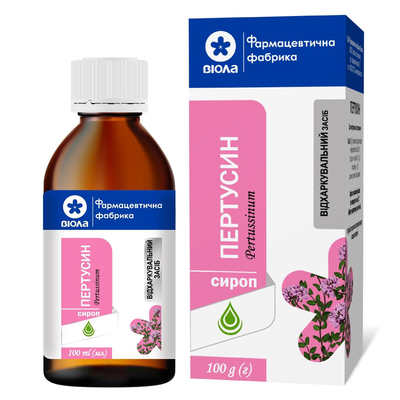
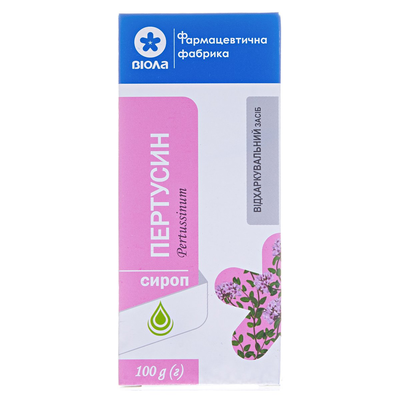
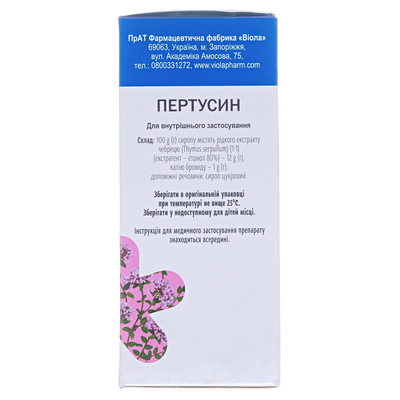
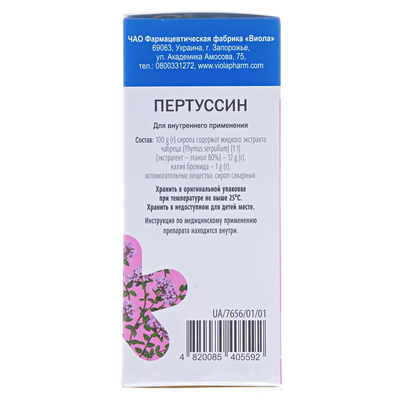
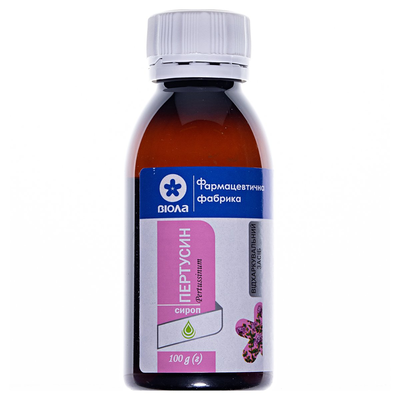
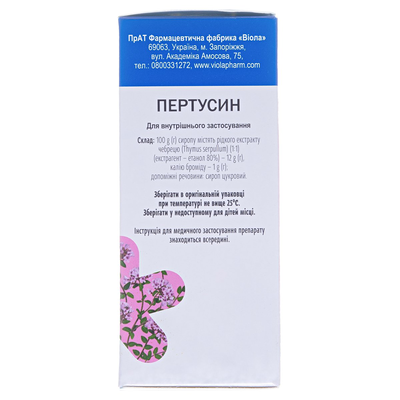
Pertusin syrup, 100 g per bottle.
Composition
Active ingredients: 100 g of syrup contains liquid thyme extract (Thymus serpyllum) (1:1) (solvent: 80% ethanol) – 12 g, potassium bromide – 1 g;
1 mL of syrup contains liquid extract of wild thyme (Thymus serpyllum) (1:1) (extractant: 80% ethanol) – 0.16 g, potassium bromide – 0.01 g;
excipient: sugar syrup.
The product contains 8–11% ethanol; the absolute alcohol content is: in 1 teaspoon (5 mL)—up to 0.43 g, in 1 dessert spoon (10 mL) – up to 0.87 g, in 1 tablespoon (15 mL) – up to 1.3 g.
The sucrose content in 1 teaspoon (5 mL) of the preparation corresponds to approximately 0.32 bread units; in 1 dessert spoon (10 mL)—approximately 0.64 bread units; and in one tablespoon—approximately 0.96 bread units.
Dosage Form
Syrup.
Main physical and chemical properties: a brown liquid with a pleasant odor.
Pharmacotherapeutic group
Respiratory system. Cough and cold remedies. Expectorants, combinations. ATC code R05C A10.
Pharmacological properties
Pharmacodynamics.
Pertussin belongs to the group of secretomotor agents. It stimulates the physiological activity of the ciliated epithelium and the peristaltic movements of the bronchioles, promoting the transport of mucus from the lower to the upper respiratory tract and its elimination. The drug soothes coughing and has a calming effect.
Indications
Cough associated with bronchitis, tracheitis, pneumonia, whooping cough, and inflammatory diseases of the upper respiratory tract.
Contraindications
Hypersensitivity to any of the drug’s components, including bromides or other plants of the Lamiaceae family, as well as sensitivity to celery and birch pollen (possible cross-reaction); cardiovascular decompensation, arterial hypotension, severe atherosclerosis, anemia, kidney disease, diabetes mellitus, alcoholism.
Special Safety Precautions
Patients with impaired glucose tolerance must consult a physician before taking this medication.
The recommended doses must be followed when using this medication.
Interactions with Other Medications and Other Types of Interactions
Barbiturates are incompatible with potassium bromide or require caution (their effects are potentiated).
If you are taking any other medications at the same time, inform your doctor!
Special Considerations for Use
If symptoms worsen during treatment with this medication and/or shortness of breath, fever, or purulent sputum develop, consult a doctor.
If symptoms persist for one week, consult a doctor. Adhere to the recommended doses when using this medication.
This medication contains 8–11% by volume of ethanol (alcohol), i.e., 1.3 g per dose (15 mL), which is equivalent to 26 mL of beer or 11 mL of wine per dose. Harmful to patients with alcoholism.
Use During Pregnancy or Breastfeeding
Due to a lack of sufficient data, use of this medication during these periods is not recommended.
Effect on reaction time when driving or operating machinery
Since this medication contains alcohol, patients should exercise caution when driving or operating machinery.
Dosage and Administration
Administer orally. Children aged 4 to 6 years: 2.5–5 mL of the medication (½–1 teaspoon), previously dissolved in 20 mL (2 dessert spoons) of cooled boiled water, 3 times daily.
Children aged 6 to 12 years: 10–15 mL (1 dessert spoon or 1 tablespoon) 3 times a day.
Adults: 15 mL (1 tablespoon) three times a day.
The duration of treatment is determined by the doctor on an individual basis.
Children
Use in children aged 4 years and older as directed by a doctor.
Overdose
In case of overdose, side effects and allergic reactions may be exacerbated. Treatment is symptomatic.
Side Effects
With prolonged use, symptoms of bromism may occur: skin rash, rhinitis, conjunctivitis, gastroenterocolitis, general weakness, ataxia, and bradycardia. Treatment of bromism involves discontinuing the medication and enhancing the excretion of bromine salts (by administering large amounts of sodium chloride, fluids, and diuretics).
Allergic reactions to the drug’s components are possible. Gastrointestinal disturbances (including nausea, vomiting, and diarrhea) may occur.
If you experience any adverse effects, consult a doctor immediately!
Shelf life
4 years.
Shelf life after opening the vial: 3 months.
Storage Conditions
Store in the original packaging at a temperature not exceeding 25 °C. Keep out of reach of children.
Do not use this product after the expiration date printed on the packaging!
Packaging
100 g per vial; 1 vial per cardboard package; 100 g per vial; 200 g in vials with or without a dispenser; 1 vial per cardboard package; 200 g in vials with or without a dispenser.
Dispensing Category
Over-the-counter.
Manufacturer
PJSC Pharmaceutical Factory “Viola.”