
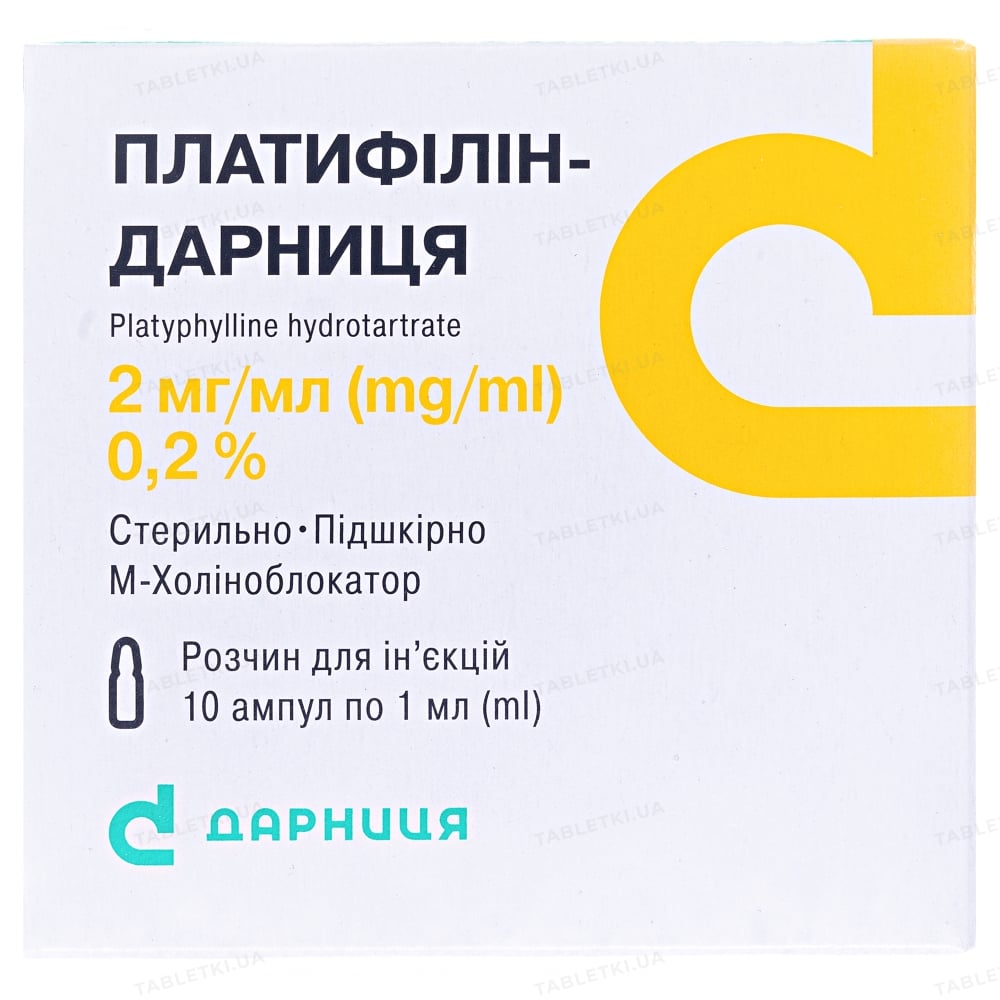
Platyfilin-Darnitsa Solution for Injection, 2 mg/mL, 1 mL, No. 10 (5×2) in ampoules
Ingredients
Active ingredient: platyphylline hydrotartrate;
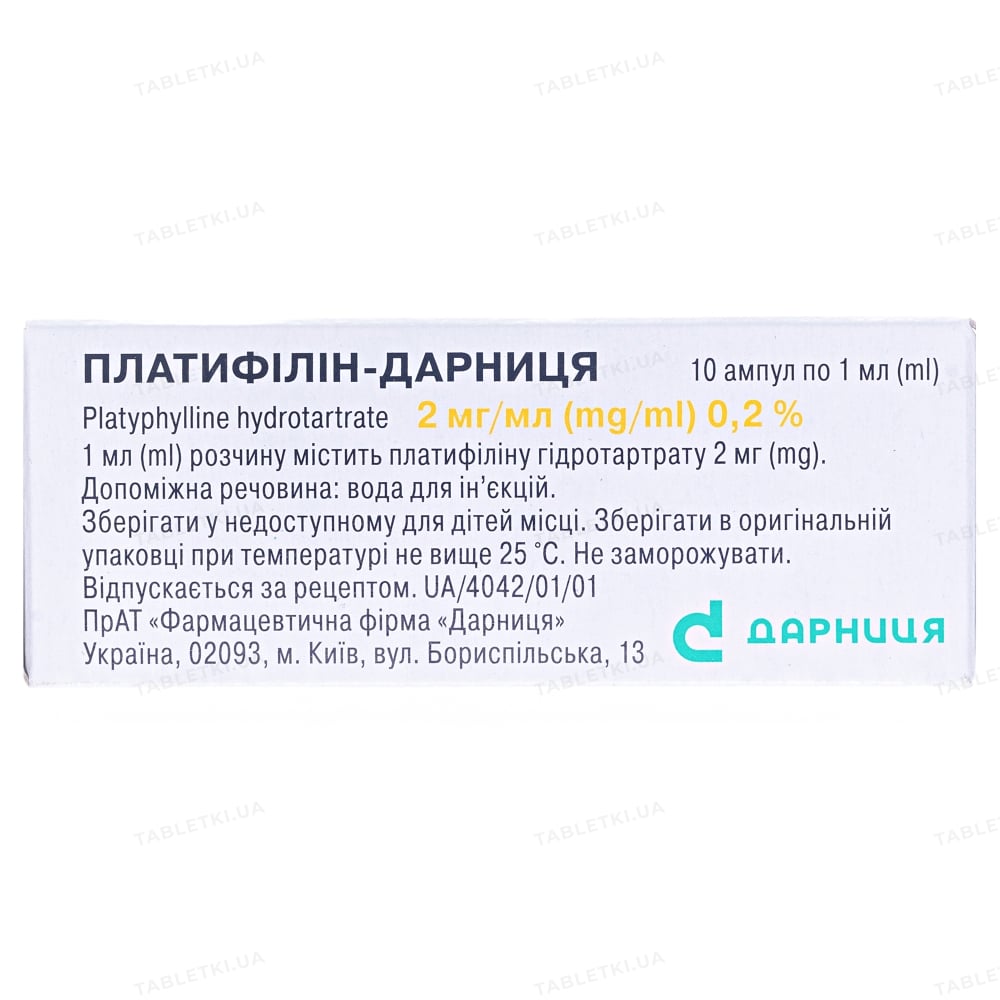
1 mL of solution contains 2 mg of platyphylline hydrotartrate;
excipient: water for injection.
Dosage Form
Solution for injection.
Main physicochemical properties: clear, colorless liquid.
Pharmacotherapeutic group
Agents used for functional disorders of the digestive system.
Other agents used for functional disorders of the intestine.
ATC code A03A X.
Pharmacological properties
Pharmacodynamics.
Platyphylline is a natural alkaloid that exhibits M-cholinergic blocking effects. It is similar to atropine in its effect on peripheral cholinergic systems, but is less toxic and better tolerated. It has a lesser effect on peripheral M-cholinergic receptors (its antispasmodic effect on the smooth muscle cells of the gastrointestinal tract and the circular muscle of the iris is 5–10 times weaker than that of atropine). By blocking M-cholinergic receptors, it disrupts the transmission of nerve impulses from postganglionic cholinergic nerves to the effector organs and tissues they innervate (heart, smooth-muscle organs, exocrine glands). It partially blocks N-cholinergic receptors. The anticholinergic effect is more pronounced against a background of increased tone of the parasympathetic autonomic nervous system or the action of M-cholinomimetics. To a lesser extent than atropine, it causes tachycardia (especially when used in high doses). By reducing the influence of the vagus nerve, it improves cardiac conduction, increases myocardial excitability, and increases cardiac output. It exerts ganglion-blocking and direct myotropic antispasmodic effects and causes dilation of small skin vessels. In high doses, it depresses the vasomotor center and blocks the sympathetic ganglia, resulting in vasodilation and a decrease in blood pressure (primarily following intravenous administration). To a lesser extent than atropine, it suppresses the secretion of endocrine glands and causes a marked decrease in the tone of smooth muscles, the amplitude and frequency of peristaltic contractions of the stomach, duodenum, small intestine, and large intestine, and a moderate decrease in gallbladder tone (in individuals with hyperkinesis of the biliary tract). In cases of hypokinesia, gallbladder tone returns to normal. It causes relaxation of the smooth muscles of the uterus, bladder, and urinary tract. Due to its antispasmodic action, it relieves pain. It relaxes the smooth muscles of the bronchi during spasms caused by increased vagal tone or cholinergic agents, increases respiratory volume, and inhibits the secretion of the bronchial glands. When administered parenterally, it causes dilation of the pupils due to relaxation of the circular muscle of the iris. At the same time, intraocular pressure increases and accommodation paralysis occurs (relaxation of the ciliary muscle of the ciliary body). Compared to atropine, the effect on accommodation is less pronounced and of shorter duration. It stimulates the brain and the respiratory center, and to a greater extent, the spinal cord (at high doses, convulsions and depression of the central nervous system (CNS), vasomotor, and respiratory centers are possible). It crosses the blood-brain barrier.
Pharmacokinetics.
After parenteral administration, it rapidly and readily crosses histohematological barriers, as well as cellular and synaptic membranes. When administered in high doses, it accumulates in the CNS in significant concentrations. In the body, it undergoes hydrolysis to form platinecin and platinecinic acid. It is excreted by the kidneys in urine and by the intestines in feces. When used correctly (dosage, intervals between administrations), the drug does not accumulate.
Indications
As part of complex therapy: gastroduodenitis, functional dyspepsia, pylorospasm, cholecystitis, cholelithiasis, intestinal colic, renal colic, biliary colic. Bronchial asthma (to prevent bronchospasm), bronchorrhea. Algomenorrhea. Spasm of the cerebral arteries. Angiotrophic neurosis.
Contraindications
Hypersensitivity to any component of the drug. Cardiovascular diseases in which an increase in heart rate may be undesirable: atrial fibrillation, tachycardia, chronic heart failure, ischemic heart disease, mitral stenosis, severe hypertension. Acute bleeding. Thyrotoxicosis. Hyperthermia. Gastrointestinal disorders accompanied by obstruction (esophageal achalasia, pyloric stenosis, intestinal atony). Glaucoma. Hepatic and renal insufficiency. Myasthenia gravis. Urinary retention or predisposition to it. Brain injury.
Interactions with Other Medications and Other Types of Interactions
When used concomitantly with haloperidol in patients with schizophrenia, the antipsychotic effect may be reduced.
It potentiates the sedative and hypnotic effects of phenobarbital, pentobarbital, magnesium sulfate, and sodium etaminal. It reverses bradycardia caused by verapamil and nausea, vomiting, and bradycardia caused by morphine.
It blocks the effects of proserine.
It enhances the effects of orally administered H2-histamine blockers, digoxin, and riboflavin (slows peristalsis and improves absorption).
Adrenomimetics and organic nitrates potentiate the increase in intraocular pressure.
M-cholinergic blockers, amantadine, haloperidol, phenothiazines, monoamine oxidase (MAO) inhibitors, tricyclic antidepressants, benztidine, quinidine sulfate, isoniazid, certain antihistamines (diphenhydramine), disopyramide, and novocaineamide increase the risk of anticholinergic side effects.
It exhibits antagonism with cholinesterase inhibitors. Do not use concomitantly with anticholinesterase drugs.
Morphine enhances the depressant effect on the cardiovascular system; MAO inhibitors—positive chronotropicand batmotropic effects; cardiac glycosides—the positive batmotropic effect; and quinidine and novocaineamide—the anticholinergic effect.
For pain associated with smooth muscle spasms, the drug’s effect is enhanced by analgesics, sedatives, and tranquilizers; for vascular spasms—by antihypertensives and sedatives.
Special Considerations for Use
Use with caution in patients with prostatic hypertrophy or urinary tract obstruction, Down syndrome, or cerebral palsy; in cases of reflux esophagitis or hiatal hernia combined with reflux esophagitis; in cases of nonspecific ulcerative colitis or megacolon; in patients aged 40 years and older, due to the possible presence of undiagnosed glaucoma; in cases of autonomic neuropathy; in elderly or debilitated patients; in chronic lung diseases characterized by the formation of thick, difficult-to-expel sputum or by obstructive airway disease. In patients with xerostomia, prolonged use may cause a further decrease in salivation.
Use during pregnancy or breastfeeding.
During pregnancy or breastfeeding, use this medication with caution only if the expected benefit to the mother outweighs the potential risk to the fetus or infant.
Effect on reaction time when driving or operating machinery.
While using this medication, patients should refrain from driving or engaging in other potentially hazardous activities that require increased attention and rapid psychomotor reactions.
Dosage and Administration
Administer subcutaneously.
For adults and children aged 15 years and older, to relieve spastic pain, prolonged bronchial asthma attacks, and cerebral and peripheral angiospasms, administer 1–2 mL of the solution 1–2 times daily.
For course treatment, administer 1–2 mL subcutaneously 1–2 times daily for 10–15–20 days.
The single and daily doses, as well as the frequency of administration, are determined individually by the physician depending on the indications and the patient’s age.
Maximum doses for adults: single dose—10 mg; daily dose—30 mg.
Children.
This medication is indicated for children 15 years of age and older.
Overdose
Symptoms: paralytic intestinal obstruction, acute urinary retention (in patients with benign prostatic hyperplasia), paralysis of accommodation, increased intraocular pressure; dryness of the mucous membranes of the mouth, nose, and throat; difficulty swallowing, mydriasis (up to complete disappearance of the iris), tremor, convulsions, hyperthermia, central nervous system excitation followed by depression, and depression of the respiratory and vasomotor centers.
Treatment: forced diuresis, administration of cholinesterase inhibitors (physostigmine, galantamine, or proserine), which alleviate intestinal paresis and reduce tachycardia. For moderate agitation and mild convulsions—administration of magnesium sulfate; in severe cases—administration of sodium oxybate, oxygen therapy, and mechanical ventilation. For life-threatening tachycardia, administer quinidine sulfate or propranolol.
Side Effects
Ocular side effects: mydriasis, photophobia, accommodation paralysis, increased intraocular pressure.
Respiratory system, thoracic, and mediastinal disorders: decreased bronchial secretory activity and tone, leading to the formation of viscous sputum that is difficult to cough up.
Gastrointestinal system: dry mouth, thirst, taste disturbances, dysphagia, decreased intestinal motility up to atony, decreased tone of the bile ducts and gallbladder.
Renal and urinary system: difficulty and delay in urination.
Nervous system: headache, dizziness, dysarthria, central nervous system (CNS) excitation, insomnia, anxiety, amnesic syndrome.
Cardiovascular system: tachycardia, arrhythmia (including extrasystoles), facial flushing, hot flashes, and decreased blood pressure.
Immune system disorders: anaphylactic reactions, anaphylactic shock.
Skin and subcutaneous tissue disorders: skin rash, hives, exfoliative dermatitis, dry skin, decreased sweating.
Reporting of Suspected Adverse Reactions.
Reporting suspected adverse reactions after a drug’s approval is an important procedure. It allows for continued monitoring of the benefit-risk profile of the drug in question. Healthcare professionals should report any suspected adverse reactions through the national reporting system.
Shelf life
5 years.
Storage conditions
Store in the original packaging at a temperature not exceeding 25 °C. Do not freeze.
Keep out of reach of children.
Incompatibility
Do not mix with other medications.
Packaging
1 mL per ampule; 5 ampules per blister pack; 2 blister packs per carton.
Manufacturer
PJSC “Darnitsa Pharmaceutical Company.”
Manufacturer’s location and address of operations.
Ukraine, 02093, Kyiv, 13 Boryspilskaya St.







