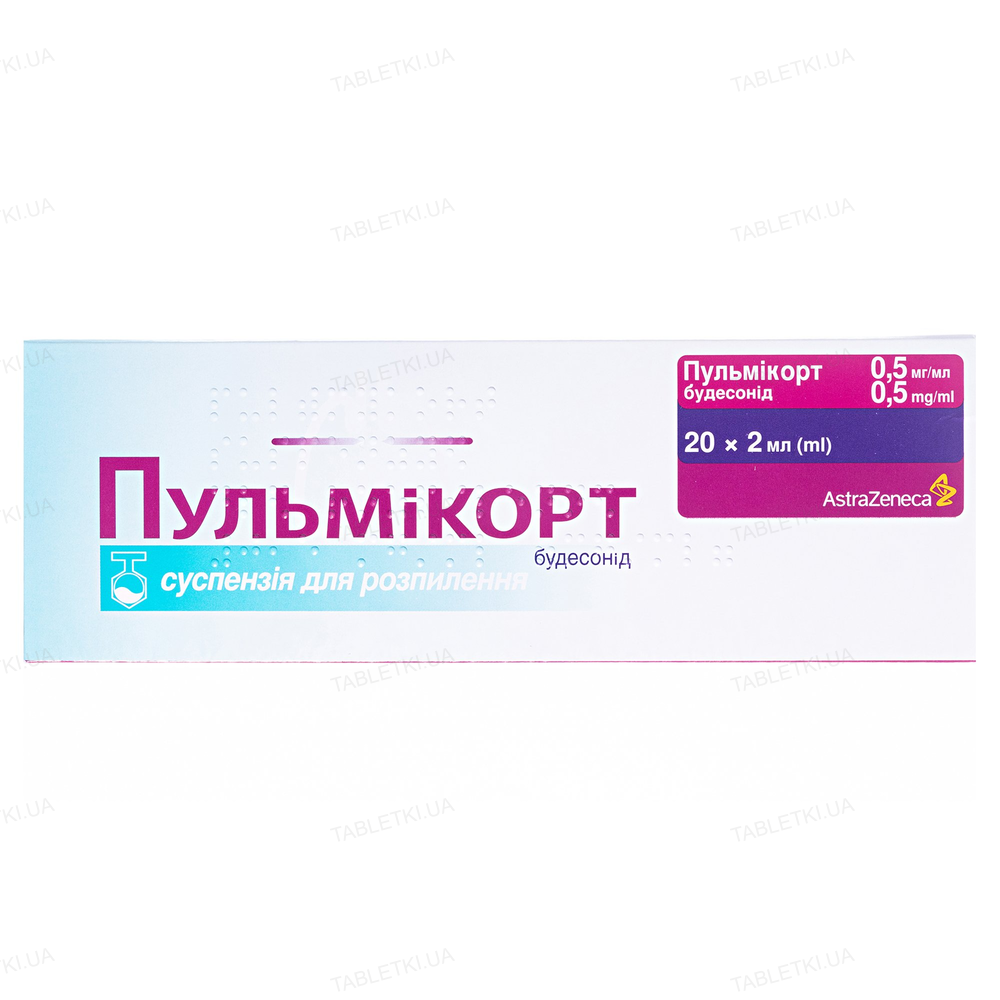
Pulmicort suspension for nebulization, 0.25 mg/mL, 2 mL each, No. 20 (5×4) in a container.
1 mL of the spray suspension contains 0.25 mg or 0.5 mg of budesonide;
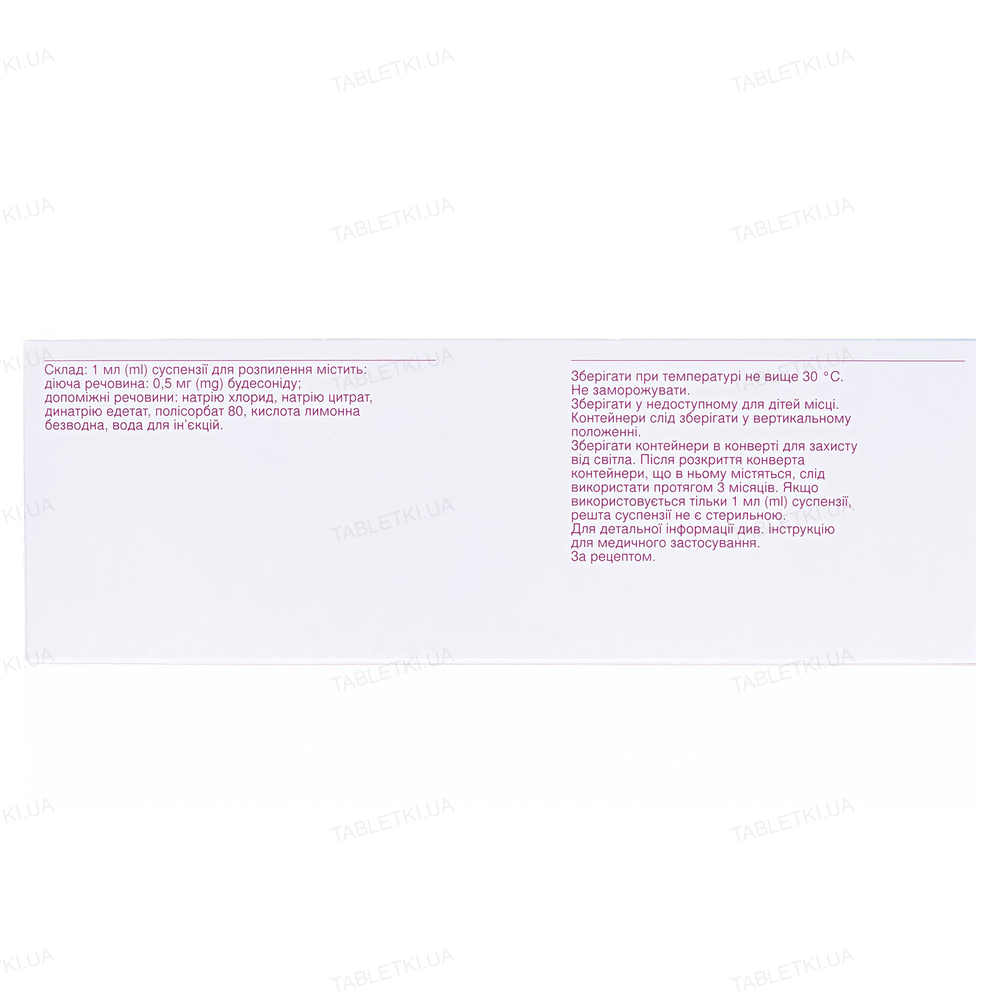
Excipients: sodium chloride, sodium citrate, disodium edetate, polysorbate 80, anhydrous citric acid, water for injection.
Dosage Form
Spray suspension.
Main physical and chemical properties: an easily resuspendable white or cream-white suspension, packaged in single-dose containers made of low-density polyethylene.
Pharmacotherapeutic group
Inhalants are used to treat obstructive airway diseases. Glucocorticoids. ATX code R03B A02.
Pharmacological Properties
Pharmacodynamics.
Budesonide is a glucocorticosteroid with potent local anti-inflammatory activity; the frequency and severity of its side effects are lower than those of oral corticosteroids.
Topical anti-inflammatory action
The exact mechanism of action of glucocorticosteroids in the treatment of bronchial asthma has not been fully elucidated. Anti-inflammatory effects, such as the inhibition of the release of inflammatory mediators and the inhibition of the cytokine-mediated immune response, likely play an important role.
A clinical trial in patients with asthma, which compared inhaled and oral budesonide preparations at doses calculated to achieve similar systemic bioavailability, showed a statistically significant advantage in the efficacy of inhaled budesonide compared with oral budesonide compared with placebo. Thus, the therapeutic effect of standard doses of inhaled budesonide is largely explained by its direct action on the airways.
In a challenge study, prior treatment with budesonide for four weeks resulted in a reduction in bronchoconstriction in both immediate and delayed asthmatic reactions.
Onset of Effects
After a single inhalation of budesonide using a dry-powder inhaler, improvement in lung function is achieved within a few hours. It has been shown that following therapeutic administration of oral budesonide via a dry powder inhaler, improvement in lung function occurred within 2 days after the start of treatment, although the maximum effect may not be achieved until 4 weeks later.
Airway Reactivity
It has also been shown that budesonide reduces airway reactivity to histamine and methacholine in patients with hyperreactivity.
Exercise-Induced Asthma
Inhaled budesonide therapy is effectively used to prevent exercise-induced asthma attacks.
Growth
In short-term studies, a slight and generally temporary reduction in growth rate was observed, which usually occurs during the first year of treatment. Limited data from long-term studies suggest that most children and adolescents who received inhaled budesonide ultimately achieved appropriate height in adulthood. However, in one study, children who received high doses of inhaled budesonide for 6 years using a dry powder inhaler (400 μg per day) without titration to the lowest effective dose were, on average, 1.2 cm shorter in adulthood than those who received a placebo during the same period. For information on titration to the lowest effective dose and on monitoring growth in children, see the “Special Instructions and Precautions for Use” section.
Effect on Plasma Cortisol Concentrations
In studies involving healthy volunteers, a dose-dependent effect on plasma and urinary cortisol levels was observed with the use of Pulmicort Turbuhaler. When used at the recommended doses, Pulmicort Turbuhaler has a significantly lesser effect on adrenal function than 10 mg of prednisolone, as confirmed by ACTH tests.
Children
Clinical Use: Bronchial Asthma
The efficacy of Pulmicort has been studied in a large number of trials, which have demonstrated the drug’s effectiveness in adults and children when administered once or twice daily for the prophylactic treatment of persistent bronchial asthma. Below are some examples of representative studies.
Clinical Use: Croup
Several studies in children with croup compared treatment with Pulmicort to a placebo. Below are examples of representative studies that investigated the use of Pulmicort for the treatment of children with croup.
Efficacy in children with mild to moderate croup
To determine whether Pulmicort improves croup symptoms and reduces the duration of hospitalization, a randomized, double-blind, placebo-controlled study was conducted involving 87 children (aged 7 months to 9 years) who were hospitalized with a clinical diagnosis of croup. Participants received an initial dose of Pulmicort (2 mg) or placebo, followed by a dose of 1 mg of Pulmicort or placebo every 12 hours. According to the statistics, Pulmicort significantly improved croup assessment scores at 12 and 24 hours, as well as at 2 hours in patients with an initial croup symptom score above 3 points. The length of hospitalization was also reduced by 33%.
Efficacy in Children with Moderate to Severe Croup
To compare the efficacy of treatment with Pulmicort and placebo, a randomized, double-blind, placebo-controlled study was conducted involving 83 infants and children (aged 6 months to 8 years) who were hospitalized with a clinical diagnosis of croup. Patients received Pulmicort at a dose of 2 mg or a placebo every 12 hours for up to 36 hours or until discharge. The total score for assessing croup symptoms was determined before administration of the drug and at 0, 2, 6, 12, 24, 36, and 48 hours after administration of the initial dose. At 2 hours, the Pulmicort and placebo groups showed similar improvements in croup symptom scores, and there was no statistically significant difference between the groups. At 6 hours, the croup symptom score in the Pulmicort group was statistically significantly better than in the placebo group, and this improvement compared with placebo was equally evident at 12 and 24 hours as well.
Pharmacokinetics.
Absorption
The systemic bioavailability of budesonide following administration of Pulmicort inhalation suspension via a jet nebulizer is approximately 15% of the nominal dose and 40–70% of the dose administered to the patient. A small portion of this amount is due to absorption of the drug that was swallowed. Maximum plasma concentration is reached approximately 10–30 minutes after the start of nebulization and is approximately 4 nmol/L following a 2-mg dose.
Distribution
The volume of distribution for budesonide is approximately 3 L/kg. Plasma protein binding averages 85–90%.
Metabolism
Budesonide undergoes extensive (≈90%) first-pass metabolism in the liver, yielding metabolites with low glucocorticosteroid activity. The glucocorticosteroid activity of the major metabolites, 6β-hydroxybudesonide and 16α-hydroxyprednisolone, is less than 1% of that of budesonide. The metabolism of budesonide occurs primarily via CYP3A, which belongs to the cytochrome P450 subfamily.
Release
Budesonide metabolites are excreted primarily by the kidneys in unchanged or conjugated forms. Unchanged budesonide is not detected in urine. In healthy adults, the systemic clearance of budesonide is typically high (approximately 1.2 L/min), and the terminal half-life of budesonide following intravenous administration averages 2–3 hours.
Linearity
The pharmacokinetics of budesonide are dose-proportional when administered at clinically relevant doses.
In a study in which patients also received 100 mg of ketoconazole twice daily, an average 7.8-fold increase in plasma budesonide levels was observed following oral administration (a single 10-mg dose). There is no information on interactions of this type with inhaled budesonide, but a significant increase in plasma levels is entirely expected.
Children
In children aged 4–6 years with bronchial asthma, the systemic clearance of budesonide is approximately 0.5 L/min. Clearance in children (per 1 kg of body weight) is approximately 50% higher than in adults. In children with bronchial asthma, the terminal half-life of budesonide following inhalation is approximately 2.3 hours. A similar value is observed in healthy adults. In patients aged 4–6 years with bronchial asthma, the systemic bioavailability of budesonide following administration of Pulmicort inhalation suspension via a jet nebulizer (Pari LC Jet Plus® with a Pari Master® compressor) is approximately 6% of the nominal dose and 26% of the dose delivered to the patient. Systemic bioavailability in children is approximately half that of healthy adults.
In children aged 4–6 years with bronchial asthma, peak plasma concentration is reached within 20 minutes after the start of nebulization and is approximately 2.4 nmol/L following a 1-mg dose. The exposure profile of budesonide (Cmax and AUC) following a single 1-mg nebulizer administration in children aged 4 to 6 years is comparable to that in healthy adults receiving budesonide at the same dose via the same nebulizer system.
Indications
Pulmicort contains a potent nonhalogenated corticosteroid—budesonide— which is indicated for the treatment of bronchial asthma in patients for whom the use of compressed-air inhalers or dry powder formulations is ineffective or inappropriate.
Pulmicort is also recommended for use in infants and children with croup (a complication of an acute viral upper respiratory tract infection, also known as laryngotracheobronchitis or subglottic laryngitis), which is an indication for hospitalization.
Contraindications
Hypersensitivity to the active ingredient or any of Pulmicort’s excipients.
Drug Interactions and Other Interactions
Budesonide is metabolized primarily by CYP3A4. Concomitant use with CYP3A inhibitors, such as itraconazole, ketoconazole, HIV protease inhibitors, and cobicistat-containing medications—is expected to increase the risk of systemic corticosteroid side effects (see the sections “Special Instructions and Precautions for Use” and “Pharmacological Properties”).
The combination of Pulmicort with potent CYP3A inhibitors should be avoided unless the benefit outweighs the increased risk of systemic side effects associated with corticosteroid use; If this combination cannot be avoided, patients should be monitored for systemic side effects associated with corticosteroids. When Pulmicort is used concomitantly with antifungal agents (such as itraconazole and ketoconazole), the interval between administration of these drugs should be as long as possible. A reduction in the budesonide dose may be considered.
Limited data on this interaction with high doses of inhaled budesonide indicate that when itraconazole 200 mg once daily is administered concomitantly, the administration of inhaled budesonide (single dose of 1,000 mcg) leads to a significant increase in plasma concentrations of the drug (on average, a fourfold increase).
In women who were concurrently taking estrogens or hormonal contraceptives, plasma budesonide concentrations increased and the corticosteroid effect was potentiated; but this effect was not observed when budesonide was used in combination with low-dose combined oral contraceptives.
Since adrenal function may be suppressed, an ACTH stimulation test used to diagnose pituitary insufficiency may yield false results (low values).
Children
Interaction studies have been conducted only in adults.
Special Considerations
This medication should be used with caution in patients with active or inactive pulmonary tuberculosis and fungal or viral respiratory tract infections.
Patients without steroid dependence. The therapeutic effect is usually achieved within 10 days. In patients with excessive mucus production in the bronchi, a short-term (approximately 2 weeks) supplemental course of oral corticosteroids may be used initially. After the course of oral medications, Pulmicort as monotherapy may be sufficient.
Patients with steroid dependence. The transition from oral steroids to Pulmicort may be initiated when the patient is in a relatively stable phase of the disease. For approximately 10 days, Pulmicort is administered in combination with the oral steroid at the previously used dose.
After that, the dose of oral steroids should be gradually reduced (for example, by 2.5 mg of prednisolone or its equivalent each month) to the lowest possible level. In many cases, oral steroids can be completely replaced with Pulmicort.
When switching from oral steroid therapy to Pulmicort, a reduction in the systemic effects of corticosteroids is observed in most cases, which may lead to symptoms of allergies or arthritis, such as rhinitis, eczema, and musculoskeletal pain. In these cases, specific treatment should be initiated. An inadequate response to glucocorticosteroid therapy is usually suspected when symptoms such as fatigue, headache, nausea, or vomiting occur, although this is rare. In such cases, a temporary increase in the dose of oral glucocorticosteroids may sometimes be necessary.
As with other types of inhalation therapy, paradoxical bronchospasm may occur immediately after the procedure, accompanied by increased wheezing. In this case, treatment with inhaled budesonide should be discontinued immediately; the patient should be evaluated, and, if necessary, alternative therapy should be initiated.
Patients who have required emergency therapy with high doses of corticosteroids or long-term treatment with inhaled corticosteroids at the highest recommended dose are also at risk of adrenal insufficiency. Such patients may experience signs and symptoms of adrenal insufficiency during periods of severe stress. In stressful situations or prior to elective surgery, supplemental systemic corticosteroid therapy may be prescribed.
Systemic effects may occur with the use of any inhaled corticosteroids, especially when high doses are prescribed over a long period of time. These effects occur much less frequently with inhaled corticosteroids than with oral corticosteroids. Possible systemic effects include Cushing’s syndrome, Cushingoid features, adrenal suppression, growth retardation in children and adolescents, decreased bone mineral density, cataracts, and glaucoma, and, less commonly, a range of psychiatric and behavioral disorders, including psychomotor hyperactivity, sleep disturbances, anxiety, depression, or aggression (especially in children). Therefore, it is important to titrate the dose of the inhaled corticosteroid to the lowest dose that maintains effective asthma control.
Pulmicort is not intended for the rapid relief of acute episodes of bronchial asthma requiring the use of short-acting inhaled bronchodilators. If treatment with short-acting bronchodilators is ineffective or if the patient requires more inhalations than usual, medical intervention is necessary. In such situations, consider intensifying conventional therapy, for example, by increasing the dose of inhaled budesonide, adding a long-acting beta-agonist, or prescribing a course of oral glucocorticosteroids.
Impaired liver function may affect the elimination of glucocorticosteroids from the body, as the rate of elimination decreases and systemic exposure increases. Be aware of the potential for side effects.
However, plasma clearance following intravenous administration of budesonide was similar in patients with liver cirrhosis and in healthy volunteers. Following oral administration, the systemic bioavailability of budesonide increased due to impaired liver function resulting from reduced presystemic metabolism. The clinical significance of these changes for treatment with Pulmicort has not been definitively established, as there are no data on the inhaled use of budesonide; but an increase in plasma drug levels and, consequently, an increased risk of systemic adverse reactions can be expected.
Concomitant use with CYP3A inhibitors, such as itraconazole, ketoconazole, HIV protease inhibitors, and cobicistat-containing medications, is expected to increase the risk of systemic corticosteroid side effects. Such combinations should be avoided unless the benefits outweigh the increased risk; if this combination cannot be avoided, patients should be monitored for systemic side effects associated with corticosteroids. This has limited clinical significance during short-term (1–2 weeks) treatment with itraconazole, ketoconazole, or other potent CYP3A inhibitors, but should be taken into account during long-term treatment. A reduction in the budesonide dose should also be considered (see the “Interactions with Other Medications and Other Interactions” section).
The nebulizer chamber must be cleaned after each use. Rinse the nebulizer chamber and the mouthpiece or face mask with hot water and a mild detergent. The nebulizer chamber should be thoroughly rinsed and dried while attached to the compressor or air source.
Oral candidiasis may develop during treatment with inhaled corticosteroids. This infection may require the use of appropriate antifungal medications, and some patients may need to discontinue treatment (see also the “Dosage and Administration” section).
Pneumonia in Patients with COPD
Patients with COPD receiving inhaled corticosteroids have an increased incidence of pneumonia, including pneumonia requiring hospitalization.
There are reports of an increased risk of pneumonia with higher doses of corticosteroids, but this has not been conclusively demonstrated in any study.
With regard to inhaled corticosteroids, there are no comprehensive clinical data on intraclass differences in the risk of developing pneumonia.
Healthcare providers should remain vigilant for the possible development of pneumonia in patients with COPD, as the clinical signs of such infections overlap with the symptoms of COPD exacerbations.
Risk factors for pneumonia in patients with COPD include smoking, advanced age, a low body mass index (BMI), and severe COPD.
Visual Disturbances
Visual disturbances may occur with systemic and topical use of corticosteroids. If a patient experiences symptoms such as blurred vision or other visual disturbances, they should consult an ophthalmologist to evaluate possible causes, which may include cataracts, glaucoma, or rare conditions such as central serous chorioretinopathy (CSC), which have been reported following systemic or topical use of corticosteroids.
Children
Effect on Height
In children receiving long-term treatment with inhaled corticosteroids, regular monitoring of growth is recommended. If the growth rate slows, therapy should be reviewed with the goal of reducing the dose of inhaled corticosteroids to the lowest possible dose that maintains effective asthma control. The benefits of corticosteroid therapy should be carefully weighed against the potential risk of growth retardation. In addition, it is important to refer the patient to a pediatric pulmonologist for consultation.
Pregnancy and lactation.
Pregnancy
Most results from prospective epidemiological studies and international postmarketing experience with the drug indicate that treatment with inhaled budesonide during pregnancy did not result in adverse effects on the health of the fetus or newborn.
Animal studies have shown that glucocorticosteroids may cause developmental abnormalities. However, these findings are not considered relevant to humans at the recommended doses; nevertheless, inhaled budesonide therapy should be regularly reviewed, and the drug should be used at the lowest effective dose. It is important for both the fetus and the pregnant woman that adequate treatment for bronchial asthma be maintained during pregnancy. As with other medications during pregnancy, the benefits of budesonide for pregnant women must be weighed against the risks to the fetus.
Inhaled glucocorticosteroids should be preferred over oral glucocorticosteroids because they cause fewer systemic effects when used at the doses necessary to achieve a consistent respiratory response.
Breastfeeding
Budesonide passes into breast milk. However, when Pulmicort is used at therapeutic doses, no effect on a breastfed infant is expected. Pulmicort may be used during breastfeeding.
Maintenance therapy with inhaled budesonide (200 or 400 mcg twice daily) in breastfeeding women with bronchial asthma results in only a negligible systemic exposure to budesonide in breastfed infants.
In a pharmacokinetic study, the calculated daily dose in breastfed infants was 0.3% of the mother’s daily dose for both doses, and the mean plasma concentration in breastfed infants was estimated to be one-sixth of the concentration observed in maternal plasma, assuming complete oral bioavailability in the infant. The concentration of budesonide in all blood plasma samples from breastfed infants was below the limit of quantification.
Taking into account information on the use of budesonide for inhalation and the fact that budesonide exhibits linear pharmacokinetic properties within the therapeutic dose range following nasal, inhaled, oral, or rectal administration, it is expected that exposure to budesonide at therapeutic doses will be low in breastfed infants.
Effects on the ability to drive and operate machinery.
Pulmicort has virtually no effect on the ability to drive or operate machinery.
Directions for Use and Dosage
Dosage
The Pulmicort dosage should be adjusted according to the patient’s individual needs.
Dosage Regimens.
The dose administered to the patient depends on the nebulizer equipment used. The nebulization time and the dose delivered depend on the flow rate, the volume of the nebulizer chamber, and the fill volume. The airflow rate through the nebulizer device should be 6–8 liters per minute. The appropriate filling volume for most nebulizers is 2–4 mL. The Pulmicort dosage should be adjusted according to the patient’s individual needs. The dose should be reduced to the minimum necessary to maintain adequate asthma control. The maximum dose (2 mg per day) should be prescribed to children under 12 years of age only in cases of severe asthma and for a limited period of time.
Bronchial Asthma
Initiation of Therapy
At the start of treatment, during exacerbations of bronchial asthma, and when oral glucocorticosteroids are reduced or discontinued, the recommended dose of Pulmicort is:
Adults (including elderly patients): usually 1 to 2 mg twice daily. In very severe cases, the dose may be further increased.
Children
Children over 12 years of age: the dosage is the same as for adults.
Children aged 6 months to 12 years: 0.5 to 1 mg twice daily.
Maintenance Therapy
The maintenance dose should be individualized and equal to the lowest dose at which the patient is symptom-free.
Adults (including elderly patients and children 12 years of age and older): 0.5 to 1 mg twice daily.
Children
Children aged 6 months to 12 years: 0.25 to 0.5 mg twice daily.
Patients taking oral glucocorticoids as maintenance therapy
Pulmicort makes it possible to discontinue or significantly reduce the dose of oral glucocorticosteroids while maintaining control of bronchial asthma. To begin the transition from oral steroids to Pulmicort, the patient must be in a relatively stable condition. For approximately 10 days, a high dose of Pulmicort is administered in combination with the previously used dose of the oral steroid. After that, the dose of oral steroids should be gradually reduced (for example, by 2.5 mg of prednisolone or its equivalent per month) to the lowest possible level. Often, oral steroid therapy can be discontinued entirely and replaced with Pulmicort. For more information on discontinuing oral corticosteroids, see the section “Discontinuation of Oral Corticosteroids” in the “Special Instructions and Precautions for Use” section.
Dose Division and Mixing with Other Medications
Pulmicort may be mixed with 0.9% saline solution and with nebulized solutions containing terbutaline, salbutamol, fenoterol, acetylcysteine, sodium cromoglycate, or ipratropium bromide. The mixture should be used within 30 minutes.
Table 1
Dosage Recommendations
| Dose (mg) | Volume of Medication
Pulmicort, nebulizer suspension |
|
| 0.25 mg/mL | 0.5 mg/mL | |
| 0.25 | 1 mL | - |
| 0.5 | 2 mL | 1 mL |
| 0.75 | 3 mL | - |
| 1.0 | 4 mL | 2 mL |
| 1.5 | 6 mL | 3 mL |
| 2.0 | 8 ml | 4 mL |
In patients for whom an enhanced therapeutic effect is desirable, especially in patients without excessive mucus in the airways, it is recommended to increase the dose of Pulmicort instead of combination therapy with oral corticosteroids, as this is associated with a lower risk of systemic side effects.
Croup
For infants and children with croup, the usual dose is 2 mg of nebulized budesonide. This dose is administered as a single dose or in two doses of 1 mg each, 30 minutes apart. Administration may be repeated every 12 hours, for a maximum of 36 hours in total, or until clinical improvement is observed.
Directions for Use
Pulmicort is to be used only with appropriate nebulizers.
Instructions for Proper Use of the Medication
Detach the canister from the strip, shake it gently, and open it by snapping off the tab at the tip. Carefully squeeze the contents of the canister into the nebulizer chamber. Discard the empty canister and replace the nebulizer chamber cap.
Pulmicort should be administered using a jet nebulizer with a mouthpiece or an appropriate breathing mask. The nebulizer must be connected to an air compressor that provides sufficient airflow (6–8 L/min), and the filling volume should be 2–4 mL.
Note: It is important that the patient:
- carefully read the instructions for use provided in the package insert included with each nebulizer;
- understand that ultrasonic nebulizers are not suitable for administering Pulmicort, and therefore their combined use is not recommended;
- be informed about the possibility of mixing Pulmicort with 0.9% saline solution and with nebulizer solutions containing terbutaline, salbutamol, fenoterol, acetylcysteine, sodium cromoglycate, and ipratropium bromide, and were aware of the need to use the mixture within 30 minutes;
- rinse the mouth with water after inhalation to minimize the risk of developing oropharyngeal candidiasis;
- wash the face with water after removing the face mask to prevent skin irritation;
- Clean and store the nebulizer properly in accordance with the manufacturer’s instructions.
Children.
Pulmicort is used in children as indicated (see the “Indications” and “Dosage and Administration” sections).
Overdose
Pulmicort contains 0.1 mg/mL of disodium edetate, which has been shown to cause bronchoconstriction if its concentration exceeds 1.2 mg/mL. An acute overdose of Pulmicort, even at excessive doses, is not expected to pose a clinically significant problem.
Side Effects
The following definitions were used to assess the prevalence of adverse reactions. Frequency is defined as follows: very common (≥1/10); common (≥1/100 to <1/10); uncommon (≥1/1,000 to <1/100); rare (≥1/10,000 to <1/1,000); very rare (<1/10,000).
Table 2 Adverse reactions classified by organ system, severity, and frequency
| Organ system classes | Frequency | Adverse reactions |
| Infections and infestations | Common | Oropharyngeal candidiasis
Pneumonia (in patients with COPD) |
| Immune system disorders | Rare | Immediate and delayed hypersensitivity reactions*, including rash, contact dermatitis, hives, angioedema, and anaphylactic reaction |
| Endocrine disorders | Rare | Signs and symptoms of systemic corticosteroid effects, including adrenal suppression and growth retardation** |
| Mental disorders | Uncommon | Anxiety |
| Depression | ||
| Rare | Psychomotor hyperactivity | |
| Sleep disturbances | ||
| Aggression | ||
| Behavioral changes (primarily in children) | ||
| Nervous system disorders | Uncommon | Tremor*** |
| Eye disorders | Uncommon | Cataracts |
| Blurred vision (see also the “Special Instructions and Precautions for Use” section) | ||
| Unknown | Glaucoma | |
| Diseases of the respiratory system, thoracic cavity, and mediastinum | Common | Cough |
| Hoarseness | ||
| Sore throat | ||
| Rare | Bronchospasm | |
| Dysphonia | ||
| Hoarseness**** | ||
| Skin and subcutaneous tissue disorders | Rare | Bruising |
| Musculoskeletal and connective tissue disorders | Uncommon | Muscle spasms |
*See below for a description of specific adverse reactions; facial skin irritation.
**See the “Children” section below.
Based on the frequency reported in clinical trials.
Rarely in children.
Occasionally, signs or symptoms of systemic glucocorticosteroid side effects may occur with the use of inhaled glucocorticosteroids, possibly depending on the dose, duration of exposure, concomitant and prior corticosteroid exposure, and individual sensitivity (see the “Dosage” section).
Description of Specific Adverse Reactions
Oropharyngeal candidiasis occurs due to drug deposition. The patient should be instructed to rinse the mouth with water after each maintenance-dose inhalation to minimize this risk.
As with any inhalation therapy, paradoxical bronchospasm may rarely occur (see the “Special Instructions and Precautions for Use” section).
Occasionally, when using a nebulizer with a face mask, hypersensitivity reactions in the form of facial skin irritation have been reported. To prevent irritation, wash your face after removing the mask.
In addition, in placebo-controlled studies, cataracts were rarely reported in the placebo group.
In pooled clinical trials, 13,119 patients received inhaled budesonide and 7,278 patients received placebo. The incidence of anxiety was 0.52% with inhaled budesonide and 0.63% with placebo; The incidence of depression was 0.67% with inhaled budesonide and 1.15% with placebo.
Children
Due to the risk of growth retardation in children, growth should be monitored as described in the “Special Instructions and Precautions for Use” section.
Reporting of Adverse Reactions
It is important to report suspected adverse reactions during the postmarketing period. This allows for continuous monitoring of the drug’s benefit-risk profile. Healthcare professionals are required to report any suspected adverse reactions through the national reporting system.
Shelf Life
2 years.
Once the envelope is opened, the containers inside must be used within 3 months. If only 1 mL of the suspension is used, the remainder of the suspension is no longer sterile.
Storage conditions
Store at a temperature not exceeding 30 °C. Do not freeze.
Keep out of reach of children.
The containers should be stored in an upright position.
Keep the containers in the envelope to protect them from light.
Packaging
2 mL in low-density polyethylene containers; 5 containers connected together in an aluminum foil pouch; 4 pouches in a cardboard box.
Manufacturer
AstraZeneca AB.
Address
Forskargatan 18, Södertalje, 15185, Sweden.