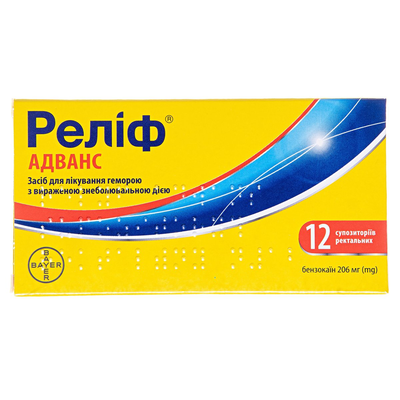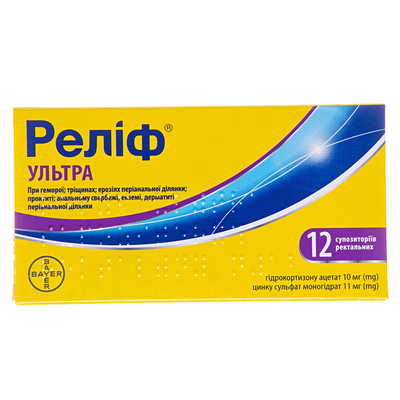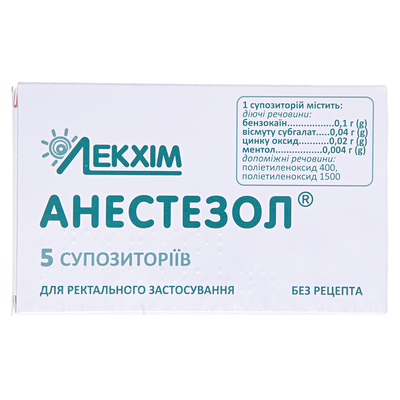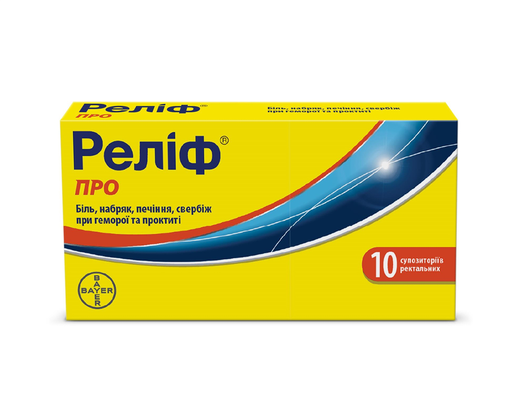
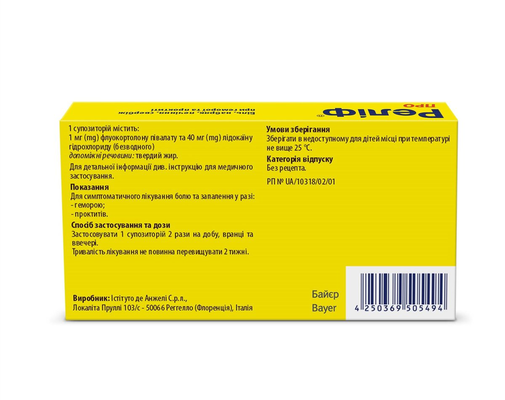
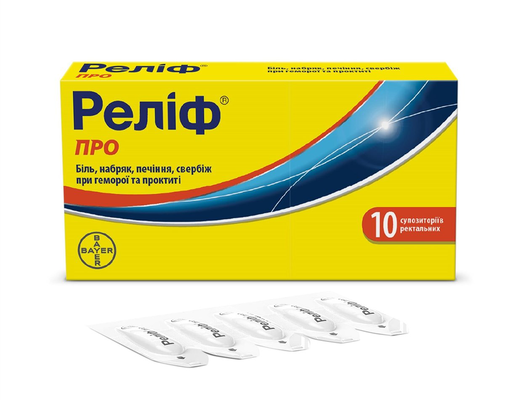
Leaflet on Rectal Suppositories No. 10 (5x2)
Composition
Active ingredients: 1 suppository contains: 1 mg of fluocortolone pivalate and 40 mg of lidocaine hydrochloride (anhydrous);
Excipients: hard fat.
Dosage Form
Rectal suppositories.
Main physical and chemical properties: The suppositories are yellowish-white in color.
Pharmacotherapeutic group
Agents for the treatment of hemorrhoids and anal fissures for topical use. Corticosteroids. Fluocortolone. ATC code C05AA08.
Pharmacological properties
Pharmacodynamics.
Fluocortolone pivalate suppresses inflammatory and allergic skin reactions and alleviates subjective symptoms such as itching, burning, and pain; it reduces capillary dilation, interstitial cell edema, and tissue infiltration, and inhibits capillary proliferation.
Lidocaine hydrochloride is a standard local anesthetic that has been used in medical practice for many years. Thanks to its analgesic effect, it is effective when used in suppositories and ointments intended to treat conditions associated with hemorrhoidal disease. The reduction in pain and itching is associated with the inhibition of afferent nerve impulses.
Pharmacokinetics.
Following a single rectal administration of a suppository to healthy male volunteers, maximum systemic absorption was approximately 5% of the fluocortolone pivalate dose and approximately 24% of the lidocaine hydrochloride dose.
Indications
For the symptomatic treatment of pain and inflammation in cases of:
- hemorrhoids;
- proctitis.
Contraindications
The use of Relief® Pro is contraindicated in cases of local infections at the application site, as well as in cases where there are clear symptoms of the following pathological conditions in the relevant areas:
- specific skin lesions (syphilis, tuberculosis);
- chickenpox;
- post-vaccination reactions;
- genital herpes;
- smallpox;
- other viral infections;
- primary bacterial or fungal infections;
- secondary skin infections in the absence of appropriate antibiotic therapy.
Contraindicated in patients with hypersensitivity to other amide-type local anesthetics (e.g., bupivacaine, mepivacaine, and lidocaine).
Relief® Pro should not be used in cases of hypersensitivity to the active ingredients or to any of the excipients.
Special Safety Precautions
Avoid contact between Relief® Pro suppositories and the eyes. It is recommended to wash your hands thoroughly after use.
In cases of fungal infections, additional specialized antifungal therapy is required.
There are reports in the scientific literature of cataract development in patients who use corticosteroids over a prolonged period; therefore, to rule out systemic effects of corticosteroids, one should be aware of the possible role of corticosteroids in cataract development.
Use with caution in debilitated patients, elderly patients, and patients with severe heart failure, renal failure, or hepatic failure.
The excipient, hard fat, may reduce the effectiveness of latex products, such as condoms.
Interactions with Other Medications and Other Types of Interactions
No interaction studies have been conducted. Relief® Pro rectal suppositories contain the active ingredient lidocaine hydrochloride (anhydrous). Approximately 30% of the administered dose of lidocaine enters the systemic circulation. This should be taken into account by patients taking medications for the treatment of heart rhythm disorders (arrhythmias).
It is believed that concomitant use with CYP3A inhibitors, including cobicistat tablets, may increase the risk of systemic adverse effects. This combination should be avoided unless the benefit outweighs the risk of systemic adverse effects associated with corticosteroid use. In cases of concomitant use, the patient’s condition must be monitored to ensure the absence of systemic adverse effects associated with corticosteroid use.
Special Considerations for Use
Use during pregnancy or breastfeeding.
There are insufficient data regarding the use of Relief® Pro suppositories by women during pregnancy. Studies of glucocorticoids conducted in animals have revealed reproductive toxicity.
Some epidemiological studies suggest a possible increased risk of cleft palate in newborns if their mothers received systemic glucocorticoid therapy during the first trimester of pregnancy. Cleft palate is a rare condition; and although systemic use of glucocorticoids has teratogenic effects, their use can be considered a cause of this condition only if the incidence increases to one or two cases per 1,000 women who received this treatment during pregnancy.
Data on the topical use of glucocorticoids for the treatment of pregnant women are insufficient; however, the risk can be considered low, since glucocorticoids have very low systemic bioavailability when applied topically.
In general, topical preparations containing glucocorticoids should not be used during the first trimester of pregnancy.
When prescribing treatment for pregnant or breastfeeding women, a thorough assessment of the clinical indications for the use of Relief® Pro suppositories, as well as the risk-benefit ratio, should be conducted. In particular, long-term use of the medication should be avoided.
Effect on the ability to drive or operate machinery: No effect.
Dosage and Administration
Use 1 suppository twice daily, in the morning and in the evening. Once symptoms improve, 1 suppository once daily or once every two days is often sufficient. It is recommended to use Relief® Pro suppositories after a bowel movement. The anal area should be gently cleaned before inserting the suppository.
Insert the suppository deeply into the anal opening. The duration of treatment with Relief® Pro suppositories should not exceed 2 weeks.
If the suppositories become soft due to exposure to high temperatures, dip them in cold water before removing the wrapper.
Children
Use in children is not recommended due to a lack of data on safety and efficacy.
Overdose
The results of studies on the potential acute toxicity associated with the active ingredients in Relief® Pro indicate no risk of developing symptoms associated with acute toxicity resulting from accidental overdose following a single rectal administration of the drug.
In the event of accidental ingestion of the medication (for example, if several suppositories are swallowed), systemic symptoms caused by lidocaine hydrochloride are primarily expected. Depending on the dose, these may manifest as severe cardiovascular disturbances (decreased blood pressure, increased sweating, pallor, bradycardia, arrhythmia, cardiac depression, shock, or, in particularly severe cases, cardiac arrest) or reactions associated with central nervous system disturbances (headache, dizziness, blurred vision, diplopia, tinnitus, drowsiness, numbness in the extremities, chills, anxiety, vomiting, convulsions, dyspnea, or, in particularly severe cases, respiratory failure). Methemoglobinemia may occur.
Treatment in case of overdose involves careful monitoring of vital signs, supportive measures to ensure adequate oxygenation, and symptomatic treatment of central nervous system and cardiovascular system disorders, such as the administration of short-acting barbiturates, beta-sympathomimetics, and atropine. Dialysis is not effective.
Side Effects
The incidence of adverse effects was calculated based on data from clinical trials involving 367 patients.
Skin and subcutaneous tissue disorders, including allergic reactions: common: pain and a burning sensation at the application site; uncommon: irritation at the application site.
After long-term therapy with Relief® Pro suppositories (exceeding 4 weeks), there is a risk of developing local skin abnormalities, such as atrophy, striae, or telangiectasia.
Adverse reactions caused by lidocaine hydrochloride: The development of systemic adverse reactions to lidocaine is unlikely, since, when the drug is used properly, the amount of lidocaine entering the systemic circulation is negligible.
Shelf life
4 years.
Storage conditions
Store out of the reach of children at a temperature not exceeding 25 °C.
Packaging
5 suppositories per strip, 2 strips per package, labeled in Ukrainian.
Dispensing Category
Over-the-counter.
Manufacturer
Istituto De Angeli S.r.l.
Istituto De Angeli S.r.l.