
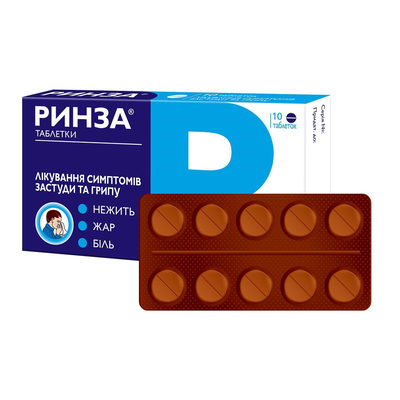
Rynza Tablets No. 10
Ingredients
Active ingredients: acetaminophen, chlorpheniramine maleate, caffeine, phenylephrine hydrochloride;
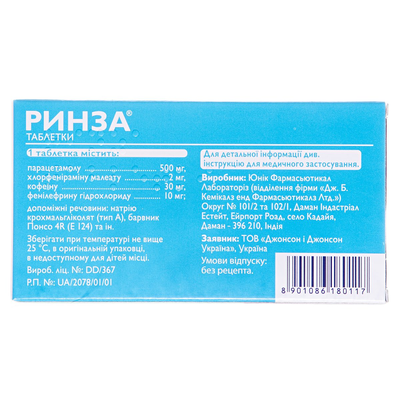
1 tablet contains: acetaminophen – 500 mg, chlorpheniramine maleate – 2 mg, caffeine – 30 mg, phenylephrine hydrochloride – 10 mg;
Inactive ingredients: colloidal anhydrous silicon dioxide, corn starch, sodium starch glycolate (type A), magnesium stearate, talc, povidone (K 30),
Ponceau 4R (E 124) dye.
Dosage Form
Tablets.
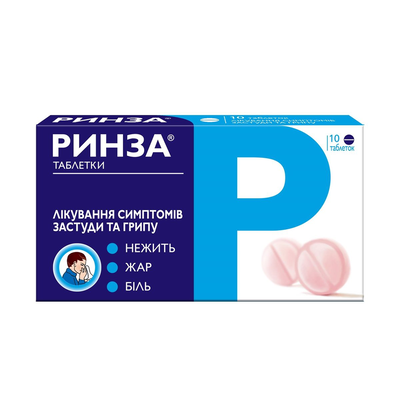
Main physical and chemical properties: round, flat, uncoated tablets with bevelled edges and a score line on one side, pink in color with dark pink and white speckles.
Pharmacotherapeutic group
Analgesics. Other analgesics and antipyretics. Paracetamol, combinations without psycholeptics. ATC code N02B E51.
Pharmacological Properties
Pharmacodynamics.
A combination drug with analgesic, antipyretic, and anti-inflammatory effects, which are due to the components included in the formulation.
Paracetamol has analgesic and antipyretic effects. It relieves pain associated with the common cold, sore throat, headache, and muscle and joint pain, and also reduces fever. The analgesic effect is due to its inhibitory effect on prostaglandin synthesis. The antipyretic effect is mediated by its action on the hypothalamic thermoregulatory center.
Chlorpheniramine maleate is an H1-histamine receptor blocker. Chlorpheniramine has an antiallergic effect: it reduces itching of the eyes, nose, and throat; swelling and redness of the mucous membranes of the nasal cavity, nasopharynx, and paranasal sinuses; and reduces exudative processes. Caffeine has a stimulating effect on the central nervous system, which reduces fatigue and drowsiness and increases mental and physical performance. Phenylephrine hydrochloride stimulates the alpha-adrenergic receptors of vascular smooth muscle. This results in a vasoconstrictive effect, which leads to a reduction in edema and hyperemia of the mucous membranes of the upper respiratory tract and paranasal sinuses.
Pharmacokinetics.
Paracetamol is rapidly and almost completely absorbed from the gastrointestinal tract. Maximum plasma concentrations are reached within 0.5–2 hours, with slightly faster absorption when liquid dosage forms are used. At excessive doses, absorption is complete within 4 hours. Administration of typical analgesic doses results in serum concentrations ranging from 5 to 20 μg/mL; the exact relationship between concentration and analgesic effect is unknown. Serum protein binding ranges from 25 to 50% at toxic concentrations.
Paracetamol is extensively metabolized and excreted in the urine primarily as inactive gluconate and sulfate conjugates (94%). Between 2 and 4% is excreted unchanged. Approximately 4% is metabolized by cytochrome P450 oxidase to a toxic metabolite, which is normally detoxified, primarily through conjugation with cysteine and mercapturic acid. The mean half-life is slightly prolonged in newborns (2.2–5 hours) and in patients with cirrhosis. With prolonged use of acetaminophen or in high doses during acute conditions, glutathione reserves are depleted and liver necrosis may occur.
Chlorpheniramine maleate is well absorbed after oral administration; the drug’s effect begins within 15–30 minutes, peak concentrations are reached within 1–2 hours, and the duration of action is 4–6 hours. It is primarily metabolized in the liver. Metabolites with antihistamine effects and a small amount of unchanged drug are excreted in the urine. A negligible amount may pass into breast milk.
Caffeine is well absorbed following oral administration (99%). Peak plasma concentrations range from 5 to 25 μg/mL and are reached within 15–45 minutes after administration of a 250 mg dose. Protein binding ranges from 15 to 17%. Caffeine rapidly crosses the blood-brain barrier and the placenta. Therapeutic plasma concentrations range from approximately 6 to 13 μg/mL; concentrations above 20 μg/mL cause adverse reactions. Concentrations above 100 μg/mL are lethal.
Caffeine is metabolized in the liver. Between 0.5% and 3.5% of the drug is excreted unchanged in the urine. Clearance is reduced in cases of alcohol-induced liver disease. In adults, the half-life in plasma is 3–7.5 hours (average 3.5 hours). The half-life is prolonged in pregnant women (up to 18 hours) and with concomitant use of certain medications.
Indications
Symptomatic treatment of the common cold, influenza, and acute respiratory viral infections (fever, pain, runny nose).
Contraindications
- Hypersensitivity to any of the drug’s components;
- severe atherosclerosis of the coronary arteries;
- severe cardiovascular diseases, including conduction disturbances and severe ischemic heart disease; decompensated heart failure;
- hypertension;
- predisposition to vasospasm;
- thrombosis;
- thrombophlebitis;
- severe renal and hepatic impairment;
- glucose-6-phosphate dehydrogenase deficiency;
- congenital hyperbilirubinemia, Gilbert’s syndrome;
- Dabin–Johnson syndrome, Rotor syndrome;
- acute pancreatitis, acute hepatitis;
- diabetes mellitus;
- thyroid disorders;
- pyloroduodenal obstruction;
- bronchial asthma;
- chronic obstructive pulmonary disease;
- emphysema;
- chronic bronchitis;
- Stevens–Johnson syndrome;
- pheochromocytoma;
- hyperthyroidism;
- phenylketonuria;
- blood disorders;
- severe leukopenia;
- anemia;
- bladder neck obstruction;
- prostatic hypertrophy with difficulty urinating, prostatic hyperplasia;
- elevated intraocular pressure;
- angle-closure glaucoma;
- increased excitability, sleep disturbances;
- epilepsy;
- alcoholism;
- advanced age;
- hypersensitivity to other xanthine derivatives (theophylline, theobromine);
- Do not use in combination with antidepressants;
- do not use with medications that suppress or increase appetite, or with amphetamine-like psychostimulants;
- Do not use with vasodilators;
- Do not use with beta-blockers or other sympathomimetics;
- Do not use with monoamine oxidase (MAO) inhibitors or within 2 weeks after discontinuing MAO inhibitors.
Interactions with Other Medications and Other Types of Interactions
Concomitant use of this medication with other drugs containing acetaminophen or other active ingredients present in Rynza® should be avoided.
Rinza® potentiates the effects of MAO inhibitors, beta-blockers, sedatives, and ethanol. In addition, when MAO inhibitors and furazolidone are used in combination with Rynza®, they may cause agitation, a hypertensive crisis, and hyperpyrexia (due to chlorpheniramine maleate). When taken concomitantly with antidepressants, antiparkinsonian drugs, neuroleptics, and phenothiazine derivatives, it may exhibit an atropine-like effect (manifested as dry mouth, urinary retention, and constipation).
The risk of developing glaucoma increases when Rynza® is taken concomitantly with glucocorticosteroids. Paracetamol, which is part of the formulation, reduces the effectiveness of diuretics, and also increases the risk of hepatotoxic reactions when taken concomitantly with barbiturates, diphenin, carbamazepine, rifampicin, and other inducers of hepatic microsomal enzymes. Anticonvulsants (phenytoin, carbamazepine), which also stimulate hepatic microsomal enzymes, and isoniazid may enhance the hepatotoxicity of paracetamol. Barbiturates reduce the antipyretic effect of acetaminophen. The rate of paracetamol absorption may increase when used concomitantly with metoclopramide and domperidone and may decrease when used concomitantly with cholestyramine. The effect of paracetamol is enhanced when combined with codeine, ascorbic acid, scopolamine, chlorphenamine, propyphenazone, and caffeine. Concomitant use of acetaminophen with azidothymidine may lead to the development of neutropenia. The anticoagulant effect of warfarin and other coumarins is enhanced with prolonged, regular use of acetaminophen, leading to an increased risk of bleeding, whereas intermittent use of these drugs has no significant effect. Concomitant use of acetaminophen with nonsteroidal anti-inflammatory drugs increases the risk of renal complications. When paracetamol is used concomitantly with hepatotoxic agents, the toxic effect of these drugs on the liver is increased. One of the drug’s components—phenylephrine hydrochloride—exhibits an adrenomimetic effect when used with tricyclic antidepressants; concomitant use with halothane increases the risk of ventricular arrhythmia. Rinza® reduces the hypotensive effect of guanethidine, which, in turn, enhances the alpha-adrenergic activity of phenylephrine hydrochloride. The interaction of phenylephrine hydrochloride with digoxin and cardiac glycosides leads to arrhythmias and myocardial infarction. Phenylephrine, when used with other sympathomimetics, increases the risk of adverse cardiovascular reactions and may reduce the effectiveness of beta-blockers and other antihypertensive drugs (reserpine, methyldopa), increasing the risk of hypertension and adverse cardiovascular reactions. The sedative effect of chlorpheniramine maleate may be significantly enhanced by concomitant use with hypnotics, barbiturates, sedatives, neuroleptics, tranquilizers, anesthetics, narcotic analgesics, or alcohol. Phenylephrine may also cause adverse reactions when combined with indomethacin and bromocriptine (severe hypertension). Rauwolfia alkaloids reduce the therapeutic effect of phenylephrine. Chlorpheniramine potentiates the anticholinergic effects of atropine, antispasmodics, tricyclic antidepressants, MAO inhibitors, and antiparkinsonian drugs. The use of chlorpheniramine with MAO inhibitors and furazolidone may lead to a hypertensive crisis, agitation, and hyperpyrexia. Caffeine enhances the effect (improves bioavailability) of analgesic-antipyretics and potentiates the effects of xanthine derivatives, alpha- and beta-adrenomimetics, and psychostimulants. Cimetidine, hormonal contraceptives, and isoniazid enhance the effects of caffeine. Caffeine reduces the effects of opioid analgesics, anxiolytics, hypnotics, and sedatives; it acts as an antagonist to anesthetics and other drugs that depress the central nervous system, and acts as a competitive antagonist of adenosine and ATP. When caffeine is used concomitantly with ergotamine, the absorption of ergotamine from the gastrointestinal tract is enhanced; when used with thyrotropic agents, the thyroid effect is increased. Caffeine reduces the concentration of lithium in the blood.
Special Instructions for Use
Do not exceed the recommended dose. Concomitant use with other medications containing acetaminophen or other active ingredients included in Rynza® should be avoided. This medication is not recommended for use with sedatives or hypnotics.
A doctor should prescribe this medication only after assessing the risk-benefit ratio in the following cases: moderate heart disease; heart rhythm disorders; urinary disorders; liver disease. Use with caution in cases of productive cough, in patients with congenital long QT syndrome, or during prolonged use of medications that may prolong the QT interval.
In patients who have taken acetaminophen, serious skin reactions, such as acute generalized exanthematous pustulosis, Stevens-Johnson syndrome, and toxic epidermal necrolysis, have been reported in very rare cases. Patients should be informed about the symptoms of serious skin reactions. Use of the medication should be discontinued if a skin rash or other signs of hypersensitivity appear.
Taking the medication in amounts exceeding the recommended doses may lead to liver damage.
Patients with liver disease should consult a doctor before taking this medication.
If, on a doctor’s recommendation, the medication is used for an extended period, liver function and peripheral blood counts must be monitored.
Consult a doctor before taking this medication if you are taking warfarin or similar medications with anticoagulant effects. This medication may affect the results of laboratory tests for blood glucose and uric acid levels.
While taking this medication, avoid excessive consumption of coffee, strong tea, other stimulant beverages, and alcohol, as well as medications containing caffeine, as this may cause sleep disturbances, tremors, tension, irritability, an unpleasant sensation behind the breastbone due to palpitations, dizziness, and arrhythmia.
Taking Rynza® may cause drowsiness.
You should avoid alcohol during treatment.
Taking Rynza® may result in a positive doping test.
Patients should use this medication with caution when performing tasks that require concentration and quick mental and cognitive responses.
If a high fever persists for 3 days or longer, or recurs, and the pain does not subside for more than 5 days, consult a doctor.
Use During Pregnancy or Breastfeeding.
It is not recommended to use Rynza® during pregnancy or while breastfeeding.
Effect on reaction time when driving or operating machinery.
Do not drive or operate potentially hazardous machinery while taking this medication.
Dosage and Administration
For adults and children 15 years of age and older, Rynza® is prescribed as 1 tablet 3–4 times daily, 1–2 hours after a meal. Take with a sufficient amount of liquid. A single dose should not exceed 1 tablet. The maximum daily dose is 4 tablets. Do not exceed the recommended dose. The duration of treatment should not exceed 5 days.
Children. Not recommended for children under 15 years of age.
Overdose
Symptoms of paracetamol overdose. It is known that toxic effects in adults may occur after ingesting 10–15 g of paracetamol. The following symptoms may occur: loss of appetite, pale skin, anorexia, nausea, vomiting, diarrhea, and discomfort in the epigastric region (0–24 hours); elevated levels of liver transaminases, lactate dehydrogenase, and bilirubin, as well as decreased prothrombin levels (24–48 hours); hepatotoxicity, characterized by general symptoms (pain, weakness, adynamia, increased sweating) and specific symptoms (hepatomegaly, jaundice, elevated liver enzyme levels). Hepatotoxic effects may lead to the development of hepatic necrosis and be complicated by the development of hepatic encephalopathy (impaired thinking, suppression of higher nervous activity, agitation, and stupor), DIC, hypoglycemia, metabolic acidosis, arrhythmias, seizures, respiratory depression, coma, cerebral edema, hypocoagulation, and collapse. Rarely, liver dysfunction develops rapidly and may be complicated by renal failure. When taking high doses, the following may occur: liver pain, disorientation, agitation, dizziness, sleep disturbances, and heart rhythm disturbances; bacterial infection, fungal infection, sepsis, coagulopathy, hypophosphatemia, lactic acidosis, cardiomyopathy, hypotension, respiratory failure, gastrointestinal bleeding, pancreatitis, acute renal failure, acute liver failure, and multiple organ failure. Glucose metabolism disorders may occur. With prolonged use of high doses, aplastic anemia, pancytopenia, agranulocytosis, neutropenia, leukopenia, and thrombocytopenia are possible.
In patients with glucose-6-phosphate dehydrogenase deficiency, hemolytic anemia may occur when taking high doses of acetaminophen.
Symptoms of overdose are associated with the potentiation of the parasympatholytic effect of the antihistamine component and the sympathomimetic effect of phenylephrine. Drowsiness, possibly followed by agitation (especially in children); visual disturbances; nausea, vomiting, headache; circulatory disturbances, coma; seizures; behavioral changes; hypertension; bradycardia; atropine-like psychosis.
Symptoms of phenylephrine hydrochloride overdose: dizziness, impaired consciousness, arrhythmias; tachycardia, tremor, hyperreflexia, irritability, restlessness, vomiting, agitation, anxiety, seizures, headache, hypertension, stroke, and paresthesia.
Symptoms of chlorpheniramine maleate overdose. Atropine-like symptoms may occur: mydriasis, photophobia, dryness and redness of the skin and mucous membranes, dry mouth, increased body temperature, intestinal atony, impaired consciousness, fever, urinary retention, tachycardia, hypertension, hypotension, nausea, vomiting, agitation, confusion, hallucinations, psychiatric disorders, seizures, or arrhythmia. Central nervous system depression is accompanied by respiratory disturbances and cardiovascular dysfunction (decreased heart rate, decreased blood pressure, and even circulatory failure). Rhabdomyolysis and renal failure may rarely develop in patients with prolonged agitation, seizures, or in comatose patients.
Symptoms of caffeine overdose. Headache, tremor, chills, hot flashes, delirium, rigidity, altered consciousness, hypertension followed by hypotension, supraventricular and ventricular arrhythmias, increased excitability and irritability, cardiac extrasystoles, loss of appetite, weakness, fever, hallucinations, hypokalemia, hyponatremia, elevated blood sugar levels, metabolic acidosis, acute skeletal muscle necrosis. High doses of caffeine may cause epigastric pain, vomiting, increased urine output, rapid breathing, tachycardia, or cardiac arrhythmia, as well as effects on the central nervous system (dizziness, insomnia, emotional disturbances, anxiety, tremors, and seizures).
Treatment: activated charcoal, gastric lavage, symptomatic therapy, administration of methionine 8–9 hours after overdose and N-acetylcysteine 12 hours later (as antidotes to acetaminophen), monitoring of respiratory and circulatory systems (adrenaline must not be used). If seizures occur, diazepam is administered.
Side Effects
In most cases, the drug is well tolerated. Side effects caused by the drug’s components have been reported rarely, usually as a result of prolonged use of the drug in high doses.
Gastrointestinal side effects: heartburn, epigastric discomfort, dyspepsia, hypersalivation, loss of appetite, nausea, vomiting, constipation, diarrhea, or flatulence. With long-term use of high doses of the drug—pain in the epigastric region.
Hepatobiliary system: impaired liver function, elevated liver enzyme activity, elevated liver transaminase levels (usually without the development of jaundice), hepatonecrosis (with high doses), hepatotoxic effects.
Nutritional and metabolic disorders: hypoglycemia, up to hypoglycemic coma; disturbances in zinc and copper metabolism.
Cardiac disorders: tachycardia, palpitations, reflex bradycardia, arrhythmia, shortness of breath, chest pain. Unlike second-generation antihistamines, the use of pheniramine is not associated with QT interval prolongation or cardiac arrhythmia.
Vascular disorders: increased blood pressure (especially in patients with hypertension).
Neurological side effects: headache, anxiety, general weakness, dizziness; psychomotor agitation and disorientation, insomnia, anxiety, restlessness, irritability, or nervousness, tremor, confusion, depressive states, tingling and heaviness in the extremities, dyskinesia, tinnitus, epileptic seizures, convulsions, coma, paresthesias.
Psychiatric disorders: hallucinations, behavioral changes (restlessness, fear, irritability, sleep disturbances, depression), psychotic reactions, insomnia, disorientation, agitation.
Renal and urinary tract disorders: nephrotoxicity (including renal colic, interstitial nephritis, papillary necrosis), urinary dysfunction, dysuria, urinary retention, and stranguria (difficulty urinating).
Blood and lymphatic system disorders: bruising or bleeding; anemia, hemolytic anemia, methemoglobinemia (cyanosis, shortness of breath, chest pain), thrombocytopenia; aplastic anemia, pancytopenia, sulfhemoglobinemia (bruising or bleeding), neutropenia, agranulocytosis, leukopenia.
Respiratory system, thoracic organs, and mediastinum: pharyngitis, bronchospasm in patients sensitive to acetylsalicylic acid and other nonsteroidal anti-inflammatory drugs.
Ocular disorders: visual disturbances and dry eyes, mydriasis, accommodation disorders, increased intraocular pressure.
Immune system disorders: skin rash, generalized rash, itching, hives, erythema; bronchial obstruction, erythema multiforme, Stevens-Johnson syndrome, toxic epidermal necrolysis, acute generalized exanthematous pustulosis; hypersensitivity reactions, including anaphylaxis, anaphylactic shock, and angioedema. Allergic-type reactions, including asthma attacks, are sometimes observed in patients with acetylsalicylic acid intolerance.
General disorders and reactions at the injection site: sleep disturbances, dryness in the nose, mouth, or throat; drowsiness, general weakness, increased sweating.
Shelf life
3 years.
Storage conditions
Store at a temperature not exceeding 25 °C, in the original packaging, out of the reach of children.
Packaging
4 tablets per blister; 1 blister per cardboard box.
4 tablets per blister; 1 blister per cardboard box; 25 cardboard boxes per carton.
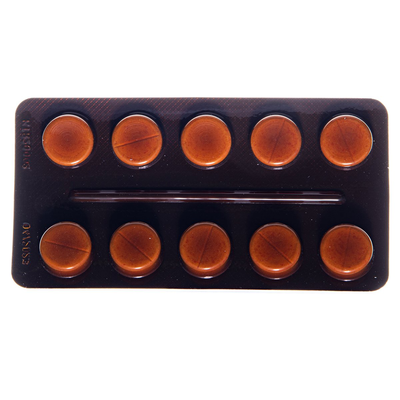
10 tablets per blister; 1 blister per cardboard box.
Dispensing category
Over-the-counter No. 4 (4×1), No. 10 (10×1).
By prescription No. 100 (4×25).







