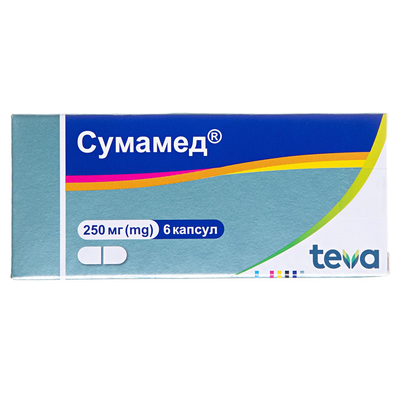
Sumamed 250 mg capsules, No. 6
Ingredients
Active ingredient: azithromycin;
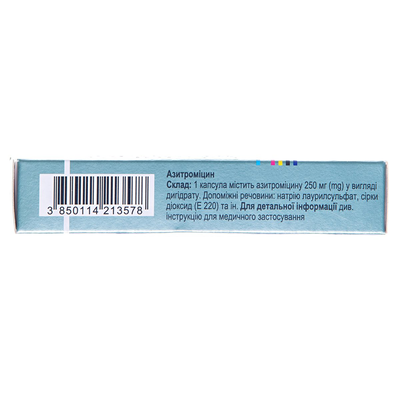
1 capsule contains 250 mg of azithromycin as a dihydrate;
Excipients: microcrystalline cellulose, sodium lauryl sulfate, magnesium stearate, gelatin, titanium dioxide (E 171), indigo carmine (E 132), sulfur dioxide (E 220).
Dosage Form
Capsules.
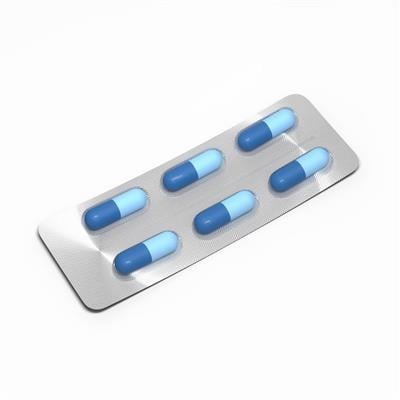
Main physical and chemical properties: hard gelatin capsules No. 1 with an opaque blue body and an opaque blue cap; Capsule contents: a white to yellowish crystalline powder or a lump of white to yellowish crystalline powder.
Pharmacotherapeutic group
Antibacterial agents for systemic use. Macrolides, lincosamides, and streptogramins. Azithromycin. ATC code J01F A10.
Pharmacological Properties
Pharmacodynamics.
Azithromycin is a macrolide antibiotic belonging to the azalide group. The molecule is formed by the introduction of a nitrogen atom into the lactone ring of erythromycin A. The mechanism of action of azithromycin involves the inhibition of bacterial protein synthesis by binding to the 50S subunit of the ribosome and inhibiting peptide translocation.
Mechanism of resistance.
Complete cross-resistance exists in Streptococcus pneumoniae, group A beta-hemolytic streptococci, Enterococcus faecalis, and Staphylococcus aureus, including methicillin-resistant Staphylococcus aureus (MRSA), to erythromycin, azithromycin, other macrolides, and lincosamides.
The prevalence of acquired resistance among isolated species may vary depending on location and time; therefore, local resistance data are required, especially when treating severe infections. If necessary, seek expert advice if the local prevalence of resistance is such that the drug’s effectiveness in treating at least some types of infections is questionable.
Antimicrobial Spectrum of Azithromycin
| Generally susceptible species |
| Aerobic Gram-positive bacteria |
| Methicillin-susceptible Staphylococcus aureus |
| Penicillin-sensitive Streptococcus pneumoniae |
| Streptococcus pyogenes |
| Aerobic Gram-negative bacteria |
| Haemophilus influenzae
Haemophilus parainfluenzae |
| Legionella pneumophila |
| Moraxella catarrhalis |
| Pasteurella multocida |
| Anaerobic bacteria |
| Clostridium perfringens |
| Fusobacterium spp. |
| Prevotella spp. |
| Porphyriomonas spp. |
| Other microorganisms |
| Chlamydia trachomatis
Chlamydia pneumoniae Mycoplasma pneumoniae |
| Species for which acquired resistance may be a problem |
| Aerobic Gram-positive bacteria |
| Streptococcus pneumoniae with intermediate susceptibility to penicillin and penicillin-resistant |
| Inherently resistant organisms |
| Aerobic Gram-positive bacteria |
| Enterococcus faecalis |
| Staphylococci: MRSA, MRSE* |
| Anaerobic bacteria |
| Bacteroides group, Bacteroides fragilis |
*Methicillin-resistant Staphylococcus aureus (MRSA) has a very high prevalence of acquired resistance to macrolides and is listed here due to its rare susceptibility to azithromycin.
Pharmacokinetics.
Bioavailability after oral administration is approximately 37%. Maximum serum concentration is reached 2–3 hours after administration.
When taken orally, azithromycin is distributed throughout the body. Pharmacokinetic studies have shown that the concentration of azithromycin in tissues is significantly higher (50 times) than in blood plasma, indicating strong tissue binding of the drug.
Binding to serum proteins varies depending on plasma concentrations and ranges from 12% at 0.5 μg/mL to 52% at 0.05 μg/mL in serum. The apparent volume of distribution at steady state (VVss) was 31.1 L/kg.
The terminal plasma half-life fully reflects the tissue half-life, which is 2–4 days.
Approximately 12% of an intravenous dose of azithromycin is excreted unchanged in the urine over the next 3 days. Particularly high concentrations of unchanged azithromycin were detected in human bile. Ten metabolites were also detected in bile, formed as a result of N- and O-demethylation, hydroxylation of the desozamine and aglycone rings, and cleavage of the cladinose conjugate. A comparison of the results of liquid chromatography and microbiological analyses showed that azithromycin metabolites are not microbiologically active.
Indications
Infections caused by microorganisms susceptible to azithromycin:
- ENT infections (bacterial pharyngitis/tonsillitis, sinusitis, otitis media);
- respiratory tract infections (bacterial bronchitis, community-acquired pneumonia);
- skin and soft tissue infections: erythema migrans (early stage of Lyme disease), erysipelas, impetigo, secondary pyoderma;
- sexually transmitted infections: uncomplicated genital infections caused by Chlamydia trachomatis.
Contraindications
Hypersensitivity to azithromycin, erythromycin, any macrolide or ketolide antibiotic, or any other component of the drug.
Drug Interactions and Other Interactions
Antacids. In studies examining the effect of concomitant antacid use on the pharmacokinetics of azithromycin, no overall changes in bioavailability were observed, although the peak plasma concentration of azithromycin was reduced by approximately 25%. Azithromycin and antacids should not be taken at the same time.
Cetirizine. In healthy volunteers, no pharmacokinetic interactions or significant changes in the QT interval were observed when azithromycin was co-administered for 5 days with 20 mg of cetirizine at steady state.
Didanosine. When daily doses of 1,200 mg of azithromycin were co-administered with 400 mg of didanosine daily in six HIV-positive volunteers, no effect on the steady-state pharmacokinetics of didanosine was observed compared with placebo.
Digoxin and colchicine. It has been reported that concomitant use of macrolide antibiotics, including azithromycin, and P-glycoprotein substrates, such as digoxin and colchicine, leads to increased serum levels of P-glycoprotein substrates. Therefore, when azithromycin is used concomitantly with a P-glycoprotein substrate such as digoxin, the possibility of increased serum concentrations of the substrate must be considered.
Zidovudine. Single doses of 1,000 mg and multiple doses of 1,200 mg or 600 mg of azithromycin had a negligible effect on the plasma pharmacokinetics or urinary excretion of zidovudine or its glucuronidemetabolites. However, azithromycin administration increased concentrations of phosphorylated zidovudine, a clinically active metabolite, in peripheral blood mononuclear cells. The clinical significance of these findings is unclear, but may be of benefit to patients.
Azithromycin does not interact significantly with the hepatic cytochrome P450 system. It is believed that the drug does not exhibit the pharmacokinetic drug interactions characteristic of erythromycin and other macrolides. Azithromycin does not induce or inactivate hepatic cytochrome P450 via the cytochrome-metabolite complex.
Ergot derivatives. Given the theoretical possibility of ergotism, the concomitant administration of azithromycin with ergot derivatives is not recommended.
Pharmacokinetic studies have been conducted on the use of azithromycin and the drugs listed below, the metabolism of which largely involves cytochrome P450.
Atorvastatin. Concomitant use of atorvastatin (10 mg daily) and azithromycin (500 mg daily) did not result in changes in atorvastatin plasma concentrations (based on analysis of HMG CoA reductase inhibition). However, cases of rhabdomyolysis have been reported in the postmarketing period in patients taking azithromycin with statins.
Carbamazepine. In a pharmacokinetic interaction study in healthy volunteers, azithromycin had no significant effect on plasma levels of carbamazepine or its active metabolites.
Cimetidine. In a pharmacokinetic study examining the effect of a single dose of cimetidine, administered 2 hours before azithromycin, on the pharmacokinetics of azithromycin, no changes in the pharmacokinetics of azithromycin were observed.
Oral coumarin-type anticoagulants. In a pharmacokinetic interaction study, azithromycin did not alter the anticoagulant effect of a single 15-mg dose of warfarin administered to healthy volunteers. During the postmarketing period, there have been reports of potentiation of the anticoagulant effect following concomitant use of azithromycin and oral coumarin-type anticoagulants. Although a causal relationship has not been established, the need for frequent monitoring of prothrombin time should be considered when prescribing azithromycin to patients receiving oral coumarin-type anticoagulants.
Cyclosporine. In a pharmacokinetic study involving healthy volunteers who received an oral dose of azithromycin 500 mg/day for 3 days, followed by a single oral dose of cyclosporine 10 mg/kg, a significant increase in the Cmax and AUC0-5 of cyclosporine was demonstrated. Therefore, caution should be exercised when these drugs are used concomitantly. If concomitant use of these drugs is necessary, cyclosporine levels should be monitored and the dose adjusted accordingly.
Efavirenz. Concomitant administration of a single 600-mg dose of azithromycin and 400 mg of efavirenz daily for 7 days did not result in any clinically significant pharmacokinetic interactions.
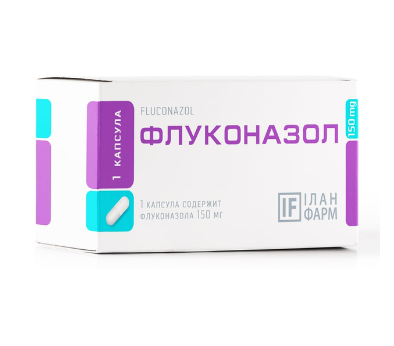
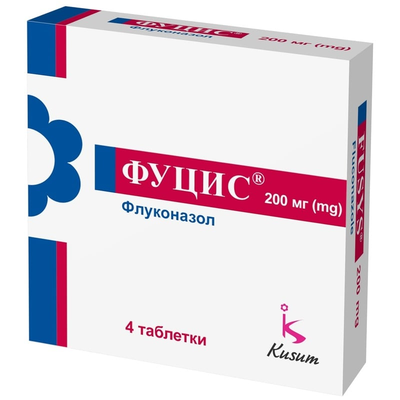
Fluconazole. Concomitant administration of a single 1,200-mg dose of azithromycin does not alter the pharmacokinetics of a single 800-mg dose of fluconazole. The total exposure and half-life of azithromycin were not altered by concomitant administration of fluconazole; however, a clinically insignificant decrease in Cmax (18%) of azithromycin was observed.
Indinavir. Concomitant administration of a single 1,200 mg dose of azithromycin does not have a statistically significant effect on the pharmacokinetics of indinavir, which is administered at a dose of 800 mg three times daily for 5 days.
Methylprednisolone. In a pharmacokinetic interaction study in healthy volunteers, azithromycin did not significantly affect the pharmacokinetics of methylprednisolone.
Midazolam. In healthy volunteers, concomitant administration of azithromycin 500 mg daily for 3 days did not cause clinically significant changes in the pharmacokinetics and pharmacodynamics of midazolam, which was administered as a single 15-mg dose.
Nelfinavir. Concomitant administration of azithromycin (1,200 mg) and nelfinavir at steady-state concentrations (750 mg three times daily) results in increased azithromycin concentrations. No clinically significant adverse events were observed; therefore, no dose adjustment is necessary.
Rifabutin. Concomitant use of azithromycin and rifabutin did not affect the serum concentrations of these drugs. Neutropenia was observed in subjects taking azithromycin and rifabutin concomitantly. Although neutropenia was associated with rifabutin use, a causal relationship with concomitant azithromycin administration was not established.
Sildenafil. In healthy male volunteers, no evidence was found that azithromycin (500 mg daily for 3 days) affected the AUC and Cmax of sildenafil or its major circulating metabolite.
Terfenadine. Pharmacokinetic studies have not reported any interaction between azithromycin and terfenadine. In some cases, the possibility of such an interaction cannot be completely ruled out; however, there are no specific data indicating the presence of such an interaction.
Theophylline. There are no data on clinically significant pharmacokinetic interactions when azithromycin and theophylline are administered concomitantly to healthy volunteers.
Triazolam. Concomitant administration to healthy volunteers of 500 mg of azithromycin on the first day and 250 mg on the second day with 0.125 mg of triazolam did not significantly affect any of the pharmacokinetic parameters of triazolam compared with the administration of triazolam and placebo.
Trimethoprim/sulfamethoxazole. Concomitant administration of double-strength trimethoprim/sulfamethoxazole (160 mg/800 mg) for 7 days with azithromycin 1200 mg on day 7 had no significant effect on the maximum concentrations, total exposure, or urinary excretion of trimethoprim or sulfamethoxazole. Serum azithromycin concentrations were consistent with those observed in other studies.
Hydroxychloroquine. Azithromycin should be used with caution in patients receiving medications that prolong the QT interval and may cause cardiac arrhythmia, such as hydroxychloroquine.
Special Considerations for Use
As with erythromycin and other macrolide antibiotics, rare serious allergic reactions have been reported, including angioedema and anaphylaxis (in isolated cases, with fatal outcomes), dermatological reactions, including acute generalized exanthematous pustulosis. Some of these reactions caused by azithromycin resulted in recurrent symptoms and required prolonged monitoring and treatment.
Since the liver is the primary route of elimination for azithromycin, azithromycin should be prescribed with caution to patients with severe liver disease. Cases of fulminant hepatitis, resulting in life-threatening liver dysfunction, have been reported with azithromycin use. It is possible that some patients had a history of liver disease or were taking other hepatotoxic medications.
Liver function tests should be performed if signs and symptoms of liver dysfunction develop, such as rapidly developing asthenia accompanied by jaundice, dark urine, a tendency to bleed, or hepatic encephalopathy. If liver dysfunction is detected, azithromycin should be discontinued.
In patients taking ergot derivatives, concomitant use of certain macrolide antibiotics promotes the rapid development of ergotism. There are no data regarding the possibility of an interaction between ergot derivatives and azithromycin. However, due to the theoretical possibility of ergotism, azithromycin should not be prescribed concurrently with ergot derivatives.
As with other antibiotics, monitoring for signs of superinfection caused by susceptible organisms, including fungi, is recommended.
When taking almost all antibacterial drugs, including azithromycin, Clostridium difficile-associated diarrhea (CDAD) has been reported, ranging in severity from mild diarrhea to fatal colitis. Treatment with antibacterial agents alters the normal flora of the large intestine, leading to overgrowth of C. difficile.
C. difficile produces toxins A and B, which contribute to the development of CDAD. Toxin-hyperproducing strains of C. difficile are responsible for increased morbidity and mortality, as these infections may be resistant to antimicrobial therapy and require colectomy. The possibility of CDAD should be considered in all patients with antibiotic-associated diarrhea. A thorough medical history is necessary, as CDAD has been reported to occur up to 2 months after antibiotic administration.
In patients with severe renal impairment (glomerular filtration rate <10 mL/min), a 33% increase in systemic exposure to azithromycin was observed.
Prolongation of cardiac repolarization and the QT interval, which increased the risk of cardiac arrhythmias and ventricular flutter/fibrillation (torsade de pointes), have been observed with treatment with other macrolide antibiotics, including azithromycin. Since conditions associated with an increased risk of ventricular arrhythmias (including torsade de pointes) can lead to cardiac arrest, azithromycin should be prescribed with caution to patients with pre-existing proarrhythmic conditions (especially women and the elderly), particularly patients:
- with congenital or documented QT interval prolongation;
- who are currently being treated with other active substances known to prolong the QT interval, such as Class IA antiarrhythmic drugs (quinidine and procainamide) and Class III antiarrhythmic drugs (dofetilide, amiodarone, and sotalol), cisapride and terfenadine, neuroleptics such as pimozide; antidepressants such as citalopram; and fluoroquinolones such as moxifloxacin and levofloxacin;
- with electrolyte imbalances, especially in cases of hypokalemia and hypomagnesemia;
- with clinically relevant bradycardia, cardiac arrhythmia, or severe heart failure.
Exacerbation of myasthenia gravis symptoms or the new onset of myasthenic syndrome has been reported in patients receiving azithromycin therapy.
Streptococcal infections. For the treatment of pharyngitis/tonsillitis caused by Streptococcus pyogenes, penicillin is generally the drug of choice; it is also used for prophylaxis in acute rheumatic fever. Azithromycin is generally effective in treating streptococcal infections of the oropharynx; however, there are no data demonstrating the efficacy of azithromycin for the prevention of rheumatic attacks.
The safety and efficacy of intravenous azithromycin for the treatment of infections in children have not been established.
The safety and efficacy for the prevention or treatment of Mycobacterium avium complex in children have not been established.
Use during pregnancy or breastfeeding.
Pregnancy.
There are no adequate data on the use of azithromycin in pregnant women. In animal studies of reproductive toxicity, no teratogenic effects of azithromycin on the fetus were observed; however, the drug crossed the placenta. The safety of azithromycin use during pregnancy has not been established. Therefore, azithromycin should be prescribed during pregnancy only if the benefits outweigh the risks.
Breastfeeding.
It has been reported that azithromycin passes into human breast milk, but no relevant and adequately controlled clinical studies have been conducted to characterize the pharmacokinetics of azithromycin excretion into human breast milk.
Fertility.
Fertility studies were conducted in rats; the pregnancy rate decreased following administration of azithromycin. The relevance of these data to humans is unknown.
Effect on the ability to drive or operate machinery.
There is no evidence that azithromycin impairs the ability to drive or operate machinery; but the possibility of adverse reactions such as delirium, hallucinations, dizziness, drowsiness, loss of consciousness, or seizures—which may affect the ability to drive or operate machinery—should be considered.
Dosage and Administration
Sumamed® should be taken 1 hour before or 2 hours after a meal, as concomitant food intake impairs the absorption of azithromycin. The capsules should be swallowed whole. Take the medication once daily.
Adults and children weighing ≥45 kg.
For infections of the ENT organs and respiratory tract, skin, and soft tissues (except for chronic erythema migrans), the total dose of azithromycin is 1,500 mg: 500 mg once daily. The duration of treatment is 3 days.
For erythema migrans, the total dose of azithromycin is 3 g: on the first day, take 1 g (4 capsules in a single dose), followed by 500 mg (2 capsules at a time) from the 2nd through the 5th day. The duration of treatment is 5 days.
For sexually transmitted infections: the total dose of azithromycin is 1 g (4 capsules taken at once).
If a dose is missed, take the missed dose as soon as possible, and take subsequent doses at 24-hour intervals.
Elderly patients.
There is no need to adjust the dosage for elderly patients.
Since elderly patients may be at increased risk for cardiac conduction disturbances, caution is advised when using azithromycin due to the risk of cardiac arrhythmias and torsade de pointes.
Patients with impaired renal function.
In patients with mild renal impairment (glomerular filtration rate 10–80 mL/min), the same dosage may be used as in patients with normal renal function. Azithromycin should be prescribed with caution to patients with severe renal impairment (glomerular filtration rate <10 mL/min).
Patients with hepatic impairment.
Since azithromycin is metabolized in the liver and excreted in the bile, the drug should not be used in patients with severe hepatic impairment. No studies have been conducted on the treatment of such patients with azithromycin.
Children.
Sumamed®, capsules, should be used in children weighing ≥45 kg.
Overdose
Clinical experience with azithromycin indicates that adverse effects resulting from doses higher than those recommended are similar to those observed with standard therapeutic doses. These may include diarrhea, nausea, vomiting, and reversible hearing loss. In case of overdose, administration of activated charcoal and general symptomatic and supportive treatment are recommended as necessary.
Side Effects
The table below lists, by system organ class and frequency of occurrence, the adverse reactions identified in clinical trials and during postmarketing surveillance that were observed with all dosage forms of azithromycin. Adverse reactions reported during postmarketing surveillance are highlighted in italics. Frequency categories were defined according to the following scale: very common (≥1/10); common (≥1/100 to <1/10); uncommon (≥1/1,000 to <1/100); rare (≥1/10,000 to <1/1,000); very rare (<1/10,000); unknown (cannot be estimated from the available data). Within each frequency group, adverse events are listed in order of decreasing severity.
Adverse reactions possibly or probably associated with azithromycin based on data obtained during clinical trials and postmarketing surveillance
| System Organ Class | Adverse reaction | Frequency |
| Infections and infestations | Candidiasis, vaginal infections, pneumonia, fungal infection, bacterial infection, pharyngitis, gastroenteritis, respiratory dysfunction, rhinitis, oral candidiasis | Uncommon |
| Pseudomembranous colitis | Unknown | |
| Blood and lymphatic system disorders | Leukopenia, neutropenia, eosinophilia | Uncommon |
| Thrombocytopenia, hemolytic anemia | Unknown | |
| Immune system | Angioedema, hypersensitivity reactions | Uncommon |
| Anaphylactic reaction | Unknown | |
| Metabolic disorders | Anorexia | Uncommon |
| Psychiatric | Nervousness, insomnia | Uncommon |
| Agitation | Rare | |
| Aggression, anxiety, delirium, hallucinations | Unknown | |
| Nervous system | Headache | Common |
| Dizziness, drowsiness, dysgeusia, paresthesia | Uncommon | |
| Loss of consciousness, seizures, hypoesthesia, psychomotor agitation, anosmia, ageusia, parosmia, myasthenia gravis | Unknown | |
| Eye disorders | Visual disturbances | Uncommon |
| Ear disorders | Hearing disorders, vertigo | Uncommon |
| Hearing disorders, including deafness and/or tinnitus | Unknown | |
| Cardiac | Palpitations | Uncommon |
| Ventricular flutter/fibrillation (torsade de pointes), arrhythmia, including ventricular tachycardia, QT interval prolongation on the ECG | Unknown | |
| Vascular | Hot flashes | Uncommon |
| Hypotension | Unknown | |
| Respiratory system | Dyspnea, nosebleeds | Uncommon |
| Gastrointestinal system | Diarrhea | Very common |
| Vomiting, abdominal pain, nausea | Common | |
| Constipation, flatulence, dyspepsia, gastritis, dysphagia, abdominal distension, dry mouth, belching, mouth ulcers, hypersalivation | Uncommon | |
| Pancreatitis, discoloration of the tongue | Unknown | |
| Hepatobiliary system | Liver dysfunction, cholestatic jaundice | Rare |
| Liver failure (which has rarely been fatal), fulminant hepatitis, liver necrosis | Unknown | |
| Skin and subcutaneous tissue disorders | Rash, itching, hives, dermatitis, dry skin, hyperhidrosis | Uncommon |
| Photosensitivity, acute generalized exanthematous pustulosis | Rare | |
| Stevens–Johnson syndrome, toxic epidermal necrolysis, erythema multiforme, drug reaction with eosinophilia and systemic symptoms | Unknown | |
| Musculoskeletal system | Osteoarthritis, myalgia, back pain, neck pain | Uncommon |
| Arthralgia | Unknown | |
| Urinary system | Dysuria, kidney pain | Uncommon |
| Acute renal failure, interstitial nephritis | Unknown | |
| Reproductive system and mammary glands | Uterine bleeding, testicular disorders | Uncommon |
| General disorders and administration site conditions | Edema, asthenia, malaise, fatigue, facial edema, chest pain, hyperthermia, pain, peripheral edema | Uncommon |
| Laboratory findings | Decreased lymphocyte count, increased eosinophil count, decreased blood bicarbonate level, increased basophil count, increased monocyte count, increased neutrophil count | Common |
| Elevated aspartate aminotransferase, elevated alanine aminotransferase, elevated serum bilirubin, elevated blood urea nitrogen, elevated serum creatinine, changes in serum potassium levels, elevated alkaline phosphatase levels, elevated chloride levels, elevated glucose levels, elevated platelet count, decreased hematocrit, elevated bicarbonate levels, abnormal sodium levels | Uncommon | |
| Injuries and Poisoning | Post-procedural complications | Uncommon |
Information on adverse reactions possibly associated with the prevention and treatment of Mycobacterium avium complex is based on data from clinical trials and postmarketing surveillance. These adverse reactions differ in type or frequency from those reported with the use of short-acting and long-acting formulations.
Adverse reactions possibly associated with the prevention and treatment of Mycobacterium avium complex
| System Organ Class | Adverse Reaction | Frequency |
| Metabolic and Nutritional Disorders | Anorexia | Common |
| Nervous system | Dizziness, headache, paresthesia, dysgeusia | Common |
| Hypoesthesia | Uncommon | |
| Eye disorders | Visual disturbances | Common |
| Ear disorders | Deafness | Common |
| Hearing impairment, ringing in the ears | Uncommon | |
| Cardiac | Palpitations | Uncommon |
| Gastrointestinal | Diarrhea, abdominal pain, nausea, flatulence, gastrointestinal discomfort, frequent loose stools | Very common |
| Hepatobiliary system | Hepatitis | Uncommon |
| Skin and subcutaneous tissue disorders | Rash, itching | Common |
| Stevens–Johnson syndrome, photosensitivity | Uncommon | |
| Musculoskeletal system | Arthralgia | Common |
| General disorders and administration site conditions | Increased fatigue | Common |
| Asthenia, malaise | Uncommon |
This medication contains sulfur dioxide (E 220), so it may rarely cause hypersensitivity reactions and bronchospasm.
Shelf life
3 years.
Storage conditions
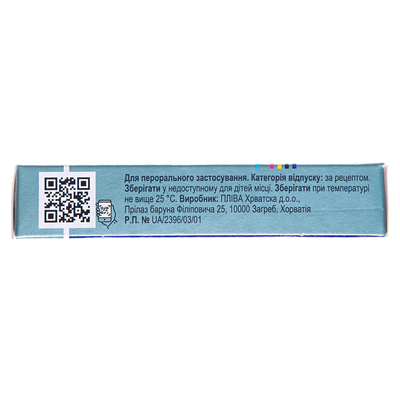
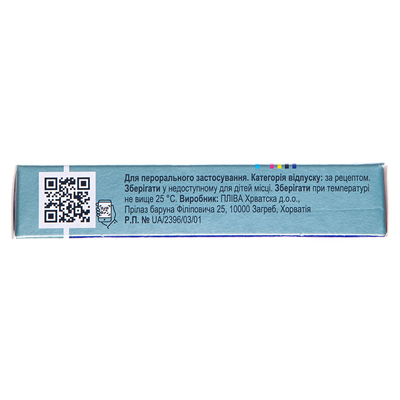
Store at a temperature not exceeding 25 °C. Keep out of reach of children.
Packaging
6 capsules per blister pack, 1 blister pack per cardboard box.
Dispensing Category
By prescription.