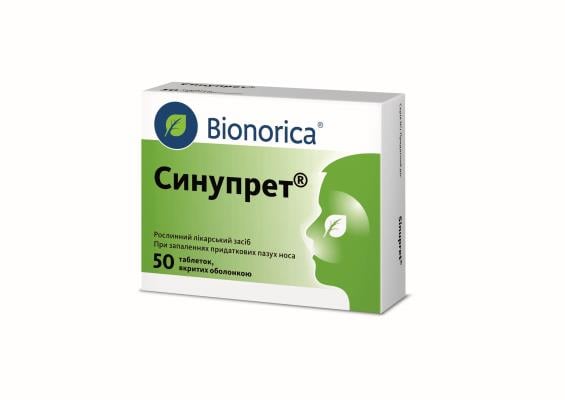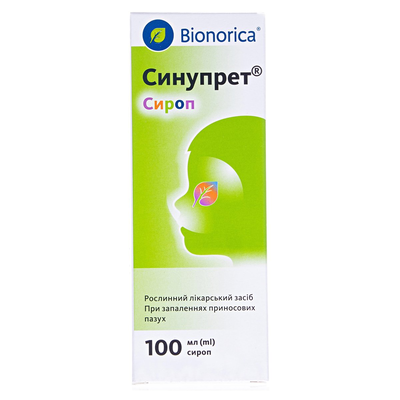
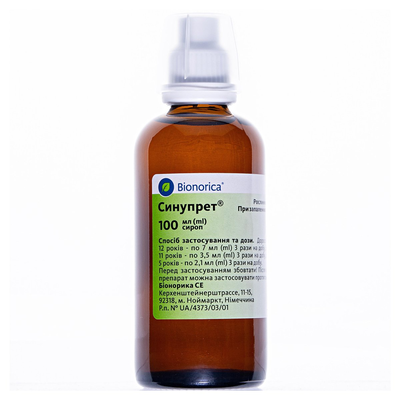
Sinupret syrup, 100 ml per bottle.
Composition
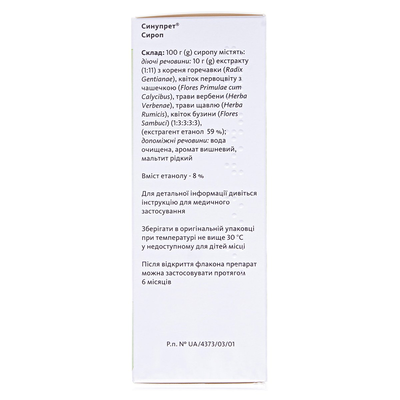
Active ingredients: 100 g of syrup contains: 10 g of extract (1:11) from gentian root (Radix Gentianae), primrose flowers with calyx (Flores Primulae cum Calybus), verbena herb (Herba Verbenae), sorrel herb (Herba Rumicis), elderflower (Flores Sambuci) (1:3:3:3:3), (extraction solvent: 59% ethanol (v/v);
excipients: purified water, cherry flavor, liquid maltitol.
Ethanol content: 8% (v/v).
Dosage form
Syrup.
Main physical and chemical properties: a clear, viscous, light brown liquid, sweet in taste, with a cherry flavor.
Cloudiness or sediment formation may occur during storage.
Pharmacotherapeutic group
Other drugs used for coughs and colds. ATC code R05X.
Pharmacological properties
The herbal components in the preparation have a complex action, manifested by secretolytic, anti-inflammatory, and anti-edematous effects.
Under the influence of the drug, secretion is regulated and tissue edema is reduced. Drainage and ventilation of the paranasal sinuses are restored, nasal congestion is relieved, and the protective function of the respiratory tract epithelium is normalized.
Indications
Acute and chronic inflammatory diseases of the paranasal sinuses.
Contraindications
Hypersensitivity to any of the active or other ingredients of the drug, to other types of primrose, as well as peptic ulcer.
Interactions with Other Medications and Other Types of Interactions
Currently, there is no information regarding any interactions with other medications.
If other medications are being used concurrently, consult a physician.
Special Instructions for Use
This medication contains 8% (v/v) ethanol; therefore, it should not be used by patients with alcoholism or those who have successfully completed treatment for alcoholism. Additionally, taking doses higher than recommended poses a health risk to children and patients with liver disease, epilepsy, or organic brain disorders.
Special caution is required when administering the medication to patients with gastritis or functional dyspepsia (a so-called “sensitive stomach”). The medication should be taken after meals.
Sinupret® syrup should not be taken without consulting a doctor by patients with an intolerance to certain sugars, as this medication contains liquid maltitol.
Note for patients with diabetes: 7 mL of syrup contains 5.5 g of liquid maltitol, which corresponds to approximately 0.35 bread units (BU). This should be taken into account if a diabetic diet must be followed. The caloric value is 2.3 kcal/g of liquid maltitol. Liquid maltitol may have a mild laxative effect.
If symptoms do not subside after 7–14 days of treatment or recur periodically, consult a doctor.
Use During Pregnancy or Breastfeeding
Sinupret® syrup should be taken during pregnancy or breastfeeding only after a doctor has clearly established a diagnosis and assessed the benefit to the mother versus the risk to the fetus (infant).
Due to its ethanol content, the syrup should be taken only when it is not possible to take Sinupret® tablets.
Effect on reaction time when driving or operating machinery
At the recommended doses, the medication does not affect the ability to drive or operate machinery; however, it should be noted that the medication contains ethanol.
Directions for Use and Dosage
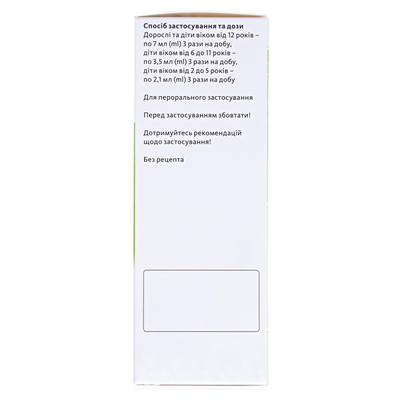
Measure the dose using the measuring cap according to the doses listed in the table, based on age, 3 times a day:
| Age | Single Dose | Daily dose |
| Children aged 2 to 5 years | 2.1 mL | 6.3 mL (3 doses of 2.1 mL each) |
| Children aged 6 to 11 years | 3.5 mL | 10.5 mL (3 doses of 3.5 mL each) |
| Adults and children 12 years and older | 7 mL | 21 mL (7 mL three times daily) |
Sinupret® syrup may be taken either undiluted or mixed with a small amount of liquid (that does not contain alcohol). Shake the syrup well before use. The medication can be taken with food or drinks, or between meals. Patients who complain of functional dyspepsia (a so-called “sensitive stomach”) are advised to take the syrup after meals. For children under 6 years of age, a single dose of the syrup should be diluted in 1 tablespoon of liquid.
During storage, cloudiness or sediment may occur, which does not affect the drug’s effectiveness.
Unless otherwise prescribed by a doctor, the recommended course of treatment is 7–14 days.
Follow the instructions in the “Special Instructions for Use” section.
Children
Due to insufficient research, do not use in children under 2 years of age.
Overdose
There are currently no known cases of overdose. The listed side effects may occur more frequently; in such cases, consult a doctor.
Treatment: If symptoms of poisoning or overdose occur, symptomatic treatment is necessary.
Side Effects
Gastrointestinal disturbances (including stomach pain, nausea, diarrhea, vomiting, and abdominal discomfort) are rarely observed. Hypersensitivity reactions are also possible, including rash, skin redness, itching, hives, angioedema, shortness of breath, and facial swelling.
If any adverse reactions occur, discontinue use of the medication and be sure to consult a doctor.
Shelf life
4 years.
Do not use after the expiration date printed on the package.
The expiration date indicates that the product is valid until the last day of the month.
Once the vial is opened, the medication is usable for 6 months.
Storage Conditions
Store in the original packaging at a temperature not exceeding 30 °C, out of the reach of children.
Packaging
100 mL in a vial with a measuring cap, contained in a cardboard box.
Dispensing Category
Available without a prescription.